Determining Where to Start as Your Child with Special Needs Nears Adulthood

Determining Where to Start as Your Child with Special Needs Nears Adulthood

Determining Where to Start as Your Child with Special Needs Nears Adulthood

Determining Where to Start as Your Child with Special Needs Nears Adulthood

Determining where to start as your child with special needs nears adulthood is no easy task. There are legal matters to address such as special needs trusts and guardianship, advocacy strategies to pass on to kids, and many more. The list is full of important things to address. Because your child’s eighteenth birthday is not yet imminent, they may be ignored.

You know what I’m talking about, right?

I’d like to give you a hand in determining where to start as your child with special needs nears adulthood. So today I’m sharing three—count ’em—just three ideas. Whether your child is five or fifteen or somewhere in-between, completing these three steps can help you jumpstart the process.

#1: Obtain Hard Copies of Your Child’s Medical Records

Electronic medical records are a great invention. They can also be very hard to access when hospitals and clinics update their computer systems. Who knows what will be in place when your child reaches adulthood? It’s wise to obtain paper copies by contacting the practices of the doctors and therapists who treat your child. They can tell you how their process works and what costs may be involved. Most likely you will be sent an electronic file to download and print out. If your child’s medical history is complex and ongoing, you may want to request records every year or two to update your paper files.

#2: Write Down Your Memories of Your Child’s Medical History

To read the rest of Determining Where to Start as Your Child with Special Needs Nears Adulthood, visit the Hope Anew blog

Do you like what you see at DifferentDream.com? You can receive more great content by subscribing to the monthly Different Dream newsletter and signing up for the daily RSS feed delivered to your email.

By

Jolene Philo is the author of the Different Dream series for parents of kids with special needs. She speaks at parenting and special needs conferences around the country. She’s also the creator and host of the Different Dream website. Sharing Love Abundantly With Special Needs Families: The 5 Love Languages® for Parents Raising Children with Disabilities, which she co-authored with Dr. Gary Chapman, was released in August of 2019 and is available at local bookstores, their bookstore website, and at Amazon. The first book in her cozy mystery series, See Jane Run!, features people with disabilities and will be released in June of 2022.

Author Jolene Philo

Archives

Categories

Subscribe for Updates from Jolene

Related Posts

EA/TEF Awareness Day 2022 is Here!

EA/TEF Awareness Day 2022 is Here!

EA/TEF Awareness Day 2022 is Here!

EA/TEF Awareness Day 2022 has arrived. Usually Different Dream devotes all of January to EA/TEF Awareness Month. For over ten years, I have issued invitations on Facebook for parents and survivors to share their stories. In the past, responses came so thick and fast, the monthly calendar filled up quickly.

This year there was plenty of initial interest after the invitations were sent. Follow-through was a different matter. I don’t know if sick kids or pandemic burnout or bad timing or holiday demands was the culprit. Whatever the reason, my Plan A resulted in a January blogging calendar that is as bare as Old Mother Hubbard’s cupboard.

Moving on to Plan B, I hereby declare that EA/TEF Awareness Day for 2022 is here! In honor of this special day, this post features some of my favorite EA/TEF posts from past years. I hope you enjoy them and pass them along to raise awareness about a condition that affects 1 in every 3,000 babies born around the world.

#1

My First EA/TEF Memories: Mary Monahan wrote this post as a 61-year-old EA/TEF survivor. In it she shares her earliest hospital memories and what she calls the “dark ages of this condition’s treatment.” This post will make new parents grateful for treatment advances since then!

#2

My Special Needs Mom Worries Never End: I wrote this post a few years back when my EA/TEF survivor son was in his mid-30s. He is not a fan of me obsessing about his health, so I wrote this post to quit doing so. Maybe it will help you, too.

#3

Our Bittersweet EA/TEF Symphony: Not many people consider EA/TEF to be music to their ears, but mom and musician Janae Copeland does. In this post she shares what she’s learned while conducting the symphony of her daughter’s life.

#4

So You’re a NICU Parent: If you’re the parent of an EA/TEF baby, you are also a NICU parent. Brianna Lennon was a NICU parent in 2015 after the birth of her son Ryan. With humor and grace, she explains several parenting skills unique to our particular breed of NICU kids.

#5

When a Kid with EA/TEF Finds Courage…: We know that our EA/TEF kids are among the bravest people in the world. Our kids have to discover that truth for themselves. In this article, Lori McGahan tells readers how her son Brandon discovered how courageous he is.

#6

6 EA TEF Warnings Hidden from New Parents: Nanette Lerner relates 6 warning signs she watches for while raising her son. These warnings allow parents to be proactive rather than reactive as they care for their kids.

#7

EA/TEF Repair Is One Chapter in Your Child’s Life: This post by Cori Welch puts EA/TEF repair surgeries into perspective. Cori also shares 5 things she wishes she’d known before her baby was born in 2018.

#9

Why EA/TEF Awareness Month Is Grace Awareness Month: When our son was born in 1982, I could only see the pain and the worry and the challenges surrounding his condition. As he grew, I began to see the grace surrounding it too.

This list is just a smattering of the Different Dream guest posts about EA/TEF. You can make EA/TEF Awareness Day last a little longer by typing “EA/TEF” in the search bar to find more great stories.

Do you like what you see at DifferentDream.com? You can receive more great content by subscribing to the monthly Different Dream newsletter and signing up for the daily RSS feed delivered to your email.

By

Jolene Philo is the author of the Different Dream series for parents of kids with special needs. She speaks at parenting and special needs conferences around the country. She’s also the creator and host of the Different Dream website. Sharing Love Abundantly With Special Needs Families: The 5 Love Languages® for Parents Raising Children with Disabilities, which she co-authored with Dr. Gary Chapman, was released in August of 2019 and is available at local bookstores, their bookstore website, and at Amazon.

Author Jolene Philo

Archives

Categories

Subscribe for Updates from Jolene

Related Posts

When the Unexpected Becomes the Norm for the Caregiver

When the Unexpected Becomes the Norm for the Caregiver

When the Unexpected Becomes the Norm for the Caregiver

When the unexpected becomes the norm for the caregiver, as was the case for many in 2021, it knocks us off balance. At least, that’s what one unexpected hit after hit did to me over the past year. 

I didn’t realize why my brain felt fuzzy and my energy level had dropped when I paused to write down 2021’s most impactful unexpected events. Then I discovered there were 8 of them. 

First on the list was our house construction and remodeling project. It was 20 months of living in constant flux and mess before the contractors were done.

Next up was the rapid decline of my mother’s health that began last spring just as my siblings and I were able to go into her memory care/assisted living facility for the first time since the pandemic shut down began. Because of her increased care needs, we moved her to a long term care facility in June.

In conjunction with Mom’s health decline came the necessity to advocate on her behalf while she was still in the memory care unit. The pandemic led to rapid staff turn over that greatly complicated my attempts to advocate for her. Snafus with her long term care insurance required numerous phone conversations to solve. The importance of keeping good records and logging conversations was repeatedly reinforced. Had I not done that, Mom’s health might have been compromised.

To read the rest of When the Unexpected Becomes the Norm for the Caregiver, click over to Key Ministry’s blog for Special Needs Parents.

Do you like what you see at DifferentDream.com? You can receive more great content by subscribing to the monthly Different Dream newsletter and signing up for the daily RSS feed delivered to your email.

By

Jolene Philo is the author of the Different Dream series for parents of kids with special needs. She speaks at parenting and special needs conferences around the country. She’s also the creator and host of the Different Dream websiteSharing Love Abundantly With Special Needs Families: The 5 Love Languages® for Parents Raising Children with Disabilities, which she co-authored with Dr. Gary Chapman, was released in August of 2019 and is available at local bookstores, their bookstore website, and at Amazon. See Jane Run!, the first book in the West River cozy mystery series will be released in June of 2022.

Author Jolene Philo

Archives

Categories

Subscribe for Updates from Jolene

Related Posts

Helping Autistic Children Recover from Meltdowns

Helping Autistic Children Recover from Meltdowns

Helping Autistic Children Recover from Meltdowns

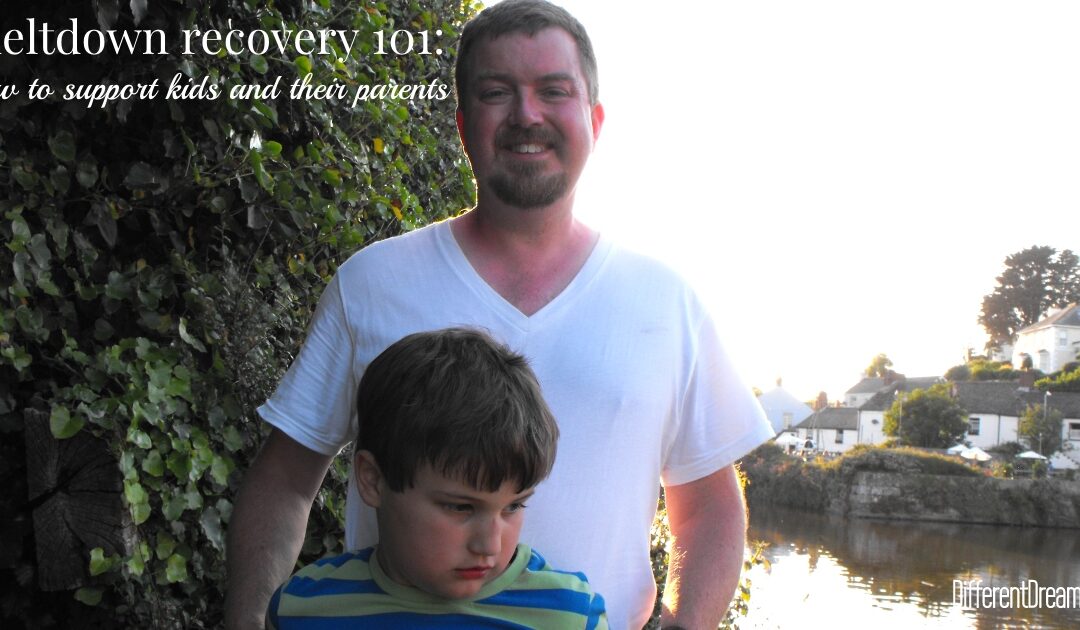
Helping autistic children recover from meltdowns is something many assume only parents and professionals can do. Thanks to this post from Mark Arnold, members of the body of Christ can play a part is supporting autistic children and their parents.

Our son James had a meltdown the other day. It’s an experience that’s familiar to many families of autistic children. Like any autistic person, there can be a wide range of triggers when James has a meltdown. He may be overwhelmed by sensory input or frustrated that he can’t communicate something to us. It could be due to change of routine, feeling unwell or in pain, or that his iPad battery has gone flat!

 When James has a meltdown, he isn’t behaving badly, pushing boundaries, or being difficult. It is brain overload, and there’s nothing he can do much about in that moment. But there is plenty we can do to support him.

 The first thing we do is let him know that we will keep him safe. We assure him that he will be okay and that we love him very much. Sometimes we gently hold him while speaking reassuring words to him. Even if the words can’t make their way through the meltdown, the sound of our voices helps him. At other times, we need to give him a little space.

 Next, we work with James to identify the cause of the meltdown. Once that is known we can help out and the meltdown will slowly lessen. The other day, the sound of a neighbor’s lawnmower. We couldn’t stop the lawnmower, so we shut the windows and significantly reduced the noise.

 If the meltdown’s cause isn’t obvious and James can’t help us to understand it, we use calming techniques such as pressure therapy. We gently squeeze his thighs and arms, rub his back, or use a weighted blanket. Other coping techniques to try are a sensory chew, distractions, snacks, or a much-loved film or TV program. These help him regulate and slowly recover.

 What is important to understand when helping autistic children recover from meltdowns is that coming down might take a while after the cause has been identified and fixed. The other day, James recovered from the more visible aspects of the meltdown after about 30 minutes, but it affected him for the rest of the day. We continued to reassure him that he was safe and cared for and had nothing to fear. We offered unconditional love. We let him rest and gave him the time and space he needed to recover fully. Once his recovery was complete, we learned from the experience and sought ways to minimize the trigger in the future.

A great way to understand meltdowns better is to talk with autistic adults about their meltdown experiences. We can ask what strategies they use to reduce the risk of meltdowns. No two people are the same, but we can learn from people that have been in similar situations. We can learn more about helping autistic children recover from meltdowns if we work together.

Do you like what you see at DifferentDream.com? You can receive more great content by subscribing to the monthly Different Dream newsletter and signing up for the daily RSS feed delivered to your email inbox. You can sign up for the first in the pop up box and the second at the bottom of this page.


By

Mark Arnold is the Additional Needs Ministry Director at Urban Saints, a leading national Christian children’s and youth organization. He is co-founder of the Additional Needs Alliance, a national and international advocate for children and young people with additional needs or disabilities. Mark is a Churches for All and Living Fully Network partner, a member of the Council for Disabled Children and the European Disability Network. He writes an additional needs column for Premier Youth and Children’s Work (YCW) magazine and blogs at The Additional Needs Blogfather. He is father to James, who has autism spectrum condition, associated learning disability, and epilepsy. To find out more about how Mark’s work can help you, contact him at: marnold@urbansaints.org or @Mark_J_Arnold.

Author Jolene Philo

Archives

Categories

Subscribe for Updates from Jolene

Related Posts

Communicating Your Child’s Love Language to Medical Professionals

Communicating Your Child’s Love Language to Medical Professionals

Communicating Your Child’s Love Language to Medical Professionals

Communicating your child’s love language to medical professionals may be a new idea to you. I hadn’t thought about it much until I interviewed caregiving parents for Sharing Love Abundantly in Special Needs Families: The 5 Love Languages for Parents Raising Children with Disabilities. 

The strategies those parents used when talking to their children’s doctors, therapists, and other professionals improved the quality of their kids’s care. We all want the services our children receive to be the best they can be, so today I’m sharing a few overarching strategies from chapter 9 of Sharing Love Abundantly in Special Needs Families today.

  • Help medical professionals see your child as a person. This can be done by acquainting them with your child’s preferences–favorite foods, activities, sports and sports teams, video and board games, books, shows, movies, and of course, their primary love language.
  • Use professional jargon to describe a child’s love language. Instead of using the term “physical touch,” suggest effective therapy techniques such as “deep pressure.” Instead of saying “words of affirmation,” suggest certain phrases that “motivate my child.”
  • Provide professionals with a “dossier” or “fast track information sheet.” The sheet can include a child’s medical information, communicate techniques, preferences, such as primary and secondary love languages, and more. Sample forms are provided in the appendix of Sharing Love Abundantly in Special Needs Families.

Communicating your child’s love language to medical professionals can be an effective tool in a parent’s advocacy toolbox. According to the parents interviewed for Sharing Love Abundantly in Special Needs Families, it’s a simple tool to use and benefited their kids. What more could a parent want?

Links to other articles in this series:

The Love Languages and Special Needs Families: A Good Combination

Basic Love Language Concepts to Ease Stress and Increase Joy in Caregiving Families

Threats to Caregiving Marriages and How To Fight Them 

Love Is a Child’s First Language

Determining the Love Language of a Child with Special Needs or a Disability 

Ways to Speak Words of Affirmation and Quality Time to Kids with Special Needs 

Ways To Speak Gifts and Acts of Service to Kids with Special Needs 

Speaking Healthy Physical Touch to Kids with Special Needs

Using the Love Languages with Siblings of Kids with Special Needs and Disabilities 

Extended Family Members Can Use the Love Languages to Encourage Caregiving Parents

Communicating Your Child’s Love Language to Educators 

Do you like what you see at DifferentDream.com? You can receive more great content by subscribing to the monthly Different Dream newsletter and signing up for the daily RSS feed delivered to your email.

By

Jolene Philo is the author of the Different Dream series for parents of kids with special needs. She speaks at parenting and special needs conferences around the country. She’s also the creator and host of the Different Dream websiteSharing Love Abundantly With Special Needs Families: The 5 Love Languages® for Parents Raising Children with Disabilities, which she co-authored with Dr. Gary Chapman, was released in August of 2019 and is available at local bookstores, their bookstore website, and at Amazon.

Author Jolene Philo

Archives

Categories

Subscribe for Updates from Jolene

Related Posts

The Reality of Spoonie Parenting

The Reality of Spoonie Parenting

The Reality of Spoonie Parenting

The reality of spoonie parenting became part of guest blogger Jessica Temple’s world in November of 2020. In this post about the reality of spoonie parenting (ie: parenting kids with special needs while living with a chronic illness), she shares what she’s learned about parenting since her diagnosis.

When I was growing up, friends said that I was the sickest healthy person they ever met. I always felt crummy, was always getting sick, and spent most of my time at doctor offices. My symptoms worsened in the past year, and I rapidly lost mobility. In November 2020, I was diagnosed with hypermobile Ehlers Danlos Syndrome (hEDS), everything clicked.

The diagnosis presented a new issue: how to parent two children with special needs, one of whom required a fair amount of assistance and was very aggressive, while increasingly disabled. As my symptoms progressed, I became less mobile and less stable on my feet. It was distressing to not be the parent I had always hoped to be; one who could run around with her children, get on the floor and back up during playtime.

Since diagnosis, I’ve discovered what to do and what not to do as the parent of kids with special needs. I’d like to share some of what I’ve learned with you about the reality of spoonie parenting.

Inform The Children

I have been telling my children what they need to know, when they need to know it, and in a way that they can understand without scaring them. When I needed surgery for ear infections, I explained that mommy’s ears were sick and needed a tiny tube and balloon in them to feel better. When I started using a rollator, I said that my knees get wobbly like slime or putty, and feel better with the rollator. They are both obsessed with the rollator. I told them that when my neck gets wobbly hurts, a hard neck collar keeps it safe and healthy. For older children, it may be appropriate to further explain the condition, its symptoms, and what this means for the parent in terms of outcome and limitations. Always keep in mind the child’s cognitive abilities, present level of mental health, and individual needs during every conversation.

Find Help

After my diagnosis, I realized that we needed more help than the ABA therapist who came some evenings to assist my son who has autism. However, it wasn’t enough. My husband, who has the same diagnosis, and I weren’t as able to do housework or lift children. Our oldest (5) is very aggressive and can cause us severe harm. So we reached out to babysitters do the intense physical play, bathing, lifting, and to create a human barricade when our son becomes aggressive. We asked for additional ABA assistance and secured the services of a psychotherapist to assist us with Benji’s behaviors. We asked family for more assistance, especially during outings. Growing our village has been wonderful. I have more time for to care for my body and attend medical appointments and physical therapy.

When You Don’t Feel Well

I recently talked to another spoonie mom about how she spends time with her children when shes sick, in pain, or has no energy. She said she instituted tablet time and slug time when her kids were young.. For tablet time, she would lay in bed with her son or daughter and they would play games, watch fun shows, draw silly pictures on art apps, or take pictures. Her son took the tablet around the house, narrated to her what he was doing (so she could keep tabs on him), and took pictures of things he found interesting. He returned to her and showed and told her the neat things he found.

Slug time was done similarly, but without screens. She read to the children, or had them read to her. They told lofty and fantastic stories and played in-room hide and seek, I-Spy, Simon Says, and other games. She could lay in bed comfortably and gain energy while having quality time with her children. I’m integrating these ideas with my kiddos, and we all love it!

Acknowledge Your Limits

At first, I really struggled with the knowledge of limits with regard to my energy level, mobility, and ability to engage with my children. I pushed through anyway which led to flares, extreme fatigue, and a decline in mobility. As I observed this, I realized the need to acknowledge my limits and abide by the information my body provided. When I lie down more, take more breaks, ask for help, and use mobility devices, I feel better and experience fewer EDS flares. I’m able to be more present with the kids and can spend more quality time with them.

Make The Most of What You Have

As the reality of spoonie parenting set in, I started appreciating time with the children more. Rather than resenting them or myself, I used mindfulness strategies to stay in the moment. I try to make each moment one of quality. We do more slug time or interactive tablet time. I engage more personally with the children, focus on the sweet or funny moments, and sneak in some cuddling to get some oxytocin, the natural pain reliever. I resent my limitations less when I spend and enjoy time with my children.

Build New Opportunities

Rather than being limited by my disability, I built and created new opportunities. This began with a burning desire to advocate for adults with invisible chronic illnesses. It led to the creation of a new podcast, The Spoonie Struggle. Through it, I have met many other people. Many of them parents, lots with children with special needs, who are now new friends. These friends have fantastic suggestions about Spoonie parenting, resources, support groups, and social media groups. Exploring these resources and options led to additional opportunities. I became more comfortable with myself and more willing to use braces and mobility aids. Those opened new travel and entertainment opportunities for building memories with the kids.

Cope With Flares

Flares happen, about one a month for me. I track them in order to prevent them or ramp up the self-care. During flares, I make more use of babysitters and family helpers and implement more of the strategies mentioned earlier in this post. They may take time away from the time I have with our children, but it shortens the length and impact of the flares and brings us back together more quickly. I let them know that mommy is not feeling as well and has to change the way she plays with them. I talk up our helpers and make everything sound novel and fun, which gets them on board.

The reality of spoonie parenting has been a new challenge, one I didn’t think I would be up for. However, it has become more manageable thanks to the strategies I’ve learned. I hope they help you learn more about your body and family, so you discover ways to adapt and thrive!

Do you like what you see at DifferentDream.com? You can receive more great content by subscribing to the monthly Different Dream newsletter and signing up for the daily RSS feed delivered to your email inbox. You can sign up for the first in the pop up box and the second at the bottom of this page.

By

Jessica Temple, PsyD, ABPP-CN, is a board-certified adult clinical neuropsychologist. She has two children who have special needs. She and her husband, Lewis, host a podcast called Thriving in The Midst of Chaos, where they talk about all aspects of special needs including getting a diagnosis and treatment, self-care, relationships, transitioning to adulthood, school, and finances. They created Thriving in The Midst of Chaos and The Spoonie Struggle to offer support to others in the special needs world as well as to provide an easy way to find the most useful resources. They aim to share helpful resources with others, advocate for improvement, change in the special needs world, and offer a different perspective on parenting.    To find out more about how Jessica’s work can help you, contact her at fubarpod@gmail.com or @midstofchaospod on all social media platforms.  


Author Jolene Philo

Archives

Categories

Subscribe for Updates from Jolene

Related Posts