It Is Only for a Season

It Is Only for a Season

It Is Only for a Season

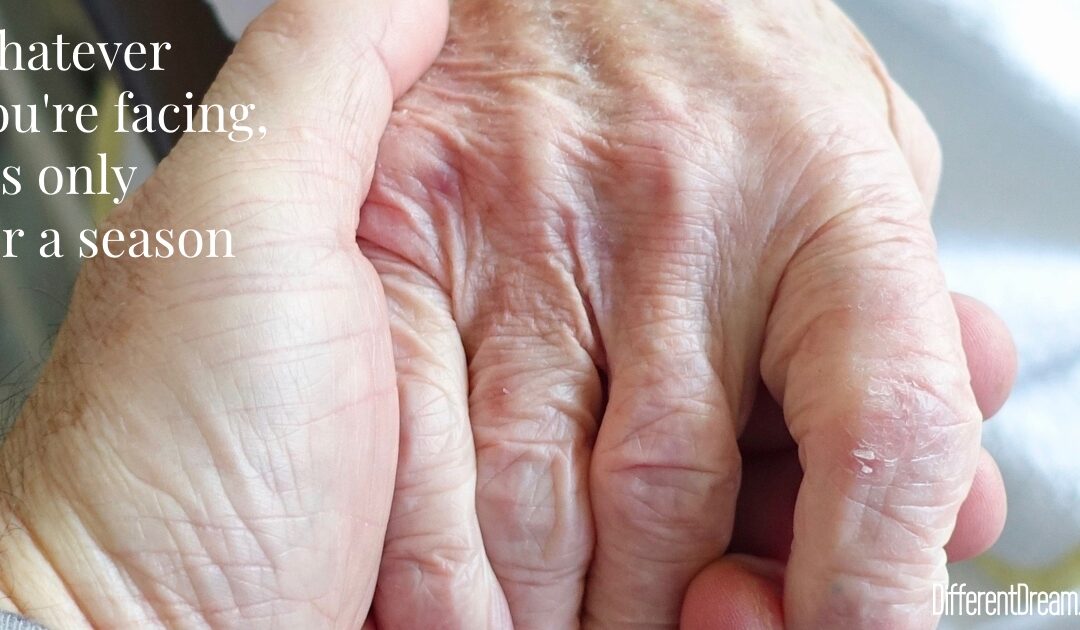
It is only for a season, though it may feel like forever. That’s a truth I cling to in hard times. Maybe it’s a word of hope you need to hear today, too.

Our son came down the driveway yesterday pulling a huge gooseneck flatbed trailer behind his gigantic work truck. I took his dramatic arrival in stride, it being 1 in a long string of dramatic arrivals that began with his birth in 1982.

My response to his first arrival wasn’t nearly as calm. I cried for hours after our baby was diagnosed with a life-threatening birth condition and flown 750 miles away for surgery. I cried at the first glimpse of him in NICU. I cried often as he endured surgery after surgery and procedure after procedure until his condition stabilized. I worried that my husband and I weren’t doing enough for our son.

That I wasn’t a good mom.
That he might die.
That our lives and his would always be wrapped up in caregiving and hospital stays and setbacks.

With time and distance, I can see that not only were my worries baseless, they obscured the truth.

That my husband and I were doing all we could for our baby.
That I was a good mom persevering during difficult circumstances.
That our son was alive and growing.
That this was a just a season of his life and of ours.

It was not forever.

Then I didn’t know that one day my son would park his gigantic truck and gooseneck trailer in a grassy spot in our acreage.
Then I didn’t know he would be sporting a bushy beard, a ponytail, and a farmer hat.
Then I didn’t know he would give me a big hug and say, “Are you ready to visit grandma?”
Then I didn’t know he would greet my mother, who’s health began failing a few months ago with great tenderness.
Then I didn’t know that after an hour of showing her pictures of his kids and his farm and playing Uno, he would notice that she was tired.
Then I didn’t know that he would kiss her with great tenderness and say, “I love you, Grandma. I love you.”

Now I do know—and he knows too—that his grandma’s illness is only for a season. A season, not for crying and worrying, but for loving well. For playing Uno. For sharing old memories and making new ones. For laughing and smiling. For hugs and kisses. For holding hands.

Whatever the difficult circumstances you are, whatever the reason for your tears and your worries, whatever loss you are facing, I want you to cling to this truth.

It is only for a season.
It may be a hard season.
It may be an unwanted season.
It may be a season of loss.
But it is only for a season.

Right now, you can’t imagine what waits on the other side of this season. 

But it will come.
It may be totally unexpected. 
But it will come.
It will be the fruits of seeds being planted in your present hardship. 
It will come.
And it will be good.

For our momentary, light affliction is producing for us an eternal weight of glory 
far beyond all comparison, 
while we look not at the things which are seen, 
but at the things which are not seen; 
for the things which are seen are temporal, 
but the things which are not seen are eternal.
2 Corinthians 4:17-18

Do you like what you see at DifferentDream.com? You can receive more great content by subscribing to the monthly Different Dream newsletter and signing up for the daily RSS feed delivered to your email.

By

Jolene Philo is the author of the Different Dream series for parents of kids with special needs. She speaks at parenting and special needs conferences around the country. She’s also the creator and host of the Different Dream websiteSharing Love Abundantly With Special Needs Families: The 5 Love Languages® for Parents Raising Children with Disabilities, which she co-authored with Dr. Gary Chapman, was released in August of 2019 and is available at local bookstores, their bookstore website, and at Amazon.

Author Jolene Philo
Archives

Categories

Subscribe for Updates from Jolene

Related Posts
What Makes Me Cry as a Caregiver?

What Makes Me Cry as a Caregiver?

What Makes Me Cry as a Caregiver?

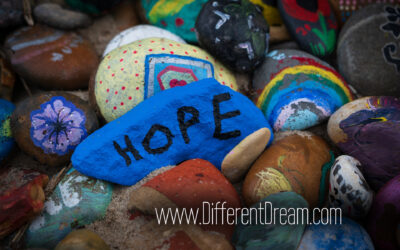
What makes me cry as a caregiver is a list that keeps getting longer. On this, the day before my 65th birthday, I’m writing down everything that makes me cry. Think of it as reverse bucket list. A bucket with a hole that leaks tears out my eyes. Do you have the picture in your head? Good.

What Makes Me Cry as a Caregiver?

  1. Imagining my parents receiving Dad’s diagnosis of multiple sclerosis. They were so young, only 29. They’d been married 8 years. They had 2 young children. They must have been devastated. Even so, they carried on and stepped into a new life, encouraged and supported by their families, their church, and their co-workers. My parents’ pluck and determination makes me cry, too.
  2. Remembering the surgical pain my son endured as a newborn. Newborns weren’t given pain medication during surgery until 1986, and our baby was born in 1982. If time travel was a thing, I would use it to correct the faulty research that caused such pain for my son and thousands of other newborns.
  3. Memories of the tiny town that gathered round us and our medically-fragile son during his early years. The town only had 92 people–even fewer now. But the residents have a long history of rallying around people with disabilities and their caregivers. They were Christ with skin on when we needed His presence in real, practical ways. They continue that practice to this very day.

To read the rest of What Makes Me Cry as a Caregiver, visit the Key Ministry blog for parents.

Do you like what you see at DifferentDream.com? You can receive more great content by subscribing to the monthly Different Dream newsletter and signing up for the daily RSS feed delivered to your email.

By

Jolene Philo is the author of the Different Dream series for parents of kids with special needs. She speaks at parenting and special needs conferences around the country. She’s also the creator and host of the Different Dream websiteSharing Love Abundantly With Special Needs Families: The 5 Love Languages® for Parents Raising Children with Disabilities, which she co-authored with Dr. Gary Chapman, was released in August of 2019 and is available at local bookstores, their bookstore website, and at Amazon.

Author Jolene Philo

Archives

Categories

Subscribe for Updates from Jolene

Related Posts

Milestones, Transitions and Rites of Passage

Milestones, Transitions and Rites of Passage

Milestones, Transitions and Rites of Passage

,Milestones, transitions and rites of passage are events parents anticipate and cherish. In this post, guest blogger Mark Arnold describes how he reframes those events as he and his wife parent their son who lives with additional needs.

 Milestones, transitions and rites of passage are part of every childhood and adolescence. Many of these events can be fraught for all families. For families of children with special needs they can also be a time of significant worry and sadness. We make unhealthy comparisons and are thrown into a cycle of grief as our children are shown to be different from what society understands as normal.

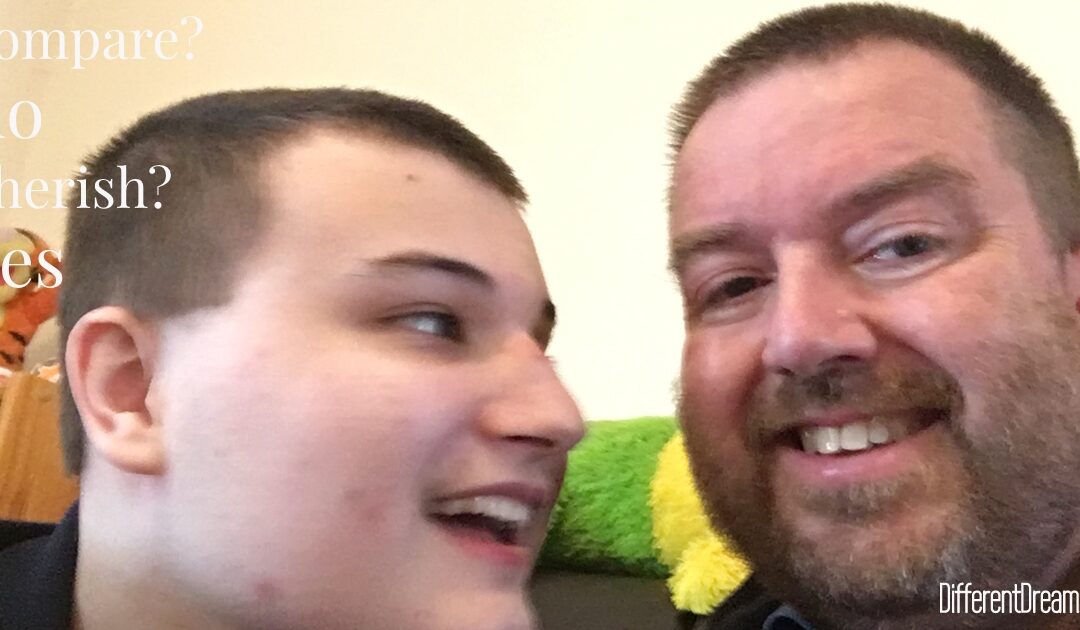
My own son was 18 last summer. Because of his various additional needs, his path of was never going to be the one of a typical 18-year-old. I have long understood this and love him for who he is. Even so, last August was hard. There was news coverage of 18-year-olds jumping excitedly in the air, celebrating their end of school exam results, and looking forward to heading to University. I realized that in a different world, my son might have been one of them. 

Did he mind not having any exam results? No, he has no concept of them. I was the one who was briefly but significantly affected. I was the one who temporarily felt a profound sense of loss.I realized what unhealthy comparison was once again doing to me and I chose to stop.

 A few moments later my sons’ laughter filled the room, and the cloud was lifted. I didn’t need to make comparisons. I could celebrate my son for who he is.

For all he brings to us.
For all we have learned by him being a part of our family.
For all that is different and better about us because of him. 

He doesn’t need a piece of paper to earn our love. He has it unconditionally. He has his own personal milestones, transitions and rites of passage on his own life journey. We’re right alongside him, helping him through them, celebrating them with him when they come along.

There’s a well-known TV ad in the United Kingdom—I live across the pond—where an opera singer uses the catchphrase Go Compare! When the ad comes on, I look at my son and smile. Whatever your reason for reading this post, maybe as a family member, a friend, a church children’s or youth team member, or a church leader, you can learn to smile too. You can go cherish the kids with additional needs in your world instead of go compare.

Do you like what you see at DifferentDream.com? You can receive more great content by subscribing to the monthly Different Dream newsletter and signing up for the daily RSS feed delivered to your email inbox. You can sign up for the first in the pop up box and the second at the bottom of this page.

By

Mark Arnold is the Additional Needs Ministry Director at Urban Saints, a leading national Christian children’s and youth organization. He is co-founder of the Additional Needs Alliance, a national and international advocate for children and young people with additional needs or disabilities. Mark is a Churches for All and Living Fully Network partner, a member of the Council for Disabled Children and the European Disability Network. He writes an additional needs column for Premier Youth and Children’s Work (YCW) magazine and blogs at The Additional Needs Blogfather. He is father to James, who has autism spectrum condition, associated learning disability, and epilepsy. To find out more about how Mark’s work can help you, contact him at: marnold@urbansaints.org or @Mark_J_Arnold.

Author Jolene Philo

Archives

Categories

Subscribe for Updates from Jolene

Related Posts

Making Every Day a Great Mother’s Day, Part 1

Making Every Day a Great Mother’s Day, Part 1

Making Every Day a Great Mother’s Day, Part 1

Making every day a great Mother’s Day seems like a long reach for many parents raising kids with special needs and disabilities. For guest blogger Heather Johnson, it’s a perspective born of loss, grief and love. In today’s post, she tells the origin story of her perspective. Next week, she’ll be back with tips for making every day a great Mother’s Day at your house.

I called my mom on Mother’s Day morning, 2002. She thanked me for sending her favorite flowers—red carnations. We chatted excitedly about her upcoming move from Ohio to Wisconsin. In just a few short weeks, she would be within five minutes of our family. We hadn’t been closer than a whole day’s drive for 45 years. Soon, she’d be able to walk with her grandkids, whom she’d only seen a handful of times, to the park across the street from her house. She’d push them on swings and scoop them up in her arms at the end of the slide.

A whole new chapter of life was about to begin for my mom and me. We needed that. She worked her tail off raising us three kids. Now I was up to my neck and beyond trying to raise our three, all adopted from Russia with a myriad of disabilities stemming from fetal exposure to alcohol (FASD). After so many losses in both our lives, we were looking for some close-by comfort and support from each other.

Before saying goodbye, Mom thanked me again for the carnations and added her often repeated philosophy—“Flowers should be for the living, not for the dead.” We laughed, said “I love you!” and hung up.

The next morning, I received a call. Mom was dead. Heart attack.

Turns out, our dreams didn’t turn out. She never moved to Wisconsin.

Our youngest of three was three when Mom died. I had significant needs at the time. Being a mom is hard. Add to that mothering kids with special needs. Add to that mothering three kids with special needs.

Are you a mother who suffers from exhaustion? Are you grieving never-ending losses—dying dreams needing to be replanted with different dreams? Are you depressed or anxious? I get that. My kids are grown up, but they will never grow out of their special needs. It’s essential for moms like us to attend to our own needs in order to attend to those of our kids. Here’s an illustration:

Every time I fly, the flight attendant gives specific instructions about oxygen masks. “Place your own mask on before helping your child.” Why? Because if parents pass out from lack of oxygen, they won’t be able to care for their children. The same is true with special needs parenting. If we don’t take care of ourselves first, we run the risk of burnout and becoming unable to care optimally for our kids with disabilities. We need our own on-going “oxygen masks” so we can care for our kids on this long-haul journey of special needs. That’s why I’ll return next week to talk about some of the oxygen masks that I use to honor my mother by making every day a great Mother’s Day for myself and my family.

Part 2

Do you like what you see at DifferentDream.com? You can receive more great content by subscribing to the monthly Different Dream newsletter and signing up for the daily RSS feed delivered to your email.

By

Heather MacLaren Johnson and her husband have three kids, all five and under when adopted from Russia. Now 29, 27, and 22, all need regular help with their multiple, permanent, invisible disabilities stemming from prenatal exposure to alcohol (FASD).

Heather has B.S. in Education and a doctorate in Clinical Psychology. She is the author of Grace, Truth, & Time: Facilitating Small Groups That Thrive and has published personal essays in The Wonder Years: 40 Women Over 40 on Aging, Faith, Beauty, and Strength (Kregel Publications) and Your Story Matters: Finding, Writing, and Living the Truth of Your Life (NavPress). She’s writing a memoir about her family’s journey through hidden disabilities and mental illness to encourage others to greater intimacy with God and each other through times of desolation and lament.

Heather and her husband of 27 years live with two horses, two dogs, two barn cats, and a bunch of silk plants she just dusts. Heather writes and photographs at www.truelifewithgod.com.

Author Jolene Philo

Archives

Categories

Subscribe for Updates from Jolene

Related Posts

Grief Happens at Different Seasons of Life in Caregiving Families

Grief Happens at Different Seasons of Life in Caregiving Families

Grief Happens at Different Seasons of Life in Caregiving Families

Grief happens at different seasons of life in caregiving families. That’s the lesson Kimberly Drew learned once again when her daughter had an unexpected grand mal seizure recently. In this post she talks about how she’s processing her emotions and adjusting to her family’s new reality.

My husband’s grandfather passed away recently at the age of 94. He was a WWII U.S. Navy veteran and had been married to his sweetheart for over 63 years. Our church provided some grief materials through Stephen’s Ministries. I received the first pamphlet recently. Our family members felt different levels of grief over his passing because he was a true family patriarch and man of God, but we also experienced a great sense of peace and hope because of how long and rich his life really was. That’s why I didn’t expect to read the pamphlet and have emotions that had nothing to do with his passing. 

You see, our daughter Abigail had a significant seizure a little over a week ago after being seizure-free for over a decade. Her previous seizure had been small, the result of weaning her off meds at the age of 8. Before that, her only seizures had occurred after her delivery. Her recent seizure was very different. What started as a cozy afternoon watching Hallmark in my bed together, turned into a 911 call and trip to the emergency room. For about a minute or so, we were truly terrified. While I am so grateful for her life and that she’s okay, her grand mal seizure took away our sense of safety and security in a matter of seconds. I found myself rereading the grief pamphlet and connecting with its Scriptures and information over that loss. I shed a lot of tears while processing it.

I have spoken to many parents of children with special needs over the years. Many of us are unaware  that what we consider to be a reaction to a hardship, trial, or caregiving duty is actually grief. The long-term care of a disabled loved one means that grief happens at different seasons of life, for example, during a medical crisis, physical changes, or losses. Grief has stages and being able to recognize them not only helps us heal, but also helps those around us understand what we are dealing with. 

My daughter’s seizure was unexpected, sudden, and traumatic, I have been walking around in shock since it happened. Emotionally, it brought me back to Abbey’s traumatic birth and the seizures that followed her delivery. I don’t like to visit that memory. The shock will pass, and in future I will have other phases of grief to process. But, I do not go through them alone. 

I often read Psalm 139, which speaks truth about many areas of life and to the grief that happens at different seasons of life. I am particularly drawn to verses 7 through 10 now and hope you will be encouraged to read it. Let these word from the Lord wash over you, and comfort you in your own stages of grief. 

Where can I go from your Spirit?
    Where can I flee from your presence?
If I go up to the heavens, you are there;
    if I make my bed in the depths, you are there.
 If I rise on the wings of the dawn,
    if I settle on the far side of the sea,
 even there your hand will guide me,
    your right hand will hold me fast.”

Do you like what you see at DifferentDream.com? You can receive more great content by subscribing to the monthly Different Dream newsletter and signing up for the daily RSS feed delivered to your email inbox. You can sign up for the first in the pop up box and the second at the bottom of this page.

By

Kimberly grew up and went to college in the small town of Upland, IN. She graduated from Taylor University with a degree in Elementary Education in 2002. While at TU, she married her college sweetheart and so began their adventure! Ryan and Kimberly have three amazing kids on earth (Abigail, Jayden, Ellie, and Cooper), and a baby boy waiting for them in heaven. Their daughter Abigail (Abbey) has multiple disabilities including cerebral palsy, a seizure disorder, hearing loss, microcephaly, and oral dysphagia. She is the inspiration behind Kimberly’s  desire to write. In addition to being a stay at home mom, Kimberly has been serving alongside her husband in full time youth ministry for almost fourteen years. She enjoys working with the senior high girls, scrapbooking, reading, and music. You can visit Kimberly at her website, Promises and Perspective.

Author Jolene Philo

Archives

Categories

Related Posts

Learning to Embrace a Special Life

Learning to Embrace a Special Life

Learning to Embrace a Special Life

Learning to embrace a special life as the parent of a child with a disability is a journey. New guest blogger, Kristin Faith Evans, describes the spiritual crisis that brought her to acceptance and shares 4 practices that bring her joy and peace.

Beginning My Unexpected Journey

As long as I could remember, I had believed in God and trusted Him. Nothing could shake my faith—or so I believed. We thought we had it all. My husband, Todd, was in his third year of serving as the Director of Youth Ministries, our son’s health and developmental progress were stabilizing with his extremely rare genetic disorder, and we had just discovered that I was pregnant with our second child. We felt so blessed by God. Then, I would begin a journey that took me through a nightmare pregnancy and delivery; learning that our daughter, Bethany Grace, had sporadically developed a more-severe genetic disorder called Cri du Chat Syndrome; three months in the NICU; the continual battle to save both of our children’s lives; then my dark crisis of faith and long war with severe depression and anxiety.

Obsessing with Finding Answers

Shortly after Bethany Grace’s homecoming from the NICU, I become overwhelmed by the stress, anxiety, grief, and guilt. I spiraled into a deep pit of depression and began to walk through a dark, terrifying wilderness of spiritual anguish. Doubt. Anger. Disillusionment. My life-long faith that I had naively believed was unshakable had easily shattered. I was desperate to understand and find answers that made sense to me. How could God be sovereign and benevolent, and at the same time allow my daughter and son to suffer like this? Why is he letting all this happen to our family?

The more I questioned, the further I distanced myself from God, and the more powerful the grip of depression grew. “But I trust in you, O Lord; I say, ‘You are my God’” (Psalms 31:14, ESV). I could no longer bring myself to utter this prayer. I found myself not even wanting to go to church anymore.

Discovering What Faith Is to Me

Sitting on my therapist’s couch, her questions helped me realize that I had a choice to make. I could continue to fight reality and be angry with God, trudging on through each day miserable; or I could release the need to find answers or understand. Two days later, I found myself hiking through the woods where I came upon a shimmering lake. The colors reflecting off the boulders created a magnificent scene. How could God create something so good and beautiful but allow darkness and pain? Then it hit me—Is this what faith is? I don’t understand how God could be good and have allowed our family to endure all of this suffering, but I let go of the need to know. I embrace the mystery of faith. “I trust you, God.” I finally began to understand and discover deep meaning and purpose in my life. I began Learning to embrace a special life, to be free to sing a new and joyful song throughout my days. Now, I am not saying that when I grew in my trust in God that my depression resolved on its own. I still had to work very hard in therapy. But letting go of the need for answers freed my soul and lightened my heart which helped me in my recovery from depression. I also began to depend on God on my journey to wholeness and healing.

So, how does learning to embrace a special life cultivate joy each day?

I have found that sometimes experiencing joy takes making a choice, despite how difficult and painful my circumstances are that day. These four practices have helped me live in a more joyful mood throughout most days:

  1. Living in gratitude for each new day (even if I can only find one thing to be thankful for)
  2. Trusting God’s good promises to me in Scripture
  3. Remembering all the times that God has helped my family and blessed us
  4. Fully enjoying the little moments

I hope that you, too, are learning to embrace a special life in deeper ways and find joy on your unique journey.

Do you like what you see at DifferentDream.com? You can receive more great content by subscribing to the monthly Different Dream newsletter and signing up for the daily RSS feed delivered to your email inbox. You can sign up for the first in the pop up box and the second at the bottom of this page.

By

Kristin lives with her husband, Todd, and their two children in the Nashville, TN area. As an author and mental health therapist, her greatest passion is walking with others on their journey to deeper emotional, psychological, and spiritual wholeness. As both her children have rare genetic disorders, Kristin especially loves supporting other parents of children with special needs. She hopes that you may find encouragement and support through her two websites and blogs, www.KristinFaithEvans.com and www.SpecialNeedsMomsBlog.com.

Author Jolene Philo

Archives

Categories

Related Posts