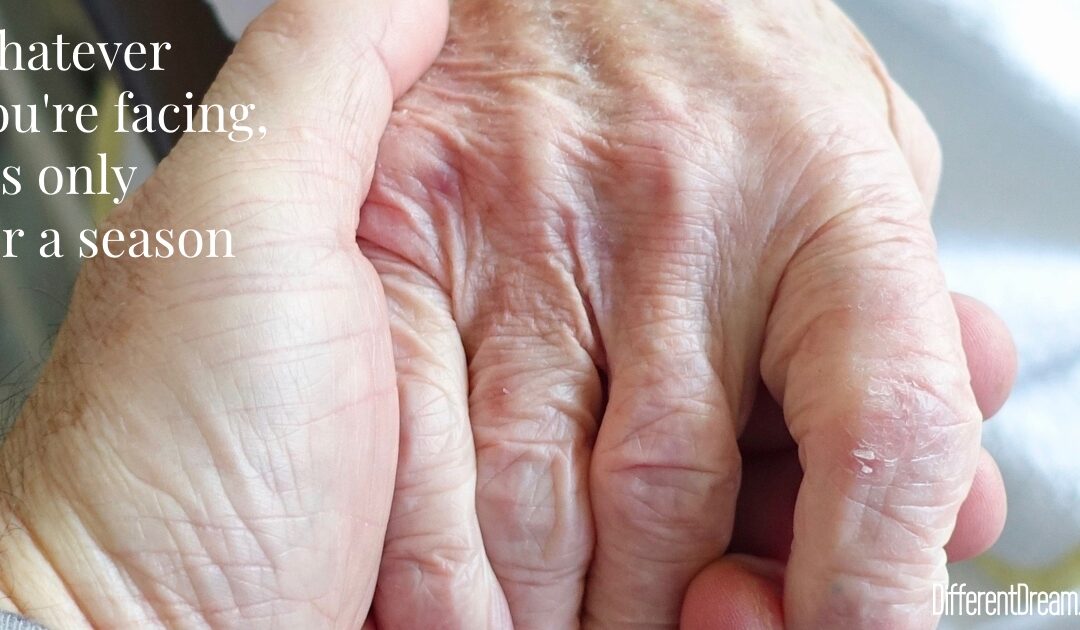
Professional Bullying Is Not Okay

Professional Bullying Is Not Okay

Professional Bullying Is Not Okay

Professional bullying is not okay. Guest blogger Trish Shaeffer has come to recognize this tactic–not from every care professional who works with her son, of course–and to advocate on his behalf. Today she encourages you to do the same.

Professional bullying is not okay. I’m not talking about semi-professional, resident, schoolyard bullies. I’m talking about the bullying by care professionals. From teachers, doctors, surgeons, therapists, nurses, principals, and others. 

I’m sure at one time on another we have felt bullied to make a decision for our kids with special needs. To feel pushed in one direction or another. Being beaten over the head by their opinion or advice. Over and over again until our head spins. 

Then the parenting guilt kicks in with it. We start asking ourselves if we are doing the right thing? Maybe we were wrong? Maybe they know best? Maybe our gut or heart is wrong? We second guess ourselves.

I’ve been a victim of bullying and guilt in this way. It made me feel lower than low. It made me at one point feel like I was a bad parent. How could I know best when I’m being told the care I want for my son is not the best? 

We feel bullied into agreeing with their opinions because they are the professionals, right?

This is where we need to pause. 
Take a deep breath. Stand our ground. 
Follow our gut and our heart because professional bullying is not okay. 

It’s someone’s opinion. Their best guess. Nothing more. They don’t know your child like you do, so be firm.  Too many times I see this and dealt with it myself. Sometimes it ends up in more heartache than where you started. 

I wish it was different. I wish more professionals accepted a parents or guardians wishes and concerns. Yes, they went to college and became professionals. But a degree is not the be all and end all be. Who knows the patient or student best matters when discussing what a child’s care should look like. 

It took a few go arounds for me as a care giver to finally stand up, disagree with the professionals opinions, to say “No!” and not back down! I’m sure at this point I’m deemed to be a handful or a difficult parent by some professionals. I don’t care as much as I used to. 

Who else will look out for my son if I don’t?
Who else will be his cheerleader? 

The word “no” is powerful. 

It can inspire change.
Acceptance.
Defiance.
Strength.
Teamwork.
Self-worth. 
And much more.

You have a voice. Your opinion matters. Remember that. I wish someone told me this a long time ago, which is why I’m sharing it now.

Saying “No!” is okay.
Use it whenever you feel you need to.
Stand up and speak and expect to be heard.
You have the power.

Professional bullying is not okay.

Do you like what you see at DifferentDream.com? You can receive more great content by subscribing to the monthly Different Dream newsletter and signing up for the daily RSS feed delivered to your email inbox. You can sign up for the first in the pop up box and the second at the bottom of this page.

By

Trish Shaeffer is the mom of 3 active boys, 2 of whom have special needs. She’s a peer supporter for Parent to Parent and volunteers with the United Cerebral Palsy Network, Special Olympics, and the United Way. She’s also an equine volunteer at Leg Up Farm. She’s married to her best friend and biggest supporter, Chris Schaeffer.

Author Jolene Philo
Archives

Categories

Subscribe for Updates from Jolene

Related Posts
Extended Family Members Can Use the 5 Love Languages to Encourage Caregiving Parents

Extended Family Members Can Use the 5 Love Languages to Encourage Caregiving Parents

Extended Family Members Can Use the 5 Love Languages to Encourage Caregiving Parents

Extended family members can use the 5 love languages to encourage caregiving parents. Sharing Love Abundantly in Special Needs Families: The 5 Love Languages® for Parents Raising Children with Disabilities walks grandparents, siblings, aunts, uncles, cousins, and churches through the process.

The first order of business is to determine the love languages of the members of a family you love. Paper and pencil quizzes for adults, teens, and children are located at the end of Chapter 1 of Sharing Love Abundantly. Online versions are available at www.5lovelanguages.com. With that information in hand, all you need is creativity and intentionality to begin speaking each of the 5 love languages to caregiving parents and their kids.

If your creative juices could use a jump start, check out Chapter 8 of Sharing Love Abundantly. It offers practical strategies about how extended family members can use the 5 love languages to encourage caregiving parents. Here are a few examples:

  • Words of Affirmation: Send a congratulatory note to a family after the birth of a child with a birth anomaly or medical condition.
  • Quality Time: Spend a morning or afternoon a week with a caregiving family learning to care for their loved one with special needs. Then arrange to come every few weeks to be with the loved one while the caregivers get away for a few hours.
  • Gifts: Mail gas cards or grocery cards (anonymously if you wish) to ease the financial burdens many caregiving families deal with every day.
  • Acts of Service: Make a double batch of your favorite casserole and drop off one pan to a caregiving family you know. (Hint: Do some sleuthing beforehand regarding any dietary restrictions or food allergies so the whole family can enjoy the meal.)
  • Physical Touch: Provide tactile experiences for the entire family. For example, horseback rides for the family or free childcare while parents go dancing.

For more ideas about how extended family members can use the 5 love languages to encourage caregiving families, check out Sharing Love Abundantly. Every suggestion in the book was provided by parents raising kids with special needs and disabilities. Be assured they will encourage the caregiving family you love in practical and profound ways.

Links to other articles in this series:

The Love Languages and Special Needs Families: A Good Combination

Basic Love Language Concepts to Ease Stress and Increase Joy in Caregiving Families

Threats to Caregiving Marriages and How To Fight Them 

Love Is a Child’s First Language

Determining the Love Language of a Child with Special Needs or a Disability 

Ways to Speak Words of Affirmation and Quality Time to Kids with Special Needs 

Ways To Speak Gifts and Acts of Service to Kids with Special Needs 

Speaking Healthy Physical Touch to Kids with Special Needs

Using the Love Languages with Siblings of Kids with Special Needs and Disabilities 

Communicating Your Child’s Love Language to Medical Professionals

Communicating Your Child’s Love Language to Educators 

Do you like what you see at DifferentDream.com? You can receive more great content by subscribing to the monthly Different Dream newsletter and signing up for the daily RSS feed delivered to your email.

By

Jolene Philo is the author of the Different Dream series for parents of kids with special needs. She speaks at parenting and special needs conferences around the country. She’s also the creator and host of the Different Dream websiteSharing Love Abundantly With Special Needs Families: The 5 Love Languages® for Parents Raising Children with Disabilities, which she co-authored with Dr. Gary Chapman, was released in August of 2019 and is available at local bookstores, their bookstore website, and at Amazon.

Author Jolene Philo

Archives

Categories

Subscribe for Updates from Jolene

Related Posts

Finding True Rest as a Caregiver

Finding True Rest as a Caregiver

Finding True Rest as a Caregiver

Finding true rest as a caregiver is an elusive quest. Yet, as guest blogger Heather Johnson has discovered, it is also an essential pursuit. Today she describes where she goes when she needs true rest as a caregiver. 

A cedar tree trunk, its branches stripped, serves as a railing along the stairs to our master bedroom. I welcome its invitation to help me pull myself up. I am tired. Bone tired. My back and legs ache.

 Once in bed, I feel the cotton sheets and the cool night breeze wafting in from the nearby window. I sigh, exhaling this day’s work. I need physical rest.

 Though my body begs for sleep, my mind defies the plea. The hamster wheel inside my head spins with thoughts. Not worrisome thoughts. Just thoughts. I toss and turn, praying my mind goes blank. I need mental rest. I need the peace that comes with finding true rest as a caregiver.

 As an empty-nest mother of three kids in their twenties with multiple special needs, you’d think my load would be lighter by now. But parents like me know differently. Our parenting work is never done. In some ways, parenting adult children with special needs can be more complicated when they’re not under our roof anymore. There are adult caregivers to secure. There are more meetings to attend. There are attorneys to draft special needs trusts so our kids will have funds for their care that they can’t manage on their own. We get weary. But we press forward because of love and try not to worry. I need soul rest. I think I need soul rest more than any other kind.

 I need to know the weight of our kids’ needs doesn’t depend completely on me and my husband or even other human caretakers. I need to know there’s a love so large, so expansive, so perfect, that will hold our kids and help them long after I’m gone.

 How do you find rest for your body, mind, and soul? How do you know in your bones that all will be well?

 For me, I turn to Genesis—to the beginning—and read about God who created, who called everything he created “good”, and who rested afterward. Why did God rest if God doesn’t get tired? I wonder if God’s rest was time to survey—time and space to say “it is good.” I wonder if “good” in our daily lives can mean “good enough” because we aren’t perfect. Maybe “good enough” is good enough?

 In a culture that implies we never do enough, that we never have enough, that we never are enough, that we’re never good enough, our souls are at-risk. These cultural messages, if absorbed, make us weary and worried. Our souls begin to wither. We forget who we are and what we really need—to know we’re never alone, that we’re perfectly loved, that our loved ones will be looked after and loved always. Our soul needs a deep well of refreshing truth to counter our culture. We can take frequent, cool drink from the well of truth that never dries and say until our thirst is quenched:

 “Today, I did enough, I have enough, I am enough.”

 For me, meditating on particular scriptures is where I find rest for my body, mind and soul. For example:

 “Come to me, all you who are weary and burdened, and I will give you rest. Take my yoke upon you and learn from me, for I am gentle and humble in heart, and you will find rest for your souls. For my yoke is easy and my burden is light.”  Matthew 11:28-30

 Will you practice saying to yourself, “good enough”? Will you pursue finding true rest as a caregiver? Will you practice delighting in all you do? Will you find your own soul rest? What would that be? 

A walk in the woods or some other nature setting. 
Unplugging from screens. 
Practicing meditation/mindfulness. 

All are scientifically proven to improve physical and mental health. Whatever you choose, true rest revitalizes body, mind, and spirit. And when we’re truly rested in all three ways, we are better able to love our children, whatever their ages and needs, because we will be loving ourselves well first.

Do you like what you see at DifferentDream.com? You can receive more great content by subscribing to the monthly Different Dream newsletter and signing up for the daily RSS feed delivered to your email.

By

Heather MacLaren Johnson and her husband have three kids, all five and under when adopted from Russia. Now 29, 27, and 22, all need regular help with their multiple, permanent, invisible disabilities stemming from prenatal exposure to alcohol (FASD).

Heather has B.S. in Education and a doctorate in Clinical Psychology. She is the author of Grace, Truth, & Time: Facilitating Small Groups That Thrive and has published personal essays in The Wonder Years: 40 Women Over 40 on Aging, Faith, Beauty, and Strength (Kregel Publications) and Your Story Matters: Finding, Writing, and Living the Truth of Your Life (NavPress). She’s writing a memoir about her family’s journey through hidden disabilities and mental illness to encourage others to greater intimacy with God and each other through times of desolation and lament.

Heather and her husband of 27 years live with two horses, two dogs, two barn cats, and a bunch of silk plants she just dusts. Heather writes and photographs at www.truelifewithgod.com.

Author Jolene Philo

Archives

Categories

Subscribe for Updates from Jolene

Related Posts

It Is Only for a Season

It Is Only for a Season

It Is Only for a Season

It is only for a season, though it may feel like forever. That’s a truth I cling to in hard times. Maybe it’s a word of hope you need to hear today, too.

Our son came down the driveway yesterday pulling a huge gooseneck flatbed trailer behind his gigantic work truck. I took his dramatic arrival in stride, it being 1 in a long string of dramatic arrivals that began with his birth in 1982.

My response to his first arrival wasn’t nearly as calm. I cried for hours after our baby was diagnosed with a life-threatening birth condition and flown 750 miles away for surgery. I cried at the first glimpse of him in NICU. I cried often as he endured surgery after surgery and procedure after procedure until his condition stabilized. I worried that my husband and I weren’t doing enough for our son.

That I wasn’t a good mom.
That he might die.
That our lives and his would always be wrapped up in caregiving and hospital stays and setbacks.

With time and distance, I can see that not only were my worries baseless, they obscured the truth.

That my husband and I were doing all we could for our baby.
That I was a good mom persevering during difficult circumstances.
That our son was alive and growing.
That this was a just a season of his life and of ours.

It was not forever.

Then I didn’t know that one day my son would park his gigantic truck and gooseneck trailer in a grassy spot in our acreage.
Then I didn’t know he would be sporting a bushy beard, a ponytail, and a farmer hat.
Then I didn’t know he would give me a big hug and say, “Are you ready to visit grandma?”
Then I didn’t know he would greet my mother, who’s health began failing a few months ago with great tenderness.
Then I didn’t know that after an hour of showing her pictures of his kids and his farm and playing Uno, he would notice that she was tired.
Then I didn’t know that he would kiss her with great tenderness and say, “I love you, Grandma. I love you.”

Now I do know—and he knows too—that his grandma’s illness is only for a season. A season, not for crying and worrying, but for loving well. For playing Uno. For sharing old memories and making new ones. For laughing and smiling. For hugs and kisses. For holding hands.

Whatever the difficult circumstances you are, whatever the reason for your tears and your worries, whatever loss you are facing, I want you to cling to this truth.

It is only for a season.
It may be a hard season.
It may be an unwanted season.
It may be a season of loss.
But it is only for a season.

Right now, you can’t imagine what waits on the other side of this season. 

But it will come.
It may be totally unexpected. 
But it will come.
It will be the fruits of seeds being planted in your present hardship. 
It will come.
And it will be good.

For our momentary, light affliction is producing for us an eternal weight of glory 
far beyond all comparison, 
while we look not at the things which are seen, 
but at the things which are not seen; 
for the things which are seen are temporal, 
but the things which are not seen are eternal.
2 Corinthians 4:17-18

Do you like what you see at DifferentDream.com? You can receive more great content by subscribing to the monthly Different Dream newsletter and signing up for the daily RSS feed delivered to your email.

By

Jolene Philo is the author of the Different Dream series for parents of kids with special needs. She speaks at parenting and special needs conferences around the country. She’s also the creator and host of the Different Dream websiteSharing Love Abundantly With Special Needs Families: The 5 Love Languages® for Parents Raising Children with Disabilities, which she co-authored with Dr. Gary Chapman, was released in August of 2019 and is available at local bookstores, their bookstore website, and at Amazon.

Author Jolene Philo

Archives

Categories

Subscribe for Updates from Jolene

Related Posts

What Makes Me Cry as a Caregiver?

What Makes Me Cry as a Caregiver?

What Makes Me Cry as a Caregiver?

What makes me cry as a caregiver is a list that keeps getting longer. On this, the day before my 65th birthday, I’m writing down everything that makes me cry. Think of it as reverse bucket list. A bucket with a hole that leaks tears out my eyes. Do you have the picture in your head? Good.

What Makes Me Cry as a Caregiver?

  1. Imagining my parents receiving Dad’s diagnosis of multiple sclerosis. They were so young, only 29. They’d been married 8 years. They had 2 young children. They must have been devastated. Even so, they carried on and stepped into a new life, encouraged and supported by their families, their church, and their co-workers. My parents’ pluck and determination makes me cry, too.
  2. Remembering the surgical pain my son endured as a newborn. Newborns weren’t given pain medication during surgery until 1986, and our baby was born in 1982. If time travel was a thing, I would use it to correct the faulty research that caused such pain for my son and thousands of other newborns.
  3. Memories of the tiny town that gathered round us and our medically-fragile son during his early years. The town only had 92 people–even fewer now. But the residents have a long history of rallying around people with disabilities and their caregivers. They were Christ with skin on when we needed His presence in real, practical ways. They continue that practice to this very day.

To read the rest of What Makes Me Cry as a Caregiver, visit the Key Ministry blog for parents.

Do you like what you see at DifferentDream.com? You can receive more great content by subscribing to the monthly Different Dream newsletter and signing up for the daily RSS feed delivered to your email.

By

Jolene Philo is the author of the Different Dream series for parents of kids with special needs. She speaks at parenting and special needs conferences around the country. She’s also the creator and host of the Different Dream websiteSharing Love Abundantly With Special Needs Families: The 5 Love Languages® for Parents Raising Children with Disabilities, which she co-authored with Dr. Gary Chapman, was released in August of 2019 and is available at local bookstores, their bookstore website, and at Amazon.

Author Jolene Philo

Archives

Categories

Subscribe for Updates from Jolene

Related Posts

Discovering the Gift of Simple Moments: Ways to Create Special Family Memories

Discovering the Gift of Simple Moments: Ways to Create Special Family Memories

Discovering the Gift of Simple Moments: Ways to Create Special Family Memories

Discovering the gift of simple moments while raising kids with special needs requires a new set of eyes. Kristin Faith Evans is learning to capture those moments and share them with her family. She explains how she does it in this post.

“What dat?”

“Fireflies, Honey. It’s fireflies!”

My ten-year-old daughter, Bethany Grace, and I were swinging on the front porch. Lightning bugs began to dance around the yard. I marveled at her anticipation for the next one to flash. Then the next. Every time, her face lit up like the glow from the bug, and so did mine. We had never really stopped to just sit and watch fireflies before.

We created this special memory in the Summer of 2020, when the Covid pandemic taught our family even more about the gift of enjoying simple moments together. Both of my children live with rare genetic disorders and complex medical conditions. So, going into isolation was not even a question for our family. 

We began to create a fun backyard adapted to Bethany Grace’s abilities. We repaired the playset, added a firepit and furniture, installed a small above-ground pool, and planted a garden. We even placed chairs and a swing on our front porch. We spent more time playing outside together in the following four months than we had in the past seven years combined.

Discovering the Gift of Simple Moments by Living in the Present

I often find myself worrying about Bethany Grace’s future and grieving the loss of a typical family life. She was born with a severe chromosomal disorder called Cri du Chat Syndrome which causes significant intellectual disabilities, developmental delays, and medical fragility. Due to frequent medical emergencies, we do not know how much longer we will have to spend with her. And I will never experience those big moments—planning her wedding or witnessing her baby’s birth. But I have realized that living in future worry and sadness pulls me away from enjoying my family today. I have discovered that the little present moments are what really create deep meaning and purpose in my life.

Discovering the Gift of Simple Moments by Creating Opportunities 

Intentionally slowing down and living in the present can help us discover ways to enjoy simple moments together. Here are some ideas for creating special family memories (adapt according to your family’s needs):

  • Plan fun theme meals
  • Hold little celebrations
  • Sit on the porch
  • Have a picnic in the yard or living room
  • Play a game at dinner
  • Watch a movie on the floor with blankets and pillows
  • Cook a meal at the table (fondue, pancakes on an electric griddle, etc.) 
  • Go for a walk
  • Build a fire pit
  • Plant a garden
  • Gaze at the stars
  • Watch fireflies
  • Look for glimpses of God’s beauty

Those fireflies glowed for only a brief moment in time; but that memory we made together will last forever. Simply stopping to swing on the porch together created the opportunity for us to experience that magical moment.

What ideas do you have that could help other families create a space for discovering the gift of simple moments and special family memories?

Do you like what you see at DifferentDream.com? You can receive more great content by subscribing to the monthly Different Dream newsletter and signing up for the daily RSS feed delivered to your email inbox. You can sign up for the first in the pop up box and the second at the bottom of this page.

By

Kristin lives with her husband, Todd, and their two children in the Nashville, TN area. As an author and mental health therapist, her greatest passion is walking with others on their journey to deeper emotional, psychological, and spiritual wholeness. As both her children have rare genetic disorders, Kristin especially loves supporting other parents of children with special needs. She hopes that you may find encouragement and support through her two websites and blogs, www.KristinFaithEvans.com and www.SpecialNeedsMomsBlog.com.

Author Jolene Philo

Archives

Categories

Subscribe for Updates from Jolene

Related Posts