Jesus Loves Me This I Know

Jesus Loves Me This I Know

Jesus Loves Me This I Know

Jesus loves me is a familiar song to many. In this post Mark Arnold describes how God used it to assure his fatherly heart that his autistic son is loved by our heavenly Father. May it assure your heart as well.

Jesus loves me this I know,
For the Bible tells me so,
Twenty-somethings to him belong,
They are weak, but he is strong.

Yes, Jesus loves me.
The Bible tells me so.

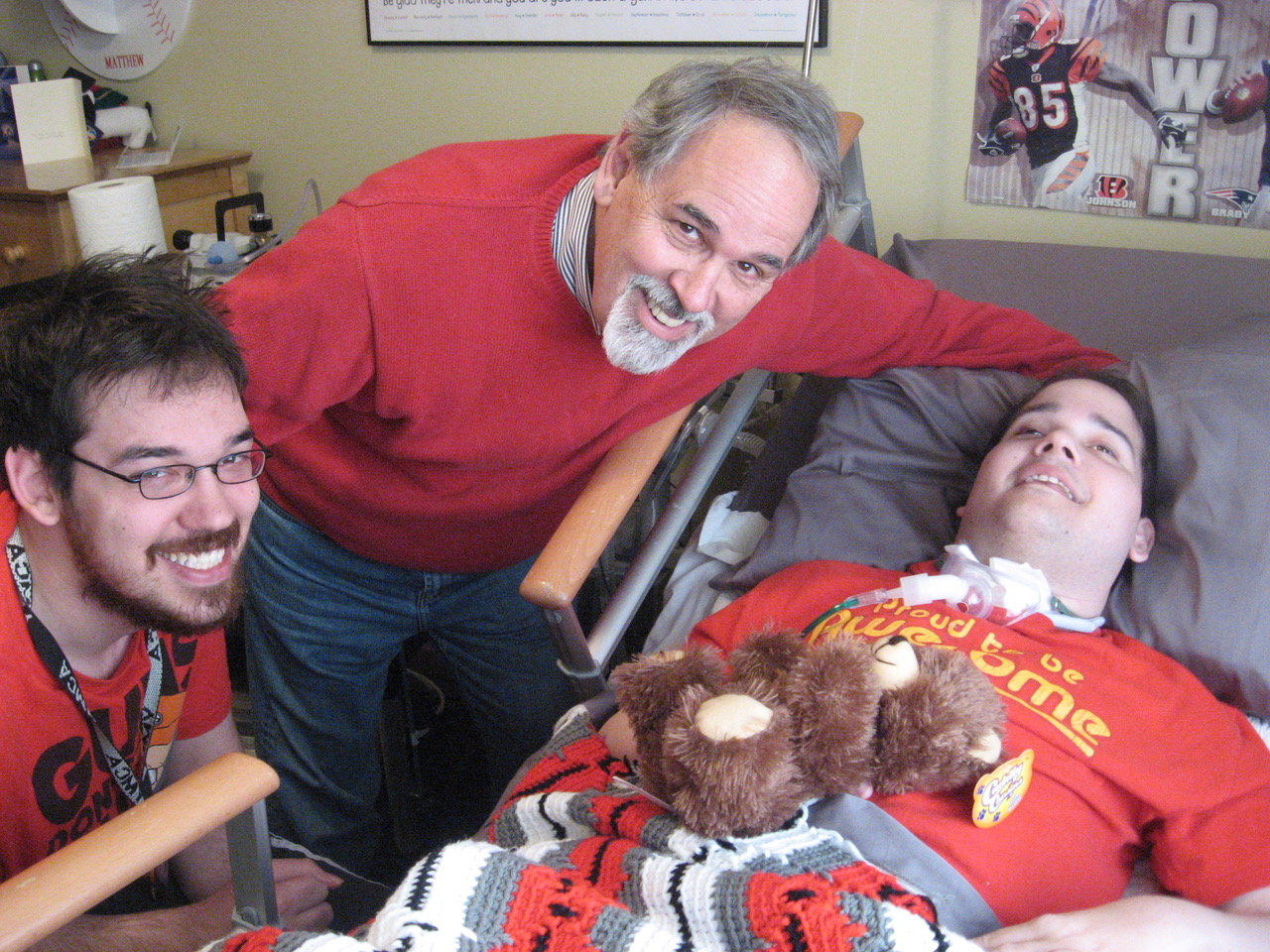
Ever since James, our son who has almost no speech communication, was a tiny baby, I have sung over him that much-loved old chorus. Over the years, he has been able to join in through words and sounds. We adapted the words as James grew, replacing “little ones” with “teenagers” and more recently, with the “twenty-somethings” version above.

Often, as we sing or say these words together, joy spreads across James’ face. Perhaps it is the familiarity of the words. Perhaps it is the time we are spending together. I also believe that Jesus joins us in that space, that his voice is added to ours. He ministers to James as we sing, and I believe that James responds to that.

James and I recently had the great privilege of being part of a BBC 4 Sunday Worship recording that was broadcast on November 17, 2024. The service was focused on and presented by autistic people.

We were recording in the middle of the day, so I wasn’t sure how James would respond. He did magnificently, his voice joining mine as we said the words together, James using words and sounds to take part.

As we listened to the broadcast, James didn’t particularly respond to his voice on the radio. When it cut to a beautifully sung version, James looked up, and a joyful smile spread across his face. I smiled back, tears welling in my eyes.

Many years ago, I talked to someone about my worries about James being unable to speak. She told me that his voice would be heard across the world. I didn’t know what to make of it then. Today I have a glimpse of what God was saying through her.

BBC Radio 4 Sunday Worship is heard by 2 million people. The blog I write is read across the world. James is seen, heard, and known by millions. He is seen, heard, known, and loved by God.

Yes, Jesus loves him.
The Bible tells me so.

Do you like what you see at DifferentDream.com? You can receive more great content by subscribing to the monthly Different Dream newsletter and signing up for the daily RSS feed delivered to your email.

Photo by Kelly Sikkema on Unsplash

By

Mark Arnold is the Additional Needs Ministry Director at Urban Saints, a leading national Christian children’s and youth organization. He is co-founder of the Additional Needs Alliance, a national and international advocate for children and young people with additional needs or disabilities. Mark is a Churches for All and Living Fully Network partner, a member of the Council for Disabled Children and the European Disability Network. He writes an additional needs column for Premier Youth and Children’s Work (YCW) magazine and blogs at The Additional Needs Blogfather. He is father to James, who has autism spectrum condition, associated learning disability, and epilepsy. To find out more about how Mark’s work can help you, contact him at: marnold@urbansaints.org or @Mark_J_Arnold

Author Jolene Philo
Archives

Categories

Subscribe for Updates from Jolene

Related Posts

Does God Speak Dutch?

Does God Speak Dutch?

Does God Speak Dutch?

Does God Speak Dutch? is an unusual way to begin a Different Dream post during the Christmas season. I encourage you to read on and let guest blogger Steve Harris explain the connection. It’s a good one you won’t want to miss!

This December Andy Williams will remind us often that Christmas is the “most wonderful” and “happ-happiest season of the year!” It’s easy to see why. Festive lights, frosted cookies, family parties, presents under a tree. Favorite movies are part of the fun too. One I enjoy is Miracle on 34th Street. It was released in 1947 and re-made in 1994.

My favorite scene is when the little girl, a Dutch war orphan, wants to see Santa at Macy’s. “She doesn’t speak English,” explains her adopted mom, “but was sure you could talk with her.” Santa pauses, smiles, then tenderly lifts the child onto his lap. The two begin to visit and sing—in Dutch. Her guardian tears up. I dare you to watch Miracle on 34th street Dutch girl scene without getting a little weepy yourself.

Double-dog dare you.

It’s a sweet picture of a remarkable spiritual truth for parents of children who are disabled and have special needs. When I was a new dad of a baby born with spina bifida, someone gave me a short story to read. The title was Welcome to Holland written by Emily Perl Kingsley. She was one of the first writers on Sesame Street and the mom of a son with Down Syndrome. In my 44 years of parenting two sons with disabilities, it remains the most powerful, honest, and helpful perspective I’ve ever read for parents like us.

Get ready for Kleenex Number 2.

Here’s a short summary of Kingsley’s amazing analogy. Joyfully anticipating the birth of a child is like planning a dream vacation to Italy. Your plane lands and the attendant announces, “Welcome to Holland!”

“Holland? That’s not right. We’re supposed to be in Italy.” The surprise, shock—and yes, the sadness—of that new reality will be part of us forever. But then come new realities and adjustments, and the life-saving truth that there are also wonderful—can we even say glorious?—things about Holland.

The Miracle on 34th street Dutch girl scene and Welcome to Holland revealed a truth for me that crystallized into questions that go way beyond fuzzy, greeting card sentimentality.

Did God arrive with us in Holland?
Is He here now?
Does He know how all of this feels?
Most importantly, does God speak Dutch?

I believe He does.

He is with us on every step of our parenting journey. He speaks our language. He knows how we feel. He knows the words we need to strengthen and encourage us, though I may not always hear them. I’ve learned that sadness can create spiritual deafness. But God continues to speak, in words accessible through His Word, in a language I need to listen to, learn, and understand. It is a language of presence and purpose.

It is a language of love.

Dad and Mom, may His words be clear to you this season and all through the new year. Merry Christmas to you and your family!

Do you like what you see at DifferentDream.com? You can receive more great content by subscribing to the monthly Different Dream newsletter and signing up for the daily RSS feed delivered to your email.

Windmill Image by piccolomondo from Pixabay
Santa Claus Photo by Srikanta H. U on Unsplash

By

Steve Harris—www.steveharrisauthor.com—recently published “Dads Like Us: A Survival Guide for Fathers Raising a Child with Disabilities.” He lives with his wife, Sue, in Lanesboro, Minnesota. Reach him at steveharrisDLU@gmail.com.

Author Jolene Philo

Archives

Categories

Subscribe for Updates from Jolene

Related Posts

This Thanksgiving I’m Grateful for Grief

This Thanksgiving I’m Grateful for Grief

This Thanksgiving I’m Grateful for Grief

This Thanksgiving I’m grateful for grief. That statement is going to make family members scratch their heads when we celebrate the holiday together and I announce that this Thanksgiving I’m grateful for grief. Chances are, those words are making you, as a family caregiver well acquainted with grief, scratch your head as well.

Five years ago, grief wouldn’t have topped my thankfulness list. Not because I lacked experience with grief…

…starting as a child in a home where caring for an ill father was our family’s chief concern,

…then as young parent caring for a medically fragile baby,

…and finally, as one of three adult children managing our mother’s care as her health failed.

During those days of constant caregiving, grief was my frequent companion. I had little time or energy to address it. Only now, with both my parents released from long suffering and our son an independent adult, have I been able to reflect upon my grief. What I have discovered in the process is yielding a cornucopia of blessings that explain why this Thanksgiving, I’m grateful for grief. I’d like to share just 3 of them with you.

  1. My dad lived with multiple sclerosis for 38 years. For 24 of them he lived in the home where my siblings and I were raised. When his needs grew too much for Mom to handle, he resided in a long-term care facility for 14 years. Every day he lost something to his terrible disease. Dad could have complained about what he could no longer do. Instead, he joked about his fumbling fingers. He grinned wide at visitors and caregivers when he couldn’t remember their names.

To read the rest of This Thanksgiving I’m grateful for Grief, visit the Hope Anew website.

Do you like what you see at DifferentDream.com? You can receive more great content by subscribing to the monthly Different Dream newsletter and signing up for the daily RSS feed delivered to your email.

Photo by Mon Esprit on Unsplash

By

Jolene Philo is the author of several books for the caregiving community. She speaks at parenting and special needs conferences around the country. Sharing Love Abundantly with Special Needs Families: The 5 Love Languages® for Parents Raising Children with Disabilities, which she co-authored with Dr. Gary Chapman, was released in August of 2019 and is available at local bookstores, their bookstore website, and Amazon. See Jane Dig!, the fourth book in the West River cozy mystery series, which features characters affected by disability, was released in October of 2024.

Author Jolene Philo

Archives

Categories

Subscribe for Updates from Jolene

Related Posts

The Power Names Have for Kids with Disabilities and Special Needs

The Power Names Have for Kids with Disabilities and Special Needs

The Power Names Have for Kids with Disabilities and Special Needs

The power names have for kids with disabilities and special needs is rarely given the attention it deserves. In this post, guest blogger Heather Braucher reflects upon the positive and negative power names associated with our children and their disabilities have on them.

The verb form of the word “name” means to be given a name or named.

When something is given a name, the significance is anything but temporary. In fact, it has compounding effects.

The word name, though simple and common, is included in many significant expressions. Their implications, however, aren’t simple. For example…

“I can’t put a name to it…”

“I need to clear my name…”

“I want to make a name for myself…”

And the simple and most universal one—

“What’s your name?”

Names carry weight and power. I think that’s why parents take painstaking efforts when deciding what to name their children.

We named our first son with my husband’s middle name, we named our youngest son after the city where we met, and we named our firstborn daughter Gracelyn to ensure that we would never forget to parent with grace.

We are raising our children to know the meaning of their names and their significance. We have also been teaching them about our surname—Braucher.

We want them to know that their family name brings with it a place they belong, endless love and values. We want them to know what it means to us and ultimately what we hope it will mean to them.

Our children have experienced many other names. Some received. Some digested. Some deflected. Always impactful. Here are a few:

    • Sensory Processing Disorder
    • ADHD
    • Oppositional Defiant Disorder
    • Anxiety
    • Autism Spectrum Disorder (ASD)
    • Obsessive Compulsive Disorder
    • Bilateral Sensorineural Hearing Loss
    • Deaf and Hard of Hearing
    • Usher’s Syndrome
    • Cochlear Implant Recipient
    • Other Impairment
    • Special Needs
    • Disabilities
    • Extra
    • Dysfunctional

These names brought heartache, relief, and peace.

Heartache when the diagnosis brings news like this: “Your son’s hearing loss is caused by a genetic syndrome that also causes vision loss.”

As strange as it sounds, the names also brought relief. After years of speech therapy with no progress and not knowing what to do, a name brought with it direction and support!

The Autism Spectrum Disorder diagnosis brought peace when the puzzle symbol for Autism brought with it a whole new meaning. The name brought clarity to the collection of diagnoses from previous years. And an unexpected release from the condemnation and all too common advice that “his behaviors will change if you just discipline more.”

As parents, our hearts long to understand our children, to help them see their strengths, and support them in their weakness. We want to raise them this way so they will recognize their strengths and weaknesses on their own. We seek medical advice, spiritual guidance, nutritional support, and wise counsel and use it all to gain wisdom and understanding in an effort to care for our children to the best of our ability.

All that we learn becomes a continuum. What we knew about our children earlier might be different from what we know now because we have been exposed to new information or other methods.

We also remember that these names attached to our children have power.

The power to help, to heal, and sometimes to acquire life-changing support.

The power to hurt, and stigmatize, and limit one’s view if used without love and wisdom.

My prayer is…

that no matter what you or your children have been named, you will all find your identity in the God who created you,

that you let the name of God be the one that leads you and your children,

that the power names have for kids with disabilities is rooted in the name that matters most—Child of God.

Do you like what you see at DifferentDream.com? You can receive more great content by subscribing to the monthly Different Dream newsletter and signing up for the daily RSS feed delivered to your email.

Photo by Ben Marler on Unsplash

By

Heather Braucher is a member of the “Braucher Bunch” aka her energetic family of 5. The bunch includes her husband and their three children, all of whom are dominant and extroverted and are going to change the world (if she can keep them alive!) She has always held a passion for writing, but motherhood has given her a reason to share her experiences, heartaches, and victories with others. In her writing you will hear stories of hope as well as grief, as her family has navigated life in ministry in the US and overseas, all while discovering that 2 of her children have special needs. Her desire is to provide others with connection, understanding, encouragement and laughter, all washed with the love of Christ.

Author Jolene Philo

Archives

Categories

Subscribe for Updates from Jolene

Related Posts

November is Caregiver Awareness Month

November is Caregiver Awareness Month

November is Caregiver Awareness Month

November is Caregiver Awareness Month. As someone who became one of my dad’s caregivers before I started school, I grew up thinking everyone in the world was aware of caregivers and caregiving. As young adults, my husband and I cared for a son born with a life-threatening medical condition—and his typical sibling. As members of the sandwich generation, my brother, sister, and I cared for our mother for 15 years after she was diagnosed with dementia.

This explains why, when I first heard that November is Caregiver Awareness Month, I was incredulous, and I still am.

How can the general public be unaware of family caregivers? I think most people are aware that family caregivers exist. That said, I do believe that most people aren’t aware of what family caregiving is like.

They aren’t aware of the sacrifices made by members of a caregiving family.

They aren’t aware of the commitment family caregivers make.

They aren’t aware of the isolation family caregivers experience.

They aren’t aware of the joy caregivers find in actively living out their love for family.

They aren’t aware that caregiving is a holy calling.

They aren’t aware of how to support and encourage caregivers.

I could write an entire post about each item on that list, but for now I’d like to suggest 10 ways you support and encourage caregiving families you know and love.

  1. Be present. Mobility and toileting issues make it hard for caregiving families to come to your home, so visit them in theirs. Or in the hospital. Or at their residential facility. If face-to-face options don’t work, set up FaceTime, Zoom, or phone calls. Or text. Or email. Do whatever you can to show caregivers you value them and want to connect with them.

To read the rest of November Is Caregiver Awareness Month, visit the Key Ministry’s blog for parents of kids with special needs and disabilities.

Do you like what you see at DifferentDream.com? You can receive more great content by subscribing to the monthly Different Dream newsletter and signing up for the daily RSS feed delivered to your email.

Photo by Luis Quintero on Unsplash

By

Jolene Philo is the author of several books for the caregiving community. She speaks at parenting and special needs conferences around the country. Sharing Love Abundantly with Special Needs Families: The 5 Love Languages® for Parents Raising Children with Disabilities, which she co-authored with Dr. Gary Chapman, was released in August of 2019 and is available at local bookstores, their bookstore website, and Amazon. See Jane Dig!, the fourth book in the West River cozy mystery series, which features characters affected by disability, was released in October of 2024.

Author Jolene Philo

Archives

Categories

Subscribe for Updates from Jolene

Related Posts

What’s Working on Your ADHD Journey?

What’s Working on Your ADHD Journey?

What’s Working on Your ADHD Journey?

What’s working on your ADHD journey? When guest blogger Lisa Pelissier began asking that question instead of stewing about what was going wrong, she and her daughter grew closer to each other. In this post Lisa describes what’s working at their house and encourages you to assess what’s working on your ADHD journey as well.

My daughter struggles with ADHD. Or, rather, she enjoys ADHD. Happily ensconced in the world inside her head, she hyper-focuses on her artistic pursuits to the exclusion of all else. Even essentials like eating and bathing.

The guidelines for helping ADHD kids seem rational—give precise directions, develop a routine, be consistent with rules, limit distractions—but they weren’t working. 

How can you limit distractions when your child has a fully formed and far more interesting world in her head than anything going on in reality? 

How can you give commands, when she forgets them as soon as they’re given? 

How can you develop routines when you have half a dozen therapy appointments in a week, and most of them don’t happen on any sort of regular schedule? 

And how do you connect with someone who’s rarely mentally present?

Here are a few things that are working for us.

  1. Enter into her world appreciatively: My daughter enjoys talking about the world she’s creating in her mind. It becomes a point of connection when I ask her about the characters she’s invented, their backstories, their motivations, the state of the world they live in, and so forth. At the moment she may not be willing to join the real world, but I can still visit her in hers. And for what it’s worth, it’s a very interesting place.
  2. Let go of what’s not important: Maybe the precursor to this is to decide what’s important. Is eating important? For sure. What about bathing? Yes, but not to the same extent as eating. What about chores? School work? Friendships? Faith? Yes to all, but with a child whose capacity to deal with those things is limited, you have to pick and choose. And once you decide what’s the most important, let the other things go. For me, that’s meant letting go of the idea that high school is a four-year process. She’ll finish when she finishes. Bathing? Three times a week is good enough. Tooth brushing? Daily, please!
  3. Wristlets: I bought some stretchy spring-coil bracelets with tags. I labeled each tag with a task she has to do. She has one set for morning and one for bedtime. Now, I only have to give her one command—put on your wristlets—instead of standing over her as she does each chore. She knows if she’s still wearing the wristlets, she still has stuff to do. She can’t forget.
  4. Encouraging her interests: She loves making art, whether it’s digital drawing, pencil drawing, sewing, or crafting masks and sculptures, that’s her world. As a homeschooling parent, I’m able to give her independent study credits as she works to perfect each art form. She’s delighted by the fact that she’s already completed a semester of art this school year, even though it’s only the beginning of November. Not only that, she’s working on some illustrations for a book I’m writing—and they’re beautiful.
  5. Fidgets are a good thing: No matter where she goes or what else she’s doing, my daughter has to be moving. She paces. She fiddles. She draws on her phone. Instead of seeing this overflow of energy as a bad thing, I know that for her, it’s a way she helps herself to focus and be present. She draws while I read to her. She paces while she works out the stories in her head. When we were studying Latin a few years ago, she did cartwheels while I explained the forms to her. It’s a little crazy-making for anyone witnessing it (including me) but for her, it works.
  6. Give her room to be her own self: My daughter’s fashion taste is on the dark side. She wears mostly black, a bit of bright red and vibrant green, a lot of metal, and random small cutesy ornaments for irony. When I was her age, I was scared of kids who looked like she does. But this is who she is. It’s not a sin to wear a spiked collar necklace. It’s not a sin to have chains dangling off your pants. I have had to learn to celebrate her unique, edgy self and to see that the little girl I knew is still under all the things she’s put on over her.

I think the thing that helps the most is understanding that my battle is not against my daughter. She wants the same things I want—for her to love God, be happy, be fruitful, and have a meaningful, good life. When we understand we’re on the same team, it cuts down on the battles and makes room for connection. 

Do you like what you see at DifferentDream.com? You can receive more great content by subscribing to the monthly Different Dream newsletter and signing up for the daily RSS feed delivered to your email.

Image by Mo Farrelly from Pixabay

Lisa Pelissier

By

Lisa Pelissier lives in Oregon where she is a homeschool mom and author of five middle-grade fiction novels, the second-grade Monsters series, and a YA fantasy novel. Lisa owns SneakerBlossom Books, offering Christian, classical homeschool Study Guides and curriculum. She blogs at Eleventh Willow, offering encouragement for Christians parenting the mentally ill. She also works as a freelance copy editor, copy writer, and a marketing editor. In her spare time Lisa enjoys playing the piano and writing books.

Author Jolene Philo

Archives

Categories

Subscribe for Updates from Jolene

Related Posts