Would You Change Things for your Child with Special Needs if You Could?

Would You Change Things for your Child with Special Needs if You Could?

Would You Change Things for your Child with Special Needs if You Could?

Would you change things for your child with special needs if you could?

Many special needs parents answered that question in a recent Different Dream survey. 93% of the respondents said yes. Only 6% said no. Perhaps not a surprising response. But, the parents who completed the survey answered 1 more question, too.

Why or why not?

And these responses were the ones that touched my heart. Below is a list of what some parents said:

Now that you’ve read these survey responses, you have another chance to have your say.

Would you change things for your child with special needs if you could?

Leave your answer to that question in the box below. Or share your thoughts about what you read. I’d love to hear what you have to say!

Do you like what you see at DifferentDream.com? You can receive more great content by subscribing to the quarterly Different Dream newsletter and signing up for the daily RSS feed delivered to your email inbox. You can sign up for the first in the pop up box and the second at the bottom of this page.


By

Jolene Philo is the author of the Different Dream series for parents of kids with special needs. She speaks at parenting and special needs conferences around the country. She’s also the creator and host of the Different Dream website. Sharing Love Abundantly With Special Needs Families: The 5 Love Languages® for Parents Raising Children with Disabilities, which she co-authored with Dr. Gary Chapman, was released in August of 2019 and is available at local bookstores, their bookstore website, and at Amazon.

Author Jolene Philo

Archives

Categories

Subscribe for Updates from Jolene

Related Posts

7 Sunday Worship Tips for Kids with Special Needs

7 Sunday Worship Tips for Kids with Special Needs

7 Sunday Worship Tips for Kids with Special Needs

Easter is this coming Sunday. Guest blogger Sherri Dacon will be celebrating the birth of Christ. Thanks to the 7 worship tips for kids with special needs, every member of her family will attend church and worship together.

Special Needs and Church: 7 Worship Tips for Kids with Special Needs

Church is important to our family. When our son was diagnosed with autism, we were committed to staying involved, but it hasn’t always been easy.

The top priority for us is attending worship services together. Learning to navigate worship with a special needs child is a challenge, but it’s not impossible.

Here are some helpful tips we’ve learned along the way.

1. Make church a regular part of the routine.

If you aren’t consistent about regularly attending services, church will be more of a struggle for your autistic child. Children on the spectrum thrive on routine and structure. Knowing what to expect helps them organize their thoughts and expectations in order to cope. If they get to stay home most weeks and play with Legos, they will be all the more resistant to going to church on random weeks. Work toward consistency as much as possible. Make church attendance the norm, not the exception.

2. Bring a busy bag.

Include activity books or small (quiet) toys, as well as sensory fidget items. My son loves Thinking Putty, double stick tape, and sticker books. Perhaps include special “Sunday only” items that your child will look forward to. Don’t include electronic items, as these will detract from worship for both autistic and neurotypical children.

3. Decide on rules for worship service ahead of time.

Write them down or create a visual reminder. Carry the rules with you to church, preferably with a copy in your child’s bag and one for you. When my son was younger, we brought a notebook of social stories with us to church every week. We read them on the way to church, and we always reviewed the rules for worship. Our rules are:

  1. Stand when most everyone stands
  2. Sit when most everyone sits.
  3. Always use a quiet voice.
  4. I can open my bag when the sermon begins.

Feel free to tailor your rules to suit your family and your local congregation. Our focus in creating rules was to ensure that our child would be engaged in worship, but also have coping strategies available during the “boring” or “quiet” part of the service.

4. Use non-verbal cues as reminders.

Non-verbal cues are great for reminding children of rules and expectations. I’ve often used the ASL signs for “stop” and “walking feet.” I also hold up one finger to remind him of rule #1, two fingers to remind him of rule #2 and so on. These are quick visual reminders for him when he gets antsy or overly excited.

5. Make your child a “This is too hard” sign.

Pack it in his bag so that if things get unbearable, he has a way to communicate without throwing a tantrum. Discuss the seriousness of the card, that it is only to be used in extreme discomfort, but when he does use it, take him out immediately for relief.

One year our family missed church on the last week of Advent. When we returned the following Sunday, the Advent Wreath had disappeared. This upset my child tremendously, but being able to use his sign prevented a meltdown and helped him cope with his disappointment in an acceptable way.

6. Provide a simple worship guide for your child.

On a sheet of paper, write out simple questions like,

  • “What color is the pastor’s tie?”
  • “What was your favorite song today?”
  • “Name one thing you remember from the sermon.”
  • Include a tally sheet for children to count how many times they hear a certain word, such as “grace” or “Jesus.”

Having something to focus on during worship can be extremely helpful. You will be surprised what your child actually hears, even though he seems to be engrossed in his comic book or sudoku.

7. Allow your child to be comfortable.

This may mean wearing different clothes than you would prefer, taking shoes off during service, or pulling arms inside a sweater. It may mean stimming during worship, or plugging her ears when things get loud. Unless these are extreme distractions, allow your child to do some of these things in order to increase her comfort level. Worship should always be a positive experience.

Going to church regularly has been a huge blessing for our entire family, even though it it continues to be a challenge for my autistic son. Still, we have learned ways to help make it an overall positive experience.

Don’t give up, parents.

Being a part of a welcoming faith community is worth the hard work and dedication.

With some preparation and tools under your belt, church can be a wonderful part of your child’s life.

What Works for You?

What helps your child navigate church successfully? Share your ideas below. 

Do you like what you see at DifferentDream.com? You can receive more great content by subscribing to the quarterly Different Dream newsletter and signing up for the daily RSS feed delivered to your email inbox. You can sign up for the first in the pop up box and the second at the bottom of this page.

By

To connect with Sheri, visit her blog at www.sheridacon.com, or find her on Twitter, Facebook or Pinterest.

Author Jolene Philo

Archives

Categories

Subscribe for Updates from Jolene

Related Posts

Every Life Matters

Every Life Matters

Every Life Matters

When I was a little girl, going shopping with my parents was a little scary.

Because of Leon.

Leon sat in his rusty wheelchair, clothed in rags, his body hunched and dirty, his smile toothless, holding a cup full of pencils for sale in his twisted hand. Most people walked right by, as if he wasn’t there, though a few slipped a nickel in the cup and took a pencil.

Leon scared me.

But he didn’t scare my father. Dad wheeled right up to him, and the two of them grinned at each other. They compared wheelchairs, laughed and joked, though I couldn’t understand a word Leon said. Once I asked Dad why he never bought a pencil. “Because Leon’s brothers spend every penny he earns at the bar. He doesn’t get to keep a cent.”

After that, I walked a wide circle around Leon.

When I got a little older, my school teacher mother forbade me from joining my classmates on the playground as they yelled “You’re a Leon!” to the kids who were slow at games and struggled in school.

We were all afraid of Leon.

The summer I got married, I worked as a nursing assistant in the nursing home where Leon had become a resident. He quickly became one of my favorite residents. He had a great sense of humor, and he dictated cowboy poetry to anyone who could spare a few minutes to write it down. He filled notebooks with his western ballads, all of them with perfect meter and rhyme.

Leon was a very intelligent man.

This fall, someone who grew up in that small, Iowa town  left a question at our hometown Facebook page. “Does anyone remember the name of the man who sat in his wheelchair downtown and sold pencils?”

“Leon,” I responded. “His name was Leon.”

To read the rest of Every Life Matters, click on over to the Not Alone website at www.specialneedsparenting.net.

Do you like what you see at DifferentDream.com? You can receive more great content by subscribing to the quarterly Different Dream newsletter and signing up for the daily RSS feed delivered to your email inbox. You can sign up for the first in the pop up box and the second at the bottom of this page.
By

Jolene Philo is the author of the Different Dream series for parents of kids with special needs. She speaks at parenting and special needs conferences around the country. She’s also the creator and host of the Different Dream website. Sharing Love Abundantly With Special Needs Families: The 5 Love Languages® for Parents Raising Children with Disabilities, which she co-authored with Dr. Gary Chapman, was released in August of 2019 and is available at local bookstores, their bookstore website, and at Amazon.

Author Jolene Philo

Archives

Categories

Subscribe for Updates from Jolene

Related Posts

That Perfect Scar

That Perfect Scar

That Perfect Scar

Guest blogger Stephanie Ballard stays busy caring for her son with heart-related special needs. But as February, also known as Heart Month, drew to a close, she found enough time to pick up a pen and write a poem. It’s a poem to her son, who had heart surgery as a tiny baby, and lives with a perfect scar on his torso. If you’re the parent of a child who had early surgery, you will want to have a tissue ready before you go any further.

The Perfect Scar

Sometimes I have those moments
When I think…life’s just not fair
Then I think of all you’ve been through
And I see the scar you bear.
A faded line right down your chest
Made with such careful precision
We wanted you to have a chance
Could there be any other decision?
And so I trace that “perfect” scar
Made with the utmost care
And I realize there is purpose
Behind this scar you wear.

What have you taught us?
You’ve taught us how to face a storm
(Some things are just out of our hands)
Life has no handy guidebook
(Things don’t always go as you’ve planned)
People come into our lives
(Sometimes it is just for a season)
But God brings them into our lives
(And I know that He must have a reason)
Normal, uneventful days
(The kind that we always hoped for)
These are the days I say, “Wow, God!”
We just never know what lies in store.
If I can place a feeding tube,
Without even getting distraught
Perhaps, maybe, I might be
Much stronger than I thought.
It’s okay to be afraid
And it’s all right to cry
It’s okay to feel lost sometimes
It’s even okay to ask…why?
You face life with courage
(Knowing God set you apart)
Every little thing you do
You do with all of your heart.
No crystal ball exists for us
(To see us through each strife)
We only have one wish for you…
An ordinary life.

You’ve taught us to love one another
(Helping each other to cope)
You’ve taught us compassion for others
You’ve taught us to never lose hope.

You already have quite a story
Which you can someday share
And I can see it’s beauty
Behind that scar you wear.

~Stephanie Ballard

Does Your Child Have a Perfect Scar?

Are you the parent of a child with a perfect scar? Have your years parenting your child revealed a purpose for what your child has gone through? Leave a comment in the box about what you’ve learned…or perhaps are still learning from your child’s perfect scar.

Do you like what you see at DifferentDream.com? You can receive more great content by subscribing to the quarterly Different Dream newsletter and signing up for the daily RSS feed delivered to your email inbox. You can sign up for the first in the pop up box and the second at the bottom of this page.

By

Stephanie Ballard is the mother of two sons, her youngest son, Braeden, was born with Kabuki Syndrome and congenital heart defects. Her oldest son, Colin is in the military. She enjoys writing poetry and life lessons about her journey in life.

Author Jolene Philo

Archives

Categories

Subscribe for Updates from Jolene

Related Posts

Special Needs Parenting: From Coping to Thriving Giveaway

Special Needs Parenting: From Coping to Thriving Giveaway

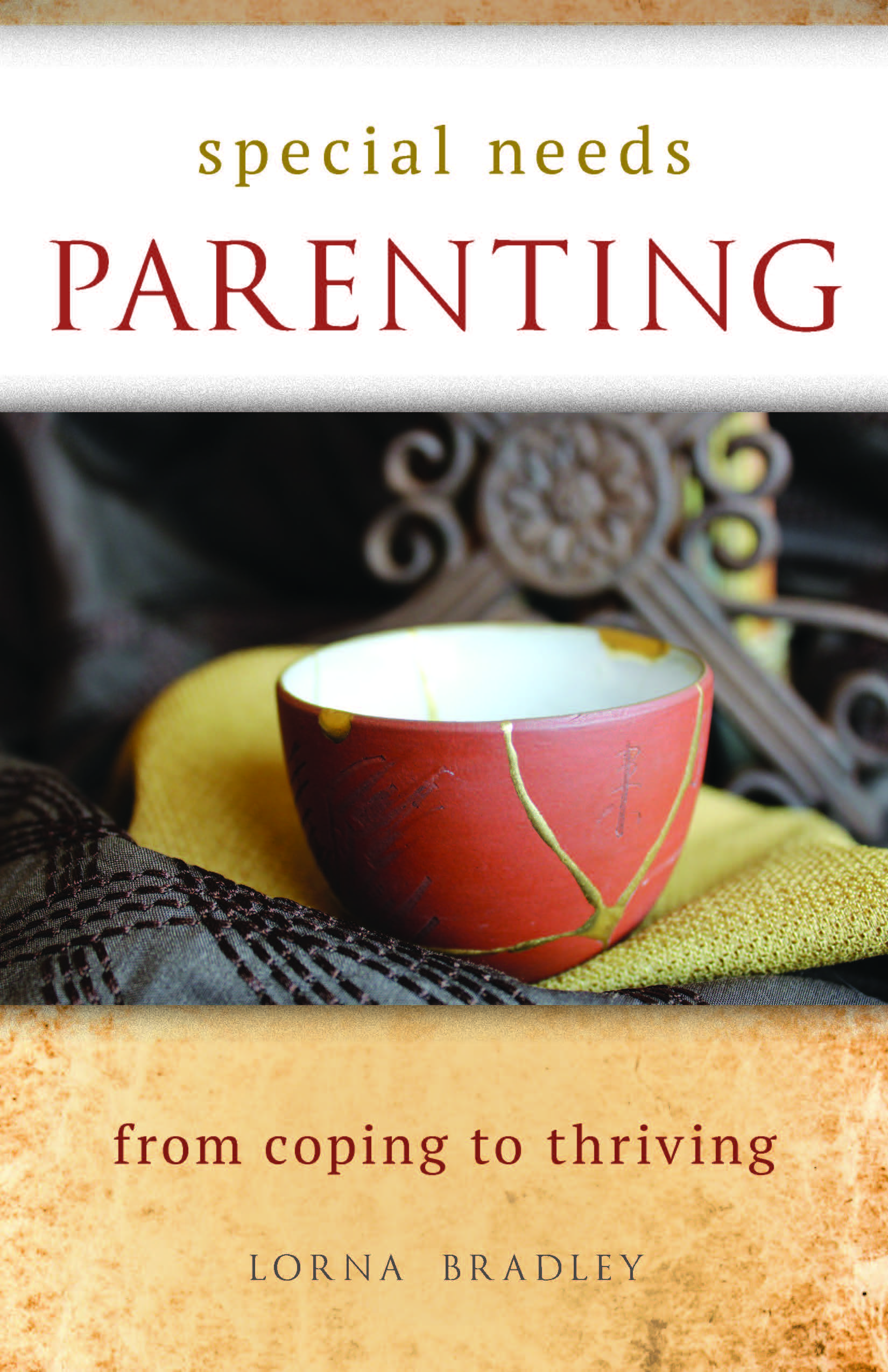
Special Needs Parenting CoverDr. Lorna Bradley is the mother of an adult son with Asperger syndrome.and she’s an ordained deacon in the United Methodist Church. If that short description rings a bell, perhaps you read her Different Dream guest post about beauty in brokenness. Now she’s combined her personal and professional expertise to write an invaluable new book for parents of kids with special needs. I’m excited about how much this book will help families, the book and am eager to tell you more about it.

Special Needs Parenting: From Coping to Thriving Addresses Issues

Special Needs Parenting: From Coping to Thriving addresses many spiritual questions parents ask when their children are diagnosed with special needs. It discusses difficult issues like dealing with grief and guilt with compassion and candor. And it also offers practical advice to makes life easier for parents. A sneak peek at the table of contents to see what it covers:

  1. God and Special Needs
  2. Understanding Chronic Grief
  3. Breaking Free from Guilt
  4. Tools to Increase Patience
  5. Self-care for Caregivers
  6. Building Healthy Relationships
  7. Hope and Healing

Appendix
Notes for Small Group Leaders
Blessing of the Parents Liturgy
Resource List
Self-care Inventory
About the Author

As you can see, Special Needs Parenting: From Coping to Thriving has something for every parent of a child with special needs. Each chapter ends with a list of questions for personal reflection, prayer helps, and Scripture references. The questions can also be used for small group discussion, which makes Bradley’s book a natural for Bible study or support groups.

To read the rest of this post and enter the give away, please visit Down the Gravel Road’s sister site at DifferentDream.com.

4 Things to Say to Parents of Kids with Special Needs Again and Again

4 Things to Say to Parents of Kids with Special Needs Again and Again

4 Things to Say to Parents of Kids with Special Needs Again and Again

Abbey, Kimberly’s amazing daughter

Guest blogger, Kimberly Drew and her family spent the last several months dealing with health issues and a complicated move to a new house. But today, she’s back to talk about things to say to parents of kids with special needs.

4 Things to Say to Parents of Kids with Special Needs Again and Again

Say it again….and again.

Having a child with special needs means having many unexpected conversations with complete strangers and even more with friends and acquaintances about about our children’s progress. Plenty of blogs and articles talk about what not to say to the parent of a child with special needs. But after 12 1/2 years, there have only been a few conversations I would like to forget. For the most part, the encounters and conversations have been lovely. So I would like to share with you a few of the things that we can and should say to each other.

1. Your child is amazing. Like any other proud parent, I think my kid is pretty much the world’s greatest kid. But when someone else comes up to me and says she is amazing in some way, it warms my heart. People stop me all the time to tell me what an awesome smile has. She really does have an awesome smile. But when you take the time to notice, and to share that with me, it means so much.

2. Point out progress. We work hard for every single move toward independence in Abbey’s life. So anytime people notice something she is doing something new or different, it is such an encouragement to us. We work so hard and sometimes do not realize the subtle changes. When you point them out with enthusiasm, it reminds us that our children are moving forward. It gives us the courage to push ahead.

3. Comment on character traits. Children with disabilities are constantly evaluated intellectually and physically by medical and educational teams. We parents can get caught up in the same cycle. Occasionally, people point out that Abbey has a mothering spirit or exhibits such joy. Noticing our children’s character traits gets us out of our own heads and reminds us to see them for the beautiful human beings they are.

4. Tell how our kids have changed you. My favorite stories are from people who have told me how Abbey has changed their lives–how she has inspired them or touched their heart. When former youth group students tell me they chose a career in special education because of Abbey, I am so humbled. When a dear friend was dealing with the after effects of radiation from brain cancer told me that Abbey gave her the courage to put on leg braces….words cannot describe what that meant. We parents literally cling to the stories about how our children inspire others.

The common theme is this: celebrate. Celebrate my child, celebrate her accomplishments, celebrate her character, celebrate what she does for your heart and mind. So please, take the time to encourage other parents by celebrating their children!

What Do You Want to Hear Again and Again?

Who has celebrated your child with words? What has someone said that you want to hear again and again? Leave them in the comment box so we can celebrate your child with you.

Do you like what you see at DifferentDream.com? You can receive more great content by subscribing to the quarterly Different Dream newsletter and signing up for the daily RSS feed delivered to your email inbox. You can sign up for the first in the pop up box and the second at the bottom of this page.
By

Kimberly grew up and went to college in the small town of Upland, IN. She graduated from Taylor University with a degree in Elementary Education in 2002. While at TU, she married her college sweetheart and so began their adventure! Ryan and Kimberly have four amazing kids on earth (Abigail, Jayden, Ellie, and Cooper), and a baby boy waiting for them in heaven. Their daughter Abigail (Abbey) has multiple disabilities including cerebral palsy, a seizure disorder, hearing loss, microcephaly, and oral dysphagia. She is the inspiration behind Kimberly’s  desire to write. In addition to being a stay at home mom, Kimberly has been serving alongside her husband in full time youth ministry for almost fourteen years. She enjoys working with the senior high girls, scrapbooking, reading, and music. You can visit Kimberly at her website, Promises and Perspective.

Author Jolene Philo

Archives

Categories

Subscribe for Updates from Jolene

Related Posts