Pediatric Dental Surgery: What Parents Need to Know, Pt. 2

Pediatric Dental Surgery: What Parents Need to Know, Pt. 2

Pediatric Dental Surgery: What Parents Need to Know, Pt. 2

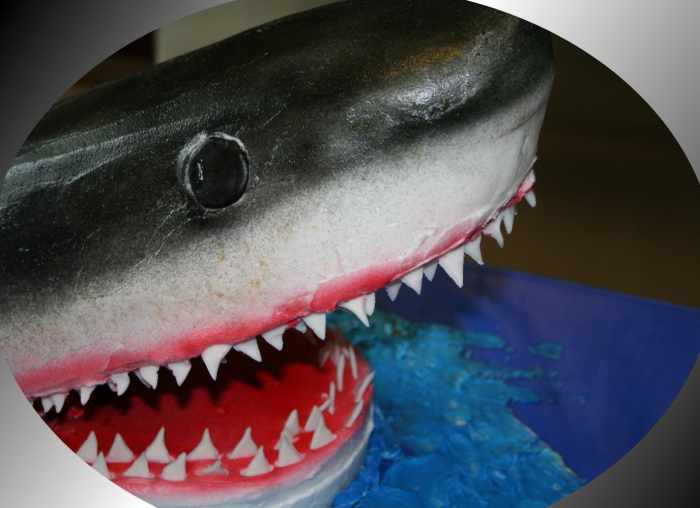
Dental surgery for kids with special needs is the topic of the day, as it was yesterday. Guest blogger Amy Stout is back again with 5 more tips she learned when her daughter’s shark teeth required dental surgery.

Pediatric Dental Surgery Tip #6

Pack a cup (no straws or sippy cups) and your child’s favorite beverage in a thermos. Put them in the trunk or back of your vehicle—out of reach of your child. Keep it in the vehicle until your child is in surgery. Once your child is in surgery, go get the beverage and cup and have it ready for your child for when they wake up in the recovery room. The hospital will have options to offer you, but your child will feel so much better if their comfort beverage is available.

Pediatric Dental Surgery Tip #7

Be honest with your child ahead of time and at the hospital, but do not give your child too much information. My daughter is always asking “What’s next?” She wants details. So, what we told her was that we were going to see our friend, the dentist, because he was going to help us make sure there would be enough room for her pretty big girl teeth to come in. That information was just enough. Do not give the gory details of surgery, or a play-by-play of medical equipment and stitches. Do tell children that medical professionals care about them and want to keep them safe.

Pediatric Dental Surgery Tip #8

Present medical professionals in a positive light. We constantly tell our daughter that our medical professionals are our friends. We always point out fun things about them. “Our dentist is so nice, he sings to your teeth,” we tell her. He does sing to her teeth. Our daughter is really big into numbers and counting, so he also will count her teeth to help calm her. Also, when entering a strange room with lots of equipment and antiseptic smells, be sure to comment about how “cool” all that neat stuff is!

Pediatric Dental Surgery Tip #9

Make sure mom and dad are at their best. Line up support from family and friends to have a meal or two delivered so that you can focus on your child once you arrive home and even the night before. Gift cards for ordering in work great too. It was hard and humbling, but I emailed my friends and family and asked if any were available to provide a meal or gift card. I am so thankful I did!

Consider setting up a Caring Bridge site so you can keep all family and friends updated with one message. Also, pack a breakfast for you to eat after your child is in surgery. An amazing friend made us mini muffins to take with us. We kept them in the trunk with our daughter’s drink and once she was in surgery, we retrieved them and renewed our energy.

Wear soft comfortable clothing that your child will want to cuddle against. If you normally wear perfume or cologne, wear it, but keep it light.  Your child will be able to recognize you by your scent before they are awake enough to see you. Bring a blanket from home so your child can use it before and after surgery. You can use it while your child is in surgery. And be sure get a good night’s sleep the night before.

Pediatric Dental Surgery Tip #10

If your child experiences sensory issues (sensitivity to light or sound), bring your child’s sunglasses and earmuffs with you. These came in very handy for us with my daughter—especially in the recovery room.

Finally, a few bonus suggestions:

  • If your child experiences any allergies or sensitivities, discuss them with your anesthesiologist and medical professional and make a plan in advance of anything happening. (For example: my daughter is terribly allergic to all adhesives. We made an advanced plan that included what medications and creams to use and when to call the hospital if something serious were to occur.)
  • Be prepared for your child to come out of anesthesia in a very emotional way—usually, either angry or sad.  In our case, because of the Versed calming drug, our daughter woke up and was very quiet and calm. However, many children around us were crying. We actually had to leave early because all the crying was bothering our daughter.
  • Know your hospital’s policy and state law regarding extracted teeth. In our case and in our state, the law considers teeth to be a body part. Every body part that is removed during surgery must go to the pathology lab. However, since there was no decay or infection in the teeth, we could pick the teeth up once the lab had completed their tests/review. (Decayed teeth are classified as a biohazard and cannot be returned. In that case, have white tic-tacs on hand to leave for the tooth fairy.)

What Tips Would You Add?

Has your child with special needs had pediatric dental surgery? What tips did you learn? Leave a comment to share them.

Pediatric Dental Surgery: What Parents Need to Know: Part 1

Do you like what you see at DifferentDream.com? You can receive more great content by subscribing to the quarterly Different Dream newsletter and signing up for the daily RSS feed delivered to your email inbox. You can sign up for the first in the pop-up box and the second at the bottom of this page.
By

Amy Stout is a wife, mother, and free-lance writer. You can visit her website at His Treasured Princess.

Author Jolene Philo
Archives

Categories

Subscribe for Updates from Jolene

Related Posts

Pediatric Dental Surgery: What Parents Need to Know, Pt. 1

Pediatric Dental Surgery: What Parents Need to Know, Pt. 1

Pediatric Dental Surgery: What Parents Need to Know, Pt. 1

Dental surgery is a big deal for any child, but the event becomes even more complex for children with special needs. Guest blogger Amy Stout is here with 5 tips she learned when her daughter’s shark teeth required dental surgery. Tomorrow, she’ll be back with 5 more tips you won’t want to miss.

Dental Surgery for Shark Teeth

I recently found out that my 6-year-old daughter has a condition called shark teeth. Sharks are known for having more than one row of teeth. When this occurs in humans, it is usually because adult teeth are growing in behind baby teeth, and the baby teeth are not getting loose on their own. This is pretty common in children who experience special needs.

To make a long story short, my daughter had to have her 4 front bottom teeth extracted all at once. That was her first losing a tooth experience!!

This mama was no less than devastated. I had spent months planning how our family would welcome the Tooth Fairy and all of the precious traditions that we would start in order to ease the trauma of having wiggly teeth and then losing them—especially for a child who experiences sensory issues. Instead, my daughter ended up having major surgery at our local hospital and all four teeth were extracted. Though she now insists she lost a tooth…and we allow her to believe that! Ha! In the process, I learned a few things that day and about how to prepare for it:

Pediatric Dental Surgery Tip #1

Schedule your child’s procedure to be the first procedure of the day because a child cannot have food or drink after midnight. When kids first get up in the morning, they want to eat or drink. If you are the first procedure, you can tell your child they can have breakfast after seeing the dentist. Or as we communicated it: First see the dentist, then eat breakfast.

Another reason is to avoid delays in the procedure. If others are scheduled ahead of you, it is possible that due to unforeseen complications in their procedures, your child’s surgery might be delayed, meaning a longer time for anxiety to build up and a longer time to wait to eat or drink. Also, it will help if your child is relaxed from just waking from a full night’s sleep. The lack of delay also ensures you will get the anesthesiologist you were originally assigned.

Pediatric Dental Surgery Tip #2

Talk with your doctor and anesthesiologist about the drug Versed to see if it would be an option for your child. This is the same drug that they often give to patients who will go through a colonoscopy. It calmed my daughter down before surgery, making it so much easier to administer anesthesia. Versed is quick acting and helps with the recovery process. My daughter was so calm in the recovery room and when we took her home. My child, who never sleeps on her own, actually found her blanket and napped for 2 hours.

FYI—The drug is a liquid and it must not taste that great, because after they gave it to my daughter, she kept asking for water.

Pediatric Dental Surgery Tip #3

Advocate to be assigned to an anesthesiologist who will allow you to remain with your child until your child is asleep. In our hospital, there were over 30 anesthesiologists, but only 4-5 that allow parents to stay with children until they are asleep. My husband was allowed to suit up in a paper suit, carry my daughter to the operating room and hold her while she blew up the purple balloon. They put a mask over her mouth and nose and when she breathed a purple balloon looking device inflated and deflated. This sedated her so they could then start the anesthesia via IV and she didn’t feel a thing.

Pediatric Dental Surgery Tip #4

Try to distract or re-direct your child from looking in the mirror for at least 24 hours after the procedure. Day 1, the child’s mouth is rather a disturbing sight. The holes are really red and sometimes blood-filled. Day 2 is so much better—the redness and swelling have decreased significantly, and it is much less scary to look at.

Pediatric Dental Surgery Tip #5

The night before surgery, dress your child in what they are going to wear to the hospital the next morning. You can take your child straight from their bed to the car and avoid a lot of questions. Doing so also gets your child, who can’t eat or drink, away from the refrigerator quicker.

Come Back Tomorrow!

Amy will be back tomorrow with 5 more tips. Leave a comment about your child’s dental surgery experience, if you like.

Pediatric Dental Surgery: What Parents Need to Know: Part 2

Do you like what you see at DifferentDream.com? You can receive more great content by subscribing to the quarterly Different Dream newsletter and signing up for the daily RSS feed delivered to your email inbox. You can sign up for the first in the pop-up box and the second at the bottom of this page.

By

Amy Stout is a wife, mother, and free-lance writer. You can visit her website at His Treasured Princess.

Author Jolene Philo

Archives

Categories

Subscribe for Updates from Jolene

Related Posts

5 Music Therapy Strategies for Children with Special Needs

5 Music Therapy Strategies for Children with Special Needs

5 Music Therapy Strategies for Children with Special Needs

Music is an effective way to promote learning in kids. That’s why the ABCs are set to music, why School House Rock tunes remain successful decades after they first appeared, and why music therapy is an effective intervention for kids with special needs.

Meet Ryan Judd

Ryan Judd is a certified music therapist who blogs at The Rhythm Tree. He posts weekly video blogs to show parents and professionals how to use music therapy strategies with children who have special needs. He explains and demonstrates the techniques thoroughly and keeps them so simple, his ideas can be used by people who can’t carry a tune in a bucket.

5 Simple Music Therapy Strategies You Can Use

Judd’s blog about creative and easy ways to make music with a child who has special needs caught my eye. In it he explains and demonstrates how to execute these 5 music therapy strategies:

  • Use simple percussive instruments to connect and bond with a child
  • Create music with a child with autism to increase eye contact and facial referencing
  • Use motivating instruments to help a child with special needs gain communication skills
  • Adapt traditional melodies so that you can personalize them to your child’s or client’s needs
  • Create rhythm to further engage a child while singing with him or her

Ryan explains each technique at the beginning of the video post and demonstrates its use with a young boy who has autism. The little guy becomes visibly more engaged as they work together. It’s fascinating stuff you won’t want to miss. So hop on over to Creative and Easy Ways To Make Music with a Child with Special Needs to see for yourself.

Music Therapy and Your Child

Has your child benefited from music therapy? How? Would you recommend other parents pursue it for their kids? Why or why not? Leave a comment about your experience if you like!

Do you like what you see at DifferentDream.com? You can receive more great content by subscribing to the quarterly Different Dream newsletter and signing up for the daily RSS feed delivered to your email inbox. You can sign up for the first in the pop-up box and the second at the bottom of this page.

Photo Credit: www.freedigitalphotos.net

By

Jolene Philo is the author of several books for the caregiving community. She speaks at parenting and special needs conferences around the country. Sharing Love Abundantly With Special Needs Families: The 5 Love Languages® for Parents Raising Children with Disabilities, which she co-authored with Dr. Gary Chapman, was released in August of 2019 and is available at local bookstores, their bookstore website, and Amazon. See Jane Sing!, the second book in the West River cozy mystery series, which features characters affected by disability, was released in November of 2022.

Author Jolene Philo

Archives

Categories

Subscribe for Updates from Jolene

Related Posts

Can Those With Disabilities Contribute to Society?

Can Those With Disabilities Contribute to Society?

Can Those With Disabilities Contribute to Society?

Can children and adults with disabilities be contributing members of society? Ellen Stumbo addresses that question in today’s guest post.

Let’s Be Realistic

Are people with disabilities contributing members of society? Let’s be realistic, depending on their disability, they might need life-long care and someone to provide for all their needs. Depending on their intellectual disability, they will might not be scientists, doctors, or teachers. Depending on their disability, they might not have businesses that will provide employment for the many people out of jobs.

Nonetheless, how wrong would it be if we assumed this was true for all people with disabilities! There are individuals with different challenges—like autism, cerebral palsy, ADD, and others—with an IQ higher than the rest of us average people. They are doing amazing things. They are doctors, teachers, scientists, or great mathematicians.

Contributing Members of Society or a Burden?

But what about those that do require life-long care? Are they contributing members of society? Or are they a burden?

Once, I thought that having a child with Down syndrome would be a burden. I believed that being smart was one of the most important qualities to have. I found success defined by performance and maybe even a bank account. So I did not welcome my new baby with open arms and a cheerful heart.

The inevitable happened, I fell in love, madly in love with my child. In doing so, I changed, I recognized that the value of a child, of a life, of any person, is not found on what they can or cannot do.

I began to look more closely at what it means to be a contributing member of society because I saw that my daughter not only changed me, but the rest of my family, my church, my friends, and many people we met. It is hard to feel unconditional love and not be moved by it.

Why Do Contributing Members of Society Take So Much?

Us “normal” people claim to be contributing members of society, yet, why is it that we take so much? We easily put our careers before our family, the people we claim to love the most. We spend hours in front of a computer screen, interacting with our Facebook friends instead of interacting with our children, our spouses, our neighbors. We fight each other based on our political preferences, or we ridicule each other based on religious beliefs. We compromise our integrity to get a job promotion. We gossip, and we talk about people behind their backs. We pretend. We hate. We lie, we cheat, we take advantage of the weak.

What People with Disabilities Contribute to Society

So I focus on people that might have severe intellectual or physical disabilities and accept that they do take from us, they require lots of care, support, and therapy. But they give so much more. They offer unconditional love, the kind that has no strings attached, it is pure, strong, real. They radiate joy as they celebrate the simple things in life. They cheer, celebrate, and encourage. They teach us compassion, acceptance, and humility. They remind us to be thankful for the many blessings that we have. They show us in a profound way what it means to be whole.

People with disabilities are contributing members of society. They show us what really matters in life, what it means to be human, what it means to be loved and accepted simply for being, not because of what we can or cannot do. And I am thankful, so very thankful that in my own brokenness, in the brokenness of this imperfect world, we all need each other. And we all have much to contribute.

How Do the People with Disabilities Contribute to Society?

How do people with disabilities you know contribute to society? Leave a comment to share your thoughts!

Do you like what you see at DifferentDream.com? You can receive more great content by subscribing to the quarterly Different Dream newsletter and signing up for the daily RSS feed delivered to your email inbox. You can sign up for the first in the pop-up box and the second at the bottom of this page.

Photo Credit: www.freedigitalphotos.net

By

Ellen Stumbo is a writer and speaker and the mother of three girls, two with disabilities. To read more of Ellen’s writing, visit her blog at www.EllenStumbo.com.  She can also be found on Twitter and Facebook.

Author Jolene Philo

Archives

Categories

Subscribe for Updates from Jolene

Related Posts

Are Kids with Special Needs Different or Beautifully Unique?

Are Kids with Special Needs Different or Beautifully Unique?

Are Kids with Special Needs Different or Beautifully Unique?

Advocating and educating others about our kids with special needs is a full-time job. Today, guest blogger Rebekah Benimoff describes how the hard work of advocating sometimes clogs her parent filter.

Different or Beautifully Unique?

It started as a normal conversation. She asked if I’d like to donate to support Autism Speaks, and I said “Sure! It’s a good cause, and close to my heart.”  It follows that questions would ensue. “Yes,” I replied, ”My son is on the autism spectrum.”

What’s Sensory Processing Disorder?

“What’s the autism spectrum?” she asked, surprised, but genuinely interested. So I explained that the kind of autism often thought of is not the only condition that affects person-to-person interaction, and that my son has a sensory processing disorder (SPD). I described what we deal with as the opposite of traditionally understood autism symptoms. Instead of drawing into himself, my son seeks constant sensory stimulation. He wants to be right next to me, climbing on me, touching my face, hanging on me—with no concept of personal space—all the time. To strangers he just looks like a very affectionate child. (I left out the fact that this mom sometimes feels a bit pummeled by love!)

“So, your son can communicate?”

Yes, in fact, he is continuously in a state of communicating. He needs constant input, although, blessedly, as he gets older I’ve been able to teach him to have some one-on-one time where he self-soothes or spends time with the cat, giving the humans in our household a much needed break.

The questions continued, even as my transaction ended. It’s natural, really, for people to be curious about differences. I shared that unless you knew my son well, his differences would not be obvious. He looks and behaves like a normal, active kid. He spins and jumps and climbs, and more than anything, lately, he dances. Everywhere.

The Difference Between SPD and ADHD?

And then the question that gets under my skin the most. “Do some people think he has ADHD?”

“Yes, sometimes they do. But as an educator who’s taught kids who have true ADHD, I knew from the beginning that my son did not.” Mentally, I work to stay off my soapbox, thinking that there are a lot of normal kids out there who are just as active as the kids I know with ADHD. Besides, ADHD is not just about kids being noisy or moving around a lot, though that’s what adults seem to notice first.

I weigh my words carefully, “My son needs movement and sensory stimulation. It’s not really an issue of impulsiveness.” I don’t even try to explain that while kids with ADHD struggle with focus my son is actually so focused on following expectations of teachers and family that he often struggles to focus on actual learning. He’s very focused—on sitting up, on holding the pencil, on resting his hand when he’s been writing too long. You might say that he’s over-focused and has a hard time adding more to his plate.

As I began to move on so the next family could be greeted, she asked a question that rattled me. “He can’t control it?”

“No.”

Not any more than people can control their curiosity. Their words, certainly, but not the innate response to something different. She smiled and wished my family much luck.

Disconcerted by Differences

While she was pleasant and friendly and her questions were authentic and asked with a smile, somehow I walked away disconcerted. In the words of a child, I felt icky. And judged, though I am fairly certain that was not her intention.

As a parent of a child who is different, I spend a lot of time explaining. For the most part, people are nice and try to be understanding.  But there are those who can’t get past whatever is clogging their own filter, and their anxiety causes me to feel stressed. And even though it’s not my job to make them feel okay about my kid, I want him to be not just accepted, but liked, and loved for who he is, which I find pretty special.

Unclogging my Parental Filter

So here’s where my filter gets clogged—when previous conversations and past judgments creep into the present, fogging the lenses that I look through. Like the strainer in my kitchen dedicated to gluten-free pasta, film can build up in the holes, and I have to wash it well if I want it to be usable. The challenge becomes—how do I unclog? For me, prayer is so often the key. Especially praying though forgiveness for those who’ve offended, even if they did not mean to. And then, praying through forgiveness for those whose own baggage hurt me or my son. A big part of these forgiveness prayers is asking God to show me truth, remembering that it is not my job to make others happy. My calling is to care for my special needs family in the way that is best for them, regardless of what others think. And it’s okay to be different.

Is My Son Different or Beautifully Unique?

My son is a one-of-a-kind, precious creation that God has gifted in some pretty amazing ways, and God accepts my son (and me) unconditionally. I need the occasional reminder that even though people don’t tend to like what’s different, God himself loves diversity, for it is our differences are what make us beautifully unique.

How Does Educating and Advocating Make You Feel?

Please leave a comment about how do you feel when you educate and advocate concerning your child’s special needs.

Do you like what you see at DifferentDream.com? You can receive more great content by subscribing to the quarterly Different Dream newsletter and signing up for the daily RSS feed delivered to your email inbox. You can sign up for the first in the pop-up box and the second at the bottom of this page.

photo credit: www.freedigitalphotos.net

By

Rebekah Benimoff is the wife of a husband with PTSD and the mother of two young men, both of whom grew up with medical and special needs. She blogs at In the Chaos…. and In the Calm (justmemama.blogspot.com).

Author Jolene Philo

Archives

Categories

Subscribe for Updates from Jolene

Related Posts

Accessibility Summit 2013 Highlights

Accessibility Summit 2013 Highlights

Accessibility Summit 2013 Highlights

Barb Dittrich, Laurie Hetherington, and Jolene Philo at the 2013 Accessibility Summit

My head’s still spinning and my feet are still hurting from standing a lot during the whirlwind weekend at the 2013 Accessibility Summit at McLean Bible Church in Vienna, Virginia.

The Best Thing About the Accessibility Summit

The absolutely best part of the Summit is meeting online friends like Laurie Hetherington in person. Connecting face to face, sharing information and pictures of our kids, and learning together is a little bit of heaven right here on earth. To hear these dear friends describe how DifferentDream.com posts have encouraged them or how resources featured here made life easier for them…well, all I can say is that the Summit should come with its own tissue warning!

The Second Best Thing About the Summit

The second-best thing about the Summit is meeting people who run organizations that serve the special needs community. People like:

Emily Colson

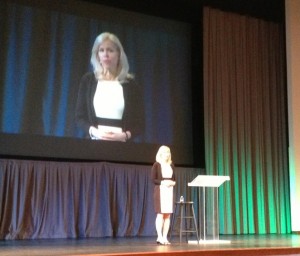
Emily Colson who spoke about raising her son Max, who experiences autism. She’s also author of Dancing with Max, her memoir about life with her sweet son,

Access Summit Peeps
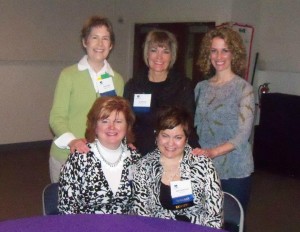
Front Row: Barb Dittrich, Katie Wetherbee
Back Row: Jolene Philo, Cindi Ferrini, Rebecah Hamilton

Barb Dittrich of Snappin’ Ministries,
Joe and Cindi Ferrini, authors of Unexpected Journey: When Special Needs Change our Course, Katie Wetherbee and Rebecca Hamilton of Key Ministry,

Matt Mooney

Matt Mooney of 99 Balloons,
and those are only the people I was able to photograph!

The Third Best Thing About the Summit

The third best thing about the 2013 Summit was having fun with friends made there over the years doing things like:

Access Earplugs

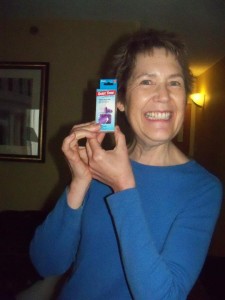
having my photo taken with the earplugs given by my roomy, Barb Dittrich, who says she snores,

Jolene and Katie

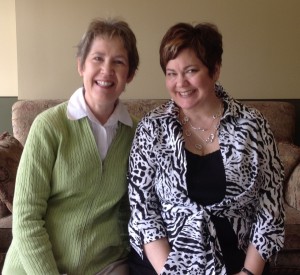
taking preliminary photo pictures with co-author, Katie Wetherbee, in case our book proposal gets accepted by the publishing house discussing it this week,

Emily Colson

and going to supper at the Cheesecake Factory Saturday night with friends, laughing until our sides ached.

The Best Thing About Next Year’s Summit

And that brings us to the best thing about next year’s summit. For me, it will be seeing you there and then posting a photo of us in the highlights of the Accessibility Summit, 2014. If you attended this year’s summit, what were the highlights for you? If you didn’t attend, what needs to happen to get you there next year? Leave a comment!

Do you like what you see at DifferentDream.com? You can receive more great content by subscribing to the quarterly Different Dream newsletter and signing up for the daily RSS feed delivered to your email inbox. You can sign up for the first in the pop-up box and the second at the bottom of this page.

By

Jolene Philo is the author of several books for the caregiving community. She speaks at parenting and special needs conferences around the country. Sharing Love Abundantly With Special Needs Families: The 5 Love Languages® for Parents Raising Children with Disabilities, which she co-authored with Dr. Gary Chapman, was released in August of 2019 and is available at local bookstores, their bookstore website, and Amazon. See Jane Sing!, the second book in the West River cozy mystery series, which features characters affected by disability, was released in November of 2022.

Author Jolene Philo

Archives

Categories

Subscribe for Updates from Jolene

Related Posts