Caregiving Spouses Are FOR Each Other

Caregiving Spouses Are FOR Each Other

Caregiving Spouses Are FOR Each Other

Caregiving spouses are FOR each other in a marriage. That’s Heather Braucher’s message in the third post in her Different Dream guest series. You’re going to love what she has to say about the power of caregiving parents being FOR one another as much as you loved. Part 1 and Part 2 of this series.

I still remember the first time I heard my husband say, “I am FOR you.” The first time I tangibly felt and received this message of hope and truth. It was during a moment when my husband and I were discussing our kids. It was one of those tense conversations when we both began sharing our concerns, but it evolved into a desperate quest for validation. Unfortunately, sometimes what we intend to be simple venting can come off more like a competition over who is more burnt out! Deep down our intentions are simply to cry out to one another for connection and affirmation. Thank goodness in this instance, my husband was wise enough to discern what needed to be said next.

He placed his hands on my shoulders and with a bit of firm pressure he said, “I am for you. We are FOR each other.” In that moment I felt an overwhelming sense of safety. Safe because I felt affirmed. He could see how hard I was going and he knew exactly how I felt. I could sense his eyes saying, “We are both weary, but let’s remember and let’s promise that we as caregiving spouses are FOR each other.”

13 years ago

This phrase has become a household constant. And every time we voice it, it speaks life and creates connection. Our family’s life often looks like a tangled mess of electrical cords that results from too many devices plugging into the same power source, overlapping and overwhelming one another. On a daily basis we are juggling the needs of our 3 children and our own needs. Most of our discussions end up being completed via email and text message. It is the only way to break through the noise! Decisions need to be made daily on who is taking which child to which therapy or which doctor or even which school. And then there are debriefs for said appointments. Because without debriefs how are we meant to help them generalize what they are learning to the home or other contexts?

Most weeks, there is an urgent need to discuss a school or social situation that went awry. Sometimes as parents we do not agree on the appropriate follow up. We both want to support our boys to be more successful the next time. When there is a disability involved, navigating these situations can be quite confusing and complex. For a child with special needs, impairments in areas such as executive functioning, self-control and emotional regulation caused by a syndrome or disorder can result in social interactions that can make a parent hold their breath, never knowing how it will turn out.

Parenting a child with extra needs is often an all-encompassing job. The management and discussion of the child’s needs can be overwhelming. The temptation to beat yourself up for not always parenting with therapy skills is constant. It is easy to condemn yourself for getting irritated or impatient. It takes ongoing awareness to control the amount of time spent sharing these thoughts, battles, schedules, and strategies with your spouse.

Parenting is a juggling act, no matter how many children you have and regardless of their abilities or needs. And at the end of the day most of us just want to rest knowing that we loved them well. When we keep in mind that our spouse knows what we are going through and is feeling the same, we can love them better too. Remember to let them know that as caregiving spouses, you are FOR one another. Chances are you both need to hear those words.

I look forward to the next post in the series when I’ll be talking about how moms can be FOR each other too!

Part 1: We are FOR Parents and Children
Part 2: Mothers are FOR their Children with Disabilities and Special Needs
Part 3: Caregiving Spouses are FOR Each Other
Part 4: Caregiving Moms are FOR Other Caregiving Moms
Part 5: Jesus is FOR Caregiving Parents

Do you like what you see at DifferentDream.com? You can receive more great content by subscribing to the monthly Different Dream newsletter and signing up for the daily RSS feed delivered to your email.
By

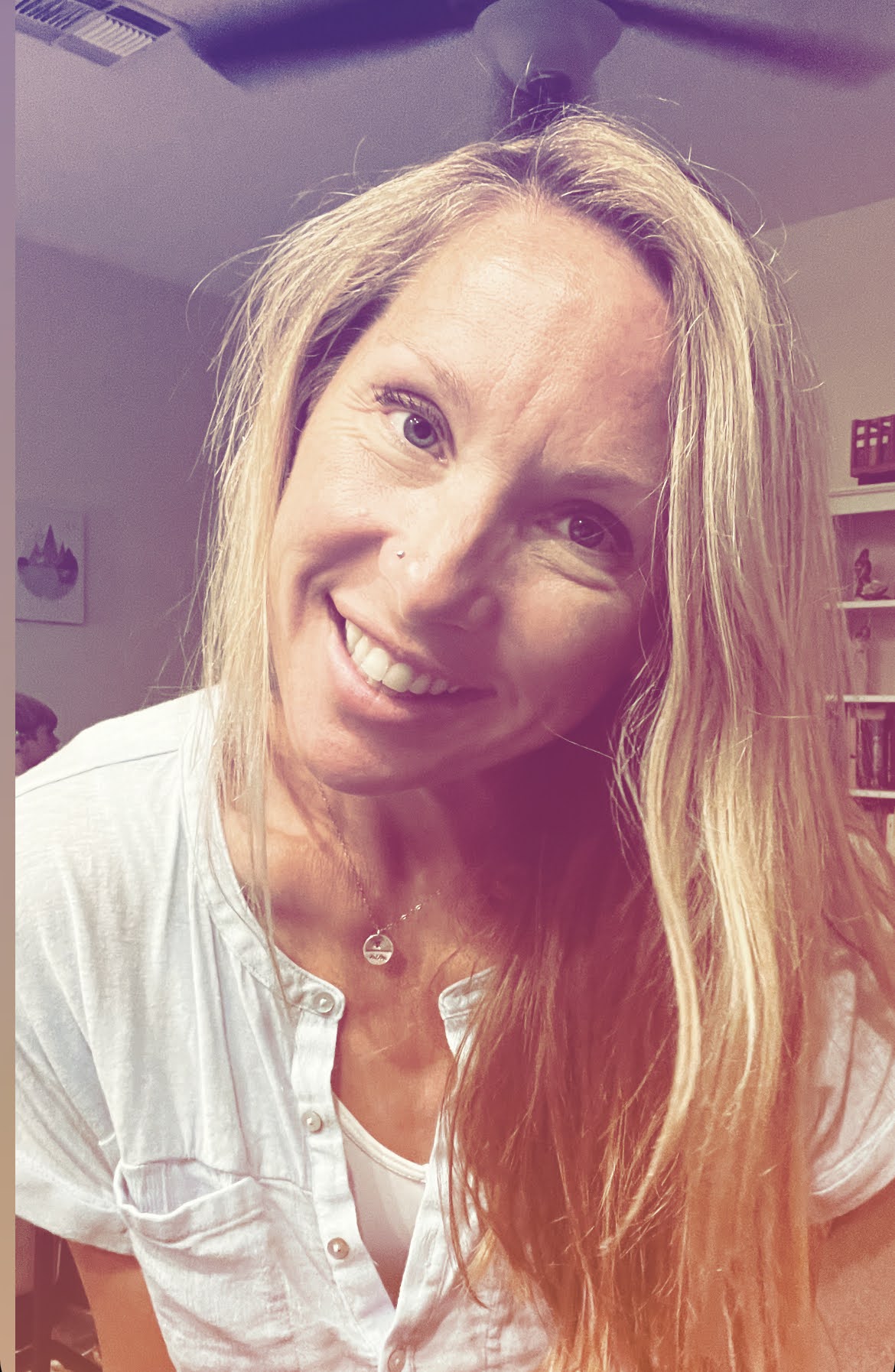
Heather Braucher is a member of the “Braucher Bunch” aka her energetic family of 5. The bunch includes her husband and their three children, all of whom are dominant and extroverted and are going to change the world (if she can keep them alive!) She has always held a passion for writing, but motherhood has given her a reason to share her experiences, heartaches, and victories with others. In her writing you will hear stories of hope as well as grief, as her family has navigated life in ministry in the US and overseas, all while discovering that 2 of her children have special needs. Her desire is to provide others with connection, understanding, encouragement and laughter, all washed with the love of Christ.

Author Jolene Philo
Archives

Categories

Subscribe for Updates from Jolene

Related Posts

Mothers Are FOR their Children with Disabilities and Special Needs

Mothers Are FOR their Children with Disabilities and Special Needs

Mothers Are FOR their Children with Disabilities and Special Needs

 Mothers are FOR their children. Moms may think they convey this truth well, but sometimes kids with disabilities and special needs have to hear that message loud and clear. In the second post in her ongoing series, guest blogger Heather Braucher explains the whys and hows behind assuring her son that she is always FOR him.

On one particular day, I was waiting for my son as he was getting off the school bus. As he descended the steps, another boy raced to get to me first. This child wanted to make sure I knew that my son had teased him. I had a sense that the other child was not completely innocent. And if I’m honest, I was getting fatigued by this after school routine repeating itself day after day. I briefly acknowledged the other child’s complaint and began walking my son home.

I remember looking at my son while we were walking, and I could tell he was getting himself ready for another talk.

Having a talk with Garrett has become as frequent as having coffee. The most common precursor to these infamous talks were the phone calls we would receive from his school. For example:

Mrs. Braucher, Garrett cut his classmate’s hair.

Mrs. Braucher, Garrett peed in the grass during recess.

Mrs. Braucher, Garrett won’t stop kissing the girls.

Mrs. Braucher, does Garrett have a lunch account? He continues to get school lunches and claims they can “put it on his tab.”

Over the years the phone calls started to get more impressive:

Mrs. Braucher, Garrett has a ladybug stuck in his ear.

Mrs. Braucher, Garrett says that he was stung by a bee, a wasp, and a hornet simultaneously.

This sweet boy of ours makes me laugh and smile bigger than I ever could have imagined. At the same time, he makes me want to shout his name with the same energy that the names Alvin the Chipmunk and Dennis the Menace have been shouted before. If you have a child like Garrett, a witty, clever, brilliant child that can manipulate like the best of them, you know what I mean!

Well, on this particular day with this particular complaint, I looked at him and said, “I need you to know, I am on your side, Buddy.”

He looked surprised and even a little confused. And then he hung his head and said, “No, you’re not.”

I stopped walking and placed my hands on his shoulders and told him, “Whether you made a mistake or not, I am for you. I am on your side. Whether I need to teach you what you did wrong, whether there is a consequence, or whether the other kid started it, YOU are MY son. I am here for YOU. I am FOR you.”

And that was the end of our talk.

This sweet boy has taught me so much.

My biggest challenge parenting my special boys has been trying to identify when their behavior is or is not a result of their unique struggles. This matters because it directly impacts which lesson is most necessary as a follow up. There are all too many opportunities for teaching and training in this realm of parenting. But one that I never ever want to forget is to teach them that no matter what, I love them and I am FOR them. That one is above all else.

Mothers are FOR their children with disabilities and special needs. I hope you find ways to speak this truth to your kids often and clearly. Come back next time, when I dive into how we can be FOR our spouses!

Part 1: We Are FOR Parents and Children
Part 2: Mothers are FOR their Children with Disabilities and Special Needs
Part 3: Caregiving Spouses are FOR Each Other
Part 4: Caregiving Moms are FOR Other Caregiving Moms
Part 5: Jesus is FOR Caregiving Parents

Do you like what you see at DifferentDream.com? You can receive more great content by subscribing to the monthly Different Dream newsletter and signing up for the daily RSS feed delivered to your email.

By

Heather Braucher is a member of the “Braucher Bunch” aka her energetic family of 5. The bunch includes her husband and their three children, all of whom are dominant and extroverted and are going to change the world (if she can keep them alive!) She has always held a passion for writing, but motherhood has given her a reason to share her experiences, heartaches, and victories with others. In her writing you will hear stories of hope as well as grief, as her family has navigated life in ministry in the US and overseas, all while discovering that 2 of her children have special needs. Her desire is to provide others with connection, understanding, encouragement and laughter, all washed with the love of Christ.

Author Jolene Philo

Archives

Categories

Subscribe for Updates from Jolene

Related Posts

The Beauty of Disability

The Beauty of Disability

The Beauty of Disability

Our pastor was introducing a new sermon series about beauty when these four words, which I had never strung together before, which I did not want to string together, took up residence in my brain. My response was swift and prickly.

The beauty of disability? Why would I consider such a thing?

Several images flashed by in rapid succession:

  • My father lying in a hospital bed, his once strong body ravaged by multiple sclerosis.
  • My 2-day-old son splayed in a NICU isolette, his abdomen marred by post-surgical incisions.
  • My elderly mother leaning sideways in her recliner at the long-term care facility where she lives.

My eyes welled with tears. My heart ached for the pain and loss experienced by people I love dearly. Where was the beauty in their disabilities?

I fought for control and turned my attention back to the pastor as he read Genesis 1:27.

And God created man in His own image, in the image of God He created him; male and female He created them. (NASB)

The pastor explained how God revealed his beauty in the act of creation. Also, because all humans are created in God’s image, we bear the image of His beauty even as our hearts long for the fullness of it.

Wait a minute!

I believe that God’s creation reveals his beauty.
I believe that all humans are made in God’s image.
I believe that all humans includes those with disabilities.
I believe that those with disabilities reveal God’s beauty.

Click here to read the rest of The Beauty of Disability at the Key Ministry website.


Do you like what you see at DifferentDream.com? You can receive more great content by subscribing to the monthly Different Dream newsletter and signing up for the daily RSS feed delivered to your email.

By

Jolene Philo is the author of the Different Dream series for parents of kids with special needs. She speaks at parenting and special needs conferences around the country. She’s also the creator and host of the Different Dream website. Sharing Love Abundantly with Special Needs Families: The 5 Love Languages® for Parents Raising Children with Disabilities, which she co-authored with Dr. Gary Chapman, was released in August of 2019 and is available at local bookstores, their bookstore website, and at Amazon. The first book in her cozy mystery series, See Jane Run!, features people with disabilities.

Author Jolene Philo

Archives

Categories

Subscribe for Updates from Jolene

Related Posts

The Blessings of Caregiving

The Blessings of Caregiving

The Blessings of Caregiving

The blessings of caregiving may not be readily apparent to families raising children with special needs and disabilities. Kristin Evans, a Different Dream guest blogger and mother of two amazing kids, describes the blessings her family experiences daily in their caregiving life.

Some people might look at my family and think that we have more to mourn than celebrate. My daughter, Beth, faces extraordinary medical and developmental challenges every day. Yet my husband, Todd, and I have discovered that we are just as blessed, if not more, than the average family. We’ve identified numerous reasons our lives are much richer as a result of having fought sixteen years to save both of our children’s lives. These are just three of the blessings of caregiving that families of loved ones with disabilities often experience.

Blessing #1: A New Perspective on Life

As a disability and medical mom, I’ve experienced how difficult it can be to express gratitude. When I’ve been surrounded by loss, the serious illnesses of my children, and seemingly-impossible circumstances, my tendency has sometimes been to become bitter and sad. Watching my children suffer doesn’t naturally prompt a thankful attitude in me.

But it has been through our difficult circumstances that our family has received the rare gift of seeing life through a different lens. Our greatest desire is for everyone to be at their health baseline and not in the hospital. The days that all four of us are able to just be together at home are the greatest blessings in life.

We’ve learned to be thankful for simple moments together—laughing, enjoying a meal, or playing outside. Sometimes we have to look for the blessings of caregiving and choose gratitude, but God’s good gifts are always there—big and small.

Blessing #2: More Reasons to Celebrate

Little wins are big reasons to rejoice. Beth may not be earning trophies in soccer or straight A academic awards, but she is working very hard on her individual goals. When she reaches a new milestone or learns a new skill, we feel like throwing a big party! Families with disabilities may not celebrate for the typical reasons, but we often have more reasons. When our children make progress in therapy, have a good day, or their health improves, these are the many moments to recognize and enjoy.

Blessing #3: Becoming Better People

My children have taught me how to truly live. I’m a better person because I’m their mom, and I’ve had the privilege of loving and advocating for them their whole lives. As parents caring for our children with disabilities or complex medical needs, we face regular obstacles. And we walk with them through their own unique challenges. In doing so, we can develop a deep empathy for other hurting parents and people in the world. We learn what’s most important in life and to not take a single special moment for granted.

What blessings of caregiving has your family experienced?

Please share your celebrations with us in the comments section!

Blessings,

Kristin

Do you like what you see at DifferentDream.com? You can receive more great content by subscribing to the monthly Different Dream newsletter and signing up for the daily RSS feed delivered to your email.

By

Kristin lives with her husband, Todd, and their two children in the Nashville, TN area. As an author and mental health therapist, her greatest passion is walking with others on their journey to deeper emotional, psychological, and spiritual wholeness. As both her children have rare genetic disorders, Kristin especially loves supporting other parents of children with special needs. She hopes that you may find encouragement and support through her two websites and blogs, www.KristinFaithEvans.com and www.DisabilityParenting.com.

Author Jolene Philo

Archives

Categories

Subscribe for Updates from Jolene

Related Posts

We Are FOR Parents and Children

We Are FOR Parents and Children

We Are FOR Parents and Children

We are for parents and children with special needs and disabilities here at Different Dream. Therefore, I am delighted to introduce you to new guest blogger Heather Braucher. Today she begins her five part I Am FOR You series. In it she’ll share her thoughts about how God demonstrates how He is FOR every member of your special needs family and how we can show others that we are with them too.

The room was pitch black, minus the dull glow from the star stickers on the ceiling. The sound of pouring rain from the white noise app was at max volume, but it still couldn’t drown out Garrett’s tapping and Jackson’s clicking as they waited for sleep to wash over them. Every tap and click made my body tense. At this point, I was convinced that my boys would never fall asleep and this day would never end.

This was a typical bedtime experience so my brain did know the boys would inevitably fall asleep. But fatigue—be it emotional, physical or mental—did not care what my brain should know to be true. Fatigue doesn’t care how much I actually love my sweet boys and their cuddles. Fatigue pays no mind to the fact that once they fall asleep, my heart will leap a little as I peek at their peaceful faces. No.

Fatigue only wants to hijack the brain with feelings of desperation. So as I stare at the stars on the ceiling and try to remain perfectly still, my fatigue-hijacked mind struggles to keep hope that the bit of solitude I am desperately clinging for is within reach.

But then, it happens. Stillness and slow breathing. They are asleep! I made it! The day’s requests and whines have ceased. No more sibling arguments and sensory overload for mommy. And if I can keep my eyes open, I can enjoy a couple hours to myself. But as I move on to this long-awaited part of my day, like clockwork, instead of resting in my solitude my brain starts to reflect and condemn! I ask myself questions.

  • Why does it take them so long to fall asleep?
  • Will they ever grow out of this?
  • Why do they even want to cuddle with me?
  • Was I even nice to be around? I wish I didn’t get so impatient!

And then I pray, “Lord, help them not remember me like this, exhausted, irritable, and quick-tempered.”

I remember early on a veteran mom told me, “You are going to make mistakes as a parent. It is impossible not to. But thank God we can ask for HIS mercy to wash our mistakes away and HIS grace to fill in the gap.” She encouraged me to bring self-condemnation to the Lord when it came.

So every night, I bring it all to the Lord.

And you know what happens? Instead of receiving a “Yup, you’re right Heather. You could’ve done so much better,” I feel a calm in my spirit and an affirmation that flawed as I am, I have a God who sees me, knows my heart for my family, and knows my desire to love well.

The Lord helps me see that at the end of those long arduous bedtime routines, when that silence finally comes—after all the those repetitive clicks and taps—HE reminds me that no matter how much fatigue will try to hold me captive, I am FOR my children! And the same for you too mama. WE are FOR our children!

When you are weary and your lens is muddied by fatigue, remember in your heart of hearts, that fatigue can often be a side effect of great love poured out. And don’t worry, the well will never run dry!

In this next installment of this series I look forward to sharing how I work to communicate to my children that I am FOR them.

Part 1: We are FOR Parents and Children
Part 2: Mothers are FOR their Children with Disabilities and Special Needs
Part 3: Caregiving Spouses are FOR Each Other
Part 4: Caregiving Moms are FOR Other Caregiving Moms
Part 5: Jesus is FOR Caregiving Parents

Do you like what you see at DifferentDream.com? You can receive more great content by subscribing to the monthly Different Dream newsletter and signing up for the daily RSS feed delivered to your email.

By

Heather Braucher is a member of the “Braucher Bunch” aka her energetic family of 5. The bunch includes her husband and their three children, all of whom are dominant and extroverted and are going to change the world (if she can keep them alive!) She has always held a passion for writing, but motherhood has given her a reason to share her experiences, heartaches, and victories with others. In her writing you will hear stories of hope as well as grief, as her family has navigated life in ministry in the US and overseas, all while discovering that 2 of her children have special needs. Her desire is to provide others with connection, understanding, encouragement and laughter, all washed with the love of Christ.

Author Jolene Philo

Archives

Categories

Subscribe for Updates from Jolene

Related Posts

Is Medicating Mental Illness the Best Plan?

Is Medicating Mental Illness the Best Plan?

Is Medicating Mental Illness the Best Plan?

Is medicating mental illness the best plan? This important question often feels like the elephant in the room. In today’s post, guest blogger Lisa Pelissier discusses both sides of an issue concerning to many parents raising kids with special needs.

Conventional western medicine is steeped in pharmaceutical tradition.

Headaches mean ibuprofen. Does your stomach hurt? Take Pepto Bismol or Tums. Or have the doctor give you something stronger. High blood pressure? Prescription. Infection? Antibiotics. Want to avoid sickness altogether? Vaccinations.

For every problem, there’s a remedy.

In the unconventional circles in which I walk, largely the homeschool world and the church, people lean toward natural remedies over drugs. Herbs. Essential oils. Amber beads. Avoiding meat. Eating only meat. Keto. Gluten-free. The GAPS diet. Chicken soup. Elderberries. The list goes on. Everyone has an answer.

But in the case of mental illness, there seem to be no good answers.

There are drugs that can treat mental illness. The battle to determine which one may work for the particular condition being treated can be daunting. Once you find something that mitigates the symptoms, there are side effects. Weight gain. Drowsiness. Rash. Muscle spasms. Patients are left to navigate which is the lesser of two evils.

What about natural remedies? Do they exist? Maybe. Some things help some people. The same things don’t help someone else. And no essential oil is going to quiet the voices in the head of someone with psychosis.

Where is the church in all this?

Often, the church insists that mental illness is a soul-sickness, not a physical one. “Just have more faith,” someone will say. Or “Confess your secret sins.” Then you’ll be freed from depression and anxiety. Maybe an exorcism will drive away the demons. Maybe the demons are attacking a person because their soul was on the wrong path in the first place. Maybe the patient deserves to be sick. I think most people, if they stop to think logically, will realize that mental illness is not the same as demon possession or demon oppression.

It shouldn’t be assumed that someone with mental illness has slipped away from the faith, has secret sins, or deserves what they got. If mental illness were merely a soul-sickness, then psych medications would not work. You can’t medicate the devil away from you. You can’t drug yourself into having faith. You can’t prescribe a remedy that sucks the secret sins out of your heart.

Psych meds do work. I’ve seen it happen to members of my immediate family. Multiple members of my immediate family.

Still there is a reluctance to try medications for what is obviously a physical ailment. Some of this hesitance is legitimate. The side effects of psych meds can be unacceptable. Sometimes the medications don’t fix the problem, or they even make things worse. Some of the unwillingness is misguided. Like worrying that you will lose your personality or become someone different if you take medications that affect your neurological system. Or worrying that people will think less of you if you take medications meant to affect your mood. (They will—but that’s because of their mistaken assumptions.) Some people are reluctant to medicate their children because they feel like it mean’s they’ve failed, or because they don’t want to admit that their children are sick, especially when, to all appearances, their children are just fine.

Should you put your child on psych medication?

Maybe.
Maybe not.

But it is definitely something to seriously consider. Let your prejudices go. Mental illness is a physical illness and a degenerative one. That is, it gets worse. If left untreated it will get worse more quickly. Statistics show that 8.4% of all U.S. adults have had a major depressive episode. In 2020 alone, 581 Americans aged 10-14 committed suicide. And 21% of all U.S. adults are living with mental illness. That’s one in five people. And less than half of those are receiving treatment.

This is not rare. Its not the patients fault. Its not the parents’ fault. Its not a reflection of a persons spiritual health.

On the contrary, constantly living with this kind of a “thorn in the side” builds both character and strength. So consider your options carefully. Love those around you. And take time to look at the mentally ill the same way you would look at cancer patients—as people fighting for their lives.

Do you like what you see at DifferentDream.com? You can receive more great content by subscribing to the monthly Different Dream newsletter and signing up for the daily RSS feed delivered to your email

By

Lisa Pelissier lives in Oregon where she is a homeschooling mother of four (three with disabilities) and author of three middle-grade fiction novels. Lisa owns SneakerBlossom Books, offering Christian, classical homeschool Study Guides and curriculum. She also works as a freelance copy editor, an artist, a substitute teacher, and a tutor. In her spare time Lisa enjoys playing the piano and fretting about things over which she has no control. Email Lisa at sneakerblossom@yahoo.com or connect on Facebook.

Author Jolene Philo

Archives

Categories

Subscribe for Updates from Jolene

Related Posts