Raising a Child with Special Needs is Like Writing a Book

Raising a Child with Special Needs is Like Writing a Book

Raising a Child with Special Needs is Like Writing a Book

“Raising a child with special needs is like writing a book,” I thought after emailing my completed manuscript to my editor recently. “During my pregnancy I had a vague outline of what parenthood would be like. And I prepared a plot outline before writing this story. But in the beginning, the details of the birth and the book were foggy and surprising.”

The first surprise regarding our son came twelve hours after his birth. He was diagnosed with a tracheoesophageal fistula, also known as EA/TEF, and flown to a hospital far, far away for corrective surgery.

Boom! My husband and I became supporting characters in our son’s adventure story. It was full of unexpected setbacks, victories, sorrow, and joy.

We went places we never imagined.
We made decisions we felt unprepared to make.
We met people who helped us along the way.
We discovered we were stronger than we knew.
We found the source of that strength in God’s faithful presence throughout the story.

Our son is forty now. At my aunt’s funeral a few months ago, he put his arm around me while I cried. He gives my husband and me advice. His story is ongoing. As we age, he will play a role in our stories, too.

Every day I see that raising a child with special needs is like writing a book.

Forty years after our son’s story began and a few days after sending that manuscript to the editor, I am once again in a situation similar to my son’s early days.

To read the rest of Raising a Child with Special Needs is Like Writing a Book, please visit the Key Ministry website.

Do you like what you see at DifferentDream.com? You can receive more great content by subscribing to the monthly Different Dream newsletter and signing up for the daily RSS feed delivered to your email.

By

Jolene Philo is the author of several books for the caregiving community. She speaks at parenting and special needs conferences around the country. Sharing Love Abundantly With Special Needs Families: The 5 Love Languages® for Parents Raising Children with Disabilities, which she co-authored with Dr. Gary Chapman, was released in August of 2019 and is available at local bookstores, their bookstore website, and Amazon. See Jane Sing!, the second book in the West River cozy mystery series, which features characters affected by disability, was released in November of 2022.

Author Jolene Philo
Archives

Categories

Subscribe for Updates from Jolene

Related Posts
Celebrate the EA/TEF Milestones, Especially the Doughnuts

Celebrate the EA/TEF Milestones, Especially the Doughnuts

Celebrate the EA/TEF Milestones, Especially the Doughnuts

Celebrate the EA/TEF milestones. This is the advice guest blogger Jennifer Forman has for other EA/TEF parents. In today’s post she describes the journey her family has had with their now 4-year-old daughter whose early years were made more difficult by the COVID pandemic.

It is late afternoon on a cool, fall day and I’m sitting next to my daughter’s incubator in the NICU while I search the internet looking for answers to understand her condition. I stumble across a support group of other parents who have children with the same birth defects. Hours pass as I read question after question and stories from other families going through the same journey. One mother posted a photo of her ten-year-old son eating a doughnut for breakfast. The caption was “It does get better.” This was a gut punch because in the moment all I could see was our current situation—our daughter on a ventilator being fed by TPN. I couldn’t comprehend her future or ever getting to the point of her eating solid food, let alone a doughnut.

Two days prior, my daughter was born with esophageal atresia (EA) with a tracheoesophageal fistula (TEF), ventricular septal defect (VSD), and hydronephrosis. This grouping of birth defects is known as VACTERL. My husband and I found out two weeks before she came into this world that she had a suspected fetal anomaly, but no parent can prepare for what was to come next. On day two of life, my daughter underwent her primary repair for the EA/TEF. Thankfully, her surgery and recovery were relatively uncomplicated, and we were discharged home two weeks later to start our journey.

Any EA/TEF parent will tell you the first two years are the hardest, and our experience proved that be true. When you are in it, it can feel overwhelming and suffocating to witness your child go through doctor visits and routine colds that can turn worse on a dime. To date, my daughter has undergone eight procedures including an emergency removal of a meatball that was lodged in her throat. We have seen countless specialists and therapists to help with her food delays.

All we could do was celebrate the EA/TEF milestoneswhen she finally weighed 6-lbs, sitting in the highchair, eating avocados and all the easily mashable foods. One of my daughter’s first victories came at 2 years old when she was able to eat everything safely at daycare. We no longer needed to pack a special lunch with “safe foods” for her.

Experiencing this during a global pandemic has not been easy. I couldn’t even count the number of times I have received comments from strangers about my daughter’s cough and I have to politely reply,

“No, she is not sick. That is her normal cough.”

My response is met with looks of judgment about my parenting skills usually followed by people keeping their distance so as not to catch her sickness. I have had people refuse to ride in elevators with us because of her cough.

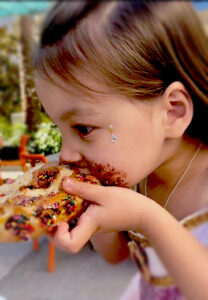
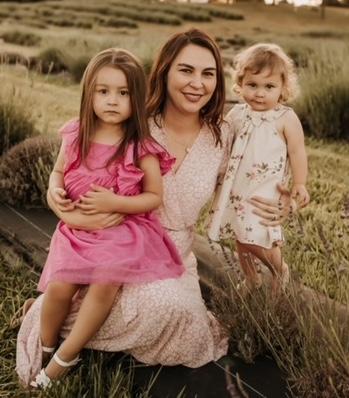
My daughter is now four and has overcome so much in her short life. She is undoubtedly the strongest little girl I know. My advice to fellow EA/TEF parents is to always acknowledge the setbacks, but to celebrate the EA/TEF milestones, no matter how small. Your child will overcome many challenges you never thought possible—like eating a doughnut.

Do you like what you see at DifferentDream.com? You can receive more great content by subscribing to the monthly Different Dream newsletter and signing up for the daily RSS feed delivered to your email.

Heading Photo by Annie Spratt on Unsplash

By

Jennifer Forman lives in Michigan with her husband Mike and two children, Leila and Abby. Jennifer is a medical professional who has dedicated her career to oncology patients and anticancer treatments. She is an advocate for her EA/TEF daughter who has been her inspiration.

Author Jolene Philo

Archives

Categories

Subscribe for Updates from Jolene

Related Posts

When Life Turns Out Differently Than You Had Planned

When Life Turns Out Differently Than You Had Planned

When Life Turns Out Differently Than You Had Planned

When life turns out differently than you had planned, the first reaction may be fear or anger. Or a sense of being overwhelmed. Four years ago, guest blogger Kelly Simpson was completely overwhelmed when her husband was deployed overseas and their son Oliver was born and quickly diagnosed with tracheoesophageal fistula (EA/TEF). She’s here today to share five realizations that helped her overcome her state of overwhelm.

A job you love, a white picket fence, a caring and loving spouse, children—everyone can picture the life they want to make for themselves. I sure had mine all mapped out! In early 2019, my husband, Jeremy, left for development overseas. This was our first deployment, and our first child was due in the next eight weeks.

“It will be a quick eleven months.” That’s what I told myself. I was ready to take on a deployment as a solo parent to a newborn with a full-time job.

The next eight weeks passed quickly and at thirty-nine weeks, our precious baby boy was born. April 5th was a day with many emotions—happiness, joy, and love—but also despair, heartache, and loneliness. Other feelings I can’t describe quickly set in when Oliver was diagnosed with tracheoesophageal fistula (EA/TEF).

I felt overwhelmed. How could I take care of my child with these “problems”? Nineteen days in the NICU, nine or more procedures and surgeries in his first year of life. This was not in my expectations of becoming a mom.

I struggled for at least the first year with feelings of being overwhelmed and wondered “why me?” Here are a few things I learned during Oliver’s first three-and-a-half years of life:

1. I had to hand over my expectations to God—many times, everyday. What I have planned and expect from my life is nowhere near the goodness that He has planned for me. When I am in shock or despair, He is not. When I hand my expectations over to Him, there is room for His way and His glory.

2. Be content in my role. Shewww! This was so hard and can be an everyday battle. I struggled with “Why me?” for many months. Every person can think of their “Why me?” reasonings to argue with God. But they really amount to nothing—they will not change my circumstances. So, the more quickly I got over myself and looked for God and His purpose in my story, the more quickly I was able to embrace my new outlook on life and life to the fullest.

3. Jesus came to give me life to the fullest. John 10:10 states “…I have come that they may have life, and have it to the full.” I can have life and have it to the fullest—best, more than I could ever imagine even with these circumstances. And you can too! Consider Daniel in the lions’ den from Daniel 6. God did not pull Daniel out of the den of wild and hungry lions. God did not change Daniel’s circumstances. He simply came down into the circumstance to be with him. God gave Daniel his presence in verse 6:22, “My God sent his angel, and he shut the mouths of the lions.” God’s presence is with us in every circumstance. If God sent His presence to Daniel, he will surely come down here to be with me, right here, in this situation, during the many doctor visits, surgeries, and procedures, and during the night while I lie awake crying. His presence is a promise I hold on to.

4. God will use this circumstance for His glory—submit it all to Him.There’s such a weight lifted when I surrender my circumstances over to God. Whatever your circumstances are, your feelings are valid and real. I needed someone to tell me that in my new walk. But I could not stay there and let the feelings fester. My trials would not go to waste, and neither will yours. Your circumstances, trials, and feelings allow you to empathize with others who are hurting. Even though your situations may not be the same, your feelings may be. You will be able to help validate others and bring them comfort and wisdom. Don’t miss out on this opportunity. It will bring you and God great joy!

5. Do not be afraid to set boundaries. Others will not always understand and that’s okay. If others are not being respectful of child/family member’s needs, set boundaries. Do not feel bad for doing so. During these times you need those who are supportive and helpful to you.

I hope these realizations ease your sense of overwhelm when life turns out differently than you had planned.

Additional Links:
Pediatric Tracheoesophageal Fistula and Esophageal Atresia | Children’s National Hospital. (n.d.). 
Tracheoesophageal Fistula. (2012, April 29).

Do you like what you see at DifferentDream.com? You can receive more great content by subscribing to the monthly Different Dream newsletter and signing up for the daily RSS feed delivered to your email.

Photo by Geran de Klerk on Unsplash

By

Kelly has lived her whole life in Kentucky. She and her husband, Jeremy, have an almost-four-year-old son, who, born during a deployment, was diagnosed with tracheoesophageal fistula (EA/TEF). She has always felt a calling to serve others and is living the dream as an Army wife, middle school teacher, and now, as an encourager to those who are living a dream different than they had planned.

Author Jolene Philo

Archives

Categories

Subscribe for Updates from Jolene

Related Posts

This Is Our Normal

This Is Our Normal

This Is Our Normal

“This is our normal,” Ellen Elizabeth says during the telling of her family’s EA/TEF story. What you are about to read can bring hope to families living through not only EA/TEF surgery and treatment, but also struggling with infertility and addiction.

I knew it wasn’t going to be an easy ride before my twins were even conceived. An infertility diagnosis sent me spiraling down a dark, lonely path that only I could get myself out of. Not only was I infertile, but I was struggling with alcoholism. The vicious cycle of addiction reared its ugly head most ferociously after my diagnosis of infertility. I no longer drank for fun; I drank to get obliterated every single day. I lost myself completely while blaming myself for all of the issues my husband and I were having becoming pregnant. It got to the point where I knew I would not be able to become a mother if I was not sober.

That was 6 years ago, and my twins are now 4. They have never seen me drunk or hungover. I would never have been able to have them if I had not gotten sober. Little did I know, getting sober was only the beginning.

We didn’t find out the sexes of the babies before they were born. I wanted it to be a surprise—never again will I experience a surprise like that. Baby A was born first. It was a boy! I was elated and crying as they put his tiny body into my arms. He was only 5 pounds and 2 ounces. His tiny little scream sounded different than I expected. I immediately fell into the deepest love I have ever felt in my whole life.

I had to give Baby Boy up so they could take him to the corner to get cleaned up and do all the things they need to do right away. Baby B, who was a healthy girl, wasn’t far behind. I immediately had to start pushing. As I was pushing Baby B, a nurse came over to me.

“Something is wrong with your son. He has to go to the NICU. We aren’t sure what is wrong right now, but we can’t get the tube down his throat to suck out the mucus.”

I was still in shock about what all was going on. “OK,” I stuttered. “Do whatever you need to do.” I wouldn’t see my son again for another 6 hours.

I found out from the doctors that Baby Boy had something called TEF and EA. I had no idea what either of these things were at the time. He proceeded to have TEF surgery on Day 1 of life. He was in the NICU for 17 days while his twin was home with us. Going between the two of them was a challenge, but we did it. Everything we went through was unexpected, yet we figured out how to navigate it.

Within the first 6 months of his life, we had to perform lifesaving CPR four times, call 911 twice to receive emergency care (it took them 4 minutes to get to our house—quite literally the longest 4 minutes of our lives). They inserted an NJ feeding tube, performed a tracheopexy, and surgically inserted a GJ feeding tube.

I was able to go through these terrifying events without drinking. Not drinking is my new normal. My son having TEF/EA is my normal. This is our new normal. Now, looking at him, you would have no idea. He just has a loud, barky cough that startles people. His tracheomalacia is severe enough that he still requires thickened liquids, inhalers, and a cough assist vest. He will always be prone to pneumonia and other bronchial illnesses. But he is our perfect little boy. His normal is not another normal. It is only ours. He picked us as his parents for a reason. We picked him as our son for a reason. I will forever be learning from him. And most importantly, I will forever love him for him. More than anything else, this is our new normal.

Do you like what you see at DifferentDream.com? You can receive more great content by subscribing to the monthly Different Dream newsletter and signing up for the daily RSS feed delivered to your email.

Photo by Greg Rosenke on Unsplash

By

Ellen Elizabeth is an infertility warrior and recovery advocate who uses her skills as an author and sober mother of twins to coach women struggling with feelings of shame and inadequacy. These women feel powerless to quit drinking or unable to bring a child into the world. Through radical honesty and recovery principles, Ellen inspires moms and their partners in all forms to define who they want to be and transform their demons into dreams. You can connect with her at her website itsellenelizabeth.com.

Author Jolene Philo

Archives

Categories

Subscribe for Updates from Jolene

Related Posts

EA/TEF Awareness Month 2023

EA/TEF Awareness Month 2023

EA/TEF Awareness Month 2023

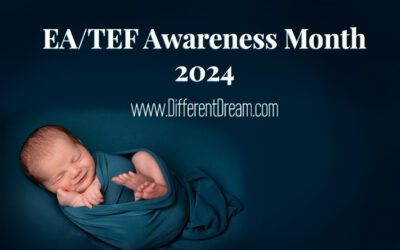
EA/TEF Awareness Month begins each year as soon as the ball drops at Times Square. Different Dream is celebrating awareness month by featuring stories written by parents who are raising kids born with EA/TEF. Some are raising children who are still quite young. Others are parenting teens. Some, like me, have adult children who are out on their own.

Because Different Dream is a blog for parents raising kids with a variety of disabilities and special needs, not all of our readers are familiar with EA/TEF. If that’s the case for you, here’s a quick summary.

EA/TEF is short for esophageal atresia with or without tracheoesophageal fistula. No wonder it goes by its initials, right? EA/TEF is a congenital anomaly in which the esophagus is not a completely open tube. It has a number of several different types which are described and illustrated at this EA/TEF link. The condition is fatal unless newborns receive immediate treatment which requires surgery and a NICU stay. Each child’s recovery is unique, as this month’s guest blog posts will show.

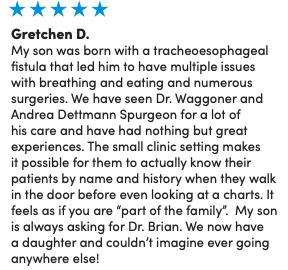
Different Dream devotes all of January to raising awareness for a very simple reason. My son, born in 1982, was an adult before I met another EA/TEF parent. We lived in a very remote area of the United States for the first three years of his life, which is a partial explanation for our isolation. We moved to Iowa in 1985, but it took 2 decades and a connection with someone at our church for me to meet that first EA/TEF parent face to face. It still happens so rarely that reading the paragraph below (from an advertisement for a local pediatric clinic) got me really excited.

My hope is that when new EA/TEF parents search the internet, they’ll find this website and be encouraged by the stories shared here. I also hope that whether or not your child lives with EA/TEF, these stories will encourage you, too.

Do you like what you see at DifferentDream.com? You can receive more great content by subscribing to the monthly Different Dream newsletter and signing up for the daily RSS feed delivered to your email.

Photo by nine koepfer on Unsplash

By

Jolene Philo is the author of several books for the caregiving community. She speaks at parenting and special needs conferences around the country. Sharing Love Abundantly With Special Needs Families: The 5 Love Languages® for Parents Raising Children with Disabilities, which she co-authored with Dr. Gary Chapman, was released in August of 2019 and is available at local bookstores, their bookstore website, and Amazon. See Jane Sing!, the second book in the West River cozy mystery series, which features characters affected by disability, was released in November of 2022.

Author Jolene Philo

Archives

Categories

Subscribe for Updates from Jolene

Related Posts

Setting Goals for Adult Children with Disabilities Matters

Setting Goals for Adult Children with Disabilities Matters

Setting Goals for Adult Children with Disabilities Matters

Setting goals for adult children with disabilities matters to Sandy Ramsey-Trayvick. When she and her husband approached the program director who works with their son Myles about setting goals for 2023, the coordinator was excited. In this post she explains why goal-setting matters to her, her husband, the support coordinator, and God.

When my son was a child, we relied on the special education system to provide the opportunities and resources for his continued growth and development. By law, this system required that measurable goals be developed annually, and that the goods and services needed to meet those goals also be supplied. As imperfect as that system may have been, I could be assured that my son’s progress was front and center for everyone on his team.

I was surprised and disappointed to learn that, after the age of 21, that goal-directed system is replaced by one in which progress is no longer required or objectively measured for adults with intellectual or developmental disabilities. According to my son’s support coordinator, the belief is that, after age 25, adults with intellectual or developmental disabilities have maxed out their ability to learn.

I couldn’t disagree more.

I believe God has a plan for my son, just like He has for all of us. And as a progressive God, I believe His plan for each of us includes His intention that we continue to grow into the best version of ourselves, whatever that may be.

God confirmed this with me recently.

He reminded both my husband and me that He has plans for Myles. Plans that were bigger than what we currently had in place or envisioned for the future. We felt convicted by this challenge from the Lord to think bigger for our son, to develop with God a vision for Myles’ life. We felt compelled to set bigger goals, both short and long term.

In a meeting with Myles’ support coordinator and the director of his day habilitation program, my husband and I shared some of our dreams for Myles as well as the role we hoped the day program would play in partnering with us for Myles’ continued growth. Much to our surprise, the director of the program was excited about our mindset and request. He revealed to us his belief that far too many parents were disengaged––having neither goals nor a vision for their adult children with disabilities. Many were merely looking for others to decide what their children’s futures would look like. They don’t yet know that setting goals for adult children with disabilities can make a difference.

Fortunately, for those of us who are followers of Christ, that doesn’t have to be the case. We have God’s promise for our kids that He has good plan for each of them and we have the wisdom of the Holy Spirit and the grace of God to help us help our kids continue to grow.

My husband and I want Myles to fulfill God’s plan for His life.

We want to partner with God, utilizing the resources and wisdom He provides, to help Myles continue to develop into the best version of himself. To continue becoming who God has called him to be, doing the things God has planned for him. That means that, as the new year approaches, I’ll be seeking God for His 2023 goals for my son.

Do you like what you see at DifferentDream.com? You can receive more great content by subscribing to the monthly Different Dream newsletter and signing up for the daily RSS feed delivered to your email.

By

Sandy and her husband are parents to three young adult children. Their son was diagnosed with multiple disabilities 21 years ago after a devastating illness as a toddler. Following her son’s diagnosis, Sandy quit her job to become his full-time caregiver and advocate.

Sandy is currently a Certified Professional Coach. Her focus is to come alongside other special needs parents, helping them to recognize choices that will enable them to reclaim freedom, renew purpose, and reactivate joy.

You can learn more about Sandy, her work and her blog at www.UNDisabledLIVES.org. You can also reach her at Sandy@UNDisabledLIVES.org.

Author Jolene Philo

Archives

Categories

Subscribe for Updates from Jolene

Related Posts