Smile Makers for Stressed Parents

Smile Makers for Stressed Parents

Smile Makers for Stressed Parents

Smile makers for stressed parents have been hard to find since the coronavirus shut down. While dads and moms have been busy juggling distance learning and working from home, I’ve run across several smile makers for stressed parents. Many are geared for families caring for kids with special needs and disability, though a few aren’t. I hope all of them make you smile, chuckle, and belly laugh as you keep your family healthy and engaged during this COVID-19 summer.

  1. What Does It Mean to Take Care of Yourself? This episode from the Lazy Genius Podcast  might not make you smile, but it gives you permission to take care of yourself so you can start smiling again. My daughter, who is works from home and is mom to 2 small children, told me about The Lazy Genius. The host, Kendra Adaci, has a knack for simplifying the stuff that makes raising kids and maintaining a house tough, and I love that.
  2. Paint Her in Color. Laura Spiegel is one of Different Dream’s newest guest bloggers, and her website Paint Her in Color offers emotional support to parents of children with special medical, developmental, or behavioral health care needs. Laura spent 12 years at the world’s largest biotech company, partnering with professionals and care teams to live healthy and happy lives. In 2013 her daughter was diagnosed with cystic fibrosis, which led to the creation of her blog. Her mom story combined with her professional expertise means she has what it takes to make caregiving parents smile.
  3. Novel Spirits Book Club. This book club is the brainchild of my daughter Anne. She’s a book editor and writing coach who wanted to do something for book lovers who didn’t have enough to read when libraries shut down during the pandemic. She and the authors she works with are offering new chapters of their books at The Novel Spirits Book Club every week for FREE. Now that’s something to smile about.
  4. Key Ministry Wednesday Roundtables. Key Ministry has been offering monthly video roundtables about topics of interest to the disability community for several years. When the shut down began, they stepped that up to weekly roundtables with an emphasis on mental health concerns exacerbated by the pandemic. You can sign up to be notified of Key Ministry’s upcoming roundtables here.  And yes, the roundtables are FREE. You smiling yet?
  5. How to Trauma-Proof Your Kids. The pandemic is traumatic for many children, and there’s plenty parents can do to prevent their trauma from becoming PTSD. This Different Dream post about the coronavirus, trauma, and PTSD explains how parents can tend to their kids’ mental health. I hope it brings you and your kids increased peace of mind.
  6. Talk with Doc. The doc is my friend, Stephen Hunsley. He’s a pediatrician and founder of the non-profit SOAR, which serves the disability community. Each Friday he hosts Talk with Doc, a Zoom meeting for caregiving families. The topic is different each week and so are his guests, and the meetings are FREE. To learn more and to register for next week’s meeting to the SOAR website. 
  7. Some Good News. If you haven’t watched any of the episodes of Some Good News hosted by John Krasinski (aka: Jim from The Office and Jack Ryan in the Amazon series), you are missing out. Krasinski started his feel good YouTube video series as a way to connect with fans during shelter-in-place, and it went viral. So viral that a bidding war ensued, which was won by ViacomCBS. Whatever happens with that venture, the first 6 episodes are worth watching. So start with Some Good News, Episode 1 so the last of these smile makers for stressed parents can make you smile.

Do you like what you see at DifferentDream.com? You can receive more great content by subscribing to the monthly Different Dream newsletter and signing up for the daily RSS feed delivered to your email inbox. You can sign up for the first in the pop up box and the second at the bottom of this page. 

By

Jolene Philo is both parent and daughter of loved ones with special needs and disabilities, as well as a former educator who worked with children for 25 years. She’s written several books about caregiving, special needs parenting, and childhood PTSD, including the recently released Sharing Love Abundantly in Special Needs Families: The 5 Love Languages® for Parents Raising Children with Disabilties, which she co-authored with Dr. Gary Chapman. She speaks internationally about caregiving and parenting children with special needs and blogs at www.DifferentDream.comJolene and her husband live in central Iowa.

Author Jolene Philo

Archives

Categories

Related Posts

Count Your Blessings: A Way To Stay Sane in a Crisis

Count Your Blessings: A Way To Stay Sane in a Crisis

Count Your Blessings: A Way To Stay Sane in a Crisis

Count your blessings, name them one by one,
Count your blessings, see what God has done!

When I was much younger, I rolled my eyes every time we sang this hymn at church. To my mind, the lyrics touted a solution far too simplistic for the troubles our family faced. 

Even when I did as instructed, life didn’t get better. 

My dad was sick and getting sicker. My mom shouldered too much stress as she worked to feed and clothe us. The trend continued after the birth of our son. Five years and seven surgeries into his young life, life was hard and getting harder. 

So far as the count your blessings thing went, I told God to count me out.

Then, one day the beginning of Zechariah 4:10 caught my eye: For who has despised the day of small things? (NASB) 

Hmmmmm.

If my response to the lyrics of Count Your Blessings was any indication, I had been despising the day of small things for years. Maybe even decades.

Not good. Not good at all.

An attitude change was long overdue, and it was a hard change to make. But as I began to look for small blessings, it was easier to see and delight in them.

And then, along came COVID-19.

The temptation was strong to stop searching for small and good things while living through such a vast pandemic. But for my own mental and spiritual health, I kept looking for and found these 10 tiny and precious treasures.

To read the rest of the post, visit the Hope Anew website.

Do you like what you see at DifferentDream.com? You can receive more great content by subscribing to the monthly Different Dream newsletter and signing up for the daily RSS feed delivered to your email inbox. You can sign up for the first in the pop up box and the second at the bottom of this page.

By

Jolene Philo is both parent and daughter of loved ones with special needs and disabilities, as well as a former educator who worked with children for 25 years. She’s written several books about caregiving, special needs parenting, and childhood PTSD, including the recently released Sharing Love Abundantly in Special Needs Families: The 5 Love Languages® for Parents Raising Children with Disabilties, which she co-authored with Dr. Gary Chapman. She speaks internationally about caregiving and parenting children with special needs and blogs at www.DifferentDream.comJolene and her husband live in central Iowa.

Author Jolene Philo

Archives

Categories

Related Posts

Caregiver Self-Care on the Cheap for COVID and Beyond

Caregiver Self-Care on the Cheap for COVID and Beyond

Caregiver Self-Care on the Cheap for COVID and Beyond

Caregiver self-care on the cheap sounds too good to be true. But new guest blogger Jessica Temple says it’s possible. As a neuropsychologist and mom of two children with special needs, she knows what she’s talking about!


We parents hear time and again that if we don’t take care of ourselves, we can’t take care of our children. It’s been said so many times because it is true!

Until recently, I thought self-care was too expensive, too exhausting, and too time consuming. Before children, I had hobbies and engaged in self-care every day. After children, that dropped drastically. Once my children were diagnosed with their special needs (autism and stroke), self-care dwindled to just about nothing. I could barely hold onto flossing, eating, and sleeping, let alone niceties such as massages and vacations. We don’t have much money, and I felt that time spent caring for myself was time stolen from my children.

A discussion with my husband opened my eyes to the fact that there are many free and quick ways to practice caregiver self-care on the cheap, even during the COVID-19 craziness. Here are some free and quick strategies we came up with.

Caregiver Self-Care on the Cheap at Home

There are many free things we can do, and we don’t even need to leave the house!

  • Soak in the bathtub
  • Listen to music
  • Safely sun bathing
  • Spend a night in with your partner or friends (once social-distancing is no longer a thing)
  • Card games or board games
  • Yoga
  • Arts and crafts with found objects
  • Read a book
  • Dance
  • Jigsaw puzzles
  • Listen to free audiobooks from the library
  • Listen to podcasts
  • Watch old home movies
  • Have a movie marathon
  • Write a letter to an old friend
  • Have a paper airplane contest
  • Design a fake house
  • Make a time capsule
  • Paint your nails
  • Drink more water 

Caregiver Self-Care on the Cheap Out of the House

There are other strategies that we can do when we go out once social distancing is no longer a thing. 

  • Take a drive in the car
  • Take a walk
  • Go to the library
  • Go to a free museum
  • Go on a picnic
  • Meditate outdoors
  • Window shop
  • Visit a farmer’s market
  • Start a found rock collection
  • Attend a free community class

Caregiver Self-Care Mindfulness Stratagies

Of course, if time is a factor, there are plenty of things you can that only take a little bit of time but pack a huge punch. 

  • Think about good past memories
  • Really taste your food 
  • Take mindful walks
  • Do the dishes mindfully
  • Wear comfortable clothes
  • Doodle, paint, or color
  • Give self-affirmations
  • Daydream
  • Write in your journal
  • Spend a few minutes outside
  • Take short breaks at work
  • Blow bubbles
  • Gaze at the stars
  • Stretch
  • Practice mindful breathing
  • Practice progressive muscle relaxation
  • Try out creative visualization

Caregiver Self-Care Fun

Having fun can’t be over-rated. Try these activites to lighten your mood.

  • Watch funny shows on YouTube
  • Having a fun text conversation with a friend
  • Sing
  • Cook or bake
  • Flip through a magazine
  • Take cool pictures on your phone
  • Put on creams and lotions
  • Give yourself a massage
  • Start a microgarden
  • Plan a (real or fake) future vacation
  • Read an interesting blog post

 On those hardest of days, when we are at are most exhausted, when we are completely broke, when we feel selfish taking care of ourselves, we no longer need to justify making time for ourselves. There are lots of quick ways to practice caregiver self-care on the cheap. Try one or two strategies a day and see what works for you. Any small steps you can take toward caring for yourself makes a world of difference. You are worth it!

Do you like what you see at DifferentDream.com? You can receive more great content by subscribing to the monthly Different Dream newsletter and signing up for the daily RSS feed delivered to your email inbox. You can sign up for the first in the pop up box and the second at the bottom of this page.

By

Jessica Temple, PsyD, ABPP-CN, is a board-certified adult clinical neuropsychologist. She has two children who have special needs. She and her husband, Lewis, host a podcast called Thriving in The Midst of Chaos. On this show, they talk about all aspects of special need, including getting a diagnosis and treatment, self-care, relationships, transitioning to adulthood, school, and finances. They created the Thriving in The Midst of Chaos podcast to offer support to others in the special needs world as well as to provide an easy way to find the most useful resources. They aim to share helpful resources with others, advocate for improvement and change in the special needs world, and offer a different perspective on parenting in the special needs community.    To find out more about how Jessica’s work can help you, contact her at:   fubarpod@gmail.com or @midstofchaospod.

Author Jolene Philo

Archives

Categories

Related Posts

Cerebral Palsy Means No Empty Nest

Cerebral Palsy Means No Empty Nest

Cerebral Palsy Means No Empty Nest

Cerebral palsy means no empty nest for parents like Trish Shaeffer, today’s guest blogger. March was Cerebral Palsy Awareness Month, which led to some soul-searching for Trish.

Cerebral Palsy Awareness Month led me to a realization that is in many of our minds as caregivers and parents. Cerebral palsy means no empty nest, a reality that worries and scares us to the core somedays. A reality we sometimes face when we look at our child Alex. I wanted to be honest and and open book and share my thoughts about what I personally deal with.

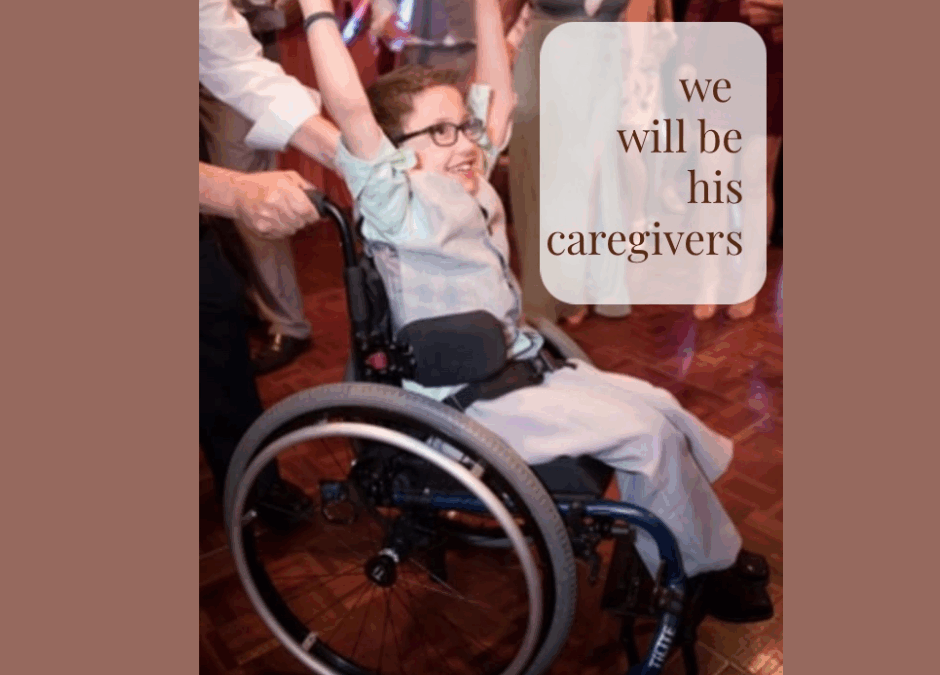
I see my oldest son being accepted into dental school courses. Alex’s twin became class president and is working on his violin solos. Watching them, I am reminded that cerebral palsy means no empty nest for us.

Cerebral palsy comes in many forms. For Alex it’s severe spastic quad cerebral palsy. This means his body is fully affected and he is in a wheelchair. He also has epilepsy and an intellectual disability. Walking and standing are very hard for him and he needs someone to hold on to him when he uses his walker for short transfers. 

He cannot do many simple tasks that we take for granted. Such as taking a bath, or brushing his teeth. Some days he has seizures. And he has a baclofen pump in his body that has to be refiled every few months. He has a lot of medical conditions, such as asthma and heart issues, that need to constantly be monitored.

He also has trouble writing and reading. Even talking sometimes is a challenge. A lot of times, he can not even communicate when he hurts or is ill. Its sometimes a guessing game.

All this comes with the sad reality that Alex may never be fully independent and on his own. We hope that he will be. We want nothing more than him to be out on his own. We want him to be happy.

But a crushing reality stares us down everyday. While our other two children grow older and more independent, we are left with the nagging thought of Alex always needing us. 

He can do some things on his own and in his own way. Like dressing himself and wheeling himself around. But, there are many things Alex may not be able to do. Like balance a checkbook, drive, or cook. Someone has to lift him and help him transfer in and out of things such as a car and his chair. He will probably always need someone there at all times to help him, whether it’s us or a nurse. So we talk often about how we will care for Alex in the future and set him up in life.

Cerebral palsy means no empty nest, but not all is negative.

I’ll always have a buddy and partner in crime. We plan to get an RV and travel with Alex all over the United States once our other two are grown. We are setting up funding so Alex will get the help and care he needs once he is 18.

We also have a tight-knit community, with people just like Alex to guide us into the future. To talk to. To share our stories with.

And we have his two brothers that care for and love Alex. They enjoy helping him with whatever he needs. For ten years Alex has been working on skills in therapy, at school, and at home to become more independent. Such as using an iPad to write, learning to snap and zip his jacket, using adaptive equipment such as an auto access seat to get out of his handicap van and transfer to his wheelchair, using a stair lift to get himself up and down stairs, and so much more.

We choose to focus on our future RV travels when we get sad or defeated when reality comes knocking. We focus on the positive steps Alex is taking to be come more independent.

Because it’s all about perception.

Some days are harder than others. We don’t know what the future holds. But we do know that Alex is a fighter, and he has a fire in his soul.

We will be his caregivers, cheerleaders, and biggest supporters. Despite not being empty nesters. Despite the challenges he faces. ?

Do you like what you see at DifferentDream.com? You can receive more great content by subscribing to the monthly Different Dream newsletter and signing up for the daily RSS feed delivered to your email inbox. You can sign up for the first in the pop up box and the second at the bottom of this page.

By

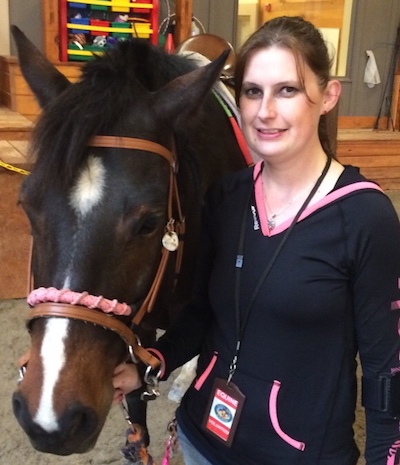
Trish Shaeffer is the mom of 3 active boys with special needs. She’s a peer supporter for Parent to Parent and volunteers with the United Cerebral Palsy Network, Special Olympics, and the United Way. She’s also an equine volunteer at Leg Up Farm. She’s married to her best friend and biggest supporter, Chris Schaeffer.

Author Jolene Philo

Archives

Categories

Related Posts

What Does It Mean to Survive as a Special Needs Parent?

What Does It Mean to Survive as a Special Needs Parent?

What Does It Mean to Survive as a Special Needs Parent?

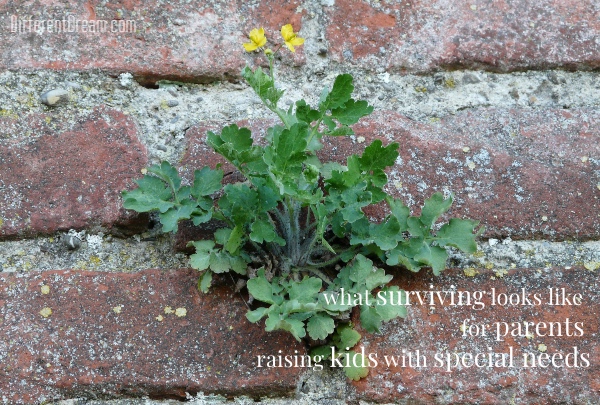
What does it mean to survive as a special needs parent? That can be a tricky question to answer as every family’s special needs and disability story is unique. Even so, our families have much in common. With that in mind guest blogger Trish Shaeffer describes what survival often means for many of us.

What does it mean to survive as a special needs parent? You may have learned your child had special needs even before he was born through prenatal diagnosis. You may have learned it abruptly and traumatically at birth or in stages as your child grew and developed. That’s why surviving is different for everyone.

Surviving is coping. Coping is doing what you have to do one problem at a time. Sometimes you may feel like you’re are trying to empty a flooding boat with one bucket at. You make decisions without feeling very informed or confident. You deal with specialist in fields you’ve never even heard of. Coping is dealing with problems and getting by. Coping always feels like you are just keeping up with what you have to do, with little energy for getting ahead of your problems.

Surviving is reacting. Reacting drains your energy and diminishes your feeling of control. You have no sense of direction of the events in your life. You are always trying to figure out what’s going on and what to do next. Your reactions may range from confusion to fear to incompetence. They may be accompanied by feelings of grief, anger, guilt, and helplessness. You may find that the services your child needs are not readily available, that family members or friends may not initially support you, or that you child’s problems are more extensive then you anticipated.

The reactions of surviving are normal and often necessary. They are not bad, wrong, or weak. They are how many people feel upon hearing sad or frightening news. You may have experienced all, some, or none of the following reactions.

  • Shock. Surviving begins with a state of shock, numbness, disbelief, or disorientation. If you are in shock, everything seems unreal. This is a normal reaction.
  • Fatigue. You may feel tired from lack of sleep, restless sleep, or the worries you carry around inside. You go through the motions and try to keep going. The only thing you look forward to is sleep.
  • Physical symptoms. You may experience headaches, lightheadedness, stomach aches, chest pains, or loss of appetite. Stress can cause these physical problems or make them worse. They must be taken seriously, so talk to your doctor.
  • Feelings of weakness, fragility, and vulnerability. Unpredictable emotions and behaviors can make you feel weak or vulnerable. You may cope well some days and then burst into tears in the grocery line.
  • Grief. You may be grieving the loss of the dreams you had for your child, yourself, your spouse, and your family. Your expectations about your child’s future are replaced by fear and confusion. You grieve for your child who deserves the same chances in life as anyone.
  • Sense of helplessness and loneliness. Surviving is an intensely personal journey. You may not be sure what to say to people, and you don’t know what they expect from you. Sometimes it’s hard to know when and how to turn to others for support.
  • Sadness. Sadness is a normal emotional reaction to events, thoughts, stories, or memories that remind you of loss.
  • Fear. You may experience fear for your child’s health, for your child’s development, and for how her condition will affect your family. Fears may race through your mind about whether you can afford this, what insurance will cover, or how you will find the right services for your child.
  • Worry. You may worry about the future, about what to do next, about doing the wrong thing, or failing to do the right thing. You worry about your partner, your other children, and you worry about money. And you worry that you worry too much, but you cannot shut off your brain.
  • Guilt. Feeling responsible for your child’s problem is one way of trying to understand what went wrong. It’s taking the blame because someone needs to be blamed.
  • Anger. Anger can take many forms. You may feel a general sense of “Why me?” Or you may feel resentment and envy, especially toward those who have typical children.
  • To ease the survival process, you may need to weep, yell, and feel very sorry for your child and yourself for a while. Knowing that these feelings are normal part of the process can help you reach out to other parents in similar situations. Remember everyone is different. Some parents adapt easily and some do not.

What does it mean to survive as a special needs parent? It means being there for each other, and remembering that life does go on. It means reminding yourself that the process of surviving is normal and necessary and that you will pass through it.


Do you like what you see at DifferentDream.com? You can receive more great content by subscribing to the monthly Different Dream newsletter and signing up for the daily RSS feed delivered to your email inbox. You can sign up for the first in the pop up box and the second at the bottom of this page.

By

Trish Shaeffer is the mom of 3 active boys with special needs. She’s a peer supporter for Parent to Parent and volunteers with the United Cerebral Palsy Network, Special Olympics, and the United Way. She’s also an equine volunteer at Leg Up Farm. She’s married to her best friend and biggest supporter, Chris Schaeffer.

Author Jolene Philo

Archives

Categories

Subscribe for Updates from Jolene

Related Posts

When We Think We’re Invincible

When We Think We’re Invincible

When We Think We’re Invincible

In the wake of an incredibly stressful year, one that almost broke me, I had to learn that I am not invincible…not even close.

The challenge began year ago last August. Our daughter’s in-home caregiver (our daughter is 22 and has severe autism) was leaving at the end of July. We needed someone new to start in August. Summer and fall flew by, however, with no replacement. We switched agencies but there was a shortage of people working as support staff, and we had no candidates.

I’m a working mom with two part time jobs. Between the responsibility of managing my daughter’s health and everyday care, not to mention keeping track of her busy teen brother, things were getting a bit dicey at home. I was having trouble sleeping, barely exercising, and flying into a rage it seemed about every little thing.  

Then spring hit. Each spring he is gone much of the time, and I am the parent who holds down home base. The agency had finally found someone to work with our daughter, but the employee was both chronically late and inconsistently availability. We limped through the season.

The final straw came in May when the caregiver quit with one day’s notice. We back to square one. In my weary and stressed state, I was sure we were facing another 7 months or more without support.

 That was when the depression and hopelessness set in. I didn’t take the news well and became quite distraught. I spent one afternoon in the ER with a bad reaction to some sleeping medication.  I realized I was not invincible. I was actually quite a mess and needed help.  

4 months after my minor mental breakdown, I am healing and learning how to better care for myself. I took time out from some of my work responsibilities, made exercise a priority, and am catching up with doctors’ appointments and counseling sessions.  

Why am I sharing this with you? 

If you are the parent of a child with a disability, a caregiving parent like me, you may need to figure out how to slow down and take care of yourself. I beg you not to ignore the warning signs of fatigue and stress. Find a way to make a change because can’t keep the pace forever. No matter what you are doing our what you’ve accomplished in the past, you are not invincible. 

If you are a family member or friends with people caring for children with disabilities, I pray you never assume they are doing just fine, even though that’s what they will say to you when you ask. I almost never tell people how I am really doing. I don’t want to burden them or go into details they probably won’t understand. I urge you to check in with your friend, lend a listening ear, or practical support. If they say no, don’t give up.  

Though I am blessed with loads of supportive friends, the swiftness of my breakdown took me by surprise.

As a person of faith, I believe all things happen for a reason. I pray you take time to care for yourself or support a caregiving friend who needs your encouragement or practical help. When we think we’re invincible and discover we’re not, it’s the most invincible thing we can do.    

PS: Less than an hour after I drafted this story, our fairly new and excellent in-home staff person texted me and gave notice that she was quitting. I feel like I’m in a better place right now to accept the situation without having a panic attack. I am also in awe of God’s timing. He prepared me for the disappointment and stress of being without caregiving help with the words of this story. I am grateful for his grace and know He will see us through. Praise God! 

Do you like what you see at DifferentDream.com? You can receive more great content by subscribing to the monthly Different Dream newsletter and signing up for the daily RSS feed delivered to your email inbox. You can sign up for the first in the pop up box and the second at the bottom of this page.


By

Karen Jackson is the Executive Director of Faith Inclusion Network (FIN) of Hampton Roads where she lives with her husband and three children in Norfolk, VA. She is also the author of Loving Samantha. You can connect with Karen at the Faith Inclusion Network page.

Author Jolene Philo

Archives

Categories

Subscribe for Updates from Jolene

Related Posts