5 Reasons to Blog During PTSD Awareness Month

5 Reasons to Blog During PTSD Awareness Month

5 Reasons to Blog During PTSD Awareness Month

June is PTSD Awareness Month, and though I sometimes feel there’s nothing more for me to write on post traumatic stress disorder, here I am blogging about it again. Specifically about PTSD in children, also known as childhood developmental trauma. Here are 5 reasons this topic is worth writing about year after year.

Reason #1: Too Many Children Suffer from PTSD

Exact numbers are hard to pin down, but as this report from the National Center on PTSD, more children live with PTSD than we’d like to think, definitely in the tens and hundreds of thousands. But even if only one child was living with untreated PTSD, that’s one child too many.

Reason #2: PTSD in Children is Highly Preventable

All children experience trauma at some point in life, but not all children develop post traumatic stress disorder. PTSD happens when a child experiences a trauma and the emotions and physical sensations accompanying the traumatic event become trapped in. Research shows that after a traumatic event, PTSD usually doesn’t develop in children who, with the help of a calm and supportive adult, are able to process the trauma, leave it in the past, and move on.

Reason #3: PTSD in Children Is Highly Treatable

Even when children whose unprocessed trauma becomes PTSD, all is not lost. Children as young as three can receive effective trauma treatment. The best methods are those that are not talk-based, and the best therapists have at least some training that is trauma-focused. For a thorough look at treatment methods, I recommend The Body Keeps the Score. In it Bessel van der Kolk describes and reviews the research related to dozens of trauma therapies.

Reason #4: Without Treatment Childhood PTSD Leads to Complications

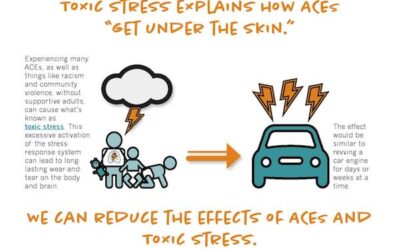
The earlier a child is diagnosed with PTSD and receives treatment, the better. The longer treatment is delayed, the more likely the condition is to become a more complex mental illness called dissociative disorder. Also, a study called The Adverse Childhood Experiences Study (ACES) revealed that children who experience traumatic events that are left untreated are likely to become adults who struggle to maintain healthy relationships, develop serious health concerns, and have shorter lifespans.

Reason #5: My Son Lived with Untreated PTSD for 26 Years

Our son developed PTSD after 4 years of invasive, painful surgeries and medical procedures that began on the day of his birth in 1982. His diagnosis came in 2008 when he was 26, and after a week of intensive, outpatient trauma therapy, he looked at me and said, “For the first time in my life, I’m not looking over my shoulder waiting for someone to take me into surgery.” My heart leaped for joy to know that he had found relief from the terrifying, wordless memories that had plagued him for decades. Simultaneously, a resolve grew within me to tell other families about PTSD so their children wouldn’t have to wait 26 years to find relief in treatment.

Ten years later the resolve is as strong as ever, and I invite you to join me in raising awareness about PTSD in children until traumatized children receive the help and effective treatment they need.

Do you like what you see at DifferentDream.com? You can receive more great content by subscribing to the quarterly Different Dream newsletter and signing up for the daily RSS feed delivered to your email inbox. You can sign up for the first in the pop up box and the second at the bottom of this page.

By

Jolene Philo is a published author, speaker, wife, and mother of a son with special needs.

Author Jolene Philo

Archives

Categories

Subscribe for Updates from Jolene

Related Posts
Timothy’s Burden: A Mom’s Song

Timothy’s Burden: A Mom’s Song

Timothy’s Burden: A Mom’s Song

Today’s post comes from guest blogger, Sharon Cargin, who reflects upon a day when her stressed, caregiving heart needed to hear God speak, and He did.

I was feeling very restless one fall morning so I took a little trip to look at what my favorite greenhouse had out for autumn pots. I love autumn but I tend to struggle emotionally every fall. As I was driving, I got hit by a flashback. Old memories of 29 years ago when my son Tim was in the NICU in Omaha, very sick, flooded back. I images of entertaining 6 and 2-year-old sons Luke and Levi at the Ronald McDonald house poured into my mind. Mom and I–and my husband on the weekends–spent that lovely fall and into winter playing outside when we could as we anxiously awaited for Timothy to be well enough to go home. Sadly, those memories are very intertwined with stress.

Later the same day, I came across this diary entry:

3-26-00 I: finally gave in to shop for a bigger car seat for Tim. We are at the dreaded point where Tim is too big for a regular car seat, and he is too big for me to care for him alone. He is handicapped and I hate that so much. I did not want to find out we needed a handicapped car seat. It seems like failure to me.  I don’t know it just hurt so much. Monday night I was upset again and prayed for encouragement like someone calling. At that moment, the phone rang and it was my mom. I thought,” I don’t want to talk to my mom right now!”

The first thing she says is, “You made me cry.”
I said, “What are you talking about?”
She said,” By that song.”

I had given her a tape of a singing group that I thought she might like. The song was titled Timothy’s Burden.  It is about keeping the faith and walking in grace in hard times. Next, I picked up a book I was reading and the chapter was on handicaps and it had a prayer on not being set back by adverse circumstances!

I do not remember writing the diary entry, let alone why it was saved on my computer. I guess God wanted me to see it today. I looked up the song and listened to the lyrics.

I’m takin on Timothy’s burden
Not ashamed to wear these chains
If I suffer things uncertain
I’m gonna count my loss for gain
I’m takin on Timothy’s burden
Oh yes, I am, I’m takin on Timothy’s burden

Though I suffer things uncertain
I’ll keep the faith and fight the fight
I’m takin on Timothy’s burden
Oh yes, I am, I’m takin on Timothy’s burden

The song is based on 2 Timothy when Paul is in prison, soon to be executed. He admonishes Timothy to carry the gospel forth and urges him to be faithful with a very hard burden. The admonishment is also for believers today. Will we be faithful even as we suffer?

For me the song parallels my life of caring for Timothy all these years. On the outside our family appears to handle Tim’s care well. But don’t be fooled. It has been hard. We have suffered and struggled to keep the faith and fight the fight. We have struggled to count the loss of a normal life for Tim and for us as gain. Even though Tim’s prognosis is not good according to the doctors, we still hope and dream about a full life for Tim. We strive to see the positive. It is only by grace we serve Tim, and it is only by grace we serve the Lord. The same is true for all of us in every area we are called to serve.

On that fall day, I saw Jesus.
He ministered to me and my hurts.
He encouraged me.

May he encourage you as you cry out to Him with your burdens today. May you see God lift your burdens and give you hope as His plan unfolds. May you be confident God has a good plan. May you embrace the burden of carrying the gospel with His help and grace! May others see its hope as you carry your burdens while keeping the faith and fighting the fight!

And because I preach this Good News,
I am suffering and have been chained like a criminal.
But the word of God cannot be chained.
So, I am willing to endure anything
if it will bring salvation and eternal glory in Christ Jesus to those God has chosen.
2 Timothy 2:9-10

Do you like what you see at DifferentDream.com? You can receive more great content by subscribing to the monthly Different Dream newsletter and signing up for the daily RSS feed delivered to your email.

By

Sharon (wearing white shirt above) is a wife, mother, mother-in-law, and grandmother. She has taught elementary school and homeschooled. Teaching and mentoring children and teens has been a joy in her life. Life was fairly normal for Sharon but pretty much blew up at the birth of her third son who was born 3 ½ months premature with quadriplegic cerebral palsy. Sharon has a passion to encourage others and share some of the lessons she has learned over the years.

Author Jolene Philo

Archives

Categories

Subscribe for Updates from Jolene

Related Posts

Why Anxiety Makes Attending Church Difficult

Why Anxiety Makes Attending Church Difficult

Why Anxiety Makes Attending Church Difficult

Different Dream welcomes Dr. Stephen Grcevich as today’s guest blogger. He’s the founder and director of Key Ministry and author of Mental Health and the Church: A Ministry Handbook for Including Children and Adults with ADHD, Anxiety, Mood Disorders, and Other Common Mental Health Conditions recently released by Zondervan.

Why Anxiety Makes Attending Church Difficult

For the past two years our Key Ministry team has been working on a ministry model for churches looking to welcome and include children, adults and families impacted by mental illness. An important takeaway for pastors and ministry leaders exploring our model is that kids and adults with common mental health conditions may function reasonably well at school or work but experience significant disability when seeking to participate in another important life activity – church!

One very common mental health condition that often makes church attendance difficult is anxiety. Anxiety is a normal and healthy response to future threats. Someone with an identified anxiety disorder experiences excessive and persistent anxiety or fear inappropriate for their level of maturity that significantly interferes with tasks of daily living. Neuroimaging studies have demonstrated that persons with anxiety have a biological predisposition to overestimate the level of risk associated with new or unfamiliar situations. They often hold wildly inaccurate perceptions—some conscious, some unconscious—of the impressions they make on others and the judgments that others make about them.

One in fifteen adults in the U.S. experience social anxiety disorder at any given time. Imagine yourself as a parent with social anxiety looking for a church for your family. Let’s consider some of the “What if” questions likely to flood that parent’s mind as they contemplate visiting a new church for the first time…

  • What if people stare at us when we arrive because we’re dressed differently than everyone else?
  • What if I make a fool of myself with the people who greet new visitors?
  • What if the folks at Sunday school ask me where my spouse is?
  • What if they expect me to get up during the service and introduce myself to people I don’t know?
  • Worse yet, what if they hand me a microphone and ask me to introduce myself to everyone in the church at one time? Or call me down to the front and pray over me?
  • What if they expect me to join a small group and share my deep, dark secrets with a bunch of people I barely know?

Other anxiety disorders also present major challenges to church participation.

Children and adults with panic disorder experience brief, recurrent, unanticipated episodes of intense fear, accompanied by a characteristic set of physical symptoms, a sense of impending doom, and the urge to flee the place where they experience symptoms. Agoraphobia is a closely related condition in which intense symptoms of anxiety occur in situations experienced as unsafe with no easy way to escape. The absence of an aisle seat at church located near an exit allowing for an unobtrusive escape may be sufficient to trigger an attack for someone with panic disorder.

Children and teens with separation anxiety disorder typically experience excessive fear or distress when away from home or significant attachment figures, usually parents. Church activities in which children and parents are served in different physical locations out of one another’s sight may result in heightened anxiety, manifested by tearfulness, anger, or irritability. Overnight retreats and mission trips often cause intense anxiety for older children and teens unless they’re accompanied by a parent.

Children and adults with obsessivecompulsive disorder (OCD) experience recurrent, intrusive thoughts or compulsive, recurrent, repetitive behaviors associated with significant mental distress. They may struggle with perfectionism or making decisions. Someone with OCD accompanied by contamination fears may go to great lengths at church to avoid physical contact with other worshipers or with objects or furniture.

Full participation in the church often requires vulnerability, social risk, and change—all of which can be incredibly challenging for those with anxiety. There are steps churches can take to help persons with anxiety overcome those challenges. Here are just a few…

  • Consider designating a staff person or volunteer as a mental health liaison—a primary contact person for church members and visitors who might require assistance before or during an initial visit or benefit from accommodations in church activities they find challenging. Persons with anxiety may experience less frustration and distress in navigating church systems through interacting by phone, email, or text with one sympathetic staff member or volunteer who functions as an advocate.
  • Your church might reserve seats for persons with anxiety at the ends of rows and near exits while providing guests an unobtrusive method of signaling their need for the seats.
  • Enlist the help of your church’s communication team. Churches can help ease anxiety through sharing lots of pictures and videos on websites and social media platforms to help prospective visitors know exactly what they can expect at a weekend worship service or any ministry activity.

Church leaders can demonstrate Christ’s love for persons with anxiety by graciously helping them enter our ministry environments and providing them with necessary supports that  grow spiritually alongside their friends and neighbors in the church.

Do you like what you see at DifferentDream.com? You can receive more great content by subscribing to the quarterly Different Dream newsletter and signing up for the daily RSS feed delivered to your email inbox. You can sign up for the first in the pop up box and the second at the bottom of this page.

By

Dr. Stephen Grcevich is the founder and President of Key Ministry and author of Mental Health and the Church. He is a child and adolescent psychiatrist who combines over 25 years of clinical practice and teaching with extensive research experience evaluating medications prescribed to children and teens for ADHD, anxiety, and depression. Dr. Grcevich has presented at over 35 national and international medical conferences and is a past recipient of the Exemplary Psychiatrist Award from the National Alliance on Mental Illness (NAMI). He blogs at Church4EveryChild and speaks at national and international ministry conferences on mental health and spiritual development.

Author Jolene Philo

Archives

Categories

Subscribe for Updates from Jolene

Related Posts

My 4 Greatest EA/TEF Mom Fears

My 4 Greatest EA/TEF Mom Fears

My 4 Greatest EA/TEF Mom Fears

EA/TEF Mom fears are on today’s EA/TEF Awareness Month menu. They’re being served up by guest blogger, Jill Seaney whose little boy is now three. In today’s post she describes her top four EA/TEF Mom fears. Her worries will be all to familiar to other EA/TEF parents and perhaps unbelievable to those just learning about the condition.

My 4 Greatest EA/TEF Mom Fears

Being a parent can be scary! Parents worry about things like babies sleeping through the night, toddlers eating their veggies, or how their child will do in school. These are all real and valid worries.

But what if your child was born with complex medical problems? My son, Blake, who is now 3.5 years old, was born with multiple birth defects, the most serious of them at birth was esophageal atresia and a tracheoesophageal fistula (EA/TEF) which required major repair surgery when he was 3 days old. He is now “fixed” in the sense that his surgery was successfully completed— his esophagus was connected to his stomach and his trachea and esophagus were separated. However, he will never be “cured” and will have struggles related to this birth defect for the rest of his life. Below are my four biggest EA/TEF Mom fears.

  1. The common cold or flu manifesting into something much worse. All kids born with EA/TEF have a medical condition called tracheomalacia (TM), a collapse of the airway when breathing. When a person with TM exhales, the airway collapses partially or even all the way in really severe cases. The airway is floppy and it makes it much more difficult to have a productive cough that gets bacteria and junk up and out of the airway. Instead, it sits in the airway and can turn into a bad respiratory infection, often times pneumonia. A child with a common cold is usually better within 10 days. For a child born with EA/TEF the common cold can quickly and easily turn into a hospitalization for pneumonia. As soon as the weather starts cooling down, usually right after the holidays here in Arizona, we go into “hibernation mode” in order to prevent sickness as much as possible.
  2. Eating. Especially in public. Most kids born with EA/TEF have a narrower than normal esophagus due to connection surgery at birth. Often times, food gets stuck in the narrow part of the esophagus. The only way to unclog the esophagus is to get the food to go down to the stomach or get it to come back up (vomiting). As my son gets older we can get the food unstuck by giving him soda or pineapple juice. But typically he vomits more quickly than normal to bring it back up. He turns reddish-blue and makes a loud noise as the food comes back up and out his mouth. When we eat in public I cut his food into teeny, tiny bites and tell him to chew, chew, chew. I also encourage small sips of soda to prevent what EA/TEF parents call “stuckies”. The stares from bystanders are tough some days, but mostly I worry about how children eating at the table with him will respond in a couple years when he goes to school. I worry about his heart being broken if kids make fun of him.
  3. Damage to the esophagus from reflux and long term effects of medications taken for reducing acid. Most people with EA/TEF have acid reflux. Blake has been on high doses of two acid reflux meds since birth. His doctor says the reflux will not likely ever go away. All we can do is keep medicating him to reduce the amounts of acid so it doesn’t do as much esophageal damage when he does reflux. Reflux is awful to watch. Blake refluxes the worst when he laughs or cries too hard, or when he falls asleep and is totally relaxed. I have to tell my 3-year-old is to calm down when he starts having too much fun. I know that he is likely going to reflux, and stomach contents will shoot up and out his mouth and nose. It will end with him crying because it hurts so badly. I fear social settings with other young kids when he gets excited or laughs too hard. What if reflux shoots out his mouth and nose in front of them? We keep him on high doses of medications to reduce acid in the stomach to protect his esophagus. But at the same time, I worry about long term side affects from the medications.
  4. Ongoing narrowing of the esophagus and esophageal dilations. Kids who are born with EA/TEF often times have stricturing (narrowing) of the esophagus. The narrowing can get so tight a dilation’s needed to open the esophagus so food can go down without getting clogged up. The dilation is done under anesthesia. The surgeon inserts a deflated balloon into the esophagus and then inflates the balloon to lightly push open the stricture again. The dilation can work for years but might have to be repeated throughout childhood and into adult life. My son has had four dilations so far. It’s hard to watch him go through dilation after dilation. When food starts getting stuck more frequently, my worry and fear is that the stricture is narrowing and will need another dilation. We also worry about an esophageal perforation or other complication with more dilations and manipulations. Our son has to be intubated to protect his floppy airway which one time resulted in a paralyzed vocal chord. That makes him more susceptible to food aspirations and aspiration pneumonia now.

Like all moms, I worry about normal stuff. But I have an extra long list of out-of-the-ordinary fears and worries as well. I hope these examples help other EA/TEF parents know that they are not alone in these fears. I hope they shed some light about typical fears of an EA/TEF parent to those unfamiliar with the condition before the start of Awareness Month!

Do you like what you see at DifferentDream.com? You can receive more great content by subscribing to the quarterly Different Dream newsletter and signing up for the daily RSS feed delivered to your email inbox. You can sign up for the first in the pop up box and the second at the bottom of this page.

By

Jill lives in Tucson, AZ with her husband Jeff and their son Blake. She worked in Human Resources up until 2014 when her son was born with VACTERL Syndrome which included EA/TEF. Jill resigned to care for her son full time. Later he was also diagnosed with a Congenital Diaphragmatic Hernia and Eosinophilic Esophagitis. Jill’s personal blog (Beloved Blake) documents his surgeries and health challenges, their family struggles, and Blake’s milestones. Jill loves writing and teaching others about what it’s like raising a child with complex medical needs. She wants to be a blessing to other parents just starting on this journey.

Author Jolene Philo

Archives

Categories

Subscribe for Updates from Jolene

Related Posts

How to Find a Trauma Therapist

How to Find a Trauma Therapist

How to Find a Trauma Therapist

Finding a skilled trauma therapist for parents who live with secondary trauma because of the stress experienced while raising children with special needs can be a challenge. However these steps can help parents who want healing to find trauma therapists in every area of the United States.

How to Find a Quality Trauma Therapist

Step 1: Ask Around

When you need to find an eye doctor, dentist, or a specialty doctor, you probably ask other friends or co-workers for recommendations. So why not follow the same strategy when looking for a trauma therapist? Be sure to ask people whose judgment you trust and then continue your search using steps 3–7 below.

Step 2: Use a Therapist Locator

If Step 1 proves fruitless, all is not lost. Psychology Today has a user friendly therapist locator at their website. Just type in your zip code and a list of therapists in your area will pop up. Another good therapist locator can be found at the Good Therapy website.

Step 3: Screen the List

Scroll through the list and jot down the names of therapists who meet these basic criteria:

  • They have trauma-specific training.
  • They do more than talk therapy (look for therapists who use hypnosis, Eye Movement Desensitization Reprocessing (EMDR), guided imagery, neuro-feedback, and play therapy rather than Trauma Focused Cognitive Behavioral Therapy (TF-CBT).
  • They operate from a worldview consistent with yours.

Then go back and read through each profile and circle the names of therapists who meet your criteria.

Step 4: Call Your Insurance Company

Call your insurance company to find out which therapists are within your network. Cross off those who aren’t.

Step 5: Do a Phone Screening

Call the offices of the remaining names on the list. If a receptionist answers, find out when to call back to speak to the therapist directly. Ask questions about the types of trauma therapy they us, what training they’ve completed, what their fees are, how much is paid by insurance, and how long until an appointment can be scheduled.

Step 6: Visit a Therapist

Schedule a first visit with the person who rises to the top of your list. During that appointment, the therapist will conduct an intake assessment. If you like what you see, schedule a second appointment during which therapy will begin. But if you feel uncomfortable for any reason, move on to the next therapist on the list.

Step 7: Assess the Situation

If you visit the therapist for an hour a week, you should feel like you’re making progress in a few months. If no progress has been made after 3-6 months of treatment, find a different therapist.

How Did You Find a Trauma Therapist?

Have you found a qualified trauma therapist who has helped you deal with your trauma? Give them a shout out in the comment box and add more tips about how you found the right person.

Do you like what you see at DifferentDream.com? You can receive more great content by subscribing to the quarterly Different Dream newsletter and signing up for the daily RSS feed delivered to your email inbox. You can sign up for the first in the pop up box and the second at the bottom of this page.

By

Jolene Philo is a published author, speaker, wife, and mother of a son with special needs.

Author Jolene Philo

Archives

Categories

Subscribe for Updates from Jolene

Related Posts

Effective Trauma Treatment for Nonverbal Children

Effective Trauma Treatment for Nonverbal Children

Effective Trauma Treatment for Nonverbal Children

Effective trauma treatment for nonverbal children doesn’t get talked about much (no pun intended), as I discovered recently during a Facebook group discussion.

A group member posed a question about trauma treatment for nonverbal children, and I passed it along to the group. Imagine my surprise when only one person had any suggestions. I reposted a question a week later in case anyone missed it the first time. A few parents said they hadn’t responded earlier because their children were verbal. But nobody added anything new to the discussion.

Resources about Trauma Treatment for Nonverbal Children

Our combined lack of knowledge has niggled at me ever since. So I did a little research on the subject and am passing what I found on to you.

  • The resource mentioned in the Facebook group was about a therapy called neurological reorganization. Here’s the website for Bette Lamont, the therapist who helped the Facebook member and her family. I’m not familiar with this treatment method and am not endorsing the therapy or therapist. Be sure to thoroughly research the method and therapists before pursuing either.
  • The National Child Traumatic Stress Network (NCTSN) has created a fact sheet about empirically supported treatments and promising practices they’ve developed and implemented. The NCTSN is a leader in the field and highly respected. The fact sheet page at their website lists several treatment methods that can be used with children from birth onward. Since babies are considered “nonverbal” from birth to age 3, my assumption is that those methods could be used with older nonverbal children, too.
  • Another resource that might be helpful is Bessel van der Kolk’s amazing book The Body Keeps the Score. In it he clearly describes dozens of trauma treatment methods and their effectiveness. The information in the book provides many treatments parents can research and pursue on behalf of their children.

What Can You Add about Trauma Treatment Methods for Nonverbal Children?

If only I had more to pass along to you about trauma treatment methods for nonverbal children. I don’t, but perhaps you do. Please share what you know in the comment box. Perhaps your information will help nonverbal, traumatized children get the therapy they need!

Do you like what you see at DifferentDream.com? You can receive more great content by subscribing to the quarterly Different Dream newsletter and signing up for the daily RSS feed delivered to your email inbox. You can sign up for the first in the pop up box and the second at the bottom of this page.

By

Jolene Philo is a published author, speaker, wife, and mother of a son with special needs.

Author Jolene Philo

Archives

Categories

Subscribe for Updates from Jolene

Related Posts