Resolving Past Trauma from the Inside Out Through Therapy

Resolving Past Trauma from the Inside Out Through Therapy

Resolving Past Trauma from the Inside Out Through Therapy

Welcome to the final post in the Inside Out Special Needs Parenting series. The purpose of the series has been to equip parents to recognize and resolve their own past traumas so they can parent their children effectively. The previous article in this series, Resolving Past Trauma from the Inside Out Through Self-Understanding provided parents with resources they can use to process past traumas.

Sometimes, parents need a professional to help with accessing and resolving past trauma. Thankfully, several new treatments for trauma have recently been developed and tested and have been proven to be very effective. Effective treatments have one thing in common. They rely on more than talk to access and process past events. Here are a few promising therapies linked to more information about each one.

  1. Somatic Experiencing
  2. Guided Imagery, Creative Visualization, and Hypnosis
  3. Neurofeedback
  4. Eye Movement Desensitization and Reprocessing

Each of these methods is explained in greater detail in Childhood Disrupted: How Your Biography Becomes Your Biology and How You Can Heal by Donna Jackshon Nakazawa. It’s an informative and interesting read. Another book that provides the most thorough summary of the history of trauma treatment and reviews each treatment method in great detail is The Body Keeps the Score: Brain, Mind, and Body in the Healing of Trauma by Bessel van der Kolk. And here’s a final reminder about the book that led to the inside out parenting series–Parenting from the Inside Out: How a Deeper Self-Understanding Can Help You Raise Children Who Thrive by Daniel Seigel and Mary Hartzell.

Checking out these resources and resolving past trauma through therapy may seem like a daunting task. But remember, your primary motivation for doing the work is to raise kids who thrive. But as you work to make life better for them, the self-understanding you gain will make your life better, too.

Inside Out Special Needs Parenting, Part 1
Inside Out Special Needs Parenting, Part 2
Inside Out Special Needs Parenting, Part 3
Inside Out Special Needs Parenting, Part 4
Inside Out Special Needs Parenting, Part 5
Inside Out Special Needs Parenting, Part 6
Inside Out Special Needs Parenting, Part 7
Inside Out Special Needs Parenting, Part 8

Do you like what you see at DifferentDream.com? You can receive more great content by subscribing to the quarterly Different Dream newsletter and signing up for the daily RSS feed delivered to your email inbox. You can sign up for the first in the pop up box and the second at the bottom of this page.

By

Jolene Philo is the author of the Different Dream series for parents of kids with special needs. She speaks at parenting and special needs conferences around the country. She’s also the creator and host of the Different Dream website. Sharing Love Abundantly With Special Needs Families: The 5 Love Languages® for Parents Raising Children with Disabilities, which she co-authored with Dr. Gary Chapman, was released in August of 2019 and is available at local bookstores, their bookstore website, and at Amazon.

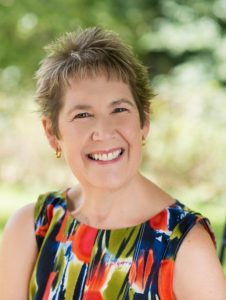
Author Jolene Philo
Archives

Categories

Subscribe for Updates from Jolene

Related Posts

The Sad Truth about PTSD in Children

The Sad Truth about PTSD in Children

The Sad Truth about PTSD in Children

For the first 52 years of my life, I had no idea children could struggle with post-traumatic stress disorder (PTSD). But in 2008 when my son, age 26, was diagnosed with this mental illness, I learned the truth. PTSD in children is real, and my son had been living with it for 26 years. His PTSD began when he had surgery less than a day after he was born.

“He won’t remember,the doctors told us.

But, deep in his implicit memory, our son did remember. And though he’s gone through successful treatment and has learned to cope with the memories of the trauma he experienced as an infant, those memories will always be with him. He will never forget them.

The truth about PTSD in children won’t let me rest.

So today, which is PTSD Awareness Day, I am climbing onto my soapbox again. Just as I did a year ago. Just like I will next year and for many years to come. Because even though I and many others speak about PTSD in children frequently, and even though my book Does My Child Have PTSD? has been published and is widely available, too many children with PTSD go undiagnosed.

That is the sad truth about PTSD in children.

But the truth gets even sadder. The truth is that many children are correctly diagnosed with PTSD, but they aren’t treated. For a variety of reasons. Many parents can’t find qualified trauma therapists. Many parents delay treatment because they think they can’t afford it.

To read the rest of this post, click on over to the Not Alone website.

Do you like what you see at DifferentDream.com? You can receive more great content by subscribing to the quarterly Different Dream newsletter and signing up for the daily RSS feed delivered to your email inbox. You can sign up for the first in the pop up box and the second at the bottom of this page.

By

Jolene Philo is the author of the Different Dream series for parents of kids with special needs. She speaks at parenting and special needs conferences around the country. She’s also the creator and host of the Different Dream website. Sharing Love Abundantly With Special Needs Families: The 5 Love Languages® for Parents Raising Children with Disabilities, which she co-authored with Dr. Gary Chapman, was released in August of 2019 and is available at local bookstores, their bookstore website, and at Amazon.

Author Jolene Philo

Archives

Categories

Subscribe for Updates from Jolene

Related Posts

Myths about PTSD in Children, Part 2

Myths about PTSD in Children, Part 2

Myths about PTSD in Children, Part 2

PTSD in a mental illness not understood by many people. People who do know about PTSD in children often have many misconceptions about it. While writing, Does My Child Have PTSD? I discovered 10 common myths and misconceptions about PTSD in children. In my latest video for Rising Above Ministries (RAM), I exchange 5 more myths for facts about PTSD in children

To watch the video click on Myths and Misconceptions about PTSD in Children, Part 2.

You can find more information about this subject in the Different Dream blog post, 10 Myths about PTSD in Children. A very in depth look at the 10 myths is included in Does My Child Have PTSD?

For the rest of the RAM videos in this series, check out these links:

Episode 1: Special Needs Parenting Is Different Dream Living
Episode 2: Childhood Trauma by any Other Name Is Still Traumatic
Episode 3: Myths about PTSD in Children, Part 1

Do you like what you see at DifferentDream.com? You can receive more great content by subscribing to the quarterly Different Dream newsletter and signing up for the daily RSS feed delivered to your email inbox. You can sign up for the first in the pop up box and the second at the bottom of this page.

By

Jolene Philo is the author of the Different Dream series for parents of kids with special needs. She speaks at parenting and special needs conferences around the country. She’s also the creator and host of the Different Dream website. Sharing Love Abundantly With Special Needs Families: The 5 Love Languages® for Parents Raising Children with Disabilities, which she co-authored with Dr. Gary Chapman, was released in August of 2019 and is available at local bookstores, their bookstore website, and at Amazon.

Author Jolene Philo

Archives

Categories

Subscribe for Updates from Jolene

Related Posts

Does My Child Have PTSD? Do I Have PTSD?

Does My Child Have PTSD? Do I Have PTSD?

Does My Child Have PTSD? Do I Have PTSD?

A strange thing happened a few months back at the Accessibility Summit in McClean, Virginia. On Friday afternoon, I was sitting in the Exhibit Hall at my book table. A copy of my newest book, Does My Child Have PTSD? What To Do When Your Child Is Hurting from the Inside Out was displayed in a place of honor. A woman paused, picked up the book, and read the title. “Does my child have PTSD?” She looked up and said, “Probably he does. But I think I it too. Where’s the book about that?” “Does your child have special needs?” I asked. Her eyes, haunted and dull, met mine and she and poured out her story. A son with autism in elementary school. A failed marriage to an abusive husband. 24/7 care of her little boy except when he’s with his dad. Battles with the school district about how to meet her son’s needs. The mom’s mounting stress exacerbated by guilt about not resting in Jesus like she wishes she could. The strange thing wasn’t her particular story. The strange thing was that for the remainder of the conference–Friday evening and all day Saturday–parent after parent paused at the table where I sat. They picked up the book and responded to the title in the same way with the same haunted, dull look in their eyes. “My child has PTSD, and I think I do, too.” Their responses alarmed me. Why? Because my research while writing Does My Child Have PTSD? unearthed several research studies that show the importance of parents safeguarding their own mental health. Numerous research show that the children of parents with mental illness are at greater risk of developing PTSD after traumatic events. Others show that pregnant women with PTSD are likely to pass along a genetic marker for PTSD to their unborn children. Yet the Amazon search I conducted after returning home resulted in some disturbing findings. There were numerous books in the general market for medical professionals about dealing with caregiver stress, chronic stress, and compassion fatigue. There were books for teachers about the same issues. General market and Christian market books abounded in for caregivers of adult spouses and aging parents and the stress they experience. But there weren’t any general market books devoted to the caregiving stress parents experience while raising children with special needs. And there were none in the Christian market either. How can that be, I wondered, when writers of both the Old and New Testament call believers to care for widows and orphans, the sick and the blind, the poor and the outcasts? How can we be so far off the mark? Why isn’t the church confronting issues of mental health instead of ignoring them? Then I thought about the Mental Health and the Church conference being sponsored by Saddleback church next October. I thought about Key Ministry, an non-denominational organization that ministers to families of kids with mental health issues. And I remembered a consensus reached by a gathering of special needs ministry leaders that mental health will be the next area of need God is calling his church to address. The church is beginning to grapple with this issue. But much remains to be done. For me and I hope for some of you, mental illness ministry begins with supporting stressed and traumatized parents of kids with special needs. The prospect is frightening because I don’t know how or where to start.
But God does. And he will guide us each step of the way when our eyes are fixed upon him. When our prays are offered in dependence and submission to him. When we confess our neglect and ignorance about the trauma and stress that oppresses caregiving parents. When our hearts are broken, and we weep for the burdens they bear. When we ask him to make us the hands and feet of Christ to guide struggling, guilt-ridden parents to his rest in this world and the next.
Lord, open the eyes of your people to the needs of struggling parents. Give us your wisdom and power to come alongside parents overwhelmed by the stress and trauma of caregiving. Show us what they need and equip us to meet them. Let your Spirit be strong in us, so we are diminished and Christ is glorified. Amen. Do you like what you see at DifferentDream.com? You can receive more great content by subscribing to the quarterly Different Dream newsletter and signing up for the daily RSS feed delivered to your email inbox. You can sign up for the first in the pop up box and the second at the bottom of this page.

By

Jolene Philo is the author of the Different Dream series for parents of kids with special needs. She speaks at parenting and special needs conferences around the country. She’s also the creator and host of the Different Dream website. Sharing Love Abundantly With Special Needs Families: The 5 Love Languages® for Parents Raising Children with Disabilities, which she co-authored with Dr. Gary Chapman, was released in August of 2019 and is available at local bookstores, their bookstore website, and at Amazon.

Author Jolene Philo

Archives

Categories

Subscribe for Updates from Jolene

Related Posts

Creating a Legacy of Love and Hope for Children with PTSD

Creating a Legacy of Love and Hope for Children with PTSD

Creating a Legacy of Love and Hope for Children with PTSD

Too often, discussions about children with PTSD descend into a litany of gloom and doom. Foster and adoptive parent, Kim Combes, who is also a mental health therapist, is here with words of hope and encouragement for those caring for children with PTSD.

Creating a Legacy of Love and Hope for Children with PTSD

“Trauma changes the biology of the brain,
but just ONE secure, loving and nurturing relationship
also changes the biology of the brain.”
Dr. Bruce Perry

Dr. Bruce Perry is my “rock star” in the human service field. He and his researchers are on the cutting edge of investigating children with PTSD, and how it affects those who have come from very difficult and traumatic backgrounds. In fact, I utilize his materials as I do my own presentations which are geared towards foster/adoptive parents, social workers, teachers, day care providers and others – all of whom have children with difficult and challenging behaviors in their charge.

Gloom and Doom for Children with PTSD

Having been in the counseling arena in some capacity or another for over three and a half decades, I can confirm the veracity of the above quote. Research has shown tangible evidence of the heinous results of trauma…relationships that have been marred by such things as neglect, physical and sexual abuse, domestic violence, and substance abuse in children’s lives.

MRI scans clearly show brain dysfunction in those with multiple ACEs (Adverse Childhood Experiences), pictures that resemble the “dark side of the moon” with black crater-like imaging throughout. However, when the same child is placed in a thriving environment in as little time as 6 months to a year, with all needs being met, an MRI photo will start showing bright colors – reds, purples, etc., displaying areas where healing is taking place and synapses are connecting in healthy ways.

It was formerly thought that once a brain was damaged, repair was not an option. Studies have since conclusively shown that previous thinking was in error. For example, my wife and I took our adoptive toddler son (born to parents both having intellectual disabilities) to a geneticist 17 years ago. It was thought by the placing social workers that Logan had some “syndrome,” the name of which I can no longer remember. Tests came back negative, thankfully, but I will always remember what the examining doctor told Diane and me. “You cannot change the hard drive a baby is born with, but you can enhance that hard drive by the software you put into it.” Wow, the validity of Dr. Perry’s research, reworded in computer terminology.

Hope for Children with PTSD and their Parents

As Logan grew we did our best to stimulate and challenge his brain while providing for him a safe and nurturing home environment. Now, at 17 1/2 years of age, he has already exceeded the prognosis we were given from professionals when we received him in our family at 10 1/2 months old. His brain, before he was removed from his bio-parents at 3 months, was in “failure to thrive” mode. Neglect of his basic needs so early on did indeed negatively affect him. Left for hours in a car seat by his caregivers, with very little or no stimulation, brought him close to death before DHS could place him in foster care. The software we installed upon his entrance into our family, did not completely reverse what genes and history did to his command center, but he is much further along than what genes and traumatic history would have initially dictated.

My son’s story is but just one of myriad stories I’ve heard from others or experienced firsthand over the course of my career. While PTSD indeed has severe consequences on children enduring tumultuous and chaotic situations, the outcomes do not have to be all gloom and doom. One does not have to be psychologically savvy to do profound work in helping overcome ACEs. Anyone can be audaciously present in a youngster’s life, creating an environment of hope and a legacy of love for those who desperately need both.

Do you like what you see at DifferentDream.com? You can receive more great content by subscribing to the quarterly Different Dream newsletter and signing up for the daily RSS feed delivered to your email inbox. You can sign up for the first in the pop up box and the second at the bottom of this page.

By

Mr. Kim Combes, M.Ed., has been in the human service field since 1980. He has been a residential treatment counselor/therapist, an educational aide, a DHS social worker, an in-home worker and foster/adoptive parent. Kim has fostered over 35 teen boys since 1994. He is currently a national presenter from Colo, IA, having spoken at numerous conferences across the U.S. Too, he and wife, Diane, have adopted five special needs children, with the youngest still at home. Kim is a published freelance writer. His book, Walk in a Manner Worthy: A Voice in the Foster and Adoptive Care Wilderness, was published in 2020.

Author Jolene Philo

Archives

Categories

Subscribe for Updates from Jolene

Related Posts

Inside Out Special Needs Parenting, Part 2: Brain Basics

Inside Out Special Needs Parenting, Part 2: Brain Basics

Inside Out Special Needs Parenting, Part 2: Brain Basics

This post is the second in Different Dream’s series about special needs parenting from the inside out. The series is a compilation of information learned while doing the research for Does My Child Have PTSD? What To Do When Your Child Is Hurting from the Inside Out.

Today’s post is a tour of brain basics. What you learn here will be used in later posts to  explain why our kids can push our emotional buttons and make us act like crazy people sometimes. Many of these concepts and the hand map of the brain can also be found in Parenting from the Inside Out: How a Deeper Self-Understanding Can Help You Raise Children Who Thrive by Dr. Daniel Siegel and Mary Hartzell.

Inside Out Special Needs Parenting, Part 2: Brain Basics

Believe it or not, a hand can be used to visualize the brain. Start by looking at the palm of your hand with the thumb folded in.  Think of the center of your wrist as the spinal cord. That makes center of your palm the brain stem. It’s the most primitive part of the brain. It connects the brain to the spinal cord and controls basic functions. Think heart rate, breathing, digesting foods, and sleeping. It also takes in data from body and moves it on to various parts of the brain.

 Limbic Region Brain Basics

Now let’s move on to the limbic region of the brain. One of its jobs is to mediate emotions and general motivational states.

The middle segment of your thumb is the hippocampus. It’s the center for processing new memories and for moving them into long term storage. The hippocampus also connects emotions and senses, such as smell and sound, to memories.

Now look at the knuckle before the middle section of the thumb and label it the amygdala. The amygdala is about the size and shape of an almond. It sits near the bottom of the brain. It is always alert to basic survival needs and emotional reactions like fear and anger. It causes fear reactions like sweaty palms and butterflies in the stomach.

Now take your hand and fold down your fingers over your thumb to discover another part of the brain that is part of the limbic region. Your two middle two fingernails are the anterior cingulate. It is the chief operating officer of the brain. It helps coordinate thoughts and bodily movements. It determines what we pay attention to. It’s also involved in creating emotions.

The orbitofrontal cortex is also part of the limbic region of the brain. It is the fingers closed over the thumb in our hand model. As you can see, it sits at top of brain. It is considered the center for most evolved brain functions such as abstract thinking, reflection, and awareness.

The orbitofrontal cortex has several major areas, one of which is the frontal lobe. On your hand its the front of fingers from second-to-last knuckle down to fingernail. The frontal mediates reasoning and all the processes that go along with that. The frontal lobe also helps us self-regulate emotions and many other things.

If you have a hard time visualizing all this, perhaps this diagram will help.

This post in the Inside Out Special Needs Parenting series takes a look at brain basics to explain why kids can push our buttons.

As was mentioned earlier, these brain basics can help us understand why our kids can push our buttons and make us act less like parents and more like, well, kids. Or, as will become clear in the next post in the series, why our kids make us flip our lids.

Your Brain Basics Questions?

Do you have questions about this brain basics information? Leave a comment and I’ll try to answer.

Inside Out Special Needs Parenting, Part 1

Do you like what you see at DifferentDream.com? You can receive more great content by subscribing to the quarterly Different Dream newsletter and signing up for the daily RSS feed delivered to your email inbox. You can sign up for the first in the pop up box and the second at the bottom of this page.

By

Jolene Philo is the author of the Different Dream series for parents of kids with special needs. She speaks at parenting and special needs conferences around the country. She’s also the creator and host of the Different Dream website. Sharing Love Abundantly With Special Needs Families: The 5 Love Languages® for Parents Raising Children with Disabilities, which she co-authored with Dr. Gary Chapman, was released in August of 2019 and is available at local bookstores, their bookstore website, and at Amazon.

Author Jolene Philo

Archives

Categories

Subscribe for Updates from Jolene

Related Posts