10 Causes of PTSD in Children

10 Causes of PTSD in Children

10 Causes of PTSD in Children

 Post-traumatic stress disorder (PTSD) is a mental illness vastly under-diagnosed in children. For that reason, I’ve been guest blogging about the topic at Friendship Circle of Michigan’s website. Previous posts in this series explained why I advocate for children with post-traumatic stress disorder (PTSD), explored 5 myths and misconceptions about PTSD in children, and defined both trauma and PTSD from a child’s point of view.

Causes of PTSD in Children

The most recent post in the series identified the following ten causes of PTSD in kids:

  1. Medical intervention
  2. Abuse
  3. Neglect
  4. Disasters
  5. Violent acts
  6. Accidents
  7. Divorce
  8. The death of a significant loved one
  9. Moving
  10. Adoption

Trauma in the Eyes of a Child

If you’re shaking your head and thinking, “She’s pulling my leg. Those aren’t traumatic events,” then you’re looking at them with the eyes of an adult rather than from a child’s point of view. That train of thought and more detailed explanations of each of the ten items on the list can be found at the blog post 10 Causes of Post-Traumatic Stress Disorder in Children at Friendship Circle’s website.

More Articles about PTSD in Children

Other articles about PTSD in kids at this website include:

Your PTSD Experience

Did you deal with PTSD as a child? Is your child dealing with it now…or do you suspect PTSD? If so, leave a comment about how the condition was diagnosed and treated. Or if you have questions, go ahead and ask. I’ll try to answer or direct you to resources where you can find answers.

Do you like what you see at DifferentDream.com? You can receive more great content by subscribing to the quarterly Different Dream newsletter and signing up for the daily RSS feed delivered to your email inbox. You can sign up for the first in the pop-up box and the second at the bottom of this page.

By

Jolene Philo is the author of several books for the caregiving community. She speaks at parenting and special needs conferences around the country. Sharing Love Abundantly With Special Needs Families: The 5 Love Languages® for Parents Raising Children with Disabilities, which she co-authored with Dr. Gary Chapman, was released in August of 2019 and is available at local bookstores, their bookstore website, and Amazon. See Jane Dance!, the third book in the West River cozy mystery series, which features characters affected by disability, was released in October of 2023.

Author Jolene Philo

Archives

Categories

Subscribe for Updates from Jolene

Related Posts

PTSD in Kids: What Is It?

PTSD in Kids: What Is It?

PTSD in Kids: What Is It?

Post-traumatic stress disorder (PTSD) is common in children. More common than adults, who want to believe they can protect kids from all harm, want to admit. Because PTSD in kids is real, parents, educators, medical professionals, therapists, and caregivers need to know as much as possible about the disorder.

PTSD in Kids and Friendship Circle

My latest guest post at Friendship Circle of Michigan’s very informative blog, answers some basic questions about PTSD. The article first defines trauma and then post-traumatic stress disorder. It explains what causes simple trauma to morph into it’s bigger, meaner cousin, post-traumatic stress disorder.

PTSD Resources

The guest post cites books by William E. Krell and co-authors Peter A. Levine and Maggie Kline, resources that explore childhood PTSD in depth. Their books also provide guidance about how to work with traumatized children and prevent simple trauma from becoming post-traumatic stress disorder. So hop on over to the post What Is Post-Traumatic Stress Disorder in Children? at Friendship Circle of Michigan’s blog to read the whole thing.

PTSD in Kids: More Questions

Of course, reading the post will lead to more questions about the disorder. Questions like:

  • Why do some kids develop PTSD after trauma but others don’t?
  • What are symptoms and warning signs of PTSD in kids?
  • How can it be prevented?
  • How can it be treated?

PTSD in Kids: What Do You Want to Know?

Those are the questions that came to mind when I first learned about PTSD in children. Maybe you have other questions spinning around in your head. Go ahead and leave them in the comment box. I’ll do my best to answer your questions in future posts in the Friendship Circle series. If you think your child is suffering from PTSD, visit Intensive Trauma Therapy’s website, www.traumatherapy.us, to learn more.

Do you like what you see at DifferentDream.com? You can receive more great content by subscribing to the quarterly Different Dream newsletter and signing up for the daily RSS feed delivered to your email inbox. You can sign up for the first in the pop-up box and the second at the bottom of this page.

By

Jolene Philo is the author of several books for the caregiving community. She speaks at parenting and special needs conferences around the country. Sharing Love Abundantly With Special Needs Families: The 5 Love Languages® for Parents Raising Children with Disabilities, which she co-authored with Dr. Gary Chapman, was released in August of 2019 and is available at local bookstores, their bookstore website, and Amazon. See Jane Dance!, the third book in the West River cozy mystery series, which features characters affected by disability, was released in October of 2023.

Author Jolene Philo

Archives

Categories

Subscribe for Updates from Jolene

Related Posts

Stress and How Parents of Kids with Special Needs Handle It

Stress and How Parents of Kids with Special Needs Handle It

Stress and How Parents of Kids with Special Needs Handle It

Stress is a component of the parenting process. The stress is often compounded for parents of children with special needs. A featured post at Julia Robert’s blog Support for Special Needs recently addressed the subject.

Overwhelming Stress

The post was written by Robert Rummel-Hudson, father of a daughter with special needs. (He also blogs at Fighting Monsters with Rubber Swords—a great title for a special needs parenting blog.) In the post, he talks about Veronica Galbraith, “a single mother of a teenaged boy with Autism in the UK  who committed suicide after she was compelled to put her son into care when she found herself unable to cope with his behavioral issues.”

External Stress of Caring for a Child with Special Needs

He goes on to analyze the external and internal stresses Veronica and every parent caring for a child with special needs faces. He says, “These external stressors aren’t mitigating circumstances. They aren’t beside the point. They ARE the point…We don’t spend every minute of every day dealing with disability challenges, but because those challenges are omnipresent, we are always special needs parents, regardless of whether the monster is driving at that particular moment or not.”

Stress You Can’t Handle

He conclude the article with this observation:

When I read the story of someone like Veronica Galbraith, I don’t wonder if she got it wrong more than she got it right, but rather if she BELIEVED she got it wrong too much. And I realize, and remind myself when necessary, that the secret to successful parenting isn’t just about educating yourself, or listening closely to what your kids are trying to tell you, or fighting the good fight like a steely-eyed warrior. Those are vital points, to be sure. But none of that happens if you lose heart, or if you convince yourself that you really can’t show up for work the next morning.

There’s a saying that every special needs parent has heard at some point, rivaling the Holland Thing for frequency of appearance in our inbox. “God never gives you more than you can handle.” But we know better. Sometimes he does.

The article is thought-provoking and worth a thorough read. So buzz on over to Support for Special Needs for a closer look.

How Do You Handle the Stress You Can’t Handle?

The post made me thankful for the support system around us when our son was very sick, and it makes me thankful for my faith, too. Because I agree with Rummel-Hudson. God does give people more than they can handle. But my faith says he doesn’t want them to commit suicide. He wants them to see their need for him and trust him to handle it.

That’s how I got through the dark days and years with our son. How about you? How do you handle the stress you can’t handle? What support do you need? Leave a comment.

Do you like what you see at DifferentDream.com? You can receive more great content by subscribing to the quarterly Different Dream newsletter and signing up for the daily RSS feed delivered to your email inbox. You can sign up for the first in the pop-up box and the second at the bottom of this page.

Photo by Jeremy Bishop on Unsplash

By

Jolene Philo is the author of several books for the caregiving community. She speaks at parenting and special needs conferences around the country. Sharing Love Abundantly with Special Needs Families: The 5 Love Languages® for Parents Raising Children with Disabilities, which she co-authored with Dr. Gary Chapman, was released in August of 2019 and is available at local bookstores, their bookstore website, and Amazon. See Jane Dance!, the third book in the West River cozy mystery series, which features characters affected by disability, was released in October of 2023.

Author Jolene Philo

Archives

Categories

Subscribe for Updates from Jolene

Related Posts

Post-Traumatic Stress Disorder: Why I Advocate for Kids with PTSD

Post-Traumatic Stress Disorder: Why I Advocate for Kids with PTSD

Post-Traumatic Stress Disorder: Why I Advocate for Kids with PTSD

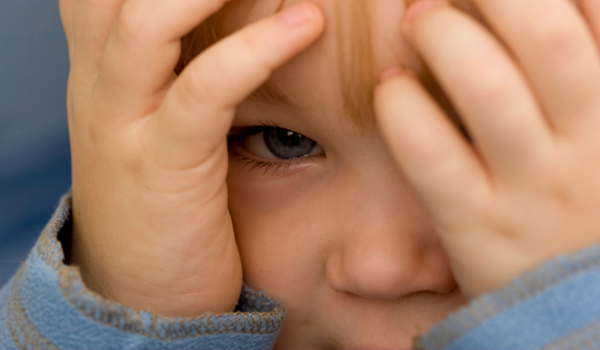
Post-traumatic stress disorder (PTSD) in children. The phrase makes me want to put my hands over my face, like the child in the picture, and pretend kids don’t get PTSD.

Why I Advocate for Kids with PTSD

But I can’t, because kids, including my son and my son-in-law, suffered from this very treatable mental illness when they were children. That’s why I jumped at the chance to write an occasional guest blogger series about PTSD in kids for the folks at Friendship Circle of Michigan. The first post in the series tells about our son’s struggle with PTSD. His post-traumatic stress disorder was precipitated by life-saving major surgery shortly after his birth and many more surgeries and invasive medical procedures and tests he endured until age five.

Confessions of a Post-Traumatic Stress Disorder Advocate

To read the whole story, scoot on over to the post entitled Confessions of a Post-Traumatic Stress Disorder Advocate at the Friendship Circle of Michigan blog. You’ll not only read the story of our son’s struggle with PTSD and his highly successful treatment, but also find out why I’ve become a passionate advocate on the topic. So passionate that an entire chapter of Different Dream Parenting is dedicated to informing parents about PTSD causes, symptoms, and treatments.  So passionate, my agent is sending out my book proposal on the topic to publishing houses around the country.

What Do You Want to Know About PTSD?

Over the next several months, I’ll inform DifferentDream.com readers each time a new post in the series is published at Friendship Circle’s blog. And I’ll let you know when a publisher offers a contract, and I start writing the book. In the meantime, please leave a comment about what you want the book to cover. What questions do you have about PTSD in children? What resources do you want to learn about? What resources do you recommend? I would love to hear from other people passionate about PTSD in children!

Do you like what you see at DifferentDream.com? You can receive more great content by subscribing to the quarterly Different Dream newsletter and signing up for the daily RSS feed delivered to your email inbox. You can sign up for the first in the pop-up box and the second at the bottom of this page.

By

Jolene Philo is the author of several books for the caregiving community. She speaks at parenting and special needs conferences around the country. Sharing Love Abundantly with Special Needs Families: The 5 Love Languages® for Parents Raising Children with Disabilities, which she co-authored with Dr. Gary Chapman, was released in August of 2019 and is available at local bookstores, their bookstore website, and Amazon. See Jane Dance!, the third book in the West River cozy mystery series, which features characters affected by disability, was released in October of 2023.

Author Jolene Philo

Archives

Categories

Subscribe for Updates from Jolene

Related Posts

Self Care for the Caregiver

Self Care for the Caregiver

For guest blogger Rebekah Benimoff and her family, successful outings require a little extra planning. She relearned the importance of self care for the caregiver during a recent visit to a crowded restaurant, as he guest post shows.

Self Care for the Caregiver: Braving the Crowds

Braving the crowds on a holiday with two wiggly boys and a husband with PTSD is not my idea of fun. Yet recently family came into town and wanted to take us to dinner. Months had passed since our last foray into the world of crowded restaurants, when Roger had left after five minutes. We’d scratched our date night and gone home. Roger hibernated in the bedroom to recover, and I had sandwiches with the kids. So I had legitimate concerns about trying again– but Roger wanted to go out, despite my hesitation.

PTSD Concerns

The restaurant was not as bad as I’d expected, but the kids were cranky and Roger had to wait outside to avoid the groups coming in and out. Blaine was flopping all over me, complaining he did not want to be there either. Tyler borrowed my iPhone only to have it taken away because he kept blaring music, way too loud- so he could hear it over the din of the crowd (he has trouble discriminating sounds in loud places).

Eventually our group was called and Roger crammed into the booth, back to the wall.  I could tell he was uncomfortable, but years of being in the middle of a war zone have caused hyper-vigilance. He can’t sit by a window, and he has to be in a strategic position and see all areas of the room, to have a way of escape.

Sensory Disorder & Diabetes Concerns

I pulled the kiddos onto my side and endured the pummeling that comes from a child with a sensory disorder who needs constant stimulation via bumping into me.  As his brother often complains, our youngest has no understanding of “personal space”. When Tyler started yelling out his order, I thought we were going lose Roger, but he surprised me by not darting out the door.  Through the meal, Roger coped by wearing headphones to keep from becoming overwhelmed by the movement and clamor at our table alone– not to mention the rest of the place.  I tried to enjoy my meal quickly, calculate the insulin to carb ratio with Tyler, and help him talk at a normal volume despite the noise in the restaurant.

Self Care for the Caregiver Techniques

We usually avoid this kind of stress, but occasionally I find myself doing my best to make it through the moment. And I have found that no matter how much we plan, and no matter how often I say “no”, sometimes I end up in places I cannot handle on my own.  And after a situation like this one, I want to go home and bury myself under the covers.

I take care of my family in ways that not everyone can relate to. Over time I have learned that part of taking care of my family involves taking care of me. This particular time, I agreed to go out, but I also arranged for “down time” afterwards—so I could recover. I’ve found that I take much better care of the ones I love if I am making sure my needs are met. Like the oxygen mask in the airplane—you have to put yours on before you can help someone else. And we need more than a breath every now and then. We need the steady supply that keeps us well.

This takes planning and communicating. Most especially it takes knowing what I can and cannot do, and prioritizing. Not everyone understands, but the reality is they do not have to. Self care for the care giver is vital- no matter what anyone else thinks. I have to do what is best for my family- it’s that simple.

How About You?

Rebekah has developed self-care techniques that work for her. Perhaps you have techniques that work for you, too. If so, we’d love to hear them and perhaps try them out. So if you please, leave a comment about your self-care for the caregiver techniques.

Do you like what you see at DifferentDream.com? You can receive more great content by subscribing to the quarterly Different Dream newsletter and signing up for the daily RSS feed delivered to your email inbox. You can sign up for the first in the pop up box and the second at the bottom of this page.

4 Ways to Combat Special Needs Parenting Stress

4 Ways to Combat Special Needs Parenting Stress

4 Ways to Combat Special Needs Parenting Stress

Special needs parenting stress is a reality. This post from Laurie Wallin offers 4 ways to combat special needs parenting stress. See what you think.

4 Ways to Combat Special Needs Parenting Stress

I sat with jaw dropped and tears flowing down cheeks as I watched the documentary. A UCSF expert in cellular aging was explaining that special needs moms were one of the best groups in which to study the negative effects of chronic stress on the human body. Her colleague, a Stanford University researcher, confirmed this, adding that for every one year of chronological age, special needs moms experience on average six years of cellular aging.

As I stared at the documentary on the screen, the full gambit of grief pulsed through my body—denial, anger, depression, bargaining—everything but acceptance, that elusive stage of grief that I wish I could grab hold of more often in this parenting journey.

My husband simply reached over and held my hand when he realized our little movie night had been ambushed by reality. Of course, choosing National Geographic’s documentary, Stress: Portrait of a Killers was, in hindsight, a stupid choice for some quality hubby snuggle time. But I gravitate to topics like that because deep down I’ve always known this job of special needs parent is intense, and that the intensity has to be affecting me over time. How can constant, high-level, hyper-vigilant care of another human being NOT do that to us?

Friends, this is one of the hardest things we face as special needs parents: stress.

But there are some things we can do to fight special needs parenting stress. Things that protect us from this radical aging in our cells due to the intensity of our caregiving lives.

Forgiveness

Forgiveness is letting go. Not forgetting, but loosening our grip on what we feel has wronged us. We forgive so WE can be free of the negative emotions that come with hurt in life. The careless comments of other parents at the supermarket. The casual way a doctor or specialist disregards our input about our child. The school’s neglecting provisions in an IEP. The ways we feel left out in our extended families or communities. Whatever the hurt—whether intentional or accidental—when we let go and allow life to deal with that person or situation so we can move on, we combat stress’s negative effects on us.

Time to Recharge

Nobody can give care constantly, daily, yearly, for a lifetime… without a break. Even health care professionals work in shifts. However we are able, we’ve got to plan regular COMPLETE breaks. Times when we relax, be in charge of ourselves alone—with no wheelchairs, feeding tubes, medications to administer, environmental hazards to watch for. What would you do if you had a half hour to yourself? What would it take to give that gift to yourself?

Sleep

We can’t function without enough of it. So why do we try? Probably because we’re trying to get things done, to feel some sense of control in the world by controlling what our kitchen or house looks like. If you think you can manage on less that you know is healthy, then consider how often you misplace your keys, forget a commitment, or snap at your spouse.

Strong Support Network

At the end of the Stress documentary, both researchers shared hope for our stressed-out lot. There is a way that we can erase the damage. We do what you’re doing right now. We engage in community—whether online, in person, at church, in your neighborhood. By sharing what we’re going through, laughing, freaking out, crying, worrying, problem-solving, and living this together, we can actually get back years the stress has taken from us.

Connecting with and helping others can help us to mend ourselves, and maybe live longer, healthier lives.
Dr. Elizabeth Blackburn, UCSF

What will you do, today, to fight back against the stress in your life?

-Laurie

Do you like what you see at DifferentDream.com? You can receive more great content by subscribing to the quarterly Different Dream newsletter and signing up for the daily RSS feed delivered to your email inbox. You can sign up for the first in the pop-up box and the second at the bottom of this page.

By

Laurie is the mom of four daughters–two adopted with developmental delays, mood disorders, and ADHD. A former junior high teacher turned speaker and life coach, she loves to learn, laugh until their sides hurt, and help women be courageous in life.

Author Jolene Philo

Archives

Categories

Subscribe for Updates from Jolene

Related Posts