Top Nine Special Needs Posts of 2015

Top Nine Special Needs Posts of 2015

Top Nine Special Needs Posts of 2015

With 2015 swiftly drawing to a close, New Year’s Eve is a good time to take a look at DifferentDream.com’s top nine special needs posts of 2015. A look through this list gives a good idea of what’s been speaking to and bothering parents of kids with special needs in the past 12 months.

9.  This top nine list begins with a post about friendship, a subject near and dear to Different Dream readers. In this post guest blogger Deborah Arrona describes the 10 kinds of friends crucial to parents of kids with special needs.

8. Sitting in the #8 spot is Sheri Dacon’s post about her decision to call her condition what it was—PTSD caused by parenting a child with special needs—and calling parents with PTSD to stand with and support one another.

7.  This story about why childhood PTSD is often misdiagnosed as ADHD made a big splash when it went live in November of 2015. Many thanks to guest blogger Ruth Stieff for so clearly explaining the reasons behind this mistake.

6.  Readers loved Rachel Olstad’s post about how she combats the adrenal fatigue associated with her PTSD.

5.  We all know the tax man cometh. Perhaps that is why this post about 6 tax deductions for special needs families made the top half of this year’s top ten list.

4.  Kimberly Drew’s lovely post about what parents of kids with special needs want to hear again and again touched many readers last spring. Don’t we all want to hear these things?

3.  The response to Liz Matheis’ post about stress and PTSD in parents of kids with special needs was astounding. Obviously, many parents deal with these issues on a daily basis.

2. The response to the #3 post led to a series about stress and PTSD in parents of kids with special needs. Barb Dittrich’s straight-talking post about 8 truths about PTSD in parents resonated with readers and made it the #2 post of the year.

1.  And finally, in the #1 spot is Stephanie Ballard’s Mother’s Day poem for moms of kids with special needs. Her words seem to go straight to the heart of readers. Thank you, Stephanie, for honoring moms raising kids with special needs.

What Makes Your List of Top Ten Special Needs Posts for 2015?

Is your favorite Different Dream story missing from this top ten list of special needs posts? If so, give your fave a shout out in the comment box.

Do you like what you see at DifferentDream.com? You can receive more great content by subscribing to the quarterly Different Dream newsletter and signing up for the daily RSS feed delivered to your email inbox. You can sign up for the first in the pop-up box and the second at the bottom of this page.

By

Jolene Philo is the author of the Different Dream series for parents of kids with special needs. She speaks at parenting and special needs conferences around the country. She’s also the creator and host of the Different Dream website. Sharing Love Abundantly With Special Needs Families: The 5 Love Languages® for Parents Raising Children with Disabilities, which she co-authored with Dr. Gary Chapman, was released in August of 2019 and is available at local bookstores, their bookstore website, and at Amazon.

Author Jolene Philo

Archives

Categories

Subscribe for Updates from Jolene

Related Posts

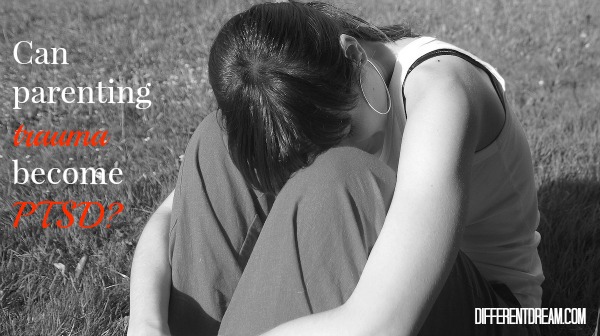
Can Parenting Trauma Lead to PTSD? Pt. 3

Can Parenting Trauma Lead to PTSD? Pt. 3

Can Parenting Trauma Lead to PTSD? Pt. 3

Welcome to the third post in Different Dream’s series about special needs parenting stress, trauma, and PTSD. The first post introduced the series, while the second explained the difference between trauma and PTSD. Today, child psychologist Liz Matheis is back, this time with her answer to this question from the mom of a child who has PTSD: Can the stress of raising a child with PTSD result in a parent with PTSD? What other kinds of parenting trauma can lead to PTSD?

The answer to your question, “Can the stress of raising a child with PTSD result in a parent with PTSD?” is a resounding “Yes.” You, as a parent, are entering into the parenting scene with your own areas of strength and weakness. Sometimes they match up with your child’s needs, but sadly, sometimes they don’t. This can lead to feelings of helplessness and lack of control, which can be traumatizing and distressing. Let’s face it, when we become parents, there is no introductory period, trial period, or returns allowed. So even though we believed that parenthood should carry on in a particular way, it often does not. Then we have to grieve that loss of the family I hoped for or the parent I promised to be.

Parenting trauma can occur after any event or behavior that a parent finds overwhelming. For example: receiving a shocking diagnosis, being beaten by your child, feeling like you are the only person who can care for your child, having your child terminated from a preschool or private school program. There is no right or wrong way of becoming traumatized. Some people have a high tolerance for life’s surprise events, others are taken down right from the start, while others can take and take and take, but then become worn down.

Some examples of situations and events that can lead to parent PTSD are on-going stresses such as marital conflict, frequent hospitalizations for your child, frequent trips to the ER, having a child who was in the NICU or PICU, aggressive behavior issues (e.g., head banging, biting, punching, pinching, spitting). Other situations include difficulties in finding the right physician or therapist to provide the support your child needs (sensory-wise, medication, overall health) or difficulty in finding a school for your child where staff uses a humane approach to handle him.

Parent PTSD can also be activated when distressing experiences in raising your child that are being triggered by trauma you may have experienced as a child, adolescent or young adult. That is, pre-existing trauma that is re-triggered by the stress of parenting a child with special needs. Pre-existing traumas could include child abuse, emotional abuse, neglect, significant hospitalization or illness, rape, or even childbirth.

Although the symptoms of PTSD are often the same for parents and child, the triggers can be different. Your child with PTSD may have nightmares, flashbacks, numbness, and avoidance behaviors triggered by certain odors, scents, places, or faces. For parents the PTSD flashbacks and nightmares can spring from inability to control or manage the child’s aggressive behavior, nightmares, and other extreme emotions that accompany their fears. The stress of parenting a child with PTSD also means that both you and your child are regularly in fight mode for different reasons. So, you both may be sleep deprived yet hypervigilant, watching for triggers or potential dangers.

Your Questions about Parenting Trauma and PTSD

Do you have questions about parenting trauma, stress, and PTSD? If so, you’re invited to leave them in the comment box for Dr. Liz. 

Do you like what you see at DifferentDream.com? You can receive more great content by subscribing to the quarterly Different Dream newsletter and signing up for the daily RSS feed delivered to your email inbox. You can sign up for the first in the pop up box and the second at the bottom of this page.

By

Dr. Liz Matheis is a clinical psychologist and school psychologist in Parsippany, NJ. She offers support, assessments, and advocacy for children who are managing Autism Spectrum Disorders, ADHD, learning disabilities, and behavioral difficulties, as well as their families. She is also a contributor to several popular magazines. Visit www.psychedconsult.com for more information.

Author Jolene Philo
Archives

Categories

Subscribe for Updates from Jolene

Related Posts
The Dividing Line Between Trauma and PTSD, Pt. 2

The Dividing Line Between Trauma and PTSD, Pt. 2

The Dividing Line Between Trauma and PTSD, Pt. 2

This post is the second in a new series about special needs parenting stress, trauma, and PTSD. The first post introduced the series, and child psychologist Liz Matheis briefly explained how the stress experienced by parents of kids with PTSD and other special needs can result secondary PTSD. Today, Dr. Matheis is back to answer this question sent by a Different Dream reader who is the mom of a son with autism: Where is the dividing line between trauma and PTSD? Here is her reply:

On a daily basis, we experience stress. Stress is that feeling of “Oh my gosh, I’m going to be late!” or “I’m never going to get this done on time!” We all know that feeling in varying degrees. On some days, a car accident or our child breaking a bone takes that daily stress to a new high. But overall, we cope, perhaps with a glass of wine, a bubble bath, or an early bedtime. The next day, we get up and do it again. By then, we are no longer reminiscing about yesterday’s stressors–unless you are continuing to handle the stress of yesterday–and you are able to focus on the next major task or event of your life, positive or negative. That is your good old experience of stress. You feel overwhelmed in the moment, you are done with it, and you move on.

So, when does good, old stress become Post Traumatic Stress Disorder (PTSD)? PTSD is related to a traumatic event (such as a shooting, abuse) either directly or through indirect experience (such as social workers who work with children who are sexually or physically abused). The experience of stress or thoughts about it remain relatively constant, taking very little break if any at all. This kind of stress impacts a person’s ability to make decisions, focus, and complete daily tasks. The individual suffering from PTSD can be agitated, hypervigilant, or even angry. Their stress also impacts appetite (stress eating or no/low appetite), sleep, interpersonal relationships, and ability to manage daily tasks like grocery shopping or managing bills.

The deciding factor of when stress has become chronic and pervasive is when you it impacts overall functioning. It’s that line between, “This really stinks, but I’ll get through it,” and “I can’t breathe, I’m not going to make it, and I don’t want to do this anymore.”

Parents of children with special needs who have been traumatized by their journey in gaining a diagnosis, seeking treatment, participating in treatment, and managing daily behaviors and struggles can develop PTSD.  When parents feels stuck, hopeless, helpless, and burned out their stress has developed into PTSD, and it’s time to seek help through a psychologist, support group, or psychiatrist.

Your Questions about the Dividing Line Between Trauma and PTSD

Does Liz’s information bring to mind new questions about special needs parenting stress, trauma, or PTSD? If so, you’re invited to leave them in the comment box.

Do you like what you see at DifferentDream.com? You can receive more great content by subscribing to the quarterly Different Dream newsletter and signing up for the daily RSS feed delivered to your email inbox. You can sign up for the first in the pop up box and the second at the bottom of this page.

By

Dr. Liz Matheis is a clinical psychologist and school psychologist in Parsippany, NJ. She offers support, assessments, and advocacy for children who are managing Autism Spectrum Disorders, ADHD, learning disabilities, and behavioral difficulties, as well as their families. She is also a contributor to several popular magazines. Visit www.psychedconsult.com for more information.

Author Jolene Philo

Archives

Categories

Subscribe for Updates from Jolene

Related Posts

Special Needs Parenting Stress, Trauma and PTSD, Pt 1

Special Needs Parenting Stress, Trauma and PTSD, Pt 1

Special Needs Parenting Stress, Trauma and PTSD, Pt 1

In February of 2015, DifferentDream.com published a guest post by psychologist Liz Matheis about stress, PTSD, and parents of kids with special needs. Reader response to the post was overwhelming and led to a survey about special needs parenting stress. The survey findings resulted in a series about PTSD and special needs parenting and many, many more questions from parents.

Different Dream’s Jolene Philo and guest blogger Dr. Liz Matheis have teamed up to create a new weekly series about special needs parenting stress, trauma, and PTSD. The series begins today and will end when your questions run out. We’ll be using a Q & A format to answer questions from readers. To kick off the series, Jolene asked Dr. Liz to answer this question posed by the mom of an adult child with autism: So, I am not the only one who feels like this?

Below is Dr. Matheis’ answer, along with a brief definition of special needs parenting stress, trauma, and PTSD in parents–sometimes called secondary stress, trauma, or PTSD.

You Are NOT Alone
Parents of children with special needs living with PTSD

You’re a parent of a child with special needs. You have a diagnosis, you’ve sought treatment and you’ve been doing this for a couple of years. As your child grows and his needs change, so does your stress and distress. You now know enough about your child’s triggers that you survey the environment and sit in anticipation of a potential meltdown. You’re on the edge a lot. You aren’t very good at ‘letting go’ because you don’t know what you have to accommodate or change in your house, in someone else’s house, or with someone else in an effort to keep your child regulated and calm.

Over time, this pattern of stress becomes a part of your life, it becomes chronic. And with that, when you hear another parent share her journey, you often find yourself getting lost in your own memory of when you first learned of your child’s diagnosis, and the immensely strong emotions, grieving, relief, sadness, and potential acceptance that you have journeyed through. You flash back to when you had to restrain your child, accept your child’s punches, head butts, pinches. It hurts, but the physical hurt is far less than the emotional hurt. Yes, you are traumatized, but please don’t be ashamed. You are not alone. Your experience is real. It is not in your head. It’s okay to admit to yourself that you feel alone and lonely despite being surrounded by professionals. It’s okay to want to take a break, or even run away.

Technically, secondary PTSD involves re-experiencing traumatic experiences through vivid recall of memories during the day. That re-experiencing can be sudden and without an obvious trigger. It can be due to an odor, a word, a color with which you have developed an association. The re-experiencing comes with intense emotions, such as guilt, fear, or even anger. And because the re-experiencing can be so overwhelming, you may find that, as a parent, you try to avoid certain places, people, clothes, odors so that you just don’t go there.

You may also find yourself feeling hypervigilant. What that means is that you function with a high level of anxiety and arousal, which can result in difficulty sleeping, poor focus, and being easily startled. You may also feel irritable and worry about your safety and the safety of your child/children. Your spouse or other children may even perceive you as being easily frustrated or being angry often, but the truth is, you are spent.

Your Questions about Special Needs Parenting Stress, Trauma and PTSD

Have some questions about special needs parenting stress, trauma, or PTSD come to mind as you read what Liz had to say? If so, you’re invited to leave them in the comment box for Liz to answer in future installments of this series. We look forward to hearing from you and exploring this important topic in the weeks to come. To learn more about Dr. Liz’s practice visit www.psychedconsult.com for more information.

Do you like what you see at DifferentDream.com? You can receive more great content by subscribing to the quarterly Different Dream newsletter and signing up for the daily RSS feed delivered to your email inbox. You can sign up for the first in the pop up box and the second at the bottom of this page.

By

Jolene Philo is the author of the Different Dream series for parents of kids with special needs. She speaks at parenting and special needs conferences around the country. She’s also the creator and host of the Different Dream website. Sharing Love Abundantly With Special Needs Families: The 5 Love Languages® for Parents Raising Children with Disabilities, which she co-authored with Dr. Gary Chapman, was released in August of 2019 and is available at local bookstores, their bookstore website, and at Amazon.

Author Jolene Philo

Archives

Categories

Subscribe for Updates from Jolene

Related Posts

Clinging to Faith while Parenting Children with PTSD

Clinging to Faith while Parenting Children with PTSD

Clinging to Faith while Parenting Children with PTSD

This post is the thirteenth and final article in this ongoing series about children with PTSD.  Though the first ten articles in this series focused exclusively on PTSD in children, the final three address issues common to parents raising traumatized kids. Today’s post looks at six truths that can help parents cling to their faith when the challenges of raising children with PTSD seem overwhelming.

Truth #1: Christians’ understanding mental health lags far behind their understanding of physical health.

Before the age of modern medicine, physical illnesses were often viewed by the church as evidence of a lack of faith, the consequence of sin, or as punishment from God. In all those cases, the best remedy was confession and prayer. Medical advances have changed that thinking in regards to physical health. But not so much for mental health matters. The general public, as well as the Christian public, is woefully unaware of the many brain-imaging and stress hormone studies that show how trauma changes both the brains and bodies of children. They are also unaware of the many effective treatments for PTSD in children. As parents we can advocate for our kids by educating others about advances in mental health.

Truth #2: PTSD in children is not punishment for their sins or yours.

Children do not cause their own PTSD by sinning. And unless parents have neglected or abused their children, their sin does not cause PTSD in children either. But families can easily lose sight of this truth when parenting kids with PTSD. Parents begin blaming themselves or their kids. Blame can snowball into self-guilt for parents and casting guilt on children. We must continually remind ourselves, our spouses, and our kids that childhood PTSD is the result of trauma they did not seek or cause.

To read the rest of this post, visit the Key Ministry blog, Church4EveryChild.

Part 1: Writing About PTSD Was Not on My Bucket List
Part 2: Childhood Trauma by Any Other Name Is Still Traumatic
Part 3: 10 Myths about PTSD in Children
Part 4: What Causes PTSD in Children
Part 5: A Look Inside the Brain’s Response to Childhood Trauma
Part 6: Why the Spotlight Is on PTSD in Children
Part 7: Childhood PTSD Symptoms in Tots, Teens, and In Between
Part 8: Why and How Childhood PTSD Is often Misdiagnosed
Part 9: Effective Treatment of PTSD in Children
Part 10: How to Prevent PTSD in Traumatized Children
Part 11: How Parents Can Advocate Effectively for Traumatized Children
Part 12: 4 Reasons Traumatized Kids Need Mentally Healthy Parents
Part 13: Clinging to Faith While Parenting Children with PTSD

Do you like what you see at DifferentDream.com? You can receive more great content by subscribing to the quarterly Different Dream newsletter and signing up for the daily RSS feed delivered to your email inbox. You can sign up for the first in the pop up box and the second at the bottom of this page.

By

Jolene Philo is the author of the Different Dream series for parents of kids with special needs. She speaks at parenting and special needs conferences around the country. She’s also the creator and host of the Different Dream website. Sharing Love Abundantly With Special Needs Families: The 5 Love Languages® for Parents Raising Children with Disabilities, which she co-authored with Dr. Gary Chapman, was released in August of 2019 and is available at local bookstores, their bookstore website, and at Amazon.

Author Jolene Philo

Archives

Categories

Subscribe for Updates from Jolene

Related Posts

4 Reasons Traumatized Kids Need Mentally Healthy Parents

4 Reasons Traumatized Kids Need Mentally Healthy Parents

4 Reasons Traumatized Kids Need Mentally Healthy Parents

Thank you for stopping in to read the twelfth article in this series about PTSD in children. The first ten posts in this series focused exclusively on PTSD in children. However last week’s post was about what parents can do to advocate effectively for traumatized children. This post continues in the same vein by examining why kids with PTSD need mentally healthy parents–a reality I first began to deal with after our son’s PTSD treatment in 2006.

One day, I was sitting in the waiting room of the clinic where our son was being treated for PTSD waiting to take him to lunch. One of the therapists strolled in and stood in front of me.

“Are things going okay?” I asked.

“Very well.” He nodded and held my gaze. “But what about you, Mom? How are you doing with all this?”

The question caught me off guard. Our son had been the one the surgeons, doctors, nurses, and x-ray techs wanted to know about since the day of his birth No one had ever asked about me. Or my husband.

“Me?” I stammered. “I’m fine. You’ve done so much for our son this week. I’ve never been better.”

“Really?” the therapist mused. “That’s interesting.”

Just then, our son came into the waiting room and the conversation ended. In the years since our encounter, I have mulled over that unexpected question many times. The mere asking of it somehow gave me permission to admit I’d experienced trauma as a mom. The more I thought about it, the more my tendency to avoid visiting people in the hospital made sense. I came to understood why my pulse quickened and my stomach knotted for years when my now-stable and responsible son called and said, “Hi, Mom.”

Eventually, through treatment and practice, I eventually learned to confront and process my experiences. As it turns out, recent research proves highlights several reasons why traumatized children need mentally healthy parents. Here are just a few.

Reason #1: Children of mothers with PTSD are at higher risk of developing PTSD. After the 2013 missile attacks in Israel, researchers found that the children of mothers who developed PTSD after the attacks were at much higher risk of developing PTSD than other children.

To read the rest of this post, go to Key Ministry’s blog, Church4EveryChild.

Part 1: Writing About PTSD Was Not on My Bucket List
Part 2: Childhood Trauma by Any Other Name Is Still Traumatic
Part 3: 10 Myths about PTSD in Children
Part 4: What Causes PTSD in Children
Part 5: A Look Inside the Brain’s Response to Childhood Trauma
Part 6: Why the Spotlight Is on PTSD in Children
Part 7: Childhood PTSD Symptoms in Tots, Teens, and In Between
Part 8: Why and How Childhood PTSD Is often Misdiagnosed
Part 9: Effective Treatment of PTSD in Children
Part 10: How to Prevent PTSD in Traumatized Children
Part 11: How Parents Can Advocate Effectively for Traumatized Children
Part 12: 4 Reasons Traumatized Kids Need Mentally Healthy Parents
Part 13: Clinging to Faith While Parenting Children with PTSD

Do you like what you see at DifferentDream.com? You can receive more great content by subscribing to the quarterly Different Dream newsletter and signing up for the daily RSS feed delivered to your email inbox. You can sign up for the first in the pop up box and the second at the bottom of this page.

By

Jolene Philo is the author of the Different Dream series for parents of kids with special needs. She speaks at parenting and special needs conferences around the country. She’s also the creator and host of the Different Dream website. Sharing Love Abundantly With Special Needs Families: The 5 Love Languages® for Parents Raising Children with Disabilities, which she co-authored with Dr. Gary Chapman, was released in August of 2019 and is available at local bookstores, their bookstore website, and at Amazon.

Author Jolene Philo

Archives

Categories

Subscribe for Updates from Jolene

Related Posts