A Little Boy, a Little Wheelchair, and a Big Lesson about Servanthood

A Little Boy, a Little Wheelchair, and a Big Lesson about Servanthood

A Little Boy, a Little Wheelchair, and a Big Lesson about Servanthood

A Little Boy, a Little Wheelchair, and a Big Lesson about Servanthood by guest blogger Steve Harris addresses the servanthood aspect of caring for children with disabilities and special needs with honesty and compassion. May it bring honor to servant-hearted dads as Father’s Day approaches.

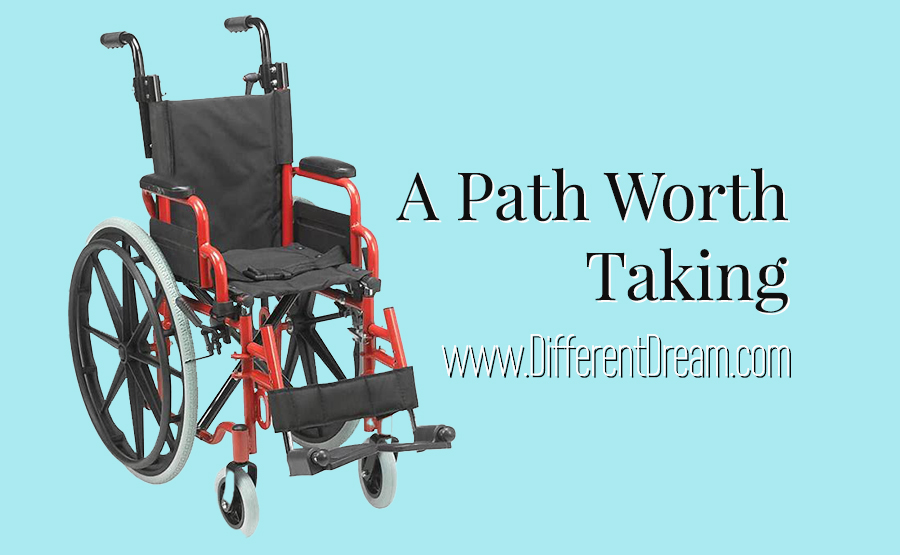
I’ll never forget the day my son, Matthew, then about three, got his first wheelchair. Shiny new and sparkling candy-apple red, it looked, well, so “cute.” Like a toy, actually. It wasn’t, of course. My little boy was paralyzed from the waist down since birth by spina bifida. This wheelchair was going to get him places! My wife and I would no longer have to carry him everywhere. He was excited. We were excited. I loved that chair!

Until I didn’t.

Over the next years, Matthew got a ton of use out of that little wheelchair. We took it everywhere—on countless walks, to his school, the mall, local playgrounds, church. That chair became a huge part of his life—and ours.

What wasn’t to love?

It wasn’t easy to lug it around, for one thing. Our car trunk was roomy but we still had to break it down to transport it. Remove the wheels, footrests, and head cushion. Every time. Multiple times each trip. If we faced stairs, it meant carrying Matthew and the chair for short distances. Needed maintenance was another thing. Flat tires. Worn breaks.

None of that was cute.

I’ll be honest. I got tired of that chair. I knew it was an indispensable part of my son’s life. It wasn’t going away. (Over the next four decades of his life it would only get replaced by bigger—and heavier—chairs.) But I struggled with all of that. Selfish? Yes. Human? I think so.

What we’re dealing with here is caregiving.

Coming in all shapes and sizes, it’s a daily reality for millions of people. (Recent stats say about 1 in every 5 adults in our country is a caregiver). Caregiving is hard, demanding, draining, and physically difficult. Caregiving as a parent of a child who is disabled and has special needs is unique to say the least.

What we’re really talking about is servanthood.

Choosing to meet the needs of others at the expense of our own. Servanthood is also very hard. It goes against our nature. Faced with a choice between selfishness or servanthood, servanthood often loses.

Following Jesus, the Ultimate Servant, means saying “yes” to servanthood!

Matthew 20:28 tells us He came “…not…to be served, but to serve.” Philippians 2:7 says that He took “the very nature of a servant.” To follow His example—and our only hope to do that is by connecting to His Spirit and power—takes us on a completely different path than the world offers.

Servanthood won’t be easy.

A little boy, a big chair, and a big lesson about servanthood taught me that. It won’t make your “wheelchairs” any lighter either. Why do it? Because servanthood is a choice worth making and a path worth taking, bringing us to places of personal peace and fulfillment the world can’t touch.

Let’s give it a try.

Do you like what you see at DifferentDream.com? You can receive more great content by subscribing to the monthly Different Dream newsletter and signing up for the daily RSS feed delivered to your email.
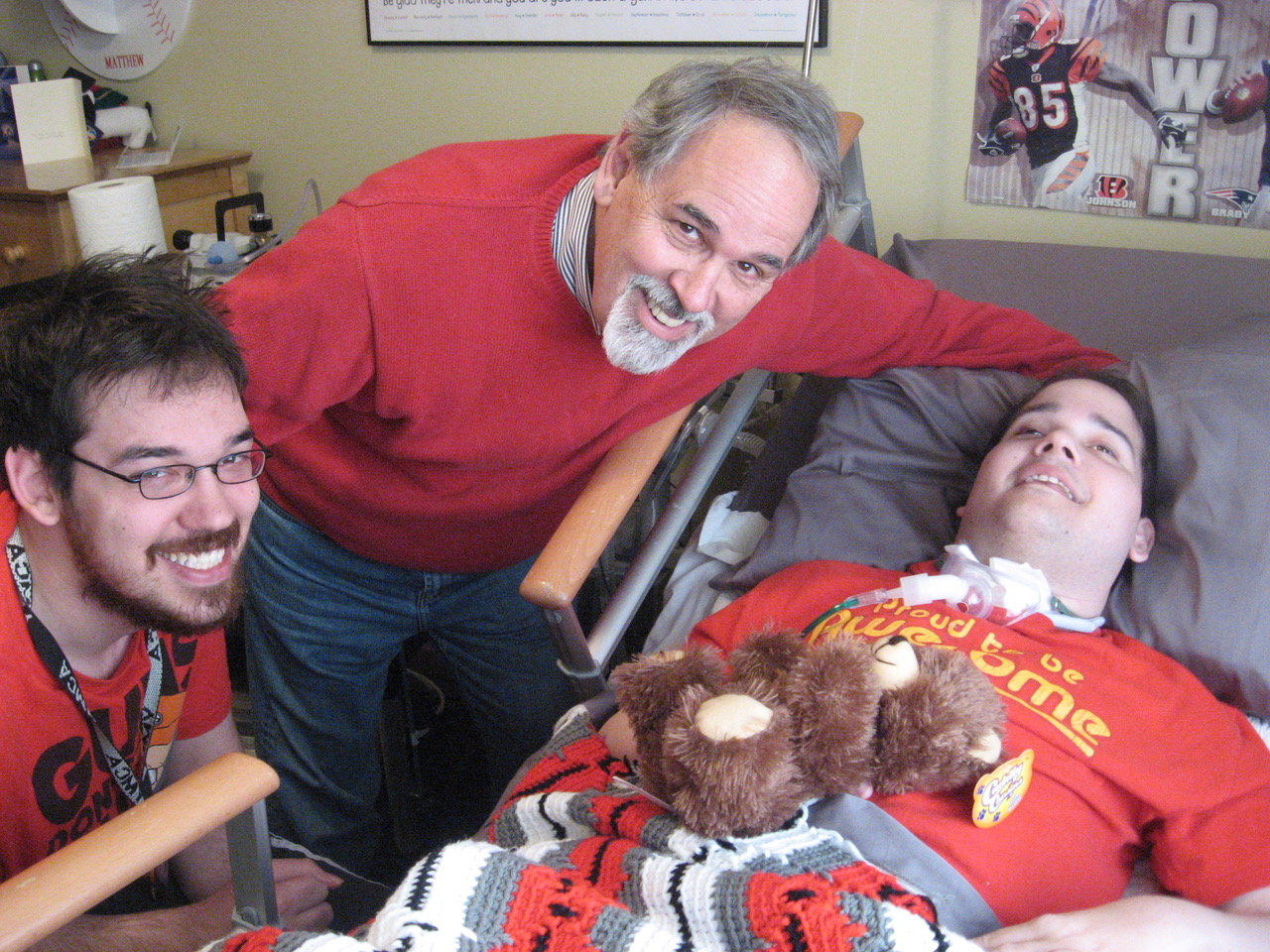
Steve Harris and sons

By

Steve Harris—www.steveharrisauthor.com—recently published “Dads Like Us: A Survival Guide for Fathers Raising a Child with Disabilities.” He lives with his wife, Sue, in Lanesboro, Minnesota. Reach him at steveharrisDLU@gmail.com.

Author Jolene Philo
Archives

Categories

Subscribe for Updates from Jolene

Related Posts

Whole in the Sight of God

Whole in the Sight of God

Whole in the Sight of God

“Whole in the Sight of God” is one of many songs written by musician and today’s guest blogger, Steve Siler. In this post, he explains not only the how and why behind the song’s creation, but also his personal connection to those with disabilities and special needs.

I remember it like it was yesterday.

We all have those memories; those moments in our life where time stood still and everything crystallized. For me it was when the ultrasound technician said, “I hate to be the one to tell you this.”

That was the moment my wife and I discovered that the child she was carrying had something called Spina Bifida. In an instant we were transported into the world of special needs. Issues and concerns that had been virtually invisible to us up to then were suddenly in the forefront of every waking moment.

It’s kind of like when you get a new car. You’ve never realized how many (fill in your model here) there are on the road until you have one. Then suddenly it seems like they’re everywhere.

And those empty handicapped parking spaces in a crowded parking lot that used to be so annoying—well, they don’t seem quite as annoying anymore.

How do You Write a Song for someone with a Disability?

A few days after I learned that my son was going to be born with a chronic condition that would affect his entire life, I did what any songwriter would do.

I went into a writer’s room at Starsong, where I was a staff writer at the time, and processed what I was feeling by writing a song.

To call it a room is being generous. It was more like a converted closet. Monochromatic beige walls and exposed plumbing were the only visual highlights.

Click here to read the rest of Whole in the Sight of God at the Music for the Soul website.

Do you like what you see at DifferentDream.com? You can receive more great content by subscribing to the monthly Different Dream newsletter and signing up for the daily RSS feed delivered to your email.

By

Steve Siler is founder and director of Music for the Soul a multi-award-winning not-for-profit ministry using songs and stories to bring the healing and hope of Jesus to people in deep pain. Siler is a Dove Award winning songwriter, music producer, author, and speaker. He is co-host of the Music for the Soul Podcast: Where Music, Hope, and Healing Come Together! He and his wife Meredith have two children and three grandchildren.

Author Jolene Philo

Archives

Categories

Subscribe for Updates from Jolene

Related Posts

Special Needs Mom, How Are You Doing this Mother’s Day?

Special Needs Mom, How Are You Doing this Mother’s Day?

Special Needs Mom, How Are You Doing this Mother’s Day?

Special needs mom, how are you doing this Mother’s Day?

Has anyone asked you that question before? Has anyone acknowledged that your feelings may not match what cards and commercials make them out to be? Have you had the courage to acknowledge, even to yourself, the swirl of emotions that surround you as the second Sunday in May approaches?

Joy.
Loss.
Love.
Grief.
Wonder.
Fear.
Gratitude.
Guilt.

I felt all those emotions as Mother’s Day and our son’s first birthday arrived within weeks of one another in 1983. I was a wreck that May—exhausted, worried, depleted, and unable to think straight. Though our son is now an independent adult, those early emotions tend to resurface each May. As our son got older, I became wiser about how to acknowledge my feelings and celebrate being a mom without letting difficult emotions rule the day. I hope these 5 lessons help you do the same.

Lesson #1: Enjoy your Child

Your child is a wonder, perhaps not the wonder you expected, but wonderful all the same. Take a moment to enjoy who your child is—or who she was if she’s no longer physically present. What about her makes you laugh? How does she surprise you? Why is your world better because of her? What has she taught you about love? Let your answers increase your joy in the wonderful aspects of her life and lighten your heart.

Lesson #2: Make Room for Grief

The joy your child brings is real and so is your grief. This Mother’s Day weekend make room to acknowledge this emotion for what it is—the loss of many dreams. Dreams of what parenting would be like. Dreams of how your child’s development would progress. Dreams of celebrating milestones. Write your thoughts down. Tell God how much your heart hurts. Admit how hard your grief is to bear. God knows a thing or two about loss and heartache. Let him hold you as you grieve.

Click to read the rest of Special Needs Mom, How Are You Doing this Mother’s Day? on the Hope Anew website.

Do you like what you see at DifferentDream.com? You can receive more great content by subscribing to the monthly Different Dream newsletter and signing up for the daily RSS feed delivered to your email.

Photo by Edward Howell on Unsplash

By

Jolene Philo is the author of several books for the caregiving community. She speaks at parenting and special needs conferences around the country. Sharing Love Abundantly with Special Needs Families: The 5 Love Languages® for Parents Raising Children with Disabilities, which she co-authored with Dr. Gary Chapman, was released in August of 2019 and is available at local bookstores, their bookstore website, and Amazon. See Jane Dance!, the third book in the West River cozy mystery series, which features characters affected by disability, was released in October of 2023.

Author Jolene Philo

Archives

Categories

Subscribe for Updates from Jolene

Related Posts

The Weight of Silence as Parents of Kids with Invisible Disabilities

The Weight of Silence as Parents of Kids with Invisible Disabilities

The Weight of Silence as Parents of Kids with Invisible Disabilities

The weight of silence as parents of kids with disabilities is all too familiar to guest blogger Lisa Pelissier. In this post she explains why she and other parents don’t talk about what’s going on with their kids and why they might want to rethink that decision.

The world of special needs parenting is broad and diverse. Some of us are thrust into a world where we’re forced to wear the special needs banner day in and day out.

However, those of us whose children have invisible disorders—high functioning autism, ADHD, mental health issues, and more—have a choice about broadcasting our special need status. Do we choose to stay silent, to blend into the crowd, or do we choose to align ourselves with the special needs population?

3 Reasons We Stay Silent

There can be stigma associated with invisible disorders, especially mental health issues. Historically, people have regarded anxiety and depression as character flaws. They often are subject to comments like ‘If your child wasn’t weak, she wouldn’t be anxious.” Or “If you trusted God more, you wouldn’t be depressed.” There can be shunning that comes along with any invisible disorder. You’re different. You “ride the special bus”—used as a pejorative. As parents, we also receive blame. People say things like, “If your child has anxiety, it’s because you’ve been an abusive parent, or at the very least, a bad one.”

Who needs that? It’s easier to keep our mouths shut.

We don’t want our kids to label and therefore limit themselves. Autism doesn’t mean you can’t have friends. It doesn’t mean you can’t have empathy, we think. If my child wears his diagnosis like a name tag, he may use it as an excuse for why he doesn’t have to reach out to make friends, have to have compassion for others, or excel at his studies.

We want our kids to achieve their full potential. Why shout out diagnosis instead of ignoring it and hoping for the best?

A third reason we stay silent is because of our own denial of our children’s conditions. He’s not autistic, he’s just quirky. She’s not depressed, she’s just hormonal. It’s not ADHD, he’s just disobedient. Accepting a diagnosis comes as a blow to our hopes and dreams for our child.

Like the title of this website states, we have to find a “different dream”—something that can be difficult and painful to do.

2 Reasons We Shouldn’t Stay Silent

Invisible disorders are real. While it’s true that kids can be quirky, hormonal, and disobedient, it’s also true that kids can have real diagnoses of autism, depression, and ADHD, and those conditions can and do affect thinking and behavior. We do our kids a disservice when we deny their reality. Helping them learn about their condition and how it affects their thoughts, feelings, and behavior will give them the power to understand, learn, and grow—and to manage their health rather than pretend there isn’t a problem.

We can help others understand why our kids are different so they can be more accepting.

Many choose silence—until someone else speaks up. Being up front about depression, anxiety, OCD, ADHD, and other invisible disorders gives others permission to speak about their own difficulties. This can be especially true in the case of disorders we in the church may try fervently to hide because of shame and grief, such as in suicidal ideation. When you say, “this is my reality,” you find that others in your circle of acquaintance have been there too, even if they’re not ready to go public with it.

Where you expected to find condemnation and rejection, you find understanding, solidarity, and friendship.

As special needs parents, our burdens are heavy. Keeping them to ourselves not only deprives us of support, of someone to help us bear those burdens, it deprives others of the chance to grow in their own knowledge, understanding, and compassion.

You are not alone if your child is crippled by anxiety.
You are not alone if your child has attempted suicide.
You are not alone if your adult child who can “pass” for neurotypical can’t get their life together.
You are not alone if your child is too depressed to get out of bed in the morning.

But if you keep your troubles hidden, you’ll never know what kind of love and support you’re missing. You’ll never know if by speaking the truth, by freeing yourself from the weight of silence as parents of kids with invisible disabilities, you may give someone else a boost out of their own pit of silent despair.

Do you like what you see at DifferentDream.com? You can receive more great content by subscribing to the monthly Different Dream newsletter and signing up for the daily RSS feed delivered to your email.

Photo by Kristina Flour on Unsplash

By

Lisa Pelissier lives in Oregon where she is a homeschool mom and author of five middle-grade fiction novels, the second-grade Monsters series, and a YA fantasy novel. Lisa owns SneakerBlossom Books, offering Christian, classical homeschool Study Guides and curriculum. She blogs at Eleventh Willow, offering encouragement for Christians parenting the mentally ill. She also works as a freelance copy editor, copy writer, an artist, and a marketing editor. In her spare time Lisa enjoys playing the piano and fretting about things over which she has no control. 

Author Jolene Philo

Archives

Categories

Subscribe for Updates from Jolene

Related Posts

Choosing Acceptance and Advocacy as Parents of Kids with Disabilities

Choosing Acceptance and Advocacy as Parents of Kids with Disabilities

Choosing Acceptance and Advocacy as Parents of Kids with Disabilities

Choosing acceptance and advocacy as parents of kids with disabilities takes time. Today’s guest blogger, who wishes to remain anonymous, talks about making that choice as a parent many years ago and using what she learned to assist parents of her students who are struggling to make that choice today.

There’s nothing to worry about.

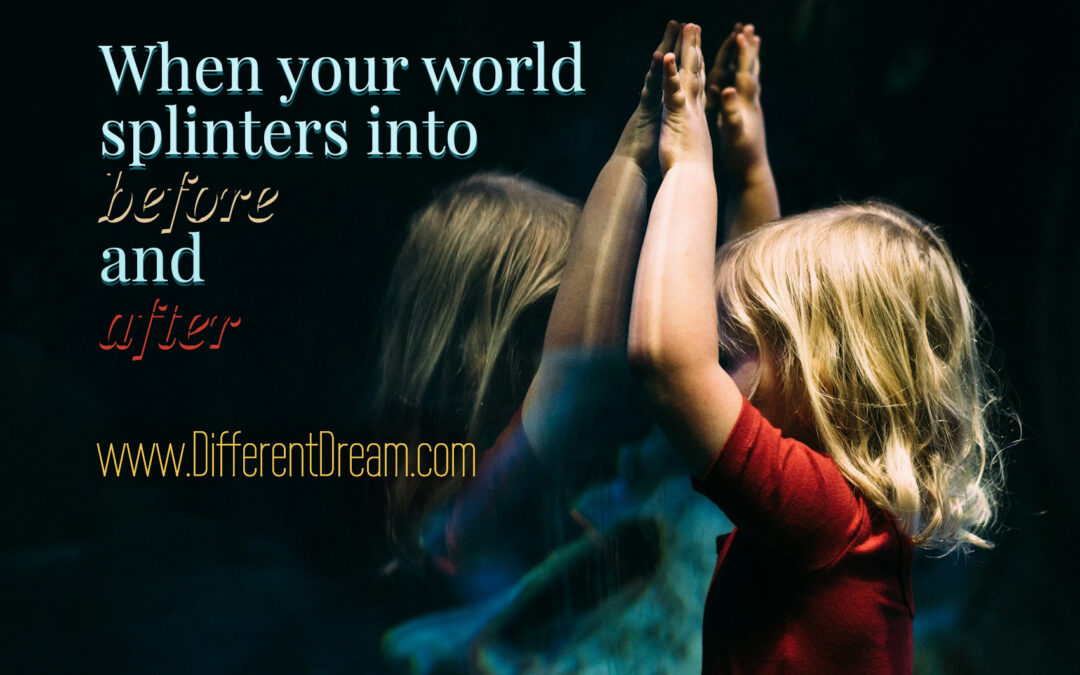
This ordinary statement, from the lips of the pediatrician, a few hours after my daughter’s silent birth, cut my life into two halves.

Before, I was an unsuspecting mother to be with an I-can-handle-it approach to life. A happy-go-lucky Christian woman who somehow thought faith was a shield to protect her from the worst life has to offer.

But as I absorbed this statement, somehow, in my core I knew that this pediatrician was mistaken, and so was my worldview. There definitely was something to worry about. My precious daughter was fighting for her life, and I had better start fighting for it too.

The events that transpired are another long story, but in a nutshell, our daughter was correctly re-diagnosed with EA/TEF in another hospital. Then, at three days old, she underwent a successful repair operation.

We could finally breathe again.

However, her struggles did not disappear. The months and years after her birth saw her back in hospital again and again with alarming frequency, as she coped with pneumonia, chest infections, and food blockages. Meanwhile, she struggled to swallow on a daily basis. My preconceived ideas of family life were turned upside down and inside out as I just struggled to feed her and stagger from one round of antibiotics to the next.*

So that pediatrician’s statement had well and truly thrown me into the second, more sober half of my life. 

I don’t hold any hard feelings towards him. After that surgery, I went back to the first hospital to find him. I explained the diagnosis, I hope, kindly. He had not read my medical notes which stated I had polyhydramnios (too much amniotic fluid) during my pregnancy. I later learned this was a warning sign of EA/TEF.

Fast forward 19 years and here I am, an Early Years Teacher. Sometimes this job entails the unenviable task of conveying difficult messages to parents.

  • Have you noticed anything unusual about your son’s development in comparison to that of his brother?
  • Have you considered a hearing test?
  • I would like to suggest you consider an assessment for your child.

These words, even when delivered with as much sensitivity as a teacher can muster, can be met with resistance and even anger. I have experienced more than once that, as the teacher, I can be the target of the anger.

I understand this.

Our daughter’s diagnosis meant that acceptance was thrust upon us in that moment. EA/TEF is a physical issue making swallowing impossible without surgery. Despite the challenges, we were able to move on towards coping with the situation by first accepting it. Other diagnoses can be more nuanced, more open to interpretation. Acceptance can sometimes be put off for a while.

Author Jocelyn Soriano says, “Acceptance is the shortest route to peace.”

  • Accepting that your child might be neurodivergent.
  • Accepting that your child might have extra physical challenges.
  • Accepting that we sometimes need, as Jolene has shown us, a different dream for our child.

Professionals might not always be sensitive or even right. But some of us do know the weight of our words. We know they have the power to cut a life into two halves. We do not speak for the fun of it. We speak out of necessity and in the best cases, with compassion.

These words are an uncomfortable but essential invitation to acceptance. 

So, if you are struggling with something a doctor or teacher has told you, don’t waste time or energy focusing on what the professional said or did. Choosing acceptance and advocacy as parents of kids with disabilities will help your family move forward. Your child needs your focus and energy to be on them. So be courageous. Find out the truth, accept it, and fight for your child.

*Everyone’s journey is different, but for us, life didn’t stay in that dark place forever. With the help of Christian friends and family, we slowly came through it. We are thankful that now our daughter is now an independent woman who lives a full life and can’t remember the last time she was on antibiotics.

Do you like what you see at DifferentDream.com? You can receive more great content by subscribing to the monthly Different Dream newsletter and signing up for the daily RSS feed delivered to your email.

Photo by Bekah Russom on Unsplash

By

The author of this post wishes to remain anonymous.

Author Jolene Philo

Archives

Categories

Subscribe for Updates from Jolene

Related Posts

Caring for our Bodies to Meet the Needs of Those We Love

Caring for our Bodies to Meet the Needs of Those We Love

Caring for our Bodies to Meet the Needs of Those We Love

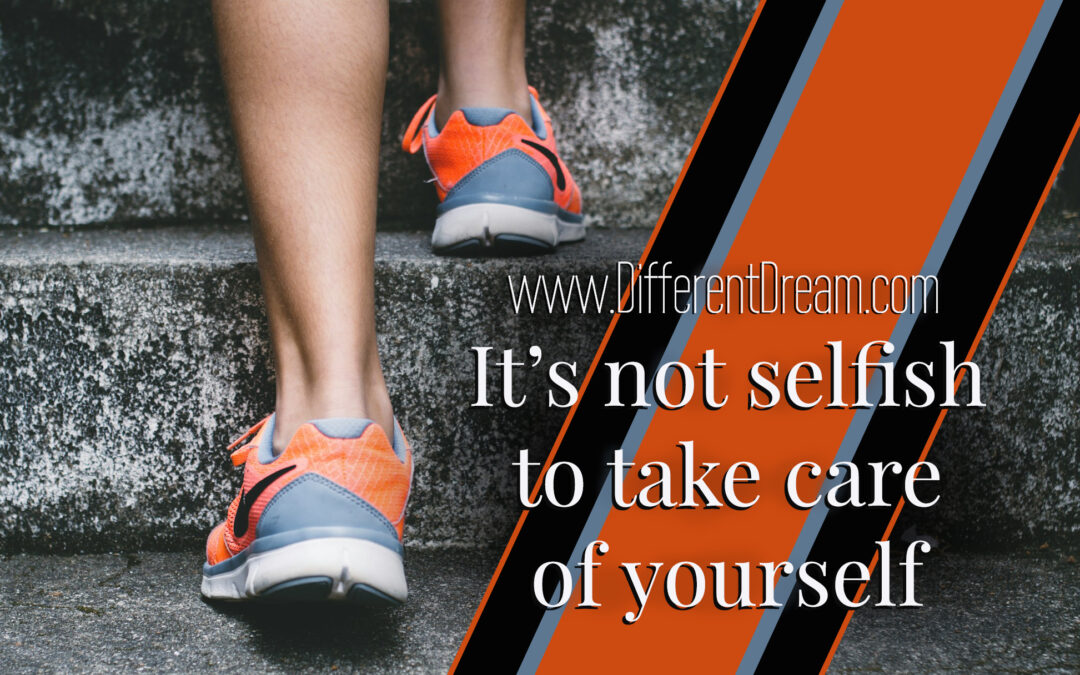
Caring for our bodies to meet the needs of those we love is a good thing to do. In this post, guest blogger Heather Braucher tells about her long journey to improved health for the benefit of her family members, which includes two boys with special needs.

A memory becomes a core memory because we never forget how we felt.

Aashna Jain

A couple weeks ago, a core memory was made in me while the fitness company I work for filmed me leading a workout for the first time.

The reason the event was so significant was that prior to finding this program I had endured a 10+ years of debilitating chronic back and neck pain that took away my job as a strength coach, impaired my ability to hold and nurse my children when they were young, and required significant time and resources to treat.

I feel like I have been given a second chance at life and am living out these verses in Joel 2:25-32:

So I will restore to you the years that the swarming locust has eaten.

I now GET to help others who are looking for similar support, wisdom, and relief.

My journey did not happen overnight. It started when I decided to not give up on asking God to help me care for my body well. Some days that looked like asking for pain relief, other days it was asking for direction on who to ask for help.

At first those prayers were just for me. Then the position of my heart changed. I prayed that my body would be a blessing to my spouse and that my endurance and testimony would glorify God. When I had children, I prayed for my body’s ability to care for my children well, sustain them, hold them and be there for them.

The call to care well for my body in order to meet the needs of those I love was a powerful one on my life. In 1 Peter 4:10, God asks us to be good stewards of the gifts that he gives us. Our bodies are one of those gifts.

The definition of stewardship is “the careful and responsible management of something entrusted to one’s care.” We are quick to identify those things as the jobs we have, our homes, resources, and finances. We know that the precious children and family members he entrusts into our care requires our faithful stewardship too.

Often as a caregiver, we are exhausted and giving our all to manage the needs of those given to us. There is little left over to use to care for ourselves. But I tell you this:

YOU are worth caring for. Your health will overflow into the lives you are caring for. And if you don’t, who will?

Sometimes our pain and suffering is a gift. Mine turned out to be the tool that God is using now to help others. It is also the tool that helps me to understand, embrace, and nurture my children with special needs.

I started this article with Aashna Jains’ quote about core memories. There is power in remembering what it felt like to suffer. Those memories help me live out 2 Corinthians 1:4 which says, “He comforts us in all our troubles so that we can comfort others. When they are troubled, we will be able to give them the same comfort God has given us.”

My passion is shared with many of you who have suffered, endured, been restored, and blessed to serve others. My hope and prayer is to provide other caregivers with the hope and possibility to care for themselves well so they can serve well, so that the lives of those they serve and their own CAN BE abundantly blessed.

Do you like what you see at DifferentDream.com? You can receive more great content by subscribing to the monthly Different Dream newsletter and signing up for the daily RSS feed delivered to your email.

Photo by Bruno Nascimento on Unsplash

By

Heather Braucher is a member of the “Braucher Bunch” aka her energetic family of 5. The bunch includes her husband and their three children, all of whom are dominant and extroverted and are going to change the world (if she can keep them alive!) She has always held a passion for writing, but motherhood has given her a reason to share her experiences, heartaches, and victories with others. In her writing you will hear stories of hope as well as grief, as her family has navigated life in ministry in the US and overseas, all while discovering that 2 of her children have special needs. Her desire is to provide others with connection, understanding, encouragement and laughter, all washed with the love of Christ.

Author Jolene Philo

Archives

Categories

Subscribe for Updates from Jolene

Related Posts