Finding Joy in the Garden of Disability and Special Needs

Finding Joy in the Garden of Disability and Special Needs

Finding Joy in the Garden of Disability and Special Needs

Finding joy in the garden of disability and special needs is a lot like finding zucchinis in the pumpkin patch. Both provide abundant and delicious harvests as guest blogger Heather Johnson explains in this post.

I kneel in my garden bed. It has been freshly tilled and spread with a layer of composted manure. We have an ample supply, given that we have four horses on our farm. As rust-breasted bluebirds flit to-and-from nearby nesting boxes, I’m thinking about raising vegetables, flowers, and kids with special needs for the past twenty-five years. Today, pumpkins are my main goal.

I pull soil toward me with my arms, making six large mounds, each six feet apart. I plunge twelve cream-colored teardrops into each heap of sun-kissed earth.

Finished, I stand and brush off my dirt-caked knees, grab the garden hose, and water the invisible seed wonders—seeds holding life just waiting to break through. Kind of like babies waiting for birth.

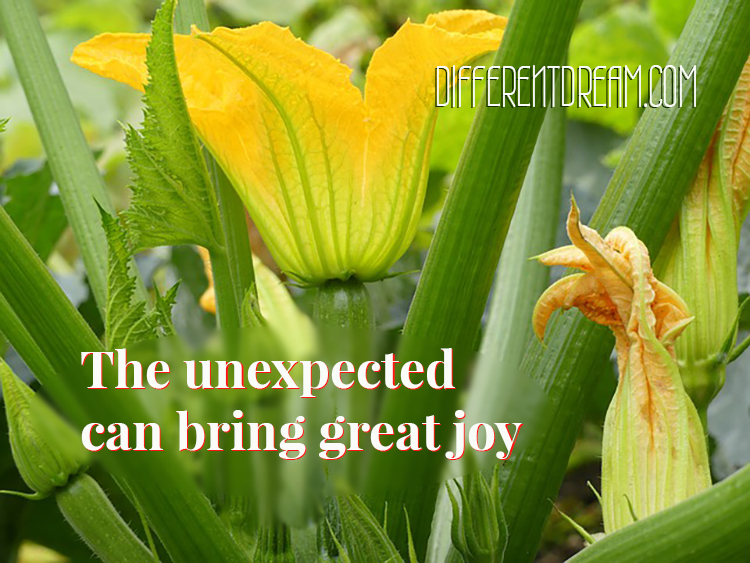
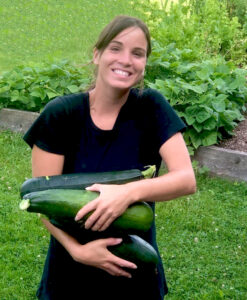
Many years ago, after planting my first pumpkins, I waited more than a week for them to peek green through the brown. When the pumpkin plants sprouted their first leaves, I noticed some didn’t look like others. Some leaves were rounded, others were angular with slightly jagged edges. Suddenly, I realized I didn’t have just pumpkins—I had zucchini. The seed pack was mixed.

I didn’t get what I expected.

I wanted a patch of large pumpkins to place along our flower garden paths in October. Not having the heart to discard tender new life, I decided to grow pumpkins and zucchini together, learning about their different growth rates, tending needs, and harvest times. Little did I know how unexpected zucchini would bring me abundant joy.

Kind of like raising our three kids with invisible disabilities.

Growing our family has been like growing my garden of unexpected. When we adopted our three kids from Russia twenty-five years ago, we didn’t know they would grow quite differently from other kids. In “seedling” form, they looked the same—no outward appearance of difference. Once they began growing, however, we realized our family “garden patch” would need different tending.

We couldn’t follow the typical growth directions of parenting books or others’ advice based on their own parenting prowess. Our “seeds” were not like other family’s “seeds”. I believed then, and I still believe now, that regardless of growth rates or harvest yields, all life is precious. All life has purpose. All life has promise.

Truth be told, tending our flower and vegetable gardens often exhausts and stretches my muscles into an ache. The same held true for raising kids with invisible disabilities. I was stretched beyond what I thought I could bear, exhausted and achy of heart sometimes. Maybe you too?

May I offer you a refreshing cup of good news?

Whether we’re tending flower and vegetable gardens or our own garden of children, harvest comes, sooner or later. Miniature harvests occur all along the way too. The first ripe raspberry, sweet juice on the tongue. The first witness of a child performing a selfless act to help a hurting other.

Then come the larger, longer growing harvests.

Our kids are not children anymore. They are 30, 28, and 24. They completed high school with special services, healed from multiple surgeries, and overcame emotional difficulties. With assistance, all found employment and enjoy living structured, productive lives. Each are kind and considerate. I love them all, with all their differing abilities, and have come to realize how they’ve tended to my soul all these years as I’ve tended to theirs.
Our unexpected family produced a harvest far more abundant than I imagined. We’ve grown love, joy, peace, patience, kindness, goodness, faithfulness, gentleness, and self-control (Galatians 5:22-23 NIV). We’ve learned we’re all precious humans needing each other’s differing abilities to bring about abundant harvest. And we anticipate each new day as a gift from God, helping others realize their precious place and purpose in this often dark and hurting world.

Now, back to my knees, tending to this spring’s pumpkins and zucchini. I planted them both on purpose. This year, like all years since the first unexpected planting, I’m finding joy in the garden of disability and special needs and looking forward to much blessing.

Do you like what you see at DifferentDream.com? You can receive more great content by subscribing to the monthly Different Dream newsletter and signing up for the daily RSS feed delivered to your email.

By

Heather MacLaren Johnson and her husband have three kids, all five and under when adopted from Russia. Now young adults, all need regular help with their multiple, permanent, invisible disabilities stemming from prenatal exposure to alcohol (FASD).

Heather has B.S. in Education and a doctorate in Clinical Psychology. She is the author of Grace, Truth, & Time: Facilitating Small Groups That Thrive and has published personal essays in The Wonder Years: 40 Women Over 40 on Aging, Faith, Beauty, and Strength (Kregel Publications) and Your Story Matters: Finding, Writing, and Living the Truth of Your Life (NavPress). She’s writing a memoir about her family’s journey through hidden disabilities and mental illness to encourage others to greater intimacy with God and each other through times of desolation and lament.

Heather and her husband of 27 years live with two horses, two dogs, two barn cats, and a bunch of silk plants she just dusts. Heather writes and photographs at www.truelifewithgod.com.

Author Jolene Philo

Archives

Categories

Subscribe for Updates from Jolene

Related Posts

When Caregiving Sparks Stress Instead of Joy, What Can You Do?

When Caregiving Sparks Stress Instead of Joy, What Can You Do?

When Caregiving Sparks Stress Instead of Joy, What Can You Do?

When caregiving sparks stress instead of joy, what can you do about it? That’s a question I began mulling over since I posted a survey on my website about stress and compassion fatigue in caregivers way back in 2019.

Within 2 days, the survey had been completed 500 times. Less than a month later, that number had risen to almost 1, 500. This was a full year before COVID and the pandemic reared their ugly heads. Keep that in mind while you read through the statistic below.

  • 98% of the caregivers said their duties cause extra stress in their daily lives.
  • On a scale of 1 to 10, the average stress level of parents was 6.4.
  • 91% said caregiving has affected their mental health.
  • 87% said caregiving has affected their physical health.

Further analysis can be found the Different Dream website. 

 To borrow a phrase from Marie Kondo’s book, The Life-Changing Magic of Tidying Up, the statistics show that caregiving is sparking as much stress as joy in parents raising kids with special needs. Which is why I’ve been pondering the question posed earlier: when caregiving sparks stress instead of joy, what can you do about it? 

Look for Signs of Post-Traumatic Growth

One thing we can do is remember that traumatic and stressful events can lead to positive outcomes. Researchers Richard Tedeschi and Lawrence Calhoun refer to this phenomenon as post traumatic growth.

To read the rest of When Caregiving Sparks Stress Instead of Joy, What Can You Do?, go to the Walk Right In Ministry website.

Do you like what you see at DifferentDream.com? You can receive more great content by subscribing to the monthly Different Dream newsletter and signing up for the daily RSS feed delivered to your email.

By

Jolene Philo is the author of the Different Dream series for parents of kids with special needs. She speaks at parenting and special needs conferences around the country. She’s also the creator and host of the Different Dream website. Sharing Love Abundantly with Special Needs Families: The 5 Love Languages® for Parents Raising Children with Disabilities, which she co-authored with Dr. Gary Chapman, was released in August of 2019 and is available at local bookstores, their bookstore website, and at Amazon. The first book in her cozy mystery series, See Jane Run!, features people with disabilities.

Author Jolene Philo

Archives

Categories

Subscribe for Updates from Jolene

Related Posts

God Uses Whatever It Takes to Grow Our Reliance on Him

God Uses Whatever It Takes to Grow Our Reliance on Him

God Uses Whatever It Takes to Grow Our Reliance on Him

God uses whatever it takes to grow our reliance on Him. Acts 9 tells the story of Paul on the road to Damascus where he simultaneously saw Jesus, heard Him speak, and went blind for a couple days.

That’s what it took to set Paul on the path of faith and reliance.

My personal road to Damascus began forty years ago today when I gave birth to a son. Twelve hours later he received a diagnosis and earned an airplane ride to a hospital in another state. That’s what it took to put me on the path to faith and reliance. I could do nothing for our tiny baby except entrust him to God.

I didn’t see God. I didn’t hear Him.

Instead, I found myself on the Damascus road of parenting a medically fragile baby. Sometimes, my husband and I could see one step ahead. Usually, we were traveling blind. We could do nothing except rely upon God to show us the way.

Forty years later, I can confidently say that He did.

My confidence was bolstered today when I was studying the story of Paul on the Damascus road in Acts 9. Paul’s experience on a dusty road close to 2,000 years ago was very different than that of mine as the parent of a child with special needs. However, the people He provided along the way for Paul and for our small family were remarkably similar.

To read the rest of God Uses Whatever It Takes to Grow Our Reliance on Him visit the Key Ministry blog.

Do you like what you see at DifferentDream.com? You can receive more great content by subscribing to the monthly Different Dream newsletter and signing up for the daily RSS feed delivered to your email.

By

Jolene Philo is the author of the Different Dream series for parents of kids with special needs. She speaks at parenting and special needs conferences around the country. She’s also the creator and host of the Different Dream website. Sharing Love Abundantly with Special Needs Families: The 5 Love Languages® for Parents Raising Children with Disabilities, which she co-authored with Dr. Gary Chapman, was released in August of 2019 and is available at local bookstores, their bookstore website, and at Amazon. The first book in her cozy mystery series, See Jane Run!, features people with disabilities and will be released in June of 2022.

Author Jolene Philo

Archives

Categories

Subscribe for Updates from Jolene

Related Posts

The Importance of Self-Care for Caregivers, Part 2

The Importance of Self-Care for Caregivers, Part 2

The Importance of Self-Care for Caregivers, Part 2

The importance of self-care for caregivers is a reality Heather Johnson has learned to deal with in her own life. She shared that story In Part 1 of this series. Today she finishes the series with specific, practical ideas for caregivers like you and me.

In February, I wrote about a lesson learned from fighting conchs washed up on the shore, desperate for compassionate, gentle care. As caregivers for family with special needs, it’s easy to neglect our own mental, physical, and relational needs—something that is detrimental for all.

Over the twenty-five years of raising three kids with invisible disabilities, I’ve learned the importance of self-care for caregivers. These mental, physical, and relational self-care practices are helpful to me. I hope they can help you too.

Mental Health

  • Challenge your thoughts. Is what you’re saying to yourself or another true? Regardless of feelings, focus on truth because truth sets us free.
  • Be gentle with self-talk. Perhaps thoughts or actions need adjustment, but judgment is not only unnecessary, it’s unhealthy for us and others.
  • Avoid the poison of comparison. Everyone has their own path, and every life is precious.
  • If you need help, get help. Self-advocacy for mental health is a sign of strength, not weakness. Depression and anxiety have many root causes. There’s no need to feel shame. (You can use my motto, if it’ll help: Others’ opinions of me are none of my business.) It’s true!
  • Practice gratitude. Focus on what you do have more than on what you don’t

Physical Health

  • Eat healthy. Eat whole foods as much as possible. Minimize refined sugar, processed foods, and ingredients that cause stress on our systems.
  • Exercise daily in ways you love. Regular exercise offers positive mental health benefits.
  • Go outside. Fresh air in your lungs and sunshine on your face are good for you.
  • Practice gratitude. Yes, gratitude has positive effects on physical health too.

Relational Health

  • Spend time with someone you trust. Someone who can empathize, someone who can listen without offering advice. Sometimes having a shoulder to cry on and an ear to hear is the best self-care of all.
  • Treat others as you would want to be treated. You are precious and have a combination of strengths and weaknesses. So does everyone else. If you want others to treat you gently without judgment, offer others the same. Even if they don’t respond well, your mental and physical health will benefit and the possibility of others’ hard shells softening increases substantially.
  • Practice gratitude. Everyone can annoy us at times. But we are free to focus on annoyances or something positive about every person. What we feed our minds about others affects our relationships with others, both positively and negatively. Find and focus on the good and you will gain.

All life is precious and deserves compassionate care. If we recognize the importance of self-care for caregivers and practice it in simple ways every day, we are able to offer our loved ones the best care. What do you do to practice self-care? Let us know in the comments below. We can all benefit by learning from each other.

The Importance of Self-Care for Caregivers, Part 1

Do you like what you see at DifferentDream.com? You can receive more great content by subscribing to the monthly Different Dream newsletter and signing up for the daily RSS feed delivered to your email.

By

Heather MacLaren Johnson and her husband have three kids, all five and under when adopted from Russia. Now young adults, all need regular help with their multiple, permanent, invisible disabilities stemming from prenatal exposure to alcohol (FASD).

Heather has B.S. in Education and a doctorate in Clinical Psychology. She is the author of Grace, Truth, & Time: Facilitating Small Groups That Thrive and has published personal essays in The Wonder Years: 40 Women Over 40 on Aging, Faith, Beauty, and Strength (Kregel Publications) and Your Story Matters: Finding, Writing, and Living the Truth of Your Life (NavPress). She’s writing a memoir about her family’s journey through hidden disabilities and mental illness to encourage others to greater intimacy with God and each other through times of desolation and lament.

Heather and her husband of 27 years live with two horses, two dogs, two barn cats, and a bunch of silk plants she just dusts. Heather writes and photographs at www.truelifewithgod.com.

Author Jolene Philo

Archives

Categories

Subscribe for Updates from Jolene

Related Posts

Small Things Are Saving Me This Winter

Small Things Are Saving Me This Winter

Small Things Are Saving Me This Winter

Small things are saving me this winter. Just like they did last February when I wrote about how small acts of mothering and fathering add up to create a big thing—a caregiver’s sacrificial life.

The small things saving me this year are more mundane, but no less crucial, as the pandemic has not allowed life to return to what the rest of the world hoped it would be by now. Once the pandemic does wane, the lives of many parents raising kids with disabilities and special needs will still be marked by health concerns, sacrificial caregiving, and constant stress. We will still need to identify the small things that spark gratitude and help us persevere.

I created such a list to remind myself that God is at work in the small things of my life. Written in no particular order, it’s obvious that the small things are saving me, and that many of them are very small indeed.

  1. My Yeti thermos. I like my hot beverages really hot. My Yeti keeps my tea or coffee hot for a really, really long time. That means I can sip whatever’s in the thermos for an hour or more, something I also love.
  2. Libraries. Reading is my favorite leisure time activity, and libraries allow me to read in whatever format I want—hardcover, Kindle, or audio—without spending a penny. I also check out books and movies to share with our multigenerational family and take my 3-year-old granddaughter to library story time every week, also for free.
  3. Our Instant Pot. My daughter and I purchased one on Black Friday. I still have a lot to learn about it, but already enjoy throwing ingredients in the pot an hour before supper and serving up soup that tastes like it’s been simmering all day.

To read the rest of Small Things Are Saving Me, visit Key Ministry’s blog for special needs parents.

By

Jolene Philo is the author of the Different Dream series for parents of kids with special needs. She speaks at parenting and special needs conferences around the country. She’s also the creator and host of the Different Dream websiteSharing Love Abundantly With Special Needs Families: The 5 Love Languages® for Parents Raising Children with Disabilities, which she co-authored with Dr. Gary Chapman, was released in August of 2019 and is available at local bookstores, their bookstore website, and at Amazon. The first book in her cozy mystery series, See Jane Run!, features people with disabilities and will be released in June of 2022.

Author Jolene Philo

Archives

Categories

Subscribe for Updates from Jolene

Related Posts

The Importance of Self-Care for Caregivers, Part 1

The Importance of Self-Care for Caregivers, Part 1

The Importance of Self-Care for Caregivers, Part 1

The importance of self-care for caregivers is a reality Heather Johnson lives with. In this post she tells how her efforts to save fighting conchs on the beach reminded her of the importance of self-care for caregivers.

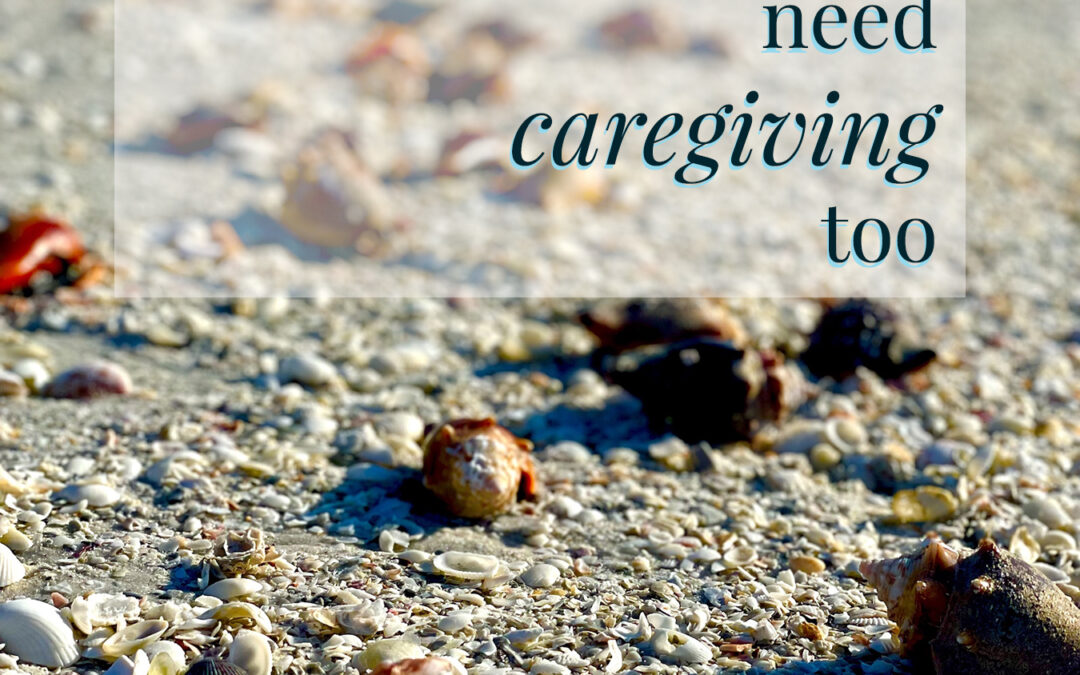
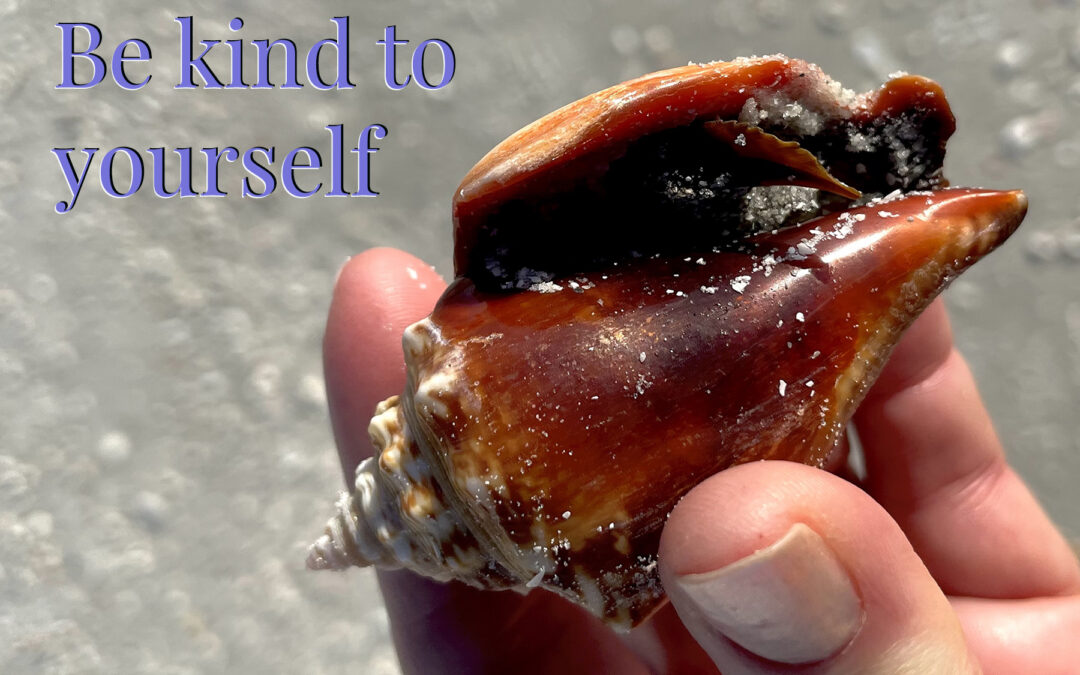
As I walked along Marco Island’s shore, I saw hundreds of fighting conchs brought in by the tide with life inside their shells. I knew I couldn’t save them all, but I scooped up all my hands could hold. All had special needs.

You see, fighting conchs try their best to survive being beached. Sometimes they try to claw themselves closer to the water where high tide will take them home. But sometimes they are washed up with their shell openings facing up. Only a sweep of high tide might save. Or someone might notice and help.

Had I simply thrown the fighting conchs back into the sea, they would mostly likely have died from the impact. Fighting conchs are fragile creatures despite their hard exteriors. They must be placed gently onto their soft seabed to recover their strength.

Cradling them in my cupped hands, I stepped into the salty water, past the surf’s pushing and pulling, and placed them where they would not just survive but thrive.

After turning and walking back to the beach, I thought about the three children my husband and I scooped up in our arms and carried gently to their new home far from the Russian orphanage near the Bay of Finland’s shore.

Our quarter-century family journey has had its ebbs and flows, its crashing and calm as I’m sure all families have. Within a couple years, however, our family had files full of testing reports with numerous diagnoses—all three kids had invisible, permanent disabilities stemming from fetal alcohol exposure. Specialists and therapies became a permanent part of our family. Many still help us today, now that our kids are adults.

But our kids aren’t the only ones with special needs. Trying my best to take care of our kids, I neglected my own needs and developed my own disability—debilitating depression with agonizing anxiety. My brain defied me. I felt washed up, desperate, and vulnerable as a fighting conch unable to claw its way back to sea. I’m thankful for the compassionate care of family and friends along with medication and therapy that brought me gently back to health. And I learned the importance of prioritizing self-care so I’m able to offer the best care long-term to those I love.

Where are you today with self-care? Swimming along just fine, living well with the stress of life? Or are you washed up, in desperate need of compassionate care from yourself and others? If you’re anything like me, sometimes it’s hard to let people see beyond your shiny shell to care for your sometimes fragile soul. Might I gently encourage you to take care of you?

Be kind to yourself by taking care of yourself. Seek health in all forms—mental, physical, and relational. You work so hard at helping others. Do them the best favor by giving yourself the same compassionate care.

For tips on specific ways to improve self-care mentally, physically, and relationally, see The Importance of Self-Care for Caregivers, Part 2.

Do you like what you see at DifferentDream.com? You can receive more great content by subscribing to the monthly Different Dream newsletter and signing up for the daily RSS feed delivered to your email.

By

Heather MacLaren Johnson and her husband have three kids, all five and under when adopted from Russia. Now young adults, all need regular help with their multiple, permanent, invisible disabilities stemming from prenatal exposure to alcohol (FASD).

Heather has B.S. in Education and a doctorate in Clinical Psychology. She is the author of Grace, Truth, & Time: Facilitating Small Groups That Thrive and has published personal essays in The Wonder Years: 40 Women Over 40 on Aging, Faith, Beauty, and Strength (Kregel Publications) and Your Story Matters: Finding, Writing, and Living the Truth of Your Life (NavPress). She’s writing a memoir about her family’s journey through hidden disabilities and mental illness to encourage others to greater intimacy with God and each other through times of desolation and lament.

Heather and her husband of 27 years live with two horses, two dogs, two barn cats, and a bunch of silk plants she just dusts. Heather writes and photographs at www.truelifewithgod.com.

Author Jolene Philo

Archives

Categories

Subscribe for Updates from Jolene

Related Posts