For Better, For Worse in Special Needs Parenting

For Better, For Worse in Special Needs Parenting

For Better, For Worse in Special Needs Parenting

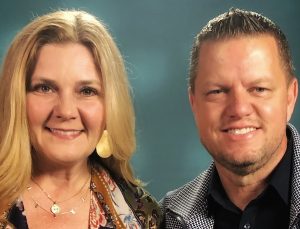
For better, for worse. Today’s guest bloggers, Joe and Cindi Ferrini, have been learning what those words mean for their family for more than 4 decades. In their new book, Love All-Ways: Embracing Marriage Together on the Special Needs Journeythey share what they’ve learned. Today’s guest post us an excerpt from their new book. 

For Better, for Worse

Within a ten year period we lost 5 close family members (one to suicide), was in the process of helping one daughter plan a wedding, getting our other daughter ready for high school graduation, all while I was losing clumps of hair leaving me with huge bald spots, and us trying to continue to meet the needs of our son with multiple special needs. Some of you are saying, “Wow, that’s nothing, here’s my story!” Others are saying, “I sure hope that doesn’t happen to me!” Either way, we all will have hard times amongst the good and there will be challenges. Times got better and life got a little easier, but we aren’t going to lie: it was tough.

Things we learned and hope to help you in your challenges:

  • Don’t be afraid of bad news. Psalm 112:7-8, “They will have no fear of bad news; their hearts are steadfast, trusting in the Lord. Their hearts are secure, they will have no fear; in the end they will look in triumph on their foes.”
  • Trust in God no matter what the news. Genesis 22:1, “They will have no fear of bad news; their hearts are steadfast, trusting in the Lord. Their hearts are secure, they will have no fear; in the end they will look in triumph on their foes.”
  • Trust Him to provide: Philippians 4:19, “And my God will meet all your needs according to the riches of his glory in Christ Jesus.” Matthew 6:33, “But seek first his kingdom and his righteousness, and all these things will be given to you as well.”
  • The root of many problems and challenges is that they are unexpected and if not managed and dealt with will mature into bitterness and often anger.
  • Unrealistic expectations and inevitable difficulties are normal. It’s what we do with them that will make the difference in our marriage.

It’s amazing to see that what we were given in life is the very template of who we will become. Caring for Joey has helped our whole family realize different things in life but as a couple it showed we’d be there for each other “for better, for worse” when that time comes. It was also good that it came early in our marriage giving us the opportunity to recognize selfishness in ourselves giving us the ability to ask God for help to see the bigger picture beyond just “me or us” and to share and serve. Good that comes from right choices was such a great story line in the movie Wonder (2017). It’s a lifetime of right choices, timing, and responding that finally tells the story of life and gives us the ending. In some ways we think we get to write, in part, how that ending turns out. What we find is that positive character traits will get us farther than negative ones and negative emotions. Don’t be entitled; be grateful. Recognize that both valleys and vistas have their own beauty. Life is not social media. Social media isn’t all that real in many ways; but fun, yes.

  • Embrace joy. Give life gusto. Keep trying, doing, enjoying different adventurous things. (Try new hobbies even if you’re lousy at them. We took dance lessons and had fun. We took golf lessons and are still lousy, but we had fun!)
  • Practice God’s presence and ask for the Holy Spirit to fill you.
  • Make friends.
  • Ask for help when you needed and before you need it!
  • Financial planning for you and your child will help eliminate some stress.

Be:

  • Winsome (fun)
  • Wise (Not a windbag!)
  • Wide awake (pay attention to each other)
  • Wishful (hopeful for the future)
  • Stop moving the bar you set for yourself and for your spouse. Are you moving it so neither of you will ever attain it? Stop expecting too much. But expect what is right.
  • Get counseling if you need to work through some things and need the help. Make sure they’ll keep it confidential and private.
  • Find a mentor couple that’s made it through the present stage you’re at.
  • The hardest challenges have changed us the most for the better.
  • Accept, affirm, and appreciate each other “as is” and always act with good intentions and affection.

When worse overshadows better, there is no shame in finding a mentor couple or seeking counseling. Let us help you work through your needs and give you some direction in Love All-Ways: Embracing Marriage Together on the Special Needs Journey. There is no harm in getting help. We all need it from time to time!

Do you like what you see at DifferentDream.com? You can receive more great content by subscribing to the monthly Different Dream newsletter and signing up for the daily RSS feed delivered to your email inbox. You can sign up for the first in the pop up box and the second at the bottom of this page.

By

Dr. Joe and Cindi Ferrini share their newest book, Love All-Ways: Embracing Marriage Together on the Special Needs Journey. They are authors, speakers, and bloggers on marriage, family and special needs. They speak nationally for FamilyLife Weekend To Remember Marriage Get-a-Ways, authored Unexpected Journey – When Special Needs Change our Course, and have been interviewed on Focus on the Family, FamilyLife, and various other radio and television venues. Connect with them at their website and on Facebook at Cindi Ferrini, My Marriage Matters, and Unexpected Journey.

Author Jolene Philo
Archives

Categories

Subscribe for Updates from Jolene

Related Posts

You Are Extraordinary: A Celebration of Every Child

You Are Extraordinary: A Celebration of Every Child

You Are Extraordinary: A Celebration of Every Child

You Are Extraordinary is the new children’s book Craig and Samantha Johnson have written to celebrate the uniqueness of all children. They sat down for an interview here at Different Dream to talk about the new book. 

Would you tell Different Dream readers a little bit about your family?

We have served in full time ministry together for over 28 years. Craig is currently the Executive Pastor at Lakewood Church and Sam serves on staff in the Lakewood Missions Department and Lakewood Champions Club. We are the co-founders of Champions Foundation and Champions Club development centers for special needs with over 75 centers around the world. We are authors, speakers, and advocates for those who have special needs or those who are medically fragile. We have been married 29 years and have three children: Cory, Courtney, and Connor.

Why did you write You Are Extraordinary?

All parents have a moment when they sit face to face with their children to have an important conversation. The conversations may look a little different, but they have the same goal: to let kids know they are exceptional, unique, and wonderful just as they are. We wanted to write a book that celebrated all kids and helped them learn how to love others well. And also welcome meaningful conversations around special needs, ethnic diversity or whatever makes a child unique.

Who do you feel could benefit from reading this book?

We feel like all children will benefit from reading this book. We have included pages
for the little girl who gets picked on based on the color of her skin
for the young boy struggling with autism
for the kid who is bullied because he is different
for the child in a wheelchair
for the little one who is adopted
for the smart girl who’s always being made fun of
or the brave little fighter battling illness

We have also received so many reports from parents telling us how emotional they became reading these affirmations over there child for the first time.

What do you want readers, young and old, to take away from it?

You Are Extraordinary is a book for all children who need a moment of reassurance that God has a plan for their lives, that they are so loved, and we feel what might be the most important message we would like people to take away is that the world is a better place when we treat all people like they are extraordinary. We hope this book will be the catalyst to point your children to their destinies and give them the encouragement they need to succeed.

As parents of a child with autism, what’s your number one piece of advice for other parents raising kids with disabilities and special needs?

Never give up hope. Your child has a plan and a purpose. When things are hard and it doesn’t make since know that you are not alone. Find a support system. Don’t become victims of your situation. As easy as it is to focus on what’s wrong with your child, teachers, medical professionals will all draw attention to these things. Focus on the good things your child did do today. Celebrate all victories no matter how small they may seem. Because what is ordinary for most families is a miracle for families like ours. 

What else would you like to mention that hasn’t been asked?

Our words have creative power. Whenever we speak something, either good or bad, we give life to what we are saying. Speak victory over your children, telling them, “I’m proud of you. I love you. You are amazing. You are talented. You are beautiful. You will do great things in life.” As parents, when we speak words like these over our kids, we are blessing our children’s futures.

Thanks to Craig and Samantha for writing You Are Extraordinary and for their willingness to be interviewed. 

Do you like what you see at DifferentDream.com? You can receive more great content by subscribing to the monthly Different Dream newsletter and signing up for the daily RSS feed delivered to your email inbox. You can sign up for the first in the pop up box and the second at the bottom of this page.

By

Jolene Philo is a published author, speaker, wife, and mother of a son with special needs.

Author Jolene Philo

Archives

Categories

Subscribe for Updates from Jolene

Related Posts

Child First, Disability Second

Child First, Disability Second

Child First, Disability Second

Child first, disability second. Guest blogger Mark Arnold explains how the order of those words can and should shift our perception of people living with disabilities and special needs. Once you read his words, you may want to share his wisdom to get the perception shift ball rolling.

Often, when someone asks me for help regarding a child with additional needs or disabilities, their starting point is problem solving centered on the child’s condition. It’s easy to see how this narrative forms. It comes from a place of getting a child that doesn’t fit our model of a typical child to adapt. The main thing that’s preventing it is their disability.

Surely there is a better way of looking at this. A starting point that isn’t problem-centered but child-centered looks first at a fabulous, individual, gifted child of God and build a more positive narrative about how we can adapt to meet the child’s needs. In other words, put the child first, disability second.

For example, our son, James is loving and affectionate, has an infectious belly laugh, loves Minions, the color yellow, PlayDoh, and trips to the farm shop or café. He is a good looking lad (I know, I’m biased!) who is loved by everyone who meets him. He is also autistic and has learning difficulties and epilepsy, so he needs adaptations to access things and be included.

A tool I regularly recommend to support children like James is a one page profile, a resource to help anyone working with children or young people get to know them better. The profile asks three key questions of the person being profiled. The order and priority given them (child first, disability second) is important.

1. What do people like and admire about me?

This sets the right tone from the outset and creates a positive narrative about the child or young person, a child-centered narrative rather than a problem-centered one. By identifying and listing the positive attributes of the child we see him more full. We see the positive things about the child that are fulfilling. This focus is affirming and constructive, completely changing the way we think about the child and respond.

2. What makes me happy?

If we know what makes a child or young person happy then we can get to know him better through those things. We see him more broadly as an animal lover, as someone who likes to play with and explore through the sense of touch, or as someone who like technology. We can also use those things to engage the child and keep him interested and focused.

3. How I want to be supported.

The words used in this final section are deliberate and helpful. First, it is a person-centered statement. Second, it talks about what support needs to look like, putting the emphasis on us to provide that support, for us to adapt rather than the child. That’s the right way around!

Resources like this can help change the narrative for children and young people with disabilities and special needs. (You can download one page profiles at  www.sheffkids.co.uk. Go to the Adults section and choose Resources.) These resources help us understand people as individuals, not labels. They also can change perceptions about children and young people with additional needs or disabilities from being seen as problems to solve to being people to serve.

When we see each child as a child first, disability second, we see them as God does.

The Lord does not look at the things people look at. People look at the outside of a person. But the Lord looks at what is in the heart.
1 Samuel 16:7b (NIRV)

Do you like what you see at DifferentDream.com? You can receive more great content by subscribing to the monthly Different Dream newsletter and signing up for the daily RSS feed delivered to your email inbox. You can sign up for the first in the pop up box and the second at the bottom of this page.

By

Mark Arnold is the Additional Needs Ministry Director at Urban Saints, a leading national Christian children’s and youth organization. He is co-founder of the Additional Needs Alliance, a national and international advocate for children and young people with additional needs or disabilities. Mark is a Churches for All and Living Fully Network partner, a member of the Council for Disabled Children and the European Disability Network. He writes an additional needs column for Premier Youth and Children’s Work (YCW) magazine and blogs at The Additional Needs Blogfather, He is father to James, who has autism spectrum condition, associated learning disability, and epilepsy. To find out more about how Mark’s work can help you, contact him at: marnold@urbansaints.org or @Mark_J_Arnold.

Author Jolene Philo

Archives

Categories

Subscribe for Updates from Jolene

Related Posts

New Resources for Caregiving Parents and Their Kids: My Top 5 for a New School Year

New Resources for Caregiving Parents and Their Kids: My Top 5 for a New School Year

New Resources for Caregiving Parents and Their Kids: My Top 5 for a New School Year

New resources for caregiving parents and their kids are popping up with increasing frequency. Today I’d like to acquaint you with my top 5 new resources for caregiving parents as the new school year begins. With the kids back in school, maybe you’ll have time to check out a few!

A Special Hope Podcast with host Sarah Broady. Sarah interviews caregiving parents, special needs ministry leaders, and more in her podcast that went live in the spring of 2019. You can find out how the podcast came into being in the guest blogger series (Part 1 and Part 2) she wrote for Different Dream. Like her Facebook page to get the scoop on new episodes as soon as they go live.

The Hope Anew Podcast with Jonathan and Sarah McGuire. This podcast came into being in February of 2019. Like Sarah, the McGuires interview caregiving parents and disability ministry leaders from around the country. They will also unveil some unique offerings for special needs families this fall, so visit their website or Facebook page frequently for some exciting announcements.

Unexpected Blessings by Sandra Wood Peoples. Sandra shares the unexpected blessings she and her husband Lee have experienced while raising a son with autism. The book will encourage your heart and perhaps change your perspective regarding your caregiving life. Visit her website at sandrapeoples.com

Hiya Moriah by Victoria Nelson. I love this book for many reasons, not the least of which is the way Victoria gives equal time to her daughter Moriah’s favorite rainbow dress, pink bow, curly hair, and her disability. To read more about Hiya Moriah, check out Victoria’s Different Dream author interview. The book is available on Amazon in paperback, hard cover, and Kindle formats.

Sharing Love Abundantly in Special Needs Families: The 5 Love Languages® for Parents Raising Children with Disabilities by Dr. Gary Chapman and Jolene Philo. You didn’t expect me to leave this one off the list, did you? It’s included not because I helped write it, but because I have heard from reader after reader about how beneficial is is for them and their family members. It’s available in paperback and Kindle formats.


I encourage you to check out these new resources for caregiving parents and their kids. If you want to add a resource to the list, leave a comment below, along with a link to where it can be found. Happy reading and listening!


Do you like what you see at DifferentDream.com? You can receive more great content by subscribing to the monthly Different Dream newsletter and signing up for the daily RSS feed delivered to your email inbox. You can sign up for them at the bottom of this page.

By

Jolene Philo is a published author, speaker, wife, and mother of a son with special needs.

Author Jolene Philo

Archives

Categories

Subscribe for Updates from Jolene

Related Posts

Caring for the Caretaker Is Essential

Caring for the Caretaker Is Essential

Caring for the Caretaker Is Essential

Caring for the Caretaker isn’t self-indulgent, as guest blogger Laurie McLean knows. It is absolutely essential. That’s why Laurie is here to tell you about an amazing caring for the caretaker resource she’s compiled.  

Parents of children with invisible disabilities often feel conflicted and complicated emotions.

On the one hand, their child may be considered “high functioning” so they feel they have no right to be overwhelmed or frustrated.

However, parenting a child with an invisible disability is stressful due to the very nature of the disability being invisible.

While we hope that our child will be accepted and their strengths acknowledged, we often have to deal with the reality that their struggles are often misunderstood.

Our lives are spent simultaneously supporting our children so they can succeed in a predominantly neurotypical world and shouting from the rooftops that they have a disability that causes them to need intervention when they are not succeeding.

Parenting a child with autism, ADHD, anxiety, and other disorders that affect behavior can be challenging.

We parents often feel guilt and shame when our children exhibit behavioral difficulties that are manifestations of their disabilities because, to the general public, it may look like they are simply misbehaving.

Caretakers of children with invisible disabilities spend an inordinate amount of time researching, battling for services, advocating, explaining, educating… it can all be very exhausting.

Parents of children with invisible disabilities need to focus on progress, not perfection.

People, in general, will celebrate each milestone of a child who very clearly has a visible disability.

For instance, we will all rally behind a child with cerebral palsy who takes their first step.

This is something concrete that we can see and understand. These children work hard in physical therapy to achieve these goals.

It is not as easy to see the growth in a child with autism who may struggle to understand non-verbal social cues.

Likewise, when a child with ADHD who struggles with impulse control is able to regulate their sensory needs and focus during a lesson it is not always recognized.

These are expected behaviors and many feel they there is no need to celebrate when a child is able to comply with the general rules.

The outside world may never understand what it took to get your child to that place.

This reality can be frustrating for us as special needs parents. Our children work very hard to do what may come naturally to other children.

When we start to feel like life is unfair and that we are simply tired of the fight, we need a change in perspective.

Typically, when I get to this point, I know that I have neglected my own self-care.

It is easy to get lost in the role of caretaker. We immerse ourselves in the battle of helping our children.

While a noble cause, we must remember to take care of ourselves in order to be the parent our children really need.

After all, how effective will we be if we experience a breakdown due to lack of self-care?

The high level of burnout amongst special needs parents is alarming.

Self-care for caretakers can be tricky as we are often inundated with our responsibilities and lack the time, energy and resources.

Caring for the Caretaker is a virtual bundle of self-care resources that will help you practice self-care on your own time when it works for you.

You can grab the Caring for the Caretaker resource for a 40% discount, only for Different Dream readers.

You can learn to not just survive as a special needs parent, but to thrive and be the parent you want to be for your child.

Parenting children with invisible disabilities may pose a unique challenge. But ensuring that we are taking care of our needs with the Caring for the Caretaker resource will enable you to parent your child with confidence.

Do you like what you see at DifferentDream.com? You can receive more great content by subscribing to Different Dream newsletter and signing up for the daily RSS feed delivered to your email inbox. You can sign up for the first in the pop up box and the second at the bottom of this page.

By

Laurie McLean is a blogger, special needs parent, coffee fiend, dog lover, special education advocate and recovering perfectionist interested in balance, humor and self-care. She helps women learn to give themselves grace while they simplify their lives and make the most of their motherhood journey, no matter what unexpected things may come their way. You can visit her blog, Life with a Side of the Unexpected or check out her page on Facebook.

Author Jolene Philo

Archives

Categories

Subscribe for Updates from Jolene

Related Posts

A Special Hope Podcast, Part 2

A Special Hope Podcast, Part 2

A Special Hope Podcast, Part 2

A Special Hope Podcast is for the special needs and disability community, as guest blogger Sarah Broady explained in Part 1 of this short series. Today, she provides ideas guaranteed to increase your enjoyment of the podcast and get the most out of every episode.

A Special Hope launched in February 2019 and airs twice a month, on the 1st and the 15th of the month. It’s available on all podcasting platforms, including Apple Podcasts, Google Podcasts, Spotify, Stitcher, Castbox, and more. Whether you have an Apple or an Android, you can listen to A Special Hope on any device. You can read more about the podcast and find show notes on all the episodes on the podcast page of my website, Hope in Autism. A Special Hope is also on social media. You can find it on Facebook, Twitter, and Instagram. If you’d like to help the work A Special Hope Podcast is doing, there are a five super simple ways to support it. 

LISTEN! Click on the links for the apps above, search for it in your podcasting app, or listen directly from the website. I know your time is valuable and you are being pressed in every direction to watch this, do that, listen to this. Your time is greatly appreciated! Take advantage of that car ride to work or hit play on your next run. I appreciate every single download!

REVIEW! Leave a 5-star review on the podcasting app you use. It goes a long way to helping others find the podcast and gain traction and more listeners.

SHARE! You can easily share the podcast directly from any app, or share the podcast page link on your social media. Follow A Special Hope Podcast on social media and share posts or retweet.

SUBSCRIBE! You can subscribe to the podcast in your podcast app, but you can also subscribe to getting news updates about the podcast, new episodes, where it’s being featured, exciting news, and more by subscribing to updates on the website. I promise I NEVER send spam.

SUPPORT! Publishing a podcast is unfortunately not free. There are monthly costs associated with media hosting and long-distance recording for my interviews, and equipment upgrades that will be needed eventually for better quality. In light of this, A Special Hope Podcast is now on Patreon. You can become a patron and choose your monthly payment (as low as $1) or make a one-time donation. I don’t like this whole self-promotion thing, but it seems to be a necessary evil in content creation. So, (deep breath) would you please consider the cost of buying me a cup of coffee every month? Every little bit helps. I’ll be adding special incentives for patrons only along the way too, so be on the lookout for those as a patron. I want to show my appreciation for my supporters.

I’m thrilled to be creating something I’m passionate about and bringing needed hope and encouragement for both families and ministry leaders in the church. I hope you’ll join me on this journey and choose one or two ways to support the work of A Special Hope Podcast.

“Not only that, but we rejoice in our sufferings, knowing that suffering produces endurance, and endurance produces character, and character produces hope, and hope does not put us to shame, because God’s love has been poured into our hearts through the Holy Spirit who has been given to us.” Romans 5:3-5 (Emphasis mine)

Part 1


Do you like what you see at DifferentDream.com? You can receive more great content by subscribing to the monthly Different Dream newsletter and signing up for the daily RSS feed delivered to your email inbox. You can sign up for the first in the pop up box and the second at the bottom of this page.

By

Sarah Broady and her husband have three boys. Their second son is autistic. Sarah is an autism advocate and has spoken to state capitol committees to secure better services on behalf of families living with autism. Her greatest joy comes in being an encouragement to other parents who are walking the same road she is walking. She blogs about their life raising a son with autism as they hope and delight in God at Hope in Autism. and interviews people involved with disabilities and special needs at A Special Hope Podcast. She is also writing a book that gives hope in Jesus on the special needs path. She speaks at Christian-related special needs events to reach parents on a more personal level. You can contact Sarah through her blog or by email at sarah@hopeinautism.com.

Author Jolene Philo

Archives

Categories

Subscribe for Updates from Jolene

Related Posts