Sully the Raccoon Hosts a Book Give Away!

Sully the Raccoon Hosts a Book Give Away!

Sully the Raccoon Hosts a Book Give Away!

Different Dream is pleased to welcome author Arielle Hobbs as today’s guest blogger. Her children’s story Sully the Raccoon was released in July. Read on to find out how the life of her son Sully gave birth to the book and how you can enter a drawing for a free copy!

In the beginning, Sully the Raccoon was written as a tool for me to help introduce Sully to the new kids in his classes each year. His classmates got a kick out of the stories I told about life with Sully, so I kept adding to them until it became the little book it is today. The main storyline and Sully’s antics in the book are based on real-life events.
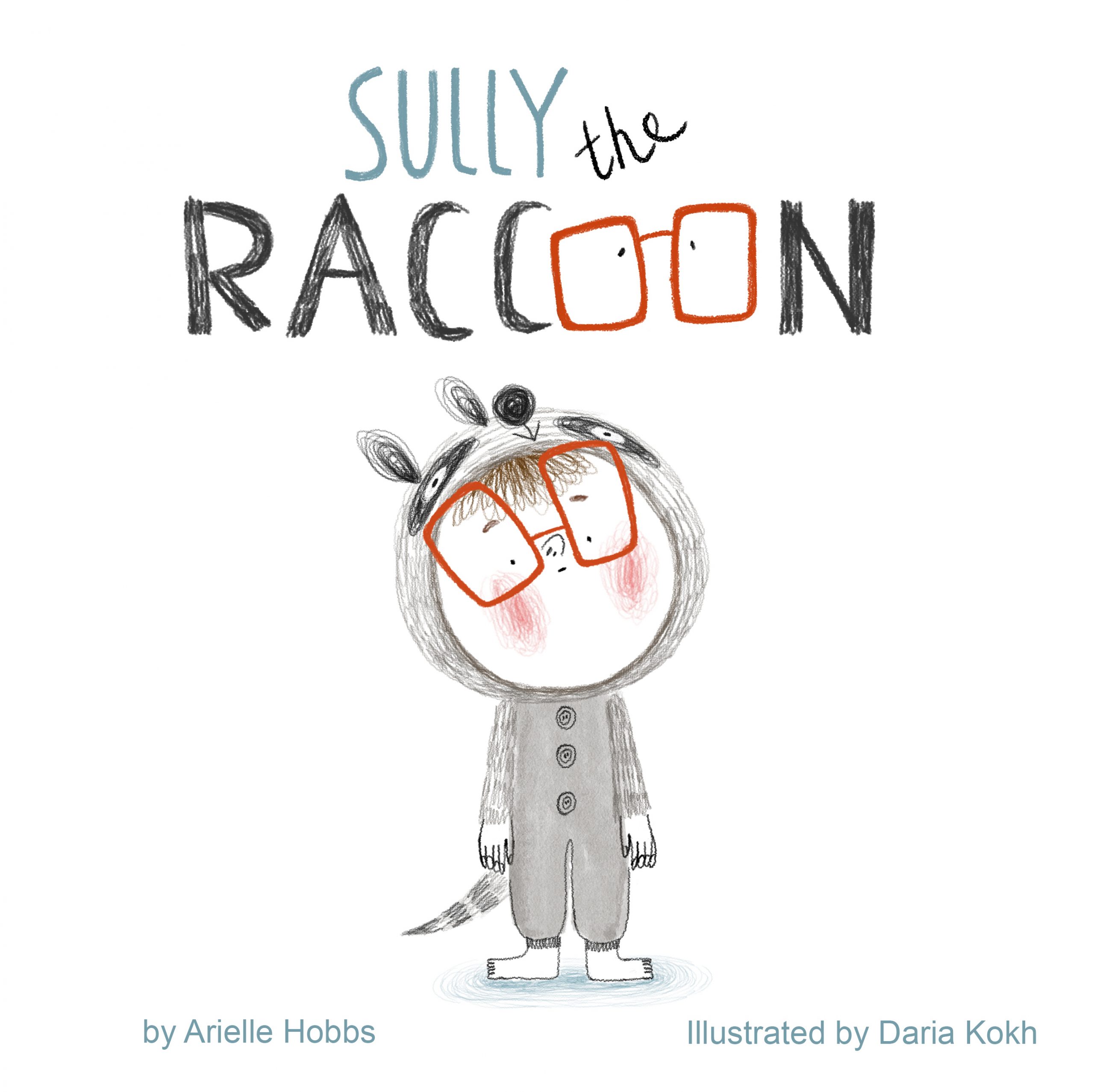
Sully did wear a raccoon costume for many years–and sometimes still does.
He did sneak out of the house in the middle of the night to jump on the trampoline–it was 10 degrees.
He still eats candy with the wrappers on–who has time to take the wrappers off?

To me, Sully is the most perfect gift from God; not just a gift to us, his parents, but a gift to the whole world. It was important for me to address the stigma surrounding disability that something was wrong with Sully. Regardless of how it looked on the outside, I had to learn to love Sully just the way he is. The process wasn’t as natural as with my neuro-typical kids.

Certainly, I didn’t love him any less. But for many years I fought for him to be better or different instead of just embracing the excellence that he is.

After writing this for Sully’s classmates, I recognized how retelling our story became therapeutic and affirming for our family. Writing Sully the Raccoon reminded us of all the ways Sully makes us laugh and smile.

His hugs should be a national treasure.
His smile should be plastered on every billboard.
His excitement and joy for living should be bottled and sold in pharmacies around the world.

The Sully the Raccoon book series is my way of sharing Sully with the world, but also a way to remind myself of how unbelievably perfect he is.

Thanks to Arielle’s generosity, one Different Dream winner is going to win a FREE copy of Sully the Raccoon. To enter the drawing leave a comment below about why you’d like to win the book. Be sure to leave your comment by midnight on September 10, 2020 to be entered in the drawing. 

Do you like what you see at DifferentDream.com? You can receive more great content by subscribing to the monthly Different Dream newsletter and signing up for the daily RSS feed delivered to your email inbox. You can sign up for the first in the pop up box and the second at the bottom of this page.
By

Arielle lives in Florida with her family and enjoys the beach (almost) every day. She is mom to Jax, Sully, and Frankie. Sully was medically fragile for the first few years of his life and later on diagnosed with global apraxia, IDD, and is nonverbal. Sully is a true miracle, vibrant, healthy, and thriving. Arielle is an author and nearing the end of her masters degree in professional mental health counseling.

Author Jolene Philo
Archives

Categories

Related Posts

The Real Story of Pregnancy and CMV

The Real Story of Pregnancy and CMV

The Real Story of Pregnancy and CMV

The real story of pregnancy and CMV needs to be told often and well. Today guest blogger Amanda Devereaux is here to tell you the story of how Cytomegalovirus (CMV) affects her family and how to avoid passing it on to an unborn child.

One of the strangest things about learning your child will have a disability is how the diagnosis seems to come out of nowhere. In general, women do everything they can to have a healthy pregnancy, and most of them expect to have a healthy baby. Interesting, considering about 1 in 33 babies in the US will be born with a birth defect. Many times we, as a society, avoid the idea of having an atypical child because we don’t want to worry expecting parents. Also, there’s often nothing a parent can do before birth to prevent the health condition in the child.

But what about the times when a condition could be prevented? The real story of pregnancy and CMV in our family illustrates how important prevention is.

Our daughter’s birth defects stemmed from a preventable infectious disease called Cytomegalovirus, or CMV. I, like most people, had little-to-no knowledge about CMV before it caused permanent damage to my daughter’s brain in utero. We found out after our 20 week ultrasound that I had caught CMV early in my second pregnancy and passed it to our unborn child.

A Common Threat

CMV is a common virus, and most people have been infected by the time they are 40. Young children are thought to be hot zones for CMV. They carry it if they catch it outside the womb, and many pregnant women who catch the virus have come into contact with it while caring for children. When the virus crosses the placenta and reaches the unborn child, it can cause permanent damage to their body and brain. Common diagnoses for these children are hearing loss, cerebral palsy, vision loss, epilepsy, and more. One in 1000 children born in the US will have a permanent birth defect or health condition due to CMV. 400 children will die each year.

Preventing CMV

Because CMV is a contagious virus that passes through direct contact with bodily fluids, it can be prevented. Vaccine work has been ongoing for decades with no vaccine yet approved. Until we can prevent CMV with a vaccine, diligent hygiene by pregnant women and women planning a pregnancy should be practiced. This starts with talking about CMV, not keeping it a secret. Prevention steps include:

  • Not sharing a toothbrush
  • Not sharing food, utensils, drinks, or straws
  • Never putting a pacifier in your mouth
  • Avoiding contact with saliva when kissing a child
  • Washing hands, especially after wiping a young child’s nose or drool, changing diapers, feeding a young child, or handling children’s toys

These simple prevention tips are the things I wish I had known while I was pregnant—not because we love Pippa any less, but because birth defects are a risk for any woman having a child. Without an accurate picture of a world with disabilities from pregnancy forward, we aren’t acknowledging the diversity of life or the ways we can care for our children and prevent them from undue challenges.

A Different Dream

Our daughter, Pippa, is almost 5 years old now. CMV caused her irreversible brain damage in utero. She began walking at age 2.5. She does not talk, but certainly lets us know what she is thinking in other ways. She is a happy, wonderful child and she makes us laugh every day. She likes going for walks and bike rides, and loves Daniel Tiger. Our dreams for her are different than they once were, and that is okay. We are learning to embrace this. However, we often think about what her life—and ours—might be like if we had known about CMV during my pregnancy. We have realized part of our dream is to help others avoid the struggles we have to face and to embrace a fuller picture of childbearing. We hope that someday CMV may be prevented, and one day, all pregnant women will know CMV by name. That’s why I’m sharing the real story of pregnancy and CMV in our family.

Do you like what you see at DifferentDream.com? You can receive more great content by subscribing to the monthly Different Dream newsletter and signing up for the daily RSS feed delivered to your email inbox. You can sign up for the first in the pop up box and the second at the bottom of this page.

By

Amanda graduated with her Bachelor’s Degree in Nursing in 2007. She has worked in public health for 11 years, most recently focusing on maternal child health. Currently, she works as the Program Director for the National CMV Foundation. Amanda became passionate about eliminating congenital Cytomegalovirus (CMV) when her daughter was born affected by the virus in 2015. In 2017 Amanda and her family successfully lobbied for CMV awareness and screening legislation in Iowa. Amanda lives in Des Moines, Iowa with her husband, Paul, and 2 children Atticus and Pippa.

Author Jolene Philo

Archives

Categories

Related Posts

Coronavirus and Kids with Special Needs

Coronavirus and Kids with Special Needs

Coronavirus and Kids with Special Needs

Coronavirus and kids with special needs sounds like a combination worthy of panic. With all the information and misinformation swirling about, it’s easy for caregiving parents to be confused and stressed about how to best protect their kids. Where’s a parent to go to find accurate, truthful information? And what should they do to keep their kids safe and healthy, both physically and mentally, as the situation unfolds? Here are five sources that provide information in a thoughtful, careful manner.

  1. The Center for Disease Control and Prevention (CDC). This site is updated daily as new cases of the coronavirus are identified and scientific advancements are made. You’ll find a state-by-state breakdown of cases and map, a page about the coronavirus in kids that should ease your mind, and a list of measures to slow the spread of the virus and avoid contracting it.
  2. The World Health Organization (WHO). This website is similar to the CDC’s but with a global, rather than national, focus. Their prevention page has much of the same information as the CDC. I especially like their graphic about how help kids cope with stress during the outbreak. What’s the big message for parents worried about the coronavirus and kids with special needs? Stay calm and manage your own stress so your kids don’t get stressed!
  3. AARP. It sounds weird, I know. But the AARP’s article about what senior citizens should know about the coronavirus can be generalized to the coronavirus and kids with special needs. Also, the article answers some questions the CDC and WHO don’t mention.
  4. My husband. He’s a nurse at a regional hospital, and they receive updates and preparedness information. He and the three sources listed above say the same things. Hand washing is the single most effective measure to slow the transmission of the coronavirus.

Based on everything I’ve read and the advice of my husband who’s been a hospital nurse for more than 30 years, the best way to keep the coronavirus and kids with special needs away from one another is to wash your hands. With soap. Several times a day. For at least 20 seconds. You would be wise to institute the other measures recommended by the CDC and WHO. They may seem simplistic and low tech, but research proves they work. Now if you will excuse me, I’m off to wash my hands. Again. 

Do you like what you see at DifferentDream.com? You can receive more great content by subscribing to the monthly Different Dream newsletter and signing up for the daily RSS feed delivered to your email inbox. You can sign up for both at the bottom of this page.

By

Jolene Philo is a published author, speaker, wife, and mother of a son with special needs.

Author Jolene Philo

Archives

Categories

Subscribe for Updates from Jolene

Related Posts

Downloadable Retreats to Strengthen Your Marriage and Special Needs Family

Downloadable Retreats to Strengthen Your Marriage and Special Needs Family

Downloadable Retreats to Strengthen Your Marriage and Special Needs Family

Downloadable retreats to strengthen your marriage and special needs family may sound too good to be true. But Becky Davidson, co-founder of Rising Above Ministries, wants you to know they are real!. In her guest blog she explains how they came about and where to find them. 

On a beautiful spring day in May of 1991, I walked down the aisle to marry my Jeff. We had met one year earlier, shortly after I had graduated from college, and we knew right away that we were each other’s “forever love”.  Within 3 months, we were engaged and a few months later we were getting married.

Standing in front of hundreds of our family members and friends, we promised that from that day forward we would love each other… for better or worse, for richer or poorer, in sickness and in health, and that we would love and cherish each other until we were parted by death.

We were 23 and 24, and we could not begin to comprehend the way those vows would be tested over our 26 years of marriage. From the loss of our first child through a traumatic miscarriage, to raising our son with profound special needs, and later through Jeff’s significant health issues, we faced more trials than we could have then imagined.

Following our son Jon Alex’s birth, we struggled to navigate our new life as special needs parents. I did what many moms do after a diagnosis and threw myself into researching ways to help our son. Jeff, on the other hand, did what many fathers often do. He could not “fix” our son so he threw himself into the arena where he excelled: his job.  We found ourselves at odds over treatment and therapy options for our son. We were exhausted due to our son’s sleep issues and often found ourselves falling into the pit of despair as we tried to our maneuver through our new normal.  

As time went on, we found ways to communicate how we were feeling. We came to a place of acceptance and believed deep in our souls that our son was wonderfully made and created for a plan and purpose. Instead of allowing the hardships and trials we faced to tear us apart, we purposed in our hearts to allow them to draw us closer together. My life with Jeff did not look the way we envisioned it would on that beautiful spring day when we said our vows to one another. But through it all, we remained faithful to the promises we made to each other, and loved each other well until we were parted by death. It was an earth shattering loss when in May of 2017, my sweet Jeff passed away, leaving me a widow and our son without a dad. I have been a solo parent to our son for almost three years now. I never dreamed I would be caring for our son and making decisions regarding his care on my own.  

 Jeff and Becky Davidson doing life together.

When Jeff and I started Rising Above in 2005, we both knew that encouraging married couples raising children with special needs had to be an integral part of our mission. We started the Two-Gether Marriage Conference to address the unique needs of couples raising a child with a disability. We are now able to offer these conferences as downloadable retreats to strengthen your marriage and special needs family. You can do the retreat with your spouse in the comfort of your own home. My hope is that this conference will encourage couples who might be facing overwhelming circumstances to see that it is possible to move toward each other and come together to face whatever life may bring. You can find this conference and other resources at our website, Rising Above Ministries.

Do you like what you see at DifferentDream.com? You can receive more great content by subscribing to the monthly Different Dream newsletter and signing up for the daily RSS feed delivered to your email inbox. You can sign up for both at the bottom of this page.

By

Becky Davidson is the co-founder and president of Rising Above Ministries, a multi-dimensional outreach to families impacted by special needs. She took on her role at Rising Above after the death of her husband, Jeff Davidson. She is passionate about supporting and encouraging special needs families and encouraging women through her platform at Redefine This Life. Becky and Jon Alex, her adult son with special needs, live and thrive in Cookeville, Tennessee. To get to know Jeff through more of his writings, check out the book he wrote with Becky, Ordinary Man, Extraordinary Call.

Author Jolene Philo

Archives

Categories

Subscribe for Updates from Jolene

Related Posts

Heartfelt Gratitude for Special Needs Blessings

Heartfelt Gratitude for Special Needs Blessings

Heartfelt Gratitude for Special Needs Blessings

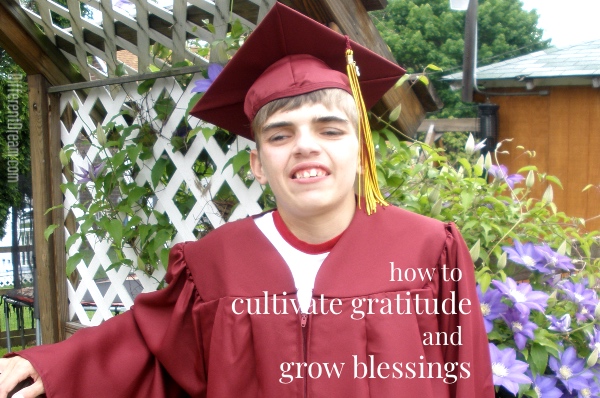
Heartfelt gratitude for special needs blessings may seem like a contradiction of terms for parents grappling with a new diagnosis or the loss of a child. Guest blogger Paul Gallagher describes how he and his wife Valerie cultivated gratitude through the life of their first child, Joshua, and how they use that gratitude to bless others. My wife Valerie and I were expecting our first child in England, her native country, where I was serving in the United States Air Force (USAF). The nursery was ready, the due date was approaching. We were so excited! Two weeks before that date, our USAF doctor noticed something that resulted in us being referred to Guys Hospital in London. After a sonogram, the doctor told us our son had a hypoplastic left heart and would not live more than a few hours after birth. We were devastated. Fortunately, the air force quickly whisked us to the United States where doctors were willing to intervene. We arrived after an 11 hour flight in a military cargo aircraft with Valerie on a stretcher. Josh was born at an army hospital and later transferred to Texas Children’s Hospital to await a heart transplant. At 3 months of age, Josh had the transplant.

Heartfelt gratitude for special needs blessings can take a long time to cultivate. Paul Gallagher describes how he and his wife learned about gratitude and how they want to bless others.

Organ transplantation isn’t a cure. It is trading an unmanageable problem for a manageable one. As a young couple we learned complex immunosuppressive medicine regimes, placed nasal-gastric feeding tubes, and experienced the worries of having a child with a compromised immune system. Later we learned that Joshua was also autistic. We’ve spent countless days living in ICUs and hospital rooms. On numerous occasions we’ve been pulled into a room and told Josh was not going to make it. We watched him endure procedures, ouchies, yucky meds, and pain. We cared for him in our home until he was almost 18. He passed away in January of 2011.

Heartfelt gratitude for special needs blessings can take a long time to cultivate. Paul Gallagher describes how he and his wife learned about gratitude and how they want to bless others. Josh has a younger brother and sister who also walked this path with us. To be sure, Josh’s good days far outnumbered the bad, but life could be unpredictable and very hard. What did we learn through these experiences?
  1. A different understanding of blessings. Blessings are often brought to us through the hardest circumstances. In the hardest times, there is something to be thankful for–if we look for it. We can only experience the blessing of God’s comfort when we are broken-hearted.
  2. We can avoid victimhood and self-pity focusing on what we can do. The quickest way to loose hope is focusing on circumstances we can’t change. But whatever our circumstances, there is always some way to be a blessing to others–if we look for it. Even in impossible situations, we can do something.
  3. We must accept life on its terms and trust the Lord. If we compare, we step away from blessings because comparing my circumstances with others or with the way I think they should be will make it difficult to be thankful. We can’t bless bless others when we aren’t thankful.
We are thankful because we know God loves Josh even more than we do. We are thankful that when Josh entered God’s presence, all the pain he ever felt was not even a memory.  Between now and our joyful reunion, we try to bless others through Josh Tree, a non-profit we recently started. Josh Tree allows us to share our heartfelt gratitude for special needs blessings and keep Josh’s memory alive by helping families with children who have life-changing illness. The long term vision of the organization is to provide those families with resources to stay resilient in the face of incredible challenge as well as helping with their more immediate needs. We invite you to visit the website to learn more about how Joshua taught us to cultivate gratitude for special needs blessings in his life and ours. Do you like what you see at DifferentDream.com? You can receive more great content by subscribing to the monthly Different Dream newsletter and signing up for the daily RSS fee
Heartfelt gratitude for special needs blessings can take a long time to cultivate. Paul Gallagher describes how he and his wife learned about gratitude and how they want to bless others.

By

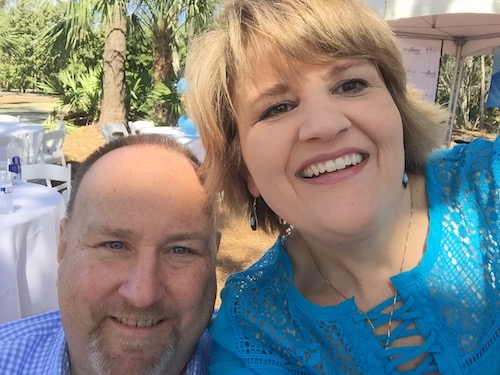
Paul Gallagher is a retired United States Air Force (USAF) Chief Master Sergeant with 29 years of service. He and his lovely wife Valerie are now empty nesters and living in New Braunfels, Texas where he works as a business consultant. They enjoy friends and family, along with hiking and camping.

Author Jolene Philo

Archives

Categories

Subscribe for Updates from Jolene

Related Posts

Christy’s Courage: An EA/TEF Success Story

Christy’s Courage: An EA/TEF Success Story

Christy’s Courage: An EA/TEF Success Story

Christy’s Courage is a the brainchild of Christy Cook, an EA/TEF survivor. As part of EA/TEF Awareness Month, 2020 she is sharing her fascinating story and her vision for supporting EA/TEF kids and their families.

My name is Christy Cook. I was born an EA/TEF baby in Baltimore, Maryland in 1963 and my “long gap type C” journey began. The first surgery at attempting to correct my unusual birth defect was performed on the very first day of my life at Sinai Hospital by Dr. Jack Handlesman and his team of doctors. Since the gap at the esophagus was too long, the connection was not successful. Therefore, a gastrostomy tube (g-tube) was very carefully inserted into my small stomach. This g-tube became my life line the next 4 years. The doctor’s goal was to attempt another corrective surgery when I weighed 25 pounds.

When I reached this goal weight sometime during the year of my second birthday, the doctors began contemplating another method for corrective surgery. During this time, I was in and out of Sinai Hospital numerous times for various medical issues relating to EA/TEF. At one time, all my available veins for injecting fluids were depleted. The doctor told my parents that only a miracle could save my life.

A miracle did happen!

The doctor performed an extraordinary surgery to find a deep vein in my groin through which I could receive lifesaving fluids. Also, there were times when fluids were simply injected under the skin to help sustain my life. When I was around 2 years of age, Dr. Handelsman performed a colonic interposition in my chest cavity to try to make a connection to my stomach. Unfortunately the transplant did not succeed because it scarred and died in my chest.

For the next few years, my life consisted of gastrostomy feedings and hospital visits. When I was around 3, my family decided to move back to North Carolina, their home state. After having my medical records sent to the Chapel Hill Hospital at the University of North Carolina, we made contact with a renowned surgeon Dr. Colin Thomas. Dr. Thomas decided to transplant a second colon section outside the chest cavity just under the skin or subcutaneously. His thinking was that this colon transplant could be surgically put into the chest cavity at a later date.

Eureka, a successful connection was made!

This type of corrective surgery has been an unusual restorative procedure that serves me well. Therefore I chose not to risk having the transplant placed into my chest since everything its working If I get a “sticky,” I help the peristalsis motion by massaging my esophagus.

Voilà, no more “sticky!”

This triumphant procedure has served me well for more than 50 years. I have been able to enjoy eating by mouth since I was 4, and I have no other serious birth abnormalities. My corrective surgeries have been written up in medical journals and medical students have studied and learned from my medical history. Thankfully, there are medical professionals who continue to do research and are finding better ways to treat, repair, and surgically help these precious babies who are born with this rare and unfamiliar birth defect.

My goal is to use my life experience to make a difference for EA/TEF patients by supporting them on their journey to navigate this diagnosis and live a successful life. For that reason, Christy’s Courage was established in 2012 when I started to write a book about my life. The book turned into a non-profit when I, along with Pi Kappa Alphas at Western Carolina University, raised money to gift an adjustable bed to an EA child. Since then have held many different fund raisers to raise awareness for EA and to gift adjustable beds, wedge pillows, monetary gifts, Farrell bag covers, airfare to hospitals, and anything else we can handle. We have a scholarship fund for EA young adults to help with their college needs.

Because EA is so rare, it is a challenge to get people engaged to attend our events and make monetary donations. So, if you are reading this educate someone about EA, please refer them to Christy’s Courage so we can make an impact for the EA community!

Do you like what you see at DifferentDream.com? You can receive more great content by subscribing to the monthly Different Dream newsletter and signing up for the daily RSS feed delivered to your email inbox. You can sign up at the bottom of this page.

By

My name is Christy Cook and I am a survivor. Living with Esophageal Atresia (EA) has been a courageous, but difficult journey. Through all the twist and turns of EA, I graduated high school, was a debutante, attended college for 3 years, became a member of Delta Zeta sorority, and after college I work full time as a food broker. (Ironic, don’t you think?) I have been married for 32 years to a wonderful man. Our fur babies are 2 Shih Tzu’s (Bunni Rose and Moonpie) and 6 cats (Amelia, Caramia, Kitta, Panther, Rusty & Zeek). In my spare time I enjoy concerts, hanging with friends and trips to the ocean.

Author Jolene Philo

Archives

Categories

Subscribe for Updates from Jolene

Related Posts