What Disability Means to My Warrior Son, Part 2

What Disability Means to My Warrior Son, Part 2

What Disability Means to My Warrior Son, Part 2

What disability means for our children with special needs is a reality we can help our kids accept. In part one of this two part series, guest blogger Trish Shaeffer described her son’s disability and what it means for him. In today’s post, she explains he is more like than different from children without disabilities.

In the first part of this series, I explained what disability means for my son Alex. His primary disability is cerebral palsy (CP), which affects him in many other ways. Issues that go along with his cerebral palsy include epilepsy, constipation, and vision issues. Even sleep disturbances caused by pain, seizures, and inability to reposition himself while he sleeps. In some case this causes pressure sores. He has balance issues and falls a lot, even when sitting on the floor on his knees. Swallowing becomes harder at times which can lead to choking on water or juice, risk of pneumonia, and other lung issues. Inability to move his extremities at times means Alex also has circulation problems and trouble staying warm in the winter.

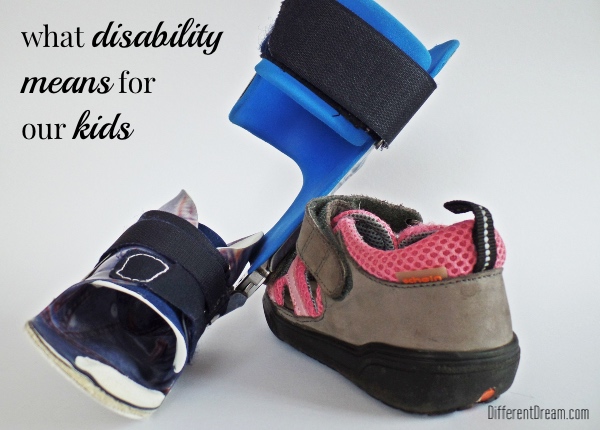
These secondary issues mean extra layers and pressure socks, as we put on his DAFO braces that help keep his feet flat and help with standing. We give him full creative run for all his equipment designs and color choices. Even down to his eye glasses. These give Alex a sense of importance, uniqueness, and independence. For example, his bath chair allows him to sit up off the bathtub floor so we can clean him properly. We continue to adapt our home and his transportation to help him become more independent in his self-care and mobility. A stair lift means he is able to get up and down stairs alone.This opens doors so he can explore his world.

CP also means a lot of therapists, doctors’ appointments, tests, and surgeries. Alex has had 10 surgeries in a decade. He has many therapists and loves them deeply, calling them his friends. He has tests every month but he never cries even when he gets his blood drawn, because they’re the norm for him. He also enjoys getting out in his community.

Alex is a big people person. I have seen him smile at someone sad, and they suddenly smile back. People tell me he brightens their day because he cares and is kind and compassionate. He has blossomed into one awesome person.

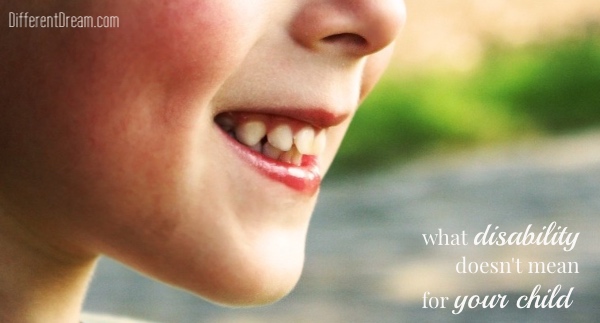
What disability means for Alex and for other kids is that it’s just a label. Every child with a disability has a personality and a name. They have likes and dislikes. They feel emotion. Talk in their own way. Want to be seen as people, not as labels, wheelchairs, or walkers. They want us to look beyond the wheelchair. Look beyond the disability. Look beyond limitations or labels. You might be surprised by who you see. Alex teaches this every day. He inspires and educates. He loves to share his story with everyone. To bring change. Reduce judgement and fear over a diagnoses.

CP means challenges for the rest of Alex’s life. But it won’t stop him from being happy and full of life. Don’t feel sorry for Alex. Feel happy next time you see him. Know that he is one happy kid and wants to share his smile with the world.

Part 1


Do you like what you see at DifferentDream.com? You can receive more great content by subscribing to the monthly Different Dream newsletter and signing up for the daily RSS feed delivered to your email inbox. You can sign up for the first in the pop up box and the second at the bottom of this page.
By

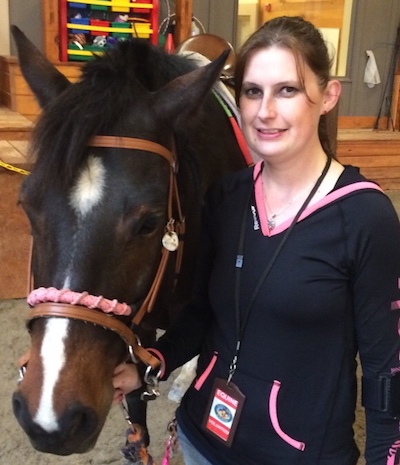
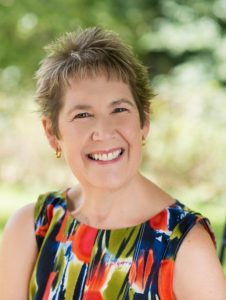
Trish Shaeffer is the mom of 3 active boys with special needs. She’s a peer supporter for Parent to Parent and volunteers with the United Cerebral Palsy Network, Special Olympics, and the United Way. She’s also an equine volunteer at Leg Up Farm. She’s married to her best friend and biggest supporter, Chris Schaeffer.

Author Jolene Philo
Archives

Categories

Subscribe for Updates from Jolene

Related Posts
What Disability Means for My Warrior Son, Part 1

What Disability Means for My Warrior Son, Part 1

What Disability Means for My Warrior Son, Part 1

What disability means for our children with special needs is something our kids wrestle with as they grow. As parents, we must anticipate what our children will face and prepare to support them. In the first post in her two part series, guest blogger Trish Schaeffer describes her son’s disability and what it means. In the second post in the series, she tells how he is more like than different from children without disabilities.

When people see my son Alex, they always has the same questions. What is wrong with him? What does he have? I don’t mind if someone asks me questions about my son, and I’m happy to advocate or offer an explanation. I answer them with “He has cerebral palsy.” Or for small children “His legs don’t work right.”

Alex had a massive stroke in utero and was born two months prematurely, along with his twin brother. The stroke caused a grade 2 and grade 3 brain bleed resulting in brain damage at birth. This is why he has cerebral palsy (CP). Despite low odds, Alex survived with his twin and has grown into a happy kid. He is is vocal and curious about the world and people around him. He has overcome so many of the odds given at birth. He continues to grow, learn, and accomplish goals.

Alex has spastic quad cerebral palsy. This means all of his limbs are affected and become rigid and stiff. He has more use of his arms and hands than of his legs. He also has pain daily, muscle spasms, and joint dislocation issues. Recently, he received a Baclofen Pump which delivers a dose of medication directly to his spine via catheter to help his muscle tone and pain management. He’s had this small pump in his abdomen for a little over 3 years. Along with the pump, Alex has had tendon-lengthening surgery to reduce his pain. It has also helped him bend and gain function in his legs.

 People often recognize the term CP, but many don’t understand what it means for my son now and in the future. What disability means for my son is this:

He will always have issues with mobility. He will always use a wheelchair or walker. Disability affects the simplest things such as eating or dressing. He will always be in pain from muscle spasms and weather changes. It means he may have good days and bad days from a physical and mental perspective. Some days are better than others but he will have trouble answering simple questions or doing simple tasks like remembering his address.

Alex has always and will always move to the beat of his own drum. At his own pace. One day at a time. One task at a time as he learns to navigate the world around him. He has learned how to push himself in his wheelchair. Take ramps. He now dresses himself. He is working on transfers and has begun to use a walker to do them. I remember when the doctors gave us overwhelming diagnostic labels and described overwhelming limitations that Alex would have. He proves them wrong to this day. All he needs is patience, love, acceptance, and a bit of cheerleading. He wants to be his own child. His own individual. To reach his goals in his own time.

Part 2


Do you like what you see at DifferentDream.com? You can receive more great content by subscribing to the monthly Different Dream newsletter and signing up for the daily RSS feed delivered to your email inbox. You can sign up for the first in the pop up box and the second at the bottom of this page.

By

Trish Shaeffer is the mom of 3 active boys with special needs. She’s a peer supporter for Parent to Parent and volunteers with the United Cerebral Palsy Network, Special Olympics, and the United Way. She’s also an equine volunteer at Leg Up Farm. She’s married to her best friend and biggest supporter, Chris Schaeffer.

Author Jolene Philo

Archives

Categories

Subscribe for Updates from Jolene

Related Posts

Child First, Disability Second

Child First, Disability Second

Child First, Disability Second

Child first, disability second. Guest blogger Mark Arnold explains how the order of those words can and should shift our perception of people living with disabilities and special needs. Once you read his words, you may want to share his wisdom to get the perception shift ball rolling.

Often, when someone asks me for help regarding a child with additional needs or disabilities, their starting point is problem solving centered on the child’s condition. It’s easy to see how this narrative forms. It comes from a place of getting a child that doesn’t fit our model of a typical child to adapt. The main thing that’s preventing it is their disability.

Surely there is a better way of looking at this. A starting point that isn’t problem-centered but child-centered looks first at a fabulous, individual, gifted child of God and build a more positive narrative about how we can adapt to meet the child’s needs. In other words, put the child first, disability second.

For example, our son, James is loving and affectionate, has an infectious belly laugh, loves Minions, the color yellow, PlayDoh, and trips to the farm shop or café. He is a good looking lad (I know, I’m biased!) who is loved by everyone who meets him. He is also autistic and has learning difficulties and epilepsy, so he needs adaptations to access things and be included.

A tool I regularly recommend to support children like James is a one page profile, a resource to help anyone working with children or young people get to know them better. The profile asks three key questions of the person being profiled. The order and priority given them (child first, disability second) is important.

1. What do people like and admire about me?

This sets the right tone from the outset and creates a positive narrative about the child or young person, a child-centered narrative rather than a problem-centered one. By identifying and listing the positive attributes of the child we see him more full. We see the positive things about the child that are fulfilling. This focus is affirming and constructive, completely changing the way we think about the child and respond.

2. What makes me happy?

If we know what makes a child or young person happy then we can get to know him better through those things. We see him more broadly as an animal lover, as someone who likes to play with and explore through the sense of touch, or as someone who like technology. We can also use those things to engage the child and keep him interested and focused.

3. How I want to be supported.

The words used in this final section are deliberate and helpful. First, it is a person-centered statement. Second, it talks about what support needs to look like, putting the emphasis on us to provide that support, for us to adapt rather than the child. That’s the right way around!

Resources like this can help change the narrative for children and young people with disabilities and special needs. (You can download one page profiles at  www.sheffkids.co.uk. Go to the Adults section and choose Resources.) These resources help us understand people as individuals, not labels. They also can change perceptions about children and young people with additional needs or disabilities from being seen as problems to solve to being people to serve.

When we see each child as a child first, disability second, we see them as God does.

The Lord does not look at the things people look at. People look at the outside of a person. But the Lord looks at what is in the heart.
1 Samuel 16:7b (NIRV)

Do you like what you see at DifferentDream.com? You can receive more great content by subscribing to the monthly Different Dream newsletter and signing up for the daily RSS feed delivered to your email inbox. You can sign up for the first in the pop up box and the second at the bottom of this page.

By

Mark Arnold is the Additional Needs Ministry Director at Urban Saints, a leading national Christian children’s and youth organization. He is co-founder of the Additional Needs Alliance, a national and international advocate for children and young people with additional needs or disabilities. Mark is a Churches for All and Living Fully Network partner, a member of the Council for Disabled Children and the European Disability Network. He writes an additional needs column for Premier Youth and Children’s Work (YCW) magazine and blogs at The Additional Needs Blogfather, He is father to James, who has autism spectrum condition, associated learning disability, and epilepsy. To find out more about how Mark’s work can help you, contact him at: marnold@urbansaints.org or @Mark_J_Arnold.

Author Jolene Philo

Archives

Categories

Subscribe for Updates from Jolene

Related Posts

Hello Noon and Special Olympics Athletes Rock Out in Music Video

Hello Noon and Special Olympics Athletes Rock Out in Music Video

Hello Noon and Special Olympics Athletes Rock Out in Music Video

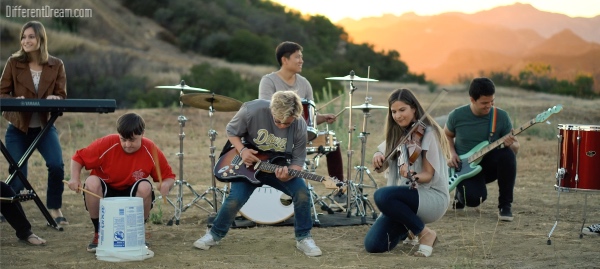
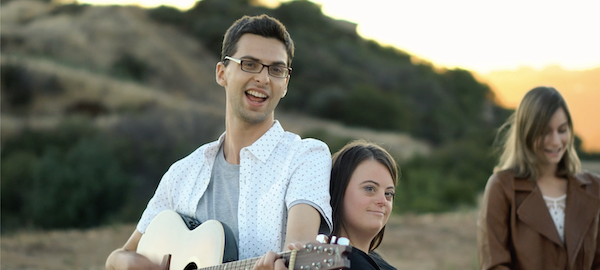
Hello Noon, a California-based band, released a music video done in collaboration with Special Olympics athletes. Stephen, who plays guitar and performs vocals for Hello Noon, explains how the Run Free video came into being.

When Stephen Spies, guitarist and singer from Hello Noon, was asked to teach music to a neurodiverse class (those with variation in brain function and behavioral traits), the classroom teacher warned him that the students may not participate. To his and the teacher’s surprise, every student in the room was drumming along and fully engaged! 

Kate and Rebecca, pianist and violist in Hello Noon, reflected with Stephen about their similar experience as music teachers with neurodiverse classes. This inspired them to start planning a project that would showcase the neurodiverse community. They reached out to Caley Versfelt, a Special Olympics swimmer and athlete from their hometown, about filming a music video with Hello Noon. She responded without hesitation that she was on board. Caley and Special Olympics Southern California worked with Hello Noon to secure two more athletes, Cole Sibus, and Jared Cozak, and filming began. 

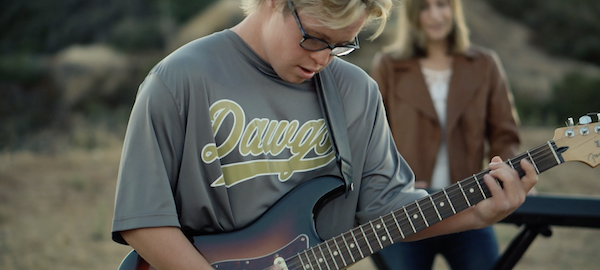
After an amazing day of incredible interviews and sport demonstrations, Cole, Jared and Caley enthusiastically joined Hello Noon for the final performance shot! Cole rocked the electric guitar back to back with Stephen.The band Hello Noon jammed out with Special Olympics athletes to create a new music video, Run Free. In this post, watch the video and learn how the project came into being.

Jared showed his amazing drumming skills side by side with Kyle (drummer from Hello Noon). Caley jumped on both the mandolin and the viola next to Rebecca. With only 20 minutes to film before the sun set atop a mountain in Malibu, the performance shot couldn’t have gone smoother and it was easily everyone’s favorite part of the shoot.

The band Hello Noon jammed out with Special Olympics athletes to create a new music video, Run Free. In this post, watch the video and learn how the project came into being.

On July 9th, 2019, Hello Noon released this music video, showcasing the incredible work Special Olympics Athletes do! Hello Noon created this video to celebrate neurodiversity and highlight the intelligence, kindness and positivity Special Olympics Athletes demonstrate that we can all learn from! 


I was so impressed by how much these athletes have accomplished! Jared is an actor on Nickelodeon, while Cole is an actor in feature films. Caley is on the Board of Directors for Special Olympics Southern California and started her own business, Tides of Kindness. All of them have been featured in the award winning docuseries ‘Born This Way’.”Stephen Spies, guitarist and vocalist from Hello Noon

I hear a lot of people saying to me, ‘Oh, I’m not beautiful enough or I’m not smart enough’, but guess what? You have the best two qualities and that’s your friendship, and your personality to other people” – Caley Versfelt, quote taken from her interview in the music video on tackling insecurities 

About the Band: Hello Noon is an orchestral, pop-rock band with a message of positivity and inclusion through social activism. Beginning as a group of friends and songwriters, Hello Noon came together sharing music with each other while music students at UCLA. They immediately realized their shared passion of serving others through musical performance. Since then, they have performed for the Special Olympics 50th Anniversary–“Pier Del Sol”–at the Santa Monica Pier, the Healthy Campus Initiative celebration at Pauley Pavilion (UCLA), the LA Cancer Challenge run to end pancreatic cancer, Angel City Games for Paralympic athletes at Drake Stadium (UCLA) and more! Their debut album, Into Place, brings to light the potential we have as a community to work together and build a brighter future.

Do you like what you see at DifferentDream.com? You can receive more great content by subscribing to the monthly Different Dream newsletter and signing up for the daily RSS feed delivered to your email inbox. You can sign up for the first in the pop up box and the second at the bottom of this page.

By

Jolene Philo is a published author, speaker, wife, and mother of a son with special needs.

Author Jolene Philo

Archives

Categories

Subscribe for Updates from Jolene

Related Posts

Special Needs Families Can Be Grateful to Live in the USA

Special Needs Families Can Be Grateful to Live in the USA

Special Needs Families Can Be Grateful to Live in the USA

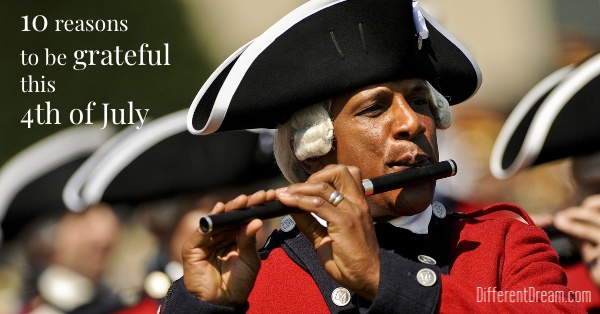
Special needs families can be grateful to live in the USA. It’s true, even in this time of contentious politics and dissatisfaction with our government. On this day before Independence Day, here’s the quick list I scribbled down without breaking into a sweat.

  1. Special needs families can be grateful for freedom of religion. Whatever faith community our families embrace, our country allows us to worship as we wish. Better yet, thanks to the growth in inclusive ministry initiatives in all denominations and faiths, more houses of worship are accessible to people with disabilities and special needs than ever before.
  2. Special needs families can be grateful for Medicare wavers and government disability payments. Yes, the paperwork is terrible and red tape is sticky and getting stickier. But these programs are lifesavers for many. May we always feel more grateful for than entitled to them.
  3. Special needs families can be grateful for elections. They allow us to speak for our children and to become change agents on local, state, and national levels. Therefore, we should exercise our right to vote at every turn and teach our children to do the same.
  4. Special needs families can be grateful for freedom of speech. This freedom, guaranteed by the Bill of Rights, is another way to advocate for our children. It’s also a way they can self-advocate and engage in public debate without fear. Let’s teach them to do it effectively, kindly, and with compassion.
  5. Special needs families can be grateful for medical advancements funded by government research. My child is alive because of those advancements. Perhaps your child is, too.
  6. Special needs families can be grateful for taxes. They seem excessive sometimes, but their benefits–public libraries, free public school education, good roads, safe air travel, Medicare waivers, to name a few–enhance quality life for us and our loved ones with disabilities.
  7. Special needs families can be grateful for Social Security and state pensions. These allow grandparents to devote time to their grandchildren with disabilities and special needs. In a few years, they’ll allow my husband and I to devote ourselves fully to special needs and disability ministry. I. Can’t. Wait.
  8. Special needs families can be grateful for public schools. We like to grumble about what public schools don’t do for our kids while ignoring what they do provide. Public schools have been the primary agents of change to create more inclusive environments for our kids. They have also been instrumental in changing public attitudes toward those with disabilities. Yes, much remains to be improved, but we can be grateful for what’s already been done.
  9. Special needs families can be grateful for the Americans with Disabilities Act (ADA). I remember how hard it was to get my dad from place to place in his wheelchair before the ADA was signed into law. More remains to be done, but we should be grateful for the accessibility this law brought into being.
  10. Special needs families can be grateful for the ABLE Act. Passed in 2014, this law created a way for families to save money for their children with disabilities and special needs. For more information about what ABLE is and does, check out this blog post.

So, that’s the list I came up with. What do you like about it? What would you add to it? Leave your comments below!

Do you like what you see at DifferentDream.com? You can receive more great content by subscribing to the Different Dream newsletter and signing up for the daily RSS feed delivered to your email inbox. You can sign up for the first in the pop up box and the second at the bottom of this page.

By

Jolene Philo is a published author, speaker, wife, and mother of a son with special needs.

Author Jolene Philo

Archives

Categories

Subscribe for Updates from Jolene

Related Posts

5 Lessons for Disability Advocates

5 Lessons for Disability Advocates

5 Lessons for Disability Advocates

Disability advocates, myself included, are people of passion. Our passion springs from a deep desire to improve the lives of those we love and the well-being of the overall disability community. Recently I provided a Christian organization I admire with information about a project to benefit caregiving families. They listened courteously but declined to participate.

Outwardly, I accepted their decision with equal courtesy, but inwardly I was fuming.
I thought nasty thoughts.
I railed against the unfairness of it all.
I contemplated cutting ties with the organization.
That would show them.

Show them what? whispered a small and powerful voice within. Show them Jesus?

Oh. Hm. That.

Chagrined, I asked God to exchange my divisive spirit for His unity and my destructive anger for His constructive love. Throughout the day, He answered my prayer with these 5 lessons for an overzealous disability advocates like me.

Lesson 1: Not every believer shares your passion.

Not because they don’t care about the disability community, but because God has given them a different passion. The organization I approached is passionate about many worthy ministries. Because they are committed to funding and serving those ministries well, they had to say no to my cause.

Lesson 2: Sometimes we push too hard or too soon.

As disability advocates, we have personal connections in the disability community. We love individual people and know their stories of struggle and victory and faithfulness. When we forget the time we were given to develop connections and be integrated into the disability community, we can push others too hard or too soon. Instead we must learn to wait for God’s timeline rather than pushing our own.

Lesson 3: Thank God for what He will do.

One reason I pushed too hard and too soon was because I was afraid of not reaching a funding goal for the project I was championing. I was a little miffed, too, because I had prayed diligently for God to provide what was needed, and He hadn’t answered.

That day, a new thought niggled its way to the front of my consciousness. Asking God to do what He knows needs to be done is redundant. Instead, thank Him for what He has always done and will always do – provide everything required to complete His good work.

Thanking God shifts the focus from fear to faith in God’s sufficiency. The shift also keeps us from pushing too hard too soon.

Lesson 4: God shuts some doors permanently and others temporarily.

God sees what we can’t. He shuts some doors because he knows what lies behind them will lead to bad ends. He shuts others because He wants us to open doors that can accomplish what is best in the disability world and the kingdom of God rather than what is merely good enough. He closes many doors temporarily and reopens them when the time and hearts are right. Who knows? God may eventually open doors in the organization mentioned before, when the seed of disability awareness planted in them grows into a passion for disability ministry.

Lesson 5: Our advocacy work is temporary, but God’s work is forever.

The work of disability advocates is good, necessary, and life-changing. The all-consuming passion that drives disability advocates can skew our perspective. We forget that our work is temporary, while God’s work is forever. He has believers waiting in the wings to continue the work He began in us.

When we are disappointed,
when progress is slow,
when doors shut,
when someone says no,
when we are tempted to blaze forth in anger,
God’s promise in Philippians 1:6 is our eternal hope.

He who began a good work in you will bring it to completion at the day of Jesus Christ. (ESV)

Do you like what you see at DifferentDream.com? You can receive more great content by subscribing to the quarterly Different Dream newsletter and signing up for the daily RSS feed delivered to your email inbox. You can sign up for the first in the pop up box and the second at the bottom of this page.

By

Jolene Philo is a published author, speaker, wife, and mother of a son with special needs.

Author Jolene Philo

Archives

Categories

Subscribe for Updates from Jolene

Related Posts