He’s My Dad, Not a Disability

He’s My Dad, Not a Disability

He’s My Dad, Not a Disability

He’s my dad, not a disability.

Those words have been rattling in my brain this March, the month in which my father died 22 years ago. My thoughts have moved beyond the deep, personal grief I felt in 1997. Now my wish is to describe Harlan Stratton who, along with Jesus, shaped my perception of who people truly are.

Harlan Stratton loved his wife. He picked out her birthday and Christmas gifts carefully. He looked through the newspaper ads and phoned the store to quiz the clerk for a long time about whatever gift he wanted to buy. Once he made his decision, he arranged to have the gift delivered when Mom was at work.

He loved his three children, and he understood how we thought and what made us happy. He gave us rabbit kisses. (There’s no way to describe them. You had to be there.) When I was home sick from school, laying on the couch, we would watch Captain Kangaroo together. He laughed as hard as I did when the ping pong balls came pouring down. His presence made me feel safe.

Dad loved people. He was always happy to see them. Always. He enjoyed playing cards with his friends after they got off work. He didn’t play to win. He played to talk, to tell stories, to make people laugh, and to laugh with them.

He had a terrific sense of humor and a thousand-watt smile. Mom remembers a time he and a friend decided to stay up until one of them ran out of jokes. They were still at it when Mom got up to make breakfast.

Dad never allowed discussions about politics to become cut throat. He listened respectfully to the views of others and never tore them down. Perhaps that’s why I was years into adulthood before I comprehended his personal political leanings. He only expressed them in a comment which referred to his right arm, severely weakened by illness–It’s my Republican arm. Not good for much of anything.

He loved his work as a cattle farmer and an extension agent. He was happiest in the show ring at the county fair when he was judging cattle. He lived for those hot, July days when young people led livestock in a circle around him and listened keenly to his advice about showmanship.

He was never, ever a picky eater. He ate with gusto whatever was served and always complimented the cook. That said, his favorite foods were a good steak, ice cream, and homemade baked goods.

Dad loved to go to church when he could. He listened intently to the sermons, but he came fully alive after the service when old friends and new acquaintances came over to say hello.

Are you getting a sense of who my father was?
His likes?
His passions?
His personality?

Can you picture him in the show ring at the fair?
Eating a good steak?
Playing cards?
Chatting after church?

How different would that picture of him be if description had begun with his disability?
If the first things you knew were that he had multiple sclerosis?
That he used a wheelchair?
That others had to cut his food and help him in the bathroom?

Because he’s my dad, not a disability, I led with who he was because I wanted you to know him.

As the church, we need to do the same.
We need to get to know people with disabilities for who they are.
We need to ask them about their interests, their work, and their families.
We need to introduce them to others with similar likes, passions, and personalities rather than with a similar disability.

Eventually, the disability will come up. But it should never come first. It should never be a person’s defining mark.
Because she’s a daughter, a mom, a sister, a niece, a cousin, an aunt, a grandma, a friend.
He’s a son, a dad, a brother, a nephew, a cousin, an uncle, a grandpa, a friend.
She’s a beloved creation of God, and so is he.

Would you say it with me now?
She’s my ____________, not a disability.
He’s my ____________, not a disability.

Do you like what you see at DifferentDream.com? You can receive more great content by subscribing to the monthly Different Dream newsletter and signing up for the daily RSS feed delivered to your email inbox. You can sign up for both at the bottom of this page.

By

Jolene Philo is a published author, speaker, wife, and mother of a son with special needs.

Author Jolene Philo
Archives

Categories

Subscribe for Updates from Jolene

Related Posts

Our Expected but Blessed EA/TEF Journey: A Year Later

Our Expected but Blessed EA/TEF Journey: A Year Later

Our Expected but Blessed EA/TEF Journey: A Year Later

Our Expected but Blessed EA/TEF Journey is guest blogger Kristen Horton’s follow up to Our Unexpected but Blessed EA/TEF Journey which she wrote for EA/TEF Awareness Month in 2018. Please welcome Kristen back to Different Dream and read on for a delightful update about the past 12 months in the Horton household.

Our Expected but Blessed EA/TEF Journey: A Year Later

The Final Dilations

Hard to believe that it was a little over a year ago that I wrote my first blog about our EA/TEF journey with my son Christopher. At the time I wrote that post, we had already gone through the repair, NICU stay, 5 dilations, and one day I had to perform CPR on him at 6 weeks old. After January 2018, he had 5 additional dilations for a grand total of 10 dilations in about four months, but has not had any more since April 2018. The most exciting and emotional day since performing CPR on him was hearing the surgeon say “We don’t need to see him except for an office visit in 6 months.”

Starting Daycare

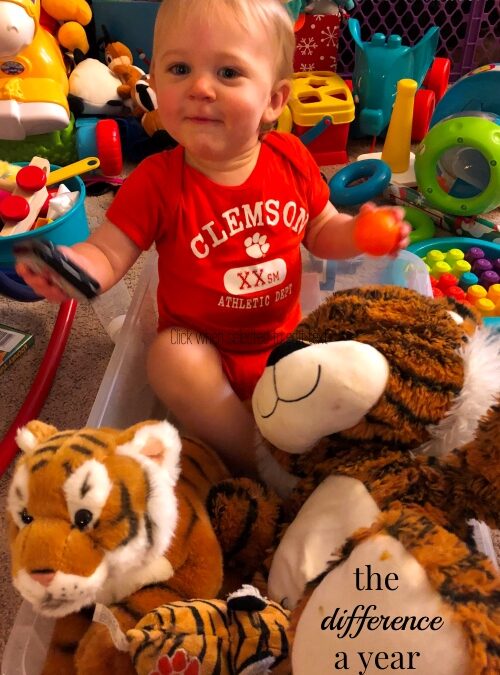
Another exciting time for us was for Christopher to go to daycare! He started around 6 months old and did so great! To this day, he loves to go and play with his friends. I was a wreck but it was one of the best things for him. While we did battle a couple colds, we have been so blessed that he was had relatively good health even while attending daycare with tons of germs!  He turned one year old in September and moved up classes where he runs around, plays, and eats like a champ.

The “Stuckie” and the Esophagram

The only time we ran into an issue was when he graduated to the next daycare classroom because they feed them items from a menu. Unbeknownst to me, the menu had hard cereal for some breakfasts and he got a “stuckie” one Friday, right after a glowing report from the surgeon to taper off his reflux medication. However, multiple after hours calls to the surgeon and an ER visit later, he has to not only stay on reflux medication indefinitely and drink Enfragrow instead of whole milk, but we are currently on a modified diet of pureed/soft foods. This was the first time I felt uneasy since he had his final dilation in April. We did an esophagram to check for a stricture, but he doesn’t have one that requires more surgery at this time. Other than that one incident, this year has been amazing with family and friends and absolutely flown by!

One Final Piece of Advice

I just want to make sure that the parents of EA/TEF and other birth defects know that it gets better!  While it’s so hard to look past the next surgery or next struggle, you will make it through and be even better at loving your child and cherishing life. However, never grow complacent about trusting that gut for when you need to advocate for your child. I believe I did allow myself to get lulled into a false sense of security that Christopher was “all better,” when I needed to continue to be vigilant about his food items and reflux back in October and November. But, you won’t be perfect and can’t beat yourself up over mistakes. Learn from them and continue to be the best parent you can be.


Do you like what you see at DifferentDream.com? You can receive more great content by subscribing to the quarterly Different Dream newsletter and signing up for the daily RSS feed delivered to your email inbox. You can sign up for the first in the pop up box and the second at the bottom of this page.


By

Kristen Horton lives in Georgia with her husband, Nathaniel, son, Christopher and dog, Winston. She received her Bachelor of Science in Electrical Engineering from Clemson University in 2010. During her time at Clemson, she participated in the ROTC program and was commissioned as a Second Lieutenant in 2010. She also has a Master of Science in Electrical Engineering with a concentration in Electromagnetics from the Air Force Institute of Technology in 2012. Her son was born with an EA/TEF birth defect and she has made it her mission to ensure that he receives the best care possible and become as educated on the condition as possible.

Author Jolene Philo

Archives

Categories

Subscribe for Updates from Jolene

Related Posts

When You Don’t Have Anything Good to Say

When You Don’t Have Anything Good to Say

When You Don’t Have Anything Good to Say

Whenever I got snarky as a kid, my mother had this habit of staring straight at me and saying, “If you don’t have anything good to say, don’t say anything at all.”

Her words came to mind as I read the Exodus 14 account of Moses and the Israelites after they fled from Egypt and were trapped between the Red Sea and the Egyptian army. The Israelites were freaking out and blaming Moses, reviling him with snarky comments like these.

“Is it because there are no graves in Egypt that you have taken us away to die in the wilderness?”
“What have you done to us in bringing us out of Egypt?”
“Is not this what we said to you in Egypt: ‘Leave us alone that we may serve the Egyptians.'”
“It would have been better for us to serve the Egyptians than to die in the wilderness.” (ESV, Exodus 14: 11–12)

Do you know what my mother would have said if she’d been in Moses’ sandals? Yup. You guessed it. She would have nailed them with an unsympathetic, “If you don’t have anything good to say, don’t say anything at all.”

Moses’ response in verses 13–14 was a little different. “Fear not, stand firm, and see the salvation of the LORD, which He will work for you today. For the Egyptians whom you see today, you shall never see again. The LORD will fight for you, and you have only to be silent.”

Moses and Mom both advised people without anything good to say to say nothing at all. But Moses, who was caught between the devil and the deep Red Sea at the time, responded with great compassion and uncompromising assurance in the ability of the God who had brought them safe thus far to complete His good work in them. This account offers advocates in the special needs community a model of how to respond when our efforts fall on deaf ears and our accessibility initiatives fail.

First, remain silent. Assume that whenever you can’t think of anything good to say or if you can’t think of anything to say, God is calling you to say nothing at all. He’s not shutting your mouth forever, but He is shutting it until you cool off and can speak constructively rather than destructively. You may need to ask to reschedule the meeting for another time. Other than that, remain silent.

Second, pray. Ask God to show you what to say and to empower you to show compassion even though you may be in a tight spot and a person’s present and future well-being is on the line.

Third, listen. Listen to God by reading His Word. Seek wise counsel from faith leaders and from special needs and disability advocates. Compare the counsel given to Scripture again.

Fourth, ask questions. Ask others how they advocated in similar situations. Ask what worked and what didn’t work. Ask disability and special education liaisons for advice. Ask what laws and legal precedents can be cited or employed.

Fifth, draft a solution. Based on what you have learned, draft a reasonable solution to the issue. The solution should ensure the well-being of those with disabilities and, if possible, establish a foundation for collaborative problem-solving in the future. Also, determine how you will respond to objections and what your next steps will be if an acceptable solution can’t be reached.

Sixth, craft a response. Think of how to best present your solution during the meeting scheduled during the first step. Write it down. Trouble shoot it. And practice, practice, practice what you will say.

Seventh, pray for compassion and courage. The compassion that comes from knowing that everyone involved is dearly loved by the Creator. The courage that comes from the Lord who began this good work of advocacy in you will be faithful to complete it.

Eighth, speak. Speak calmly. Speak courageously. Speak firmly. Speak objectively. Speak truth. Speak in hope, doing all you can to make good and right changes for those with disabilities and special needs. If your solution isn’t accepted, and you are speechless or you can’t think of anything good to say, don’t give up. Don’t lose your cool. If you feel God has called you to be His change agent in the disability arena, go back to the first step and begin again.

It took ten plagues, the parting of the Red Sea, two attempts at recording God’s commandments, and forty years in the wilderness before Moses completed what God had called him to accomplish. Why do we think our work should require anything less?

Do you like what you see at DifferentDream.com? You can receive more great content by subscribing to the quarterly Different Dream newsletter and signing up for the daily RSS feed delivered to your email inbox. You can sign up for the first in the pop up box and the second at the bottom of this page.

By

Jolene Philo is a published author, speaker, wife, and mother of a son with special needs.

Author Jolene Philo

Archives

Categories

Subscribe for Updates from Jolene

Related Posts

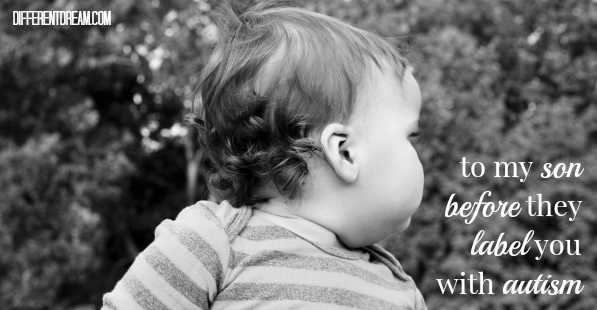
To My Son Before They Label You with Autism

To My Son Before They Label You with Autism

To My Son Before They Label You with Autism

Before they label you with autism. No parent wants to pen a letter to a child before that happens. But this post is an example for parents of what to say and how to say it. Thank you, guest blogger Amy Felix, for saying what many parents need to hear.

My Son,

The doctors tell me that you have autism. That, though you’re not quite old enough for them to make an official diagnosis, all of the signs are there. Soon, the world will label you. Many will see you through the lens of disability. Life will change. Before it does, I wanted to write to you. To tell you what I see in you. To tell you what will remain the same…

You’re strong, brilliant, and hand-crafted in the image of God. Look no further than His Word for the truth of who you are. No label can define you. Never let anyone convince you you’re anything less than priceless.

I love you fiercely. Nothing can separate you from my love. Nothing. No words can express the depth of it. No label, diagnosis, or struggle could ever change it. My love for you is endless.

We are a team. Your battles are my battles. When you hurt, I hurt. When you struggle, I struggle. I will fight for what’s best for you, fight for all that you deserve, until the day I die. I will push you to reach your goals and I will lead you in running this race with endurance. You may encounter many hardships, but you’ll never face them alone.

God’s purpose and plan for your life is bigger than you could ever imagine. Never let the world drag you down. Don’t lose sight of your mission.

You are worthy of respect. People may not always give it to you; sometimes you’ll need to work hard to earn it. You need to be respectful. God created that person who’s tearing you down; because He loves them, you are called to as well. Don’t be afraid to stand up for what you deserve, but choose your words carefully.

I’m proud of you. Not just because I’m your mother, but because I see your determination to achieve…because when you fall, as we all do, you always get back up and try again.

I believe in you. Always will. I’ll be here to guide you in truth and compassion as you reach for your dreams and beyond. Never underestimate yourself. Through Christ, you can do all things. Even when you find yourself feeling lost, remember that God can use any situation for good.

You are a gift. I have never, not for a single moment, wanted a different child. I’ve never wanted to change you. I never will. You are exactly who you are meant to be and who you are is amazing. I am privileged and honored to be your mama.

Lastly, if I could give you anything, I’d give you the passion to live out 1 Corinthians 16:13-14. Be on guard. Stand firm in the faith. Be courageous. Be strong. And do everything with love.

By Your Side,
Mom

Do you like what you see at DifferentDream.com? You can receive more great content by subscribing to the quarterly Different Dream newsletter and signing up for the daily RSS feed delivered to your email inbox. You can sign up for the first in the pop up box and the second at the bottom of this page.

By

My name is Amy Felix. I’ve been married for 10 years to a guy who’s totally out of my league. I’m a homeschooling mom to 4 kids, ranging in age from 9 to 2 years. That’s really enough work on it’s own but, because I love it, I’m a photographer as well. And, in my spare time, I write. My faith is the driving force behind my special needs blog: Appointed To Hope. I’m a firm believer in being real, transparent, and using the gifts of this journey as a way to relate to others in their joy as well as their sorrow. To read more about my adventures in special needs parenting, visit my website at www.appointedtohope.com.

Author Jolene Philo

Archives

Categories

Subscribe for Updates from Jolene

Related Posts

Autism and the Church: A Success Story

Autism and the Church: A Success Story

Autism and the Church: A Success Story

Autism and the church are not always a winning combination. Different Dream welcomes guest blogger Laurie McLean today who writes about her family’s autism and the church success story. She also provides resources and ideas to aid families who want to make autism and the church a combination as successful as peanut butter and jelly.

Autism and the Church: A Success Story

Parenting a special needs child can often feel like a battle. We constantly fight for services, support, understanding, tolerance, acceptance, connection, and the list goes on.

Early on, when our son was little and newly diagnosed, we had a negative experience with autism and the church not being very compatible with one another.

It was a traumatic experience of not feeling like we belonged and that our son was not welcome.

As a result, we did not feel very confident about finding a new place that our family could worship.

We wanted our son to be accepted. We prayed he would be included. But our earlier experience left us doubtful.

We knew that we could not just walk through the doors of a new church and blend right in. We would have to work to ensure a smooth transition.

It took some time, and some effort on our part, but we were able to find a new church that accepted our family with open arms.

Here are the three best tips that helped us blend autism and church into a story of inclusion and love.

Be proactive about communication

Before we simply dropped our son off at Sunday School, we took the time to speak with the teachers. We modeled our communication on the summary sheet we have used in school as part of his IEP.

To that end, we shared concrete examples of strategies that have worked as well as tips for how to interact with him and get him to comply.

In addition to the direct, frequent communication with the child workers, we also initiated larger conversations with the Youth Director to ensure there was an understanding of the big picture.

Be open to questions

It is easy to feel defensive as a special needs parent. Often we feel like we need to explain our child’s behavior or make excuses. Special needs parents may carry a lot of guilt.

However, it is helpful if we can remain open to questions. In fact, if someone is asking questions, then the chances are they care enough to want to hear the answer so they can help.

At first, I had mixed feelings if anyone asked me anything about my son’s diagnosis or how to best work with him. I wanted them to treat him like any other child.

But, that wasn’t fair. It wasn’t fair to him, to me or to the person asking. I learned to welcome questions and answer them openly and gladly.

I saw them as people who wanted to provide my son with love and care in the best way possible for him.

Focus on the child’s gifts

Yes, my son has autism. But he also has a lot of gifts. He knew how to read at three years old. He could memorize Bible verses and knew all of the books of the Bible (in order) at a very young age.

He is honest and loyal. He wants to please and do the right thing. There are many gifts that accompany his autism.

Our church family recognized those gifts and made use of them. His preschool Sunday School teachers permitted him to read aloud from the Bible to his preschool class of four and five year olds. It kept him engaged.

He was able to earn candy for reciting Bible verses. Our church family loves him and cares for him. And not only do they include him, they value him and the gifts he possesses.

Parenting a special needs child is a daily reminder that we are all beautifully and wonderfully made. We all have unique gifts to share.

Making autism and the church work took some extra effort. But it was well worth it as it led to deeper connections, both personally and spiritually.


Do you like what you see at DifferentDream.com? You can receive more great content by subscribing to the quarterly Different Dream newsletter and signing up for the daily RSS feed delivered to your email inbox. You can sign up for the first in the pop up box and the second at the bottom of this page.

By

Laurie McLean is a blogger, special needs parent, coffee fiend, dog lover, education advocate and recovering perfectionist interested in balance, humor and self-care. She helps women learn to give themselves grace while they simplify their lives and make the most of their motherhood journey, no matter what unexpected things may come their way. You can visit Laurie’s blog at www.lifewithasideoftheunexpected.com or on Facebook or Pinterest.

Author Jolene Philo

Archives

Categories

Subscribe for Updates from Jolene

Related Posts

The Truth About Being a Special Needs Parent

The Truth About Being a Special Needs Parent

The Truth About Being a Special Needs Parent

Guest blogger Trish Shaeffer is at Different Dream with a post about what she’s learned since she first became a special needs parent.

The Truth About Being a Special Needs Parent

Being the parent of a child with special needs is an adventure. There are many ups and downs and many unknowns, so we experience many emotions all in one day. We endure stress that would break a normal person, and we do it with a loving heart.

Sure, we may not always endure with grace, and we may not have a lot of dignity left when the day is out. Our hair is messy. Our clothes are chosen for comfort, not for the latest fashions. We may go a day or two without a shower or a wink of sleep. We spend some days not knowing when we’ll have time to eat.

Our lives are always on the go.
Our gas tanks run on empty.
We ignore the little things and think of the big picture.

There are days when we wish we didn’t have to be so strong.
There are days when we wish we were not the person the teacher calls with a list of concerns.
There are days where we want to scream that we have had enough.

We can feel like we’ll never survive raising such special, yet complicated children.
We sometimes wish parenting our beautiful children didn’t present a complex range of problems without easy solutions.
We are very lonely at times–canceled play dates or get-togethers with friends, missed birthdays and family gatherings.

Parents of children with significant special needs, life-threatening conditions, or serious illnesses are forever altered, forever changed by endless medical tests, appointments with specialists, and meetings with therapists and teachers. We learn a lot on the fly and have more knowledge about our child than most medical doctors do. We go through and will continue to go through much for our children. Even if we are at our breaking point, we do it all for them.

No matter what we deal with or what we go through, we must make time for ourselves. We must force ourselves to reach out for support—from a friend or family member or even an online group.

Know that you can do this.
You are a great parent.
You matter.

When you have been strong for so long, know that it’s okay to have a good cry…or a glass of wine.

Keep on laughing through the hard parts.
Things will look up and you will survive.
We are special needs parents.
We are made of tough stuff.

Do you like what you see at DifferentDream.com? You can receive more great content by subscribing to the quarterly Different Dream newsletter and signing up for the daily RSS feed delivered to your email inbox. You can sign up for the first in the pop up box and the second at the bottom of this page.

By

Trish Shaeffer is the mom of 3 active boys with special needs. She’s a peer supporter for Parent to Parent and volunteers with the United Cerebral Palsy Network, Special Olympics, and the United Way. She’s also an equine volunteer at Leg Up Farm. She’s married to her best friend and biggest supporter, Chris Schaeffer.

Author Jolene Philo

Archives

Categories

Subscribe for Updates from Jolene

Related Posts