This Thanksgiving I’m Grateful for Grief

This Thanksgiving I’m Grateful for Grief

This Thanksgiving I’m Grateful for Grief

This Thanksgiving I’m grateful for grief. That statement is going to make family members scratch their heads when we celebrate the holiday together and I announce that this Thanksgiving I’m grateful for grief. Chances are, those words are making you, as a family caregiver well acquainted with grief, scratch your head as well.

Five years ago, grief wouldn’t have topped my thankfulness list. Not because I lacked experience with grief…

…starting as a child in a home where caring for an ill father was our family’s chief concern,

…then as young parent caring for a medically fragile baby,

…and finally, as one of three adult children managing our mother’s care as her health failed.

During those days of constant caregiving, grief was my frequent companion. I had little time or energy to address it. Only now, with both my parents released from long suffering and our son an independent adult, have I been able to reflect upon my grief. What I have discovered in the process is yielding a cornucopia of blessings that explain why this Thanksgiving, I’m grateful for grief. I’d like to share just 3 of them with you.

  1. My dad lived with multiple sclerosis for 38 years. For 24 of them he lived in the home where my siblings and I were raised. When his needs grew too much for Mom to handle, he resided in a long-term care facility for 14 years. Every day he lost something to his terrible disease. Dad could have complained about what he could no longer do. Instead, he joked about his fumbling fingers. He grinned wide at visitors and caregivers when he couldn’t remember their names.

To read the rest of This Thanksgiving I’m grateful for Grief, visit the Hope Anew website.

Do you like what you see at DifferentDream.com? You can receive more great content by subscribing to the monthly Different Dream newsletter and signing up for the daily RSS feed delivered to your email.

Photo by Mon Esprit on Unsplash

By

Jolene Philo is the author of several books for the caregiving community. She speaks at parenting and special needs conferences around the country. Sharing Love Abundantly with Special Needs Families: The 5 Love Languages® for Parents Raising Children with Disabilities, which she co-authored with Dr. Gary Chapman, was released in August of 2019 and is available at local bookstores, their bookstore website, and Amazon. See Jane Dig!, the fourth book in the West River cozy mystery series, which features characters affected by disability, was released in October of 2024.

Author Jolene Philo
Archives

Categories

Subscribe for Updates from Jolene

Related Posts

The Power Names Have for Kids with Disabilities and Special Needs

The Power Names Have for Kids with Disabilities and Special Needs

The Power Names Have for Kids with Disabilities and Special Needs

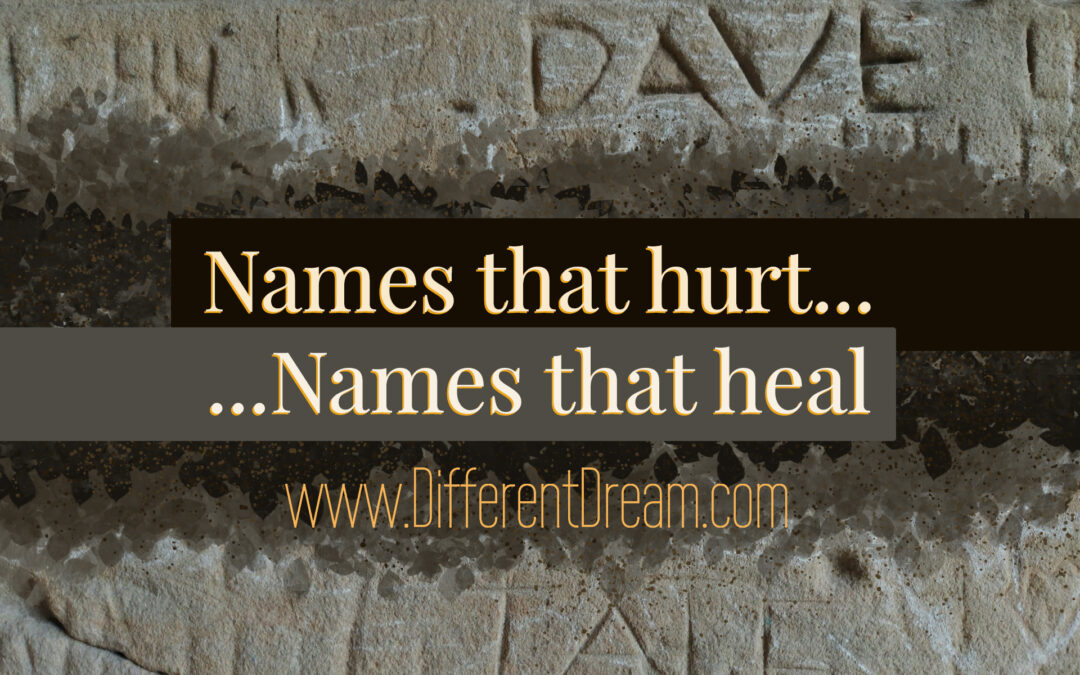
The power names have for kids with disabilities and special needs is rarely given the attention it deserves. In this post, guest blogger Heather Braucher reflects upon the positive and negative power names associated with our children and their disabilities have on them.

The verb form of the word “name” means to be given a name or named.

When something is given a name, the significance is anything but temporary. In fact, it has compounding effects.

The word name, though simple and common, is included in many significant expressions. Their implications, however, aren’t simple. For example…

“I can’t put a name to it…”

“I need to clear my name…”

“I want to make a name for myself…”

And the simple and most universal one—

“What’s your name?”

Names carry weight and power. I think that’s why parents take painstaking efforts when deciding what to name their children.

We named our first son with my husband’s middle name, we named our youngest son after the city where we met, and we named our firstborn daughter Gracelyn to ensure that we would never forget to parent with grace.

We are raising our children to know the meaning of their names and their significance. We have also been teaching them about our surname—Braucher.

We want them to know that their family name brings with it a place they belong, endless love and values. We want them to know what it means to us and ultimately what we hope it will mean to them.

Our children have experienced many other names. Some received. Some digested. Some deflected. Always impactful. Here are a few:

    • Sensory Processing Disorder
    • ADHD
    • Oppositional Defiant Disorder
    • Anxiety
    • Autism Spectrum Disorder (ASD)
    • Obsessive Compulsive Disorder
    • Bilateral Sensorineural Hearing Loss
    • Deaf and Hard of Hearing
    • Usher’s Syndrome
    • Cochlear Implant Recipient
    • Other Impairment
    • Special Needs
    • Disabilities
    • Extra
    • Dysfunctional

These names brought heartache, relief, and peace.

Heartache when the diagnosis brings news like this: “Your son’s hearing loss is caused by a genetic syndrome that also causes vision loss.”

As strange as it sounds, the names also brought relief. After years of speech therapy with no progress and not knowing what to do, a name brought with it direction and support!

The Autism Spectrum Disorder diagnosis brought peace when the puzzle symbol for Autism brought with it a whole new meaning. The name brought clarity to the collection of diagnoses from previous years. And an unexpected release from the condemnation and all too common advice that “his behaviors will change if you just discipline more.”

As parents, our hearts long to understand our children, to help them see their strengths, and support them in their weakness. We want to raise them this way so they will recognize their strengths and weaknesses on their own. We seek medical advice, spiritual guidance, nutritional support, and wise counsel and use it all to gain wisdom and understanding in an effort to care for our children to the best of our ability.

All that we learn becomes a continuum. What we knew about our children earlier might be different from what we know now because we have been exposed to new information or other methods.

We also remember that these names attached to our children have power.

The power to help, to heal, and sometimes to acquire life-changing support.

The power to hurt, and stigmatize, and limit one’s view if used without love and wisdom.

My prayer is…

that no matter what you or your children have been named, you will all find your identity in the God who created you,

that you let the name of God be the one that leads you and your children,

that the power names have for kids with disabilities is rooted in the name that matters most—Child of God.

Do you like what you see at DifferentDream.com? You can receive more great content by subscribing to the monthly Different Dream newsletter and signing up for the daily RSS feed delivered to your email.

Photo by Ben Marler on Unsplash

By

Heather Braucher is a member of the “Braucher Bunch” aka her energetic family of 5. The bunch includes her husband and their three children, all of whom are dominant and extroverted and are going to change the world (if she can keep them alive!) She has always held a passion for writing, but motherhood has given her a reason to share her experiences, heartaches, and victories with others. In her writing you will hear stories of hope as well as grief, as her family has navigated life in ministry in the US and overseas, all while discovering that 2 of her children have special needs. Her desire is to provide others with connection, understanding, encouragement and laughter, all washed with the love of Christ.

Author Jolene Philo

Archives

Categories

Subscribe for Updates from Jolene

Related Posts

Addressing Faith Struggles and Doubts as Special Needs Parents

Addressing Faith Struggles and Doubts as Special Needs Parents

Addressing Faith Struggles and Doubts as Special Needs Parents

Addressing faith struggles and doubts as special needs parents is normal says guest blogger Kristen Faith Evans. In today’s post she describes her journey and ways she found to draw closer to God when she doubted his goodness.

When my disabled daughter was younger, I didn’t understand how common it is for special needs parents to experience faith struggles. Gut-wrenching questions and chronic grief can create spiritual angst. I now realize that during this time of pain and confusion, we can deepen our intimacy with God and receive His comfort and help. But instead of drawing closer to God in my heartache, I pulled away in hurt and anger. I felt guilty for my thoughts toward God, so I stopped praying. As a result, I grew disillusioned with God, and my depression and anxiety worsened.

Consider these ways of drawing closer to God:

  1. Honestly cry out to God.

It can be easy to distance ourselves from God when shame-provoking thoughts arise. We may experience intense emotions and serious questions such as these:

  • Confusion: “Why is God allowing my child and family to suffer?”
  • Guilt: “Is God punishing me?”
  • Bitterness and anger: “Why did I not have a healthy/typically developing child? or “Why did God allow the accident/illness to happen?”
  • Doubt: “How could God be good?”

Many parents believe they shouldn’t be wrestling with these feelings or that they would be sinning if they admitted their questions. However, in Scripture we have the example of Job crying out to God, “Therefore I will not keep silent; I will speak out in the anguish of my spirit, I will complain in the bitterness of my soul” (Job 7:11). Job expressed his honest emotions and questions without cursing God or sinning (Job 1:22).

Distancing ourselves from God can cause us greater mental, emotional, and spiritual suffering. We learn in Psalm 139:1-4 God already knows what we are thinking and feeling. So, I encourage you to not delay in having an honest conversation with God.

  1. Find comfort in the promises of Scripture.
  • For guilt and shame: “Even if we feel guilty, God is greater than our feelings, and he knows everything.” (1 John 3:20, NLT)
  • For sadness: “The Lord is close to the brokenhearted and saves those who are crushed in spirit.” (Psalm 34:18)
  • For confusion: “The Holy Spirit prays for us with groanings that cannot be expressed in words.” (Romans 8:26b, NLT)
  • For doubts: “The Lord is good to all; he has compassion on all he has made.” (Psalm 145:9)
  • For hopelessness: “And we know that in all things God works for the good of those who love him, who have been called according to his purpose.” (Romans 8:28)
  1. Seek support in Christian community.

It can be tempting to isolate and hide our true thoughts from others. Yet, other parents who have walked through similar spiritual struggles can support and encourage us with their faith and wisdom. They can pray and intercede for us. We also can uplift others. God “comforts us in all our troubles so that we can comfort others. When they are troubled, we will be able to give them the same comfort God has given us.” (II Corinthians 1:4, NLT)

I hope these practices bring you strength and healing while addressing your faith struggles and doubts as special needs parents.

All Scripture references are from the New International Version unless otherwise noted.

Do you like what you see at DifferentDream.com? You can receive more great content by subscribing to the monthly Different Dream newsletter and signing up for the daily RSS feed delivered to your email.

Photo by Aaron Burden on Unsplash

By

Kristin Faith Evans, MA, MS, LMSW is an award-winning author, national speaker, Licensed Master Social Worker, and a special needs mom. She is passionate about empowering caregiving parents with the skills to thrive, as well as equipping the professionals and ministry leaders who support them. Kristin and her husband recently released their new book, How to Build a Thriving Marriage as You Care for Children with Disabilities. She has served in ministry for over a decade and is experienced in couples, child and family, substance abuse, and crisis interventions. Connect with Kristin and find lots of free resources at DisabilityParenting.com.

Author Jolene Philo

Archives

Categories

Subscribe for Updates from Jolene

Related Posts

God’s Plans for our Children are Like a Puzzle

God’s Plans for our Children are Like a Puzzle

God’s Plans for our Children are Like a Puzzle

God’s plans for our children are like a puzzle larger than any Sandy Ramsey-Trayvick has ever completed. In today’s post she describes how putting together jigsaw puzzles had shown her to trust in God’s plans for her kids.

I began doing jigsaw puzzles again while we were sheltering in place during the COVID pandemic. As I got back into my reactivated hobby, I remembered what I’d always enjoyed about putting them together. I loved watching the emergence of the picture or landscape as it was slowly revealed with the addition of each new piece. Of course, it was no surprise to see the picture revealed; I knew it was already there waiting to be displayed. However, knowing the picture was already there didn’t take away from the pleasure of its revelation.

God’s plan for our children—the potential he has placed uniquely in each of them to help move his kingdom forward—comes in pieces. Like a puzzle. And he provides our kids with opportunities and experiences for those pieces to come together—step-by-step, one piece at a time. The Lord already knows the picture he wants to reveal, yet he requires us to trust him with what it will look like. We don’t get to decide what his planned outcome for our kids will be; he does. However, we do get to participate in the picture’s emergence as we help our children step into the opportunities and experiences he provides.

The most challenging puzzles for me are the ones which include varieties of shapes and sizes in the puzzle pieces—no two exactly the same. Some of the pieces are so oddly shaped that it appears initially they’d fit nowhere. Yet, each piece of the puzzle, even those with the most convoluted shapes and unexpected sizes, is needed to complete the final picture. One of my greatest puzzling pleasures is discovering the spaces where those hard-to-fit pieces actually belong.

Though Scripture promises each of us that God has a good plan for our lives, it can be challenging to understand how a particularly difficult circumstance or a long, hard season could ever contribute to something good. These are the puzzle pieces that seem initially like they’d never fit anywhere in God’s good plan. And they may continue to look that way for a while, until more of the picture, the plan, emerges.

There is a process involved in putting jigsaw puzzles together that must be followed in order for the correct picture to be displayed. Each puzzle piece has to be added at the right time. Some pieces won’t fit into the puzzle until other pieces are in place first—to create the connection to the rest of the puzzle. If we try to circumvent the process by forcing pieces into places where they don’t actually fit or if we leave out pieces we don’t like, the finished puzzle will not reflect the intended outcome. In fact, the finished product will look wrong and confusing. Yet when we adhere to the process of adding each piece at the point when it can be connected to other pieces, the beauty and purpose of each piece becomes evident and clear.

God’s plans for our children are like a puzzle. He adheres to his process of revealing his plan for our children and so must we. When pieces of our child’s life don’t seem like they could ever fit into something good, we can trust God to provide the opportunities and experiences for every piece to come together at the right time for something beautiful to emerge.

We are confident that God is able to orchestrate everything
to work toward something good and beautiful
when we love Him and accept His invitation to live according to His plan.
Romans 8:28 (The Voice)

Do you like what you see at DifferentDream.com? You can receive more great content by subscribing to the monthly Different Dream newsletter and signing up for the daily RSS feed delivered to your email.

By

Sandy and her husband of 34 years live in NJ and have 3 young adult children. She became a special needs mom, caregiver and advocate 24 years ago, after a childhood illness left her son multiply disabled.

Sandy works now as a Certified Professional Coach with a desire to help other special needs parents move forward into the powerful story that God wants to write through their family’s unique special needs journey.

Sandy is also a writer and speaker, a community group leader for other special needs moms, and a frequent podcast guest. She has just released her first book, When Dreams Are Disrupted – A Story of God’s Faithfulness.

You can learn more about Sandy, her work and her blog on her website: www.UNDisabledLIVES.org and on IG (@undisabled_lives).

Author Jolene Philo

Archives

Categories

Subscribe for Updates from Jolene

Related Posts

God’s Power Is More than Sufficient to Answer our Prayers

God’s Power Is More than Sufficient to Answer our Prayers

God’s Power Is More than Sufficient to Answer our Prayers

God’s power is more than sufficient to answer our prayers. As Christ-followers, we know that. What we don’t know is how he will do it. Guest blogger Mark Arnold is here with a story about how his prayer was answered on a very rainy day.

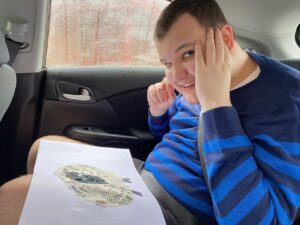
Each Thursday, we take our son James to his craft session at the community center. It is one of the few things that we can get him to attend. Even then, he does the craft activity in the car. To get him there, the weather needs to be “Goldilocks” weather… not too hot, not too windy, and not wet at all. Otherwise, James struggles to transition from home to the car, and massively struggles to transition back from the car to the house when we get home.

Today we took a massive risk. It was raining lightly when it was time to go to the craft class, but we went for it anyway. James only realized that it was raining when he got outside. I quickly shut the door so he had to dash for the car. He quickly settled in the back seat and was fine. I, however, was still worried.

It’s one thing hurrying James from the front door to the car, but it would be an entirely different one to get him to leave a dry, warm, car to dash through the rain to the house when we returned from the craft activity. It once took an hour and a half to get him out of the car and into school while I held an umbrella to shelter him from the rain while I got soaked. Today I had visions we might be having tea in the car, a sleepover in the car, Help!

Humanly, this day would be really hard, so I sought higher help.

“Lord, you know this is looking really difficult, please when we get home help James to transition quickly from the car to the house. In human terms, this is unlikely, but to you nothing is impossible.”

We drove on. My worries remained. What would happen? Had God heard my prayer? Would he answer in the way that I hoped?

Home got nearer, and my anxiety increased. As we were pulling onto the drive, the rain got stronger. It was time to get James out of the car. I prayed again.

James noticed the rain when it dripped on his leg as the car door was opened. He shrank back into the car. He noticed some rain on the inside of the open car door and wiped it away too. He showed no sign of being willing to come out of the car.

Where was God? Had he heard my prayer and ignored it?

I got an umbrella. I did everything in my power to coax James out. Nothing worked. My power was not enough.

I noticed that the rain had stopped. James noticed it too. One leg emerged from the car followed by another. He shuffled forward.

I wanted to rush in and encourage him, but felt a sense of “Stop. Wait.” I stopped. I waited. James hesitantly stood up and headed for the house.

My power had not been enough. In this case, it was not needed. God’s power was more than sufficient.

He had answered my prayer and used it to teach me something. It’s not all about me and what I can do. Sometimes it’s about standing back, watching, and seeing that God’s power is more than sufficient to answer our prayers in ways we don’t expect.

Do you like what you see at DifferentDream.com? You can receive more great content by subscribing to the monthly Different Dream newsletter and signing up for the daily RSS feed delivered to your email.

Photo by Max on Unsplash


By

Mark Arnold is the Additional Needs Ministry Director at Urban Saints, a leading national Christian children’s and youth organization. He is co-founder of the Additional Needs Alliance, a national and international advocate for children and young people with additional needs or disabilities. Mark is a Churches for All and Living Fully Network partner, a member of the Council for Disabled Children and the European Disability Network. He writes an additional needs column for Premier Youth and Children’s Work (YCW) magazine and blogs at The Additional Needs Blogfather. He is father to James, who has autism spectrum condition, associated learning disability, and epilepsy. To find out more about how Mark’s work can help you, contact him at: marnold@urbansaints.org or @Mark_J_Arnold

Author Jolene Philo

Archives

Categories

Subscribe for Updates from Jolene

Related Posts

Emotions Are Information: A New Way to View and Interpret Big Feelings

Emotions Are Information: A New Way to View and Interpret Big Feelings

Emotions Are Information: A New Way to View and Interpret Big Feelings

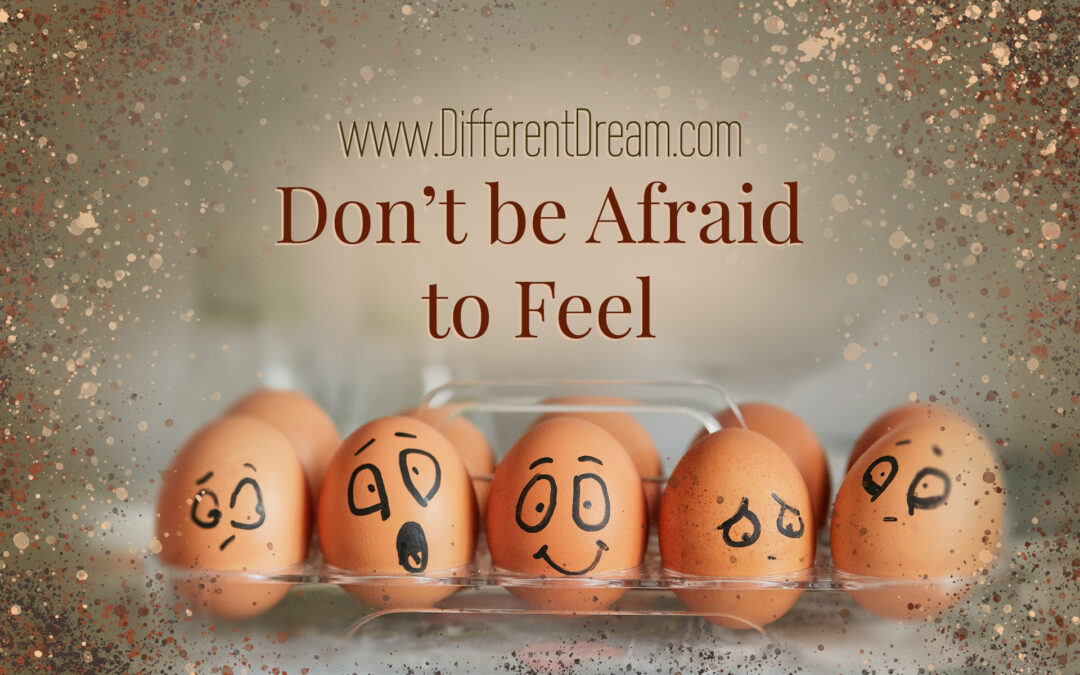
Emotions are information.

I was astounded when Margaret Vasquez, the therapist conducting a virtual workshop for parents about trauma-proofing kids, made that statement. Ever since her August workshop, I’ve been chewing on what she said. Thinking about the impact those three words have changed the way I now perceive my big feelings. About how those words could do the same for other parents raising kids with disabilities.

So bear with me as I attempt to unpack what Margaret meant when she said, “Emotions are information” and explain what that means for us as we parent kids with disabilities and special needs.

Margaret explained that emotions aren’t who we are. Rather, they are similar to physical sensations. When we feel something hot, cold, sharp, or painful, our bodies are alerting us to approach with caution something in our environment. When we feel emotions—big and small—our mind is alerting us to something internal that deserves our attention.

Her explanation was a revelation to a midwesterner like me. I grew up in a culture uncomfortable with displays of emotion—not only negative ones, but positive ones like joy, delight, and happiness.

As children, my siblings and I were not allowed to acknowledge the grief we felt as multiple sclerosis ravaged our Dad’s body and mind. As the young mom to a son who endured numerous surgeries and invasive medical procedures, I thought being a good mother to my child meant stuffing down the fear and grief, the anger and guilt I felt in order to concentrate on meeting his emotional and physical needs.

Yet here was Margaret saying that my emotions—and yours—were information designed to show us a better way to respond to them. By recognizing what our fear, anger, guilt, grief, shame, and a sense of abandonment are telling us, we can respond in healthy rather than unhealthy ways.

To read the rest of Emotions are Information, click here to visit the Key Ministry blog for parents.

Do you like what you see at DifferentDream.com? You can receive more great content by subscribing to the monthly Different Dream newsletter and signing up for the daily RSS feed delivered to your email.

Photo by Oleg Moroz on Unsplash

By

Jolene Philo is the author of several books for the caregiving community. She speaks at parenting and special needs conferences around the country. Sharing Love Abundantly with Special Needs Families: The 5 Love Languages® for Parents Raising Children with Disabilities, which she co-authored with Dr. Gary Chapman, was released in August of 2019 and is available at local bookstores, their bookstore website, and Amazon. See Jane Dance!, the third book in the West River cozy mystery series, which features characters affected by disability, was released in October of 2023.

Author Jolene Philo

Archives

Categories

Subscribe for Updates from Jolene

Related Posts