How to Cope with Multiple Special Needs Diagnoses

How to Cope with Multiple Special Needs Diagnoses

How to Cope with Multiple Special Needs Diagnoses

How to Cope with Multiple Special Needs Diagnoses

Every special needs family has their own unique story and journey. But one thing we all share is the initial shock and worry that sets in when we learn about our child’s diagnosis. Nothing can prepare you for that moment when you first learn that something is wrong. Your whole world is flipped upside down in a matter of seconds. This can happen over and over throughout a child’s lifetime. Some how, some way, as parents, we have to find a way to cope and to be strong for our children and families when we face multiple special needs diagnoses. But how?

My son, Blake, now just a few months from turning three, is one of these kids. I found out at 18 weeks pregnant that one of his kidneys was covered in cysts and would not function properly, if at all. When he was born, we were shocked and horrified to learn that, not only was the kidney covered in cysts, but that he had esophageal atresia and a tracheoesophageal fistula (EA/TEF) and needed major surgery to save his life. He was also had two holes in his heart and other common VACTERL birth anomalies. He survived surgery and was thriving despite all the odds.

Our next blow came when he was diagnosed at 11 months old with a congenital diaphragmatic hernia (CDH). This condition had been missed at birth and required another major life saving surgery. Then, at 18 months old, Blake was diagnosed with a chronic immune condition called eosinophillic esophagitis (EoE).

Every time Blake was diagnosed with something new, it felt like a huge punch in the gut. Like the life was being sucked out of us. We were filled with questions, fears, doubts, guilt, and so many other emotions. It never gets easier, no matter how many times you experience these situations or feelings. But one thing remains the same. We have a child who needs us and who depends on us, and who feeds off our energy and emotions.

So to answer the earlier question: How do we cope and how do we stay strong when dealing with multiple special needs diagnoses?

First, and foremost, we put our complete trust in God. He loves our children even more than we do, and His timing is perfect. I spent a lot of time on my knees praying and spending time with God. I vented to Him and thanked Him. Sometimes I told Him I was mad and angry and didn’t know how to move forward–but that I would give my anxieties, worries and doubts to Him and trust that He would guide us. I wrote down Bible passages and verses to recite when I felt overwhelmed. I went back to them time and time again.

I reached out to friends and family to form a strong support system. I learned to ask for help. I pushed my pride aside and asked for help–something I wouldn’t have done in the past. I changed my inner circle based on our circumstances. Not letting everyone in at once, but trusting a few good friends and family members to help us emotionally and physically. Other relationships moved to the back burner for a time, and I had to accept that.

I am a doer. I like to do things. Fix things. Make things right. I had to accept that I couldn’t change our circumstances. But I could learn everything possible about our son’s multiple special needs diagnoses. I could be involved and hands on. I then knew I was doing everything to help Blake through these challenges while trusting God and Blake’s medical team.

My motto has become one day at a time. That’s all we as parents can do. Put one foot in front of the other. Take one step at a time. Live one day at a time. I have learned not to dwell on the past or the future, but to live in the present. Each day is a blessing from our amazing God and I will treat it as such. Even on the worst days, there is always something to be grateful for.

Do you like what you see at DifferentDream.com? You can receive more great content by subscribing to the quarterly Different Dream newsletter and signing up for the daily RSS feed delivered to your email inbox. You can sign up for the first in the pop up box and the second at the bottom of this page.

By

Jill lives in Tucson, AZ with her husband Jeff and their son Blake. She worked in Human Resources up until 2014 when her son was born with VACTERL Syndrome which included EA/TEF. Jill resigned to care for her son full time. Later he was also diagnosed with a Congenital Diaphragmatic Hernia and Eosinophilic Esophagitis. Jill’s personal blog (Beloved Blake) documents his surgeries and health challenges, their family struggles, and Blake’s milestones. Jill loves writing and teaching others about what it’s like raising a child with complex medical needs. She wants to be a blessing to other parents just starting on this journey.

Author Jolene Philo

Archives

Categories

Subscribe for Updates from Jolene

Related Posts

Special Needs Inclusion Ministry Resources for Free!

Special Needs Inclusion Ministry Resources for Free!

Special Needs Inclusion Ministry Resources for Free!

Special needs inclusion ministry conferences abound every spring, and for the past few months I’ve attended several of them–The Engage Conference hosted by 99 Balloons in Fayetteville, Arkansas; the That All May Worship Conference hosted by the Faith Inclusion Network (FIN) in the Norfolk, Virginia area;  and The Accessibility Summit hosted by McLean Bible Church near Washington, DC.

Spring is filled with special needs inclusion ministry conferences. This post spotlights resources featured at several of the conferences, and they're free.

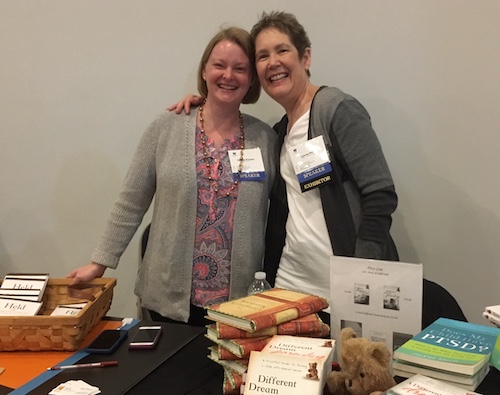
Key Ministry representative and fellow author, Sandra Wood Peoples, and I shared a booth at the Accessibility Summit.

Besides providing an opportunity to spend time with parents of kids with special needs and to meet online colleagues like Sandra in person, these conferences are a wonderful place to learn about special needs ministry resources. I’d like to share 3 resources, all completely free, that can help you and your church start a new special needs inclusion ministry or beef up what’s already available.

Special Needs Inclusion Ministry Resource #1: Key Ministry’s Special Needs Parenting Blog

This blog features posts from parents of kids with special needs from all over North America. Moms and dads raising children and caring for young adult children with special needs share their struggles and joys with transparency and faith. The diversity of special needs they represent make this a blog easily relatable for parents. New posts go up almost every weekday, so check it out at Key Ministry’s Special Needs Parenting Blog.

Special Needs Inclusion Ministry Resource #2: Faith Inclusion Network (FIN) Panel Discussions

The morning sessions at the That All May Worship Conference featured 3 panel discussions with special needs ministry leaders from the United States and Canada. The 3 discussions were video recorded and are available on YouTube.

The first panel addressed beginning efforts in special needs ministry inclusion. Panel members were Milton Tyree (Univeristy of Kentucky and Presbyterians for Disability Concerns), Shelly Christensen (Inclusion Innovations),  Laureen Lynch-Ryan (Archdiocese of Washington DC, Deaf Ministry Coordinator), Barbara Newman (CLC Network founder and author), and Carrie Price (Grace Bible Church, Virginia Beach, VA Disability Ministry Director)

The second panel discussed pathways that support individuals and families affected by disability. Panel members were Jolene Philo (author), David Morstad (former head of Bethesda Institute), Lorna Bradley (Hope and Healing Center in Texas), Neil Cudney (Christian Horizons in Ontario, Canada), and Angela West (Partnership for People with Disabilities)

The third panel considered new paths to explore as disability inclusion efforts in faith communities mature. Participants were Dr. Jeff McNair (California Baptist University, and Director of Public Policy for Joni and Friends Ministry), Bill Gaventa (Director of the Summer Institute on Theology and Disability), and Anne Masters (Director of Pastoral Ministry of Persons with Disabilities of the Archdiocese of Trenton, New Jersey)

 
Special Needs Inclusion Ministry Resource #3: CLC Network Worship Resources

Barb Newman of the Christian Learning Center (CLC) Network and the Calvin College Institute of Christian Worship recently teamed up to create resources churches can use to promote inclusive worship in their congregations. At Worship as One: Disability in Community, you will find an introductory worship video and a downloadable video PDF guide.

Other Special Needs Inclusion Ministry Resources

Want to give a shout out to other special needs ministry resources? Share them in the comment box. Thanks!

Do you like what you see at DifferentDream.com? You can receive more great content by subscribing to the quarterly Different Dream newsletter and signing up for the daily RSS feed delivered to your email inbox. You can sign up for the first in the pop up box and the second at the bottom of this page.

By

Jolene Philo is the author of the Different Dream series for parents of kids with special needs. She speaks at parenting and special needs conferences around the country. She’s also the creator and host of the Different Dream website. Sharing Love Abundantly With Special Needs Families: The 5 Love Languages® for Parents Raising Children with Disabilities, which she co-authored with Dr. Gary Chapman, was released in August of 2019 and is available at local bookstores, their bookstore website, and at Amazon.

Author Jolene Philo

Archives

Categories

Subscribe for Updates from Jolene

Related Posts

Therapy Dogs for Reluctant Readers

Therapy Dogs for Reluctant Readers

Therapy Dogs for Reluctant Readers

Therapy dogs for reluctant readers, also knows as read dogs, are the subject of Sally Key’s fascinating guest post. Read on to learn about the many benefits therapy dogs can offer our children who struggle to read fluently.

Pawfect Listeners

Learning to read is an essential skill, but unfortunately while developing the fundamental building blocks, the task offers numerous setbacks, which can dishearten many children. Fantastic innovations are now in place, offering alternative strategies in assisting children with this process. There is increased recognition of the benefits of therapy dogs for children with special needs or learning difficulties.

The dogs are able to assist in meeting the needs of these children in an unconditional and natural way that promotes the positives of reading. Therapy dogs have been used for some time and there is a growing appreciate of initiatives such as Reading with Rover. This program encourages children to attend libraries to experience a one-to-one reading session with a dog. Parents are reporting that their previously reluctant-to-read children can’t wait to attend the library for these sessions. There are plans moving forward that this program will extend to assist children in a classroom setting.

Read Dogs

Sometimes referred to as read dogs, these calm and patient animals are non-judgmental listeners. There give no corrections or interruptions, allowing the child to read at their own pace. In a classroom or small group setting, the dog will naturally become the focus of attention, allowing the reader space and time away from criticism or any negativity sometimes found in this setting. Cultivating confidence in the reader is paramount and there is documented evidence that there are many other positive effects on children.

Scary School

School life presents a myriad of experiences and opportunities for children. These in themselves can be daunting. Spending time with a dog is well known to help reduce anxiety and improve confidence. Reduced reading anxiety is one of a number of positive outcomes documented by allowing the dog to help children read. The benefits even extend to better social interactions outside of the classroom, following on from a reading therapy session. Increased exposure to positive experiences are proven to help develop confidence, which is especially crucial with young children. Becoming more confident with reading is an essential stepping stone that in turn allows children to progress faster academically and personally. This enables children to hopefully become more excited in entering school and learning. Biologically, interactions with dogs have been shown to reduce blood pressure and lower levels of the stress hormone cortisol.

Future

Allowing a child to spend time reading with a dog present has so many benefits for all concerned. For children who are more advanced, the non-judgmental dog allows them to play with their reading. Children who are struggling can potentially find new hope. The wide and far reaching positives brought on by increased confidence in reading and education are factors that all parents and teachers aspire to.

Do you like what you see at DifferentDream.com? You can receive more great content by subscribing to the quarterly Different Dream newsletter and signing up for the daily RSS feed delivered to your email inbox. You can sign up for the first in the pop up box and the second at the bottom of this page.

By

Sally Keys is a professional freelance writer with many years experience across many different areas. She moved from a corporate job to freelancing and loves the work-life balance it offers. When not at work, Sally enjoys reading, hiking, spending time with her family, and traveling.

Author Jolene Philo

Archives

Categories

Subscribe for Updates from Jolene

Related Posts

How to Find the Best Daycare for a Child with Special Needs

How to Find the Best Daycare for a Child with Special Needs

How to Find the Best Daycare for a Child with Special Needs

Want to find the best daycare for a child with special needs? Guest blogger Alex Robbins offers his tips about this important subject today. Please join me in welcoming Alex as a first time Different Dream guest blogger!

How to Find the Best Daycare for a Child with Special Needs

Finding the right daycare or camp for your child is one of the most important things you’ll do, but it can be a stressful undertaking. Knowing that your choice will decide what kind of care your child receives can be a little overwhelming, because we all want the best for our children with special needs and those developing typically. Safety, learning, growing, and being taken care of emotionally are the biggest needs your child has, and when you can’t be there, it’s important to know that someone else is meeting those needs.

Before committing to a daycare, it’s important to take a tour and speak to the director extensively about the facility, how the caregivers are trained, what rules they might have, and what sort of care you can expect for your child. Ask about safety training and state guidelines, such as the ratio of children to teachers.

Here are a few of the best things to look for on a tour.

Class Size

Overcrowding can be a big issue for some daycares, and that means there will always be some kids who are overlooked. One teacher can’t be everywhere at once, and this becomes a safety issue. Look into classrooms to see how full they are and observe the teacher; is she paying close attention to the children? Are they engaged with her in singing or reading, or are they running wild in the classroom? Are accommodations made for children with different learning styles and those with special needs? Keep an eye out for phones, as well; many daycares have guidelines regarding whether a teacher can have a cell phone out in the classroom, as it’s a distraction.

Stimulation

Take a look at the environment to make sure it’s a stimulating one. Are there plenty of books, games, and toys? Learning stations in older classrooms? Bright colors on the walls? Are all areas accessible to children with limited mobility? All children need to be challenged and given the opportunity to thrive and explore.

Safety

Safety is a top priority where daycares are concerned. Pay special attention to the way classrooms are set up; are there children climbing on bookshelves? Is the entire room open so the teacher can see into every corner? Are safety precautions such as fire extinguishers and alarms easy to access? Health concerns might include making sure caregivers wear gloves to serve food and change diapers and, if there’s an infant room, peek in to see what the setup is like. In most states, infants should be in their own room without older children around, and ideally, you should see a caregiver holding one, singing, or providing some sort of stimulation. If you are the parent of a child with special needs, there are additional safety concerns that should be met. Such as are play areas easily accessible for your child or are safety precautions in place that consider your child’s special needs? And is the facility equipped to help your child in the event of an emergency?

Pop In

If possible, stop by unannounced for a tour rather than setting up an appointment. This allows you to see what the teachers and director are like when they are unprepared for a visitor, and you can take a look at the rooms as they are when no one is looking.

Consider taking a walk around the premises, as well. Are there alarms on the doors? Is the playground equipment accessible, safe and in good condition? You might also ask what the facility’s fire safety measures are and what the protocol is during an emergency.

By taking all of these specifics into account, you will have a clearer view of whether the daycare or camp is the right place for your child.

Your Best Tips?

What are your best tips for finding a daycare for a child with special needs? Add them in the comment box.

Do you like what you see at DifferentDream.com? You can receive more great content by subscribing to the quarterly Different Dream newsletter and signing up for the daily RSS feed delivered to your email inbox. You can sign up for the first in the pop up box and the second at the bottom of this page.

By

Writer Alex Robbins is part of the Safety Today team, and loves having the opportunity to promote home and community safety through his writing.

Author Jolene Philo

Archives

Categories

Subscribe for Updates from Jolene

Related Posts

5 Questions to Ask Before a Child’s IEP Annual Review

5 Questions to Ask Before a Child’s IEP Annual Review

5 Questions to Ask Before a Child’s IEP Annual Review

Annual review season is here, and your child’s meeting is probably on your schedule. Guest blogger Liz Matheis is here with a few definitions and some timely advice about how to prepare for an annual review.

It’s about that time – annual review meetings are about to start, which means you need to get ready to make the most of this important Individualized Education Plan (IEP) meeting.

Before I begin, let me review the different types of IEP meetings that you can have:

An IEP annual review is your yearly meeting when you sit down with your case manager, general education teacher, special education teacher, and related service providers in an effort to review your child’s program as it has been set for the last year, and to decide what your child’s program will be for the upcoming year.

A re-evaluation eligibility meeting is one you will with your Case Manager, general education teacher, special education teacher and related service providers every 3 years in order for your child’s continued eligibility for special education and related services to be reviewed. That is, your child will be re-evaluated (psychological, educational assessments, as well as necessary related service therapies) so that you may review your child’s progress. During this time, you can bring forth any diagnoses that your child has that were made by private professionals (e.g. ADHD, Sensory Processing Disorder, Dyspraxia, etc). Sometimes, your case manager may decide that there is enough data from your child’s teachers that shows that your child continues to be eligible and requires the program that has been established. As a result, your case manager may ask you to waive testing and re-convene in 3 years.

An initial eligibility meeting takes place after you or your child has requested a child study team (CST) meeting in order to review your child’s learning needs in an effort to gain testing. The eligibility meeting occurs when all testing has been completed and eligibility is being determined.

5 Questions to Ask Before a Child’s IEP Annual Review

Request a meeting with your child’s teacher about 3 month prior to your IEP annual review meeting. Review his/her functioning in the following areas: social, emotional, academic (be specific with the different academic skills. For example, math, reading, writing, reading comprehension, etc). Write down what your teachers have shared with you in case you need to reference this information during a CST meeting.

Ask your teacher for your child’s reading level (independent and instructional), as well as gain baseline and quarterly teacher based assessment scores prior to your CST meeting. If you are unsure what this data means, sit down with your teacher and gain an understanding. For example, ask your child’s teacher where your child was functioning in reading in September and then again in January. Where was there improvement? Regression? No progress?

Inquire about your child’s accommodations. Are they being used regularly by your teachers? If so, make a list of accommodations that you feel are very useful for your child, and enter into the meeting with the intent to delete the extraneous ones that may be hanging out from year to year, but with little benefit.

Ask for feedback from your child’s related service providers. How is your child progressing? Are related services being recommended into the next year? If so, with what duration and frequency? What goals will be addressed and how are they different from the ones that were addressed in the year prior? If goals have not been met, it may be time to re-evaluate that goal and either modify it (raise the bar, or lower it), or eliminate that goal all together.

Ask about  your child functioning socially and emotionally. Does your child need to join a social skills group? Does your child need individual or group counseling weekly? Biweekly? On an as-need basis? Gain that information from your child’s teacher, and touch base with your guidance counselor.

At a Child’s IEP Annual Review

When you have your IEP annual review meeting, there should be very few (if any) surprises. You should have a solid understanding of what your child has been working on and which areas need continued support. Maintain consistent communication with your child’s teachers and related service providers so that your child’s IEP remains a fluid document that truly reflects your child’s levels of functioning within the many domains throughout the school year. You can, by law, request an IEP meeting as often as you would like. Amendments can be made as the program needs to be adjusted.

It’s important not to adopt the mindset of putting your child’s IEP in place and then not reviewing it several times per year. Unfortunately, very few people are monitoring your child’s program and progress like you can. You are your child’s best and biggest advocate. Check in regularly and use your IEP annual review meetings as check-ins, rather than it becoming a source of distress and worry.

What Questions Do You Ask before an IEP Annual Review Meeting?

How do you prepare for your child’s IEP annual review? Leave your suggestions in the comment box. Thanks!

Do you like what you see at DifferentDream.com? You can receive more great content by subscribing to the quarterly Different Dream newsletter and signing up for the daily RSS feed delivered to your email inbox. You can sign up for the first in the pop up box and the second at the bottom of this page.

By

Dr. Liz Matheis is a clinical psychologist and school psychologist in Parsippany, NJ. She offers support, assessments, and advocacy for children who are managing Autism Spectrum Disorders, ADHD, learning disabilities, and behavioral difficulties, as well as their families. She is also a contributor to several popular magazines. Visit www.psychedconsult.com for more information.

Author Jolene Philo

Archives

Categories

Subscribe for Updates from Jolene

Related Posts

The Special Needs Tax Break Nobody’s Talking About

The Special Needs Tax Break Nobody’s Talking About

The Special Needs Tax Break Nobody’s Talking About

Have you heard about the special needs tax break nobody’s talking about? Guest blogger Rachel Olstad tells Different Dream readers about a special needs tax break her family recently discovered. You’re going to love what she has to say. I guarantee it!

My husband and I are fortunate enough to get paid to take care of our adult disabled son. This arrangement began several years ago through our state’s Medicaid Home and Community-Based Services Waiver program. We were delighted with the program as it enables us to keep our son in our home – and we’re getting paid for something we’ve been doing for the last 26 years. It’s a win-win!

We were even more delighted a couple months ago to discover that our income through the waiver program is income-tax free. Wait! What? Here’s the scoop on the special needs tax break nobody’s talking about.

Non-related caregivers (think foster care families) have taken advantage of  the Difficulty of Care Income Exclusion (DOC) for adults who live in their home. Parents heard about exclusion and asked, “Why doesn’t this include us?” So, in 2014 the IRS issued Notice 2014-7. While it doesn’t specifically state that parents are eligible, the notice now includes parents because the adult they care for lives in their home.

We stumbled upon this information when our state changed companies that processed our paychecks. The new company had information on this exclusion on their web page as well as on the paperwork we completed so they could issue our paychecks. When I called and asked the old company why they didn’t tell us about the exclusion, they said they could not give any financial advice to individuals. Fair enough.

But why didn’t my son’s caseworker tell us about it? I don’t know. But I do know that we took this new-found special needs tax break information to our CPA, our taxes for 2014 and 2015 were refiled. We received a sizable chunk of money from the IRS and from our state. Woohoo for us! All states may not consider this income as an exemption, so check your state laws and consult a CPA.

As long as the waiver and this exemption remain intact, this special needs tax break will help us plan for our son’s future as we age. The financial advantages will make it easier to find a caregiver to live with our son and become his family when we are no longer capable of taking care of him.

Of course, our trust for provision and for the future ultimately remains in the Lord, not in government programs. But for now, these special needs tax breaks and waivers ease our minds and our burdens. Maybe they can do the same thing for you. Happy Tax Day!

Your Special Needs Tax Breaks?

Do you know of other special needs tax breaks? Give them a shout out in the comment box so more people can access them. Thanks!

Do you like what you see at DifferentDream.com? You can receive more great content by subscribing to the quarterly Different Dream newsletter and signing up for the daily RSS feed delivered to your email inbox. You can sign up for the first in the pop up box and the second at the bottom of this page.

By

Rachel Olstad began her journey into the world of disabilities in 1990 when her oldest child was born with spina bifida and subsequently diagnosed with autism. She volunteers with Joni and Friends Southern Oregon, helping to meet the physical, emotional and spiritual needs of individuals and families affected by disability and encouraging churches to include all people. She was a contributing writer for both Special Needs Smart Pages and Nursery Smart Pages (Gospel Light), has been published in the Journal for Religion, Disabilities & Health, and was an assistant editor on Beyond Suffering: A Christian View on Disability Ministry. (Christian Institute on Disability)

Author Jolene Philo

Archives

Categories

Subscribe for Updates from Jolene

Related Posts