by jphilo | Mar 17, 2010 | Books and Resources, Different Dream, PTSD

If you’re the foster or adoptive parent of a child with special needs, thank you for opening your home to the most vulnerable and needy members of our society. Many of those children endured severe trauma before arriving in your safe and loving homes. And you, though not the cause of the trauma, deal with its effects every day.
Wounded Children, Healing Homes
You need much more than thanks and applause as you parent your kids. Your children need professional therapy and counseling in order to heal. You need practical support, encouragement and access to professional help to survive. You will learn about all those things in Wounded Children, Healing Homes: How Traumatized Children Impact Adoptive and Foster Families, released by Nav Press in January of 2010.
The book is co-authored by Jayne E. Schooler; Betsy Keefer Smalley, LSW; and Timothy J. Callahan, PSYD, with other chapters contributed by Elizabeth A. Tracy, Debra L. Shrier, and Grace Harris.
Help for Parents, Families and School
The book is divided into five parts. The first section is an introduction and the remaining parts are:
- Understanding Trauma and Its Impact on the Family
- Inside the Crisis of Adoption Breakdown
- The Child, the Family, and School
- Strategies for Successfully Parenting Traumatized Children
The final section is followed by two appendices. The first is titled Assessing Attachment-Readiness and Capabilities in Prospective Adoptive Parents. The second is Building a Support System and Finding Resources.
A Road Map, Not a Cure
The information in the book is more of a road map than cure for families living with deeply traumatized children. It gives parents strategies for creating safe, loving environments where children will gradually heal. It is realistic about the challenges involved, the effects on the family, the strain such children place on a marriage. But it also gives hope, provides resources, and acknowledges the reality of failure in some cases.
If you are an adoptive or foster parent caring for a deeply traumatized child, you should read this book. It not only provides information and strategies, but also explains why traumatized kids act like they do and how parents typically respond to them. What reassurance these words can be to parents dealing with difficult behaviors day after day.
After you read Wounded Children, Healing Homes, come back and leave a comment about what you read.
Do you like what you see at DifferentDream.com? You can receive more great content by subscribing to the quarterly Different Dream newsletter and signing up for the daily RSS feed delivered to your email inbox. You can sign up for the first in the pop up box and the second at the bottom of this page.
by jphilo | Mar 12, 2010 | Different Dream, In Children, PTSD

A recent radio interview with Dr. John Rich caught my ear the other day. He was explaining why he wrote the book, Wrong Place, Wrong Time. After watching young black men stream through Boston City Hospital’s ER with gunshot and knife wounds, he started listening to their stories.
Wrong Place, Wrong Time
He learned that many of the young men were just in the wrong place at the wrong time–maybe at a bus stop or a party and ended up in the line of fire when violence broke out. And it didn’t take much for violence to break out in the highly charged atmosphere where many of the young men lived.
Rich says he ” came to realize that many of the men who had been injured also suffered emotional wounds, similar to those of combat veterans. Symptoms like nightmares and flashbacks contributed to a feeling of jumpiness and unease — and often put these young men at risk for even more violence. When you are hyper-vigilant or jumpy, or always on guard, you can go from 0 to 60 in a very short time. So a young person who is on the bus, somebody steps on his foot and suddenly somebody gets stabbed or shot.”
Post-Traumatic Stress Disorder
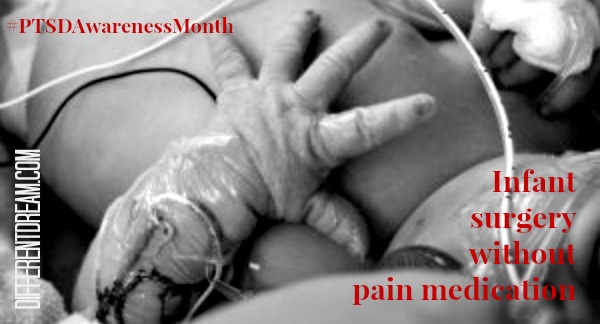
My ears perked up at that description. Dr. Rich was describing Post-Traumatic Stress Disorder (PTSD), the condition our son developed after undergoing seven surgeries and hundreds of procedures before he was five years old. His hyper-vigilance and unstable behaviors escalated throughout adolescence. A little over a year ago, he went through a week of intense, one-on-one treatment at the Intensive Trauma Therapy Institute and is now emotionally healthy and stable.
Trauma in the ER
Because of our son’s experience, I found a paragraph in the excerpt of Rich’s book about what the young, black men experienced when in the ER fascinating. He first described ER protocol. “The treatment of trauma is arguably the most highly standardized and choreographed treatment in medicine. There is little room for variation or creativity in the process. As a result, every trauma patient gets the same assessment, the same tests.”
Then, after describing the terrifying ER procedures endured by one young man, he wrote, “Several impressions struck me as I walked out of the emergency department to my car. The first was that in the rush to save this young man’s life, very few words were spoken to him, and he said very few words in return. “I’m cold” were the only intelligible words that I could remember hearing the patient speak.”
What About Little Kids?
After hearing the report, all I could thing was that my son had experiences like that as a baby and toddler. If it’s scary for big, tough guys who already had PTSD from living in a violent world, no doubt repeated trips to the hospital caused and then exacerbated my son’s condition.
If you have a child who endures frequent, invasive medical treatment be aware of the signs of PTSD. Ask to speak to the child life specialist at the hospital about how to avoid and treat it. If you suspect your child has PTSD, visit Intensive Trauma Therapy website for more information about treatment options. Our child was twenty-six before he went through the treatment that changed his life. He wants your child to receive healing much sooner.
To listen to the entire radio interview or read the transcript, the complete story is available at www.npr.org.
Do you like what you see at DifferentDream.com? You can receive more great content by subscribing to the quarterly Different Dream newsletter and signing up for the daily RSS feed delivered to your email inbox. You can sign up for the first in the pop up box and the second at the bottom of this page.
by jphilo | Jan 22, 2010 | Advocacy and Research, Different Dream, PTSD

As I’ve mentioned in previous DifferentDream.com posts, (PTSD Treatment Can Change Your Child’s Life, PTSD and NICU Parents: What About You?, and Critically Ill Kids and War Veterans Have What in Common?) war veterans aren’t the only people who suffer from post-traumatic stress disorder (PTSD). It also affects children who have endured invasive medical treatment, and PTSD can affect their parents, too.
Minnesota Public Radio’s Midmorning Show
PTSD nearly ruined our son’s life until he went through cutting edge treatment at the Intensive Trauma Therapy, Inc. in Morgantown, WV in December of 2008. So when he heard the topic of Minnesota Public Radio’s midmorning talk show for January 7, he told me to listen. I’m so glad he did.
University of Minnesota Brain Research
Karri Miller, host of the show, interviewed two scientists from the University of Minnesota. They imaged the brains of war veterans suffering from PTSD and the brains of people without PTSD. By analyzing and comparing the images, they located a PTSD marker in the brain. To learn more, you can go to this link and hear the entire interview. The discussion of the research and its implications are fascinating.
So have a listen and then tell me what you think. I’d love to hear from you.
Do you like what you see at DifferentDream.com? You can receive more great content by subscribing to the quarterly Different Dream newsletter and signing up for the daily RSS feed delivered to your email inbox. You can sign up for the first in the pop up box and the second at the bottom of this page.
Save
by jphilo | Nov 25, 2009 | Books and Resources, Different Dream, PTSD

For the past few weeks, National Public Radio (NPR) has been airing a series called The Impact of War. While listening to several episodes that described the symptoms of PTSD in returning vets, the similarities to our son Allen’s PTSD symptoms (caused by early, repeated medical traumas from 1982 – 1986) were striking.
An Interview with General Eric Shinseki
In a November 13 interview with retired General Eric Shinseki, who is head of the Department of Veterans Affairs, he talked about an encounter with veterans during a recent speaking engagement. When he asked if any of them suffered from PTSD, no one said anything. So he asked the following questions:
- How many of you have a little trouble sleeping at night?
- Are you overly vigilant for threats in your own homes?
- Have you been having anger management problems?
Then, Shinseki said, “And then hands go up.”
The Sand Storm: Stories from the Front
In a November 14 episode, a clinical psychiatrist named Judith Broder describes her reaction to The Sand Storm: Stories from the Front, which was written by a Marine and featured monologues of those who served in Iraq and Afghanistan.
“The most horrifying aspect of it was the sense that I got that these were really just ordinary everyday guys, and they had seen things and done things that just shattered their whole sense of themselves,” says Broder. “And that they would all need help.” Broder has since started a program to help veterans recover from PTSD.
PTSD in Medically Traumatized Children
What General Shinseki and Broder said described Allen before he was treated for PTSD. For years, our son displayed the symptoms Shinseki mentioned. And as Broder said, he needed help. Thankfully he found help last December at Intensive Trauma Therapy, Inc., an outpatient clinic in Morganstown, West Virginia.
But Allen isn’t the only person struggling with PTSD caused by medical trauma at a young age. If you have a child exhibiting the symptoms above, and you suspect they are related to some sort of trauma (which can include the death of a loved one, divorce, a difficult move, sexual abuse, physical abuse, medical trauma or adoption) go to their website to learn more. Your child doesn’t need to suffer any more. Life-changing treatment is available that doesn’t require drugs or hospitalization in most cases.
After treatment, Allen turned to me and said, “Mom, I have my life back.”
Those were the sweetest words he’d ever spoken. I hope that one day, your child who is suffering from PTSD will say the same words to you.
Do you like what you see at DifferentDream.com? You can receive more great content by subscribing to the quarterly Different Dream newsletter and signing up for the daily RSS feed delivered to your email inbox. You can sign up for the first in the pop up box and the second at the bottom of this page.
by jphilo | Oct 9, 2009 | Different Dream, Prevention/Treatment, PTSD

A few weeks ago Claire Shackelford interviewed me about A Different Dream for My Child. While we talked, I thought about the double whammy military wives with special needs children deal with every day. My only desire was to encourage the moms as they care for their kids.
But as Claire listened to our son’s story, she recognized a second link between my son’s story and the families of combat vets: post-traumatic stress disorder. Claire hopes that the interview, which you can hear at this link, will minister to struggling veterans, their spouses, and children.
Intensive Trauma Therapy, Inc.
If you suspect your special needs child or returning war vet has PTSD, I urge you to visit Intensive Trauma Therapy, Inc’s website and see what they have to offer. Read their literature. Check out their statistics. Call them and see if your loved one can take the diagnostic test and perhaps qualify for treatment.
Our son’s life was changed after a week of outpatient treatment. Maybe your vet’s life can be changed, too.
Do you like what you see at DifferentDream.com? You can receive more great content by subscribing to the quarterly Different Dream newsletter and signing up for the daily RSS feed delivered to your email inbox. You can sign up for the first in the pop up box and the second at the bottom of this page.
Save
Save
by jphilo | Sep 9, 2009 | Different Dream, In Parents, PTSD

Neonatal Intensive Care Unit (NICU) doctors and nurses know that a stay in NICU can lead to post-traumatic stress disorder (PTSD) in preemies. But a recent study shows that a NICU parents are at risk of developing PTSD, too.
NICU Babies and PTSD
Post-traumatic stress disorder (PTSD) can occur after someone sees or experiences a traumatic event involving the threat of injury or death. With that definition in mind, it’s not hard to understand why small children who have undergone serious medical treatment develop PTSD. This response in young children is well-documented. Most large hospitals have rained therapists, known as child life specialists, who help kids overcome and avoid PTSD.
NICU Parents and PTSD
But, according to Laurie Tarken’s recent article in the New York Times, parents of NICU preemies also are prone to developing PTSD. According to the article, “parents of NICU infants experience multiple traumas, beginning with the early delivery, which is often unexpected.”
The author of one study, Dr. Richard J. Shaw, an associate professor of child psychiatry at Stanford and the Lucile Packard Children’s Hospital says, “The second trauma is seeing their own infant having traumatic medical procedures and life-threatening events, and also witnessing other infants going through similar experiences.”
“And third, they often are given serial bad news,” he continued. “The bad news keeps coming. It’s different from a car accident or an assault or rape, where you get a single trauma and it’s over and you have to deal with it. With a preemie every time you see your baby the experience comes up again.”
What About You?
If you want to know more about PTSD in NICU parents, lick on this link, For Parents on NICU, Trauma May Last, to access the entire article. You have to register to become an online New York Times subscriber, but it’s free and the piece is well worth the read.
For me, the article explained a comment made by the therapist who recently treated our son’s PTSD, which was caused by early medical trauma. (Child life specialists weren’t readily available way back in 1982 when he was born and spent three weeks in NICU.) On the last day of Allen’s successful treatment, the kindly therapist looked at me and asked, “What about you, Mom?”
I didn’t understand why he asked the question at the time, but now I do. He realized that I had suffered trauma, too. His simple, caring question validated emotions I’d hidden for years. His words were healing balm to my soul.
Now I want to pass the balm on to you in case you need healing, too: Moms and Dads of NICU kids, what about you?
Do you like what you see in the Dream Team link up? You can receive more great content by subscribing to the quarterly Different Dream newsletter and signing up for the daily RSS feed delivered to your email inbox. You can sign up for both in the upper right column on this page.
Save
Save