Special Needs Parenting Stress and Medication

Special Needs Parenting Stress and Medication

Special Needs Parenting Stress and Medication

Thank you for stopping by Different Dream today. June is Post-Traumatic Stress Disorder (PTSD) Awareness Month, and almost every Different Dream post in June deals with some aspect of this pervasive mental illness. Today, guest blogger Sheri Dacon brings up something few parents willingly discuss: when parents dealing with the stress of raising kids with special needs should consider medication for themselves.

Special Needs Parenting Stress, and Medication

It’s a hot enough topic talking about medications for our kids. But to discuss medications for ourselves—the parents—well, it’s a conversation we’d rather avoid.

Nonetheless, it’s something we must address. The stress level special needs parents experience on a daily basis is not the norm. It’s a far heavier load than the average parent bears. One study equates the stress levels of special needs moms to that of combat soldiers.

It’s that kind of stress that completely blindsided me.

I’ve always been independent, a hard worker. I believed there was nothing I couldn’t handle if I set my mind to it. With grit and determination, I could accomplish anything.

Well, I was wrong.

When You’re Drowning in Stress

Dealing with autism increased my workload exponentially and took “mommy guilt” to a whole new level.

  • There was more driving–to therapy sessions and doctor appointments, to schools and social skills camps.
  • There was more paperwork to file and keep track of.
  • There were appointments to be made, phone calls to make, books to read, meetings to attend, and so much to learn.
  • There were diets and supplements to try, behavioral strategies to implement, schedules and charts to create, screens to monitor, sleep schedules to regulate, basic life skills to teach.

And there was very little support.

I was one of the lucky few blessed with supportive family and teachers. But I had few friends who understood what I was going through, and no one to talk to about the difficulty of managing my day to day.

It felt like drowning.

I loved my child—all my children. But I was so depleted emotionally, physically, and spiritually that I had trouble expressing anything other than frustration, anger, and sadness.

It was time for some intervention.

The biggest mistake I made? Waiting too long.

False pride convinced me I could handle everything alone. As a result, I ended up in an emotional pit I couldn’t climb out of on my own, no matter how hard I tried.

It was anger that finally sent me to my doctor, and it’s not surprising. Anger is a secondary emotion. It’s a signal on the dashboard, a warning that something’s wrong under the hood.

My anger pointed to a deep-seated problem with anxiety. Because I didn’t have control over my life, I was consumed by worry, fear, and hopelessness. My body responded the way an anxious body always does. I couldn’t relax, I was noticeably tense throughout my shoulders, neck and back, and my breathing was shallow. I couldn’t make it through a day without some sort of emotional explosion or meltdown.

Special Needs Parenting Stress and Medication

The doctor listened to my descriptions and diagnosed me with anxiety. He then prescribed an SSRI as well as a prescription for Xanax, to be used as needed for warding off panic attacks.

Let me just say a word about antidepressants and anti-anxiety medications. I’d taken them before, but had become leary of them. I’d bought into the religious ideology that mistakenly claims these drugs are unnecessary at best, and a total lack of faith in God at worst. I had the legalistic notion that if I just improved my spiritual life by doing all the right Christian things, then I could overcome any depression or anxiety on my own.

I was afraid of using medication as a crutch to avoid the deeper spiritual and emotional problems.

To be fair, this can be a problem with prescription medications. Sometimes they’re used as band-aids to cover up symptoms rather than address heart problems.

But there are times when both medication and deeper emotional work are needed.

And special needs parenting often falls into that category.

Having to take medications just to cope with ordinary days made me feel weak. I felt like a failure. Until I learned that most special needs parents end up having to take prescription medications for exactly the same reasons.

The human body and mind can only handle so much stress.

Sure, we recognize the importance of self-care to alleviate stress. Problem is, self care regimens aren’t easily acquired by special needs parents.

  • If our kids don’t sleep well, or if they require round the clock care, we don’t sleep well.
  • We’d like to exercise or get out of the house more, but it’s likely our special needs child requires constant supervision.
  • We’d love an hour or two of respite, but without family or friends nearby whom we can trust, or a local respite program willing to accept our child, the opportunity for a few hours off eludes us.

Seeking help through prescription medication is more often than not, a necessary part of the solution.

I’ve been on anti-anxiety meds for several years now and can tell you this: medication takes the edge off of my stress. It doesn’t remove it altogether. It doesn’t keep me from having meltdowns or panic attacks. But it makes both more rare. It helps me to stay at a more even keel for longer periods of time.

In short, prescription medications help me to parent all my children better. Medication helps me to feel more like myself, to keep my emotions within a healthy range, and to think more rationally when stress tries to get the better of me.

A Word of Encouragement

If you’re a special needs parent, you’re dealing with stress, too. It comes with the territory.

So may I offer a word of encouragement from a parent who’s been there?

Don’t wait too long. Don’t wait until your stress levels reach dangerous levels.

  • Do your research.
  • Look to reputable sources for information.
  • Talk to your significant other or a trusted friend.
  • Contact a health professional and discuss your options.

And don’t rule out prescription medications. They might just be the lifeline you need to help keep your head above water.

You aren’t alone in this, you know.

What’s your take on special needs parenting stress and medication?

What would you add to Sheri’s take on special needs parenting stress and medication? Everyone at Different Dream would love to hear what you have to add to the conversation.

By

You can learn more about Sheri by visiting her website at sheridacon.com.

Author Jolene Philo

Archives

Categories

Subscribe for Updates from Jolene

Related Posts

Inside Out Special Needs Parenting, Part 1

Inside Out Special Needs Parenting, Part 1

Inside Out Special Needs Parenting, Part 1

Special needs parenting is a challenging, wonderful, unexpected, amazing adventure. For most of us, it is uncharted territory that can be scary and stressful. It can also push our buttons, causing normally sane and calm adults like us to fly off the handle when we least expect it.

The Origins of Special Needs Parenting from the Inside Out

While doing the research for Does My Child Have PTSD? What To Do When Your Child Is Hurting from the Inside Out, I read an excellent book that explained why parents overreact when their kids intentionally or inadvertently push their buttons. The book, by Dr. Daniel Siegel and Mary Hartzell is Parenting from the Inside Out: How a Deeper Self-Understanding Can Help You Raise Children Who Thrive.

This book, along many others read while researching the book about PTSD in kids, also helped me understand why so many parents of kids with special needs are more stressed than those raising typical kids. I even developed a recertification workshop for foster and adoptive parents. Whenever I present it, I can almost see the lightbulbs turning on inside the minds of those attending as they connect with the concepts presented.

Special Needs Parenting from the Inside Out Blog Series

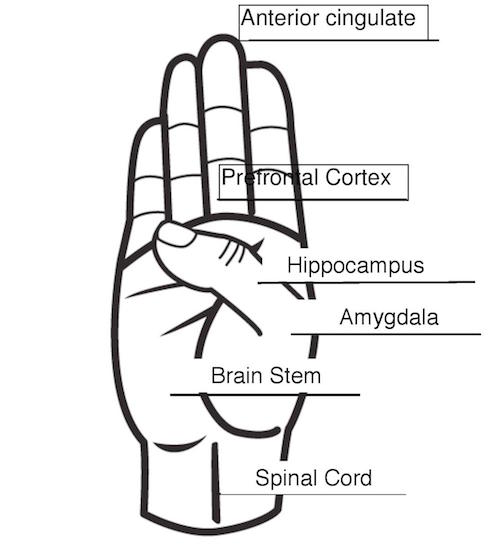
Their enthusiastic response motivated me to create a special needs parenting from the inside out blog series for the Different Dream website. So over the next few months, I’ll be sharing the parenting information from the foster and adoptive parent workshop with you. There’s a lot of information to share, which will be presented in small, easy-to-digest portions, on occasional Thursdays over several months. You’ll learn about the basic areas of the brain and how they respond to stress and traumatic events. You’ll also learn about different kinds of memory, about different ways babies learn to attach and how those attachments affect their behavior as children and our responses as adults. You’ll also learn to reflect upon the events from your own childhood that tend to push your buttons and what you can do to make the button-pushing stop. Finally, you’ll learn when it’s time to go beyond self-reflection and seek professional help to put an end to the button pushing.

Your Special Needs Parenting from the Inside Out Homework Assignment

Actually, there isn’t any homework. I just used that heading to grab your attention. But you are invited to leave questions and comments as always. And if you r-e-a-l-l-y want homework, I highly recommend you read Parenting from the Inside Out. Trust me, you’ll be glad you did.

Do you like what you see at DifferentDream.com? You can receive more great content by subscribing to the quarterly Different Dream newsletter and signing up for the daily RSS feed delivered to your email inbox. You can sign up for the first in the pop up box and the second at the bottom of this page.

By

Jolene Philo is the author of the Different Dream series for parents of kids with special needs. She speaks at parenting and special needs conferences around the country. She’s also the creator and host of the Different Dream website. Sharing Love Abundantly With Special Needs Families: The 5 Love Languages® for Parents Raising Children with Disabilities, which she co-authored with Dr. Gary Chapman, was released in August of 2019 and is available at local bookstores, their bookstore website, and at Amazon.

Author Jolene Philo

Archives

Categories

Subscribe for Updates from Jolene

Related Posts

Parent PTSD: When You Can’t Put Special Needs Behind You

Parent PTSD: When You Can’t Put Special Needs Behind You

Parent PTSD: When You Can’t Put Special Needs Behind You

Parent PTSD?
Again?
Shouldn’t that horse be dead by now?

How I wish the answer to the last question was yes. Unfortunately, much as I wish the parent PTSD horse was dead, it is not. In fact, the more interaction I have with parents, of kids with special needs and the more I read about the subject, the more I realize, this nasty horse is alive and kicking.

The realization resurfaced recently when a friend sent a link to an article titled The Pastor’s PTSD: When you can’t bounce back after the conflict is over. As you can see from the title, the article is about pastors, not parents of kids with special needs. But with a few minor substitutions (change “pastors” to “parents” and “church conflict” to “raising kids with special needs”), the information it contains is interchangeable in remarkable ways.

Parent PTSD Symptoms

First, the symptoms described are interchangeable.

  • Dreams and flashbacks, two intrusive symptoms common to parents of kids who’ve experienced invasive medical trauma or accidents.
  • Constant alert, an arousal symptom that surfaces in parents when something (like a dream or flashback) triggers a memory of something traumatic related to their child’s care, throwing parents into a state of hyper-alert of hyper-arousal.
  • Avoidance and self-protection, a natural response to the “dangers” spotted by someone on constant alert.

Parent PTSD Treatment

Many of the treatments suggested were similar, too.

  • Learn to lament. For parents, this means grieving the loss of dreams for children with special needs and grieving again when age peers reach developmental and life milestones your child has not yet or may never reach.
  • Forgiveness. We have to forgive ourselves and release shame, bitterness, and guilt associated with our child’s special needs. And many of us have to forgive God for his plans for our children, which are much different than were our plans.
  • Patience. Especially toward a spouse who may process grief and the trauma experience differently.
  • Friendship. We need to build long-lasting friendships with encouraging people who understand what we are experiencing.
  • Re-engage. Special needs families often become very isolated because caregiving demands are great and taking a child with special needs into the community can be a major task. But at some point we must re-engage with the bigger world, for the good of our mental health and to create a support system for our kids.
  • Solitude and retreat. Getting away can be very hard for parents in special needs families. After all, no one can care for our kids like we can. Even so, we must get away now and then, for our own good and for the good of our kids. So take advantage of respite when possible. And while cultivating friendships and re-engaging with the world, train others to care for your child, too.

Finally, seek professional help. Find a counselor with trauma training who can help you process your parent PTSD. Information about locating counselors can be found in this post, 4 Reasons Traumatized Kids Need Healthy Parents, and in my book, Does My Child Have PTSD? What To Do When Your Child Is Hurting from the Inside Out.

Your Parent PTSD Questions or Comments

If you have questions about what you read or comments, please leave them in the box below. If you’d prefer more privacy, click on the comment box and send your question or comment in an email. I’ll get back to you as soon as possible.

Do you like what you see at DifferentDream.com? You can receive more great content by subscribing to the quarterly Different Dream newsletter and signing up for the daily RSS feed delivered to your email inbox. You can sign up for the first in the pop up box and the second at the bottom of this page.

By

Jolene Philo is the author of the Different Dream series for parents of kids with special needs. She speaks at parenting and special needs conferences around the country. She’s also the creator and host of the Different Dream website. Sharing Love Abundantly With Special Needs Families: The 5 Love Languages® for Parents Raising Children with Disabilities, which she co-authored with Dr. Gary Chapman, was released in August of 2019 and is available at local bookstores, their bookstore website, and at Amazon.

Author Jolene Philo

Archives

Categories

Subscribe for Updates from Jolene

Related Posts

PTSD in Parents of Kids with Special Needs Wrap Up, Pt. 11

PTSD in Parents of Kids with Special Needs Wrap Up, Pt. 11

PTSD in Parents of Kids with Special Needs Wrap Up, Pt. 11

Thank you for stopping by for the final post in Different Dream’s series about stress, trauma, and PTSD in parents of kids with special needs. Rather tackling a new question, this post takes a look back at what was asked each week and provides links to all the posts.

Post One

Series Introduction

Post Two

Question: What’s the dividing line between trauma and PTSD?
Answer: The Difference between Trauma and PTSD

Post Three

Question: Can the stress of raising a child with PTSD result in a parent with PTSD? What other kinds of parenting trauma can lead to PTSD?
Answer: Can the Stress of Raising a Child with PTSD Result in a Parent with PTSD?

Post Four

Question: Does the state of hypervigilance that special needs parents experience lead to PTSD or is it a symptom?
Answer: Hypervigilance as a Cause and Symptom of PTSD

Post Five

Question: What are some tools or coping mechanisms when I feel anxiety building? What should I do when I find myself remembering the traumatic events that led to my PTSD?
Answer: Coping Mechanisms for Anxiety and Traumatic Memories

Post Six

Question: What is an easy way to explain secondary PTSD to family and friends who think that it’s something that only people in the military suffer from?
Answer: How to Explain Secondary PTSD to Friends and Family

Post Seven

Question: How can I find balance in while raising a special needs child? It’s as if the special needs issues are screaming constantly but others are whispering at the same time. How can I deal with the whispers so I’m not just focused on the screaming special needs issues?
Answer: Finding Balance while Raising a Child with Special Needs

Part Eight

Question: How can I allow my child to move on without trauma, but remain aware of the physical issue is part of her DNA and continues to influence her life?
Answer:  PTSD, Stress, and Moving On as Special Needs Parents

Part Nine

Question: What advice can you give single parents who have PTSD and do everything themselves with little outside help?
Answer: Single Parents, Special Needs, and PTSD

Part Ten

Question: When is it time for parents to find respite for kids with special needs?
Answer: Respite for Kids with Special Needs

Thank you so much for your interest in this series! If you have comments or questions, please leave them in the box below.

Do you like what you see at DifferentDream.com? You can receive more great content by subscribing to the quarterly Different Dream newsletter and signing up for the daily RSS feed delivered to your email inbox. You can sign up for the first in the pop up box and the second at the bottom of this page.

By

Jolene Philo is the author of the Different Dream series for parents of kids with special needs. She speaks at parenting and special needs conferences around the country. She’s also the creator and host of the Different Dream website. Sharing Love Abundantly With Special Needs Families: The 5 Love Languages® for Parents Raising Children with Disabilities, which she co-authored with Dr. Gary Chapman, was released in August of 2019 and is available at local bookstores, their bookstore website, and at Amazon.

Author Jolene Philo

Archives

Categories

Subscribe for Updates from Jolene

Related Posts

Respite for Kids with Special Needs and Stressed Parents, Pt. 10

Respite for Kids with Special Needs and Stressed Parents, Pt. 10

Respite for Kids with Special Needs and Stressed Parents, Pt. 10

Welcome back to another post in the series about stress, trauma, and PTSD in parents of kids with special needs. This week, Dr. Liz Matheis will answer a question submitted by a parent. She wants to know when it’s time for parents to find respite for kids with special needs. Here’s a brief look at what the series has covered so far.

Post One: Series Introduction
Post Two: The Difference between Trauma and PTSD.
Post Three: Can the Stress of Raising a Child with PTSD Result in a Parent with PTSD?
Post Four: Hypervigilance as a Cause and Symptom of PTSD
Post Five: Coping Mechanisms for Anxiety and Traumatic Memories
Post Six: How to Explain Secondary PTSD to Friends and Family
Post Seven: Finding Balance while Raising a Child with Special Needs
Part Eight: PTSD, Stress, and Moving On as Special Needs Parents
Part Nine: Single Parents, Special Needs, and PTSD

Now, let’s take a look at Liz’s answer to a very important question. When is it time for parents to find respite for kids with special needs?

Respite is a good idea right when you begin to think you need a break. It’s okay to access and use respite care. It doesn’t mean that you are a bad or incompetent parent. It means that you need a break and you know you do. If you wait too long to find relief, you will be beyond the point of burnout which means it will take you even longer to return to your baseline level of functioning. In the meantime, everyone may suffer.

Many parents feel that they are the only people who understand how to meet their children’s needs. Those parents are right. But, they don’t have to be the sole caretaker for your child everyday, all day, 365 days a year. Neither do you. Allowing someone else to care for your children builds resilience because your kids will have the opportunity to communicate their needs with another person, and build trust and a sense of safety with others. This allows your child to learn flexibility, which allows you to get a break without feeling like your kids’ needs aren’t being met.

Another thing to remember is that though we are familiar our children’s capabilities and limits, we also tend to lose sight of where to push and challenge our kids. Stuck in the muck of special needs parenting, we don’t always see that our children can do things like emptying the dishwasher or tying their shoes because we don’t want them to feel badly if they can’t. We don’t want to point out what they can’t do. We also don’t want to trigger a meltdown. But sometimes new people who don’t know our children and aren’t as emotionally connected, can ask them to do something outside of their scope of capabilities. And they may be able to do it! Think about the sense of self-efficacy children can build with experiences that show parents and kids that they can!

So, to go back to the original question – if you think you need respite care, take it.

What Do You Know about Respite for Kids with Special Needs?

Do you have advice for parents looking for respite care? Leave a comment!

Do you like what you see at DifferentDream.com? You can receive more great content by subscribing to the quarterly Different Dream newsletter and signing up for the daily RSS feed delivered to your email inbox. You can sign up for the first in the pop up box and the second at the bottom of this page.

By

Dr. Liz Matheis is a clinical psychologist and school psychologist in Parsippany, NJ. She offers support, assessments, and advocacy for children who are managing Autism Spectrum Disorders, ADHD, learning disabilities, and behavioral difficulties, as well as their families. She is also a contributor to several popular magazines. Visit www.psychedconsult.com for more information.

Author Jolene Philo

Archives

Categories

Subscribe for Updates from Jolene

Related Posts

Single Parents, Special Needs and PTSD, Pt. 9

Single Parents, Special Needs and PTSD, Pt. 9

Single Parents, Special Needs and PTSD, Pt. 9

Single parents are the focus of this post in the Different Dream series about PTSD, stress, and special needs parenting. Before moving on to what child psychologist Dr. Matheis has to say to dads and moms raising kids without a second parent in the house, here’s a look at what the series has covered so far:

Post One:  Series Introduction
Post Two: Three Difference between Trauma and PTSD.
Post Three: Can the Stress of Raising a Child with PTSD Result in a Parent with PTSD?
Post Four: Hypervigilance as a Cause and Symptom of PTSD
Post Five: Coping Mechanisms for Anxiety and Traumatic Memories
Post Six: How to Explain Secondary PTSD to Friends and Family
Post Seven: Finding Balance while Raising a Child with Special Needs
Post Eight: PTSD, Stress, and Moving On as Special Needs Parents

Now, let’s take a look at what Dr. Matheis has to say to single parents who ask this question every single day: What advice can you give single parents who have PTSD and do everything themselves with little outside help?

Raising a child or children as a single parent is hard. When you have a child with special needs, your resources and stamina will be depleted even quicker. Here are some easy and inexpensive ways to find some relief:

  • Trade child care with other parents. Find other moms with children with special needs and set up a rotating schedule so that each you can take a break while knowing that your child is with another person who is not afraid of special needs
  • Involve the extended family. Get your child’s grandparents, aunt, uncles, and other willing adults to take your child one time per month for a few hours so that you can take a break and re-invest in to yourself
  • Create a schedule for your child. Then, stick to it. That is, adhere to a set bed time so that you know you have down time at the end of the day for you to catch up on emails, paying bills, or reading a book
  • Tap into your school. If your child is at a school for children with special needs, ask them to schedule a parent’s night where you can drop off your child for 2-3 hours for a nominal fee.
  • Find respite. Look into respite care and use it as often as is available. (More on this in the next post in this series.)

Your Suggestions for Single Parents?

Are you a single parent living with trauma while raising a child with special needs? What can you add to Liz’s answer? Leave your advice in the comment box.

Do you like what you see at DifferentDream.com? You can receive more great content by subscribing to the quarterly Different Dream newsletter and signing up for the daily RSS feed delivered to your email inbox. You can sign up for the first in the pop up box and the second at the bottom of this page.

By

Dr. Liz Matheis is a clinical psychologist and school psychologist in Parsippany, NJ. She offers support, assessments, and advocacy for children who are managing Autism Spectrum Disorders, ADHD, learning disabilities, and behavioral difficulties, as well as their families. She is also a contributor to several popular magazines. Visit www.psychedconsult.com for more information.

Author Jolene Philo

Archives

Categories

Subscribe for Updates from Jolene

Related Posts