4 Ways to Strengthen a Marriage While Raising Kids with Disabilities

4 Ways to Strengthen a Marriage While Raising Kids with Disabilities

4 Ways to Strengthen a Marriage While Raising Kids with Disabilities

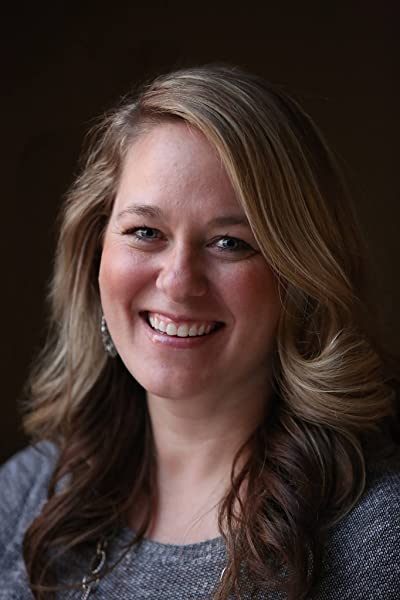
4 ways to strengthen a marriage while raising kids with disabilities may seem like 3 too many in the middle of a pandemic. Jessica Temple, neuropsychologist and mom to 2 sons with special needs, syas they were a great help to her and her husband this past year.

My husband, Lewis, and I knew that having children would transform our relationship. When our oldest child was diagnosed with autism, our lives became chaotic, straining our relationship. Once COVID hit, we were home 24/7 and stressed beyond belief. The experience put such tension on our relationship, we weren’t sure what to do. But we were committed to one another and our relationship, so we looked for ways to make things work for us amidst the chaos. Our relationship took a turn for the better when we implemented these 4 ways to strengthen a marriage while raising kids with disabilities.

 Nurture Your Support Network

Include friends and families, but also support groups, other parents of children with special needs, psychotherapists, and even marriage counselors in your network. Ask for help when you need it. Reach out to them as often as you need to. Having others as a sounding board or to help guide decisions is exceptionally beneficial. 

Manage Expectations

Expectations change when parents raise children with special needs. We get caught up in the fast-paced life and place high expectations on ourselves. This adds to the strain so it’s important for partners to take short breaks. Think about what it was that brought you together.  What did you like about them in the beginning and what attracts you to them now. Seek out opportunities in to rediscover those qualities in your partner now to help you recall why you loved them to begin with. 

You don’t have to like everything about your spouse. Acknowledging this can relieve some of the burden. Moreover, we all have different ways of completing tasks. That’s fine. Tasks will still get done, perhaps differently, but still completed. Things don’t have to be perfect, even if it may feel that way. Practice forgiving your partner, and try to find humor in everything, even things that drive you mad! 

Open Lines of Communication

Communication is key when raising a child with special needs. We can forget to talk to each other, so reach out to your spouse when you’re struggling. Open a dialogue about your wants and needs, both as a spouse and as a parent. Look for ways to support each other. Share your feelings toward the situations. What are you having trouble coping with? What are your frustration points? Discussing them will help you feel understood and to solve problems that arise. Considering ways to divvy up responsibilities will make your arrangement feel more equal. 

Steer clear of blaming. Instead, listen to one another with compassion. Notice and compliment what is done well. Remember that you’re on the same parenting team. Put your heads together to break the problem down into smaller pieces to make it more manageable to solve. 

Spend Quality Time With One Another

For a healthy relationship, it’s imperative to spend time with each other. Look at your week and see what time you can fit in with your partner, even if you have to schedule it.  Activities can be as small as a quick bedtime kiss and a “goodnight.” You can learn something new together, like cooking, or a date night. Or have date night at home. Watch a show, cook dinner together, play a game, read to one another, or do a craft. Enjoy quality time with your partner and laugh together. Be spontaneous with a simple “I love you” text, a special treat, a passing kiss or hug or neck massage. Keep intimacy alive, even though it may look different than before having kids. Intimacy doesn’t have to always mean sex. It can mean snuggling, holding hands, kissing, giving a sweet massage, or buying small gifts. 

Times are hard. Sometimes, it doesn’t feel like you and your partner will make it through. By implementing these 4 ways to strengthen a marriage while raising kids with disabilities to tweak your relationship. They can make you feel better as individuals, parents, and partners. Your relationship is worth it!

Do you like what you see at DifferentDream.com? You can receive more great content by subscribing to the monthly Different Dream newsletter and signing up for the daily RSS feed delivered to your email inbox. You can sign up for the first in the pop up box and the second at the bottom of this page.

By

Jessica Temple, PsyD, ABPP-CN, is a board-certified adult clinical neuropsychologist. She has two children who have special needs. She and her husband, Lewis, host a podcast called Thriving in The Midst of Chaos, where they talk about all aspects of special needs including getting a diagnosis and treatment, self-care, relationships, transitioning to adulthood, school, and finances. They created Thriving in The Midst of Chaos to offer support to others in the special needs world as well as to provide an easy way to find the most useful resources. They aim to share helpful resources with others, advocate for improvement, change in the special needs world, and offer a different perspective on parenting.    To find out more about how Jessica’s work can help you, contact her at fubarpod@gmail.com or @midstofchaospod on all social media platforms.  

Author Jolene Philo

Archives

Categories

Related Posts

Caregiving in a Culture of Outrage

Caregiving in a Culture of Outrage

Caregiving in a Culture of Outrage

Caregiving in a culture of outrage is a huge challenge. Parents of kids with special needs and disabilities who use social media to engage with other caregiving families have to wade through the outrage before they can connect. What do they have to contend with in the swamp?

Nasty memes.
Dubious news articles gone viral.
Ugly accusations.
Personal attacks.
Language that surely grieves the heart of God.

I wade into the swamp each morning to post encouragement on my Facebook page for caregiving families. 

Every step of the way I fight discouragement.
I push away angry thoughts toward those posting views unlike my own.
I fight the temptation to go down rabbit holes.

Caregiving in a culture of outrage isn’t easy for me or for the parents I desire to encourage. These three strategies help me keep from being sucked into the swamp, and I hope they do the same for you.

Strategy #1: Evaluate and Control What You See on Social Media

Ask yourself these three questions to evaluate and control your social media news feeds.

  • Does this post give me life or suck away my joy? If it gives life, read it. If it sucks joy, scroll past it. Or if it comes from someone whose posts consistently drain your joy (joy you need to be the positive caregiver your child deserves), snooze whoever it is for 30 days, hide their posts, or unfriend the person.

To read the rest of Caregiving in a Culture of Outrage, visit Key Ministry’s blog for parents.

Do you like what you see at DifferentDream.com? You can receive more great content by subscribing to the monthly Different Dream newsletter and signing up for the daily RSS feed delivered to your email.

By

Jolene Philo is the author of the Different Dream series for parents of kids with special needs. She speaks at parenting and special needs conferences around the country. She’s also the creator and host of the Different Dream website. Sharing Love Abundantly With Special Needs Families: The 5 Love Languages® for Parents Raising Children with Disabilities, which she co-authored with Dr. Gary Chapman, was released in August of 2019 and is available at local bookstores, their bookstore website, and at Amazon.

Author Jolene Philo

Archives

Categories

Related Posts

Tips for Raising Kids with Disabilities and Special Needs, Part 2

Tips for Raising Kids with Disabilities and Special Needs, Part 2

Tips for Raising Kids with Disabilities and Special Needs, Part 2

Tips for raising kids with disabilities and special needs can be learned in unexpected places and events. Heather Johnson, mom to three kids with special needs, discovered three tips when from she returned from a once in a lifetime trip with her husband and her elderly father just as the COVID pandemic began. In this post, she shares her final two tips. The first post in this series can be found here.

Tip 2: Know that your current chapter in life is not the end of your story.

We live in a world that’s rocked and rolled by the unexpected. As parents of three kids with disabilities who are now adults, we’re thankful for God’s grace giving us fuel to keep going, to keep hoping. This broken world with all of us broken people is not the end of the story. 

Our family has found strength for the long haul in knowing that God is working all things, even horribly hard things, together for good (Romans 8:28), in his perfect timing. Sometimes we get to see how God is working and other times we don’t. For us, we’ve come to terms with the not knowing and, actually, not knowing has made life more exciting because what we do know is explained in my final tip.

Tip 3: Trust God’s promises.

Our Tanzanian guide couldn’t promise we’d see the “big five” everyone hopes to see on the same safari—lion, leopard, elephant, cape buffalo, and rhinoceros. Turns out, we did see “the big five”. But God has given us more than five big promises that are certainties, not just possibilities.  

We’ve learned, as a family, that God doesn’t give us everything we want, but he promises to give us everything we need. Problem is, when we’re close-hearted and tight-fisted, there’s no ability to receive. Letting go and opening ourselves to things we’ve never thought about or hoped for is key to finding how good God is. 

God has changed our minds about what’s good—what’s worthy to want. And we’ve witnessed that every “no” answer to prayer paves the way to a “yes” answer that’s better. 

Letting go and trusting God isn’t always easy. In fact, it feels often like we’re dying. Because we are. We’re dying to a bit or ourselves that thinks we know best—our hopes, dreams, expectations—and letting God give us something better. 

For I know the plans I have for you, declares the LORD, plans to prosper you and not harm you, plans to give you hope and a future. Jeremiah 29:11

I gave all three of our kids this same “life verse” before we ever met them in that Russian orphanage. I had no idea the same verse would become mine to have and to hold until the end of time. 

You can hold the same promise for yourself. Read it. Memorize it. Write it on an index card and carry it with you like I do. Hold it more tightly than anything else in your life. Because it’s God’s promise that will never be broken. 

No matter where you are in your parenting journey right now, know this—you’re never alone. God knows you and loves you. God will help you through the thunder and crashing during your great migration through this life to a place of peace where you will look back and say you and your loved ones are blessed more than you could have ever imagined. This is a mystery worthy of all our heart, mind, soul, and strength. 

It’s a joy to journey with you!

Part 1 of Tips for Raising Kids with Disabilities and Special Needs

Do you like what you see at DifferentDream.com? You can receive more great content by subscribing to the monthly Different Dream newsletter and signing up for the daily RSS feed delivered to your email

By

Heather MacLaren Johnson and her husband have three kids, all five and under when adopted from Russia. Now 29, 27, and 22, all need regular help with their multiple, permanent, invisible disabilities stemming from prenatal exposure to alcohol (FASD).

Heather has B.S. in Education and a doctorate in Clinical Psychology. She is the author of Grace, Truth, & Time: Facilitating Small Groups That Thrive and has published personal essays in The Wonder Years: 40 Women Over 40 on Aging, Faith, Beauty, and Strength (Kregel Publications) and Your Story Matters: Finding, Writing, and Living the Truth of Your Life (NavPress). She’s writing a memoir about her family’s journey through hidden disabilities and mental illness to encourage others to greater intimacy with God and each other through times of desolation and lament.

Heather and her husband of 27 years live with two horses, two dogs, two barn cats, and a bunch of silk plants she just dusts. Heather writes and photographs at www.truelifewithgod.com.

Author Jolene Philo

Archives

Categories

Related Posts

Tips for Raising Kids with Disabilities and Special Needs, Part 1

Tips for Raising Kids with Disabilities and Special Needs, Part 1

Tips for Raising Kids with Disabilities and Special Needs, Part 1

Tips for raising kids with disabilities and special needs are usually the product of trial and error. But Heather Johnson, mom to three kids with special needs, discovered three tips when the COVID pandemic entered the scene on the heels of a once in a lifetime African safari. She shares one of the tips in the first post of this series and the other two in the second installment later this week.

One year ago my husband, my 87-year-old father, and I boarded a flight from Chicago for a two-week African safari in Tanzania. After a year of planning and anticipation, we were about to experience the most marvelous part of creation we had ever witnessed–except for having kids. 

We saw lions, leopards, cheetahs, elephants, cape buffalo, and hippopotamus so close to our vehicle that I didn’t need my Nikon zoom lens most of the time. My iPhone 8+ took stunning photos. 

On the Serengeti plain, zebras and wildebeests thundered around us on their annual migration north, braying and bellowing as they ran. Hyenas, meerkats, warthogs, and yellow-billed hornbills made The Lion King come to life.

This was bliss—as close to Eden as we could come. Far away from civilization in the African bush, we were unaware of what was thundering and spreading across the globe at a breath-taking pace, literally. 

Covid-19. 

We returned to a world changed suddenly and dramatically. Masks, social distancing, school and business closings, job losses, blaming, shaming, raw nerves flaring. 

From bliss to this? Shocking, to say the least. 

So what did an awe-inspiring African safari and a frightful Covid-19 pandemic teach parents like you and me about living with and raising kids with special needs? Here are 3 tips our family is still learning.

Tip 1: Hold hope tightly but hold expectations loosely.

As new parents, sometimes our sky-high hopes come crashing suddenly, thundering through our whole being. Such was the case when my husband and I learned, one-by-one, that all three of our kids we adopted from Russia had multiple, invisible disabilities stemming from fetal exposure to alcohol (FASD). We gave our kids every opportunity to develop. Still, the neuropsychologists weren’t quite right in their predictions. 

For our daughter, 29, independent living and driving will never happen. For our oldest son, 27, a weekly caregiver helping with meal preparations, cleaning, appointment setting, and money management will always happen. For our youngest son, 22, who knows? His attempt at tech school ended with words uttered to me through sobs near the end of his first quarter. “I tried as hard as I could, but I couldn’t do it.” Now he works in a factory and is happy as can be, as are we. There’s been grief and tears, for sure. Loss is hard. But grieving losses is good, even necessary, for moving on and opening our hearts again to new possibilities. 

We are happy all our kids are living lives that have caused us and others to realize an important truth—it’s not what we have or what we do that makes us happy. It’s accepting who we are and being loved no matter what that makes us happy. When we have love, we know the present is not the end.

That profound truth leads right into the second of my tips for raising kids with disabilities and special needs. I’ll share it in the second post in this short series which will become available on March 11, 2021.

Part 2 of Tips for Raising Kids with Disabilities and Special Needs

Do you like what you see at DifferentDream.com? You can receive more great content by subscribing to the monthly Different Dream newsletter and signing up for the daily RSS feed delivered to your email.

By

Heather MacLaren Johnson and her husband have three kids, all five and under when adopted from Russia. Now 29, 27, and 22, all need regular help with their multiple, permanent, invisible disabilities stemming from prenatal exposure to alcohol (FASD).

Heather has B.S. in Education and a doctorate in Clinical Psychology. She is the author of Grace, Truth, & Time: Facilitating Small Groups That Thrive and has published personal essays in The Wonder Years: 40 Women Over 40 on Aging, Faith, Beauty, and Strength (Kregel Publications) and Your Story Matters: Finding, Writing, and Living the Truth of Your Life (NavPress). She’s writing a memoir about her family’s journey through hidden disabilities and mental illness to encourage others to greater intimacy with God and each other through times of desolation and lament.

Heather and her husband of 27 years live with two horses, two dogs, two barn cats, and a bunch of silk plants she just dusts. Heather writes and photographs at www.truelifewithgod.com.

Author Jolene Philo

Archives

Categories

Related Posts

Day by Day Caregiving

Day by Day Caregiving

Day by Day Caregiving

Day by day caregiving describes life for parents raising children with special needs and disabilities. It’s also a strategy Kimberly Drew has been using for months as the lack of routine due to the pandemic makes life hard for her daughter Abbey.

During this COVID pandemic, I’ve been unable to achieve structure and routine for our daughter Abbey. In the beginning, we were in “emergency” mode and just winging it. We gave virtual classes and therapies our best go. For the first couple of weeks, Abbey thought they were great. But she regularly grabbed her shoes or backpack and stood by the door. After the first few weeks we saw behavior changes including lack of sleep, increased constipation, and mood swings. She’s never quite recovered from our first lock down. 

Many other parents have tearfully reported that their children are showing regression in skills, aggressive behavior as a result of this lack of routine. To a child with limited cognitive function, it’s not a new routine, it’s a mess. Abbey doesn’t understand why she’s supposed to use the computer when she gets home, why she goes to school on Monday and Tuesday but not on Wednesday. My once happy girl who lit up the room has dimmed in our home. Her mornings are consistently plagued with tantrums. She screams, hits, and drops to the floor. 

We’ve tried just about everything to establish the best routine we can. When school isn’t closed for a COVID exposure or a contact trace, or someone here doesn’t have a runny nose so we’re home for 10 days, we manage to get by.  But as soon as that routine is out the door, so is Abbey’s sense of security. 

We are in day by day caregiving survival mode of living. I’ve received advice from well-meaning relatives, friends, school employees, and therapist about how to manage this problem. 

Join a support group.
Read a book.
Ty this or that.

I hope those who are not having our experience will take heed of our story. We have no emotional energy to join anything. Exhaustion keeps us from doing, reading, or trying things that might be helpful. We are navigating new waters and doing our very best. What we could use are your prayers, compassion, empathy, and for you to drop off off a meal. 

We are clinging to hope. For now, and to other parents engrossed in day by day caregiving, I want you to know that you’re not alone. The best way for us to get by is summed up in the hymn Day by Day written in 1865 by Carolina Sandell.

 Day by day, and with each passing moment,
Strength I find to meet my trials here;
Trusting in my Father’s wise bestowment,
I’ve no cause for worry or for fear.

He, whose heart is kind beyond all measure,
Gives unto each day what He deems best,
Lovingly its part of pain and pleasure,
Mingling toil with peace and rest.

Every day the Lord Himself is near me,
With a special mercy for each hour;
All my cares He fain would bear and cheer me,
He whose name is Counsellor and Pow’r.

The protection of His child and treasure
Is a charge that on Himself He laid;
“As thy days, thy strength shall be in measure,”
This the pledge to me He made.

Help me then, in every tribulation,
So to trust Thy promises, O Lord,
That I lose not faith’s sweet consolation,
Offered me within Thy holy Word.

Help me, Lord, when toil and trouble meeting,
E’er to take, as from a father’s hand,
One by one, the days, the moments fleeting,
Till with Christ the Lord I stand.

Do you like what you see at DifferentDream.com? You can receive more great content by subscribing to the monthly Different Dream newsletter and signing up for the daily RSS feed delivered to your email inbox. You can sign up for the first in the pop up box and the second at the bottom of this page.

By

Kimberly grew up and went to college in the small town of Upland, IN. She graduated from Taylor University with a degree in Elementary Education in 2002. While at TU, she married her college sweetheart and so began their adventure! Ryan and Kimberly have three amazing kids on earth (Abigail, Jayden, Ellie, and Cooper), and a baby boy waiting for them in heaven. Their daughter Abigail (Abbey) has multiple disabilities including cerebral palsy, a seizure disorder, hearing loss, microcephaly, and oral dysphagia. She is the inspiration behind Kimberly’s  desire to write. In addition to being a stay at home mom, Kimberly has been serving alongside her husband in full time youth ministry for almost fourteen years. She enjoys working with the senior high girls, scrapbooking, reading, and music. You can visit Kimberly at her website, Promises and Perspective.

Author Jolene Philo

Archives

Categories

Related Posts

2 Mental Health Red Flags for Caregiving Parents

2 Mental Health Red Flags for Caregiving Parents

2 Mental Health Red Flags for Caregiving Parents

2 mental health red flags for caregiving parents? Are you kidding me? I’m waving at least a dozen red flags every day!

That would have been my reaction to the title of this post when I was in the thick of caring for a medically-fragile kid. In fact, that would have been my reaction as recently as a month ago. But I had a lightbulb moment between then and now.

The lightbulb moment came while I facilitated a class for teachers about post-traumatic stress disorder (PTSD) in kids. We were discussing childhood symptoms, also known as behaviors, displayed by traumatized children. The class members wanted to know what kinds of behaviors are indicators that the trauma has evolved into PTSD.

“It’s not so much the kind of behavior,” I explained, “because most kids display these kinds behaviors at one time or another. Red flag indicators for me are the intensity and duration of the behavior. An example would be what happens after telling 2-year-olds they can’t have a cookie. More than likely, a 2-year-old will throw a tantrum. However, 2-year-olds living with unresolved trauma and PTSD will pitch magnificent fits that are long and loud. That’s intensity.

Similar tantrums continue to occur whenever these 2-year-olds are denied anything long after the child should have moved past the terrible 2s. That’s duration.” 

The words had barely come out of my mouth before the lightbulb turned on: Intensity and duration of behaviors can be 2 mental health red flags for caregiving parents, too.

I mean, let’s face it. Parents raising kids with special needs and disabilities face plenty of attacks on their mental health, including traumatic stress. Such as thee stress of overwhelming, unrelenting caregiving demands. The trauma of sending a child off to surgery or hearing the heart monitor flatline. The stress of trying to manage unmanageable behaviors. The trauma of a receiving a difficult diagnosis. 

To read the rest of 2 Mental Health Red Flags for Caregiving Parents, visit the Hope Anew website.

Do you like what you see at DifferentDream.com? You can receive more great content by subscribing to the monthly Different Dream newsletter and signing up for the daily RSS feed delivered to your email.

By

Jolene Philo is the author of the Different Dream series for parents of kids with special needs. She speaks at parenting and special needs conferences around the country. She’s also the creator and host of the Different Dream website. Sharing Love Abundantly With Special Needs Families: The 5 Love Languages® for Parents Raising Children with Disabilities, which she co-authored with Dr. Gary Chapman, was released in August of 2019 and is available at local bookstores, their bookstore website, and at Amazon.

Author Jolene Philo

Archives

Categories

Related Posts