French Fries in the Park: Encouraging Understanding, Acceptance, and Love

French Fries in the Park: Encouraging Understanding, Acceptance, and Love

French Fries in the Park: Encouraging Understanding, Acceptance, and Love

JM Sheridan is the author of the children’s book French Fries in the Park. Please welcome her and enjoy her guest post about the story behind French Fries in the Park.

The scene in the kitchen was heart-wrenching. My beautiful girl, tears streaming down her red cheeks, shaking from her distress. Next to her was my husband, Kevin, with his head in hands.

“I don’t know what is wrong,” he said wearily, “and she cannot tell me.”

Brianna was three and she was not speaking, save for a handful of words.

I looked down at the breakfast in front of her, and I knew. I don’t know how, but I did. As her cries continued, I quickly made a piece of toast, buttered it and cut it diagonally. I placed the warm bread in front of her and repeated, “Look toast.” I touched her softly until she opened her eyes to see the plate. Her sobs quelled as she reached out for the new toast and smiled.

I met Kevin’s questioning eyes. “I always cut her toast on a diagonal.”

That was eleven years ago. I have learned so much from Brianna: patience and understanding, acceptance, but more importantly she opened my mind to see the world from a different perspective. She has always been my muse. She inspires me in so many ways. Brianna was actually thrilled to be one of the main characters in the Brianna & Mrs. Moomoo series. The original Mrs. Moomoo is a small beanie baby cow that my good friend Mina gave Brianna when she was about one. Now that Mrs. Moomoo is a celebrity, she sits on a bookshelf in Brianna’s room guarded by other stuffed animals.

Throughout the years, Kevin and I have faced a number of challenges – most of which were derived from inexperience, unawareness, and prejudices. I wrote French Fries in the Park to be used as a source for discussion, whether in a classroom setting or at home, to help children understand what autism is and how it affects some kids. This story encourages them to be mindful and patient of the differences children with autism have, but also to recognize the similar wants and likes these children have that are the very same as their own.

In French Fries in the Park I carefully selected specific behavioral differences a child around the age of six would recognize and identify with. For example, no eye contact, being non-verbal, stimming, and parallel play rather than interactive play. Not only does Brianna notice each of these behaviors throughout the book, she gains a better understanding of them with the help of the boy’s father. She accepts this boy and his differences by continuing to stay with him in the park and play right alongside him.

In addition to discussions at home, I recommend that all preschool and elementary teachers and personnel be educated in the autism spectrum disorders, and that the administrators and education systems support this training. Knowledge is the key to a better understanding and a more accepting community.


Do you like what you see at DifferentDream.com? You can receive more great content by subscribing to the monthly Different Dream newsletter and signing up for the daily RSS feed delivered to your email.
By

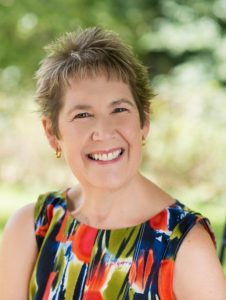
JM Sheridan lives in New England with her husband, Kevin, her daughter, Brianna, and four very mischievous kitties Sheridan attended the Institute of Children’s Literature in Connecticut, as well as numerous children’s book writing workshops, seminars, and classes. She is currently a member of the Association of Rhode Island Authors (ARIA) and Society of Children’s Book Writers and Illustrators. Dragonfly Magic and French Fries in the Park are the first books in the Brianna and Mrs. Moomoo series of books designed to educate and inspire children, as well as support our New England communities. You can learn more about her and her books at www.jmsheridan.com.

Author Jolene Philo
Archives

Categories

Subscribe for Updates from Jolene

Related Posts

Unexpected Blessings: An Interview with the Author

Unexpected Blessings: An Interview with the Author

Unexpected Blessings: An Interview with the Author

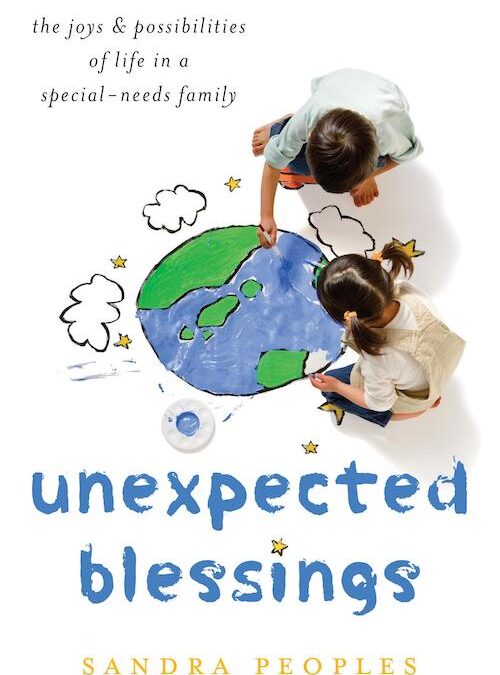
Sandra Peoples is the author of the book, Unexpected Blessings: The Joys and Possibilities of Life in a Special-Needs Family. She’s joining us today to answer a few questions about her experiences as a special-needs sibling and mom.

1. Hearing a diagnosis for a child can be a scary experience for any family. How did you and your husband react to first hearing your son’s autism diagnosis, and what advice do you have for parents who are going through this process with their children?

Diagnoses come at different times for different disabilities. Some parents hear them when they are still pregnant. Some at birth. Some read a list in adoption papers. For us, it came when James was three years old. We were finally honest with the pediatrician about the ways James was falling behind what was expected. And we were honest with ourselves about what that might mean. I reacted with relief because there was a name for all that was different about him and that meant we could get help. My husband reacted first with doubt and fear. It took us a couple months to adjust to our new normal and feel like a team. My advice is to be patient with each other. Do your best to support each other and not pressure the other person for grieving or adjusting at a different rate than you do. Reach out to your pastor and ask for counseling recommendations if you feel that would be helpful.

2. What harmful messages do new parents hear from friends, family members, and even other Christians that hurt more than they help? (examples: your child’s disabilities are because of your sin, if you pray hard enough he will be healed, and God won’t give you more than you can handle)

In addition to the ones listed, one I didn’t like was “God knew what He was doing when He gave James to you!” It is supposed to be a compliment, implying we have what it takes to get James everything he needs to thrive. But at the time, I could think of a lot of other people who deserved the hardship I felt like we were going through! I quickly learned that I was being extra sensitive because of our pain and needed to give people more grace. Because at least they were trying to say something. Saying nothing is worse than saying the wrong thing. I do try to encourage others to lead with empathy instead of answers in times like this. They can point friends to the hope we have in Christ when it feels appropriate, but the first step is to validate whatever they are feeling as legitimate. Romans 15:15 says “Be joyful in hope, patient in affliction, faithful in prayer.” We often pray for suffering to be over as quickly as possible, but Scripture tells us to be patient and hold on to hope.

3. Most parents feel like they are going down a detour they didn’t plan when they get a diagnosis for their child. But you believe their Plan B is God’s Plan A. How do you help parents see this huge change in their lives as a positive change, to see their unexpected circumstances as unexpected blessings?

After we got James’s diagnosis I called a friend of my mom’s who had an adult son with autism and she shared this verse: “Those who sow with tears will reap with songs of joy” (Psalm 126:5). She assured me that what felt hard today would get easier. Even if our circumstances didn’t actually get easier, our strength would grow. Our faith would deepen. His autism wasn’t a surprise to God, it wasn’t a punishment for me or James. It just was our new normal. There isn’t a person in Scripture who didn’t suffer in some way, and all of their circumstances were part of God’s plan for their lives. So we too can see the detour as our new road, and be ready for the unexpected blessings God will bring our way.

4. Because you have a sister with Down syndrome, the special-needs world isn’t new to you. How do your experiences as a sibling help you as a parent?

I saw the community my parents had around them when we were young. In our small town in Oklahoma, the parents of kids with disabilities supported and encouraged each other. I try to create support communities like that as well. Even online communalities like Facebook groups are a huge blessing to families like mine. It also encourages me to look at the long game and not just the struggles of today. I put less pressure on myself and on James because I see that my sister is happy and living a fulfilled life. Meeting every therapy goal when she was James’s age isn’t as important as making sure she feels supported, safe, and loved.

5. You’re in the unique position of having empathy for your older son as he goes through life as a special-needs sibling. What advice can you offer to parents who want to support and encourage the typical kids in their families?

One thing my parents did right that I learned from was that they never shamed me for how I felt. If my sister embarrassed me, they didn’t rush to say I needed to get over it. If I was angry at her, they understood that was a normal response to a challenging situation. I want to tell David “James can’t help his behavior, but you can help yours,” but that isn’t helpful in the moment. David needs his feelings validated as well. In our situation, David is like an only child in many ways. James isn’t a playmate to him. So my husband and I have to fill that gap. We also encourage him to peruse his interests. Right now that is acting. He recently turned thirteen and has already been in almost twenty plays and musicals. It gives him an identity beyond being “James’s brother,” like he’s often known as at school and church.

6. Rumor is the divorce rate for parents of kids with disabilities is higher than the typical rate. Why do you believe that’s not true, and how do you and your husband stay strong in the midst of the challenges you face?

When I looked for actual studies and facts about the divorce rate for special-needs parents, I couldn’t find anything that supported the idea that it’s dramatically higher. The stress level can be higher. There was a study done that said parents of teens with autism have the stress levels of a solider in active combat. If that’s normal for you and your spouse, you have to work hard to support each other. Lee and I have developed routines that help us know what to expect. At night, I stay awake until James falls asleep, but Lee gets up with him early the next morning. We have learned to step in when the stress is too high. For example, I hate making phone calls, especially to set up appointments with the doctor or talk to insurance. I don’t mind going to appointments, I just don’t like the phone call. So Lee makes the calls. I get him all the information he needs, and he handles it. Then I handle the actual doctor or therapy appointment. There have been times we’ve needed extra help, and we’ve seen therapists to help us work through seasons that felt more difficult. We pray we can keep moving toward each other through our circumstances, and not drift apart.

We appreciate Sandra taking time to answer these questions so we can get to know her better. If you’re interested in learning more about her new book, check out unexpectedblessingsbook.com


Do you like what you see at DifferentDream.com? You can receive more great content by subscribing to the quarterly Different Dream newsletter and signing up for the daily RSS feed delivered to your email inbox. You can sign up for the first in the pop up box and the second at the bottom of this page.

By

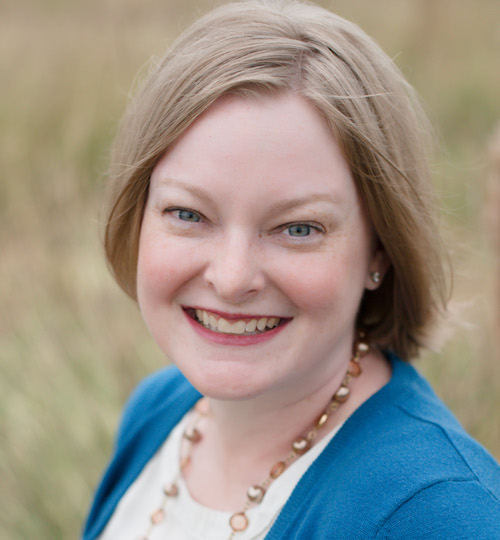
Sandra Peoples, M Div, is a leading voice in the disability community as an encourager to special-needs parents. She has been a member of a special-needs family since the day she was born. Her older sister has Down syndrome, and in 2010 her son James was diagnosed with autism. She is the executive editor for Key Ministry and Not Alone (on Patheos). Sandra, her husband, and their two boys live outside of Houston. Connect with her at sandrapeoples.com.

Author Jolene Philo

Archives

Categories

Subscribe for Updates from Jolene

Related Posts

Eunice: The Kennedy Who Changed the World

Eunice: The Kennedy Who Changed the World

Eunice: The Kennedy Who Changed the World

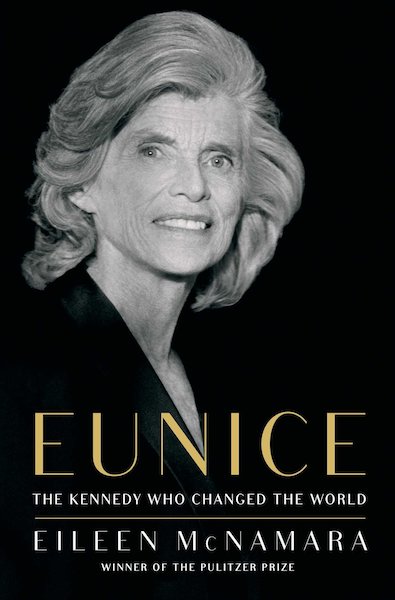
Eunice: The Kennedy Who Changed the World is Eileen McNamara’s new biography about Eunice Kennedy Shriver. Shriver is best known as the founder of Special Olympics, but that monumental achievement is just one of her many contributions to the welfare of children, women, and people living with special needs and disabilities. Recently, I had a chance to ask Shriver’s biographer several questions about what she learned while researching and writing the book.
 
What piqued your interest in Eunice Kennedy Shriver?
Senator Edward M. Kennedy died two weeks after his sister Eunice in August 2009 and I was taken aback by the photo captions accompanying his obituary in the New York Times. In almost every one, his sisters were misidentified or not identified at all. I had been talking with Simon & Schuster about the astounding fact that a biography had never been written of Mrs. Shriver. The correction the New York Times ran of those captions convinced me to undertake that project. It was clear to me that – in her family and in history – Eunice Kennedy Shriver was invisible or indistinguishable from her sisters. I knew enough about her accomplishments to know that there was nothing invisible about her and that she stood out for her achievements among all the women – as well as the men – in the Kennedy family.
 
Can you briefly describe how you conducted your research?
It took me a few years to convince the five Shriver siblings that I could be trusted to produce a thorough, complete and honest biography of their mother if they would give me unrestricted access to her private papers, 33 boxes of which were in storage at the JFK Presidential Library in Boston. I understood their reluctance; journalists have not always dealt fairly with the Kennedy family. I pushed because I knew those papers – which her children had not read – would provide insights into the woman she was. I had won a Pulitzer Prize at the Boston Globe and later contributed to the coverage of the clergy sex abuse scandal in the Catholic Church detailed in the Oscar-winning movie “Spotlight.” I am grateful that the Shrivers did trust me with those papers and agreed to be interviewed for the book knowing they would not see the manuscript before publication. I talked as well to scores of Mrs. Shriver’s friends, extended family (including Ethel Kennedy) and colleagues in her lifelong campaign on behalf of people with intellectual disabilities. My interviews took me to London where I met a classmate who sat beside her in Study Hall in the convent school she attended when her father was the US ambassador to Great Britain. I went to Stanford University where she earned her undergraduate degree and to Chicago and West Virginia where she worked with juvenile delinquents and women in federal prison. I logged hours at the National Archives in Washington, learning all I could about the work she did during World War II in the US State Department and after the war in the US Justice Department.
 
What do you admire most about her?
Her persistence. She knew that no single battle wins a war. She fought all her life for the hearts and minds of lawmakers, presidents and members of the public on behalf of people with intellectual disabilities. When she began in the 1950s, those she championed were warehoused in Dickensian institutions, denied a seat in a public school classroom and a place on the playing field and a job in the community. When she won those rights, she did not stop. She knew that those rights had to be protected so she went back again and again to Capitol Hill to make sure the government kept appropriating money for special education, for group homes, for job training, for medical research. She was relentless because, without vigilance, progress can be rolled back and she would not stand for that.
 
What about her allows readers to identify with her?
Most of us do not have a 250-acre “backyard” on which to establish a summer camp for children with intellectual disabilities. But in 1962 when Eunice created Camp Shriver on her Maryland estate, she was doing what so many mothers of children with intellectual disabilities were trying to do on a much smaller scale in an effort to help their children enjoy life. Mrs. Shriver used her famous name, her father’s money and her brother’s presidency to kick down doors all over the world on behalf of those children. No one thought she’d succeed. She said toward the end of her life that she was always told by men that real power was not for her. But because she refused to listen to them, she was able to do what no one had ever done before. She got her strength from every mother she saw trying to do her best for her children as her own mother, Rose, had tried to help Rosemary, the older Kennedy sister born with intellectual disabilities. What woman cannot identify with Eunice’s struggle to be seen and heard in her family and in the world?
 
What would you list as her greatest contributions as a citizen of the world?
She was not satisfied with making progress on this issue in the U.S. alone. In the mid-1980s – when children with intellectual disabilities in places in China, the Mideast, Africa and the Soviet Union – were still being denied their basic human rights, she insisted that Special Olympics become an international movement. Getting children onto the playing fields in those places opened the door to getting them into group homes, into jobs and out of huge residential institutions. She made the world look differently at a child with intellectual disabilities. Where once the world saw the disabilities, she refocused the world’s attention to see the child.
 
What about her life can encourage parents raising children with special needs today?
Eunice Kennedy Shriver was told “no” all her life but she refused to take “no” for an answer. When she asked President Kennedy to create a National Institute for Child Health and Human Development so that federal funds could help scientists research the causes of intellectual disabilities and other conditions that impact developing fetuses and infants, the president told her that the medical establishment said it did not need such an institute. She said the establishment was wrong. She pointed to the miscarriage and the stillbirth that Jackie Kennedy had suffered in the 1950s as examples of circumstances that needed more research. She got President Kennedy to “yes.” Today that institute is named for Eunice Kennedy Shriver. When she wanted to make swimming a Special Olympic event experts told her the children would sink. “Nonsense,” she said, proving it with the success of young swimmers at Camp Shriver. All her life she counseled parents of children with special needs to trust themselves and their instincts, not the experts who too often are naysayers. She had faith in these children and their parents and now five million in more than 170 countries around the globe prove over and over again that Special Olympians can swim, run, jump, dunk a basketball and hit a baseball as well as any child on the planet.
 
Where can readers find  the book?

At their local bookstore or on Amazon.

Do you like what you see at DifferentDream.com? You can receive more great content by subscribing to the quarterly Different Dream newsletter and signing up for the daily RSS feed delivered to your email inbox. You can sign up for the first in the pop up box and the second at the bottom of this page.

By

Jolene Philo is a published author, speaker, wife, and mother of a son with special needs.

Author Jolene Philo

Archives

Categories

Subscribe for Updates from Jolene

Related Posts

5 Fave Books for the Special Needs Community

5 Fave Books for the Special Needs Community

5 Fave Books for the Special Needs Community

August days are dwindling fast, but there are enough left for one last summer read. In case you’re looking for a book worthy of the last lazy, hazy days of summer, here are my top 5 books for the special needs community.

A Good and Perfect Gift: Faith, Expectations, and a Little Girl Named Penny by Amy Julia Becker. Penny, the author’s first child, was born with Down Syndrome. In A Good and Perfect Gift, Becker describes how she and her husband came to accept their daughter’s diagnosis and wholly embrace who God created her to be. Becker writes beautifully, and she tells the story with warmth and transparency.

 A Story Unfinished: 99 Days with Eliot by Matt Mooney. Before Eliot Money was born, he was diagnosed with Trisomy 18, a condition generally incompatible with life. His parents, Matt and Ginny Mooney, determined to count every day with Eliot a gift. Eliot lived 99 days, and in A Story Unfinished, Matt tells of God’s goodness and redemption even during the dark days he and Ginny experienced. This book comes with a tissue warning.

In Dancing With Max, Emily Colson how she and her son Max, who lives with autism, learned to do life together. She exposes both the joys and challenges of raising her son with special needs with transparency and humor. A masterful storyteller, Colson will make you laugh and cry and long to experience the delight of dancing with Max.

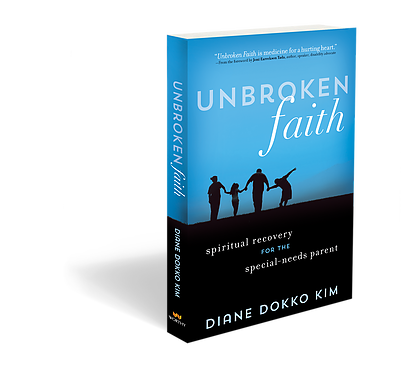
Unbroken Faith: Spiritual Recovery for the Special Needs Parent and it’s author Diane Dokko Kim were featured in a series of Different Dream posts last spring. In Unbroken Faith, Kim describes how her son Jeremy’s autism diagnosis weakened her faith and how she learned to lean on God’s strength instead of her own.

Eunice: The Kennedy Who Changed the World is a new book about Eunice Kennedy Shriver, the woman known best as the founder of Special Olympics. Biographer Eileen McNamara explains the origins of Shriver’s passion for children with intellectual disabilities and how she was the driving force behind the Maternal and Child Health and Mental Retardation Planning Amendment to the Social Security Act, the last piece of legislation signed by John F. Kennedy before his death.

There you have it…my 5 fave books for the special needs community. If you want to give your favorite special needs-related book a shout out, leave a comment in the box below.


Do you like what you see at DifferentDream.com? You can receive more great content by subscribing to the monthly Different Dream newsletter and signing up for the daily RSS feed delivered to your email.

By

Jolene Philo is a published author, speaker, wife, and mother of a son with special needs.

Author Jolene Philo

Archives

Categories

Subscribe for Updates from Jolene

Related Posts

Inclusion Fusion Live at Your Fingertips

Inclusion Fusion Live at Your Fingertips

Inclusion Fusion Live at Your Fingertips

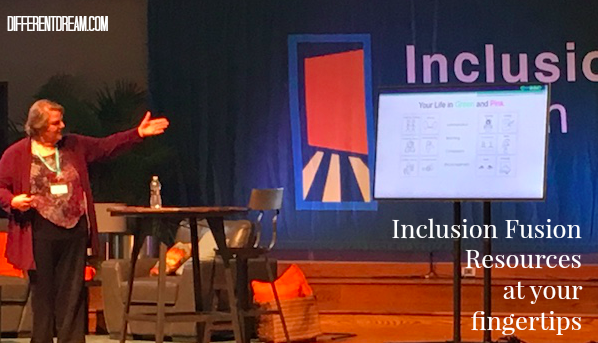
The Inclusion Fusion Live Conference on April 20-21, 2018 was two days worth of amazing speakers, exceptional exhibit booths, panel discussions, and more. The event was billed as a disability conference with a special focus on mental health issues. I came home with enough new ideas and resources to keep me thinking and researching for several months.

The conference was hosted by Key Ministry under the visionary leadership of Dr. Steve Grcevich, with Sandra Woods Peoples, Beth Golik, and Barb Dittrich behind the scenes turning his vision into a reality. (You’ll find bios for all four of them at Key Ministry’s Writers’ Page and Staff Page.)

Part of Steve’s vision, and that of Key Ministry, is to make resources available to families dealing with mental health issues and other special needs. That’s why they live-streamed all the main stage events and Quick Takes on Facebook. Even better, those videos can still be accessed at the Key Ministry Facebook page. At some point, the videos will be archived at another location on the internet, and I’ll provide that link once it happens.

Wherever they are housed, I highly encourage you to take advantage of this free resource and watch the 19 videos recorded at the Inclusion Fusion Conference on April 19–20. You can learn from national speakers like Barbara Newman of the CLC Network, Lamar Hardwick, Jason Hague, Tiffany Crow, Keith Dow, Ron Sandison, and more. It’s binge watching at it’s absolute best!

Do you like what you see at DifferentDream.com? You can receive more great content by subscribing to the quarterly Different Dream newsletter and signing up for the daily RSS feed delivered to your email inbox. You can sign up for the first in the pop up box and the second at the bottom of this page.

By

Jolene Philo is a published author, speaker, wife, and mother of a son with special needs.

Author Jolene Philo

Archives

Categories

Subscribe for Updates from Jolene

Related Posts

Unbroken Faith Is Not Just for Parents of Kids with Special Needs

Unbroken Faith Is Not Just for Parents of Kids with Special Needs

Unbroken Faith Is Not Just for Parents of Kids with Special Needs

Different Dream concludes the three-part series from guest blogger, Diane Dokko Kim. Today, Diane shares about why she wrote Unbroken Faith: Spiritual Recovery for the Special Needs Parent, and whom it was written for.  (Heads up: It’s not just for parents of children with special needs.)

Why did you write Unbroken Faith?

When our son was diagnosed in 2004, my husband and I were fresh off the mission field and had committed ourselves to full-time ministry. Then, we got hit with this. Feeling trapped and chagrined, I felt as if I had nowhere to go with my shock, grief –and quite honestly—my outrage. So I poured out my anguish into a password-protected journal. For years, I wrestled privately with God: How could He do this to us? How can I trust Him after this? After about five years, rather than healing our child of his developmental disability, God healed me of my spiritual disability. The very thing I thought would destroy my relationship with God was the very thing that drew me closer to Him, and to understanding His heart, anew.

Why is Unbroken Faith needed?

Unbroken Faith is the book I wish had existed for that crucial time, immediately post-diagnosis. Like most special-needs parents, I Googled everything I could get my hands on. I found many resources that targeted my son’s disability, but few that addressed my own spiritual needs. Nothing scratched where I itched – or, more accurately, where my soul ached.

After God healed my heart through His Word, I was asked to lead a special needs parent support group. As I got to know other families with a wide range of diagnoses, I marveled that regardless how rare a diagnosis, no matter how different our cultures or socio-economic backgrounds, we all shared the same core struggles: How could God let this happen? Why us? Is He going to fix this?  If not, how will I get through this? How can I trust Him again?

We all felt spiritually disillusioned, our faith “broken.” Especially when 90% of our families are unable to attend church, who else hungers more for hope and encouragement that God has a plan for our children and our families? In a world that devalues those who are different, who else needs to hear the Good News that our children are wonderfully and fearfully made?

God was calling me to comfort others with the comfort I had received from Christ. The pain that once wrecked us, God had redeemed and repurposed into a calling to minister to others.

What’s different about Unbroken Faith?

I intentionally wrote Unbroken Faith to not be about my family’s story, but about the collective, universal experience of ALL families affected by disability. The illustrations in the book speak to the most common denominators that all special-needs families face: feeling devastated by unexpected news, having to recalibrate our expectations, feeling overwhelmed, unqualified, fearful, and isolated. No matter what the diagnosis, we all feel this way. But no matter what the disability or special need, Jesus is an equal opportunity healer and Redeemer.

Unbroken Faith spends a significant amount of time giving parents “permission” to grieve the loss of expectations. When God devotes half the book of Psalms to validate and honor human grief and doubts, then we can know that our grief matters to God. If we cannot grieve, we cannot heal. And if we cannot heal, we’re unable to open our hearts or hands to receive the new, unique blessings God wants to reveal in and through our children.

It’s also unique in that it’s written in a hybrid devotional-Bible study format. Each chapter is short (because special needs parents are busy!) and includes cross-referenced Scriptures, a prayer and application questions. It can be used for personal reflection as well as group study and discussion.

Who (else) might be interested and why?

Unbroken Faith: Spiritual Recovery for the Special-Needs Parent is for parents, of course. But it’s also for the extended family, friends, neighbors and church community who love them. I consider the closest concentric circles to a family affected by disability as “first responders.”   These also include the wonderful circles of therapists, clinicians, educators who work directly with special needs families, as well as church staff and ministry team volunteers (e.g. pastors, children and student ministry leaders) and counselors and therapists who can wrap around to provide needed emotional and spiritual supports.

In particular, I wrote chapter 18, Compassion: Suffering With (available in the free extended preview by subscription to her website) to help others understand and know how to support a family affected by disability: What to say or do, what not to say or do.  Because our closest friends and family want to help, but they often don’t know how, and may fear getting it wrong.

I hope and pray that Unbroken Faith can serve as a translator or tour guide to the complex and delicate world of special needs, to equip “non-native” speakers with understanding, empathy and compassion.

Lastly, Unbroken Faith is for anyone who’s been crippled by anything. We all live as residents of a broken planet. None of us are exempt from getting pierced by its jagged edges. At some point, all believers must contend with “How could God let this happen? Is He going to fix this?  If not, how will I get through it? How will I trust God again?”  Whether it’s a diagnosis, disorder, divorce, death –or the death of a dream– everyone has to reconcile our faith with disappointment. But no matter what our spiritual condition, we can all have the same solution.  His name is Jesus.

Part 1
Part 2

Do you like what you see at DifferentDream.com? You can receive more great content by subscribing to the quarterly Different Dream newsletter and signing up for the daily RSS feed delivered to your email inbox. You can sign up for the first in the pop up box and the second at the bottom of this page.

By

Diane is the mother of a child with multiple disabilities including autism and ADHD. Since 2008, she has served as a special needs ministry consultant, partnering with Joni and Friends as a national speaker, trainer and ministry ambassador. Author of Unbroken Faith: Spiritual Recovery for the Special Needs Parent(Worthy, April 2018), her work has been featured in Orange’s Parent Cue, Parenting Magazine, Dandelion Magazine, and Not Alone. Diane’s passion is to encourage weary parents and empower them to experience the timeless relevance of God’s Word applied to the gritty realities of special needs family life. She and her husband, Eddie, live in the heart of Silicon Valley with their two sons. Connect with her on Facebook or www.dianedokkokim.com where she blogs on being wrecked, redeemed and repurposed.

Author Jolene Philo

Archives

Categories

Subscribe for Updates from Jolene

Related Posts