
How Is Disability a Blessing?

How Is Disability a Blessing?

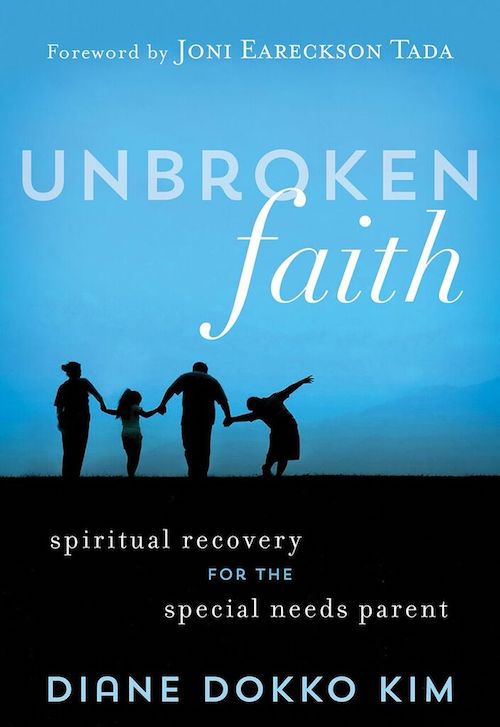
In her new book "Unbroken Faith," Diane Dokko Kim wrestles with a question parents ask after a child's diagnosis: How is disability a blessing?

How could God let this happen? I can’t do this! How can my child have a meaningful life? Where is God in all this? When a parent hears that their child has a disability, hearts and hopes are broken. But faith doesn’t have to be. A Different Dream welcomes guest blogger, Diane Dokko Kim, author of Unbroken Faith: Spiritual Recovery for the Special Needs Parent, for a 3-part series. Today, she graciously shares an excerpt from her new book. Enjoy!

“God won’t give you anything you can’t handle.”
“Special-needs children are a blessing!”
“Trust God. He is good!”

Just stop. Please. In the face of “Severely disabled. Mentally retarded. Prognosis unknown,” how is disability a blessing? How is God still good? Our son was cognitively disabled; and I was now spiritually crippled. That single piece of paper severed all existing connections between my head and heart. Any preexisting conditions, convictions, and even feelings went numb as disillusionment and spiritual death hovered near. My faith was flat-lining. We both required urgent and intensive intervention.

God Understands?

Spiritual surgery is not without pain. Pat Sunday-school answers are as helpful as a Band-Aid plastered hastily over a stab wound. Superficial solutions don’t stick. Shallow treatment doesn’t mend torn tissue or flush out the emotional pus festering deep within. Sometimes you have to cut deep to really deal with what’s going on inside.

But what does the Bible have to do with the modern-day, gritty realities of raising a child with a disability? How is this antique, archaic book relevant? What does God know about special needs parenting? His Child was perfect, wasn’t He? An impenetrable, omnipotent Being didn’t have to contend with chronic fatigue, isolation, or a lack of resources and support. After all, He has all the power of the universe at His disposal. What does God really understand about this?

Consider This

In Genesis, He knows the joyful anticipation of beloved children. He prepared lavishly for their arrival, too, just like every eager parent. He also understands the heartache when those children don’t turn out as expected, despite having done everything right to guarantee they do. And His heart was filled with pain.

In Isaiah, He’s the Father of a wounded Son who was bullied, misunderstood, rejected, and scorned. He shares my outrage, feral protectiveness, and demand for justice. He advocates for us. Oh, how He fights for us! He knows when we are unable to fend for ourselves. His strength is perfect in our moments of abject weakness. He vindicates
to make our righteousness shine like the noonday sun.

At Gethsemane, He felt completely alone, carrying a burden no one could understand. He experienced utter disappointment when trusted people weren’t there for Him at His time of need. He cried out prayers in blood, sweat, and tears . . . that were met with silence. He, too, pleaded for deliverance but received the answer no. He even uttered the same words I’ve cried out in times of darkness and despair: “My God, why have you forsaken me?” (Mark 15:34).

At the cross of Calvary, for all His power and authority—being in very nature God—He demonstrated submission to “not my will, but thine” (Luke 22:42 KJV). He proved “my grace is sufficient for thee” (2 Corinthians 12:9 KJV).

Ultimately, He demonstrated His power over death and despair. He proved that what the enemy intended for evil, God can redeem for good (Genesis 45:5). He proved that He is a redeeming God, the only kind of God He knows how to be.

Part 2
Part 3

Do you like what you see at DifferentDream.com? You can receive more great content by subscribing to the quarterly Different Dream newsletter and signing up for the daily RSS feed delivered to your email inbox. You can sign up for the first in the pop up box and the second at the bottom of this page.
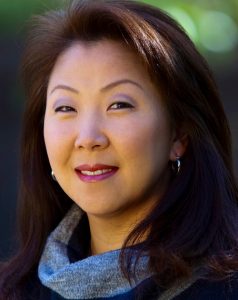
Diane is the mother of a child with multiple disabilities including autism and ADHD. Since 2008, she has served as a special needs ministry consultant, partnering with Joni and Friends as a national speaker, trainer and ministry ambassador. Author of Unbroken Faith: Spiritual Recovery for the Special Needs Parent (Worthy, April 2018), her work has been featured in Orange’s Parent Cue, Parenting Magazine, Dandelion Magazine, and Not Alone. Diane’s passion is to encourage weary parents and empower them to experience the timeless relevance of God’s Word applied to the gritty realities of special needs family life. She and her husband, Eddie, live in the heart of Silicon Valley with their two sons. Connect with her on Facebook or www.dianedokkokim.com where she blogs on being wrecked, redeemed and repurposed.
 

The Importance of Community for Parents of Kids with Complex Medical Needs, Pt. 1

The Importance of Community for Parents of Kids with Complex Medical Needs, Pt. 1

The Importance of Community for Parents of Kids with Complex Medical Needs, Pt. 1

Guest blogger Jill Seaney is back with advice for new parents of kids with complex needs. The advice comes from her personal experience since her son was born three years ago. She’ll be back with ideas of how to find the best community for you in the near future.

When my son was born with complex medical problems, I faced a set of challenges I never expected. I immediately turned to my husband who was a pediatric nurse at the time and to the surgeons, physicians and nurses caring for my son with my questions and concerns.

In the beginning, these resources were a wealth of knowledge. But what I didn’t realize is that medical professionals are great resources, but that what moms really need long term is a support group of other parents walking the same path. Moms and Dads of kids with complex medical needs live in the trenches all day, every day, and have a vast knowledge of what its like to raise a kid similar to mine. Most medical professionals or friends/family don’t have that same knowledge simply because most of them don’t live and breath it 24 hours a day.

Medical professionals can teach me about anatomy and symptoms, fixes and long term side effects. But they cannot give me the practical advice and tools needed to fight our every day battles. The same goes for friends and family. I can rely on them for advice about potty training or sleep training their children. But they cannot offer the advice of what it’s like to do those things with a kid with complex medical needs that is so different from their own.

After we brought my son home from the NICU, I felt isolated because I wasn’t experiencing newborn life the way I had imagined. My caregiving duties became more and more overwhelming. I spent a lot of time online reading other parents blogs, joining Facebook groups for parents and individuals with the same birth anomalies as my son, and scouring the web for resources. I was searching for anyone who was walking a road similar to mine as a mom with a 3-week-old newborn who had already faced major surgery, was facing more surgeries and had a multitude of life long medical complexities. I can’t describe the feeling of chatting with moms who were or had been in my shoes. They understood the worries, the medical terminology and had advice to give.

I’m so thankful I figured out the importance of community for parents raising kids with complex medical needs. I am in at least 15 different groups currently and have gained so much knowledge from other parents. I can get on these groups 24 hours a day and ask questions that doctors or friends and family aren’t able to answer. Within minutes I typically have answers from more than one parent.

These groups have a wealth of knowledge and a camaraderie of parents with a mutual trust and respect. It’s a breath of fresh air to communicate with other moms who understand my fears. Its been a beautiful ride to go from being the new parent with all the questions to now being one of the veteran parents who answer them. I feel fortunate and thankful for the friendships made along the way. I can’t imagine momming without them!

My advice for new parents  is to seek out a community of other moms and dads raising kids with complex medical needs similar to your child’s. You will find solace, peace of heart and mind, and many incredible parents and kids to cheer you on.

Part 2

Do you like what you see at DifferentDream.com? You can receive more great content by subscribing to the quarterly Different Dream newsletter and signing up for the daily RSS feed delivered to your email inbox. You can sign up for the first in the pop up box and the second at the bottom of this page.

By

Jill lives in Tucson, AZ with her husband Jeff and their son Blake. She worked in Human Resources up until 2014 when her son was born with VACTERL Syndrome which included EA/TEF. Jill resigned to care for her son full time. Later he was also diagnosed with a Congenital Diaphragmatic Hernia and Eosinophilic Esophagitis. Jill’s personal blog (Beloved Blake) documents his surgeries and health challenges, their family struggles, and Blake’s milestones. Jill loves writing and teaching others about what it’s like raising a child with complex medical needs. She wants to be a blessing to other parents just starting on this journey.

Author Jolene Philo

Archives

Categories

Subscribe for Updates from Jolene

Related Posts

God’s Enabling Grace for Parents of Kids with Special Needs

God’s Enabling Grace for Parents of Kids with Special Needs

God’s Enabling Grace for Parents of Kids with Special Needs

God’s enabling grace wasn’t what my husband and I expected to see when we attended Dr. Paul Tripp’s marriage video series, What Did You Expect?,  at our church. After all, we reassured one another, we weren’t there to shore up our marriage. But as part of the research for my new book for special needs families that includes a marriage component.

As you might expect, the Holy Spirit used the series to reveal that realigning to His will certain attitudes within our marriage, rather than my book research, was the primary reason He’d prompted us to attend. It was a time of conviction and repentance for both of us, and our marriage benefited from it.

But, in what I have come to comprehend is the economy of God, He also used Dr. Tripp’s words in the final Sunday morning video to assure us and other couples of His constant presence and love. Dr. Tripp reminded us of a truth that brought me to tears because I immediately saw that it applied not only to the tough spots in our marriage, but to the hard places we’d experienced while parenting our son with special needs.

Dr. Tripp called this truth God’s enabling grace.

I was too busy hunting for a tissue as the words soothed my weary, convicted soul to scribble down Tripp’s exact definition. But an excerpt from his post about 6 kinds of grace explains it well:

“…grace reaches us where we are and takes us where God wants us to be. You see, God’s not simply content to give us salvation and then leave us alone until eternity. Rather, He wants us to become more like His Son and work for the furtherance of His Kingdom right here, right now.

But remaining sin leaves us lame and weak and unable. God’s grace intervenes to give us power and strength. It’s gives us the ability to do what we’re called to do but what we could never do on our own.”

To ready the rest of this post, go to the Key Ministry’s blog for special needs parents.

Do you like what you see at DifferentDream.com? You can receive more great content by subscribing to the quarterly Different Dream newsletter and signing up for the daily RSS feed delivered to your email inbox. You can sign up for the first in the pop up box and the second at the bottom of this page.

By

Jolene Philo is a published author, speaker, wife, and mother of a son with special needs.

Author Jolene Philo

Archives

Categories

Subscribe for Updates from Jolene

Related Posts

Why I Wrote Loving Lindsey: An Interview with Linda Atwell

Why I Wrote Loving Lindsey: An Interview with Linda Atwell

Why I Wrote Loving Lindsey: An Interview with Linda Atwell

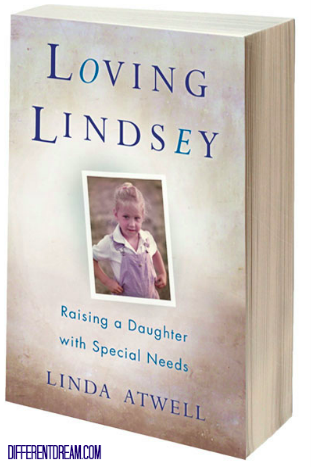
Different Dream is pleased to welcome Linda Atwell as today’s guest blogger. Linda is here to talk about and answer our questions about her new book, Loving Lindsey: Raising a Daughter with Special Needs. We hope you enjoy getting to know Linda as much as we did and that, perhaps, you’ll purchase her new book.

Why Linda Atwell Wrote Loving Lindsey: An Interview with the Author


Question 1: Did you know immediately after birth that your daughter would have special needs?

When I was pregnant, the only baby my mind ever visualized was a healthy one, and when my daughter was born, I thought my dearest dream had been granted. Lindsey had impressive Apgar scores—the evaluations taken right after a baby is born that tells doctors and nurses how well your infant did coming into the world, then five minutes later to find out how she was adjusting to her new environment. Lindsey scored eight and nine—out of ten. Then she excelled in her early development. Based upon the developmental milestones, she rolled over, crawled, talked, and even walked on time.

Question 2: So, when did things change?

At 16 months, my inquisitive, beautiful toddler suffered a grand mal seizure and developed essential tremors. Although she’d had no visible problems with gross motor skills, fine motor skills confounded her. She could not coordinate the small muscle movements in her fingers, hands, or eyes. She wasn’t making friends or keeping up with her peers in school. In the 1980s, when Lindsey was 6, doctors at Oregon Health Science University diagnosed her as “mildly mentally retarded” (a term I despise and rarely use)—from an unidentified syndrome, but most likely from an undiagnosed birth defect. They told me that when she became an adult, she would likely live in a group home.

Question 3: What lifestyle did you hope for your daughter’s future?

After coming to terms with my daughter’s diagnosis, I learned that what I wanted more than anything (just like the mother of a typical kid), was for my girl—despite her intellectual disabilities—to live an independent life, to have purpose, and to find love. Fortunately, Lindsey wanted those things for herself. In fact, she demanded them. But with such goals, there are also challenges.

Question 4: How did Lindsey handle independence?

Lindsey plunged into adulthood and experimented with sex, decided to have a tubal ligation, then ran away with a man more than twice her age to live in a house with tinfoil taped over the windows. As she grew closer to Emmett, she withdrew from us. But because she was twenty, and it was not illegal in Oregon to pick a bad partner, law enforcement could not help us. It took 4 1/2 years to bring our daughter home.

Question 5: Why did you write Loving Lindsey?

Initially, I felt the need to get our story down on paper. But as I wrote, I wondered if our story might have turned out differently if I’d been aware of Lindsey’s rights as an adult, or the traits of people who prey on our most vulnerable young adults—whether or not they have a mental disability. So by sharing, I hoped it would help others.

Question 6: What do you hope the reader learns from your book?

Our story includes moments of love and pride, as well as the times our family struggled. It shares the successes people with special needs can achieve when offered parental, educational, and community support. Although the challenges for independent living will vary from child to child, and family to family, kids with special needs often have more abilities than we might initially think. Our daughter continues to surprise us all the time. And, truth be told, that is the story I really wanted to tell.


Do you have questions for Linda or about her book, Loving Lindsey? Leave them in the comment box if you like!


Do you like what you see at DifferentDream.com? You can receive more great content by subscribing to the quarterly Different Dream newsletter and signing up for the daily RSS feed delivered to your email inbox. You can sign up for the first in the pop up box and the second at the bottom of this page.


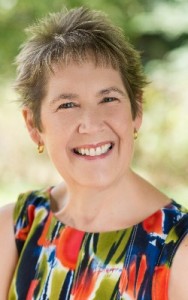
Linda Atwell earned her BA from George Fox College. She owned a successful home décor business for ten years before switching to adjusting catastrophe insurance claims and climbing roofs for a living. Now she writes award-winning work that has appeared in print and online magazines. Her first book, Loving Lindsey: Raising a Daughter with Special Needs was recently released by She Writes Press. Linda irregularly writes a blog about her daughter with special needs. She hopes to get 50 stamps in her passport before it expires. Linda and her husband John live in Silverton, Oregon. They have 2 incredible adult children.
 

By

Jolene Philo is the author of the Different Dream series for parents of kids with special needs. She speaks at parenting and special needs conferences around the country. She’s also the creator and host of the Different Dream website. Sharing Love Abundantly With Special Needs Families: The 5 Love Languages® for Parents Raising Children with Disabilities, which she co-authored with Dr. Gary Chapman, was released in August of 2019 and is available at local bookstores, their bookstore website, and at Amazon.

Author Jolene Philo

Archives

Categories

Subscribe for Updates from Jolene

Related Posts

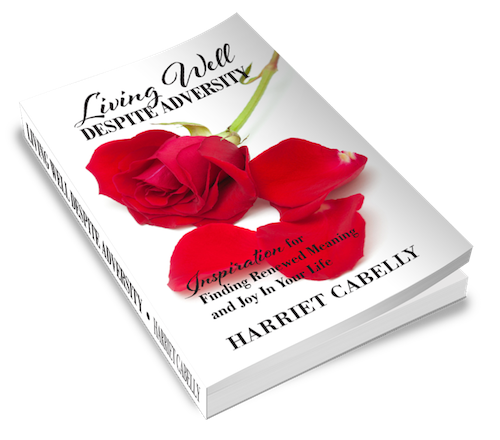
Living Well Despite Adversity

Living Well Despite Adversity

Living Well Despite Adversity

Different Dream welcomes author Harriet Cabelly as today’s guest blogger. She’s here for an interview about her new book, Living Well Despite Adversity, for parents and caretakers of loved ones with special needs. 

Question #1: Why did you write Living Well Despite Adversity?

The idea that we all go through bad things and yet some people come through and live on well while others seem to crumble, has been a passion of mine for as long as I can remember. Since no one gets through this life unscathed–loss and pain is part of the human condition–the key is how to live well despite….

When my middle daughter miraculously survived and fully recovered from her medical crisis, I looked for something positive to do with this miracle. This book is an outgrowth of both my life theme and what I consider to be my new lease on life. This has been part of my  personal post traumatic growth.

Question #2: There are some well-known people in this book. How did you get them to do an interview for you?

The simple answer – I asked! My new and evolved way of living has become going beyond my comfort zone, taking risks and not being afraid of being told no. I did stop at Oprah though; I didn’t ask her. Maybe for my next book of interviews!

Question #3: What are some key concepts you’d like your readers to take away?

The main concept is that it’s not about circumstance; it’s about our response to our situation. That’s what got me interested in this theme to begin with. I would see similar things happen to many people. I became fascinated and inspired with how it was that some could rise above and carry on and others would remain in the depths of despair? So then it’s not necessarily what happens to us; it’s how we respond. I first learned of this concept in Viktor Frankl’s book, Man’s Search for Meaning.

Another key idea is that of choice. We can choose how we respond and we can shape our attitude. It’s not just how and what we’re born with.

Which brings me to the last point: we can grow our resilience. It’s not a fixed amount in our inborn or genetic pool. We all have internal strengths which we can build on and bring forth more to our benefit.

Question #4: What are you hoping readers will get from this book?

I’m hoping they will get inspiration from those they read about; but more that that they will see that it is possible to cope and live on well through their personal challenges. I hope they take on some of the ideas and concepts and begin to incorporate and apply them in their lives. I want them to feel hopeful in their own difficulties – that there can be light once again with intentional actions and ways of living.

Question #5: Who will this book appeal to?

Since the theme of dealing and living with hardships and loss is universal. I think it can appeal to everyone. As I said initially, we all have rough and painful things to contend with in our lives, therefore the array of various circumstances and adversities that are highlighted here will hopefully resonate with many, many people. The ideas and tools are applicable to all. And life lessons abound!


Do you like what you see at DifferentDream.com? You can receive more great content by subscribing to the quarterly Different Dream newsletter and signing up for the daily RSS feed delivered to your email inbox. You can sign up for the first in the pop up box and the second at the bottom of this page.

Harriet Cabelly is a social worker, speaker and workshop facilitator who has appeared on ABC News as a parenting coach and on WOR Radio’s Change Your Attitude, Change Your Life show as a guest coaching expert. As a positive psychology coach, Harriet journeys with her clients as they cope with and grow beyond their painful situations.
By

Jolene Philo is a published author, speaker, wife, and mother of a son with special needs.

Author Jolene Philo

Archives

Categories

Subscribe for Updates from Jolene

Related Posts

Broken Brain, Fortified Faith: Shining the Spotlight on Schizophrenia

Broken Brain, Fortified Faith: Shining the Spotlight on Schizophrenia

Broken Brain, Fortified Faith: Shining the Spotlight on Schizophrenia

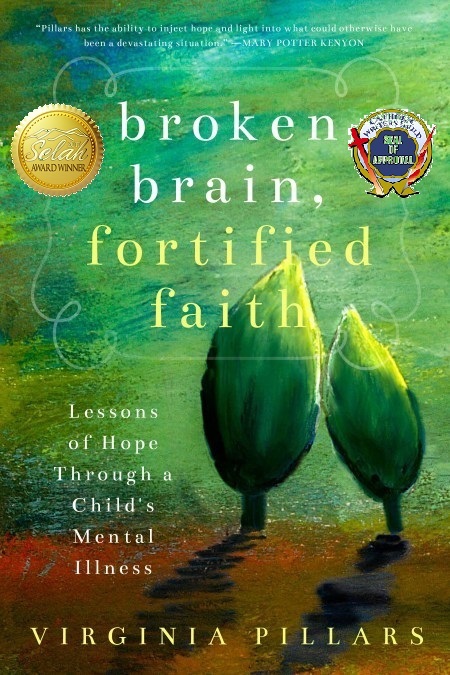
Mental illness resources have become more plentiful in the past few years. Today’s post highlights Broken Brain, Fortified Faith: Lessons of Hope Through a Child’s Mental Illness. The book was written by Virginia Pillars, the mother of a young woman who began exhibiting symptoms in her late teens and early 20s.

I had the honor of reading an advance copy and wrote the following endorsement:

Virginia Pillars tells the story of her adult daughter s descent into schizophrenia with unflinching honesty in Broken Brain, Fortified Faith. But Pillars does more than tell how family, friends, and mental health professionals rallied around one young woman, providing the treatment and support her daughter needed to regain her mental health and learn to manage her condition. The author also educates readers about how the disease affects the brain, how it is treated, and what people must do financially and legally to protect loved ones until they recover from the disease. Best of all, Pillars shares her thoughts, doubts, and faith struggles, as well as the comfort and strength she found as she prayed for her daughter and saw those prayers answered in unexpected ways. Broken Brain, Fortified Faith is an approachable and highly readable book for anyone who wants to learn more about schizophrenia and how to support those dealing with it. I highly recommend it.

But you don’t have to take my word for it. Broken Brain, Fortified Faith has received several honors since its release in September of 2016. In April, it received the Catholic Writers’ Guild Seal of Approval. Then, in May, it won the Blue Ridge Writers’ Conference Selah Award in the memoir category.

What makes this book a powerful and valuable resource is Pillar’s unflinching recounting of the challenges her family faced while trying to find effective treatment. In addition to strong story telling, Pillars uses the research she conducted while searching for treatment to effectively explain this disease and the therapies used to control it. Woven into every page is the story of how her faith sustained and motivated her to advocate for her daughter and find hope in overwhelming circumstances.

If you’re looking for encouragement, plain talk, and information about schizophrenia, I encourage you to purchase the paperback or Kindle edition of Broken Brain, Fortified Faith.

By

Jolene Philo is a published author, speaker, wife, and mother of a son with special needs.

Author Jolene Philo

Archives

Categories

Subscribe for Updates from Jolene

Related Posts