5 Day Programs for Those with Special Needs Made Me Cry Tears of Joy

5 Day Programs for Those with Special Needs Made Me Cry Tears of Joy

5 Day Programs for Those with Special Needs Made Me Cry Tears of Joy

5 day programs for those with special needs don’t always lead to to tears of joy. But when guest blogger Jim Gaven showed up for on his last day at a non-profit he worked for, he began to cry. Here’s why.

A clear box sat on a small raised platform next to my office computer on my last day of work. It was a collection of thank you card and well wishes from many of the individuals I served and supported at the 5 Day Program for those with special needs I had conducted across New Jersey for the past 4 years. The programs were established to better serve and support adults with developmental disabilities in achieving their goals–to become the best versions of themselves through developing life skills and taking on more independent responsibilities. 

Each program addressed a specific need. For instance, one was a mainly medical day program, while another was a strictly behavioral program. One encouraged independent living. One was at a thrift shop, another was more community-based one, and one was at a bakery. Even though they operated separately, they were connected in their mission of service and independence for each individual. 

These programs were 30-45 minutes away from each other. To collect these handwritten notes, the effort had to have been put into place months earlier. I couldn’t believe it. Each note filled my heart with gratitude, love, peace, and joy. The deeper I dove into the box, the more intense the emotions were. I had tried to impact their lives, teach them about music–how to play instruments and how to sing. More often than not, we talked about life and what mattered to them.

They matched and surpassed what I did for them. I realized the 5 day programs for those with special needs didn’t make me cry. The people in the programs did.In honor of them, I published a picture book and wrote a song, both titled Just Like You and Me. You’ll find the book here and the song here

Watch out, they might just make you cry!

Do you like what you see at DifferentDream.com? You can receive more great content by subscribing to the monthly Different Dream newsletter and signing up for the daily RSS feed delivered to your email.

By

To learn more about Jim and his business which exists to improve the quality of life for those in a time of need, head to Key of Awesome Music. You can follow and share Key of Awesome Music’s on Instagram and Twitter here: @keyofawesomemusic. You’ll find free daily Facebook Live programs geared towards and children and those with developmental disabilities at his Facebook page. To sign-up for the monthly newsletter go to http://eepurl.com/dwPEGH. To contact Jim, email him at jim.gaven@gmail.com.

Author Jolene Philo
Archives

Categories

Related Posts

Transitioning Between Rhythms and Tempos

Transitioning Between Rhythms and Tempos

Transitioning Between Rhythms and Tempos

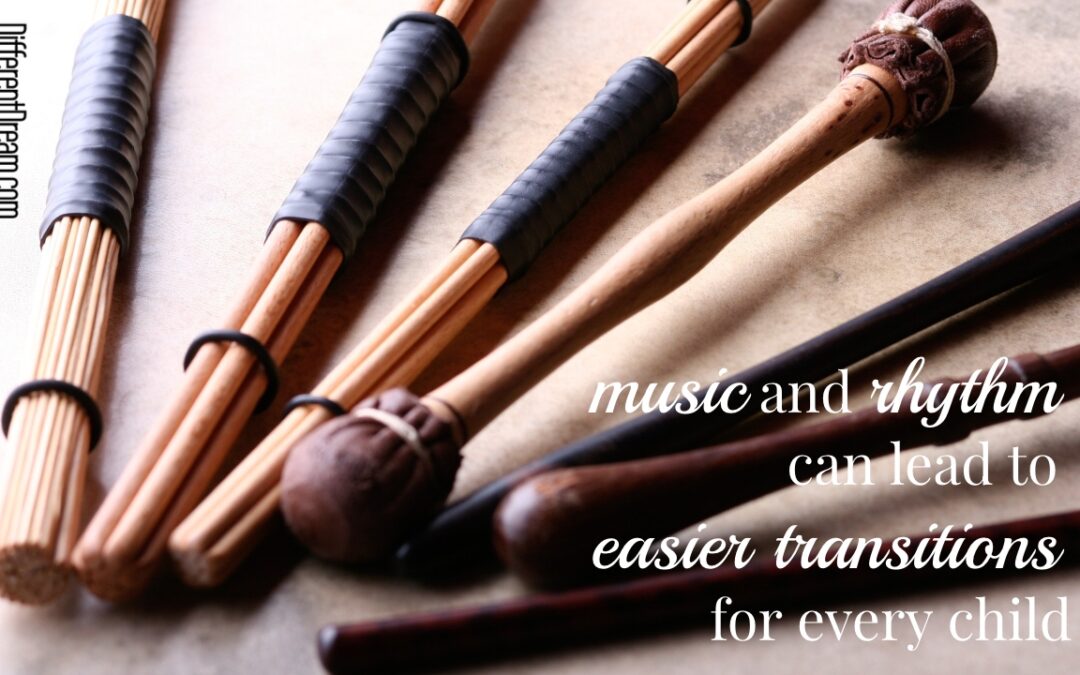
Transitioning Between Rhythms and Tempos is the brainchild of music therapist, Jim Gavin. In this post he explains what transitions are, what’s included in the class he’s developed, and who can benefit from it.

We are creatures of habit, and routines are key to being the best version of ourselves. This is why transitioning can be difficult for the both the neuro-typical person and a person with special needs or disabilities. Difficult transitions could be from one activity to the next (arts and crafts to lunch time), from one day to the next (Tuesday night into Wednesday morning), or from one holiday to another (such as Valentine’s Day to St. Patrick’s Day). Other transitions could be from season to season or going from 5 years old to 6. 

During 10 years of being in the human services field, I’ve found that the more we prepare and make a plan for what we intend to do next, the better off we are if something goes awry. With planning, we can adapt to a situation in real time in a calm, cool, and collected way. If we do this successfully, we not only keep the situation under control for ourselves, but also for those around us.

This is one way I build trust with those I serve and support.  

It is the main reason I created music-related activities to practice rhythm, melody, and harmony, as well as how to deal with out-of-control, chaotic situations. Instead of flying off the handle, practice helps my clients take a deep breath, realize that this too shall pass, through the difficult time with more ease and peace. 

The class I’ve created, Transitioning Between Rhythms and Tempos which is available on Udemy, takes the idea of transitioning between activities and occasions in life and applies it to actual music making at a basic rhythmic level.

Before I end in-person or virtual individual/group classes, I give those I serve a head’s up to help them transition. Something to the effect of:

This is the last song before I say goodbye.
Thank you for letting me spend time with you today.
It’s been so much fun!
Looking forward to the next time we see each other.

Phrases like these that make people feel comfortable knowing that what we’re doing is about to end, and that’s okay.

Do you like what you see at DifferentDream.com? You can receive more great content by subscribing to the monthly Different Dream newsletter and signing up for the daily RSS feed delivered to your email.

By

To learn more about Jim and his business which exists to improve the quality of life for those in a time of need, head to Key of Awesome Music. You can follow and share Key of Awesome Music’s on Instagram and Twitter here: @keyofawesomemusic. You’ll find free daily Facebook Live programs geared towards and children and those with developmental disabilities at his Facebook page. To sign-up for the monthly newsletter go to http://eepurl.com/dwPEGH. To contact Jim, email him at jim.gaven@gmail.com.

Author Jolene Philo

Archives

Categories

Related Posts

Fostering Communication and Connection Between Caregiving Parents

Fostering Communication and Connection Between Caregiving Parents

Fostering Communication and Connection Between Caregiving Parents

Fostering communication and connection is crucial for parents of kids with special needs and disabilities. Several couples interviewed for Sharing Love Abundantly in Special Needs Families: The 5 Love Languages® for Parents Raising Children with Disabilities said they had to learn to tend to their relationship with one another first in order to meet their kids’ needs effectively.

As parents raising kids who require ongoing care, our attention and resources frequently go to our children first. Sometimes that can’t be helped. But there’s a tendency, as time goes on, to make a habit of paying attention to our kids before our spouses. According to the parents interviewed for Sharing Love Abundantly in Special Needs Families it doesn’t have to be that way. They said that the basic love language concepts are tools for fostering communication and connection for these 3 reasons:

  1. The love languages empower couples to make marriage a top priority.
  2. The love languages enhance communicate even in the thick of caregiving.
  3. The love languages make couples more intentional and observant.

To use the love languages, couples first need to learn one another’s love language. The easiest way to do so is by taking the free online quiz at 5lovelanguages.com. Once you know each other’s love language, you can start to speak it using ideas from Sharing Love Abundantly in Special Needs Families that are tailored for fostering communication and connection between caregiving parents. Here are a few to get you started.

Words of Affirmation. Compliment appearance, write and mail an old-fashioned letter, send encouraging texts or emails throughout the day.
Quality Time. Schedule coffee dates on the deck or by the fireplace, read a book out loud together, play a silly board game.
Gifts. Buy a single slice of dessert to share after the kids are in bed, buy small items at the dollar store, give a gift card to a favorite coffee shop.
Acts of Service. Gas up the car, get up early and pack your spouse’s lunch, grocery shop.
Physical Touch. Kiss and hug before going to work, exercise together, hold hands while you pray.

For more ideas like these, check out the book Sharing Love Abundantly in Special Needs Families. For ideas about how use the love languages with your kids who have disabilities and special needs, come back in February for the next post in this series.

Other articles in this series:

The Love Languages and Special Needs Families: A Good Combination

Basic Love Language Concepts to Ease Stress and Increase Joy in Caregiving Families

Threats to Caregiving Marriages and How To Fight Them 

Love Is a Child’s First Language

Determining the Love Language of a Child with Special Needs or a Disability 

Ways to Speak Words of Affirmation and Quality Time to Kids with Special Needs

Speaking Healthy Physical Touch to Kids with Special Needs

Using the Love Languages with Siblings of Kids with Special Needs and Disabilities 

Extended Family Members Can Use the Love Languages to Encourage Caregiving Parents

Communicating Your Child’s Love Language to Medical Professionals

Communicating Your Child’s Love Language to Educators 

Do you like what you see at DifferentDream.com? You can receive more great content by subscribing to the monthly Different Dream newsletter and signing up for the daily RSS feed delivered to your email.

By

Jolene Philo is the author of the Different Dream series for parents of kids with special needs. She speaks at parenting and special needs conferences around the country. She’s also the creator and host of the Different Dream websiteSharing Love Abundantly With Special Needs Families: The 5 Love Languages® for Parents Raising Children with Disabilities, which she co-authored with Dr. Gary Chapman, was released in August of 2019 and is available at local bookstores, their bookstore website, and at Amazon.

Author Jolene Philo

Archives

Categories

Related Posts

The Special Needs Roller Coaster

The Special Needs Roller Coaster

The Special Needs Roller Coaster

The special needs roller coaster wasn’t guest blogger Katie Espinoza’s ride of choice. But she, her husband, and their baby climbed on in October of 2017. Katie’s found a way to make the ride easier for other parents too. I hope you enjoy this story from one of my former fourth grade students!

As a mother you only ever hope the best for your children. You never hope for a special needs roller coaster. My ride began when I was 27-years-old and in the military. I was the only woman in the Best Warrior Competition, placing 7th out of 15. About a week after this, I found out I was going to be a mom for the first time. My husband-to-be and I weren’t expecting this bundle of joy, but we embraced every bit of it. At our 20 week ultrasound we were excited to see if we were going to have a boy or girl. After my ultrasound they took us into a room and said the doctor wanted to talk to us. She told us our son would be born with a heart condition called Hypoplastic Left Heart Syndrome.

Our lives stood still. We left the doctor’s office with tears running down our faces. I felt as though I was on a roller coaster. The wind whipping through my hair, twirling and flicking as I climbed higher and higher. I reached the top, and my fears emerge as I looked over the edge knowing that was no going back now. My stomach flipped and soared high inside of you until gravity lunges it back down. I was jolting every which way. Should I scream? Should I laugh? Should I cry?

My husband and I took the remainder of that day off and rode the special needs roller coaster.  We cried into each other’s arms until no more tears could leave our bodies. 

A few days later the cardiologist told us that this defect meant that our son would only have half of his heart. Our baby boy would be taken from us immediately after he was born to be hooked up to tubes and monitors. He gave us the choice of terminating the pregnancy. My first thought was to yell at him. Once I calmed down a bit, the rational side of me understood why he would offer that option to people. And then like the whiplash of the special needs roller coaster hit me all over again. It dawned on me that God planned all of this. He chose us to be parents to a special needs child. Some parents aren’t able to. Not because they aren’t capable, just where their lives are at that time. I am not saying we agree with termination, but once you are hit with news of a special needs child, all of that judgement goes away.

We were blessed in our journey to be able to take care of Elijah when he was born in October of 2017. So far, he’s overcome 3 open heart surgeries with 1 more down the road and a heart transplant at some point is likely. Our life has been full of monitors, beeps, alarms, checking breathing in the night, checking pulse ox and capillary refills. It has also been full of laughter, fun, swings and slides, dirt piles and vacations.

We promised Elijah from day one that heart defect or not we would not make him live in a bubble, even though he is susceptible to illness. We want him to see the world and live as normally as possible. He’ss doing well and is the orneriest spitfire you will ever meet. We say his stubborn side is what has kept him alive so far. His third birthday is in October and we can’t wait to celebrate it and many more with him. 

Along this journey we came across a Mended Heart Bear© to be exact. It was made by a company called Bummer Bears©. Elijah loves this bear, because it has a zipper with a heart that is stitched in the middle. I kept up with their website and Facebook page throughout the next year or two. Next thing we saw was that Bummer Bears was going into hibernation. I knew immediately that I had to purchase the business. A year later, I became the proud owner of Bummer Bears© to help other children and families on the special needs roller coaster.

Do you like what you see at DifferentDream.com? You can receive more great content by subscribing to the monthly Different Dream newsletter and signing up for the daily RSS feed delivered to your email inbox. You can sign up for the first in the pop up box and the second at the bottom of this page.

By

Hi, my name is Katie Espinoza. I wear many hats in life: I’m a chef, a chauffeur aka “Mom Taxi”, a kisser of boo boos, a cheerleader in the stands, a maid, a laundromat, a master of the French braid, a dishwasher, a sippy cup filler, the general contractor on any project at our house, a veteran, a business owner, a military wife to a supportive husband, and the best thing in the world…. a mother to 3 beautiful stepdaughters, Elijah, and his little sister. 

Author Jolene Philo

Archives

Categories

Related Posts

Moriah and Friends: A New Kind of Book Series

Moriah and Friends: A New Kind of Book Series

Moriah and Friends: A New Kind of Book Series

What is your new series, Moriah and Friends?

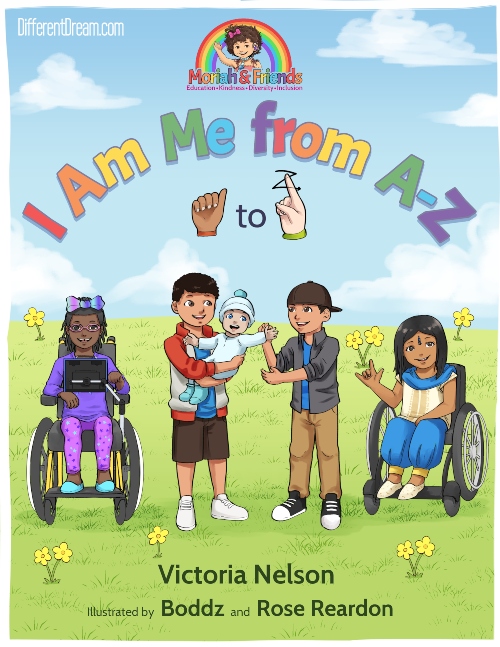
Moriah and Friends is a disability-inclusive children’s book series that incorporate the themes of Education, Kindness, Diversity, and Inclusion. So far, the series consists of Hiya Moriah and I Am Me from A-Z, but I aim to create more books in the future.

My hope for this series is that children with disabilities can see themselves represented in the characters, and will be able to identify with them. There aren’t too many books out there that represent children with trachs, g-tubes, or with augmentative and alternative communication devices – just to name a few. I provide education around many medical and adaptive devices, and try to have the illustrations detailed so that children can learn about them and recognize them in their surrounding world. I believe knowledge and empathy are powerful tools, and can help break down social barriers we have when making friends who are different from us. Lastly, the underlying themes encourage kindness and respect towards every human being, and celebrate the worth and value in everyone – no matter what our differences may be.

What is I Am Me from A-Z about?

It’s a book that celebrates the value in every child and the power in every word! Moriah and Friends take you on an empowering journey through the alphabet–in sign language. Through a series of positive affirmations, children will learn to recognize their own amazing qualities and appreciate the things that make everyone wonderfully unique!

Like Hiya Moriah, this book provides a bonus picture glossary of medical and adaptive devices, an ASL Alphabet chart, and an activity sheet where you get to celebrate the way you were made to be with positive words from A-Z.

How is this book different than Hiya Moriah?

Hiya Moriah really focuses on Moriah’s journey with Charge Syndrome, and encourages children to say “hiya” when they meet a boy or girl like Moriah–rather than just stare or walk away, which was the response Moriah got many times throughout her life. I Am Me from A-Z includes Moriah and her friends, and focuses on the worth and value of every child through the power of “I am” affirmations. This time, I include children not only with various disabilities but those who are ethnically-diverse, including those who have impacted my own life. There is a section in the back of the book with pictures of featured friends in the story, and you might just recognize a few–or have the chance to meet some new friends. In the end, both books are educational, promote diversity, and encourage kindness and inclusion.

What inspired you to write I Am Me from A-Z?

My kids were behind the idea, dedication, and motivation for this book.

THE IDEA

I wrote the manuscript for I Am Me from A-Z before Hiya Moriah was even published (March 2019). I envisioned reading this book to Moriah, or any child for that matter, while in the NICU, wanting to speak truth over her as she was born fighting for her life. I believe there is power in the words we speak to our children – especially when they might be hearing a bunch of “can nots and never wills” in the hospital.

THE DEDICATION

But, I dedicated the book to my other daughter, Olivia, because I wanted to always remind her of her worth and value. I wrote this in simple, short verses so she could read the words herself, memorize them, and carry the affirmations with her throughout the day (as I saw she memorized Hiya Moriah).

THE MOTIVATION

Lastly, halfway through the creation process of the book, my youngest son, Shane, was diagnosed with autism. I couldn’t be more motivated to put out a book for him after being told that “God didn’t intend for him to be that way (autistic).” Instead of listening to others, Shane can hold onto the truth that God created him perfectly, that he is uniquely and wonderfully made, and that he is amazing…strong…eXtraordinary!

This book has my heart poured into it – on so many levels and layers. I hope and pray it impacts children on all different walks; that these words will encourage them and meet them wherever they are.

Victoria is sponsoring a drawing to win a free copy of I Am Me. To enter, leave a comment below about why you’d like to win by midnight on October 20, 2020.

Do you like what you see at DifferentDream.com? You can receive more great content by subscribing to the monthly Different Dream newsletter and signing up for the daily RSS feed delivered to your email inbox. You can sign up for the first in the pop up box and the second at the bottom of this page.

By

Victoria Nelson was born in Singapore, grew up in Southern California, and now lives in Arizona. She is married to her high school sweetheart, Justin, and is a proud mom to four children. Her youngest son has autism spectrum disorder, and her oldest daughter, Moriah, was born with CHARGE syndrome and passed away at the age of seven. Through her books, Victoria hopes to honor Moriah’s legacy, increase representation for children with disabilities, and encourage kindness and respect for all. For more information, visit www.moriahandfriends.com, Instagram @moriahandfriends, or Facebook page Moriah & Friends.

Author Jolene Philo

Archives

Categories

Related Posts

Called To Be Creative: How To Ignite Your Creativity

Called To Be Creative: How To Ignite Your Creativity

Called To Be Creative: How To Ignite Your Creativity

Called To Be Creative, Mary Kenyon Potter’s latest book speaks directly into the hearts of caregiving parents. Though none of her eight children have special needs and disabilities, she knows what it means to be overwhelmed and constantly stretched thin. She also knows how creative endeavors can lower stress and breathe life into ordinary days. In this post she offers 5 tips found in Called To Be Creative that caregivers can implement to reignite their creativity.

If you think creativity is for a chosen few, think again. Our Creator designed each of us to create. Scientific research supports this. According to the latest findings of neuroscience and psychology we are all wired for creating, and everyday life presents endless opportunities to express it.

Not only that but creating is good for us. In 2010 the American Journal of Public Health analyzed more than 100 studies that revealed practicing various forms of art improved medical outcomes and reduced depression, stress, and anxiety.

For years I struggled for the solitude and idleness that is conducive for someone who feels called to be creative. As a homeschooling mother of eight children, I’d immersed myself in a style of mothering that consumed my time and energy, much like my mother before me. Yet, despite raising ten children in abject poverty, Mom had been an example of incorporating creativity into everything she did; from canning garden produce to creating hand-stitched quilts, wall-hangings and woven rag rugs, and conducting a home business selling her paintings and woodcarvings.

When I abandoned pursuing a master’s degree to stay home with my growing family in 1988, I instinctively knew I’d need to pursue some creative endeavor to maintain a semblance of self and sanity. I chose writing, practicing the craft with a fervor that bordered on desperation. I’d write before children were awake and again that evening, writing by the glow of a nightlight next to a child’s bed as they fell asleep. My determination paid off: my first book was born in 1996, the same year as my sixth child. My seventh was released this year. If I’d waited until my children left home, I’d still be waiting; my youngest is seventeen.

If you’d like to reignite your creative self, here are five ideas from Called To Be Creative to get you started:

Redefine your definition of creativity. Being creative isn’t about producing a museum-worthy painting. It can be as simple as discovering innovative ways to use an abundance of zucchini from the garden, or artfully arranging photos on a scrapbook page. Creativity means thinking outside of the box to look at unique ways of doing things. 

Look to your childhood interests. Maybe it’s been so long since you’ve taken time for yourself, you’ve lost sight of your passions. What were you drawn to as a child? Spending time outdoors? Doodling? What activities did you get lost in? How can you replicate those in your adult world?

Allow yourself to fail. If you haven’t written or painted for thirty years, your initial attempts might not look very good. That’s okay. There is inherent value in the attempt and you’ll only get better as you practice.

Involve your family. Whether it’s rediscovering the lost art of baking or canning, drawing on your sidewalk with chalk, making construction paper hearts for your windows, or identifying plants on nature walks, there are creative endeavors you can pursue as a family.

Make (or take) the time. Creative space doesn’t magically appear in a busy life. If we wait until the timing is perfect to embark on a creative adventure, it could be a long wait. Enlist your spouse to take over house and childcare for a morning while you gift yourself with creative time. Make sure to reciprocate. Trade childcare hours with another parent. Schedule creative time and write it on your calendar like you would a doctor’s appointment. It’s that important.

Then watch what happens. Creativity begets more creativity, and before you know it, your life becomes the masterpiece God intended.

Do you like what you see at DifferentDream.com? You can receive more great content by subscribing to the monthly Different Dream newsletter and signing up for the daily RSS feed delivered to your email inbox. You can sign up for the first in the pop up box and the second at the bottom of this page.

By

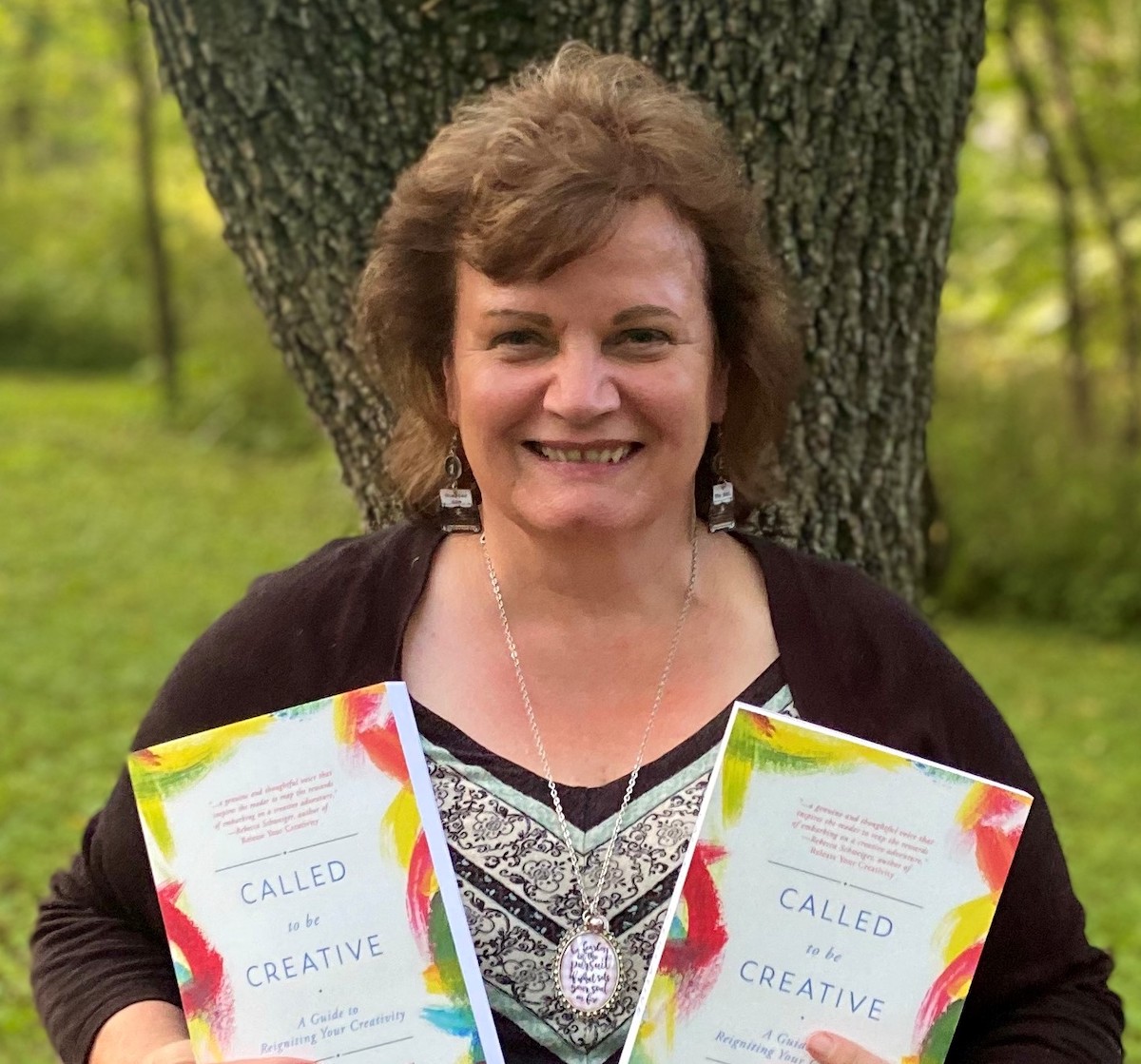
Mary Potter Kenyon lives a creative life in Dubuque, Iowa, where she lives with her youngest daughter and works as Program Coordinator for Shalom Spirituality Center. Mary is widely published in newspapers, magazines and anthologies, and the author of seven books, including the newly released Called to Be Creative: A Guide to Reigniting Your Creativity. Learn more about Mary at www.marypotterkenyon.com.

Author Jolene Philo

Archives

Categories

Related Posts