Using the Love Languages with Siblings of Kids with Special Needs and Disabilities

Using the Love Languages with Siblings of Kids with Special Needs and Disabilities

Using the Love Languages with Siblings of Kids with Special Needs and Disabilities

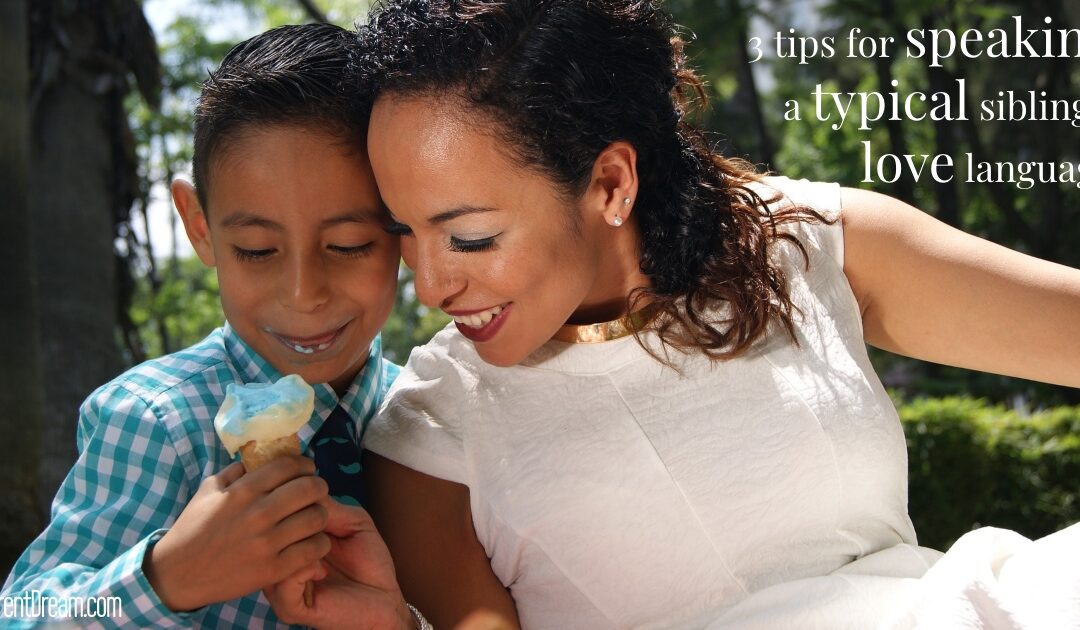
Using the love languages with siblings of kids with disabilities and special needs is important. That’s a statement caregiving parents can agree with. Implementing the practice, however, is an entirely different kettle of fish.

The needs of our kids with special needs feel more urgent.
They require more time.
They drain our energy.

And yet, our typically-developing kids are children, too.

They need our attention.
They need us to speak love in the language they understand best.

Thankfully, the parents I interviewed while writing Sharing Love Abundantly in Special Needs Families: The 5 Love Languages® for Parents Raising Kids with Disabilities shared many great ideas about how to do just that. Here’s a smattering of the wisdom found in chapter 7 of  Sharing Love Abundantly.

  1. Be intentional about creating one-on-one time. This can be as easy as taking the typical sib with you while running errands. Or taking them out to lunch once a quarter during the school year. You get the idea.
  2. Create family traditions. One family made Friday pizza and movie night. After pizza, everyone got into their pajamas. The whole family watched the first movie together. Then the siblings with special needs went to bed and the rest of the family watched a second movie.
  3. Encourage typical kids to use the love languages with their disables siblings. Teach them how to speak love in their siblings’ primary love language and give them time to practice. The encouragement and guidance you provide will be interpreted by the typical siblings as their primary love language. So it’s a win-win situation.

You’ll find many more stories and creative ideas about using the love languages with siblings of kids with disabilities and special needs in Sharing Love Abundantly. I encourage you to give them a try and to come back in a few weeks for the next post in this series, which will explore ways to share the love language concepts with friends and extended family.

Links to other articles in this series:

The Love Languages and Special Needs Families: A Good Combination

Basic Love Language Concepts to Ease Stress and Increase Joy in Caregiving Families

Threats to Caregiving Marriages and How To Fight Them 

Love Is a Child’s First Language

Determining the Love Language of a Child with Special Needs or a Disability 

Ways to Speak Words of Affirmation and Quality Time to Kids with Special Needs 

Ways To Speak Gifts and Acts of Service to Kids with Special Needs 

Speaking Healthy Physical Touch to Kids with Special Needs

Extended Family Members Can Use the Love Languages to Encourage Caregiving Parents

Communicating Your Child’s Love Language to Medical Professionals

Communicating Your Child’s Love Language to Educators 

Do you like what you see at DifferentDream.com? You can receive more great content by subscribing to the monthly Different Dream newsletter and signing up for the daily RSS feed delivered to your email.

By

Jolene Philo is the author of the Different Dream series for parents of kids with special needs. She speaks at parenting and special needs conferences around the country. She’s also the creator and host of the Different Dream websiteSharing Love Abundantly With Special Needs Families: The 5 Love Languages® for Parents Raising Children with Disabilities, which she co-authored with Dr. Gary Chapman, was released in August of 2019 and is available at local bookstores, their bookstore website, and at Amazon.

Author Jolene Philo

Archives

Categories

Subscribe for Updates from Jolene

Related Posts
Speaking Healthy Physical Touch to Kids with Special Needs

Speaking Healthy Physical Touch to Kids with Special Needs

Speaking Healthy Physical Touch to Kids with Special Needs

Speaking healthy physical touch to kids with special needs deserves its own post in this series for three reasons. First, this subject comes with a caution. Physical touch is not always loving in our broken world. As parents of vulnerable children, we must directly teach them the difference between good and bad touch. We must also protect them by inviting only trusted people into our kids’ worlds, watch over them diligently, and keep the doors open at all times.

The second reason is that many children with disabilities and special needs deal with sensory processing disorder (SPD). SPD falls into 2 categories.

  1. Sensory seekers are under-sensitive to sensory input and look for more stimulation. A sensory seeking child doesn’t want just a hug. He wants a bear hug.
  2. Sensory avoiders experience sensory input intensely. They avoid loud noises, strange textures, bright lights, unusual flavors and more.

The third reason is that speaking physical touch to our kids with disabilities has a broader scope that you might think. The book, Sharing Love Abundantly in Special Needs Families: The 5 Love Languages® for Parents Raising Kids with Disabilities upon which this series is based, provides a plethora of surprising ways of speaking healthy physical touch to kids. Here are a few favorites:

  • Putting hands on a child’s shoulders during conversation to help her focus on what’s important and ignore distractions.
  • A foot or hand rub.
  • High fives, fist bumps, and handshakes.
  • Hold hands when praying before meals and at bedtime.
  • A basket of fidget toys to use during homework or church services.
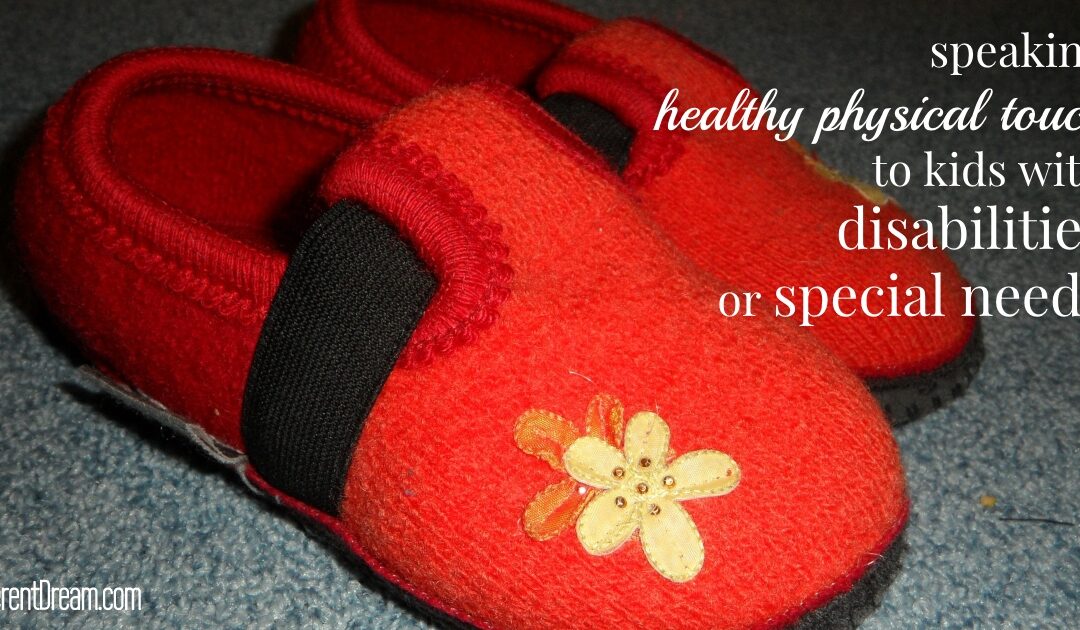
  • Gifts like a fuzzy slippers, chew toys, and clothes without tags.
  • Holding a child close after administering discipline.

More ideas for speaking healthy physical touch to kids with disabilities and special needs and stories about the caregiving families who use them can be found in chapter 6 of Sharing Love Abundantly in Special Needs Families: The 5 Love Languages® for Parents Raising Kids with Disabilities.

Stop by in June for the next post in the series. It’s about how to use the love languages with typical siblings in caregiving families.

Other articles in this series:

Do you like what you see at DifferentDream.com? You can receive more great content by subscribing to the monthly Different Dream newsletter and signing up for the daily RSS feed delivered to your email.

By

Jolene Philo is the author of the Different Dream series for parents of kids with special needs. She speaks at parenting and special needs conferences around the country. She’s also the creator and host of the Different Dream websiteSharing Love Abundantly With Special Needs Families: The 5 Love Languages® for Parents Raising Children with Disabilities, which she co-authored with Dr. Gary Chapman, was released in August of 2019 and is available at local bookstores, their bookstore website, and at Amazon.

Author Jolene Philo

Archives

Categories

Subscribe for Updates from Jolene

Related Posts

Ways To Speak Gifts and Acts of Service to Kids with Special Needs

Ways To Speak Gifts and Acts of Service to Kids with Special Needs

Ways To Speak Gifts and Acts of Service to Kids with Special Needs

Ways to speak gifts and acts of service to kids with special needs are plentiful. All you need are these ingredients mentioned in the previous post in this series about using the 5 love languages in special needs families:

  1. Determine the child’s love language. To learn more about how to do so, check out this post.  
  2. Brush up on a couple child development concepts. These two posts in the series offer a quick review: Love Is a Child’s First Language and Sharing Love Abundantly in Special Needs Families: The 5 Love Languages® for Parents Raising Children with Disabilties. 

Chapter 6 of Sharing Love Abundantly has oodles of stories from parents raising kids with disabilities and special needs about how they speak gifts and acts fo service in their families. Plus the end of the chapter lists more ideas, all of them field-tested by special needs families. Here are some ideas to get you started.

Gifts

  • Trip to the thrift store to hunt for treasures.
  • Found or scrounged objects like a feather or cardboard boxes.
  • Color a picture and give it to your child.
  • Mail a package to your child when you’re out of town.
  • Grocery store treats like string cheese, yogurt, granola, or candy.
  • Make a special meal or dessert.

Acts of Service

  • Teach your child how to self-advocate.
  • Complete one of your child’s chores on a particularly hard day.
  • Take your child to library story time, sporting events, or church activities.
  • Create a birthday activity tradition (rather than a birthday meal) for a child with a feeding tube.
  • Role play social skills such as making introductions or saying please, thank you, and excuse me.

These are just a smattering of the love language ideas found in Sharing Love Abundantly. The next post in this series will feature ideas about how to adapt Physical Touch for kids with special needs, along with some safety precautions. It’s one you won’t want to miss!

Other articles in this series:

The Love Languages and Special Needs Families: A Good Combination

Basic Love Language Concepts to Ease Stress and Increase Joy in Caregiving Families

Threats to Caregiving Marriages and How To Fight Them 

Love Is a Child’s First Language

Determining the Love Language of a Child with Special Needs or a Disability 

Ways to Speak Words of Affirmation and Quality Time to Kids with Special Needs 

Speaking Healthy Physical Touch to Kids with Special Needs

Using the Love Languages with Siblings of Kids with Special Needs and Disabilities 

Extended Family Members Can Use the Love Languages to Encourage Caregiving Parents

Communicating Your Child’s Love Language to Medical Professionals

Communicating Your Child’s Love Language to Educators 

Do you like what you see at DifferentDream.com? You can receive more great content by subscribing to the monthly Different Dream newsletter and signing up for the daily RSS feed delivered to your email.

By

Jolene Philo is the author of the Different Dream series for parents of kids with special needs. She speaks at parenting and special needs conferences around the country. She’s also the creator and host of the Different Dream websiteSharing Love Abundantly With Special Needs Families: The 5 Love Languages® for Parents Raising Children with Disabilities, which she co-authored with Dr. Gary Chapman, was released in August of 2019 and is available at local bookstores, their bookstore website, and at Amazon.

Author Jolene Philo

Archives

Categories

Related Posts

Determining the Love Language of a Child with Special Needs or a Disability

Determining the Love Language of a Child with Special Needs or a Disability

Determining the Love Language of a Child with Special Needs or a Disability

Determining the love language of a child with special needs or a disability may be easy for some families and more challenging for others. So said the parents who share their stories in chapter 5 of Sharing Love Abundantly in Special Needs Families: The 5 Love Languages® for Parents Raising Children with Disabilities. 

Whether children were non-verbal or verbal, developmentally delayed or physically disabled, behaviorally challenged or compliant, parents who successfully discovered the their kids’ primary language used the same two tools–trial and error followed by keen observation. You can use the same tools to discover your child’s language by implementing these 5 strategies.

Strategy #1

Use all the love languages with children ages 5 and younger. Take care to observe which one results in the most consistent positive responses from your child. That is most likely your child’s primary love language.

Strategy #2

If your child is developmentally between the ages of 5 and 8, choose 1 love language to use with him for a week or two. Write down how he responds in a notebook. Then move on to another love language for a couple weeks. Proceed through all 5 languages and then read through your notes. As was the case in strategy #1, the language that elicited the most consistent, positive responses is most likely your child’s primary love language.

Strategy #3

Children who are over age 8 may be able to complete a love language quiz. You can even help them take it. Versions for kids and teens can be found at the end of chapter 1 of  Sharing Love Abundantly in Special Needs Families. Complete the quiz, tally your child’s score, and you’ll know your child’s primary love language.

Strategy #4

The first 3 strategies will work for most children. However, if a child struggles to communicate or is non-verbal, ask these 3 questions which were designed by the parents of a little girl with autism.

  • What calms my child?
  • What motivates my child?
  • Where does my child choose to spend time?

The answers to those questions should help you pinpoint your child’s love language.

Strategy #5

Determining the love language of a child with special needs or a disability may be impossible for some reason. In that case, use all 5 love languages equally. You’ll be sure to hit your child’s language at least 20% of the time.

More about each of these strategies is found in Sharing Love Abundantly in Special Needs Families and in the other articles in the series, which are listed below. And return in April for an article packed with ideas for using the love languages with kids who have special needs and disabilities. You won’t want to miss it.

Other articles in this series:

The Love Languages and Special Needs Families: A Good Combination

Basic Love Language Concepts to Ease Stress and Increase Joy in Caregiving Families

Threats to Caregiving Marriages and How To Fight Them 

Love Is a Child’s First Language

Ways to Speak Words of Affirmation and Quality Time to Kids with Special Needs

Ways To Speak Gifts and Acts of Service to Kids with Special Needs

Speaking Healthy Physical Touch to Kids with Special Needs

Using the Love Languages with Siblings of Kids with Special Needs and Disabilities 

Extended Family Members Can Use the Love Languages to Encourage Caregiving Parents

Communicating Your Child’s Love Language to Medical Professionals

Communicating Your Child’s Love Language to Educators 

Do you like what you see at DifferentDream.com? You can receive more great content by subscribing to the monthly Different Dream newsletter and signing up for the daily RSS feed delivered to your email.

By

Jolene Philo is the author of the Different Dream series for parents of kids with special needs. She speaks at parenting and special needs conferences around the country. She’s also the creator and host of the Different Dream websiteSharing Love Abundantly With Special Needs Families: The 5 Love Languages® for Parents Raising Children with Disabilities, which she co-authored with Dr. Gary Chapman, was released in August of 2019 and is available at local bookstores, their bookstore website, and at Amazon.

Author Jolene Philo

Archives

Categories

Related Posts

Love Is a Child’s First Language

Love Is a Child’s First Language

Love Is a Child’s First Language

Love is a child’s first language. This truth is the title of the fourth chapter in Sharing Love Abundantly in Special Needs Families. The chapter explores two child development concepts that can help parents better understand how to express love to their kids with disabilities and special needs.

The first concept is attachment categories. Attachment equals love in mental health care jargon. Professionals in the field have identified 4 attachment categories to identify how very young children learn to love, or bond, with primary caregivers.  

Secure attachment happens when the child has consistent, emotionally appropriate interactions with parents. Secure children feel empowered to explore the world as they develop and grow.

Avoidant attachment occurs when parents are unavailable or rejecting. As a result, children also avoid closeness and emotional attachment.

Anxious attachment is the result of inconsistent interactions with parents. Lack of consistency causes children to exhibit anxious and unreliable behaviors.

Disorganized attachment happens when contact with parents is so inconsistent and unpredictable that children are repeatedly disoriented or terrified. Their lives are so chaotic and their needs are so frequently unmet that they are unable to rely on or attach to anyone.

Many children with special needs develop avoidant, anxious, or disorganized attachment. Reasons include early, invasive medical treatment, separation from birth mother for medical treatment or adoption, repeated trauma, extreme sensory sensitivity, or unpredictable medical conditions like seizure disorders. Parents can use the love languages to fill these kids’ with the security they didn’t receive earlier.

The second concept is stages of cognitive development. This is a term used by educational psychologists to describe how thinking and learning develops in children. All kids go through these 4 stages in the same order, but not always at the same speed.

The sensorimotor stage runs roughly from birth to age 2. In this stage, children learn about the world by manipulating and observing physical objects.

In the pre-operational stage goes from age 2 to 7. At this age, children start using symbols while thinking, but they still need to manipulate symbols. They also asked lots of “why” questions and are very curious.

The concrete operational stage runs from about age 7 through age 11. This is where children begin to think logically in their heads. They can’t apply what they’ve experienced to unfamiliar situations because they can’t yet think abstractly.

The formal operational stage can start at age 11 and runs through adulthood. Some adults never reach this stage, which can only be achieved in an enriched and intentional environment. Those who reach this stage can think abstractly about things they haven’t personally experienced.

Many children with developmental delays or attachment issues progress through these stages slowly. By identifying what stage children are at, parents can speak their love languages in developmentally appropriate ways. 

Chapter 4 of Sharing Love Abundantly is filled with the stories of families who have adapted and used the love languages with their kids who have special needs and disabilities. Assuring our children that they are loved is what parenting is all about!

Other articles in this series:

The Love Languages and Special Needs Families: A Good Combination

Basic Love Language Concepts to Ease Stress and Increase Joy in Caregiving Families

Threats to Caregiving Marriages and How To Fight Them 

Fostering Communication and Connection Between Caregiving Parents 

Determining the Love Language of a Child with Special Needs or a Disability 

Ways to Speak Words of Affirmation and Quality Time to Kids with Special Needs

Speaking Healthy Physical Touch to Kids with Special Needs

Using the Love Languages with Siblings of Kids with Special Needs and Disabilities 

Extended Family Members Can Use the Love Languages to Encourage Caregiving Parents

Communicating Your Child’s Love Language to Medical Professionals

Communicating Your Child’s Love Language to Educators 

Do you like what you see at DifferentDream.com? You can receive more great content by subscribing to the monthly Different Dream newsletter and signing up for the daily RSS feed delivered to your email.

By

Jolene Philo is the author of the Different Dream series for parents of kids with special needs. She speaks at parenting and special needs conferences around the country. She’s also the creator and host of the Different Dream websiteSharing Love Abundantly With Special Needs Families: The 5 Love Languages® for Parents Raising Children with Disabilities, which she co-authored with Dr. Gary Chapman, was released in August of 2019 and is available at local bookstores, their bookstore website, and at Amazon.

Author Jolene Philo

Archives

Categories

Related Posts

Fostering Communication and Connection Between Caregiving Parents

Fostering Communication and Connection Between Caregiving Parents

Fostering Communication and Connection Between Caregiving Parents

Fostering communication and connection is crucial for parents of kids with special needs and disabilities. Several couples interviewed for Sharing Love Abundantly in Special Needs Families: The 5 Love Languages® for Parents Raising Children with Disabilities said they had to learn to tend to their relationship with one another first in order to meet their kids’ needs effectively.

As parents raising kids who require ongoing care, our attention and resources frequently go to our children first. Sometimes that can’t be helped. But there’s a tendency, as time goes on, to make a habit of paying attention to our kids before our spouses. According to the parents interviewed for Sharing Love Abundantly in Special Needs Families it doesn’t have to be that way. They said that the basic love language concepts are tools for fostering communication and connection for these 3 reasons:

  1. The love languages empower couples to make marriage a top priority.
  2. The love languages enhance communicate even in the thick of caregiving.
  3. The love languages make couples more intentional and observant.

To use the love languages, couples first need to learn one another’s love language. The easiest way to do so is by taking the free online quiz at 5lovelanguages.com. Once you know each other’s love language, you can start to speak it using ideas from Sharing Love Abundantly in Special Needs Families that are tailored for fostering communication and connection between caregiving parents. Here are a few to get you started.

Words of Affirmation. Compliment appearance, write and mail an old-fashioned letter, send encouraging texts or emails throughout the day.
Quality Time. Schedule coffee dates on the deck or by the fireplace, read a book out loud together, play a silly board game.
Gifts. Buy a single slice of dessert to share after the kids are in bed, buy small items at the dollar store, give a gift card to a favorite coffee shop.
Acts of Service. Gas up the car, get up early and pack your spouse’s lunch, grocery shop.
Physical Touch. Kiss and hug before going to work, exercise together, hold hands while you pray.

For more ideas like these, check out the book Sharing Love Abundantly in Special Needs Families. For ideas about how use the love languages with your kids who have disabilities and special needs, come back in February for the next post in this series.

Other articles in this series:

The Love Languages and Special Needs Families: A Good Combination

Basic Love Language Concepts to Ease Stress and Increase Joy in Caregiving Families

Threats to Caregiving Marriages and How To Fight Them 

Love Is a Child’s First Language

Determining the Love Language of a Child with Special Needs or a Disability 

Ways to Speak Words of Affirmation and Quality Time to Kids with Special Needs

Speaking Healthy Physical Touch to Kids with Special Needs

Using the Love Languages with Siblings of Kids with Special Needs and Disabilities 

Extended Family Members Can Use the Love Languages to Encourage Caregiving Parents

Communicating Your Child’s Love Language to Medical Professionals

Communicating Your Child’s Love Language to Educators 

Do you like what you see at DifferentDream.com? You can receive more great content by subscribing to the monthly Different Dream newsletter and signing up for the daily RSS feed delivered to your email.

By

Jolene Philo is the author of the Different Dream series for parents of kids with special needs. She speaks at parenting and special needs conferences around the country. She’s also the creator and host of the Different Dream websiteSharing Love Abundantly With Special Needs Families: The 5 Love Languages® for Parents Raising Children with Disabilities, which she co-authored with Dr. Gary Chapman, was released in August of 2019 and is available at local bookstores, their bookstore website, and at Amazon.

Author Jolene Philo

Archives

Categories

Related Posts