7 Sunday Worship Tips for Kids with Special Needs

7 Sunday Worship Tips for Kids with Special Needs

7 Sunday Worship Tips for Kids with Special Needs

Easter is this coming Sunday. Guest blogger Sherri Dacon will be celebrating the birth of Christ. Thanks to the 7 worship tips for kids with special needs, every member of her family will attend church and worship together.

Special Needs and Church: 7 Worship Tips for Kids with Special Needs

Church is important to our family. When our son was diagnosed with autism, we were committed to staying involved, but it hasn’t always been easy.

The top priority for us is attending worship services together. Learning to navigate worship with a special needs child is a challenge, but it’s not impossible.

Here are some helpful tips we’ve learned along the way.

1. Make church a regular part of the routine.

If you aren’t consistent about regularly attending services, church will be more of a struggle for your autistic child. Children on the spectrum thrive on routine and structure. Knowing what to expect helps them organize their thoughts and expectations in order to cope. If they get to stay home most weeks and play with Legos, they will be all the more resistant to going to church on random weeks. Work toward consistency as much as possible. Make church attendance the norm, not the exception.

2. Bring a busy bag.

Include activity books or small (quiet) toys, as well as sensory fidget items. My son loves Thinking Putty, double stick tape, and sticker books. Perhaps include special “Sunday only” items that your child will look forward to. Don’t include electronic items, as these will detract from worship for both autistic and neurotypical children.

3. Decide on rules for worship service ahead of time.

Write them down or create a visual reminder. Carry the rules with you to church, preferably with a copy in your child’s bag and one for you. When my son was younger, we brought a notebook of social stories with us to church every week. We read them on the way to church, and we always reviewed the rules for worship. Our rules are:

  1. Stand when most everyone stands
  2. Sit when most everyone sits.
  3. Always use a quiet voice.
  4. I can open my bag when the sermon begins.

Feel free to tailor your rules to suit your family and your local congregation. Our focus in creating rules was to ensure that our child would be engaged in worship, but also have coping strategies available during the “boring” or “quiet” part of the service.

4. Use non-verbal cues as reminders.

Non-verbal cues are great for reminding children of rules and expectations. I’ve often used the ASL signs for “stop” and “walking feet.” I also hold up one finger to remind him of rule #1, two fingers to remind him of rule #2 and so on. These are quick visual reminders for him when he gets antsy or overly excited.

5. Make your child a “This is too hard” sign.

Pack it in his bag so that if things get unbearable, he has a way to communicate without throwing a tantrum. Discuss the seriousness of the card, that it is only to be used in extreme discomfort, but when he does use it, take him out immediately for relief.

One year our family missed church on the last week of Advent. When we returned the following Sunday, the Advent Wreath had disappeared. This upset my child tremendously, but being able to use his sign prevented a meltdown and helped him cope with his disappointment in an acceptable way.

6. Provide a simple worship guide for your child.

On a sheet of paper, write out simple questions like,

  • “What color is the pastor’s tie?”
  • “What was your favorite song today?”
  • “Name one thing you remember from the sermon.”
  • Include a tally sheet for children to count how many times they hear a certain word, such as “grace” or “Jesus.”

Having something to focus on during worship can be extremely helpful. You will be surprised what your child actually hears, even though he seems to be engrossed in his comic book or sudoku.

7. Allow your child to be comfortable.

This may mean wearing different clothes than you would prefer, taking shoes off during service, or pulling arms inside a sweater. It may mean stimming during worship, or plugging her ears when things get loud. Unless these are extreme distractions, allow your child to do some of these things in order to increase her comfort level. Worship should always be a positive experience.

Going to church regularly has been a huge blessing for our entire family, even though it it continues to be a challenge for my autistic son. Still, we have learned ways to help make it an overall positive experience.

Don’t give up, parents.

Being a part of a welcoming faith community is worth the hard work and dedication.

With some preparation and tools under your belt, church can be a wonderful part of your child’s life.

What Works for You?

What helps your child navigate church successfully? Share your ideas below. 

Do you like what you see at DifferentDream.com? You can receive more great content by subscribing to the quarterly Different Dream newsletter and signing up for the daily RSS feed delivered to your email inbox. You can sign up for the first in the pop up box and the second at the bottom of this page.

By

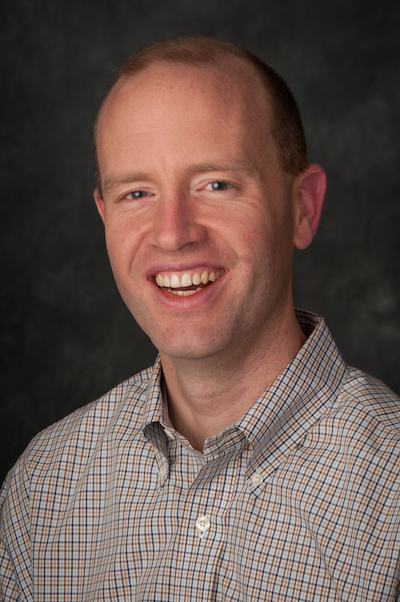
To connect with Sheri, visit her blog at www.sheridacon.com, or find her on Twitter, Facebook or Pinterest.

Author Jolene Philo
Archives

Categories

Subscribe for Updates from Jolene

Related Posts

Special Needs Respite: How to Start a Program

Special Needs Respite: How to Start a Program

Special Needs Respite: How to Start a Program

Special needs respite should be a component of every special needs caregiver’s life. Unfortunately, finding good respite care is difficult in many parts of the country. In the final post in Cameron Doolittle’s series about special needs respite, he shares many ideas and oodles of resources churches can use to create respite programs right where you live.

Special Needs Respite: How to Start a Program

We hear from senior pastors that often someone in their church wants them to ‘do something’ about special needs. But the pastor says, ‘My plate is so full. I’d love to do something, but I just can’t add one more thing.’ So how can we make this easy for your pastor and a huge win for your church?rEcess

God is using Jill’s House to bring respite and renewal to families affected by disability in the DC area and across the country. But this did not happen overnight. Here are a few of the resources we relied on as we built our programs. I hope they help prepare your church to ‘do something’ about disability ministry.

Step 1: Recruit Special Needs Respite Volunteers

First, you’ll need a group of committed volunteers. No matter the level of their enthusiasm and passion, one or two people will not be able to sustain an effective disability ministry. One way to inspire volunteers is to take them on a missions trip where they can work with people with disabilities. Jill’s House Weekend Adventures provides an opportunity for groups or individuals to spend a weekend learning about God’s heart for disability and seeing disability ministry in action. They’ll return to your home church ready to apply what they’ve learned. 

Step 2: Locate Special Needs Respite Coaches

Second, you’ll need advice. I recommend two amazing ministries (led by two friends of mine) that coach churches on building very doable, impactful ministries to families of children with disabilities: Matt Mooney at 99 Balloons and Marie Kuch at Nathaniel’s Hope. Check out Matt Mooney’s piece about rEcess or Marie Kuch’s amazing Buddy Break. By following their guidance, you’ll find that providing a high-impact ministry to families in your community is easier than you think!

Step 3: Learn from Special Needs Respite Pros

Third, you’ll need to learn from the pros. As your program grows, you should know there are some great “sherpas” out there who would be happy to guide you along the path. Jackie Mills Fernald at McLean Bible Church’s Access Ministry has put together some great tips for pastors. Joni & Friends was doing disability ministry before it was cool, and they have awesome resources to help churches. I particularly recommend Five Myths About Starting a Disability Ministry.

God hasn’t taught us to heal children with autism or genetic abnormalities, but He has given us the tools and resources we need to support their families. Our prayer is that as we serve them in Jesus’ name, they come to know—or trust more fully in—His infinite love for them.

Your Special Needs Respite Questions?

Do you have questions about how to start a special needs respite program where you live? Leave them in the comment box for Cameron to answer. Thanks!

Part 1: Special Needs Respite & Jill’s House
Part 2: Special Needs Respite: Camps

Do you like what you see at DifferentDream.com? You can receive more great content by subscribing to the quarterly Different Dream newsletter and signing up for the daily RSS feed delivered to your email inbox. You can sign up for the first in the pop up box and the second at the bottom of this page.

By

Cameron Doolittle has been President & CEO of Jill’s House since it opened in 2010. He loves that families find physical and spiritual rest through Jesus, and that Jill’s House is helping prepare a new generation of leaders to love children with special needs as God does. Before he came to Jill’s House, Cameron was the “new business launch guy” at Corporate Executive Board. He’s a graduate of Stanford University and holds a JD/MBA from UC-Berkeley. Cameron and his wife, Carolyn, live in Falls Church with their four young children.

Author Jolene Philo

Archives

Categories

Subscribe for Updates from Jolene

Related Posts

Special Needs Respite: Camps

Special Needs Respite: Camps

Special Needs Respite: Camps

Special needs respite is one way parents of kids with special needs can recharge their caregiving batteries. In part 2 of this series about special needs respite,  Cameron Dolittle, director of the respite facility Jill’s House in the Washington, DC area, is here to share his vision about how to provide respite all over our country.

Special Needs Respite: Camps

After serving abroad with the military, Greg returned home to Colorado. His wife, Samantha, was grateful to have him home and to have his help raising their son with special needs. But just as Greg was beginning to settle in, he was diagnosed with cancer. Their marriage had stayed strong despite distance and war. But could it survive cancer and parenting a child with special needs? More than ever this couple wanted and needed to spend time together, but that time was a luxury they couldn’t afford. They needed God to give them that time. And He did.

Special Needs Respite Camps

God gave Greg and Samantha the time they needed by bringing Jill’s House from DC to CO. In 2012, we began looking for ways to bring overnight respite to other parts of the country. We knew that trying to replicate our building in each new location would be slow and expensive. We needed a program that was mobile and low-cost. So we created Jill’s House National Programs weekend respite camps.

This program is similar to our weekend program at Jill’s House. Parents still get two nights of respite, but their kids, instead of staying in a facility, stay in cabins at Christian camps. They enjoy camp activities—like high ropes course, archery, canoeing, campfires and s’mores—while their parents get the respite they need.
It was through our National Programs camp in Colorado that Greg and Samantha got to spend an entire weekend together without the responsibilities of caring for their son. When we asked Samantha what she did while her son was at camp she said, “Sit by my husband’s hospital bed without having to leave.” God is using these programs to give couples like Greg and Samantha the time they need to rest and connect.

Special Needs Respite Missionaries

God is also using these camps to train his people how to care for children with special needs. The weekend is supervised by a few Jill’s House staff members and a group of missionaries. These missionary groups spend the entire weekend serving as a buddy to one of our campers. The missionaries bond as a team, learn about God’s heart for disability, and return to their home churches ready to apply what they’ve learned.

Through this camp program, parents get a break, kids have a great weekend at camp, and missionaries get to experience the challenges and joys of disability ministry. We’re operating these camps in Virginia, Maryland, Texas, Colorado, and Southern California and will soon be in Washington State. By 2020, we hope to be operating a Jill’s House respite camp in 20 locations. We’re working to change the face of disability ministry in America so that God’s people are known for their compassionate remembrance of those who are often forgotten and overlooked.

But to accomplish this goal, we’ll need help. These programs cannot survive without the support of a strong disability ministry. Next week, in the last post in this series, I’ll suggest a few resources that will help you start or grow the disability ministry in your church.

What Do You Think of Special Needs Respite Camps?

What’s your opinion of the special needs missions trip concept? Has your child participated in one? Would you like to start one in your area? Leave a comment to share your thoughts.

Part 1: Special Needs Respite: Jill’s House
Part 3: Special Needs Respite: How to Start a Program

Do you like what you see at DifferentDream.com? You can receive more great content by subscribing to the quarterly Different Dream newsletter and signing up for the daily RSS feed delivered to your email inbox. You can sign up for the first in the pop up box and the second at the bottom of this page.

By

Cameron Doolittle has been President & CEO of Jill’s House since it opened in 2010. He loves that families find physical and spiritual rest through Jesus, and that Jill’s House is helping prepare a new generation of leaders to love children with special needs as God does. Before he came to Jill’s House, Cameron was the “new business launch guy” at Corporate Executive Board. He’s a graduate of Stanford University and holds a JD/MBA from UC-Berkeley. Cameron and his wife, Carolyn, live in Falls Church with their four young children.

Author Jolene Philo

Archives

Categories

Subscribe for Updates from Jolene

Related Posts

Special Needs Respite & Jill’s House

Special Needs Respite & Jill’s House

Special Needs Respite & Jill’s House

 Petting zoo outside Jill’s House on a respite weekend

Special Needs Respite & Jill’s House

Parents of kids with disabilities need a break now and then. Cameron Dolittle, director of the respite facility Jill’s House, is passionate about providing quality respite for parents in the Washington, DC area and about training teams to do the same thing all over the country. In the first post in a series about respite for families of kids with special needs, Dolittle introduces you to Jill’s House and one of the families they serve.

Waverly was four years old and Oliver was 15 months old when they were diagnosed with Sanfilippo syndrome. The life expectancy for someone with Sanfilippo syndrome is 12 to 18 years old. During their short lives, Waverly and Oliver will meet a few developmental milestones but then slowly lose them all. Their parents, Matt and Shannon McNeil, were forced to adjust their expectations for their children. Shannon explains, “Playdates and sleepovers became physical therapy sessions and doctor appointments.” Like so many other parents raising children with special needs, they had to grieve the loss of the what-should-have-been to embrace the what-is.

The staff of Jill’s House loves Jolene Philo’s book, A Different Dream for My Child, and particularly the part in which she describes parents, like Matt and Shannon, who had great dreams for the children. She writes, “When their children became ill and their dreams changed, they slowly, and sometimes painfully, embraced the different dream God had fashioned for their children and found joy.” This is an important process for parents raising children with a disability, or a chronic or fatal illness.

How Special Needs Respite Supports Parents

At Jill’s House, we have the privilege of supporting families through that process. Jill’s House is a short term overnight respite facility for children with intellectual disabilities between ages 6-17. While not many families hope to have a child that qualifies for our programs, God has provided a place of hope and healing for the ones who do. Located just outside of Washington DC, our 42,000 square foot building holds 45 beds, an accessible playground, computer lab, gymnasium, library, and indoor pool. The children stay overnight and their parents get a break.

This break renews the entire family. Parents of children with special needs experience 60% more stress than the rest of the population and are 80% more likely to get divorced. Since we opened in 2010, we’ve been proving empirically that an overnight break drastically lowers a family’s stress level. Shannon explains that while Waverly and Oliver are at Jill’s House, “We have an opportunity to connect and feel refreshed, to re-center ourselves to deal with the never-ending stress of parenting two terminally ill children.” These short breaks help caregivers be better spouses and parents.

How Special Needs Respite Supports Kids

These breaks are also good for the kids. Shannon explains, “We try to accept that Waverly and Oliver will miss out on so many milestones in life, such as their first dates, driving a car, and getting married. But they have also missed out on so many quintessential childhood activities.” At Jill’s House, kids like Waverly and Oliver have the opportunity to experience those childhood activities. Shannon says, “Jill’s House opened our world back up. Waverly and Oliver finally have a place of their own. Jill’s House was made for kids just like them. Every room and activity is modified to allow them active participation. Sleepovers and playdates are possibilities once again.”

Waverly is now ten years old and Oliver is seven. Matt and Shannon know that the next few years are going to be extremely difficult for their family. Shannon says, “We are grieving, but thanks to Jill’s House, our children know only joy and unconditional love.” (To follow the McNeil family’s journey, visit their blog, Exploring Holland.)

Jill’s House serves hundreds of families like the McNeils in the DC area. But we know that there are thousands of families affected by disability across the country who need respite. In next week’s post, I’ll share the steps we’re taking to meet that need. You’re going to love what God is doing!

Your Special Needs Respite Story?

What’s your special needs respite story? Are you able to access it? Are you trying to find it? Leave a comment about your experience in the comment box. And come back next Monday for Part 2 in the special needs respite series.

Part 2: Special Needs Respite: Camps
Part 3: Special Needs Respite: How to Start a Program

Do you like what you see at DifferentDream.com? You can receive more great content by subscribing to the quarterly Different Dream newsletter and signing up for the daily RSS feed delivered to your email inbox. You can sign up for the first in the pop up box and the second at the bottom of this page.

By

Cameron Doolittle has been President & CEO of Jill’s House since it opened in 2010. He loves that families find physical and spiritual rest through Jesus, and that Jill’s House is helping prepare a new generation of leaders to love children with special needs as God does. Before he came to Jill’s House, Cameron was the “new business launch guy” at Corporate Executive Board. He’s a graduate of Stanford University and holds a JD/MBA from UC-Berkeley. Cameron and his wife, Carolyn, live in Falls Church with their four young children.

Author Jolene Philo

Archives

Categories

Subscribe for Updates from Jolene

Related Posts

Special Needs Ministry: Meet Michael’s Village

Special Needs Ministry: Meet Michael’s Village

Special Needs Ministry: Meet Michael’s Village

Our post for the day comes from guest blogger Susie Stefonowich. After reading Karen Jackson’s post about her daughter’s confirmation, Stefonowich submitted this piece about a young man in the parish where she and her husband lead an ecumenical special needs ministry.

Special Needs Ministry: Meet Michael’s Village

I truly began to appreciate the saying “It takes a village” when Michael, a man who experiences cognitive disabilities and attends our church, asked to become Catholic. His roommate, Max, a man who experiences Down Syndrome is a Fourth degree Knight in the Knights of Columbus. Therefore Michael knew what being a Knight meant and wanted to join. However, he was told he needed to be Catholic to do this.

Special Needs Ministry and Kits from Loyola Press

After contacting Michael’s family in North Carolina, we found that he had never been baptized. So, baptism is where we began. There is not a written curriculum for an adult with cognitive disabilities to become Catholic, so we needed to develop one for Michael. We decided to use kits produced by Loyola Press as our guide. These kits were developed for children who experience autism, but are helpful with anyone with cognitive disabilities.

Michael’s Special Needs Ministry Village

My husband and I assumed we would sponsor Michael, but then 2 people volunteered to sponsor him. Amazing, as sometimes its difficult finding sponsors for persons who do not experience disabilities. Michael had two without even asking! So began Michael’s Village.

Since Michael was not raised in the Catholic Church, we began teaching him how to bless himself with the sign of the cross. This was difficult for him as some of his motor skills are limited. Also, he had difficulty remembering exactly how it should be done. Immediately after we met on Sunday mornings and before mass started, he walked up to everyone and said, “Look!” and then attempted to do the sign of the cross. We tried to be there and explain, “Michael is learning the sign of the cross.”  They began to help him….so more villagers.

From January until Mother’s Day, we and Michael’s sponsors worked with him on Sunday mornings. Once we set the date for his baptism, he invited everyone. Every Sunday, after class, he walked up to anyone and everyone and told them he was going to be baptized. Then he called one of us to give the specific details. He would say, “I want you to come!” More villagers, as many said they would be there.

Michael was baptized on Mother’s Day 2014 with many of his friends and his family from North Carolina in attendance. He was so excited and so spontaneous, he affected everyone who was there. Michael’s innocence and sincerity showed our entire parish of over 1200 families how wonderful and simple God’s love truly is.

Michael’s Special Needs Ministry Village Continues to Grow

Michael’s village grows weekly. We will continue helping to prepare him to receive his other sacraments (Eucharist and Confirmation), and in the near future he will accomplish his dream of becoming a Knight of Columbus.  My husband and I, along with his other sponsors all agree, that Michael has taught us much more than we could ever teach him about God’s love.

Your Special Needs Ministry Success Story?

Do you have questions or comments for Susie? Leave them in the comment box. Or leave a shout out about the good things happening in the special needs ministry at your church.

Do you like what you see at DifferentDream.com? You can receive more great content by subscribing to the quarterly Different Dream newsletter and signing up for the daily RSS feed delivered to your email inbox. You can sign up for the first in the pop up box and the second at the bottom of this page. 

By

Susie Stefonowich worked as a pediatric nurse at the Children’s Hospital in Norfolk, VA for 38 years. She is also the parish advocate at Church of the Holy Family in Virginia Beach, Virginia. She and her husband coordinate The Chosen Ministry, an ecumenical special needs ministry. They are the parents of Colleen, who 29 years ago was born 12 weeks prematurely. Colleen has some cognitive disabilities which led to the Stefonowichs’ involvement in the special needs community. God works in mysterious ways!

Author Jolene Philo

Archives

Categories

Subscribe for Updates from Jolene

Related Posts

The Joy of Special Needs Inclusion and Confirmation

The Joy of Special Needs Inclusion and Confirmation

The Joy of Special Needs Inclusion and Confirmation

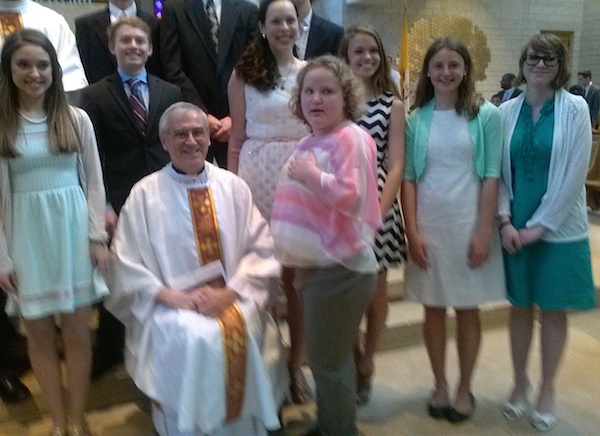
Karen and her daughter Samantha

Special needs inclusion is a passion for today’s guest blogger Karen Jackson. She’s the director of the Faith Inclusion Network (FIN) in Hampton Roads, Virginia. In this post, she shares the joy she experienced when her daughter Samantha, who lives with autism, participated in confirmation at their church.

The Joy of Special Needs Inclusion

As the director of Faith Inclusion Network and parish advocate for persons with disabilities at Blessed Sacrament Church, I felt a strong obligation to ensure that my daughter participated in the rite of Confirmation. After all, my thoughts chided me, if I could not help make this happen with the advocacy experience I have attained in the past several years, then who could?

I shared my concern with Anne Masters, a guest speaker at a recent FIN event. “What if Samantha refuses to go up front? What if, for some reason I can’t determine, she gets upset and we have to leave? What if…What if…What if?”

But even as Anne assured me that everything would be okay, another answer came to me. It was not about what I had done or not done to help prepare Samantha for this sacrament and it wasn’t for me to worry about. The Holy Spirit would be with us. Her participation in the mass was about Samantha and our almighty and loving God.

So I prayed for God to ease my anxiety and on a beautiful, sunny Sunday afternoon in April we made our way to Holy Trinity Church to participate in the mass. When we arrived, a full 30 minutes early as instructed, I tried to remain calm. All the students and their sponsors were directed to the pastoral center to get ready to line up and receive last minute instructions.

“Oh no,” I thought. “We have never been in this building.” In preparation, I had brought Samantha to visit the chapel several times, but we had never been across the street. But Samantha held my hand and bravely went into this new site with no problem at all, though she is usually very anxious in new places.

Samantha’s sponsor, Jackie, had not arrived yet but her catechist, Derek, greeted Samantha and I with big hugs and words of encouragement. We were also warmly greeted by Sr. Regina, which made it seem we had come full circle, since she was the religious education director and the first person we met at Blessed Sacrament those many years ago. Sr. Regina would later hug me in the church and comment, “We did it!”

Jackie arrived just in time for a quick photo and to line up. We decided that although parents did not usually accompany the students and sponsors into the church, Samantha would be more comfortable with me there. And so we all walked out of the pastoral center, across the street, and toward the chapel.

We were surprised when Monsignor Mark Lane, who was presiding over the Mass, stopped us and the entire line. He held Samantha’s hand to introduce himself. I was touched that the Monsignor had not only taken a moment to greet Samantha but also had spent time learning about her. My confidence soared as we continued into the church.

I would like to report that all went smoothly during the 90-minute Mass, but we did have some tense moments. As the homily went on, Samantha began to get a bit restless and agitated. Jackie pulled out some gum and Samantha chomped through four pieces while I prayed, “Please help us through the homily, Lord.”

It was finally time to go up for the anointing with oil. Samantha waited patiently for her turn. When she approached the Monsignor, she became a little shy as if not sure she really trusted him to touch her forehead. But Monsignor Lane talked her through the process. I stood off to the side, trying to control the tears of happiness, pride, and love I felt.

We made our way back to our seats and I kept thinking, “Wow! We actually made it through the rite of Confirmation.” We still had to make it through the rest of the mass, but being familiar with all the regular mass order, Samantha seemed more relaxed.

The mass ended and it was time for photos. At first I thought, “Samantha is not going to tolerate this, she is ready to leave”, but she surprised me. We followed the Blessed Sacrament group up to the altar and took a photo. My mind exploded with the thought, “If there is anything that is the exact opposite of exclusion it is this; fully included, participating with her peers, accepted as member of the church, one of the body of Christ.”

special needs inclusion

8 years ago, we tentatively stepped into Blessed Sacrament Church, unsure of being accepted or of how to educate Samantha, a child with autism. With much support from our parish, hard work on the part of Samantha, myself, and many others, Samantha was included in this holy sacrament of the Catholic Church. It was not always easy and there were certainly a lot of bumps along the way but this day we experienced the joy of inclusion. I pray that, as the faith and disabilities movement moves throughout our country, ours will become a common story, and that the joy of inclusion can be experienced by all. Thanks be to God!

Special Needs Inclusion Joy at Your House?

Have you experienced the joy of special needs inclusion on behalf of your child? We’d love to hear about it. Share your story in the comment box if you like.

Do you like what you see at DifferentDream.com? You can receive more great content by subscribing to the quarterly Different Dream newsletter and signing up for the daily RSS feed delivered to your email inbox. You can sign up for the first in the pop-up box and the second at the bottom of this page.

Special needs inclusion became joy to guest blogger Karen Jackson as her child who lives with autism participated in the rite of confirmation at her church.

By

Karen Jackson is the Executive Director of Faith Inclusion Network (FIN) of Hampton Roads where she lives with her husband and three children in Norfolk, VA. She is also the author of Loving Samantha. You can connect with Karen at the Faith Inclusion Network page.

Author Jolene Philo

Archives

Categories

Subscribe for Updates from Jolene

Related Posts