My Child has ADHD and the School Can’t See It

My Child has ADHD and the School Can’t See It

My Child has ADHD and the School Can’t See It

What do you do when your child has ADHD and the school can’t see it? That’s a puzzle Trish Shaeffer had to solve during the past school year. In this blog post, she shares resources and strategies she discovered in case you are in a similar situation in the upcoming school year.

My Child has ADHD and the School Can’t See It

Keeping it all together at school can be hard for my son Logan. His behaviors and meltdowns at home keep getting worse when certain seasons, like testing and PSSA, roll around.

Unfortunately, the school can’t see it as I do or as his doctors and therapist do. Often, the school states that they do not see our child’s ADHD behaviors at school. They don’t know that our son keeps it together all day at school and then when he gets home, he explodes. A simple homework task can take 3 hours or more because of meltdowns, anger and the life-isn’t-fair speech. Destructive behaviors surface because he wants to be heard and get his frustrations out after school–unfortunately the trash can was the target that day.

A parent can feel alone or crazy because the school can’t see it. This has happened for me with Logan. When he started kindergarten, the school exchanged his preschool IEP for a 504 plan. All it mentioned was his peanut allergy. Logan did okay in kindergarten because his teacher understood him and less was expected of him during that year.

Fast forward to first grade, and Logan struggled in every area. No matter how we tried to help him and study, it didn’t add up. It took hours, if not days to complete one page, and the meltdowns when from small to critical. No matter how much I talked to the school and the teacher they couldn’t see it. I felt like they thought I was crazy or making it all up even though I had documentation.

By the end of the third marking period, the school called and said that Logan needed help and testing. It surprised me, but also frustrated me. Why did it take so long?! No one really knows. But I sigh with relief because Logan will now be put in therapy groups for behaviors and anger issues. He’s being tested. Finally I am being heard and Logan is hopefully going to get the help he needs.

As a parent, I try to read as much as I can to keep on top of the issues with schools regarding ADHD. I’ve learned the best way to work with the school is to know as much as I can and teach them along the way. Here are some books I have recently read to hopefully close the gap on ADHD and autism for teachers and parents.

Remember that knowledge and advocating is key. You need to write down the facts that show your child has ADHD or autism or behavior issues. It maybe taboo to talk about meltdowns, anger, and behaviors because it feels like you have failed as a parent. But it’s not about us. We all love our kids, and we want to help them. We need to stay strong and positive as parents. We need all the help and support we can get and so do our kids. We need to keep advocating until the school sees our kids as we do, so they get the help they need.

Do you like what you see at DifferentDream.com? You can receive more great content by subscribing to the quarterly Different Dream newsletter and signing up for the daily RSS feed delivered to your email inbox. You can sign up for the first in the pop up box and the second at the bottom of this page.

By

Trish Shaeffer is the mom of 3 active boys with special needs. She’s a peer supporter for Parent to Parent and volunteers with the United Cerebral Palsy Network, Special Olympics, and the United Way. She’s also an equine volunteer at Leg Up Farm. She’s married to her best friend and biggest supporter, Chris Shaeffer.

Author Jolene Philo

Archives

Categories

Subscribe for Updates from Jolene

Related Posts

6 Tips to Gear Up for a Special Needs School Year

6 Tips to Gear Up for a Special Needs School Year

6 Tips to Gear Up for a Special Needs School Year

 Gearing up for a special needs school year is the last thing parents (or kids) want to think about in the middle of July. But as guest blogger Barb Dittrich has learned, the secret to a smooth transition from vacation to school is to start early. She’s with us today to share 6 tips she implements before the start of a new special needs school year.

6 Tips to Gear Up for a Special Needs School Year

We all wish the summer days would never end. A change of routine almost always means extra struggle for families with exceptional kids. Still, there are many things we can do to make the school year transition better for everyone.

Tip #1: Involve the Entire Family

If your family is anything like ours, there are multiple health issues, multiple emotional issues, varying personal expectations, jobs, and activities that play into the entire dynamic. In order for there to be any semblance of harmony in our home, everyone’s needs and issues must be laid out on the table. This likely requires a family meeting where all of these things are brought to the forefront and put on paper.

Tip #2: Get a Calendar Out for the Whole Darn Family

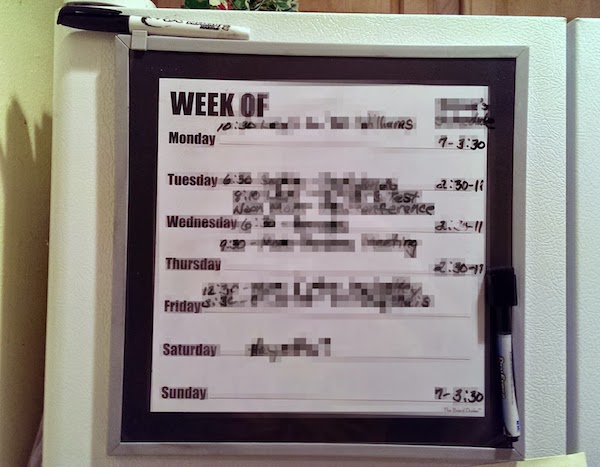
Is there anything worse than scheduling conflicts within your own household? Once the dates are laid out, get things on a calendar. For instance, I have one child who needs physical therapy while she’s juggling school and a job. I also have another child who needs visits to multiple other specialists. With yet another child who thrives on activity and needs extra help with homework, as well as a husband who likes to play, organization is a must. We even have chores to get worked into all of this busyness. Thankfully, a dry-erase one-week board on our refrigerator helps bring that week’s essentials front-and-center. This supplements our monthly calendar.

Tip #3: Be Informed

You must know what your family needs to survive and thrive. Are there accommodations that must be in place for your child to succeed this school year? Is there a better therapy schedule that needs to be adopted? Did that extracurricular activity cause more stress to the family than benefit last year? What are your rights if things don’t improve with the school district this year? Tapping into awesome resources like caregiving apps or the Wrightslaw website can be a real lifesaver!

Tip #4: Make Wise Purchases

You only have limited resources. After you have determined your priorities and educated yourself, explore what items you can access for the best value. That doesn’t always mean the cheapest price. Check with other parents to get insights on iPad cases, noise-blocking headphones or other adaptive equipment. In addition, look into medical equipment lending organizations or local charities that offer grants to help pay for some of this year’s serious necessities.

Tip #5: Practice!

While the notion of visiting a classroom and walking a schedule ahead of time may seem obvious to some, there are other things that you can do to practice for the new school year. Getting back into the rhythm of waking and bedtime at appropriate hours for the school year is helpful the month before. Practicing the routine for getting ready in the morning is helpful. Guiding instructors through the practice of what works for your child is useful as well. In The Don’t Freak Out Guide to Parenting Kids with Asperger’s, Sharon Fuentes makes a great case for sitting down with your challenged child ahead of the school year to complete a “One Pager” for the new teachers. With the amount of mind-numbing information in your child’s IEP, it will bless both your child and their instructors if you can put on one page what adjustments or accommodations will be needed to help your child have a successful year in school.  For example, does specific seating help? Is a check-in/check-out system help your child with their day?  As much as possible or age-appropriate, your child should drive what’s on this “one pager.” This gives them practice at advocating for themselves. And by the way, this brilliant idea is useful for any family with a child who has special needs, a disability, or a chronic illness.

Tip #6: Be on Medical Solid Ground

As much as possible, start the school year with a regular rhythm of medications, treatments and therapy in place. Make certain all of your important doctor’s visits and medical procedures under your belt. Having been there several times before, I can tell you that it makes the start to the school year extremely challenging when your child has to be out any time for the first month class is in session. Those first few weeks can literally set the tone for the entire school year.

While so many of us are still trying to fit in vacations, adventures and trips, turning our thoughts toward these preparations can make for a much smoother transition to a new special needs school year for us and our children in the weeks ahead.

How Do You Prepare for a Special Needs School Year?

What do you do to ease the transition to a new school year for your kids? Leave your tips in the comment box.

Do you like what you see at DifferentDream.com? You can receive more great content by subscribing to the quarterly Different Dream newsletter and signing up for the daily RSS feed delivered to your email inbox. You can sign up for the first in the pop up box and the second at the bottom of this page.

By

The mother of three children, all of whom have a variety of chronic illnesses or special needs, Barbara Dittrich founded SNAPPIN’ MINISTRIES (Special Needs Parents Network) in 2002 and currently serves as its Executive Director.  The organization she leads was one of three finalists for WORLD MAGAZINE’S Hope Award for Effective Compassion in October of 2009, in conjunction with the American Bible Society.  With a unique vision for serving parents of children with chronic illness, disability, or special needs, she has led the SNAPPIN’ MINISTRIES team in developing an innovative parent mentor curriculum.  She lives with her husband of 20+ years in Wisconsin, and writes and speaks nationwide.

Author Jolene Philo

Archives

Categories

Subscribe for Updates from Jolene

Related Posts

Five Reasons Music Helps Children with Special Needs

Five Reasons Music Helps Children with Special Needs

Five Reasons Music Helps Children with Special Needs

Music helps children with special needs in many ways. Guest blogger Sally Keys explains five of them in this post.

5 Reasons Music Helps Children with Special Needs

Educators the world over are exploring how to use music to help children with special needs. These needs run the gamut from autism spectrum disorders (ASD) to physical disabilities and learning difficulties. Here are 5 reasons learning a musical instrument can help children.

  1. Motivation. Those of us who struggle to learn find more motivation in music than other forms of learning, but making sounds and singing songs works for a lot of students.
  2. Multi-Sensory Experience. Many students with special needs enjoy learning through sounds, through tactile experiences, through movement, and visually. Playing an instrument activates all of these areas.
  3. Music Works on the Left and Right Hemispheres. Our brains process music in several different areas, similar to a multi-sensory experience. Children whose brains work differently can enjoy many kinds of experiences from the music.
  4. Music is Nonverbal. Many children with unique needs struggle to verbalize their feelings and knowledge. Music moves beyond words and transcends the need for verbal communication. Think of how many people connect through music when they cannot speak the same language.
  5. Music Creates Bonds. Finally, music is a great way to help bring people together. Listening and playing music together creates a wonderful bond between people.
Music and Intelligence

Decades of research have shown that learning a musical instrument can improve intelligence. Studies have shown that developing brains exposed to this kind of learning are able to distinguish and pick up different types of sounds which can later help the brain improve literacy. Picking up and remembering musical elements is also linked with improving both short term and long term memory, which has proven useful across the field from history to math.

Playing a musical instrument is not the only way in which music can influence a child’s academic ability. If a compilation of music tastes and SAT scores is to be believed, a favorite artist or genre can influence test results. For example, fans of Beethoven average 1371 while fans of Lil Wayne only average 889. The difference is stark and average test ranges for different genres show some out performing others.

Neuroscientists are currently examining the impact of classical music on creativity based on accounts about how music inspired Albert Einstein to make some of his discoveries. Let’s not forget that Einstein is believed to have been on the autism spectrum!


Do you like what you see at DifferentDream.com? You can receive more great content by subscribing to the quarterly Different Dream newsletter and signing up for the daily RSS feed delivered to your email inbox. You can sign up for the first in the pop up box and the second at the bottom of this page.

By

Sally Keys is a professional freelance writer with many years experience across many different areas. She moved from a corporate job to freelancing and loves the work-life balance it offers. When not at work, Sally enjoys reading, hiking, spending time with her family, and traveling.

Author Jolene Philo

Archives

Categories

Subscribe for Updates from Jolene

Related Posts

The Emotional Toll of IEP Meetings

The Emotional Toll of IEP Meetings

The Emotional Toll of IEP Meetings

The emotional toll of IEP meetings is real to parents. Educator Kimberly Drew learned that after her daughter with special needs began school. Over the years she’s learned several strategies to deal with the emotional toll of IEP meetings, and she shares them in this post.

Having been in an IEP meeting as an educator before I had our daughter with special needs, I can tell you that I cared deeply about my student. I went into that meeting prepared and ready to collaborate with the team and parents on how we could best help our student with special needs. I left feeling fantastic about the plan we had in place. It never occurred to me that the parents might have felt differently, that they left feeling exhausted, concerned, and maybe even sad.

I understand now what it feels like to sit on the other side of the table. As a parent, I have left IEP meetings feeling all those emotions at one time or another. I would like to give you some tips on how to handle the emotional toll of IEP meetings.

  1. Most teachers do not get into the field of special education for the money. (What money!?) They do it because they care about these kids and because they want to make a difference in their lives. Go into your meeting knowing that teachers are for your child, not against them or you.
  2. It is the responsibility of each team member to come to the table with a report. They’ve spent a lot of time observing your child in an educational setting very different than a home or family environment. While your child might be able to hold it together at home, school challenges their minds both educationally and socially. The report makes it feel like your child has been under a microscope, and to some extent this is true. However, its details are meant to form a complete picture of your child’s strengths and weaknesses to gauge where they need the most help and what the team can do about it. Try not to listen on the defensive, but remember that you are part of the team. Come with your own notes and thoughts to present, and embrace that you are all working toward the same goal.
  3. As the meeting goes on, it is normal to feel discouraged and tired. It is very taxing to listen to four or more people (six at our last meeting) talk about your child in detail. Try to plan ahead for the fatigue that comes after these meetings. I usually have a plan for dinner that includes either a crock pot or eating out! I also try to come home with nothing else on the planner. It’s important to be able to crash and recover.
  4. Understand that it’s okay to be sad. It’s very hard to hear how your child is struggling. At our last meeting, our daughter was transitioning to a new school. I had to answer the questions about whether or not our daughter could read. The answer was no. Can she recognize letters? A few. Can she count? No. Does she now any numbers? Only one to three. Then we all sat there staring at each other for a few awkward moments. I felt my heart sink. I was sad. It was okay to be sad. I kept the tears in until I got home and then gave myself a moment to let them out.
  5. If you leave the meeting feeling unsure if everything was covered or if you forgot things, you can e-mail the team afterwards. You have time to review the IEP once it’s printed and nothing is set in stone without your signature.

Always remember that you are all doing your best to help your child reach their fullest potential. Be grateful for a team who wants to help your child, let yourself grieve if you feel the sadness rising up again, and look for the positives in the meeting and try to focus on those.

How do you deal with the emotional toll of IEP meetings? Leave your comments below!

Do you like what you see at DifferentDream.com? You can receive more great content by subscribing to the quarterly Different Dream newsletter and signing up for the daily RSS feed delivered to your email inbox. You can sign up for the first in the pop up box and the second at the bottom of this page.

By

Kimberly grew up and went to college in the small town of Upland, IN. She graduated from Taylor University with a degree in Elementary Education in 2002. While at TU, she married her college sweetheart and so began their adventure! Ryan and Kimberly have four amazing kids on earth (Abigail, Jayden, Ellie, and Cooper), and a baby boy waiting for them in heaven. Their daughter Abigail (Abbey) has multiple disabilities including cerebral palsy, a seizure disorder, hearing loss, microcephaly, and oral dysphagia. She is the inspiration behind Kimberly’s  desire to write. In addition to being a stay at home mom, Kimberly has been serving alongside her husband in full time youth ministry for almost fourteen years. She enjoys working with the senior high girls, scrapbooking, reading, and music. You can visit Kimberly at her website, Promises and Perspective.

Author Jolene Philo

Archives

Categories

Subscribe for Updates from Jolene

Related Posts

Therapy Dogs for Reluctant Readers

Therapy Dogs for Reluctant Readers

Therapy Dogs for Reluctant Readers

Therapy dogs for reluctant readers, also knows as read dogs, are the subject of Sally Key’s fascinating guest post. Read on to learn about the many benefits therapy dogs can offer our children who struggle to read fluently.

Pawfect Listeners

Learning to read is an essential skill, but unfortunately while developing the fundamental building blocks, the task offers numerous setbacks, which can dishearten many children. Fantastic innovations are now in place, offering alternative strategies in assisting children with this process. There is increased recognition of the benefits of therapy dogs for children with special needs or learning difficulties.

The dogs are able to assist in meeting the needs of these children in an unconditional and natural way that promotes the positives of reading. Therapy dogs have been used for some time and there is a growing appreciate of initiatives such as Reading with Rover. This program encourages children to attend libraries to experience a one-to-one reading session with a dog. Parents are reporting that their previously reluctant-to-read children can’t wait to attend the library for these sessions. There are plans moving forward that this program will extend to assist children in a classroom setting.

Read Dogs

Sometimes referred to as read dogs, these calm and patient animals are non-judgmental listeners. There give no corrections or interruptions, allowing the child to read at their own pace. In a classroom or small group setting, the dog will naturally become the focus of attention, allowing the reader space and time away from criticism or any negativity sometimes found in this setting. Cultivating confidence in the reader is paramount and there is documented evidence that there are many other positive effects on children.

Scary School

School life presents a myriad of experiences and opportunities for children. These in themselves can be daunting. Spending time with a dog is well known to help reduce anxiety and improve confidence. Reduced reading anxiety is one of a number of positive outcomes documented by allowing the dog to help children read. The benefits even extend to better social interactions outside of the classroom, following on from a reading therapy session. Increased exposure to positive experiences are proven to help develop confidence, which is especially crucial with young children. Becoming more confident with reading is an essential stepping stone that in turn allows children to progress faster academically and personally. This enables children to hopefully become more excited in entering school and learning. Biologically, interactions with dogs have been shown to reduce blood pressure and lower levels of the stress hormone cortisol.

Future

Allowing a child to spend time reading with a dog present has so many benefits for all concerned. For children who are more advanced, the non-judgmental dog allows them to play with their reading. Children who are struggling can potentially find new hope. The wide and far reaching positives brought on by increased confidence in reading and education are factors that all parents and teachers aspire to.

Do you like what you see at DifferentDream.com? You can receive more great content by subscribing to the quarterly Different Dream newsletter and signing up for the daily RSS feed delivered to your email inbox. You can sign up for the first in the pop up box and the second at the bottom of this page.

By

Sally Keys is a professional freelance writer with many years experience across many different areas. She moved from a corporate job to freelancing and loves the work-life balance it offers. When not at work, Sally enjoys reading, hiking, spending time with her family, and traveling.

Author Jolene Philo

Archives

Categories

Subscribe for Updates from Jolene

Related Posts

10 Positive Ways to Advocate at School

10 Positive Ways to Advocate at School

10 Positive Ways to Advocate at School

Advocacy at school.

For many in the special needs community, that phrase conjures images of parents breathing fire while toting armloads of files and folders into an IEP meeting or annual review.

Not a pretty picture.

And, if the truth be told from my vantage point as a former teacher, it’s not the most effective way to advocate at school either. During my 25 years in public education, the parents who did the most good for their children were those who took President Theodore Roosevelt’s advice to heart.

They spoke softly and carried a big stick.

For special education parent advocates who are Christians, the big stick part involves research and understanding of special education law. (Wrights Law is a great place to begin that research.) For those same believing advocates, the speaking softly component involves cultivating fruitful relationships with school personnel. Here are ten ways I saw parents advocate at school positively and fruitfully on behalf of their kids.

  1. Pray for those involved in your child’s life at school. Your prayers make a huge difference in the lives if educators. For ideas about how and why to pray, check out the post Mid-September Is a Good Time to Pray.
  2. Volunteer. Sign up to be a room parent or to supervise class parties for younger kids or as a chaperone for older ones. Or volunteer to use a special skill to make life easier for your child’s teachers. The best volunteer I ever had was a mom who was a court reporter. She came once a week to type and format my students’ stories into the computer. The kids were thrilled to have professional looking writing samples, and I was thrilled to have time to devote to other teaching tasks.

To read the rest of this post visit the Not Alone website at specialneedsparenting.net.

Do you like what you see at DifferentDream.com? You can receive more great content by subscribing to the quarterly Different Dream newsletter and signing up for the daily RSS feed delivered to your email inbox. You can sign up for the first in the pop up box and the second at the bottom of this page.


By

Jolene Philo is the author of the Different Dream series for parents of kids with special needs. She speaks at parenting and special needs conferences around the country. She’s also the creator and host of the Different Dream website. Sharing Love Abundantly With Special Needs Families: The 5 Love Languages® for Parents Raising Children with Disabilities, which she co-authored with Dr. Gary Chapman, was released in August of 2019 and is available at local bookstores, their bookstore website, and at Amazon.

Author Jolene Philo

Archives

Categories

Subscribe for Updates from Jolene

Related Posts