September Comes, and School Does Too

September Comes, and School Does Too

September Comes, and School Does Too

I don’t want to think about it, but September is coming. And when September comes, our children go back to school. As a parent, I heave a sigh of relief but at the same time, I also take in a breath of panic.

Change.
Change is impending.
Here comes homework, early mornings, routines, activities, and packing lunches. 

If your child’s schedule has lightened up on therapies and academics, saying good-bye to summer will be difficult. This transition is not only hard on our children, but also on parents. So, let’s discuss a few ways to make this transition easier for everyone!

Set it Back

As Mother Nature begins to work to set her lovely summer sun earlier and earlier at the end of August, begin to settle in your babies (big or small) just a few minutes earlier each night into their bedtime routine. I like to start with 5 minutes and keep working back every 2-3 days. That is, if everyone in your house is settling down into bed by 10, I recommend getting to bed at 9:55, then 9:50, 9:45 and so on. That way, the transition to an earlier bedtime doesn’t feel so drastic.

You may also want to bring down the blinds and dim the lights to create the ambiance of the night time when body movements become slower and eye lids become heavier. You may also want to eat dinner earlier, as summer meal times tend to become later and later!

Request a Meeting

 Instead of waiting for your child’s teacher to figure out your child’s academic, emotional, social and behavioral profile, provide the background. Set up a time to met within the first 2-3 weeks of the school year. This will ease your anxiety about a new teacher, new classroom or new classmates. It also takes the guess work as your child’s teacher gets to know your child. 

At the meeting review your child’s IEP and give the teacher an overview of what is easy and difficult for your child. This will make your child’s IEP more about the person than a  profile. The meeting can ease your child’s teacher’s anxiety as well. Teachers are supposed to be familiar with their students’ IEPs, but the teacher is just one person. She can’t possibly memorize the contents of your child’s IEP.

Ease Into the School Year

I tend jump into the school year by making big changes quickly in an effort to gain control over this much dreaded time of the year. Instead, continue to take walks in the evening and enjoy the sunshine. Avoid getting into after school activities and therapies right away. Rather, schedule new activities and therapies for the end of September. Or start with a lesser frequency, perhaps one time per week instead of two. Set up tutoring for the beginning of October.

Transitioning into a new school year is difficult for all. Let’s acknowledge that and take the steps to make the new year easier and happier!

Do you like what you see at DifferentDream.com? You can receive more great content by subscribing to the monthly Different Dream newsletter and signing up for the daily RSS feed delivered to your email.

 

By

Dr. Liz Matheis is a clinical psychologist and school psychologist in Parsippany, NJ. She offers support, assessments, and advocacy for children who are managing Autism Spectrum Disorders, ADHD, learning disabilities, and behavioral difficulties, as well as their families. She is also a contributor to several popular magazines. Visit www.psychedconsult.com for more information.

Author Jolene Philo

Archives

Categories

Subscribe for Updates from Jolene

Related Posts

Special Education by the Numbers May Surprise You

Special Education by the Numbers May Surprise You

Special Education by the Numbers May Surprise You

Special education is a much discussed–or as my father used to say, “cussed and discussed”– topic of conversation for parents raising kids with special needs. During my teaching years, I assumed everyone had the same understanding of what special education was, how students qualified for assistance, what individualized education plans (IEPs) are, and how annual reviews work.

Special Education by the Numbers

But when I left education in 2003 after 25 years, I realized not everyone had access to education’s inside track. Since then, I’ve tried to explain special education teaching and law to curious parents, without great success. So I was very pleased to receive an email from the University of California’s USC’s Rossier Masters of Teaching Online. They wrote with information about their updated graphic, Special Education by the Numbers: A Look into Today’s Schools.

The infographic provides a highly readable overview of the special needs served by special education services in the public schools, as well as the numbers of students served. 13% of the public school population is served by special education, which translates into 6.6 million students between the ages of 3 and 21. That’s a staggering number by any measure, and potent proof that parents must advocate on behalf of their children lest they be lost in the system.

Pass the Information Along!

The number quoted above is just one of many provided in the chart. You can study it in depth at Special Education by the Numbers: A Look into Today’s Schools and pass the information along to anyone you think should know. And, if you know a special education teacher, para-professional or anyone working with your child who deserves positive recognition, give that person a shout out in the comment box below.

Do you like what you see at DifferentDream.com? You can receive more great content by subscribing to the quarterly Different Dream newsletter and signing up for the daily RSS feed delivered to your email inbox. You can sign up for the first in the pop up box and the second at the bottom of this page.

By

Jolene Philo is a published author, speaker, wife, and mother of a son with special needs.

Author Jolene Philo

Archives

Categories

Subscribe for Updates from Jolene

Related Posts

Stat Buddies: An Inclusive Teaching Strategy Comes to an End

Stat Buddies: An Inclusive Teaching Strategy Comes to an End

Stat Buddies: An Inclusive Teaching Strategy Comes to an End

“Stat Buddies is being phased out at the end of the year,” a former teaching colleague said in a text. “Would you like to come for the final session?”

“I’ll be there,” I replied.

On a mid-April Tuesday, I entered an elementary school in the Boone Community School District where I taught from 1985 – 2003, and spent an hour observing fourth graders and high schoolers engaged in Stat Buddies, the collaborative program Jeff Wells and I created in the mid-1990s. The history of Stat Buddies, an explanation of why it’s ending, and pictures of the program in action can be found in a very nice article in The Boone News Republican.

Memories of the years Jeff and I brought our students together flooded back as fourth graders and high school students crawl around on the floor sorting and analyzing data. As I watched, I was struck by the many ways Stat Buddies promoted inclusiveness.

  • It was equally appropriate for high school upperclassmen and fourth graders.
  • Children were out of their seats involved in active learning.
  • Visual cues made the concepts accessible to emerging readers.
  • The program used concrete, hands on information to teach abstract concepts.
  • Children who received special education services could be easily integrated.

When Jeff and I developed the program in the 1990s, our primary goal wasn’t inclusiveness, but creating a rigorous activity that promoted interactions across grade levels. But as experienced educators know, good teaching is good teaching is good teaching, whatever the subject and whatever the age of the students.

I’m a little sad that a program that benefited students across grade levels for more than 2 decades is being cut. But I’m eager to see what a new generation of inventive educators, with more resources available than ever before, will devise to turn the delivery of ordinary curriculum requirements into into extraordinary learning experiences that meet the needs of all learners.

Do you like what you see at DifferentDream.com? You can receive more great content by subscribing to the quarterly Different Dream newsletter and signing up for the daily RSS feed delivered to your email inbox. You can sign up for the first in the pop up box and the second at the bottom of this page.

By

Jolene Philo is a published author, speaker, wife, and mother of a son with special needs.

Author Jolene Philo

Archives

Categories

Subscribe for Updates from Jolene

Related Posts

Academic Support Center for Students with Learning Differences at Notre Dame

Academic Support Center for Students with Learning Differences at Notre Dame

Academic Support Center for Students with Learning Differences at Notre Dame

The Academic Support Center at Notre Dame College is amazing. I’m not saying that because my friend and co-author Katie Wetherbee works there. I’m saying it because of what’s being done to support students with learning differences who want to earn a college degree.

Academic Support Center Facts

Notre Dame College is located in South Euclid, a suburb of Cleveland, Ohio. Their Academic Support Center (ASC) served 100 students during the 2017-18 academic year and has the capacity for 150 students. An additional fee is required for ASC services, which include the following and much more:

  • A six week, 1 credit course for freshman that emphasizes study skills and time management.
  • 4 hours of tutoring per week with degreed professionals in the student’s field of study. (I met a lawyer, a CPA, and a biologist while touring the facility.)
  • Weekly, individual academic status report meetings with a learning specialist. During these meetings, the learning specialist and the student create weekly plans that become more self-directed as the student becomes more independent.
  • Quiet study areas for students.
  • Quiet test-taking areas and extended time for tests.
  •  Access to adaptive learning tools such as class materials provided in print, audio versions of textbooks, note-taking assistance, and recording of class lectures.

During the 2018-19 academic year, the ACS hopes to launch an initiative in which some college professors and ACS learning specialists will co-teach some classes.

Academic Support Center Focus

The focus of the ASC is employability. To that end, the center has created a strong career program. Staff members assist students as they create resumes and prepare for job opportunities. They practice interviewing on the phone and and in person. They conduct some mock interviews in front of a mirror so students can observe their own facial expressions. Students also learn simple techniques to manage the anxiety that arises before and during job interviews.

Notre Dame's Academic Support Center provides support for students with learning differences and is a model for higher education around the country.

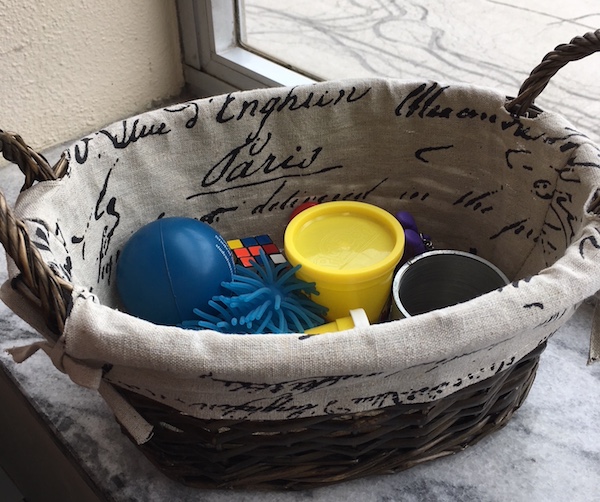
A basket of fidget items on a window sill in the ASC.

Academic Support Center Staff

Every person I met at the ASC had the same goal. They all expressed a desire to provide support, to build student skills, and to offer encouragement. They want all their students, with a wide range of interests, talents, and learning differences to graduate from college and become valued employees.

Notre Dame College has students from all over the United States and from several countries. If you have a child with learning differences who wants to earn a college degree, check out Notre Dame’s ASC. If sending your child away from home isn’t feasible, contact colleges in your area to see what they offer by way of academic support. Notre Dame College is a leader in providing support for learning differences, and many colleges and universities are falling into line behind them.

Notre Dame's Academic Support Center provides support for students with learning differences and is a model for higher education around the country.

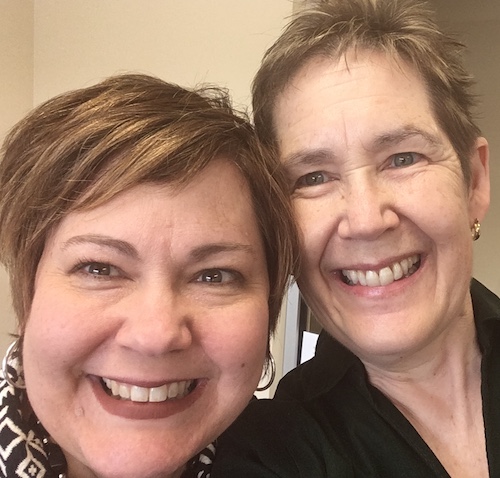
Katie and I doing the selfie thing at the end of our visit.


Do you like what you see at DifferentDream.com? You can receive more great content by subscribing to the quarterly Different Dream newsletter and signing up for the daily RSS feed delivered to your email inbox. You can sign up for the first in the pop up box and the second at the bottom of this page.

By

Jolene Philo is a published author, speaker, wife, and mother of a son with special needs.

Author Jolene Philo

Archives

Categories

Subscribe for Updates from Jolene

Related Posts

When Is Private Testing Right for a Child Struggling Academically?

When Is Private Testing Right for a Child Struggling Academically?

When Is Private Testing Right for a Child Struggling Academically?

When is private testing right for a child struggling academically? Liz Matheis, clinical child psychologist and today’s guest blogger, offers answers by walking readers through 6 questions to determine what’s best for their child’s specific needs. 

When Is Private Testing Right for a Child Struggling Academically?

#1: When your child is struggling academically and your teacher agrees with you, what do you do?

The natural next step is to reach out to the Child Study Team. Lately, I have been finding that parents are receiving much resistance regarding this step and are being sent back to the general education classroom for an intervention plan with accommodations to be implemented for 4-6 weeks. In essence, teachers are being asked to offer more differentiated instruction and try more strategies before the child can be referred for a Child Study Team evaluation.

So where does this leave our struggling child? Waiting. Waiting for intervention while more of the school year passes by. This means that both you and your child are frustrated and flailing. Speaking from experience, waiting is not good for a child who is already struggling academically.

#2: What are your options?

As a parent, you have a few options. You can wait until the 4-6 week intervention period is over and try again. You can also hire a private tutor for your child. Or, you can seek private psycho-educational testing. The last two options involve waiting and often, out of pocket expense.

If you decide to wait and your Child Study Team agrees to test at the end of the 4-6 week intervention period, you will meet again in 90 days to review the test data and determine your child’s eligibility for a special education program and related services.

#3: What are the tests involved in a psycho-educational evaluation done either through the schools or privately?

A psychological evaluation consists of an intelligence quotient (IQ) test, usually a Wechsler-based test that looks at intellectual functioning (WPPSI, WISC-V or WAIS-IV). A full scale IQ is the sum of four index scores while an educational evaluation is a measure of achievement or the different areas of academic functioning such as spelling, writing, reading and math. The Woodcock Johnson Test or the Wechsler Individual Achievement Test is used to assess achievement. The social evaluation is a review of developmental and family history of the student.

#4: What are the advantages of gaining a psycho-educational evaluation privately?

A private psycho-educational evaluation can offer you more information than an evaluation provided by your Child Study Team. A privately based evaluation can also offer you a diagnosis, such as a learning disability or attention deficit hyperactivity disorder (ADHD), where one exists. A private evaluation often consists of executive functioning testing that looks at attention, learning and memory, impulse control, and cognitive flexibility. Another piece of information that is available through private testing is the learning profile. That is, your child’s learning style–visual spatial or auditory sequential.

The examiner can integrate all of the test findings in order to understand your child as a student and learner instead of looking at discrete test scores without looking at how they are related to each other. The other major advantage to private testing is that it will be completed in less than 90 days, which means that you do not need to wait 3 months in order to gain an understanding of how your child is functioning, based on standardized test scores.

#5: When should I accept a Child Study Team evaluation?

That’s easy – if everyone on the Child Study Team is in agreement, then let them proceed with the testing. If you are looking to make the most of the data generated, you may want to consult with a psychologist, learning specialist or educational consultant in order to help you integrate the data that has been provided to you.

#6: How is eligibility determined by the Child Study Team?

Traditionally, the Child Study Team is going to look for a 23 point discrepancy (please note that this can vary from state to state and district to district) between the full scale IQ and an index score on the educational testing. This discrepancy suggests that there is a difference between your child’s cognitive ability and how they are actually performing; thus, a learning disability exists, and your child can be eligible for special education and related services under the category of specific learning disability. Your child can also gain eligibility under several other categories that vary from state to state. So you will want to refer your state’s special education law for the most accurate information.

I hope this clarifies some of the process for you when you are trying to determine when private testing is right for a child struggling academically. If you have more questions, leave them in the comment box.

Do you like what you see at DifferentDream.com? You can receive more great content by subscribing to the quarterly Different Dream newsletter and signing up for the daily RSS feed delivered to your email inbox. You can sign up for the first in the pop up box and the second at the bottom of this page.

By

Dr. Liz Matheis is a clinical psychologist and school psychologist in Parsippany, NJ. She offers support, assessments, and advocacy for children who are managing Autism Spectrum Disorders, ADHD, learning disabilities, and behavioral difficulties, as well as their families. She is also a contributor to several popular magazines. Visit www.psychedconsult.com for more information.

Author Jolene Philo

Archives

Categories

Subscribe for Updates from Jolene

Related Posts

The Final IEP Meeting: Advice to the Mom I Once Was

The Final IEP Meeting: Advice to the Mom I Once Was

The Final IEP Meeting: Advice to the Mom I Once Was

After her daughter’s final IEP meeting, guest blogger Karen Jackson, marked the day by penning a letter to the mother she was in the early days of their children’s education. Her advice is valuable beyond measure and may require a tissue.

The Final IEP Meeting:
Advice to the Mom I Once Was

Today I attended my 17th and final IEP meeting for my daughter, Samantha. I remember the first one when she was just four years old. I was new to the lingo, new to the procedures and still grieving and trying to figure out what autism was and how it would affect my sweet daughter.

Samantha’s public schooling comes to an end this year, and the last IEP begins the official process of transition to the post-high school world. I feel like something should mark this day. Celebration does not seem completely appropriate but the idea of a letter to that mom from 17 years ago might work. So here goes…

Dear Young(er) Mom,

As you begin this new, unknown path of education for your child who was just diagnosed with autism, let me share a few things you will learn during the next 17 years- things that may set your mind at ease:

  1. You aren’t going to do this alone. There will be many, many professionals who will come alongside and help educate your daughter. They will not all be excellent teachers, but some will be. Most will be caring and skilled, doing their best to help your daughter reach new goals.
  2. It’s not a battle. Despite how you feel right now, the best strategy is to support and encourage the IEP team. Be a positive advocate when at all possible. Sometimes, you will need to use strong words or even bring in other advocates, but you will be most affective by staying positive.
  3. Do not feel guilty. You try your best for your daughter, so do not feel guilty when you miss something–when she doesn’t make the expected progress or when you can’t be at every event for all three of your children. (Oh, by the way, you will have a third child in a couple of years…Surprise!)
  4. Enjoy the everyday moments. The schedule in the school years will always be busy: activities, work, meetings, therapy will be on-going. So savor the small, seemingly insignificant moments; a walk to the water, the first day she wanted to help in the kitchen, watching her interact with her brothers. These precious moments will make up for some of the daily challenges so take time to recognize and enjoy them.
  5. You are stronger than you think. The task ahead appears daunting. You need to educate a child who can’t speak a word, keep her safe, help her to grow into the woman she is meant to be. You will become strong enough because, as you gain parenting and life experience on this unexpected journey, your faith will also mature. One day, you will look back and realize your strength is not just from yourself. It is from the Lord. You were never meant to be strong enough by yourself, or even with all the support of professionals, family and friends. God will be on every step of the journey with you and He will give you the strength to carry on.

Blessings to you as you begin this exciting and very special parenting journey. Hang in there. The years are going to go quickly!

Love,
Karen, a slightly older and more experienced me


Do you like what you see at DifferentDream.com? You can receive more great content by subscribing to the quarterly Different Dream newsletter and signing up for the daily RSS feed delivered to your email inbox. You can sign up for the first in the pop up box and the second at the bottom of this page.

By

Karen Jackson is the Executive Director of Faith Inclusion Network (FIN) of Hampton Roads where she lives with her husband and three children in Norfolk, VA. She is also the author of Loving Samantha. You can connect with Karen on Facebook at the FIN page.


Author Jolene Philo

Archives

Categories

Subscribe for Updates from Jolene

Related Posts