Fitness and Exercise in Kids with Special Needs

Fitness and Exercise in Kids with Special Needs

Fitness and Exercise in Kids with Special Needs

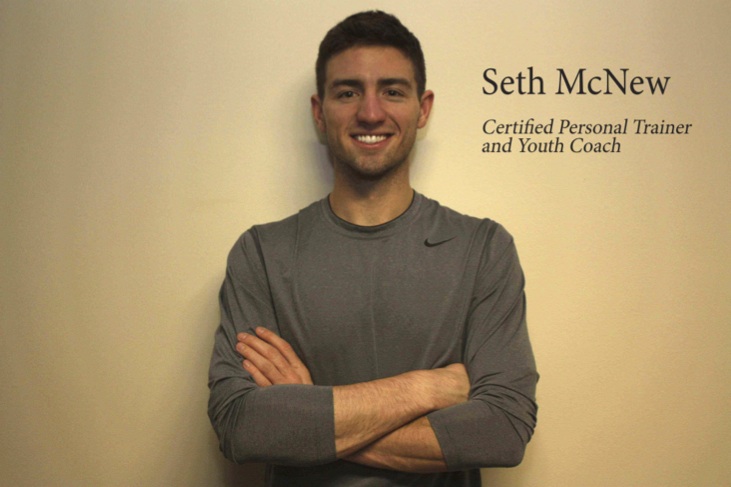
Today’s guest blogger is Seth McNew, a fitness and exercise coach. He’s here to offer ideas about how parents can encourage children to become more active and stay fit.

Childhood obesity rates are growing at a dangerous rate, with one out of every three kids in America considered overweight. This is not just in the United States, this epidemic is in Canada, Australia, the U.K., and many other countries around the world.

Fitness and Exercise for Kids with Special Needs

Now apply this to the community of kids with special needs. With little research and nutrition data available specific to special needs exercise, and it being much harder for to participate in organized sports and group physical activities for many reasons, it’s no wonder that the rate of obesity is even higher among this population than in the general public.

However, through targeted exercise and play ideas, as well as healthy habit creation, we can change stereotypes and statistics and get our kids fit, healthy, and happy. This is not about special diets or one-stop cure-all exercises. This is about finding fun and motivating ways to exercise, with activities for special needs children.

Fitness and Exercise Sample Activity

Here is one example of a simple and fun exercise to do at home:

The Bear Crawl: Animal moves are a favorite for all kids and easy to learn. Start by bending forward and lowering the hands to the ground. Then, try to keep the legs straight as he or she shuffles back and forth across the room. Make it fun by growling like a bear! The more fun the activity, the more reinforced the movements will be. See similar activities for special needs children in this post.

Other Fitness and Exercise Activities and Resources

Do you and your child have favorite activities to encourage fitness and exercise? Do you know of other good resources on this topic? Please share them in the comment box!

Do you like what you see at DifferentDream.com? You can receive more great content by subscribing to the quarterly Different Dream newsletter and signing up for the daily RSS feed delivered to your email inbox. You can sign up for the first in the pop-up box and the second at the bottom of this page.

Top Photo Credit: www.freedigitalphotos.net

By

I’m Seth McNew. I’m fortunate that I get the amazing opportunity to work with this incredible population and help our community to reach better fitness goals, encouraging lifelong health in kids with special needs. As a long-time youth sports coach, as well as a certified personal trainer, I have been working in athletics and fitness all of my life. During my early days of fitness instruction, I was asked to help with a local elementary school’s special needs class to facilitate an exercise program. I saw a need and a possibility and have been running the Play Through Autism program since then. Check out this video to learn more. I hope that you will be able to use this resource to acquire some fitness techniques and ideas that will help you and your child to exercise.

Author Jolene Philo

Archives

Categories

Subscribe for Updates from Jolene

Related Posts

IEPs, Sports, and Kids with Special Needs

IEPs, Sports, and Kids with Special Needs

IEPs, Sports, and Kids with Special Needs

Today, I’m happy to introduce my friend and guest blogger Naomi Norris. She’s here to share how she and her son’s school used IEPs to encourage her son to get involved in his middle school cross country team. If you read the story and would like to leave a comment for Naomi below, it will be passed on to her.

I was very proud as I read the digits on the official timer as each runner crossed the finish line…18 minutes, 10 seconds. That’s his best time yet! His first time was over 27 minutes because he had stopped to scream at his aide a couple of times and had a fit over some bugs flying around. This was a good time, and though he had stopped twice, he finished ahead of over forty other boys.

My son, Joshua, was born with a severe Pierre Robin Sequence, which caused him to be trached and tube-fed for his first 3 years of life while he underwent a series of corrective surgeries. He used a walker for 1 1/2 years and is small for his age. Josh is both autistic and mentally-challenged, requiring a full-time aide at school. Though he has these weaknesses in his life, he has an incredible personality that people love.

Until this fall, Josh had ridden the bus home each day after school, only to play video games and watch PBS until bedtime. Last spring I became concerned over this pattern developing in him. So when it was time to write a new IEP, I decided to include cross country in it. At the time, my husband was not on board with the idea. But the school agreed, and when the 7th grade cross country team assembled this fall, Josh Norris was on it. The only glitch was finding the right aide to run beside him. We knew of a young man who plays soccer and runs to stay in shape and asked if he would be willing to volunteer. He agreed, was approved by the school, and goes to every practice and meet with Josh. He is allowed to run with Josh in the meets, and even hold onto his arm or hand to lead him along. The goal is that by ninth grade, Josh will run independently and even be an asset to the team.

Josh was not happy about the change in his routine. He fought with his aide, hitting and kicking and throwing fits for the first week of practice. And did I mention his bug phobia? Dragonflies are especially terrifying to him, so he would rather stay indoors. Even so, after the first week, he started to enjoy being on the team. The other boys and coaches treat him well and seem to enjoy him. At one meet, he became irritable and upset halfway through, giving his aide some trouble. I watched as a young teammate ran alongside him, put his arm over his shoulders, and ran with him until he calmed down. Josh finished the race and even passed several boys before the finish line. Needless to say, Dad is now on board!

A woman approached us wanting to meet Josh after one race. She works for another school district and wanted to know how we got the school to agree to this. She fought for autistic kids in her district to be able to participate in school sports and lost. I told her to have the parents request it in the IEP. The school will be more likely to comply if it’s there. There’s always a way to make it work.  Parents sometimes forget that they need to fight for their kids’ legal rights. Our school was very happy to make it happen for Josh, and we are grateful.

Final Note: For any parents struggling to raise your autistic child, I want to encourage you not to give up hope. Josh is my third child with autism. My oldest daughter couldn’t speak until she was 5, graduated high school with honors, and is now doing well in college. My 14-year-old son with autism struggled with horrible outbursts of profanity for years. He just started his freshman year of high school without a one-on-one associate and is completely off medications for the first time. He has a 3.4 GPA and is on the football team. Now we are focusing in getting Josh on track for life.  We have always accepted our kids’ physical and emotional shortcomings, but have never underestimated them. Each child has had incredible strengths…these are what we have focused on, while continually teaching them self-discipline. Our children has been a wonderful gift from God, and we are grateful to Him for allowing us to have been their parents.

We don’t let autism ever get in the way of teaching them what’s really important in this life.

Do you like what you see at DifferentDream.com? You can receive more great content by subscribing to the quarterly Different Dream newsletter and signing up for the daily RSS feed delivered to your email inbox. You can sign up for the first in the pop-up box and the second at the bottom of this page.

Naomi Norris explains how she used IEPs to get her son with autism involved in cross country & how being on a sports team helped her son.

By

Naomi Norris lives in Iowa with her husband Rob and their four children. She is a stay-at-home mom who sometimes works with her husband in their real estate investment business.  Her faith in Jesus Christ is first in her life, allowing her to be the mother and wife she has needed to be over the last 20 years. She has five children. Three of them have been diagnosed with autism and one died of a neurological cancer at age 3. Naomi and Rob have taken all their children overseas to expose them to different cultures and show them what true poverty looks like in the world. Naomi and her daughters are heavily involved in helping save the lives of orphans in Congo, Africa through orphan sponsorship and teaching orphans AIDS prevention.

Author Jolene Philo

Archives

Categories

Subscribe for Updates from Jolene

Related Posts

Math Literacy Ideas for Kids with Special Needs

Math Literacy Ideas for Kids with Special Needs

Math Literacy Ideas for Kids with Special Needs

Math literacy is a crucial part of school readiness for kids with special needs, though it’s not nearly as well-known as its popular older sibling, reading literacy. But an article in Chicago Parent addresses the topic. The article is written by Ellen Metrick. Her last name is not the reason she’s qualified to write an article about math literacy. She’s qualified because she’s a member of Special Parent’s advisory board in Chicago.

6 Math Literacy Ideas

Metrick first recommends parents “sprinkle lessons in magnitude, numbers, distance, shapes, weights, volume, patterns, and relationships into a day of fun.” The she offers six fun ways for encouraging math literacy in our kids with special needs:

#1 Breakfast of Shapes

Make toast squares and pancake circles. Cut the toast into triangles. Then talk about fractions, too.

#2 Puzzle Play

Puzzles encourage math concepts that involve spatial skills such as rotating and translating shapes and recognizing patterns.

#3 Lunch with Weight and Volume

Capitalize on kids’ fascination with scales (the original article provides a link to a kid-friendly scale) by allowing him to weigh their sandwiches. Let them drink from a measuring cup to measure how big a gulp is.

#4 Add a Dimension

Use 3D puzzles and games to improve spatial relationships. Again, the original article contains numerous links to 3D games, puzzles, and products.

#5 Dinner Is about Counting

Counting real things is more effective than reciting numbers in order. So have your child count the plates at the table, how many times they chew, and how many peas in a spoonful.

#6 Take a Number to Bed

NumbersAlive! creates plush number characters your child can take to bed. The link to the company and more ideas about how to use them can be found in the Chicago Parent article.

To access all the wonderful resources and more fun ideas, visit Fun Ways to Teach Math Literacy to Kids with Special Needs.

How Do You Encourage Math Literacy?

What have you done to familiarize your child with numbers and math concepts? Leave your fun ideas in the comment box.

Do you like what you see at DifferentDream.com? You can receive more great content by subscribing to the quarterly Different Dream newsletter and signing up for the daily RSS feed delivered to your email inbox. You can sign up for the first in the pop-up box and the second at the bottom of this page.

Photo Credit: www.freedigitalphotos.net

By

Jolene Philo is the author of the Different Dream series for parents of kids with special needs. She speaks at parenting and special needs conferences around the country. She’s also the creator and host of the Different Dream website. Sharing Love Abundantly with Special Needs Families: The 5 Love Languages® for Parents Raising Children with Disabilities, which she co-authored with Dr. Gary Chapman, was released in August of 2019 and is available at local bookstores, their bookstore website, and at Amazon. The first book in her cozy mystery series, See Jane Run!, features people with disabilities.

Author Jolene Philo

Archives

Categories

Subscribe for Updates from Jolene

Related Posts

Special Needs & Middle School: 6 Sanity Savers for Parents

Special Needs & Middle School: 6 Sanity Savers for Parents

Special Needs & Middle School: 6 Sanity Savers for Parents

Special needs kids transitioning to middle school face some unique challenges. So do their parents. One of those challenges is staying sane when parents send their adolescents into the great, big middle-school world.

6 Sanity Savers for Parents from Katy Dran

Kate Dran is an autism advocate and parent of 2 sons, one with autism, one developing typically. She’s also the founder of Adaptive Solutions Analysis, LLC. In an article for Special-Ism, she offers 6 sanity saving tips for parents sending their kids with special needs to middle school. Here’s what she suggests to ease the transition for both parent and child:

  1. Realize you can’t protect him from every difficult social situation anymore. Trust that the relationship you built when your child was young is strong. And remind your child that you’re available to talk whenever he comes to you.
  2. Don’t freak him out with memories of your middle school experience. Instead, keep things positive without sugar-coating the hard stuff.
  3. Communicate openly and positively with school personnel. Make sure they know that you’re there to help them.
  4. Give your child room to learn. Even from his mistakes. Remember, he’ll be an adult in just a few years and needs to start learning independence  now.
  5. Trust him. So your child will learn to trust himself.
  6. Don’t Panic. You made it through middle school, and your child will, too.

What Sanity Savers for Parents Do You Recommend?

So how about you? How did you stay sane when your child with special needs entered middle school? What did you worry about and how did you rein in those worries? What worked and what didn’t? Leave your suggestions in the comment box.

Do you like what you see at DifferentDream.com? You can receive more great content by subscribing to the quarterly Different Dream newsletter and signing up for the daily RSS feed delivered to your email inbox. You can sign up for the first in the pop-up box and the second at the bottom of this page.

Photo Credit: www.freedigitalphotos.net


By

Jolene Philo is the author of several books for the caregiving community. She speaks at parenting and special needs conferences around the country. Sharing Love Abundantly With Special Needs Families: The 5 Love Languages® for Parents Raising Children with Disabilities, which she co-authored with Dr. Gary Chapman, was released in August of 2019 and is available at local bookstores, their bookstore website, and Amazon. See Jane Sing!, the second book in the West River cozy mystery series, which features characters affected by disability, was released in November of 2022.

Author Jolene Philo

Archives

Categories

Subscribe for Updates from Jolene

Related Posts

Back to School, Coffee, and a Little Nostalgia

Back to School, Coffee, and a Little Nostalgia

Back to School, Coffee, and a Little Nostalgia

Back to school days are almost upon us as August fades into September. Guest blogger Kimberly Drew loved going back to school when she was a kid. But now that she’s mom to a child with special needs, she’s learned how to help her daughter, Abbey, transition back to school. Maybe her ideas will make life easier at your house, too.

Back to School, Coffee, and a Little Nostalgia

I don’t know about you, by my calendar beings in September with the beginning of a new school year. There’s this scene in the movie You’ve Got Mail where they talk about a bouquet of perfectly sharpened pencils. I love that scene because I adore new school supplies! There’s a chance it’s completely psychological, but I think a backpack full of them has a very particular smell to it. I absolutely love it and it takes me back to an easier time of life.

Back to School for Me

My mom always took first day of school photos on the front step, and then we were off. My biggest fear back then was whether or not my little sister and I could run across the field fast enough to catch the bus—proof that we have been chronically, almost-running-late since we were kids! If I close my eyes, I can see my sister’s waist-long braids flapping around, and it makes me laugh.

Back to School for My Daughter

The first couple of months of school for children with disabilities might not come with as much enthusiasm and excitement as it did for me as a child. There are new classrooms, new classmates, different seating arrangements, and classroom décor. The work and routine are dependent on the teaching style of your classroom teacher and the grade level your child is in. The hype is quickly overshadowed by all the specific challenges that our kids have to deal with.

Back to School Routine

Still, there are always ways to take the edge off. I know I’ve said it before, and I will probably mention it a hundred more times. There is nothing more soothing for your child than to wake up to, come home to, and go to bed to than ROUTINE, ROUTINE, ROUTINE. Their brains are working so hard to process sensory information all day long, control impulses, and maintain attention spans. The established routine gives their brain a break from it all. The predictability of routine gives them a sense of security and peace of mind.

Back to School Breaks for Kids

With all of that said, be assured that I’m not suggesting you color block every fifteen minutes of your child’s day, because they WILL become addicted to whatever routine you establish. You need to have blocks of time where there is nothing that’s expected so that you have the freedom to run to the store unexpectedly, take a phone call, or just plain live a semi-normal life. But I am saying that your child will greatly benefit from established routines. All of our kids do, even if they don’t have a disability.

Back to School Breaks for Parents

At almost 34 years of age, I find my new favorite first day of school tradition is being the one taking the pictures on the front step. When the bus pulls away I make a cup of coffee that I actually get to drink hot instead of re-warmed in the microwave. I sit back and think about my old bus stop, my little sister, and pray for all of my kids to have as great a childhood school experience as I did.

Your Back to School Experience?

How do you respond to sending the kids back to school? How do your kids respond? What do you do to make the transition easier for all of you? Leave a comment in the box below.

Do you like what you see at DifferentDream.com? You can receive more great content by subscribing to the quarterly Different Dream newsletter and signing up for the daily RSS feed delivered to your email inbox. You can sign up for the first in the pop-up box and the second at the bottom of this page.

Photo credit: www.freedigitalphotos.net

By

Kimberly grew up and went to college in the small town of Upland, IN. She graduated from Taylor University with a degree in Elementary Education in 2002. While at TU, she married her college sweetheart and so began their adventure! Ryan and Kimberly have four amazing kids on earth (Abigail, Jayden, Ellie, and Cooper), and a baby boy waiting for them in heaven. Their daughter Abigail (Abbey) has multiple disabilities including cerebral palsy, a seizure disorder, hearing loss, microcephaly, and oral dysphagia. She is the inspiration behind Kimberly’s desire to write. In addition to being a stay-at-home mom, Kimberly has been serving alongside her husband in full time youth ministry for almost fourteen years. She enjoys working with the senior high girls, scrapbooking, reading, and music. You can visit Kimberly at her website, Promises and Perspective.

Author Jolene Philo

Archives

Categories

Subscribe for Updates from Jolene

Related Posts

Homeschooling Kids with Special Needs: 4 Tips to Get Started

Homeschooling Kids with Special Needs: 4 Tips to Get Started

Homeschooling Kids with Special Needs: 4 Tips to Get Started

Homeschooling is an option for parents of kids with special needs to consider. The decision is personal and depends upon factors specific to each family’s circumstances. Veteran homeschooling mom of kids with special needs, Sylvia Phillips, is here with 4 tips on how to get started if you choose the homeschooling option.

Thinking About Homeschooling Your Child with Special Needs?

The new school year is right around the corner. As much as I love summer and hate for it to end, I still get excited about and enjoy planning new educational activities, experiences, and learning opportunities, even after 29 years of homeschooling. This year I have only two school-aged children to plan for, though at one time I was homeschooling six children.

  1. Check out the Homeschool Legal Defense Association: Whether you’re  contemplating homeschooling one child or nine, the first thing that I always recommend new families who are thinking about homeschooling to do is to check out Homeschool Legal Defense Association. Joining HSLDA will guarantee that you have legal representation if you should happen to have any negative  issues with your school district concerning your right to home educate your children. Also check for your state’s homeschooling laws on HSLDA’s My State page.
  2. Inform Your School District: The next step would be to inform your school district of your intention to homeschool your child for the next school year. Do not ask permission. Simply let them know that your children will not be attending school in the fall. If your child has any special needs it is your choice if you want to mention it to them or not. If my child with special needs performed at grade level and had no problem proving that on tests, I personally wouldn’t divulge that she had any special needs at all. However, if your child will need special accommodations, does not perform at grade level, or does not perform well on tests then I strongly advise you to inform the school district of your child’s special needs. In most states schools are required to offer your special needs child educational and psychological evaluations,  and any special services your child might need such as speech therapy, physical therapy, or occupational therapy. You will not be required to accept such services even if they are recommended. However, you may be required to prove how you will be providing your child with equivalent services.
  3. Complete the Necessary Forms: Upon receiving your letter of intent, the school official in charge of homeschooling should send you all the necessary information you’ll need and any forms you may be required to fill out. In New York we are required to send in a description of our courses of study, also known as the  Individualized Home Instruction Plan (IHIP), attendance records, and quarterly report cards. We are also required to give our children standardized tests every other year beginning in fourth grade and every year beginning in ninth grade.
  4. Choose Your Homeschooling Materials: Now comes the fun part:  deciding on your homeschooling method,  searching for curriculum ideas, and planning exciting learning experiences for your family! A great place to start researching homeschooling styles and planning curriculum is the Christian Book Distributors’ Homeschooling Catalog. Here you will find an abundance of the information you’ll need to get started on your exciting brand new homeschooling adventure!


For a brief description of several homeschooling options you might want to stop by Homeschooling Methods Explained. I hope your child has a great school year wherever you decide to educate this fall!

Your Homeschooling Starter Tips?

Are you homeschooling your child with special needs? What tips can you add to Sylvia’s list? Your advice could help another family have a successful homeschooling year, so leave a comment in the box below.

Do you like what you see at DifferentDream.com? You can receive more great content by subscribing to the quarterly Different Dream newsletter and signing up for the daily RSS feed delivered to your email inbox. You can sign up for the first in the pop up box and the second at the bottom of this page.

Photo Credit: www.freedigitalphotos.net

By

Author Jolene Philo

Archives

Categories

Subscribe for Updates from Jolene

Related Posts