Nasty Little Whispers and the Truths Caregivers Can Use to Silence Them

Nasty Little Whispers and the Truths Caregivers Can Use to Silence Them

Nasty Little Whispers and the Truths Caregivers Can Use to Silence Them

Nasty little whispers had a way of burrowing into my thoughts while my husband and I cared for our very sick baby in the early 1980s. Those whispers, also known as lies, set up camp in my head, and drained me of the joy and purpose that keeps a caregiver going. Combatting those lies was nearly as big a struggle as keeping our son alive during the first 4 years of his life. Frankly, the nasty little whispers often beat me down battles during my days as a sleep-deprived, isolated, anxious young mom.

Our very sick baby is now a healthy man, and I have time to minister to caregivers. We connect rapidly and profoundly because despite our differing circumstances, we have much in common, including those nasty little whispers. As we talk, I often share 3 truths to silence 3 very common lies.

Lie #1: This Caregiving Season Is Forever

My father was diagnosed with multiple sclerosis as a young man, when my siblings and I were very young. Our mother was his primary caregiver for 38 years, but we kids were part of his caregiving team throughout our childhoods and into young adulthood. More than once, we nearly bought into the lie that we would care for Dad forever.

Truth #1: This Caregiving Season Is Not Forever

Dad’s death dispelled the lie. Mom was 67, my sister, myself, and my brother were 44, 41, and 38. Suddenly, the forever of caregiving ended, and we had to move on. Caregivers who know this season will end–when their loved one recovers, when others share the caregiving duties, or with the death of the loved one or the caregiver–are more likely to handle this difficult transition in a healthy manner.

To read the rest of this post visit Heather Johnson’s website, True Life with God.

Do you like what you see at DifferentDream.com? You can receive more great content by subscribing to the quarterly Different Dream newsletter and signing up for the daily RSS feed delivered to your email inbox. You can sign up for the first in the pop up box and the second at the bottom of this page.

By

Jolene Philo is a published author, speaker, wife, and mother of a son with special needs.

Author Jolene Philo

Archives

Categories

Subscribe for Updates from Jolene

Related Posts

Sometimes a Mom Needs to be Mothered

Sometimes a Mom Needs to be Mothered

Sometimes a Mom Needs to be Mothered

“I’ve got a sinus infection,”  I texted the friend who was picking me up at an unfamiliar airport in an unfamiliar town. “Do you have any antibiotics?”

“We’ve got your back,” she replied.

She wasn’t kidding. When she delivered me to our destination, she and my other friends had arranged an array of medications on the bathroom counter–everything and more than I needed to beat the nasty bug that reared it’s ugly head on a way to the Inclusion Fusion Live Conference where I was speaking before joining my friends for some R & R.

I shouldn’t have been surprised by their response.

Each of the friends is the mom, and most of them are moms of kids with special needs. They made sure I took my medicine and whisked me off to bed. “Don’t even think about going to church in the morning,” they said. “Sleep in and get better.” A single thought passed through my foggy mind as I fell asleep in the comfy bed made up with fresh sheets.

Sometimes, a mom needs to be mothered.

After 41 years of marriage, 36 years as the parent of a child with special needs, and 12 years of caring for my own mom I had forgotten the wonderfulness of being mothered. I had forgotten how lovely it is to be fussed over, to surrender control, to be given permission to rest, to turn off the alarm and sleep until my body would wake of its own accord.

To read the rest of this post, visit the special needs parenting blog at Key Ministry.

Do you like what you see at DifferentDream.com? You can receive more great content by subscribing to the quarterly Different Dream newsletter and signing up for the daily RSS feed delivered to your email inbox. You can sign up for the first in the pop up box and the second at the bottom of this page.

By

Jolene Philo is a published author, speaker, wife, and mother of a son with special needs.

Author Jolene Philo

Archives

Categories

Subscribe for Updates from Jolene

Related Posts

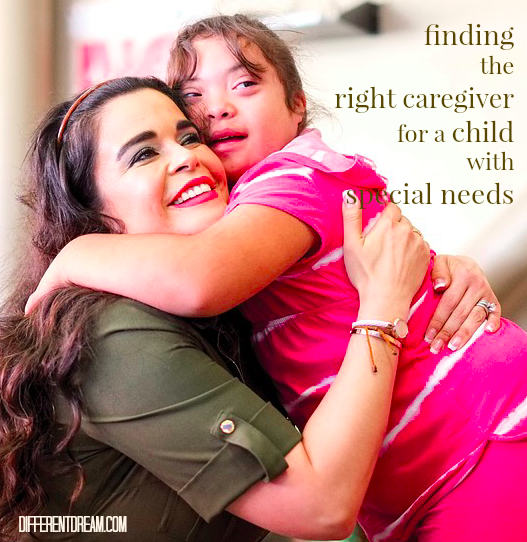
Finding the Right Caregiver for a Child with Special Needs

Finding the Right Caregiver for a Child with Special Needs

Finding the Right Caregiver for a Child with Special Needs

Parents want to find the best possible caregiver for a child with special needs. They want to be hands-on all the time. But there are times that getting an extra hand to help is practical choice. That was that route that my sister took, who is a single mom.

I was still in college when my sister had her child. She was born with Down Syndrome. I naturally got involved in taking care of her, and I owe that experience for my deeper understanding of taking care of children with special needs.

When my sister decided to hire a caregiver, I understood why she had a tough time deciding on the right one. Finding the person who perfectly fits the role in handling such responsibility is not as easy as looking for the cutest baby bows or dresses. And I was there to lend a hand in the selection process. We were eventually guided by our own experiences with her child and good advice from other parents of children with special needs. We were blessed to find good caregivers. The more experiences we had working with them, the more we gained insights about which caregiver traits worked for us.

Finding the right caregiver started with a needs assessment and our knowledge of my niece’s needs and personality. They helped narrow down the choices and guided us through the interview process. The following caregiver criteria guided our selection process:

Physical and Mental Health

  • Healthy, active, and able to keep up with the child’s activities.
  • No history of alcohol and drug abuse.
  • Physical strength and agility to lift and carry a child when needed.
  • Alert and attentive enough to monitor the child and her environment.
  • Good personal hygiene and grooming.

Social Skills

  • Enjoys working with children with special needs.
  • Effective oral and written communication of feedback regarding the child’s progress.
  • Interacts well with the child and the rest of the family.
  • Respectful and has a keen sense of responsibility.
  • Displays professional ethics regarding confidential information
  • Handle conflict with emotional maturity, maintains emotion control, and calm disposition.
  • Uses good judgement in problem-solving.
  • Handles emergencies and unforeseen situations wisely.

Knowledge Base

  • Trained in First Aid and CPR.
  • Understands nutritional requirements for children with special needs.
  • Has knowledge of child growth and development.

Finding the ideal caregiver for a child with special needs requires the work and involvement of every family member. If needed, parents should seek advice from experts and other parents to find a caregiver with experience, patience, skills, and genuine love and compassion for children with special needs.

Do you like what you see at DifferentDream.com? You can receive more great content by subscribing to the quarterly Different Dream newsletter and signing up for the daily RSS feed delivered to your email inbox. You can sign up for the first in the pop up box and the second at the bottom of this page.

By

Angelica Beers is proud mom in her early 30’s who embraced the life of freelancing just so she could have more cuddle time with her kids. She is a writer at babywisp.com. She loves to write about her motherhood journey, and hopes to travel with her family someday.

Author Jolene Philo

Archives

Categories

Subscribe for Updates from Jolene

Related Posts

8 Lessons from My Kids about Life

8 Lessons from My Kids about Life

8 Lessons from My Kids about Life

The lessons from my kids just keep coming. My youngest turns 30 this year, and I am continually surprised and delighted by what they have to say and how they have improved upon what their dad and I taught them. This morning, I sat down and brainstormed a list of the wisdom and richness they’ve brought to my life.

  1. How to keep house in a tornado. Which was the general condition of our home when they were kids. Now that we have an intergenerational living arrangement with our daughter’s family, our grandkids create tornadoes whenever they visit our part of the house. Thanks to my tornado training, I can keep up with them–most of the time.
  2. How to foster creativity and individual uniqueness. My kids taught me that fostering creativity requires only a few key ingredients: time to mess with art supplies, tape, blank paper, scissors; imaginative time with dress up clothes; reading books together; time for Legos, Lincoln Logs, and blanket forts; time alone to think and imagine; and time outside to explore and get dirty. Both kids had access to these ingredients, and their individual uniquenesses emerged as they gravitated to the ones that piqued their interests. The same pattern is emerging with our grandkids. Warning! This strategy will result in a house that looks like it was hit by a tornado.
  3. What matters to kids is different than what matters to adults. My kids often talk about their favorite childhood memories and what events impacted them profoundly. Usually their fondest recollections spring, not from planned events like vacations or big, but from little things–songs we sang in the car, the radio shows playing while we cleaned house and folded laundry on Saturdays, the stories their dad told at bedtime, and learning to cook simple meals.
  4. How to make a good latte. My daughter did the barista thing while her husband was in graduate school. She did some research and convinced my husband and son to join her in purchasing a refurbished latte machine for me one Mother’s Day. She taught me how to use it, and we now take turns making lattes for one another–sheer bliss for two coffee snobs on a tight budget and miles from a good coffee shop.
  5. How to safely peel an onion. My son taught me this skill the last time we visited his farm. It’s not just safe, it’s quick and easy. I am eternally grateful!
  6. How to protect privacy. I’m thankful social media didn’t exist when our kids were young. I would have plastered pictures of our son’s surgeries and recoveries to keep people up-to-date. Now that he’s an adult, I realize that practice would have been an invasion of his privacy that could never be erased. Both are parents themselves who post few pictures of their children, and I post none at all.
  7. Endings are new beginnings. Each time a phase of my children’s lives ends, I am a little sad. But I also get a little excited because my kids have showed me that each ending—including the ones I was pulled into kicking and screaming–is also a new beginning. Each new beginning contains disappointments and delights, and God continually uses both for good in unexpected and amazing ways.
  8. Let go of all but prayer. God allowed my children to mature and become adults. They are no longer the baby boy in a NICU isolette recovering from surgery or the little girl whose dyslexia kept her from learning her math facts. They are adults who have made the most of their strengths and can cope with their weaknesses. My job is no longer to pick them up when they fall. My job is to let go of all but prayer. To pray that when they fall, they will have the strength to pick themselves up, and to cry out to God when their strength fails.

Do you like what you see at DifferentDream.com? You can receive more great content by subscribing to the quarterly Different Dream newsletter and signing up for the daily RSS feed delivered to your email inbox. You can sign up for the first in the pop up box and the second at the bottom of this page.

By

Jolene Philo is a published author, speaker, wife, and mother of a son with special needs.

Author Jolene Philo

Archives

Categories

Subscribe for Updates from Jolene

Related Posts

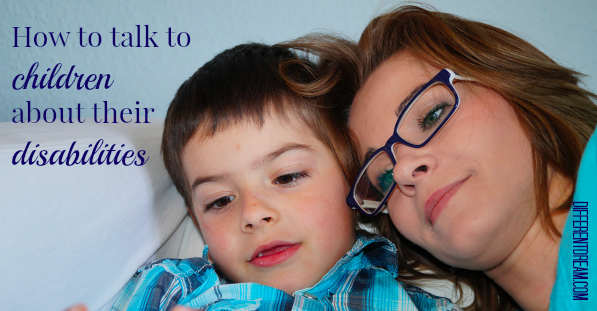
How to Talk to Children About Their Disabilities

How to Talk to Children About Their Disabilities

How to Talk to Children About Their Disabilities

Guest blogger Trish Shaeffer is at Different Dream to explain how to talk to children about their disabilities. Her ideas have been field tested on her own boys with whom she says she’s “100% honest so it’s not a shock to them in later life.

We’ve all been there as parents. When our little ones with disabilities realize what is going on in their world and how different they are from others, the questions will come pouring out. Why? When? How? What’s that?

No matter what age our children are, we have to answer their questions regarding the giant elephant in the room. If they have siblings, we have to answer their questions depending on a child’s chronological or development age. The talk about a child’s disability doesn’t have to be a formal, one-time-only, high-pressure sit-down event. Instead, make it part of everyday conversations and share information on your child’s timetable.

As a mom of three boys, with twins who have unique and different medical conditions and disabilities, I have answered their questions. I simplify things and change the way I answer  depending on their ages and developmental delays. For instance, my neuro-typical 9-year-old will understand more than the one twin who is 5. And his twin with the developmental delay of a 2-year-old, will understand less. Changing the way I answer the same question depending on their circumstances helps so much.

For example, the developmental delayed twin will get the answer, “Your legs do not work right.” His twin and older brother may get the response, “Your brother was born with a condition that makes it hard for his legs to work.” With the 9-year-old, I go into more detail about cerebral palsy and how it effects people differently. When my one 5-year-old asks what autism is I may say, “People with autism look and feel the world differently, but they like the same things as you.”

In addition to these examples. these guidelines can help you educate your children about these issues regardless of age or disability.

  • Start small. Don’t share information in one big dump. From the very start, give your child a name for the condition that makes some stuff harder and some stuff special. For very young kids, you can introduce a storybook element or a stuffed animal with a name like that diagnosis that your child must tame or battle.
  • Tell stories. Find children’s books about your child’s disability. Books can provide  good language to explain a complicated disorder and to show that others have the same issues.
  • Find role models. Knowing other people with the same disability makes the diagnosis much less spooky and isolating. It can be valuable for your child to spend time with other kids with special needs. And other special needs children can provide more answers.
  • Work as a team. All family members should work as a team and provide the same information so as not to confuse your child. Mixed signals are worse than no signals at all.
  • Accentuate the positive. Though you may wish your child didn’t have to deal with disability. But do not describe it as a tragedy. Children living with disabilities know what’s hard and need parents to shine a light on the brighter side. But be sure to discuss strengths and weaknesses, abilities and disabilities.
  • Follow your child’s lead. Some kids may have questions earlier than others. Some may seek only a simple definition and others may want more in depth answers. Every child and every family is different, and there’s no one right way to do this. Keeping lines of communication open and the topic out in the light will make sure that whatever your child wants to talk, you’ll be ready.
  • Watch shows with characters who have disabilities. Shows that feature characters with special needs can be a good way to get a conversation started with your child.
  • Locate helpful websites. Forums for parents of kids with your child’s disability are a good place to see how others have handled the telling and to locate resources. Sites for children with specific disabilities can also be helpful. Older kids might appreciate forums and email lists where they can communicate with kids with similar issues.

Best wishes as you talk to your child. Remember, let the light and positivity in as you share a great moment with your children. Bond with them over the conversation about their disability and find strength in each other.


Do you like what you see at DifferentDream.com? You can receive more great content by subscribing to the quarterly Different Dream newsletter and signing up for the daily RSS feed delivered to your email inbox. You can sign up for the first in the pop up box and the second at the bottom of this page.

By

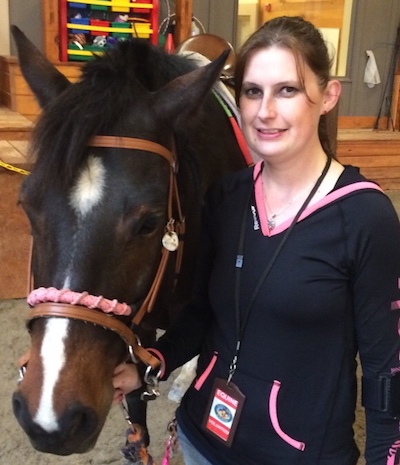
Trish Shaeffer mom of 3 active boys, a 9-year-old and 5-year-old twins who were born 2 months early and have special needs. She’s a peer supporter for Parent to Parent and volunteers with the United Cerebral Palsy Network, Special Olympics, and the United Way. She’s also an equine volunteer at Leg Up Farm. She’s married to her best friend and biggest supporter, Chris Shaeffer.

Author Jolene Philo

Archives

Categories

Subscribe for Updates from Jolene

Related Posts

6 Special Needs Tent Camping Tips

6 Special Needs Tent Camping Tips

6 Special Needs Tent Camping Tips

Special needs tent camping may sound impossible, but guest blogger Trish Shaeffer encourages families to give it a try. Today, she shares her 6 best special needs tent camping tips with Different Dream readers.

Summer is here, and I often get asked if having special needs kids keeps us from going on vacation. My answer?

Absolutely not!

We still do family vacations regardless of our twins with special needs. Even camping! And I’m not talking RV camping. I’m talking tent camping, which is a great way to save money and have a fun and memorable family vacation. In fact, a camping trip was our first-ever family vacation, and it was a dry run for an actual big vacation. So how did we do it?

Special Needs Tent Camping Tip 1: Make a Trial Run

We stayed at the camp site for a weekend to try it out: it went well and the kids loved it. The only thing we overdid was packing too much stuff. But now I know exactly what to bring next time.

Special Needs Tent Camping Tip 2: Consider Your Child’s Needs

We keep our sons’ needs in mind when planning a vacation and choosing a camping spot. For example, for places with larger crowds we bring along noise-cancelling headphones or take a break during the day away from noise and people. We also keep in mind how long we are out and about on vacation.

Special Needs Tent Camping Tip 3: Bring Necessary Equipment

When we go camping, we need a tent site with electricity for Alex’s nebulizer and other medical equipment. He also sleeps on a cozy air mattress because of his cerebral palsy.

Special Needs Tent Camping Tip 4: Find the Perfect Campground

For great family-friendly camping spots, check online through the your state’s Department of Conservation and Natural Resources website. It should have information on accessibility. At the Pennsylvania website, we located a camping spot that was handicap-friendly, and it didn’t cost any extra. We were even fairly close to the lake front.

Special Needs Tent Camping Tip 5: Look for Accessible Activities

Having a kid in a wheelchair makes going on vacation a real planning deal because we have to make sure travel destinations are handicap accessible. Luckily, many places do offer handicap accessible actives. Even beaches have handicap ramps down to the ocean.

One of the things you have to remember when planning a family vacation is simply to ask if you are not sure. Most people are understanding and friendly and will help you with accommodations. Some restaurants even offer a menu for people with food allergies.

Special Needs Tent Camping Tip 6: Be Creative

There are many other details to keep in mind–from keeping your kids in their tents and not going astray, to how to take your special needs child fishing in a wheelchair. All you need to do is be creative with your planning and brave enough to try a family adventure somewhere you have always wanted to go. Be adventurous and have fun!

Your Special Needs Tent Camping Tips?

Have you gone camping with kids who have special needs? What tips did you discover along the way? Leave them in the comment box if you like!

Do you like what you see at DifferentDream.com? You can receive more great content by subscribing to the quarterly Different Dream newsletter and signing up for the daily RSS feed delivered to your email inbox. You can sign up for the first in the pop up box and the second at the bottom of this page.

By

Trish Shaeffer mom of 3 active boys, a 9-year-old and 5-year-old twins who were born 2 months early and have special needs. She’s a peer supporter for Parent to Parent and volunteers with the United Cerebral Palsy Network, Special Olympics, and the United Way. She’s also an equine volunteer at Leg Up Farm. She’s married to her best friend and biggest supporter, Chris Shaeffer.

Author Jolene Philo

Archives

Categories

Subscribe for Updates from Jolene

Related Posts