Autism Brought Me to the End of Myself

Autism Brought Me to the End of Myself

Autism Brought Me to the End of Myself

Autism brought me to the end of myself. That’s what guest blogger Amy Felix says about her daughter’s condition. My son’s condition brought me to the end of myself, too, and your child’s condition has probably brought you to the same place. Today Amy tells of finding grace at the end of herself through a small connection with her little girl. Tissue warning!

Autism brought me to the end of myself. It had been years. Years of longing to hold her, to breathe her in. I missed her. I would think back to the day I met her. She slept in my arms as I snuggled her close. Then, quickly, it came to an end. The distance between us became so vast––all of me ached to be near her again. I watched, on the outside looking in, as autism swept my little girl away to another world.

She wouldn’t let me hold her anymore.

It became our new normal. I could help her get dressed and tie her shoes before preschool, but there were no goodbye kisses. I watched as the other kids ran excitedly into their mother’s arms at the end of the day, while I carefully led my daughter to the car by the strap of her backpack. I couldn’t get too close. She didn’t want to be touched, even when she was sad. I couldn’t comfort her. My heart was breaking as I felt a loss over a child who was still with me. I’d look back at those first months of her life; all those moments I held her, not knowing––taking for granted the sweet way she’d lay on my chest in the early hours of the morning.

The pain was overwhelming.

Autism brought me to the end of myself. I’d watch her there, alone in her playroom, as she’d recite her Little Quack books over and over again from memory. Her soft blonde curls covering most of her face, (She didn’t like her hair brushed, much less pulled back.) she would gladly stay alone there for hours if I’d let her.

In her own little world, she remained––and I felt trapped in mine.

We were just beginning; just entering the world of intense therapies and IEPs. I didn’t even know what to hope for. All I knew was to fight. To fight for all that my baby needed, all that she deserved. To fight to know her more and to let her know that she was longed for; that she was seen, loved, and carried in my heart whether she be in the middle of a period of progress or in the middle of another epic meltdown.

I longed for her to let me into her world; to feel her love and to know she felt mine.

Fast forward seven years, to the week before Christmas. We stood in the front row at church. Our family had been asked up on stage to light the advent candle. She was nervous. Her usual swaying and singing to the worship songs replaced by that disregulated look I knew all too well. I was envisioning us having to step out, as she struggled to find a way to calm herself. No matter how I’d tried over the years, I couldn’t get her to connect my presence with comfort. She was trapped in her overwhelming anxiety but wasn’t able to reach out in any way and accept the care I offered. Autism created a chasm between us, even as we were only inches apart. This distance, one of the most painful experiences of my life.

Until that night.

I could feel her stress level rising. My heart sent up the same prayer it had thousands of times before––a silent plea for a deeper connection to my child. This time, the answer was a big, beautiful, life-changing Yes!

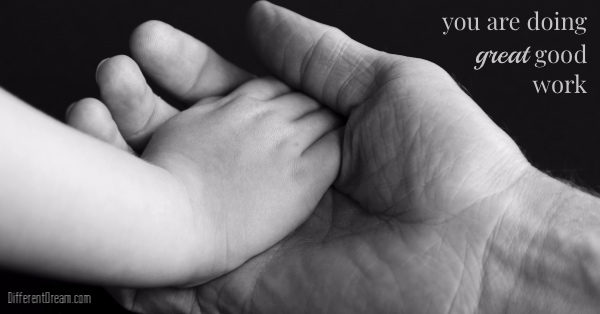
My daughter looked up at me and said, “I’m feeling pretty nervous. Can I hold your hand?” 

There it was.

One moment. One sentence. One breath of new life into my weary heart. She came to me. She was scared and, instead of the usual withdrawal into fear-filled isolation, she reached out for my hand. My baby girl was letting me comfort her, the way I’d longed to for so many years. I finally entered her world on a deeper level- one most moms reach with their children the very first time they hold them in their arms. The waiting, the hoping and the dreaming was over…I had just been given the greatest Christmas gift anyone could ever ask for.

God’s love moved mountains.

I stood there, her hand in mine, through two more Christmas songs with a smile on my face and tears in my eyes. No one around me could’ve possibly known that my entire world was shifting and changing. Autism brought me to the end of myself. But here I was, experiencing a glimpse of Heaven; of restoration and life-giving joy…and I’ll never forget it. This journey, once again, teaching me that the little things are the biggest of them all.

Do you like what you see at DifferentDream.com? You can receive more great content by subscribing to the quarterly Different Dream newsletter and signing up for the daily RSS feed delivered to your email inbox. You can sign up for the first in the pop up box and the second at the bottom of this page.

By

My name is Amy Felix. I’ve been married for 10 years to a guy who’s totally out of my league. I’m a homeschooling mom to 4 kids, ranging in age from 9 to 2 years. That’s really enough work on it’s own but, because I love it, I’m a photographer as well. And, in my spare time, I write. My faith is the driving force behind my special needs blog: Appointed To Hope. I’m a firm believer in being real, transparent, and using the gifts of this journey as a way to relate to others in their joy as well as their sorrow. To read more about my adventures in special needs parenting, visit my website at www.appointedtohope.com.

Author Jolene Philo

Archives

Categories

Subscribe for Updates from Jolene

Related Posts
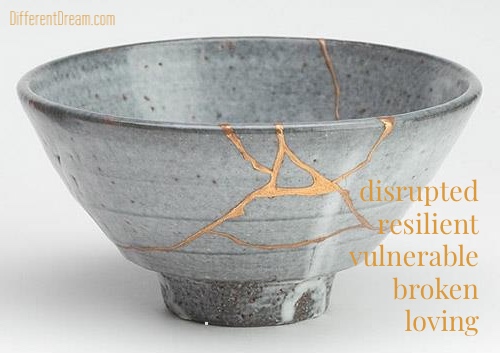
Special Needs Parenting Is Disrupted, Resilient, Vulnerable, Broken, Loving

Special Needs Parenting Is Disrupted, Resilient, Vulnerable, Broken, Loving

Special Needs Parenting Is Disrupted, Resilient, Vulnerable, Broken, Loving

Image rights: ‘Broken Beautiful’ Teresa Shields Parker

Special needs parenting is disrupted to be sure. But as guest blogger and special needs dad Mark Arnold reminds us, it is also resilient, vulnerable, broken, loving, and more.

One of the things about parenting someone with special or additional needs is that life is never predictable. Just when you think that everything is going quite well, something happens that turns everything upside down. That this happens on a regular basis doesn’t necessarily prepare you for the next time or give you answers. It might, however, make you look at the light at the end of the tunnel and wonder if it’s a train just about to run you over!

Special needs parenting is disrupted, but it is normal for additional needs parents. It comes with the territory, and it will happen again and again.

Over the years we’ve gone through and emerged from many disruptive periods with James. Some of them have been because of big changes in his routine at school. Some have been due to big changes in James as he has developed and grown. Hitting puberty was a very disruptive time for us all!

As James is non-verbal, we don’t ignore these disruptions, but work to understand what he is trying to communicate to us through them. What matters most is that James feels safe, cared for and is able to communicate his feelings in a way that we can understand and respond to.

While sometimes these disruptive periods can be hard for us as parents, one thing that this does build in us is resilience.

I remember the first time I saw an official form, describing us as a resilient family. Yes, our experiences over the years have built resilience in us. Our lived experiences have also enabled us to help others, especially through my additional needs ministry work. That doesn’t mean that there aren’t hard times, when we feel like we’ve been run over by that train, times like this morning when I was stood by the window looking out over the garden and longed for the day to go as planned.

Serving God by growing an additional needs ministry doesn’t mean we have all the answers. It doesn’t mean that we’re bullet proof.

We are as vulnerable and broken as anyone else. In fact ministry can increase our vulnerability, as the enemy prowls around looking to find ways to harm God’s work. But God knows this, and He teaches that He can use our vulnerability and brokenness to serve Him and others. It is because we are vulnerable, because we are broken, that we have authenticity and integrity. Without lived experience, scars, stories of disruption, resilience, vulnerability, and brokenness, we would have very little of real value to give.

Paul writes that If I could speak all the languages of earth and of angels, but didn’t love others, I would only be a noisy gong or a clanging cymbal.” I Corinthians 13:1 (NLT)

The experiences, scars, disruption, resilience, vulnerability and brokenness I speak of are united in love. Love for James, love for our family, love for those we serve and support, and love for God who is there with us through it all. Special needs parenting is disrupted. But Christ, alive in us and working through us, binds the disruption, resilience, vulnerability and brokenness together, and makes something beautiful out of it all.

Love.


Do you like what you see at DifferentDream.com? You can receive more great content by subscribing to the monthly Different Dream newsletter and signing up for the daily RSS feed delivered to your email inbox. You can sign up for the first in the pop up box and the second at the bottom of this page.

By

Mark Arnold is the Additional Needs Ministry Director at Urban Saints, a leading national Christian children’s and youth organization. He is co-founder of the Additional Needs Alliance, a national and international advocate for children and young people with additional needs or disabilities. Mark is a Churches for All and Living Fully Network partner, a member of the Council for Disabled Children and the European Disability Network. He writes an additional needs column for Premier Youth and Children’s Work (YCW) magazine and blogs at The Additional Needs Blogfather, He is father to James, who has autism spectrum condition, associated learning disability, and epilepsy. To find out more about how Mark’s work can help you, contact him at: marnold@urbansaints.org or @Mark_J_Arnold.

Author Jolene Philo

Archives

Categories

Subscribe for Updates from Jolene

Related Posts

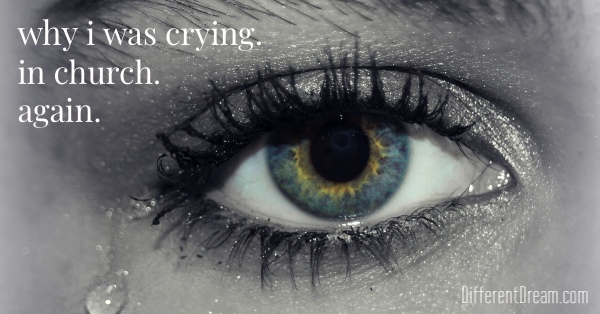
Crying When God Gives What I Need and Not What I Want

Crying When God Gives What I Need and Not What I Want

Crying When God Gives What I Need and Not What I Want

Crying when God gives what I need and not what I want is a regular event in my life. It’s most recent occurrence happened on Sunday. At church. During the sermon.

I thought I’d hidden my tears. Until the woman to my left scooted a few inches away, and my husband gave my shoulder a squeeze. He knew what the woman did not. He knew the pastor had said something that touched the tender spot in my heart. The place where I long for the healthy father I never had.

My husband was right. Our pastor had described Jesus telling the paralytic that his sins were forgiven. Then, the pastor paused. “Do you think the paralyzed man thought something like ‘Thanks for forgiving my sins, but what I really want is to walk again.'”

Tears welled in my eyes. My dad. My mom. My sister. My brother. Me. We had all wanted Dad to walk again, for God to restore what Dad had lost to multiple sclerosis. But, God didn’t give us what we wanted.

Long ago, I accepted God’s plan for my father’s life, though it wasn’t what my family wanted. Decades after Dad left this earth, God continues to reveal the good being accomplished through my father’s life. Even so, our pastor’s words probed the tender spot in my heart where my childhood longings for a healthy father are stored. The probing hurt, and I wept for the father I had wanted.

To read the rest of this post, visit Crying When God Gives What I Need and Not What I Want at Key Ministry’s blog for caregiving parents.

Do you like what you see at DifferentDream.com? You can receive more great content by subscribing to the monthly Different Dream newsletter and signing up for the daily RSS feed delivered to your email inbox. You can sign up for the first in the pop up box and the second at the bottom of this page.

By

Jolene Philo is a published author, speaker, wife, and mother of a son with special needs.

Author Jolene Philo

Archives

Categories

Subscribe for Updates from Jolene

Related Posts

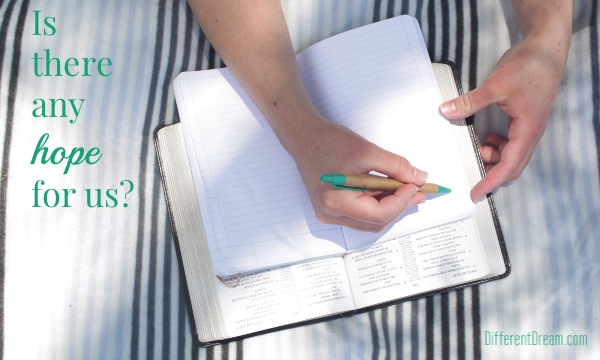
Is There Any Hope for our Children with Disabilities?

Is There Any Hope for our Children with Disabilities?

Is There Any Hope for our Children with Disabilities?

Is there any hope? Now there’s a question every parent caring for a child with disabilities and special needs ponders. Guest blogger Kimberly Drew is back to point readers to the source of her hope as she and her husband raise two daughters with disabilities.

I keep asking that the God of our Lord Jesus Christ, the glorious Father,
may give you the Spirit
of wisdom and revelation, so that you may know him better.
I pray that the eyes of your heart may be enlightened in order that you may know the hope to which he has called you,
the riches of his glorious inheritance in his holy people, 
and his incomparably great power for us who believe.
Ephesians 1:17-19a (NIV)

I sat in a waiting room of a children’s hospital dedicated to those with special needs. It’s a small hospital, and the waiting room was packed. My daughter Abbey was around 10 at the time, and we were there for a routine appointment. I was irritated about the wait when an ambulance transfer showed up with a little boy confined to a hospital bed. There were feeding tubes, trach tubes, and all kinds of other medical leads coming out of this little guy. His mom walked alongside the paramedics and stayed with her son while he got checked in. She rubbed his forehead and kissed his chee. A nurse suctioned his trach. I looked around the room at all the children with disabilities and their parents and felt hopeless. What are we all doing here? This life is too hard, it’s too painful! What’s the point of it all!?

Is there any hope?

I know I’m not the only parent who has felt that way because I have talked to so many of you who have wrestled with those very thoughts. It’s really important for us to recognize that this pursuit of truth leads to the answers that quiet our soul’s questions. Time in God’s Word is what strengthens our ability to process our unique and sometimes painful experiences. If we are in Christ Jesus, we have a living hope that is not only meant to be known, but to be experienced. Paul prays for the Ephesians to have the eyes of their hearts enlightened so that they may know  (emphasis mine) the hope to which Christ calls us, the riches of our inheritance in Him, and the incomparable power of Christ in our lives.

Psalm 119:114 says this about the Lord: You are my refuge and my shield; I have put my hope in your word.

Sometimes people look at our life and say that it’s really hard. I won’t argue that having two disabled children is sometimes heartbreaking. But is there any hope? The answer is yes! We still have joy and hope. People ask my husband Ryan and me how we handle it the way we do. There’s only one word: Jesus. The work of his Holy Spirit, and the truth of God’s word has changed us from the inside out. 

Jeremiah 29:12-13 says Then you will call on me and come and pray to me, and I will listen to you. You will seek me and find me when you seek me with all your heart. If you are feeling hopeless today, I encourage you to seek God’s Word. Christ is a refuge and shield. This hope, this inheritance, this power of Christ is meant to be known and experienced!

Do you like what you see at DifferentDream.com? You can receive more great content by subscribing to the monthly Different Dream newsletter and signing up for the daily RSS feed delivered to your email inbox. You can sign up for the first in the pop up box and the second at the bottom of this page.

By

Kimberly grew up and went to college in the small town of Upland, IN. She graduated from Taylor University with a degree in Elementary Education in 2002. While at TU, she married her college sweetheart and so began their adventure! Ryan and Kimberly have three amazing kids on earth (Abigail, Jayden, and Cooper), and a baby boy waiting for them in heaven. Their daughter Abigail (Abbey) has multiple disabilities including cerebral palsy, a seizure disorder, hearing loss, microcephaly, and oral dysphagia. She is the inspiration behind Kimberly’s  desire to write. In addition to being a stay at home mom, Kimberly has been serving alongside her husband in full time youth ministry for almost fourteen years. She enjoys working with the senior high girls, scrapbooking, reading, and music. You can visit Kimberly at her website, Promises and Perspective.

Author Jolene Philo

Archives

Categories

Subscribe for Updates from Jolene

Related Posts

Are Parents to Blame for Their Child’s Disability?

Are Parents to Blame for Their Child’s Disability?

Are Parents to Blame for Their Child’s Disability?

Are parents to blame for their child’s disability? Mark Arnold gives his answer to a question he and every parent of a child with special needs and disabilities asks at some in life. Read on for his answer.

Are parents to blame for their child’s disability? Jesus was asked that very question 2,000 years ago.

As he went along, he saw a man blind from birth. His disciples asked him,
“Rabbi, who sinned, this man or his parents, that he was born blind?’”
“Neither this man nor his parents sinned,” said Jesus,
“but this happened so that the work of God may be displayed in his life.”
John 9:1-3.

Back then, it was commonly thought that the sins of the parents caused disability in their children. In the 2000 years since, our understanding of disability has increased enormously. However the belief that parents are to blame for their child’s disability or additional needs still clings in some communities and church denominations. Whether the belief is that the sins of the parents are the cause of the disability, or that their perceived lack of faith is to blame for unfulfilled prayers for healing, the finger of blame is firmly pointed at the parents. This is in direct contradiction to what Jesus taught.

Imagine what parents have gone through. The emotional turmoil of discovering their child has a disability or additional needs. The confusion, shock, and grief they experienced during the process of diagnosis. If they told their church, they may have been offered prayer for healing of their child. I believe God heals. I’ve seen and heard examples of this. The Bible teaches us about healing. But I’m also aware that often God doesn’t heal. Apply that to a church where a child isn’t healed after prayer. Instead of recognizing that this is up to God, churches often blame the parents for their lack of faith. This is cruel to both the parents and the child, and ut is totally wrong.

So let’s stop asking if parents are to blame for their child’s disability and look at what Jesus said…“but this happened so that the work of God may be displayed in his life.”

In that case, Jesus chose to heal the man, giving him his sight, so that the work of God was displayed in his life. The work of God can, however, be displayed in and through the life of a child, young person, or adult with additional needs, whether they are healed or not. 

I don’t pray for healing for my 17-year-old autistic son anymore. His autism is a neuro-diversity. This means he lives in and responds to the world differently. He also understands and communicates differently. I do pray that some of the things he finds hard be made easier and less stressful so we can communicate more effectively.

Jesus’ words in the final part of the passage are as relevant for James as they were for the man he encountered 2000 years ago.

God works through our children too, so that his work may be displayed in their lives. Let’s stop wrongly blaming parents, or even worse, cause parents to blame themselves for their child’s condition. Let our children inspire us to what God has called us to do. Let us celebrate how God is working through our children. Let us do away with fault, blame, guilt and other negatives that are the work of the enemy. Jesus won the victory over the enemy, and we share that victory with him!

Let us all pray that the work of God may be displayed in all of our lives.


Do you like what you see at DifferentDream.com? You can receive more great content by subscribing to the monthly Different Dream newsletter and signing up for the daily RSS feed delivered to your email inbox. You can sign up for the first in the pop up box and the second at the bottom of this page.

By

Mark Arnold is the Additional Needs Ministry Director at Urban Saints, a leading national Christian children’s and youth organization. He is co-founder of the Additional Needs Alliance, a national and international advocate for children and young people with additional needs or disabilities. Mark is a Churches for All and Living Fully Network partner, a member of the Council for Disabled Children and the European Disability Network. He writes an additional needs column for Premier Youth and Children’s Work (YCW) magazine and blogs at The Additional Needs Blogfather, He is father to James, who has autism spectrum condition, associated learning disability, and epilepsy. To find out more about how Mark’s work can help you, contact him at: marnold@urbansaints.org or @Mark_J_Arnold.

Author Jolene Philo

Archives

Categories

Subscribe for Updates from Jolene

Related Posts

Rejoice To Do Good

Rejoice To Do Good

Rejoice To Do Good

Rejoice to do good.

Those words from Ecclesiastes 3:12 have been easy to obey this month with the release of Sharing Love Abundantly in Special Needs Families, which I co-wrote with Dr. Gary Chapman. Yeah, he’s the love languages guy. So I have plenty to rejoice about these days.

But when I was a kid surreptitiously carrying my dad’s urinal to the empty in the church bathroom or feeling the stares of neighbor kids as I wheeled him around the block, the command to rejoice to do good stuck in my craw.

After the birth of our first child, my reaction to the rejoice to be good thing would have been throw my Bible across the room.
If I’d had time to read my Bible.
Which I didn’t thanks to sleep deprivation,
and atypical baby care like pumping breast milk 6 times a day to pour down his feeding tube,
and way too many 240 mile round trips from the remote town where we lived to the doctor’s office.
All of which prevented the throwing of my Bible.
And proves that Romans 8:28 is true.
God does work all things to good for those who love Him and are called according to His purposes.

Back to rejoice to do good thing. My point is this.

Throughout my childhood, when Mom, my siblings, and I cared for Dad we were doing great good. My husband and I also did great good caring for our son during the hard first years of his life. In both situations, we had no idea we were doing good. We were just doing what loving families do–we were taking care of our family members who couldn’t care for themselves.

To read the rest of this post, please visit the Hope Anew website.

Do you like what you see at DifferentDream.com? You can receive more great content by subscribing to the monthly Different Dream newsletter and signing up for the daily RSS feed delivered to your email inbox. You can sign up for the first in the pop up box and the second at the bottom of this page.

By

Add author bio information here. You can use hyperlinks like normal.

Author Jolene Philo

Archives

Categories

Subscribe for Updates from Jolene

Related Posts