A Call to Defeat the ADA Education and Reform Act in 3 Short Months

A Call to Defeat the ADA Education and Reform Act in 3 Short Months

A Call to Defeat the ADA Education and Reform Act in 3 Short Months

Dear Members of the United States House of Representatives and the Senate,

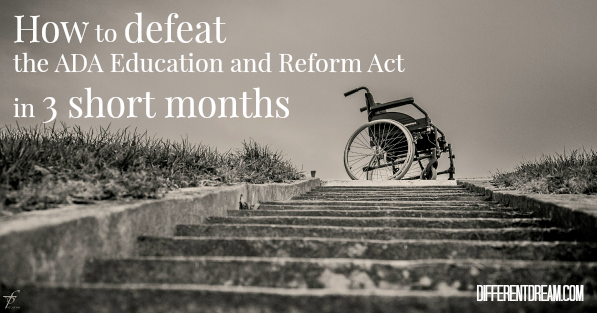
To defeat the ADA Education and Reform Act is my only 2018 New Year’s Resolution. Though I’ve never been much for resolutions in the past, this one took root after spending the final 3 months of 2017 in a manual wheelchair and a boot because of a broken foot. During those 3 months as a patron of automatic doors and handicapped accessible facilities, my understanding of what the Americans with Disabilities Act has and hasn’t accomplished changed. The most troubling reality revealed was how difficult it is for someone with disabilities who is determined to remain an independent and contributing member of society to do so.

I’m also very troubled by how difficult it is to discover the current status of the ADA Education and Reform Act. An internet search found this October 2017 op ed piece by Illinois Senator Tammy Duckworth in which she explained why she’s opposed to the bill.

“The bill would allow businesses to wait until they are notified of their failure to meet legal obligations before they even have to start removing barriers that prevent Americans with disabilities from leading independent lives.

This offensive legislation would segregate the disability community, making it the only protected class under civil rights law that must rely on “education” — rather than strong enforcement — to guarantee access to public spaces.”

She also quotes the Consortium for Citizens with Disabilities Rights Task Force and other civil rights organizations opposed to the bill.

“We know of no other law that outlaws discrimination but permits entities to discriminate with impunity until victims experience that discrimination and educate the entities perpetrating it about their obligations not to discriminate.”

Tammy Duckworth is a disabled veteran with firsthand knowledge of the challenges and obstacles faced by people with disabilities. Her opposition to a bill that makes people with disabilities responsible for overcoming disability discrimination is understandable.

Equally understandable, dear lawmakers, is your lack of firsthand knowledge about these barriers. Until breaking my foot on October 1, 2017 and becoming best friends with a manual wheelchair, I lacked firsthand knowledge, too. But 3 months of wheelchair experience became my best teacher and led to my New Year’s resolution to defeat the ADA Education and Reform Act.

To make this resolution a reality, I’m asking every member of Congress and the Senate to spend 3 months in a manual wheelchair before moving this misguided bill forward.

No cheating is allowed during those 3 months. No walking of any kind, though hopping on 1 foot from the wheelchair to the toilet or the car is permissible. But, like people with disabilities, you are restricted to the handicapped modifications available where you live, work, and play. You are also expected to remain as independent as possible–no fair being a drain on society–seeking the assistance of others only when you really need it and when they are willing to grant it.

At the end of the 3 months, read through the ADA Education and Reform Act again. If you can vote for it in good conscience, go right ahead. But I don’t think you will. Because once you’ve spent 3 months in a wheelchair, your perspective will change.

Because of your experience, you’ll identify remaining barriers to be eliminated instead of only those already removed. You’ll have experienced the extra work a disabled person does to remain independent. And you’ll know that if the ADA Education and Reform Act passes into law, it will be detrimental to you when your body grows old and fails–when you need a wheelchair or a walker or a scooter or a prosthetic device, not for 3 months, but for the rest of your life. You’ll realize that by voting for this ill-conceived bill, you are voting against yourself. Do you really want to do something like that?

Sincerely yours,
Jolene Philo
Daughter of a disabled father
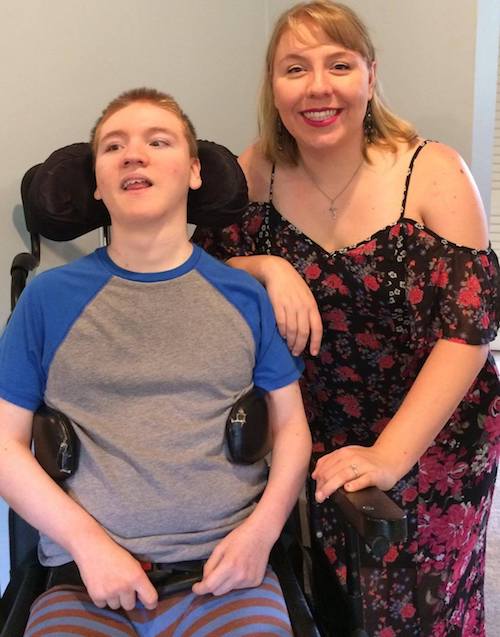
Mother of a son with special needs
Member of the human race who will one day, God willing, have age-related special needs


Postscript: The ADA Education and Reform Act was passed on February 15, 2018. 

Do you like what you see at DifferentDream.com? You can receive more great content by subscribing to the quarterly Different Dream newsletter and signing up for the daily RSS feed delivered to your email inbox. You can sign up for the first in the pop up box and the second at the bottom of this page.

By

Jolene Philo is a published author, speaker, wife, and mother of a son with special needs.

Author Jolene Philo
Archives

Categories

Subscribe for Updates from Jolene

Related Posts
When a Kid with EA/TEF Finds Courage…

When a Kid with EA/TEF Finds Courage…

When a Kid with EA/TEF Finds Courage…

Different Dream is pleased to welcome today’s guest blogger, Lori McGahan. Lori is mom to a son, Brandon, who lives with EA/TEF, and she’s the founder of EA/TEF Awareness Month. Lori’s first EA/TEF Awareness Month guest post at Different Dream appeared in January of 2011. Today, she shares an update about how life with Brandon is progressing.

When a Kid with EA/TEF Finds Courage

In October, our son Brandon said that he wanted to do the Spartan Kids Run at Fenway with his classmates. Of course, my husband and I had a lot of fear and trepidation as to whether to allow Brandon to participate given his complex medial history of EA/TEF and tracheomalcia. We were also a bit fearful that he may become overwhelmed due to sensory processing and gross motor deficits. As parents, naturally we did not want our child to fail, but we also knew we had to look beyond our own fears and allow him to spread his wings and find himself.

As the day of the Spartan Kids Race grew closer, our son grew more excited. For the next several weeks our house was a chorus of “You can do it,” “We are so proud of you for taking this challenge on,” and “You will be amazing in everything you do!” Brandon’s excitement fueled our excitement which found us living in the present versus worrying about the future. What an amazing feeling such a positive outlook and challenge can have on a family.

“Do not dwell in the past, do not dream of the future, concentrate the mind on the present moment.”
Buddha

Before we knew it, race day was upon us. We put Brandon on the team bus and again told him how proud we were of him. We reminded him that it is not about winning but trying your best. As the bus rolled out, my husband and I sat in our car, and all those fears and worries came back for the next several hours. Questions flooded through our minds.

How is he doing?
Did he have a meltdown?
Do you think he finished?

When the bus rolled back in, we anxiously rushed to greet Brandon and hear all about his day. He was tired and dirty, but the smile on his face and the glow in his eye said it all as he held up the Spartan medal around his neck.

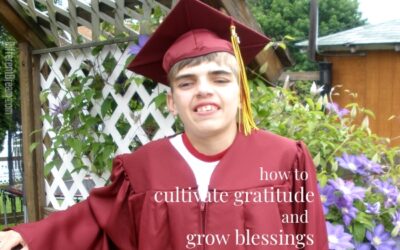
How does a kid with EA/TEF find courage for the Spartan Kids Run at Fenway Park? Lori McGahan tells her son's story in today's EA/TEF Awareness Month post.

He was so excited to tell us how he came in seventh in his group and how some of the obstacles were tough, but he didn’t give up. Our hearts swelled with pride and inside we cried!

Our son, who had been through so many obstacles and challenges from birth, just completed the Spartan Kids Run! He had the courage to face his fears and his obstacles. That day, we saw our son grow as an individual. As his parents, we did too.

“The miracle isn’t that I finished. The miracle is that I had the courage to start.”

John Bingham, No Need for Speed: A Beginner’s Guide to the Joy of Running

Do you like what you see at DifferentDream.com? You can receive more great content by subscribing to the quarterly Different Dream newsletter and signing up for the daily RSS feed delivered to your email inbox. You can sign up for the first in the pop up box and the second at the bottom of this page.


By

Lori McGahan lives in Massachusetts with her husband Brian and son Brandon. She’s a Division Administration Manager for a human services agency and is working on a degree in Business Administration. Brandon was born with a series of birth defects referred to as VACTERL Syndrome, including tracheo-esophageal fistula (EA/TEF). Brandon has also been diagnosed with sensory processing disorder, dyslexia and anxiety. For more information on EA/TEF you can visit the Bridges of Hope website. Lori and her husband, started the EA/TEF online awareness campaign, Color It Periwinkle, in 2018.

Author Jolene Philo

Archives

Categories

Subscribe for Updates from Jolene

Related Posts

EA/TEF Awareness Month, January 2018

EA/TEF Awareness Month, January 2018

EA/TEF Awareness Month, January 2018

For parents of kids with esophageal atresia (also known as tracheo-esophageal fistula), nothing says Happy New Year like EA/TEF Awareness Month. Unless you’re a pediatric healthcare professional or the parent of a child with EA/TEF, you probably aren’t aware of the condition. I sure wasn’t until our newborn son was diagnosed with the condition hours after his birth in 1982.

That’s why Lori McGahan, an EA/TEF parent, started EA/TEF Awareness Month some years back. And that’s why Different Dream will feature several posts about EA/TEF throughout January of 2018, as it has done in the past.

The Different Dream gang invites you to stop by this website frequently throughout the month to read new stories, as well as articles from past years, about children who live with EA/TEF and the parents who care for them.

Tomorrow, Lori kicks off the guest post series with the story of her son’s gritty determination. But if curiosity is getting the best of you, check out these links to information about the condition.

You can also type either EA/TEF or EA/TEF Awareness Month, in the search bar to start reading Different Dream articles from past Januaries. But before you do, grab a tissue. There’s a good chance you’ll need to wipe your eyes a time or two!

Do you like what you see at DifferentDream.com? You can receive more great content by subscribing to the quarterly Different Dream newsletter and signing up for the daily RSS feed delivered to your email inbox. You can sign up for the first in the pop up box and the second at the bottom of this page.

By

Jolene Philo is a published author, speaker, wife, and mother of a son with special needs.

Author Jolene Philo

Archives

Categories

Subscribe for Updates from Jolene

Related Posts

Ten Handicapped Accessibility Lessons Learned in a Wheelchair

Ten Handicapped Accessibility Lessons Learned in a Wheelchair

Ten Handicapped Accessibility Lessons Learned in a Wheelchair

I’ve been in a wheelchair for six weeks now, compliments of the malicious purse strap that wrapped itself around my leg, causing me to fall and break my foot. The doctor issued strict non-weight bearing until the foot heals, which is taking longer than expected. Since the fall (and yes, I still use the purse), I’ve made the acquaintance of a pair of crutches and become good friends with a black boot and a wheelchair.

While the wheelchair has resulted in a slower paced life for the time being, I get out as often as possible. (Translation: whenever busy and thoughtful family members can serve as drivers.) These forays have allowed me to experience the challenges people in wheelchairs deal with day after day, from building to building, and from one encounter to another. It’s been an eye-opening experience, and I’d like to share some observations with you today.

10 Lessons Learned in a Wheelchair

10.  Those signs near hotel elevators that say “In case of fire, use the stairs” are less than reassuring to people in wheelchairs assigned handicapped rooms located anywhere other than on the first floor.

9. Have you ever tried to open a heavy door while sitting in a wheelchair? If you have, you know that any bathroom that claims to be be “handicapped accessible” and doesn’t have an automatic door is not truly handicapped accessible.

8. The pitches of many ramps are so steep that they inaccessible to people operating manual wheelchairs by themselves. So in reality, those “handicapped accessible” ramps force dependence upon people in manual wheelchairs.

7. Most handicapped bathroom stalls are too small for wheelchairs to turn around in so the stall door can be closed and locked. Therefore, they are “handicapped accessible” only for exhibitionists.

6. Flagstone walkways, while quaint and charming, are dangerous for anyone using crutches, a walker, or a wheelchair. Therefore, our flagstone sidewalk to the front door is being replaced with a mildly pitched cement ramp as soon as possible.

5. If the front of a wheelchair can’t roll far enough under the sink in a “handicapped accessible” bathroom so a person can reach the faucet and soap, the bathroom is not handicapped accessible. It’s a germ factory.

4. By the same token, if a person has to use wet hands to wheel to the hand dryer in a “handicapped accessible” bathroom, the bathroom is not handicapped accessible. It’s gross.

3. When you’re out and about in a wheelchair, half the people will ignore you, a third of the people will call you “hon”  or “honey” and try to do everything for you, and the rest will ask you what you need, listen carefully, and be truly helpful.

2. Most grab bars in “handicapped accessible” bathrooms aren’t close enough to the toilet to be useful. Which once again means the bathroom is mislabeled.

1. Anyone who is temporarily confined to a wheelchair will likely become a disability advocate. They will also be grateful for those who go beyond the minimum “handicapped accessible” guidelines to make the world truly handicapped accessible to all.

Do you have mobility issues? What lessons have you learned in a wheelchair, a walker, or crutches? Share them in the comment box.


Do you like what you see at DifferentDream.com? You can receive more great content by subscribing to the monthly Different Dream newsletter and signing up for the daily RSS feed delivered to your email.

By

Jolene Philo is a published author, speaker, wife, and mother of a son with special needs.

Author Jolene Philo

Archives

Categories

Subscribe for Updates from Jolene

Related Posts

Cerebral Palsy: A Message for You

Cerebral Palsy: A Message for You

Cerebral Palsy: A Message for You

Cerebral palsy (CP) is part of life for many Different Dream readers and their families. One of those readers. Today’s guest blogger, Lindsey Pasieka, is raising awareness about the condition as part of her advocacy efforts on behalf of her brother.

Cerebral Palsy: A Message for You

For those of you who may have missed it, October 6th was World Cerebral Palsy Day. World CP Day is a day to spread awareness about the #1 childhood motor function issue in the world. Cerebral palsy affects nearly 1 in 300 children.

People make a lot of assumptions about kids with CP. They assume that people with CP can’t think or learn. That they can’t grow up, or won’t grow up, because of their disease. And that even if they do reach adulthood, they will never be independent.

Over the past few months, I’ve been able to connect with a huge community of CP families online and it’s clear that those assumptions are often wrong. So here are a few things you might have never known about cerebral palsy.

CP doesn’t always imply intellectual impairment.

While some people with CP do have mental delays or deficiencies, there is a huge number of folks with normal cognition. Actually, many people with CP are intellectually gifted– I’ve connected with college grads, business owners, and even doctors who have a form of CP.

Cerebral palsy isn’t all the same.

There are 4 large groupings to distinguish the different types of CP: spastic, athetoid, ataxic and mixed. Each of those groups contains a myriad of symptoms and severities. Some people with CP may have multiple issues -added complications on top of their motor function deficits. The range is truly astounding, as is the range of capabilities. Yes, there are CP patients that are wheelchair bound and have almost no motor function control. There are also CP patients who wear high heels, drive cars or go jogging.

Lots of people with cerebral palsy live happy, independent lives.

That’s right. They don’t all stay with their parents forever or end up in long-term care facilities. Some may use assistive technology, which has come such a long way in recent years. Others won’t need it and are able to use medications or physical therapy to manage motor function issues. With some people, you might not realize that they even have CP.

But for some people, cerebral palsy is devastating.

I’ve spent a lot of time around World CP Day talking about the amazing accomplishments of people with CP. But those stereotypes, those assumptions you make, they are also someone’s reality.

Someone prays that their child lives past 10.
Someone sits by a hospital bed and refuses to go home.
Someone knows their kid won’t walk, or talk, or graduate.

When you meet someone with CP, the best thing you can do is enter the conversation with no assumptions. Let that person or their family tell you their story their way.  Be supportive, and respectful. Pray by their side if they need it. Cheer them on as they accomplish things they never expected. And never let your preconceptions get in the way of connecting with another person. Thank you, and Happy (belated) World CP Day.

Do you like what you see at DifferentDream.com? You can receive more great content by subscribing to the monthly Different Dream newsletter and signing up for the daily RSS feed delivered to your email.


By

Lindsey Pasieka is a writer and consumer advocate working with ConsumerSafety.org. When not working, she enjoys spending time with family and volunteering for animal rescue. She writes for Different Dream on behalf of her brother, who has cerebral palsy.

Author Jolene Philo

Archives

Categories

Subscribe for Updates from Jolene

Related Posts

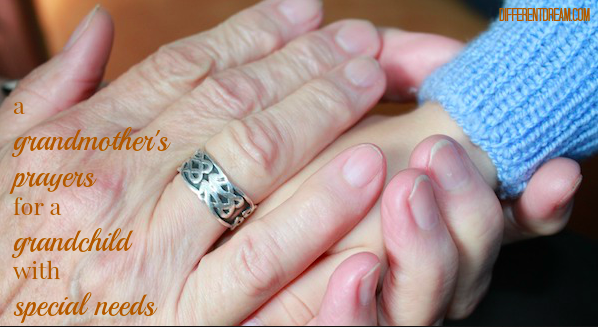
A Grandmother’s Prayers for a Grandchild with Special Needs

A Grandmother’s Prayers for a Grandchild with Special Needs

A Grandmother’s Prayers for a Grandchild with Special Needs

Different Dream welcomes new guest blogger, Liz Schultz, today. She’s here with the story of the power of a grandmother’s relationship with and her prayers for a grandchild with special needs. What an example for all of us!

A Grandmother’s Prayers for a Grandchild with Special Needs

“Wait, Grandma! Stop the movie! Stop it right there!”

Helen fumbled for the remote and punched the pause button. “What is it, Austin?”

“I want Jesus in my heart,” Austin answered, responding to the gospel message in the Veggie Tales movie now frozen on the screen. Helen prayed with him, “Jesus, come into my heart. I want you to live in me.”

“I don’t know if it sunk into his mind,” Helen explains when she remembers that day and considers the effects of prayer on her grandson’s growing faith, “but I know that seed of faith got into his heart, and my greatest prayer is that what is sown in Austin’s heart will manifest in his life.”

Helen prays that what she teaches about God will grow in Austin’s understanding and be displayed in his behavior. She knows the summer vacations and Christmas breaks that Austin spends with her are times to share her faith and cover him with prayers for his protection and future.

“When Austin is here, it’s seed time,” Helen says. “The greatest thing I can do for him is to sow that seed in his heart and pray for the fruition.”

One effect of Austin’s pervasive development disorder is that he struggles to understand and control his emotions. Helen is teaching Austin to pray to God for his assistance.

“When he becomes angry or aggressive, I say, ‘Let’s ask Jesus to help you,’” Helen says. “’ Let’s ask Jesus to help you when you’re mad. Let’s ask him to help your heart be happy,’ and Austin will reply, ‘Okay, Grandma, I’ll ask Jesus to help.’ When he shares or is polite, I tell him that makes Jesus happy, and Austin understands.”

They often pray together asking Jesus to help Austin make good choices.

“I pray that Austin will make a difference,” Helen explains, describing her hopes for her grandson to live a fruitful and productive future. “I pray that he lives to the full potential God created in him.”

“He is so full of love,” Helen continues. “He’s very aware of and sensitive to other people’s feelings. I pray that he always cares about others, and gives to others. I want him to seek to meet the needs of others, and know that he makes a difference in their lives.”

While Helen prays for Austin’s growing faith, she encourages parents who are struggling with a child’s disability to pray to God and trust in him.

“God knows and loves every child conceived on this earth. Jeremiah 29:11 says that God has a purpose and a plan. Those plans are for good and not evil, for a future and a hope. Never, never give up hope. When I feel weighed down by worries and what-if’s, I remember that God is bigger than my fear.”

“Hey, Grandma, what’s up?” Austin beams as he climbs the front steps, arriving for another visit at Helen’s house.

“There’s my Austin!” Helen greets him, welcoming another opportunity to pray with him and share her faith.

Your Prayers for a Grandchild with Special Needs?

Are you a praying grandparent? Feel free to share about your prayers for a grandchild with special needs in the comment box.


Do you like what you see at DifferentDream.com? You can receive more great content by subscribing to the quarterly Different Dream newsletter and signing up for the daily RSS feed delivered to your email inbox. You can sign up for the first in the pop up box and the second at the bottom of this page.

By

Liz Schultz draws on her experience as a single mother to write encouragement to other single parents. She contributes guest posts at desmoines.citymomsblog.com. Liz also volunteers with a ministry serving teen parents in the Des Moines area, and is completing a book about how her single mom experience led her to faith in God. In her spare time, Liz deconstructs pajama pants to create warm and comforting quilts. Her daughter married last year, so Liz and her husband are now eagerly awaiting the arrival of grandchildren.

Author Jolene Philo

Archives

Categories

Subscribe for Updates from Jolene

Related Posts