by jphilo | Nov 14, 2011 | Advocacy, Different Dream, Special Needs Parenting
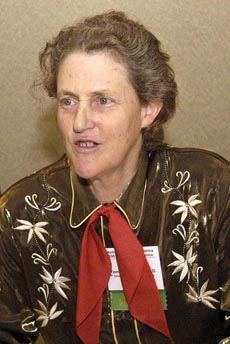
As has been mentioned before on this blog, Temple Grandin is one of my heros. So when Harriet Cabelly who blogs at www.rebuildyourlifecoach.com sent an email saying her interview with Temple Grandin is posted at her website, I was impressed.
Way to Go, Harriet Cabelly
My guess is you’re going to love the description about how the interview withe Temple Grandin came about. It certainly inspired me to follow Harriet’s advice: Don’t be afraid to ask for what you want, you just might get it.
Way to Go, Temple Grandin
But Harriet’s story is just the warm up. The interview is filled with advice from Temple, a lifetime of experiences distilled into encouragement and practical suggestions for parents of kids on the autism spectrum. But don’t take my word for it. Read the interview for yourself at Harriet’s blog.
Utilizing Harriet’s Advice
Now’s the time for me to take Harriet and Temple’s advice. Somehow, Harriet’s email address got caught in this blog’s spam filter and was deleted before I realized what had happened. Therefore Harriet, who has lots of good insights to share, can’t post them. If you have any ideas about how to rectify the situation, please leave a comment.
Do you like what you see at DifferentDream.com? You can receive more great content by subscribing to the quarterly Different Dream newsletter and signing up for the daily RSS feed delivered to your email inbox. You can sign up for the first in the pop up box and the second at the bottom of this page.
by jphilo | Sep 30, 2011 | Advocacy, Different Dream, Special Needs Parenting
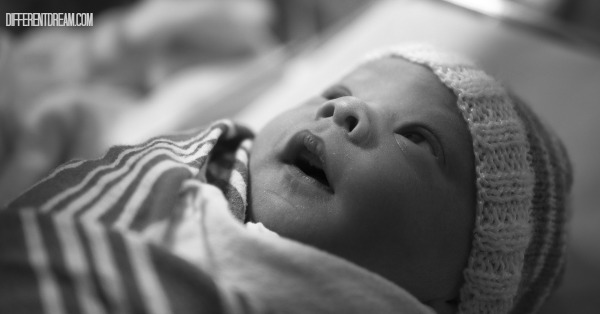
This past August, young relative of ours delivered her first child 7 weeks early. Baby Tommy is a fighter, starting to gain weight (he’s now over four pounds) and even beginning to nurse from his mother. The only pesky problem remaining is a lower-than-desired oxygen level.
His parents, Mike and Karen, spend a great deal of time with him in the NICU unit–holding him, talking to him, and reading to him. This little story, told in an email from his great-grandmother, shows the importance of reading to children, no matter how young. Both Tommy’s parents and his great-grandma gave permission to share Tommy’s NICU survival Story.
The Importance of Reading
Kris (Tommy’s grandmother) told me (Tommy’s great-grandmother) a heartwarming story that I want to share. The implications of this story are deep in that we don’t any of us understand the depth of God’s planning for us, his children.
Karen had been holding little Tommy and he was asleep. BUT, she was reading him stories. When the doctors came in, they were quite amused but thought it was great that she was reading to him. While she was reading to him, his oxygen levels were good. When the doctor interrupted the story, Tommy d-satted. Then as the doctor left and Karen started reading to him again, his oxygen levels went right back to being good.
The doctor stopped and said, “Do you realize what just happened?” They were amazed. Karen is sure that Tommy just knows who his momma is—even when he is asleep!
What NICU Survival Stories Do You Have?
Do you have similar NICU Survival stories about reading to your baby, whether in or out of the hospital, preemie or full term, infant or toddler? If so, share them in the comment box. Who knows, your comment could encourage a young parent to read aloud to a child tonight.
Do you like what you see at DifferentDream.com? You can receive more great content by subscribing to the quarterly Different Dream newsletter and signing up for the daily RSS feed delivered to your email inbox. You can sign up for the first in the pop up box and the second at the bottom of this page.

by jphilo | Jul 29, 2011 | Advocacy, Different Dream, Special Needs Parenting
Many of the parents who visit DifferentDream.com have young children with special needs. But some of them parent older children, and even adult children, who are living with a variety of conditions. So I’m glad to introduce to you a new guest blogger, Kathy Guzzo, who is learning about parenting a young adult with special needs. Or rather, she will introduce herself in today’s post.
Parenting an Adult Child with Special Needs
Once Upon A Time…
Recently I was thinking back to when our youngest daughter, now 27, was 16. She was a great student, involved in drama and musicals, played high school basketball, excelled at fast pitch softball, worked as a lifeguard, and hung out with friends. She wasn’t just living her life; she was experiencing it with real gusto.
Then as a junior in high school she started getting sick a lot. Throughout the next two years she was diagnosed repeatedly with mononucleosis, strep throat and even had her tonsils removed. She would be well for a couple weeks then the symptoms would return. She seemed to be home from school more days then she was able to attend. My mother’s instinct told me this was serious so I kept taking her to doctors, nursing her back to health, doing research and asking questions. All while helping her keep up with school and trying to keep us both upbeat.
The Answers Were Just the Beginning
For months I had wanted to take her to a university hospital out of state, but she kept fighting it because she didn’t want to miss more school. Finally, the summer after her high school graduation, we went to the university clinic where they immediately diagnosed her with lupus and with Epstein Barre Replication, meaning that her body replicated the mono virus instead of just allowing her to have it only once.
We were relieved to have a diagnosis thinking she would receive treatment and then could get on with her life as a young adult. Neither of us realized that more than 10 years later her life would be drastically different than what she had thought it would be. The minute she was diagnosed her life was altered forever. Although she graduated, her college experience was not at all what we had hoped and dreamed it would be. Just as her adult life is so different from what we had envisioned for her when she entered high school.
The Metamorphosis of a Mom Begins
Throughout this process I went from being the mom, of a teenager who drove her to appointments, continually talked with doctors, did research, dealt with insurance companies, fixed her favorite meals, talked with teachers, helped with homework, cried with and encouraged her to being the mom of a chronically ill adult child whose role is only to be available if she needs me. The adjustment has been a tough one.
Parenting an adult child with special needs is a difficult transition emotionally and practically, and in future posts I hope to share insights and encourage others that may be walking that path right now.
Thanks, Kathy
Thanks for sharing your story so transparently, Kathy. And readers, if have a topic you’d like Kathy to address, please leave a suggestion in the comment box. I’ll pass it along to her.
Do you like what you see at DifferentDream.com? You can receive more great content by subscribing to the quarterly Different Dream newsletter and signing up for the daily RSS feed delivered to your email inbox. You can sign up for the first in the pop up box and the second at the bottom of this page.

by jphilo | Jul 6, 2011 | Advocacy, Different Dream, Special Needs Parenting
Today’s post, along with yesterday’s, comes from guest blogger Julie Riera Matsushima. She’s the author of For the Love of Aimee, a memoir of her relationship with her granddaughter Aimee who lives with special needs. Yesterday, Julie said the first priority of grandparents is to maintain a loving, supportive relationship with their children, the parents of the child with special needs. Today, she describes another component of grandparenting a child with special needs: how to be a supportive grandparent.
Grandparenting a Child with Special Needs: It Takes a Family
So what does it mean to become an involved and supportive grandparent? What can you do to make a difference? The quality of life provided to a child with special needs may largely depend on the quality of life experienced by the family as a whole. Special needs children deserve the same good quality of life as their siblings and peers. It may be a slightly different quality of life but nevertheless a good one.
Include Children in Family Events
Attitude, motivation and involvement on the part of the entire family, not just grandparents, can make all the difference in the world. Inclusion in most, if not all, family activities, outings and travel will provide rich experiences and opportunities for the special needs child to develop their own identity within the extended family unit.
Grandparents can become involved in adaptive sports activities, which provide an outlet for physical activity and an opportunity to build self-confidence. Music and art can also provide grandparents with opportunities to develop creative outlets and interest, even if it is simply listening to music or looking at an art exhibit together. Reading, crafts, baking and other activities can provide hours of enjoyment and gratification when sharing this experience with a special needs child.
Make Your Home Accessible
Extended family should be prepared with appropriate equipment in their home that will provide a safe, accessible and secure environment when the child visits. Walks together and outings at the local park are the most simple opportunities to enjoy nature and get to know each other.
Emotional well being and a sense of belonging, participating and inclusion will provide the child with rich opportunities and confidence to interact with others outside the extended family and reap the rewards of loving relationships with others in their lives. Grandparents can provide activities that will also serve to develop appropriate behavior, communication and social skills.
Make a Difference
Involvement in the child’s school is another area rich in activities for grandparent involvement. Participation in school activities, homework, reading and learning skills can provide the child a heightened level of interest and satisfaction in learning.
Grandparents should also arm themselves with knowledge about the Americans with Disabilities Act, and information about their own grandchild’s rights in school, in transportation, and in life in general.
It is obvious to me that special needs children simply want to be part of the human race; to participate in life the way all children do. Grandparents can and do make a tremendous difference in their lives. I encourage you to think about what you have to offer and what you can do to make a difference to the family in your own life with a special needs child.
We can all make a difference.
Win a Free Copy of the Book!
Julie has generously donated three copies of For Love of Aimee for a book giveaway. To enter the drawing to win one of the copies, leave a comment about how grandparents are involved in your child’s life here or at the end of Part 1 of this series.. The cut off date for comments is midnight on Monday, July 11, 2011. This contest is now closed.
To learn more about Julie, visit her website at www.juliematsu.com.
Thanks, Julie, for sharing your insights with us. Aimee is blessed to have such a loving grandmother!
Part 1
Do you like what you see at DifferentDream.com? You can receive more great content by subscribing to the quarterly Different Dream newsletter and signing up for the daily RSS feed delivered to your email inbox. You can sign up for the first in the pop up box and the second at the bottom of this page.

by jphilo | Jul 5, 2011 | Advocacy, Different Dream, Special Needs Parenting
A few months ago, I received an email about For the Love of Aimee, a memoir written by the grandmother of a girl with special needs. My ears perked up immediately because the topic of extended family members doesn’t get nearly enough press in the special needs world. So I read the book eagerly, but decided against doing a book review.
Instead, I asked author Julie Riera Matsushima if she would write a guest blog for DifferentDream.com and share a grandparent’s perspective directly with readers. To my delight, Julie agreed. In today’s post, she talks about the importance of being loving parents to children who are parents of kids with special needs. In tomorrow’s post, she’ll share what’s she’s learned about grandparenting a child with special needs.
Grandparenting a Child with Special Needs: Being a Loving Parent First
Becoming a grandparent wasn’t an especially attractive proposition for me at the time. I was excited but I knew I wasn’t going to be one of those over-indulging grandmothers carrying around a mini-photo album of the grandkids in my purse to show everyone I knew. No, that was not for me! I was a career business woman, and community activist and wasn’t interested in playing that role. I had raised my kids and was finally at a place where I could enjoy all life had to offer.
I Became One of Those Grandmothers
But what I didn’t know then was that I would, in fact, become one of those grandmothers. Not to the extreme, but certainly to the point that the love in my heart for my grandchildren would consume me in time. I would become overwhelmed with joy, grief and pride especially when it came to Aimee, my special needs granddaughter and her identical twin sister, Chloe. Aimee’s presence in my life would change it forever and take me on an unexpected journey–a journey that would lead me to inspire and encourage other grandparents to do the same.
It hasn’t always been easy, though, because the first challenge as a grandparent, of course, is dealing with your own children—the parents of your beloved grandchild. This can present challenges in the best of circumstances, but when it involves a child with a disability, illness or special needs, it presents a dramatic change of circumstances. My experience has been that some grandparents, like me, get very involved while others, to the dismay and disappointment of their children, never become involved at all. In fact, many avoid involvement with the special needs child and focus on the “normal” children in the family where relationships and activities are more familiar to what we expect ourselves to do as grandparents. It definitely takes courage to step up and become involved with the special needs child.
Remain a Loving and Caring Parent
First and foremost, your children need your help and support. You must demonstrate that you remain a loving and caring parent to them. This is where parenting the parents is a delicate balance of showing your love and support, while at the same time maintaining love and advocacy for your special needs grandchild. Life can be difficult for these young parents. They have had to learn to cope with a situation they didn’t expect. They may feel abandoned and isolated by family and friends. But, for me, it was an opportunity to provide guidance and wisdom and to lead by example. That a good parent never abandons their child–no matter what difficulties they face. So, it begins there–setting the example of a parent with love, support and commitment to your child. And then as a loving and involved grandparent to their child.
This has been my approach from the beginning. I have paid my dues by exhibiting my commitment to being involved in Aimee’s life through thick and thin and it has paid off. I have earned the respect and trust of my children, Aimee’s parents, by being consistent and steadfast in my commitment to help. We don’t always agree, but they listen when I have something important to say. Aimee doesn’t have a voice of her own and they know I advocate for her with love in my heart.
Step In and Step Up to the Job at Hand
When times are difficult for them, they know they can always on us, the grandparents, to step in and step up to the job at hand. I’ve probably become more involved than most by taking Aimee across the world for extended therapy, but I could just as easily be a grandmother who could offer that support by taking her to a therapist across town. The end result is the same; a demonstration of love and support. Sometimes it doesn’t even have to be that. How about a simple respite for a few hours?
Win a Free Copy of the Book
Julie has generously donated three copies of For Love of Aimee for a book giveaway. To enter the drawing to win one of the copies, leave a comment about how grandparents are involved in your child’s life. The cut off date for comments is midnight on Monday, July 11, 2011.
Come back tomorrow for Part 2 of Julie’s guest post. And to learn more about Julie, visit her website at www.juliematsu.com.
Part 2
Do you like what you see at DifferentDream.com? You can receive more great content by subscribing to the quarterly Different Dream newsletter and signing up for the daily RSS feed delivered to your email inbox. You can sign up for the first in the pop up box and the second at the bottom of this page.

by jphilo | Jun 13, 2011 | Advocacy, Different Dream, Special Needs Parenting
Today, it is my pleasure to introduce a new guest blogger, Lori McGahon. Some of you may remember Lori from a post she contributed in January, which was EA/TEF Awareness Month. If you aren’t aware of what EA/TEF is, check out that article. She and I are fellow members of the EA/TEF motherhood, so an instant bond formed when we met last December. Since that virtual meeting, my admiration for Lori has grown by leaps and bounds. As her guest blogger bio shows, (scroll down the guest blogger page to find her), she is a can do woman. But even can do women struggle sometimes, as Lori’s sweet post shows.
Beautiful Butterfly: Our Child with Special Needs
Another week of sleepless nights, as our son Brandon suffered another bought of respiratory distress which several days later brought on a bout of pneumonia.
Normal for Most Kids
For some children, it would be another bout of ‘normal’ childhood illness; for Brandon, it means the difference of being treated at home or rushed to the ER for medical intervention. Brandon was born with a myriad of complex medical issues and his airway has always been a challenge for us. I say US, because its seems in the four years we have dealt with the complexity of Brandon’s medical issues and how WE should deal with them, it seems a light bulb has gone off in my head.
Normal for Brandon, Our Child with Special Needs
All of this is normal to Brandon, this is Brandon’s life and he does not know anything different from this. He was born into the world this way, and this is how his world has been. He has adapted to his world and in most ways accepted what is ‘normal’ to him. After all, this is Brandon’s world as he knows it. So, I wonder why can’t I? Why is it so hard for me to adapt and to accept?
I Am the Beautiful Butterfly
As Brandon recuperates, I mourn the fact he is missing school and missing his friends. I mourn the loss of innocence and ’normal’ children moments. We do a lot of things during the week he is home, but one particular activity really hit home for me. We started to play the board game, The Very Hungry Caterpillar, and I start to wonder when my son will shed his cocoon and become a beautiful carefree butterfly. I start to think about how wonderful it would be to be hospital-free, medicine-free and able to enjoy the world as a carefree butterfly with my little man. No worries, no sickness, no hospitals, just carefree fun. As my mind wanders, I am brought back with the squeal of delight of a 4 year old who has just beat mommy in the game! Brandon looks at me, laughs and says, “I won, Mommy! I am the beautiful butterfly!”
Our Lives Are What We Make of Them
And it is at this moment I think, indeed you are little man, indeed you are! It is amazing how in such simple moments we can learn such valuable lessons from our children. I realize my little caterpillar is not missing out on life, but I am. My worries and fears for what Brandon is missing out on clouded my vision. But he is actually not missing out on life at all.
After all, our lives are what we make of them, not what people define them to be. Our lives may be stressful, and we may wish for more, or something better. You know, the utopia that all people seem to have with ‘normal’ children. Life is not about the definition that other people put on it, but the definition you, yourself create. I realize, Brandon would not be who he is today without all of the challenges he has been through. I can wish everyday that he did not have to go through these things, but the bottom line is that wishes do not change reality.
What a Beautiful Butterfly Our Child with Special Needs Is!
This moment was like a slap in the face to me. I am letting go of my wishes and living for the moment. I realize, I missed the moment my son went from caterpillar, to cocoon to butterfly. But…… when my eyes, heart and soul allowed me to see!
….. Oh what a beautiful butterfly he is indeed standing in front of me!
Leave a Comment for Lori
Do you think of your child with special needs as a beautiful butterfly? How did you get to that point? How can you get to that point? Please, celebrate your butterfly moment by leaving a comment for Lori.
Do you like what you see at DifferentDream.com? You can receive more great content by subscribing to the quarterly Different Dream newsletter and signing up for the daily RSS feed delivered to your email inbox. You can sign up for the first in the pop up box and the second at the bottom of this page.