Modifications to Welcome Children with Special Needs

Modifications to Welcome Children with Special Needs

Modifications to Welcome Children with Special Needs

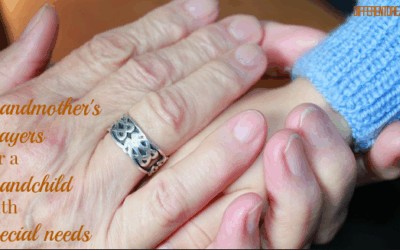
Modifications. They are a necessary and natural part of life for families who want their loved ones with special needs to have access to the world. One of my earliest memories is watching carpenters build a ramp so Dad could wheel in and out of our house. Mom modified an old leather toiletry bag to carry Dad’s urinal when we were out and about since few bathrooms were wheelchair accessible in the 1960s. (Note: Do not do this. Leather absorbs urine odor, and it never goes away.)

Modifications at Our House

My husband and I continued the practice after we became parents. Before our baby was released from NICU, Hiram modified the crib, elevating the head to reduce reflux in our tiny boy’s esophagus. On vacations, we wedged suitcases between motel mattress and box springs for the same purpose. For years I carried a hand crank baby food grinder—strong enough to grind hamburgers and pizza—in my purse when we ate out. And because our little boy’s misshaped esophagus caused him to throw up about half of what he ate, we also left really big tips for the wait staff…to make up for the napkins full of spit up food we left behind.

You know what I’m talking about because as a special needs parent, you are constantly modifying the world around your children, too. To us, it’s natural and necessary. But convincing others to join us in making the world accessible to all isn’t an easy task, a fact proven by recent history.

Modifications at School

In fact, convincing schools to modify education for children with special needs required an act of Congress. In 1975, federal lawmakers enacted Public Law 94-142. The law said that children with disabilities “have a right to education” and established “a process by which state and local educational agencies may beheld accountable for providing educational services for all handicapped children.”

As a college freshman—and an education major—the year that law passed, I had a front row seat as our college scrambled to create classes to educate a new crop of special education teachers, and schools scrambled to comply with the mandate. The law wasn’t perfect, and schools didn’t implement the law perfectly. But schools did modify physical buildings, teaching strategies, and levels of education to meet the needs of all students. Today, such modifications are accepted practice and expected practice.

You can read the rest of this post at the Not Alone website.

Do you like what you see at DifferentDream.com? You can receive more great content by subscribing to the quarterly Different Dream newsletter and signing up for the daily RSS feed delivered to your email inbox. You can sign up for the first in the pop-up box and the second at the bottom of this page.

photo credit: www.freedigitalphotos.net

By

Jolene Philo is the author of several books for the caregiving community. She speaks at parenting and special needs conferences around the country. Sharing Love Abundantly With Special Needs Families: The 5 Love Languages® for Parents Raising Children with Disabilities, which she co-authored with Dr. Gary Chapman, was released in August of 2019 and is available at local bookstores, their bookstore website, and Amazon. See Jane Sing!, the second book in the West River cozy mystery series, which features characters affected by disability, was released in November of 2022.

Author Jolene Philo
Archives

Categories

Subscribe for Updates from Jolene

Related Posts
George Will Affirms Goodness of Life with Down Syndrome

George Will Affirms Goodness of Life with Down Syndrome

George Will Affirms Goodness of Life with Down Syndrome

Many of the parents who visit DifferentDream.com are raising young children. Maybe you’re one of them. A deep desire of my heart, as the parent of an adult child who had special needs when he was young, is to give you encouragement and a vision of life for your children when they become adults.

Meet George Will, Special Needs Dad

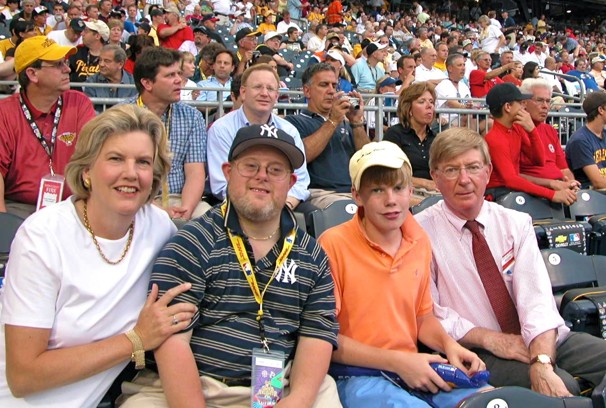
George Will is best known as a conservative political columnist. But he’s also the father of four children, and his oldest child, Jon, lives with Down Syndrome. About a year ago in one of his columns, George Will celebrated the life of Jon, who turned 40 on May 4, 2012. Will says this about the timing of his son’s birth:

Jon was born just 19 years after James Watson and Francis Crick published their discoveries concerning the structure of DNA, discoveries that would enhance understanding of the structure of Jon, whose every cell is imprinted with Down syndrome. Jon was born just as prenatal genetic testing, which can detect Down Syndrome, was becoming common. And Jon was born eight months before Roe v. Wade inaugurated this era of the casual destruction of pre-born babies.

Jon Will Is a Gift

George Will is proud of his son, and he wants parents to know he considers Jon a gift worthy of being born, as these words show:

Judging by Jon, the world would be improved by more people with Down Syndrome, who are quite nice, as humans go. It is said we are all born brave, trusting, and greedy, and remain greedy. People with Down Syndrome must remain brave in order to navigate society’s complexities. They have no choice but to be trusting because, with limited understanding and limited abilities to communicate misunderstanding, they, like Blanche DuBois in “A Streetcar Named Desire,” always depend on the kindness of strangers. Judging by Jon’s experience, they almost always receive it.

Jon Will Lives a Good Life

Finally, George says two things have greatly enhanced his son’s life: the Washington subway system and the Washington Nationals baseball team. Jon’s dad says, “He navigates the subway expertly, riding it to the Nationals ballpark, where he enters the clubhouse a few hours before game time and does a chore or two…Major leaguers, all of whom understand what it is to be gifted, have been uniformly and extraordinarily welcoming to Jon, who is not.”

The article, which can be found in its entirety at Jon Will’s Gift, and it’s worth reading. You might want the tissue box nearby!

What Worries You About Your Child’s Future?

I hope Jon Will’s story is an encouragement to you. But I also know some of you are anxious for your children’s futures. Young parents, what worries you most as your child gets older? Older parents, what advice can you give them? Leave a comment if you’re in need of encouragement or have encouragement to give.

Do you like what you see at DifferentDream.com? You can receive more great content by subscribing to the quarterly Different Dream newsletter and signing up for the daily RSS feed delivered to your email inbox. You can sign up for the first in the pop up box and the second at the bottom of this page.

photo source

By

Jolene Philo is the author of several books for the caregiving community. She speaks at parenting and special needs conferences around the country. Sharing Love Abundantly With Special Needs Families: The 5 Love Languages® for Parents Raising Children with Disabilities, which she co-authored with Dr. Gary Chapman, was released in August of 2019 and is available at local bookstores, their bookstore website, and Amazon. See Jane Sing!, the second book in the West River cozy mystery series, which features characters affected by disability, was released in November of 2022.

Author Jolene Philo

Archives

Categories

Subscribe for Updates from Jolene

Related Posts

Can Those With Disabilities Contribute to Society?

Can Those With Disabilities Contribute to Society?

Can Those With Disabilities Contribute to Society?

Can children and adults with disabilities be contributing members of society? Ellen Stumbo addresses that question in today’s guest post.

Let’s Be Realistic

Are people with disabilities contributing members of society? Let’s be realistic, depending on their disability, they might need life-long care and someone to provide for all their needs. Depending on their intellectual disability, they will might not be scientists, doctors, or teachers. Depending on their disability, they might not have businesses that will provide employment for the many people out of jobs.

Nonetheless, how wrong would it be if we assumed this was true for all people with disabilities! There are individuals with different challenges—like autism, cerebral palsy, ADD, and others—with an IQ higher than the rest of us average people. They are doing amazing things. They are doctors, teachers, scientists, or great mathematicians.

Contributing Members of Society or a Burden?

But what about those that do require life-long care? Are they contributing members of society? Or are they a burden?

Once, I thought that having a child with Down syndrome would be a burden. I believed that being smart was one of the most important qualities to have. I found success defined by performance and maybe even a bank account. So I did not welcome my new baby with open arms and a cheerful heart.

The inevitable happened, I fell in love, madly in love with my child. In doing so, I changed, I recognized that the value of a child, of a life, of any person, is not found on what they can or cannot do.

I began to look more closely at what it means to be a contributing member of society because I saw that my daughter not only changed me, but the rest of my family, my church, my friends, and many people we met. It is hard to feel unconditional love and not be moved by it.

Why Do Contributing Members of Society Take So Much?

Us “normal” people claim to be contributing members of society, yet, why is it that we take so much? We easily put our careers before our family, the people we claim to love the most. We spend hours in front of a computer screen, interacting with our Facebook friends instead of interacting with our children, our spouses, our neighbors. We fight each other based on our political preferences, or we ridicule each other based on religious beliefs. We compromise our integrity to get a job promotion. We gossip, and we talk about people behind their backs. We pretend. We hate. We lie, we cheat, we take advantage of the weak.

What People with Disabilities Contribute to Society

So I focus on people that might have severe intellectual or physical disabilities and accept that they do take from us, they require lots of care, support, and therapy. But they give so much more. They offer unconditional love, the kind that has no strings attached, it is pure, strong, real. They radiate joy as they celebrate the simple things in life. They cheer, celebrate, and encourage. They teach us compassion, acceptance, and humility. They remind us to be thankful for the many blessings that we have. They show us in a profound way what it means to be whole.

People with disabilities are contributing members of society. They show us what really matters in life, what it means to be human, what it means to be loved and accepted simply for being, not because of what we can or cannot do. And I am thankful, so very thankful that in my own brokenness, in the brokenness of this imperfect world, we all need each other. And we all have much to contribute.

How Do the People with Disabilities Contribute to Society?

How do people with disabilities you know contribute to society? Leave a comment to share your thoughts!

Do you like what you see at DifferentDream.com? You can receive more great content by subscribing to the quarterly Different Dream newsletter and signing up for the daily RSS feed delivered to your email inbox. You can sign up for the first in the pop-up box and the second at the bottom of this page.

Photo Credit: www.freedigitalphotos.net

By

Ellen Stumbo is a writer and speaker and the mother of three girls, two with disabilities. To read more of Ellen’s writing, visit her blog at www.EllenStumbo.com.  She can also be found on Twitter and Facebook.

Author Jolene Philo

Archives

Categories

Subscribe for Updates from Jolene

Related Posts

Are Kids with Special Needs Different or Beautifully Unique?

Are Kids with Special Needs Different or Beautifully Unique?

Are Kids with Special Needs Different or Beautifully Unique?

Advocating and educating others about our kids with special needs is a full-time job. Today, guest blogger Rebekah Benimoff describes how the hard work of advocating sometimes clogs her parent filter.

Different or Beautifully Unique?

It started as a normal conversation. She asked if I’d like to donate to support Autism Speaks, and I said “Sure! It’s a good cause, and close to my heart.”  It follows that questions would ensue. “Yes,” I replied, ”My son is on the autism spectrum.”

What’s Sensory Processing Disorder?

“What’s the autism spectrum?” she asked, surprised, but genuinely interested. So I explained that the kind of autism often thought of is not the only condition that affects person-to-person interaction, and that my son has a sensory processing disorder (SPD). I described what we deal with as the opposite of traditionally understood autism symptoms. Instead of drawing into himself, my son seeks constant sensory stimulation. He wants to be right next to me, climbing on me, touching my face, hanging on me—with no concept of personal space—all the time. To strangers he just looks like a very affectionate child. (I left out the fact that this mom sometimes feels a bit pummeled by love!)

“So, your son can communicate?”

Yes, in fact, he is continuously in a state of communicating. He needs constant input, although, blessedly, as he gets older I’ve been able to teach him to have some one-on-one time where he self-soothes or spends time with the cat, giving the humans in our household a much needed break.

The questions continued, even as my transaction ended. It’s natural, really, for people to be curious about differences. I shared that unless you knew my son well, his differences would not be obvious. He looks and behaves like a normal, active kid. He spins and jumps and climbs, and more than anything, lately, he dances. Everywhere.

The Difference Between SPD and ADHD?

And then the question that gets under my skin the most. “Do some people think he has ADHD?”

“Yes, sometimes they do. But as an educator who’s taught kids who have true ADHD, I knew from the beginning that my son did not.” Mentally, I work to stay off my soapbox, thinking that there are a lot of normal kids out there who are just as active as the kids I know with ADHD. Besides, ADHD is not just about kids being noisy or moving around a lot, though that’s what adults seem to notice first.

I weigh my words carefully, “My son needs movement and sensory stimulation. It’s not really an issue of impulsiveness.” I don’t even try to explain that while kids with ADHD struggle with focus my son is actually so focused on following expectations of teachers and family that he often struggles to focus on actual learning. He’s very focused—on sitting up, on holding the pencil, on resting his hand when he’s been writing too long. You might say that he’s over-focused and has a hard time adding more to his plate.

As I began to move on so the next family could be greeted, she asked a question that rattled me. “He can’t control it?”

“No.”

Not any more than people can control their curiosity. Their words, certainly, but not the innate response to something different. She smiled and wished my family much luck.

Disconcerted by Differences

While she was pleasant and friendly and her questions were authentic and asked with a smile, somehow I walked away disconcerted. In the words of a child, I felt icky. And judged, though I am fairly certain that was not her intention.

As a parent of a child who is different, I spend a lot of time explaining. For the most part, people are nice and try to be understanding.  But there are those who can’t get past whatever is clogging their own filter, and their anxiety causes me to feel stressed. And even though it’s not my job to make them feel okay about my kid, I want him to be not just accepted, but liked, and loved for who he is, which I find pretty special.

Unclogging my Parental Filter

So here’s where my filter gets clogged—when previous conversations and past judgments creep into the present, fogging the lenses that I look through. Like the strainer in my kitchen dedicated to gluten-free pasta, film can build up in the holes, and I have to wash it well if I want it to be usable. The challenge becomes—how do I unclog? For me, prayer is so often the key. Especially praying though forgiveness for those who’ve offended, even if they did not mean to. And then, praying through forgiveness for those whose own baggage hurt me or my son. A big part of these forgiveness prayers is asking God to show me truth, remembering that it is not my job to make others happy. My calling is to care for my special needs family in the way that is best for them, regardless of what others think. And it’s okay to be different.

Is My Son Different or Beautifully Unique?

My son is a one-of-a-kind, precious creation that God has gifted in some pretty amazing ways, and God accepts my son (and me) unconditionally. I need the occasional reminder that even though people don’t tend to like what’s different, God himself loves diversity, for it is our differences are what make us beautifully unique.

How Does Educating and Advocating Make You Feel?

Please leave a comment about how do you feel when you educate and advocate concerning your child’s special needs.

Do you like what you see at DifferentDream.com? You can receive more great content by subscribing to the quarterly Different Dream newsletter and signing up for the daily RSS feed delivered to your email inbox. You can sign up for the first in the pop-up box and the second at the bottom of this page.

photo credit: www.freedigitalphotos.net

By

Rebekah Benimoff is the wife of a husband with PTSD and the mother of two young men, both of whom grew up with medical and special needs. She blogs at In the Chaos…. and In the Calm (justmemama.blogspot.com).

Author Jolene Philo

Archives

Categories

Subscribe for Updates from Jolene

Related Posts

A Sweet Special Needs Victory

A Sweet Special Needs Victory

A Sweet Special Needs Victory

A special needs victory is worth celebrating, and guest blogger Rachel Cordeiro is here to celebrate her daughter’s recent step toward independence.

Victories Are Sweet

Our church has canisters of individually packaged mints at the welcome center located in the lobby. Because of their melt-in-your-mouth consistency, these mints seem to be more of a sweet treat rather than a breath freshener.

All it took was one mint for Cami’s sweet tooth to discover their deliciousness! Soon, it became part of our Sunday morning routine for her to eat one in between Sunday School and Jr. Church.

Sweet Motivation

After a few weeks of this, it was apparent that these sweet mints were highly motivating for Cami—sometimes the sole reason she’d walk into Jr. Church without any resistance at all.  I wondered if her affinity for these mints could motivate her any further?

I decided to give it a try. “Cami, today you need to reach up into the container on the counter and get out your own mint, okay?” I said.

“And then I can eat one?” she asked without missing a beat.

“Yes—after you open it by yourself.”

We walked slowly toward the welcome center, the pile of mints towering high above the bowl which held them.

Sweet Surprise

To my surprise, Cami led the way right over to the counter. Confidently, she reached up to grab a mint from the bowl, proceeded to the garbage can, and fumbled with the wrapper.

She struggled to pull at the corners of the tiny package, growing agitated at the work it required for her fingers.  The entire process involved every ounce of her determination and strength.

Before I could jump in to her rescue, she was already sticking the puffy peppermint into her mouth.

Sweet Special Needs Victory

The longer she chewed the candy, the bigger her smile grew. My heart was filled with pride over the difficult task she’d just accomplished.  I smiled too.
Because watching her achieve victories tastes sweeter than any peppermint I’ve chewed.

After finishing her treat, she rested her hand in mine, allowing me to lead her down the hallway to Jr. Church.

Share Your Child’s Sweet  Special Needs Victory

Thanks, Rachel, for that sweet story. We are celebrating with you and Cami! Readers, if your child has recently achieved a sweet victory, leave a comment so we can celebrate with your family, too.

Do you like what you see at DifferentDream.com? You can receive more great content by subscribing to the quarterly Different Dream newsletter and signing up for the daily RSS feed delivered to your email inbox. You can sign up for the first in the pop up box and the second at the bottom of this page.

Photo Source

By

Author Jolene Philo

Archives

Categories

Subscribe for Updates from Jolene

Related Posts

Because of C. Everett Koop

Because of C. Everett Koop

Because of C. Everett Koop

My day came to a halt this past Monday morning when the radio host announced the death of Dr. C. Everett Koop at the age of 96. I nodded as the accomplishments of his life in politics were listed: Surgeon General under Ronald Reagan, evangelical Christian and early champion of the pro-life movement, promoter of AIDS education and prevention, crusader of tobacco health warnings, and defender of the rights of children with special needs.

But that story—and every other media story about this remarkable man— barely mentioned C. Everett Koop’s many accomplishments before he became Surgeon General.
They didn’t mention his long tenure as surgeon-in-chief and practicing physician at Children’s Hospital in Philadelphia from 1946 to 1981.
They didn’t mention he created the first neonatal intensive care (NICU) at CHOP in 1956.
They didn’t mention that he pioneered the field of pediatric surgery by perfecting the administration of safe doses of anesthesia to newborns, babies, and children.
They didn’t mention that the first birth anomaly surgically corrected by Koop was a tracheoesophageal fistula (TEF), now known as esophageal atresia (EA/TEF).
They didn’t mention that the baby would have died from EA/TEF without the risky surgery.
They didn’t mention that because of that original, pioneering work, our son, who was born in 1982 with EA/TEF, is alive today.
They didn’t mention the impact C. Everett Koop had on our family.

But the impact C. Everett Koop had on our family was all I could think about on Monday. It was all my husband could think about, too. He mentioned the news the minute he came in the door after work. Together we talked about how this great man’s work changed our lives in ways not noticeable to national media reports, but worthy of mention nonetheless.

To read the rest of this article, please go to the Not Alone website.

photo source: The Gospel Coalition

Do you like what you see at DifferentDream.com? You can receive more great content by subscribing to the quarterly Different Dream newsletter and signing up for the daily RSS feed delivered to your email inbox. You can sign up for the first in the pop-up box and the second at the bottom of this page.

By

Jolene Philo is the author of several books for the caregiving community. She speaks at parenting and special needs conferences around the country. Sharing Love Abundantly With Special Needs Families: The 5 Love Languages® for Parents Raising Children with Disabilities, which she co-authored with Dr. Gary Chapman, was released in August of 2019 and is available at local bookstores, their bookstore website, and Amazon. See Jane Dance!, the third book in the West River cozy mystery series, which features characters affected by disability, was released in October of 2023.

Author Jolene Philo

Archives

Categories

Subscribe for Updates from Jolene

Related Posts