Before they label you with autism, my son, here is what I want you to know about who you really are. Beautiful words from Amy Felix we all need to hear.
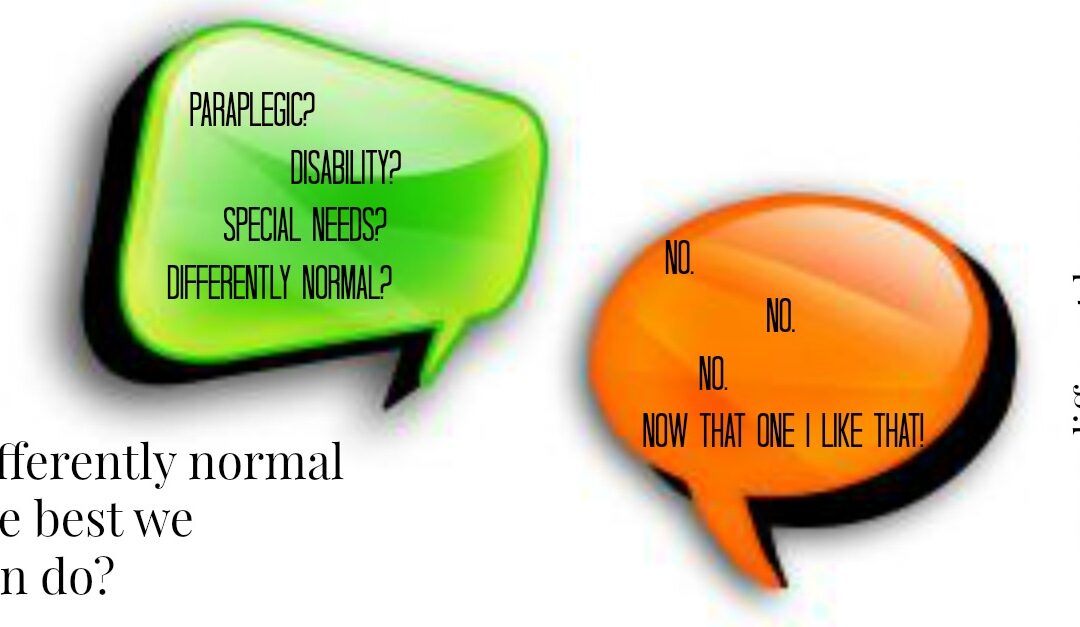
Is Differently Normal the Best We Can Do?
Is Differently Normal the Best We Can Do?
Terry Pratchett has a way with words. He’s written oodles of fantasy fiction, and his make-believe worlds are filled with golems, goblins, dwarves, and men. In Making Money some of his human characters discuss politically correct terms for golems, goblins, and dwarves. Finally, they settle on “differently normal” rather than golems, goblins, and dwarves. Which made me laugh.
It also made me think of the present, hot debate in my world about the politically correct way to refer to the special needs disability handicapped differently normal community.
Differently Normal or “Paraplegic Coming Through!”
In a way, the hot debate has been swirling through my life for as long as I remember. For me it began in the early 1960s when our family went to local football games. Dad was in a wheelchair, so mom was allowed to inch our car through the football field’s, drive behind the stadium, and pull up close to the edge of the field. To part the crowd, Dad would stick his head out the car window and yell, “Paraplegic! Paraplegic coming through!”
As you may have guessed, Dad was not shy about his handicap disability differently normal status. He also liked the word “paraplegic”, he told us often, because big words impress people so they moved faster.
Many years later, Dad was told paraplegic was a negative term he shouldn’t use.
So he switched to handicapped—long before handicapped parking spaces were mandated—until that term was nixed.
Then he used disabled—though he never received Social Security disability pay—until that term was given the kibosh, too.
I watched, puzzled, as the terminology changed, but Dad’s condition remained the same. Whatever the approved terms were, Dad still had multiple sclerosis. He was still in a wheelchair. He still couldn’t walk. He still couldn’t work. He still used a urinal and needed help to get in and out of the passenger seat of the car. He still had a great sense of humor for the 38 years he lived with his disease. And I still loved him—still do love him—no matter what word was the politically correct term of the month.
Special Needs Disabled Handicapped Differently Normal
Today, the debate’s still swirling. And I’m still puzzled by our attempts to use words to change the reality of our kids and their special needs. Sometimes we spend all our time and energy discarding words perceived as negative by someone, somewhere. And we forget that our kids who they are. Our kids have special needs handicaps disabilities. No matter what words are used to describe them, our children are who they are. We love them fiercely, no matter what the politically correct word of the month is.
So perhaps instead of using all our energy creating and lobbying for meaningless terms like “differently normal,” we should help others see beyond our kids differently normalness. Maybe we should raise them so they bravely face the world, stick their heads out the car window, shout, “This is who I am, and I’m coming through,” and watch the crowds step back in awe.
Your Thoughts about Differently Normal?
What’s your preferred term for differently normal? What are your thoughts about the entire terminology debate? Leave them in the comment box.
Do you like what you see at DifferentDream.com? You can receive more great content by subscribing to the quarterly Different Dream newsletter and signing up for the daily RSS feed delivered to your email inbox. You can sign up for the first in the pop up box and the second at the bottom of this page.
By
Jolene Philo is the author of the Different Dream series for parents of kids with special needs. She speaks at parenting and special needs conferences around the country. She’s also the creator and host of the Different Dream website. Sharing Love Abundantly With Special Needs Families: The 5 Love Languages® for Parents Raising Children with Disabilities, which she co-authored with Dr. Gary Chapman, was released in August of 2019 and is available at local bookstores, their bookstore website, and at Amazon.
Author Jolene Philo
Subscribe for Updates from Jolene
Related Posts
To My Son Before They Label You with Autism
read more
Autism and the Church: A Success Story
Autism and the church don’t always play nicely together. Guest blogger Laurie McLean describes how her family made the two compatible.
The Truth About Being a Special Needs Parent
Trish Shaeffer offers encouragement out of her personal experience of being at her wit’s end and discovering she is made of the same tough stuff as every special needs parent.