No More Vacant Special Needs Dads

No More Vacant Special Needs Dads

No More Vacant Special Needs Dads

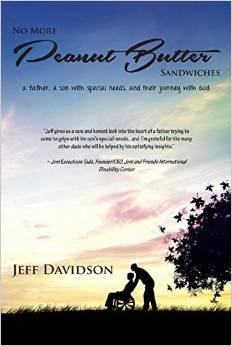
Vacant special needs dads are an unwanted reality for many families kids with disabilities. Today’s guest blogger and author Jeff Davidson was in danger of becoming a vacant dad after the birth of his son who has profound special needs. Today, Jeff shares the story of the grace that rescued him and his family and eventually led to his newly released book, No More Peanut Butter Sandwiches

No More Vacant Special Needs Dads

“My coping mechanism, like so many other dads of children with special needs, was to live in denial. I convinced myself that this was temporary and he would eventually catch up developmentally. For years I would not even utter the word autism out loud. I would say my son was on the autism spectrum, but not autistic. I would declare he had sensory processing issues but it wasn’t autism. I acted as if as long as I didn’t acknowledge it verbally, it didn’t exist. I was convinced he would just grow out of it someday. I would retreat at night to my home office and pour myself into my work, sitting at my desk until everyone else in the house was in bed.

“That’s what most of us do when we are in denial or just don’t know what to do. We retreat to something we are good at, or can master, and we throw ourselves into that instead. That’s our coping mechanism. So I dug in passionately at work and masked what was going on in my private life.”

Special Needs Dads and Moms Need to Grieve

“Coming to grips with the realization that you have a child with special needs is very much like many other life-altering moments in life. Everyone has to grieve. Everyone has to go through the grief process. What no one tells you is that you and your spouse will grieve differently and not be at the same stage or place in your grief at the same time.

“Men, for example, tend to get all tangled up in the denial and anger stages of grief. We can linger there for years and, for many dads, it’s unrecoverable. They never come to terms with it and it destroys them. Some dads choose to live forever in anger or denial. Often, dads check out within just a few years of receiving a diagnosis. Many will just walk away and leave the family fatherless.”

Why Special Needs Dads Become Vacant Dads

“For too many others, though, they just become what I call the ‘vacant dad.’ The vacant dad stays in the marriage, but he is pretty much there in body only. He doesn’t care, he doesn’t get engaged, and he doesn’t get involved. He’s checked out in every way except physically. I don’t know which is worse, the dad who leaves or the vacant dad. But I didn’t want to be either one.

“We have an epidemic of vacant dads in the special-needs community these days. We are losing too many dads within two or three years after diagnosis. As a result too many children with special needs are being predominantly raised by single female caregivers.”

Why I Write for Special Needs Dads

Those words are excerpted from my new book for parents of children with special needs, No More Peanut Butter Sandwiches: a father, a son with special needs, and their journey with God.

I began using the phrase “vacant dad” a couple of years ago after noticing the lack of engagement and involvement so many fathers have within their special-needs families. As a father of a son with profound special needs myself, I cannot imagine missing out on the blessings, joys, and cherished experiences I have had through my interactions with my own son.

As I like to say, “God sent a broken child into a broken world to a broken father, so that together they could find God in their brokenness.” That’s why I have become so passionate about starting a movement to reach more dads of children with special needs. That’s why I wrote my book from a father’s perspective to help other fathers along the journey.

How to Join the No More Vacant Dads Community

At risingaboveministries.org, fathers and mothers of children with special need can network, find support, participate in discussion forums, and link up with dad’s groups and activities across the country.
Unknown

Do you like what you see at DifferentDream.com? You can receive more great content by subscribing to the quarterly Different Dream newsletter and signing up for the daily RSS feed delivered to your email inbox. You can sign up for the first in the pop up box and the second at the bottom of this page.

 

By

Jeff Davidson and his wife Becky founded Rising Above Ministries to help support and encourage special needs families. Jeff passed away in 2017.

Author Jolene Philo

Archives

Categories

Subscribe for Updates from Jolene

Related Posts
Elevators, Bathrooms, and Car Trunks

Elevators, Bathrooms, and Car Trunks

Elevators, Bathrooms, and Car Trunks

Elevators.
Bathrooms.
Car trunk.

What could those three random items possibly have in common? As it turns out, quite a lot for my 1960s family that included a father who had multiple sclerosis (MS) and used a wheelchair. Dad’s mobility was dependent upon wheelchair accessible…

Elevators

He loved department stores that had them. Because elevators meant he could join his wife and kids while we shopped for school clothes and shoes in August and Christmas shopped in December. Instead of sitting alone on the first floor until we were done. He loved buildings with them. Because elevators meant he could join the other men at meetings instead of waiting alone on the first floor until someone came down to tell him what was happening.

Bathrooms

Most bathroom doorways weren’t wide enough for Dad’s wheelchair. Even if he could get into the bathroom of a public building or home, they weren’t big enough maneuvering a wheelchair. Because MS made it hard for Dad to control his bladder for very long, Dad’s urinal went with him everywhere, discretely tucked in an old leather shaving kit. Can you imagine being a 30-year-old man forced to use a urinal while sitting in a wheelchair in a dark hallway? Can you imagine being the child assigned to stand guard against intruders and then carry the receptacle to the bathroom to empty? A few experiences like that, and a family stops going to those places.

Car Trunks

When car shopping, my parents’ first question to a salesperson was never about the engine or tires. Instead, they asked to see the interior of the trunk. Because it had to be big enough to hold a wheelchair so Mom could heft Dad’s wheelchair inside and get the family where we needed to go. Which is why we had a 1960 something Ford Fury. As the picture shows, Plymouth Furies had big trunks. Though ours was a blah beige rather than a lovely blue.

But why a post about elevators, bathrooms, and car trunks for parents of kids with special needs in 2014? A couple reasons.

To read the rest of this post, please visit the Not Alone website where Jolene’s guest blogging today.

Do you like what you see at DifferentDream.com? You can receive more great content by subscribing to the quarterly Different Dream newsletter and signing up for the daily RSS feed delivered to your email inbox. You can sign up for the first in the pop up box and the second at the bottom of this page.

By

Jolene Philo is the author of the Different Dream series for parents of kids with special needs. She speaks at parenting and special needs conferences around the country. She’s also the creator and host of the Different Dream website. Sharing Love Abundantly With Special Needs Families: The 5 Love Languages® for Parents Raising Children with Disabilities, which she co-authored with Dr. Gary Chapman, was released in August of 2019 and is available at local bookstores, their bookstore website, and at Amazon.

Author Jolene Philo

Archives

Categories

Subscribe for Updates from Jolene

Related Posts

Disability and Special Needs Are Part of Life

Disability and Special Needs Are Part of Life

Disability and Special Needs Are Part of Life

 Photo Credit: stock images at www.freedigitalphotos.net

A trip to the grocery store proved to Ellen Stumbo that disability and special needs are a part of life. In today’s guest post she describes how shopping with her daughters, two of whom have special needs, shows others that disabilities and special needs are a part of every day life.

Life with Disabilities: A Part of Life

I pushed a grocery cart, and behind me three little girls followed close by, each pushing a customer in training cart. We were the perfect display of a mother duck being followed by her little ducklings. We got smiles, waves, and many comments, “Looks like you got some little helpers with you today!” “How adorable!” On that trip, disability was inconsequential to our adoring audience.

Two of my daughters have obvious disabilities. My middle daughter has cerebral palsy, making it hard and clumsy for her to walk pushing a little cart. My youngest has Down syndrome, and what can I say, she’s a cute little rascal, but you can tell by looking at her face that she makes an extra chromosome look good.

But there we were, pushing our carts. Our little family parade. And don’t get me wrong, because grocery shopping with three girls is not one of my developed skills, nonetheless, I know we did more than shopping, we gifted plenty of smiles.

I was a frazzled mama trying to keep it together though.

“Nichole, watch where you are going!”

Thankfully we avoided all collisions, but we were close.

“Just a second girls, the walker just fell…again.”

I did my best to balance the walker on the bottom of the grocery cart.

When we arrived at the store, the girls went straight for the customer in training carts. My daughter with cerebral palsy wanted one too. I was not going to deprive her of the fun just because she needs a walker. It makes the trip more complicated, but it also makes her just one of the girls. The walker fell out more times than I wanted to reposition it. It got to be a frustration, but we just kept moving along. Nobody gets left out.

By the time we were half way done, my youngest was done pushing her cart and ready to ride in mine. I left her little cart in the middle of an aisle and let one of the workers know.

We checked out and Nina got her walker back, thank goodness! As we walked out of the store and headed to the car, a lady followed us.

“Excuse me.” She said, “I wanted to give you this.”

She handed me a grocery bag. “It’s for your girls. A thank you for making my day.”

I looked inside the bag and there was a bag a puffed corn. A bag Nichole had wanted to get and I’d said no to.

“Thank you!” I said.

“No, thank you.”

As we drove home I thought about our grocery store adventure. My little ducklings, and me, the frazzled mama. Disability was not invisible, but it wasn’t scary, and it wasn’t bad, and it wasn’t something to look away from. Disability was just a part of life. A mother shopping with her three girls. Disability was normal, because disability is part of life.

And every day we do this, as we do life, we show the world that disability is just a part of life. Disability happens. We balance the walker and sometimes it falls, perhaps more than we want it to, but we pick it up and keep on moving. And we can see people smile and recognize the pleasures of being a family, just a family, like everyone else. And sometimes, this is what it means to live life with disability.

Is Disability or Special Needs Part of Your Life?

Have disabilities and special needs become an integral part of your life? How did it happen? How has your attitude made disability more integral for others, too?

Do you like what you see at DifferentDream.com? You can receive more great content by subscribing to the quarterly Different Dream newsletter and signing up for the daily RSS feed delivered to your email inbox. You can sign up for the first in the pop up box and the second at the bottom of this page.

By

Ellen Stumbo is a writer and speaker and the mother of three girls, two with disabilities. To read more of Ellen’s writing, visit her blog at www.EllenStumbo.com.  She can also be found on Twitter and Facebook.

Author Jolene Philo

Archives

Categories

Subscribe for Updates from Jolene

Related Posts

12 Things Special Needs Parents Need to Do

12 Things Special Needs Parents Need to Do

12 Things Special Needs Parents Need to Do

Today’s guest blogger Kerith Stull is mom to a daughter with special needs. So she knows special needs parents have plenty to do. Still, she thinks there are certain things special needs parents need to do, no matter how busy they are. Here are a dozen items that need to be on every special needs parent’s to do list.

12 Things Special Needs Parents Need to Do

My 18-year-old daughter, Brielle, has moderate cerebral palsy. If you’re a special needs mom like me, I’ve probably been where you are. There are things I wish I knew to do along the way.

#1: Grieve

Cry, scream, get violent (safely), and get over it. If you need help to get through a dark period, talk to family, friends, or seek professional help.

#2: Collect Information

Do your research. Talk to doctors, family, friends, and strangers. Some will offer insight and advice, often unsolicited. They may not always be right, but listen anyway. Write everything down so it helps you think, remember, and separate out your feelings.

#3: Gather your Tribe

Ask family and friends to come by your side. Some may scare away, but most will be eager to be there for you. Cultivate friendships for your child as well. Your child needs friends and you need to know your child has friends.

#4: Love On Your Family

They need your love and you need to love them. Make your husband and your marriage a priority. Be a team and give attention generously. Pay attention to your other children, let them have their own identity, and love on them independently from any other chaos.

#5: Take Care of You

Attend to your body, mind, and spirit. Ditch the bad habits. Rest when you can. Always keep some energy in reserves. Keep your mind active and alert. Believe in something bigger than you are.

#6: Attend to Your Finances and Legal Matters

Spend money wisely. You may be providing for your child’s needs for their entire lifetime. Your child’s ability to eventually receive government funding may be compromised if your child has any money in their name. Invest in life and disability insurance. Write a will and create a special needs trust.

#7: Be an Advocate

Gather information. Formulate a solution or plan. Be assertive. Make it happen. This might mean you become a bit of a watchdog, rattle a few cages, or make some compromises. Pick your battles carefully.

#8: Find Activities for Your Child

They provide social opportunities, learning experiences, and therapeutic benefits. They will also give you an opportunity to interact with other special needs parents and recognize your own joys and blessings. Find a hobby just for yourself as well.

#9: Do Not Baby Your Child

The more you baby your child and encourage interests below their age level, the less your child will grow. You might want to keep doing things for your child to ease their burdens. Don’t. Give your child chores and keep adding responsibilities so they learn life skills.

#10: Plan Ahead

Have a written plan for your child’s daily care, plans for the future, and anything someone else might need to know to take your place. At least three months before your child’s 18th birthday, start the guardianship process and apply for disability income. Plan for your child’s future 25 and 50 years from now, including living arrangements, routine, job, volunteer work, and activities. Start getting those things lined up now.

#11: Keep a Positive Spirit

Things are going to get better. There will also be seasons when things are much worse. Both are transient. Don’t sweat the small stuff. There will be messy, frustrating days. Appreciate the small successes. You’re gonna screw things up. Learn from your mistakes, pick yourself up, and try again.

#12: Find Your Purpose

Figure it out, even if it seems like something small. Part of your purpose is surely about paying it forward. Find someone who is where you were and be the sort of friend you wish you had at that point in your parenting journey.


What Do You Think Special Needs Parents Need to Do?

What do you think of Kerith’s list? Which items on the list are you going to work on? What would you add to the list? Leave a comment and then check out the links below to connect with Kerith at her website and beyond!

Do you like what you see at DifferentDream.com? You can receive more great content by subscribing to the quarterly Different Dream newsletter and signing up for the daily RSS feed delivered to your email inbox. You can sign up for the first in the pop-up box and the second at the bottom of this page.

By

Kerith Stull earned a Masters Degree in communication and worked in marketing before becoming a stay-at-home mother when her children were little. She has been married to her high school sweetheart for the last 24 years and is a recent semi-empty-nester since her 20-year-old daughter moved out to go to college. Kerith blogs about special needs parenting issues at Brielle and Me: Our Journey with CMV and CP with her uniquely positive perspective. You can also find her on Facebook, Twitter, and Pinterest. She recently published a book, Brielle and Me: Our Journey with Cytomegalovirus and Cerebral Palsy, about her experiences with their 18-year-old special needs daughter and their family’s journey of hope, determination, love, and faith.

Author Jolene Philo

Archives

Categories

Subscribe for Updates from Jolene

Related Posts

6 Attributes of an Effective Special Needs Advocate

6 Attributes of an Effective Special Needs Advocate

6 Attributes of an Effective Special Needs Advocate

 Photo Credit: acambaro at Star Stock

If you’re the parent of a child with special needs, you are already an advocate. And you want to be the best advocate you can be…for the good of your child. TCPalm.com ran an excellent article by Samantha Kayser that listed several attributes of effective special needs advocates and how to develop those attributes.

6 Attributes of an Effective Special Needs Advocate

Kayser listed these attributes suggested by Evelyn Duah. Duah is the administrator a local medical day care center for children newborn to 20 years of age and is passionate about parents advocating for their children.

  1. Get organized. Create an organized medical file and save every piece of paper pertaining to a child’s disabilities, services, needs, and more. Make copies monthly and scan new documents into the computer.
  2. Get educated. Research your rights, therapies, and more. Be willing to learn, ask questions, and keep asking questions until you understand.
  3. Educate others. Respond patiently with the appropriate information when people say hurtful things or respond in ignorance.
  4. Be persistent. Don’t give up when you can’t get an appointment. Instead of getting angry, keep restating your need in a nice way.
  5. Look for solutions. Instead of talking poorly about a doctor or the insurance company, focus on finding solutions.
  6. Take care of yourself. Take some time to care for yourself; otherwise you’ll quickly burn out and be unable to care for your child. Find time each day, even if it’s only 5 minutes, to focus on your own needs.

Pretty good list, don’t you think? 

How Have You Become an Effective Special Needs Advocate?

What have you learned about being an effective special needs advocate? What practices do you use on a regular basis? Leave a comment.

Do you like what you see at DifferentDream.com? You can receive more great content by subscribing to the quarterly Different Dream newsletter and signing up for the daily RSS feed delivered to your email inbox. You can sign up for the first in the pop-up box and the second at the bottom of this page.

By

Jolene Philo is the author of the Different Dream series for parents of kids with special needs. She speaks at parenting and special needs conferences around the country. She’s also the creator and host of the Different Dream website. Sharing Love Abundantly With Special Needs Families: The 5 Love Languages® for Parents Raising Children with Disabilities, which she co-authored with Dr. Gary Chapman, was released in August of 2019 and is available at local bookstores, their bookstore website, and at Amazon.

Author Jolene Philo

Archives

Categories

Subscribe for Updates from Jolene

Related Posts

Top 10 Similarities Between Flight Delays and Special Needs Parenting

Top 10 Similarities Between Flight Delays and Special Needs Parenting

Top 10 Similarities Between Flight Delays and Special Needs Parenting

Photo Source: Stuart Miles at www.freedigitalphotos.net

About a month ago, I was at Ronald Reagan National Airport waiting to board the airplane after a wonderful weekend at McLean Bible Church’s Accessibility Summit. But instead of announcing it was time to board, an airline official announced the flight had been canceled because of inability to assemble a flight crew.

A few minutes later, the other passengers and I were lined up in front of the customer service desk. I was not at all pleased to discover that a) the next available flights weren’t until Monday, b) the airline would pay for hotel rooms but not for food or any other expenses caused by the delay, and c) I was experiencing emotions very similar to those that accompanied the arrival of our medically fragile son.

With 17 hours until the rescheduled flight’s take off, I had P-L-E-N-T-Y of time to think about the similarities between flight delays and parenting a child with special needs. Here are my top ten:

10.  Unexpected expenses pop up all the time and everywhere.

9.    Sleep deprivation is an integral part of each circumstance.

8.    In both cases, it’s wise to pray first, speak second, and then pray some more.

7.   Parents and passengers learn very quickly that are not in control.

6.   Flexibility is essential, not optional.

5.   Both parents and passengers learn to bite their tongues.

4.   Once the dust settles and their tongues have healed, parents and passengers need to advocate for better treatment. (My letter of complaint went out later that week. I’ll keep you posted on how that goes.)

3.   Both situations are rife with rudeness and unexpected grace.

2.   They are both cauldrons in which deep and lasting friendships form.

1.   Two crucial elements can transform these potential negatives into positives: a sense of humor and a spirit of forgiveness.

Now, parents of kids with special needs, what would you add to the list? Leave a comment!

Do you like what you see at DifferentDream.com? You can receive more great content by subscribing to the quarterly Different Dream newsletter and signing up for the daily RSS feed delivered to your email inbox. You can sign up for the first in the pop-up box and the second at the bottom of this page.

By

Jolene Philo is the author of the Different Dream series for parents of kids with special needs. She speaks at parenting and special needs conferences around the country. She’s also the creator and host of the Different Dream website. Sharing Love Abundantly With Special Needs Families: The 5 Love Languages® for Parents Raising Children with Disabilities, which she co-authored with Dr. Gary Chapman, was released in August of 2019 and is available at local bookstores, their bookstore website, and at Amazon. The first book in her cozy mystery series, See Jane Run!, features people with disabilities and will be released in June of 2022.

Author Jolene Philo

Archives

Categories

Subscribe for Updates from Jolene

Related Posts