by jphilo | Aug 30, 2011 | Different Dream, Encouragement, Spiritual Support
In yesterday’s post, guest blogger Rebekah Benimoff shared her reaction and spiritual struggle after her son’s juvenile diabetes diagnosis . In today’s post, you’ll read about her son’s struggle to reconcile his disease and his understanding of God. See what you think.
A Juvenile Diabetes Diagnosis, Part 2
“Mommy, why did God give me diabetes?”
We were snuggled together on the couch; one of the fleeting treasures a mother of a pre-teen knows but only rarely. My son’s words tore my heart in two, but I remembered to keep quiet and let Tyler share. When he finished sharing how sad and angry he feels about his life-altering diagnosis, I was quiet for another moment, gathering my thoughts.
“Oh, honey,” I said, “I don’t think that God gave you diabetes…”I trailed off, uncertain how to express my own learning process in words.
“He could have stopped it.”
I was struck at how my son understands so much more than I give him credit for. Isn’t this thought how we respond to every difficulty, every loss?
Why Didn’t He Stop It?
“Why didn’t he stop it Mommy?” Tyler asked.
I took a deep breath and whispered a prayer for wisdom. “Tyler, I believe that some things happen because we live in a sin sick world. Life is not perfect– not at all the way we want it to be.” I struggled for words. “Some people think God causes bad things so we can learn a lesson, but I don’t. I think God takes what the enemy intends for bad and He changes it around and uses it for good.”
“So the devil gave me diabetes?”
“Well…”, I trailed off. All I was left with was the truth. “I don’t think so. I think our enemy does cause some of the bad stuff that happens.” But a medical diagnosis? “No, sweetie… I don’t really know why it happened.”
God Wants to Make Us Whole
I’ve experienced many faith groups that believe all illness is due to sin, passed down from one generation to another. But I’ve been through a number of healing based studies, and each time I prayed and broke the curse of generational sin, God spoke to my heart the need to pray for my son to be healed, not just physically, but emotionally. We long for physical healing, for removal of all difficulties, but I am finding that most often it is our hearts, our souls that He longs to heal. He wants so much more for us than we want for ourselves. We want the trial to come to a sudden halt, yet God’s desire is to make us whole. He loves us that much!
God Wants to Heal Your Heart
I sighed.”Tyler, I don’t really know the answer. I don’t know why God allowed you to get diabetes. What I do know is that God has told me to pray for your heart to be healed.” Tyler nodded, so I went on. “You see, I think that getting diabetes was very hard for you. It was so scary, especially in the hospital and that first year with so many shots and seizures. I think your heart is hurt. I think you need to work through all the hard things you went through—all the hard things you still go through. I pray you will work through the grief and that God will heal your heart.” I touched my hand to his chest, covering his heart, and gave him a big bear hug.
“Yeah,” Tyler said. “It is really hard. I feel sad and angry sometimes.”
Isn’t that the truth? When bad things happen, that’s the natural response. I sought to encourage my son, to let him know that these feelings are normal and okay, and that I was there for him if he needed to talk more.
A Mother’s Goal
For Tyler, that was enough. Enough to know that his mom would listen, and not contradict. Not tell him he was wrong, or judge him for how he feels. We still don’t know the answer to our questions, but by being quiet, resisting the urge to talk and tell him what to do, and how to feel, we actually moved closer in relationship to each other. And to God, too.
As a mom, that’s my goal. To let my children know I am human, I am fallible, but I love Jesus. I hope and pray that they will walk in God’s plans and purposes every day of their lives, accepting His grace and healing along the way.
What Hard Questions Are Your Kids Asking?
Whew, Tyler put Rebekah on the spot with his hard question about his juvenile diabetes diagnosis. And God gave her grace to answer with wisdom, faith, and honesty. So, what hard questions are your kids asking? And how did you answer? Leave a comment to share your wisdom or to ask other parents at DifferentDream.com for advice.
Part One
Do you like what you see at DifferentDream.com? You can receive more great content by subscribing to the quarterly Different Dream newsletter and signing up for the daily RSS feed delivered to your email inbox. You can sign up for the first in the pop up box and the second at the bottom of this page.
by jphilo | Aug 29, 2011 | Different Dream, Grief, Spiritual Support
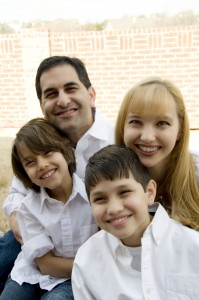
Once again, it’s my pleasure to introduce a new guest blogger, Rebekah Benimoff. In today’s post, she shares the story of how her family’s special needs adventure began. Though your child’s story may be different than her son’s juvenile diabetes diagnosis, I think you’ll identify with how she and her family responded.
A Juvenile Diabetes Diagnosis, Part 1
It began with rapid weight loss. Tyler dropped from a 4T, to a 2. A boy who was already small for his age began to look anorexic. When he started going to the bathroom every few minutes, I called my mom since my husband was deployed. “Do you think it could be a bladder infection?” She suggested that it might be diabetes, and I simply could not take that in. I took Tyler to our doctor and shared what was happening. Within minutes I had the shock of my life. There were massive amounts of sugar in his urine.
We were sent to the hospital and the next days were a blur of shock, fear, and information overload. The Red Cross flew my husband home, and we struggled to cope. Tyler would dissolve into screams each time he had to have a shot. Desperately he would cry out for me to stop the doctors and nurses who were trying to keep him alive. I could only watch, feeling helpless and overwhelmed. The first week was a nightmare, and the next year was not much better. My husband returned to complete the military mission, and I was left to care for a little boy who hated needles and was having diabetic seizures due largely to a doctor who over-medicated—an attempt force Tyler to gain weight. Tyler figured out that when he ate, he got a shot. So he decided he’d simply stop eating.
Moving Forward
A year later we found a better endocrinologist, and Tyler began to stabilize–just in time for Roger to deploy again, this time to Iraq. I had little time to do much other than survive. During Roger’s second deployment to Iraq, Tyler started kindergarten, and I began to work through an inner healing study. I discovered that I needed to work through quite a few issues related to the trauma of Tyler’s diagnosis, and the year that followed.
Fear
I lived in fear that Tyler would die. He was still having seizures and low blood glucose episodes, even after we had a doctor that listened to my concerns. Tyler’s body was still producing some insulin, so stabilizing blood glucose levels was a shot in the dark. Even after the “honeymoon phase” ended, and all of the cells that create insulin had finally been killed off (by his own body), Tyler was super sensitive to insulin. We were referred to the nationally renowned Barbara Davis Center for Pediatric Diabetes and Research, and had a wonderful support system, but I lived in terror that I would lose my son- if not now, then surely later. After much prayer, I came to the place of surrender. I pictured myself placing Tyler on the altar, much like Abraham did with Isaac, and I released my little boy to God. I still go back to the altar now, every time fear creeps back in.
Forgiveness
I had a lot of work to do in the area of forgiveness. Many hours were spent praying over specific offenses related to the saga of diabetes—especially that first traumatic year. I had to forgive the doctor whose tactics caused Tyler’s seizures and low blood glucose episodes. I had to forgive myself for listening to the medical personnel, and not knowing better sooner. And I had to forgive God for allowing this disease to alter our reality.
Grief
When Tyler received his juvenile diabetes diagnosis, I did not grieve the loss of my dream for him to have a normal childhood. Later I realized I needed to work though that loss. About the time I freed myself to face the issues, my husband returned from Iraq with PTSD. So the process of working through all the issues has had some stops and starts as other, more pressing matters have had to be dealt with. In the last year or so, I’ve been able to work through much of my grief regarding parenting children with special issues, as we continue to adjust to life with a husband/dad who has a brain injury. It is a process.
I am realizing that Tyler, too, needs to grieve, in his own natural way, and that listening is really the best way to help him work through his feelings.
Sound Familiar?
Does Rebekah’s story sound familiar to you? Leave a comment about the emotions you experienced when your child was diagnosed. And come back tomorrow for Part 2 of this series, and hear about Tyler’s reaction to his juvenile diabetes diagnosis.
Part Two
Do you like what you see at DifferentDream.com? You can receive more great content by subscribing to the quarterly Different Dream newsletter and signing up for the daily RSS feed delivered to your email inbox. You can sign up for the first in the pop up box and the second at the bottom of this page.

by jphilo | Aug 16, 2011 | Different Dream, Encouragement, Spiritual Support
A new school year is just around the corner, and maybe that’s why guest blogger Scott Newport is in a math mood today. Take a look at the new math he learned during his years as dad to Evan, their son who had special needs.
Mathematics of an Exceptional Parent
I never did really well in school but since the birth of my special needs son, Evan, I was left no option but to continue my education. Like you, I was taught mathematics is all about numbers. Ha!
Since my new schooling commenced, I figured out numbers do not always add up when trying to calculate a problem. I may not be the smartest guy on the block but the mathematics I have recently learned has paid off.
Below are two lists. The first part is composed of four equations I figured out as a home work assignment. The second part is a list of definitions that help shape our lives.
Part 1: Equations of an Exceptional Parent
- Circumstance – Hope = disappointment
- Relationships X forgiveness = longevity
- Friends / zero= loneliness
- Resiliency + humor = survival
Part 2: Geometry of an Exceptional Parent
- A triangle can be described as the relationship with three sides, you, your child and those who are there to help. At times it kinda functions like a three legged dog.
- A circle is a symbol of what you do when you try to explain your situation with those who don’t care. (Note: a circle has no beginning or end)
- A square has four equal sides, (Okay, Ill give you a pass on that one. I forgot, “equal sides” is not in our dictionary)
- A line is one of those marks on my face, not from age but from all the miles I have traveled in this journey with my exceptional child. But in reality a line moves in a clear direction you can either go forward or backwards on it. It is up to you which way you travel.
Epilogue
The three R’s; reading, writing and arithmetic were foundations for basic skills for education.
I say the three L’s; listening, learning, and lots of fun are the basic skills needed for an exceptional parent.
Your New Math?
What math lessons have you learned as the parent of a child with special needs? Please leave your favorite equations below!
Do you like what you see at DifferentDream.com? You can receive more great content by subscribing to the quarterly Different Dream newsletter and signing up for the daily RSS feed delivered to your email inbox. You can sign up for the first in the pop up box and the second at the bottom of this page.
by jphilo | Aug 15, 2011 | Different Dream, Encouragement, Spiritual Support
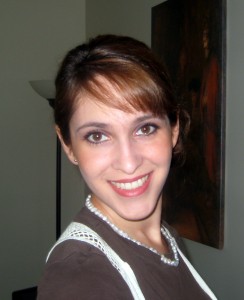
Today, I’m tickled to introduce Ellen Stumbo, a new guest blogger at DifferentDream.com. Ellen and I met at a writers’ conference a few years back and quickly became good friends since we are both parenting a child with special needs. She agreed to share part of her family’s story in Different Dream Parenting, which will be released in October of this year, and we’ve tossed around some book ideas to tackle together. In the last couple of years she and her husband adopted their third daughter and moved to a different state. But finally, things are slowing down for Ellen, and she has time to guest blog now and then.
So get ready to meet Ellen. You’re gonna love her!
Parenting a Child with Special Needs: How We Got Here
As my second daughter made her entrance into the world, she was lifted up to be placed on my chest. While the rush and noise of labor and delivery continued all around me, my world was reduced to nothingness except for the naked backside of my baby. I was familiar enough with Down syndrome to know, just from that glance, that my baby girl had an extra chromosome. Once she was placed in my arms and I was able to see her face, there was no doubt that I had become the mother of a child with special needs.
Becoming the Mother of a Child with Special Needs
Dealing with Nichole’s diagnosis was extremely difficult. I cried several times a day and questioned what our new life would be like. I worried about my oldest daughter having a sister with a disability, and I was convinced that our life would be defined by limitations. I was so scared back then.
Now I Experience Miracles
Almost 4 years later and I am amazed at how God chose to use a little baby girl with Down syndrome to change my heart. Nichole’s life has transformed me. Her extra chromosome has been one of the most significant blessings I have been given. The value of her life took us to a small orphanage in Ukraine where we got our third daughter. A little girl with Cerebral Palsy.
Some Days Are Hard
Some days are hard, yet some days I get to experience miracles that many take for granted. Moreover, while this is a road I would not have willingly chosen at the beginning, now that I walk this road, I would not want it any other way. We are living and loving life with special needs.
How About You?
Now you know how Ellen and her family became part of the special needs community. But how did your family get here? Leave a comment to share your story, if you like. To learn more about Ellen, check out her bio on the guest blogger page…just keep scrolling down until you see her smiling face!
Do you like what you see at DifferentDream.com? You can receive more great content by subscribing to the quarterly Different Dream newsletter and signing up for the daily RSS feed delivered to your email inbox. You can sign up for the first in the pop up box and the second at the bottom of this page.

by jphilo | Aug 11, 2011 | Different Dream, Grief, Spiritual Support
What a hard questions to have to ask. And what a hard question to try to answer. No doubt, some of you have had to ask such a question, and I can’t imagine the grief and sadness you have had to bear.
An Email from Miranda Gardner
A couple weeks ago, my editor at Discovery House Publishers emailed. “I read this article and thought of you and your new book,” Miranda said. (Miranda’s been thinking a lot about Different Dream Parenting: A Practical Guide to Raising a Child with Special Needs, since she’s the one shining it up before its release in October.) I clicked on the link that took me to Two Minutes to Eternity, an article at the Christianity Today website.
Two Minutes to Eternity
The article was written by Marshall Shelley. He’s the editor of Leadership Journal which is published by Christianity Today. Shelley wrote the article in 1994 after he lost two children. Son Toby died from complications of Trisomy 13 after two minutes on earth. Daughter Mandy had severe developmental delays and died just before she turned two. And yet in the midst of his grief and pain, Shelley found comfort in the promises of God. Because his thoughts were so profound, filled with truth and hope, the article was recently republished at www.ChristianityToday.com.
Thank You, Marshall Shelley
Thank you, Marshall Shelly, for sharing your journey. Thank you for this wonderful resource to pass on to grieving parents who need hope. May we respond to others with equal sensitivity and compassion when families we love lose children they love.
Do you like what you see at DifferentDream.com? You can receive more great content by subscribing to the quarterly Different Dream newsletter and signing up for the daily RSS feed delivered to your email inbox. You can sign up for the first in the pop up box and the second at the bottom of this page.
by jphilo | Aug 3, 2011 | Different Dream, Encouragement, Spiritual Support
In yesterday’s post, Amy Stout described how broken she felt after she and her husband received a diagnosis for their young daughter: autism. Then, Amy shared bits and pieces of wisdom she and her husband have learned since that memorable day, things she wants to pass on to other parents embarking on the adventure of special needs.
Bits and Pieces of Wisdom, Part 2
- Look for and investigate supports. There are various supports for therapy, financial resources, education options, Medicaid, anxiety, electronics and etc. Don’t try to do it all on your own. Places to start would be your child’s doctor, area education agency, the social worker at the place where your child was diagnosed, Medicaid and the Department of Human Services. By FAR, the best resource you will find is other parents. Try joining blogging communities such as www.theblogfrog.com and searching for special needs groups or groups related to your situation. Join a support group, ask questions and speak up. Help is there if you will humble yourself and ask.
- Advocate for your child: None of us enjoy this part of the process, but it doesn’t always have to be difficult. Work on fostering care teams in your child’s school, church, and sport activities. Advocate and help search out funding to accommodate special equipment, activities or other supports your child will need.
- Be approachable. I know way too many families who experience special needs that have drawn a wall between themselves and the general public. None of us want to be hurt, but the best way to foster relationships is to be open and honest with those who are willing to step into our lives. I especially love it when a friend will say “I have no idea what you are going through, but I would really love it if you would teach me about it and tell me ways that I can be there for you and help support your family” – What a GIFT!!
- Find a safe place – whether on paper, to your spouse or best friend where you can vent openly and not damage a relationship. Make sure that if it is a person, it is someone who can help you get out of the funk and back into a positive mindset.
- Take care of yourself. This is an area that I am not proficient in, so I am standing on the platform preaching to the choir. Get enough rest, eat balanced meals, exercise, take a time out when you need to, ask for help, foster social and spiritual relationships. Try to have balance in your life between school, church, therapy, family responsibility and fun.
- Try not to be concerned with what others think (this is also a difficult one for me). If your child needs a safety harness to navigate pedestrian traffic, then use it (even if a woman in Parents Magazine said using a safety harness is lazy parenting. I’d like to see them parent a special needs child for just one day). Your priority is to your child and family. Do whatever is necessary to meet your child’s safety (and other) needs.
- Empower your child by giving them the tools they need to be successful in the community. When speech therapy taught our daughter to say “I want book”, we taught her to say “I want book PLEASE.” When they transitioned to “Can I have book”, we taught her “MAY I have book, PLEASE” (proper grammar and polite/less demanding to casual observers).
- Express Gratitude: Be sure to write thank you notes, or express gratitude verbally to your child’s caregivers, teachers and helpers. Praise service providers and other people who have stepped into your life. Provide good, honest and constructive feedback when you are asked to (or when you feel it is necessary), but always balance it with positive and thankful experiences.
- LIVE: Turn off your computer, close the library book, put away the therapy tools and gather your family around you. Make a bucket list of things you would like to experience together or learn about together over the summer. Then DO those things and take pictures. The best way to bond as a family is to have shared experiences. The best way to have others feel connected to your family is to share these things with them (via caring bridge, a blog, a photo album, hearing your stories)… Again… they will take their cue from you and emerge more educated and supportive of your future endeavors.
- Invest in your spouse and your child. Don’t allow your lives to focus on the disability. Enjoy each other’s company, make memories, find out what each is good at and encourage that area. Really listen and hear what they say, how they feel, and what they think about things.
- LOVE your family: Say it, write it, demonstrate it in your touch. Date your spouse. Date your kids. Express pride (in front of them so they can hear). Meet their needs before they surface, remember special dates, surprise them with the occasional gift or favorite meal.
“…I think,” concluded Anne, hitting on a very vital truth,
“that we always love best the people who need us.”
— L.M. Montgomery (Anne of Avonlea)
Final Advice
- Rest assured that your life will be as fun, complete and whole as it is supposed to be. Different is better than ordinary if you are willing to embrace it and experience it.
- YOU CAN DO IT. God gives each of us the tools, personalities and gifts to navigate these special highways in life. We were chosen for a special purpose and He has a perfect plan for our future.
- If anyone reading this has any questions or would like more detailed information as to resources available, I would be happy to answer any questions or give further information. I don’t have all the answers but I could point you in the right direction and share with you what has worked for my family.
Some people go through life trying to find out what the world holds for them
only to find out too late that it’s what they bring to the world that really counts.
— L.M. Montgomery (A Stepping Stone Book)
Add Your Bits and Pieces of Wisdom
Thanks again Amy for sharing your wonderful advice. Readers, if you have bits and pieces of wisdom to share with other families who recently received a special needs diagnosis for their children, please leave a comment.
Part 1
Do you like what you see at DifferentDream.com? You can receive more great content by subscribing to the quarterly Different Dream newsletter and signing up for the daily RSS feed delivered to your email inbox. You can sign up for the first in the pop up box and the second at the bottom of this page.