
by jphilo | Jan 14, 2011 | Different Dream, Self-Care and Stress, Special Needs Parenting
Guest blogger and special needs dad, Scott Newport, sent a piece he wrote a few years ago. See what you think of Scott’s 12 signs you might be a special needs parent.
12 Signs You Might Be a Special Needs Parent
- When you are in a public setting and everyone is staring and whispering about you but no one comes over to ask for an autograph.
- When you are at the pharmacy counter and the guy next to you figures you must be related to the pharmacist.
- When you arrive at the neighborhood park and immediately everyone becomes overly gracious and gives your family sole right to the play structure.
- When others used to give you the “guilty eye” about sitting in the back row at church, but now they are happy you sit there. In fact they have a designated area just for you and your child.
- When only those under the age of four don’t look at you with that quizzical look.
- When you finally figure out you have become a stranger in your own community- the community you grew up in.
- When you are asked to interpret a foreign language spoken by your child that was never taught in a place of higher education.
- When your typical child has a birthday party and instead of passing out squirt guns, you pass out 60 cc syringes.
- When after tube feeding your child, your wife asks how you liked your breakfast. Then laughing, she informs you that we had run out of milk and the pancakes were made with your child;s special medical formula.
- When you feel Head Bangers would not be a good name for a pop band. Trust me the sound is irritating and isn’t sweet music.
- When you use to go to PTA meetings the parents were the majority and now you go to IEP meetings where you are the minority.
- When the above list of traits might have offended you in the past and now you can’t stop laughing.
Don’t feel bad if you cried at a couple. I did too.
Scott (Evan’s dad)
Can We Get to 24 Signs You May Be a Special Needs Parent?
Did the list make you laugh? Cry? Both? Did you think of a few more reasons to add to the list? If so, leave a comment. Maybe we can double the list to 24!
Do you like what you see at DifferentDream.com? You can receive more great content by subscribing to the quarterly Different Dream newsletter and signing up for the daily RSS feed delivered to your email inbox. You can sign up for the first in the pop up box and the second at the bottom of this page.
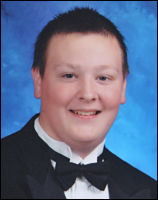
by jphilo | Mar 3, 2010 | Different Dream, Self-Care and Stress, Special Needs Parenting
After sharing Chad’s story in the first post in this series, I knew you’d want to see a picture of this handsome young man. It makes you smile, doesn’t it?
Rita’s Advice for Parents
When Rita and I talked on the phone a few weeks ago, I asked her to share advice with parents of kids with special needs. Here are her suggestions for staying strong spiritually:
- Read your Bible every day, even if it’s only a few verses.
- Claim some verses when your child is diagnosed and lean on them throughout the journey. One of Rita’s verses was Psalm 46: 10 – Be still and know that I am God.
- Ask people to be on your prayer team and pray for your specific needs.
- Pray for the doctors and educators working with your child.
- Instead of focusing on the possibility of death, be thankful each day that your child is living with his condition.
- Adjust your attitude by paying attention to the other families in the hospital. There’s always a family experiencing greater difficulties than you are.
- Schedule play dates at your house so you can answer questions friends have about your child’s condition.
Rita’s Advice for Friends
Rita also shared the following advice for friends of the family:
- Remember what the parents enjoyed doing before the life-altering diagnosis. Talk about hobbies or interests with parents instead of focusing only on illness and treatment. Parents will welcome the change and find it refreshing.
- If you want to give a gift to the child, give gifts to his siblings so they don’t feel overlooked.
In the last post in this series, you’ll learn about what’s inside Rita’s group Bible study and how to use it. Until then, choose one of Rita’s suggestions and give it a try. If it makes a difference in your attitude or ability to cope, leave a comment.
Do you like what you see at DifferentDream.com? You can receive more great content by subscribing to the quarterly Different Dream newsletter and signing up for the daily RSS feed delivered to your email inbox. You can sign up for the first in the pop up box and the second at the bottom of this page.

by jphilo | Aug 21, 2009 | Different Dream, Self-Care and Stress, Special Needs Parenting
When a child survives a serious illness, life is good again, right? Of course it’s good, but most likely it isn’t perfect since raising a survivor comes with a number of potential challenges. In this post, we’ll identify some of those challenges and the typical ways parents respond to them. Future posts will discuss each one in greater depth and point you to available resources.
Challenge 1: Over-Vigilance
After a child is seriously ill, parents can become over-vigilant. Because moms and dads know how bad things can get, the smallest sniffle and headache kicks the parental worry meter into high gear. And if the health care provider sends parents home with a long list of cautions and potential treatment side effects, they can agonize over the tiniest irregularities. This over-vigilance strips life of joy. It is no way for a family to live.
Challenge 2: Special Treatment
Conscious of what they nearly lost and grateful for renewed life, parents can easily fall into the trap of treating their little survivor like royalty. Instead of returning to normal, pre-illness life, they lavish the child with gifts, rewrite the family rules, and withhold discipline. Kids, unable to see the harmful consequences of such treatment, will eagerly milk the system. If this goes on for very long, the child so graciously restored to you, will become a small, unmanageable tyrant.
Challenge 3: Victim Mentality
Victim mentality can afflict both parents and kids. It often begins in the hospital when control over a child’s life and death is ripped away from the parents and placed in the hands of medical personnel. When all control rests in someone else’s hands, parents can easily view themselves as victims and pass that attitude on to their child. If the hospital stay is long, the illness is serious, and the complications are frequent, parents and children can’t shake the mentality of helplessness even when the child survives and goes home.
Challenge 4: Post-traumatic Stress Disorder
Children who experience significant medical trauma during their illness run the risk of developing post-traumatic stress disorder (PTSD). Most children’s hospitals or large medical campuses have child life specialists who are trained to reduce that risk. But a child life specialist was not available or your child is exhibiting signs of PTSD, treatment is available. This subject will be discussed in future posts, but if you have immediate concerns, visit www.traumatherapy.us for more information.
If any of these challenges sound familiar, rest assured that you’re not alone. All parents of survivors struggle with them at some time to some degree. If you would like to share how your family handles them or about other challenges you’ve experienced, please leave a comment. Or ask a question, if you have one. I’d love to hear from you.
Do you like what you see at DifferentDream.com? You can receive more great content by subscribing to the quarterly Different Dream newsletter and signing up for the daily RSS feed delivered to your email inbox. You can sign up for the first in the pop up box and the second at the bottom of this page.