by jphilo | Jun 30, 2010 | Advocacy, Different Dream, Special Needs Parenting
The first post in this series introduced you to Deborah Arrona, her husband Salvador, and their daughter Aria. If you haven’t read Part 1 of the series, the background information it provides will help this post make more sense.
Salvador and Deborah were only 20 when their premature baby arrived, and they’re only 26 now. But they have valuable wisdom to share. While everything can’t be shared here, (though I hope to include more of their story in Different Dream Parenting, my new book which is in the works) these comments give you a flavor of how the Arronas are choosing to live and grow through the life of their child with special needs.
What Are Your Greatest Sources of Support?
Deborah answered that question immediately. “My husband is the number one best. He’s a positive guy. If he sees the negative, be doesn’t mention it. If he grieves, it’s private. He does well with Aria and always encourages me. He thinks of another way to deal with problems. he helped me with grieving, and showed me it’s okay to feel how I do. He doesn’t judge me. I don’t have to ask for help. He just does it because he’s her dad. He helps me because I’m Aria’s mom.”
He’s as amazing as his wife, don’t you think?
Describe How You Started a Special Needs Ministry at Your Church
Elim Church, the Arrona’s home church even before Aria was born, has also been a source of support. They were always eager for updates about her progress. When Aria was well enough to attend church, she stayed in the nursery while her parents went to worship and Sunday school.
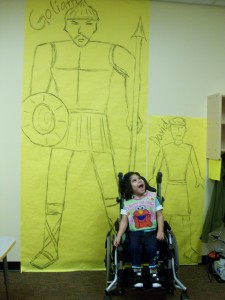
More parents of kids with special needs started attending the church, more than the nursery could handle. Suddenly, there was a need for a ministry for kids like Aria. Church leaders approached Deborah and asked if she would help get things going. Well, it just so happened that a few years earlier, a church in the area held a conference about how to start special needs ministries. Deborah attended, just in case the information would be needed some day. She shared the information with her church leaders. But still she said, “I thought the program would be for me, not by me.”
God had other plans. Deborah was asked to lead the program, and she said she would pray and consider it. No one else volunteered. More families of kids with special needs started coming. More issues related to their needs arose. Suddenly, Deborah knew she could do the job by asking, “What would I want for my child?”
She realized she knew how to answer that question and volunteered to lead it. Her husband said he would help. Each week, they make sure they aren’t just babysitting the kids from 11 families who attend. “We have a time for the kids to praise and worship, either with the other children or in a quieter setting.”
What Would I Want for My Child?
Deborah Arrona is an amazing woman. Because she asked a good question – What would I want for my child? – God showed her what to do and is using her to help many other kids with a wide variety of special needs. Their church is growing because she and her husband saw a need and stepped forward to meet it.
What question is God waiting for me to ask? What question is he waiting to hear from your lips?
Part 1
Do you like what you see at DifferentDream.com? You can receive more great content by subscribing to the quarterly Different Dream newsletter and signing up for the daily RSS feed delivered to your email inbox. You can sign up for the first in the pop up box and the second at the bottom of this page.
by jphilo | Jun 28, 2010 | Advocacy, Different Dream, Special Needs Parenting
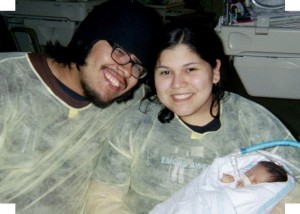
I’ve said it before, and I’ll say it again. Meeting parents of kids with special needs and hearing their stories is the best part of what I do. Recently, I met Deborah Arrona via the Coffee Klatch, a Twitter community for parents of kids with a wide variety of special needs. Later, she agreed to be interviewed, and her testimony of life with a child who has significant special needs impressed me deeply.
Baby Aria Comes Early
The Arrona’s adventure began in December of 2003 when Deborah was 23 weeks pregnant. Her blood pressure was slightly elevated, and she was spilling protein in her urine. After a hospital stay and a week on medication, her blood pressure improved. But she was still spilling protein, so she went back to the hospital. Deborah’s preeclampsia worsened, and the baby had to be delivered early by C section, at 25 weeks. Aria was born on December 31, 2003 and weighed in at only 1 pound, 4 ounces. She was 11 inches long.
110 Days in NICU
Deborah and her husband Salvador didn’t see their daughter for 5 long days. When they finally did, she was covered with plastic sheets as the medical staff tried to mimic a mother’s womb. Special coverings hid her eyes and ears. Much of what happened during Aria’s early days is still foggy for Deborah. Complications were numerous, procedures constant, and surgeries were required. Deborah does remember that her daughter nearly died of pneumonia once. And they didn’t get to hold her until she was three months old. When Aria’s weight went over 5 pounds and she could to bottle-feed without oxygen, they were able to take her home. She’e been in NICU or 110 days, from December 31, 2003 until April 27, 2004.
Life with Aria
The NICU staff did all they could for Aria, but humans just can’t recreate the sheltering, nurturing environment of a womb. Leaving that environment so early left the little girl with some major special needs. Her vision is impaired, though she can see light and shadow. In 2005, at age 2, a feeding tube was surgically implanted because eating was so much work, she couldn’t get enough nutrition. Aria is confined to a wheelchair, though in physical therapy, she’s been learning to stand. At age 6, she communicates mostly through facial expression, though she babbles a great deal. Aria still wears a diaper, but her parents are working on toilet training. She attends a preschool program for children with disabilities. When she’s home, caring for her is a full time job.
So Young and So Wise
When asked what she’d learned from Aria’s condition, Deborah said, “I’ve learned to slow down and think about what I do and say…I try to get to know medical professionals as people so they will take better care of Aria. I present myself as a mom who’s serious about her care and who can help her. I plan carefully, think of variables first, and then do. I try to be over-prepared.”
Wow! What an example of a wise advocate for a child with special needs. Here’s the kicker, folks. Deborah is only 26 years old. She’s been advocating like this since Aria was born, when Deborah was 20!
How Did It Happen?
If you want to know how Deborah develop such wisdom, come back Wednesday for the second part of this series. In it, Deborah will tell about where they received support and what they are doing to give back. You won’t want to miss it.
Part 2
Do you like what you see at DifferentDream.com? You can receive more great content by subscribing to the quarterly Different Dream newsletter and signing up for the daily RSS feed delivered to your email inbox. You can sign up for the first in the pop up box and the second at the bottom of this page.
by jphilo | Apr 2, 2010 | Advocacy, Different Dream, Special Needs Parenting
Several previous posts have addressed the need for parents to advocate on behalf of their hospitalized children. But until now, none of those posts dealt specifically with issue of patient safety.
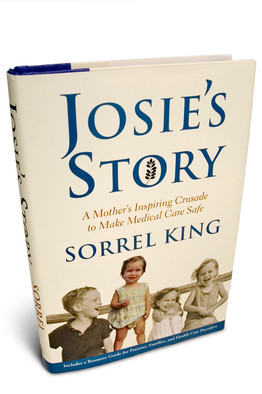
Josie’s Story by Sorrel King
The importance of patient safety is made painfully clear in Josie’s Story, Sorrel King’s heart-wrenching book about her daughter’s death. Eighteen month old Josie died in 2001 because of a preventable hospital error. It didn’t occur at a small town hospital, but at Johns Hopkins, one of the best hospitals in the United States.
Josie King Foundation
After Josie’s death, Sorrel and her husband learned that 98,000 people die every year due to medical errors, which makes it one of the leading causes of death in this country. In light of such a startling statistic, they created the Josie King Foundation, which is dedicated to preventing hospital errors. At their website, you can find resources and information for parents, patients, and health care workers.
If your child has as scheduled hospitalization coming up or is hospitalized frequently, please visit this site. Or pass it on to parents of children with critical or chronic illnesses. By being proactive, you could save a life.
Do you like what you see at DifferentDream.com? You can receive more great content by subscribing to the quarterly Different Dream newsletter and signing up for the daily RSS feed delivered to your email inbox. You can sign up for the first in the pop up box and the second at the bottom of this page.

by jphilo | Mar 10, 2010 | Advocacy, Different Dream, Special Needs Parenting
The previous post in this series introduced you to Justin and Victoria Nelson, proud parents of Moriah, age two. In this post, you’ll hear their answers to some questions about how Moriah’s medical saga has impacted them.
How Has This Changed You?
Justin: I learned to come to God and give him each day. Trust in God and constant reliance on who He is. That’s the only way to survive.
Victoria: As a mom, I used to be shy, but learned I can’t be. I have to speak up, be strong, and advocate for Moriah. I have to keep going, stand my ground, and be firm.
Justin: The situation simplified my perspective on life. I used to be ambitious for my family, but I’ve learned to be content with little things. I have my wife, my daughter, and God. I don’t need any other stuff.
Victoria: I’ve become passionate for kids with medical needs. Someday I would love to give back – support families and show appreciation to doctors and nurses.
Do You Have Advice for Parents?
Justin: Spend time with God each day. Hold onto his promises. He loves us more than we understand. Seek him even when you’re ticked off about what’s happening. Only God can help you do that.
Victoria: They should read your book, Jolene. It covers everything and says it all.
Jolene’s Disclaimer
Just so you know, I didn’t pay Victoria or bribe her in any way to say that about A Different Dream for My Child. In fact, this young couple is much more mature than my husband and I were when Allen was little. So I encourage you to visit www.momentswithmoriah.com often to see how they are doing and benefit from their wisdom and insight. Along with updates about Moriah, you’ll find links to other parents’ websites, information about support organizations, and much more.
You’ll also fall in love with Moriah and her parents. I sure did.
Do you like what you see at DifferentDream.com? You can receive more great content by subscribing to the quarterly Different Dream newsletter and signing up for the daily RSS feed delivered to your email inbox. You can sign up for the first in the pop up box and the second at the bottom of this page.
by jphilo | Mar 8, 2010 | Advocacy, Different Dream, Special Needs Parenting
Every now and then, God flabbergasts me with his creative ways of bringing people together. Recently, he used modern cyberspace and an old-fashioned book to connect me with to delightful young parents.
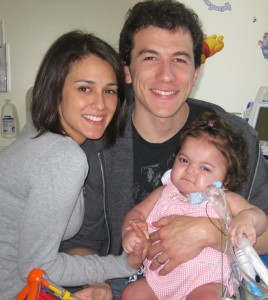
Moriah’s Mom and Dad
I first learned about Moriah’s mom and dad, Victoria and Justin Nelson, by clicking on a google alert link to www.momentswithmoriah.com. A young mom I didn’t know had posted a review of A Different Dream for My Child. Victoria said someone had donated to the San Francisco Children’s Recovery Center, so she picked it up and read it. Touched by whayt she read, she wrote a review and posted it.
Once she did, visits to DifferentDream.com and books sales increased significantly. So I went to Moriah’s website and was intrigued by her parents’ positive attitudes, even though Moriah has been hospitalized most of her short life.
Justin and Victoria Nelson
The Nelsons shared Moriah’s story during a recent phone call. Their website describes their daughter’s medical journey completely, so there’s no need to recount it here. Instead, here are a few of the struggles Justin and Victoria have experienced since they knew their daughter was on the way.
- They learned of Moriah’s heart defect when Victoria was six months pregnant. Abortion was out of the question for them.
- They became advocates for their daughter after she was born in Los Angeles on January 23, 2008. They researched the heart surgery she needed and contacting the San Francisco surgeon who saved Moriah’s life.
- Eventually, Justin took a job demotion that allowed him to transfer to San Francisco so Moriah’s medical care could continue there.
- Justin and Victoria don’t feel sorry for themselves. Since Moriah’s health has stablized and she’s become stronger in the last few months, they went through a “let down” and are now receiving counseling for post-traumatic stress.
- These parents are 26 and 25 years old, close in age to my kids. Their maturity and faith is marvelous.
In the second post in this series, the Nelsons talk about how Moriah’s life has changed them. Their insights will warm your heart and challenge your faith. Until then, you can learn more about them and see pictures of the adorable Moriah at their website.
Do you like what you see at DifferentDream.com? You can receive more great content by subscribing to the quarterly Different Dream newsletter and signing up for the daily RSS feed delivered to your email inbox. You can sign up for the first in the pop up box and the second at the bottom of this page.
Save

by jphilo | Aug 13, 2009 | Advocacy, Different Dream, Special Needs Parenting
When a child is hospitalized, a clear-thinking parent at the bedside is very good medicine. Here are five things clear-thinking parents do to help their hospitalized children:
#1 Stay Calm
It’s hard to stay calm when a child is in distress, on the way to surgery or enduring a difficult treatment. But conscious or unconscious, children pick up their parents’ emotional vibes. So it’s important for Mom and Dan to project calm and confidence, even if they don’t feel calm and confident. Also, doctors, nurses, and hospital staff members are more likely to listen to calm parents than to those who are out of control, and that translates into better treatment for your child. So do whatever is necessary to stay calm, which leads into the next point…
#2 Develop a Support Group
Clear-thinking parents surround themselves with calm, supportive people. They contact friends and family, explain the situation, and ask them for help. You need to do the same thing. Ask your support team to visit you, pray with you, and to bring an overnight bag or anything else you need. Whenever you need a calming influence, give someone on your support team a call. Ask them to pray on the phone with you and to call other people and get them praying.
#3 Find Experts
To help when a child is hospitalized, effective parents ask nurses and doctors about the educational and support services provided by the hospital. They contact hospital chaplains and child life specialists, who are trained to help children deal with medical trauma. You should locate and take advantage of the services your child’s hospital provides. If the hospital doesn’t have a child life specialist, the Child Life Council website, www.childlife.org recommends asking your physician or healthcare provider if child life services are appropriate and/or available.
#4 Ask Questions
Effective parents ask lots of questions. Highly-effective parents write their questions in a notebook so they’re ready when the doctor or nurse comes in. So ask someone from your support group to bring you a notebook and start jotting down your questions.
#5 Get Online
Most medium to large hospitals provide Wi-Fi services and computers on each floor so parents without laptops can access the internet. Clear-thinking parents visit their hospital’s website for more information about services available to parents and families. They use a search engine to research their child’s condition and to find parent support organizations. And they go to www.caringbridge.com or www.carepages.com to set up a free web page and post updates about their child’s condition. If you aren’t online already, ask a nurse how to get started.
An unexpected stay in the hospital with your child isn’t fun, but by staying clear-headed, you will find the resources you need to weather the situation and support your child during a very difficult time.
Do you like what you see at DifferentDream.com? You can receive more great content by subscribing to the quarterly Different Dream newsletter and signing up for the daily RSS feed delivered to your email inbox. You can sign up for the first in the pop up box and the second at the bottom of this page.

Save
Save