by jphilo | Jun 9, 2014 | Books and Resources, Different Dream, Special Needs Parenting
5 Marriage Tips for Parents of Kids with Special Needs
Photo Credit: Salvatore Vuono at www.freedigitalphotos.net
How can parents of kids with special needs adequately care for both their children and their spouses? That’s a crucial and difficult question, one DifferentDream.com showcases periodically. A Washington Post article by Mari-Jane Williams does a good job of outlining the challenges raising kids with special needs brings to a marriage. It also offers parents 5 ways to care for their marriages.
Marriage Challenges for Parents of Kids with Special Needs
Williams lists the following challenges parents face:
- exhaustion
- worry and anxiety
- advocacy
- financial demands
- time demands
Any of those strike a chord with you?
5 Ways for Care for Marriage
The author then suggests these 5 ways parents can care for their marriages:
- Do not just become “parent-partners.” Talk about more than your kids. Connect about other topics, too.
- Embrace your differences with your partner. Parents have different expectations and grieve differently, too. Don’t just tolerate your spouse’s differences, embrace them.
- Be proactive when marital resentments build. Talk about problems sooner than later before you become angry.
- Get creative when it comes to romance. If date nights away aren’t doable, look for creative ways to be romantic at home.
- Appreciate each other’s efforts. Share responsibilities and give credit for each other’s efforts to make you feel more like a team.
To read everything Williams has to say, click on over to her article, How to Take Care of your Marriage When You Have a Child with Special Needs. You might also want to read these previous DifferentDream.com posts about marriage:
What’s Your Best Advice?
What have you and your spouse done to care for your marriage? Leave a comment to share your wisdom.
Do you like what you see at DifferentDream.com? You can receive more great content by subscribing to the quarterly Different Dream newsletter and signing up for the daily RSS feed delivered to your email inbox. You can sign up for the first in the pop-up box and the second at the bottom of this page.
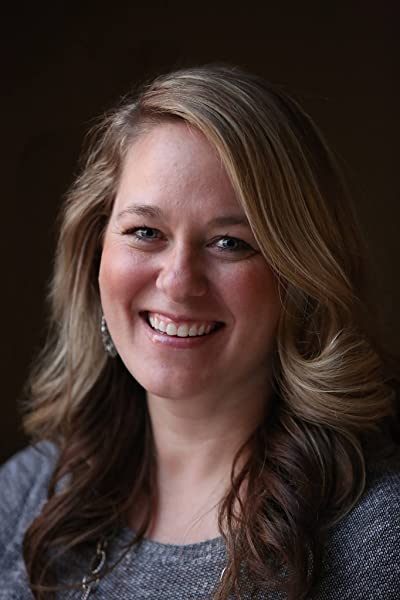
Kimberly grew up and went to college in the small town of Upland, IN. She graduated from Taylor University with a degree in Elementary Education in 2002. While at TU, she married her college sweetheart and so began their adventure! Ryan and Kimberly have four amazing kids on earth (Abigail, Jayden, Ellie, and Cooper), and a baby boy waiting for them in heaven. Their daughter Abigail (Abbey) has multiple disabilities including cerebral palsy, a seizure disorder, hearing loss, microcephaly, and oral dysphagia. She is the inspiration behind Kimberly’s desire to write. In addition to being a stay-at-home mom, Kimberly has been serving alongside her husband in full time youth ministry for almost fourteen years. She enjoys working with the senior high girls, scrapbooking, reading, and music. You can visit Kimberly at her website, Promises and Perspective.
Subscribe for Updates from Jolene

by jphilo | Nov 19, 2012 | Advocacy, Different Dream, Special Needs Parenting
Siblings of Kids with Special Needs: Do Their Lives Change?
Siblings of kids with special needs often face their own set of challenges. But when the needs of their brothers or sisters are urgent and possibly life-threatening, these siblings sometimes suppress their own needs, feel guilty, or become resentful.
Sibling Confession: Ranit Mishori
Dr. Ranit Mishori, a family practitioner here in Washington and member of the faculty at Georgetown University School of Medicine, penned a Washington Post article about her struggles as the sibling of a brother with severe autism. She very honestly wrote about locking her brother in his bedroom so her date who was picking her up wouldn’t see him. She listed several challenges siblings face:
- Missing out on typical family outings
- Being embarrassed to bring friends home
- Being the focus or cause of tantrums and outbursts
- Being expected to grow up quickly and be responsible
- Feeling second in importance to parents, because their time and energy is focused on the child with special needs
The article is quite extensive and informative and worth checking it out at Autism can have large effects, good and bad, on a disabled child’s siblings.
Siblings with Special Needs Conversation: Talk of the Nation
The article must have piqued the interest of the talk show planners at National Public Radio. Dr. Mishori was a guest of Neal Conan, host of Talk of the Nation, during the September 25, 2012 broadcast called Siblings with Special Needs Change Childhood. Several guests called in to share their experiences and emotions as the siblings of children with special needs. About halfway through the show, guest Don Meyer, the founder of Sibshops, joined the conversation. Sibshops is a national organization that trains volunteers to run local workshops that support siblings with kids with special needs.
The conversation covered more ground than can be summarized here, so you might want to listen to the story or read the transcript of Siblings with Special Needs Change Childhood at NPR.
Sibling Challenges: What Are You Dealing With?
What kinds of challenges are the siblings of kids with special needs facing at your house? How are you dealing with them? What kind of help do you need? What resources have you found useful? Leave a comment so we can work together to meet the needs of all our children.
Do you like what you see at DifferentDream.com? You can receive more great content by subscribing to the quarterly Different Dream newsletter and signing up for the daily RSS feed delivered to your email inbox. You can sign up for the first in the pop-up box and the second at the bottom of this page.
Subscribe for Updates from Jolene

by jphilo | Feb 13, 2012 | Books and Resources, Different Dream, Special Needs Parenting
For about a year, I couldn’t figure out why people, when they learned I write about special needs, would ask, “Do you watch Parenthood?”
“No,” I would tell them, “thanks to the government mandated the switch to bigger, better, digital TV, we only get one channel. And that’s with the converter box. So we don’t watch much TV.”
The Public Library Is my Superhero
But the question kept coming.
Do you watch Parenthood?
Do you watch Parenthood?
Do you watch Parenthood?
Finally, I checked with our public library to see if they carried the DVDs of the first two seasons. Lo and behold they did! Once again, the library is my superhero!
Yes, I Watch Parenthood
Now, when people ask if I watch Parenthood, the answer is, “Yes, and I totally understand why you are asking that question.” This is a show that gets what it’s like to be the parent of a child with special needs, in this case Asperger’s Syndrome. The writers get the grief. They get the joy. They get the awkwardness and the fear and the hope and the sadness.
Why Does Parenthood Get It?
Now, thanks to blogger Mari-Jane Williams at the Washington Post, I understand why this show gets it. Because the executive producer, Jason Katims has a son with Asperger’s. He talks about that and much more, thanks to the questions Williams asked when she interviewed him. To read the interview click on this link. You’ll read about Jason’s story and about Max Burkholder, the young actor who plays Max Braverman, the character who lives with Asperger’s. And you can watch a video clip of him on the show. It’s good stuff.
Do You Watch Parenthood?
When you’re done at the Washington Post website, would you come back here and leave a comment? Do you watch Parenthood? What do you like about it? What do you dislike about it?
Do you like what you see at DifferentDream.com? You can receive more great content by subscribing to the quarterly Different Dream newsletter and signing up for the daily RSS feed delivered to your email inbox. You can sign up for the first in the pop up box and the second at the bottom of this page.

by jphilo | Feb 7, 2012 | Current Events
Last weekend a friend sent an email about the Washington Post’s Annual Mensa Invitational. According to the email, this year’s invitational consisted of two parts. In the first, “The Post invited readers to take any word from the dictionary, alter it by adding, subtracting, or changing one letter, and supply a new definition. For those of you who, like me, can’t follow all that in your head, here’s one entry.
Giraffiti: Vandalism spray-painted very, very high
The email described the second part of the invitational which asks readers to supply alternate meanings for common words. Such as:
Flatulence, n. Emergency vehicle that picks up someone who has been run over by a steamroller.
By the time I finished reading the 17 entries in the first category and the 16 entries in the second, my sides ached with laughter. This response confirmed a long held, secret suspicion that if I could be queen of anything, I would choose queen of word play. The email made me so happy, I also decided to blog about it.
That’s when an internet search disclosed a disturbing truth.
The Washington Post’s Annual Mensa Invitational doesn’t exist. Once upon a time, someone ran a contest and an almost identical list has been circulated year after year…since 1998. The news kinda broke my queen of word play heart.
Until I stumbled upon the WPM Invitational website.
WPM took the idea, though they clearly state they are not associated with the Washington Post, and now oversee their own annual contest. Their rules are identical to the first half of the original contest. At the site, you can see:
You can also:
My fave in the 2010 contest was…Ussues Issues shared or inherited by virtue of being in a committed relationship which was submitted by Michale Bertani.
Now if you will excuse me, it’s time to wrap up this blog and get to work on my entries for the 2012 contest. If you’d like to vote for them, just look for the ones by Queen of Word Play and vote for royalty.
This queen will be quite amused.