Cerebral Palsy: A Message for You

Cerebral Palsy: A Message for You

Cerebral Palsy: A Message for You

Cerebral palsy (CP) is part of life for many Different Dream readers and their families. One of those readers. Today’s guest blogger, Lindsey Pasieka, is raising awareness about the condition as part of her advocacy efforts on behalf of her brother.

Cerebral Palsy: A Message for You

For those of you who may have missed it, October 6th was World Cerebral Palsy Day. World CP Day is a day to spread awareness about the #1 childhood motor function issue in the world. Cerebral palsy affects nearly 1 in 300 children.

People make a lot of assumptions about kids with CP. They assume that people with CP can’t think or learn. That they can’t grow up, or won’t grow up, because of their disease. And that even if they do reach adulthood, they will never be independent.

Over the past few months, I’ve been able to connect with a huge community of CP families online and it’s clear that those assumptions are often wrong. So here are a few things you might have never known about cerebral palsy.

CP doesn’t always imply intellectual impairment.

While some people with CP do have mental delays or deficiencies, there is a huge number of folks with normal cognition. Actually, many people with CP are intellectually gifted– I’ve connected with college grads, business owners, and even doctors who have a form of CP.

Cerebral palsy isn’t all the same.

There are 4 large groupings to distinguish the different types of CP: spastic, athetoid, ataxic and mixed. Each of those groups contains a myriad of symptoms and severities. Some people with CP may have multiple issues -added complications on top of their motor function deficits. The range is truly astounding, as is the range of capabilities. Yes, there are CP patients that are wheelchair bound and have almost no motor function control. There are also CP patients who wear high heels, drive cars or go jogging.

Lots of people with cerebral palsy live happy, independent lives.

That’s right. They don’t all stay with their parents forever or end up in long-term care facilities. Some may use assistive technology, which has come such a long way in recent years. Others won’t need it and are able to use medications or physical therapy to manage motor function issues. With some people, you might not realize that they even have CP.

But for some people, cerebral palsy is devastating.

I’ve spent a lot of time around World CP Day talking about the amazing accomplishments of people with CP. But those stereotypes, those assumptions you make, they are also someone’s reality.

Someone prays that their child lives past 10.
Someone sits by a hospital bed and refuses to go home.
Someone knows their kid won’t walk, or talk, or graduate.

When you meet someone with CP, the best thing you can do is enter the conversation with no assumptions. Let that person or their family tell you their story their way.  Be supportive, and respectful. Pray by their side if they need it. Cheer them on as they accomplish things they never expected. And never let your preconceptions get in the way of connecting with another person. Thank you, and Happy (belated) World CP Day.

Do you like what you see at DifferentDream.com? You can receive more great content by subscribing to the monthly Different Dream newsletter and signing up for the daily RSS feed delivered to your email.


By

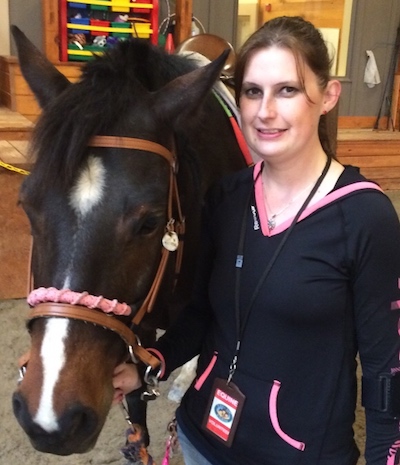
Lindsey Pasieka is a writer and consumer advocate working with ConsumerSafety.org. When not working, she enjoys spending time with family and volunteering for animal rescue. She writes for Different Dream on behalf of her brother, who has cerebral palsy.

Author Jolene Philo

To get posts delivered to your inbox, enter your email address:

Delivered by FeedBurner

Archives

Categories

Related Posts

How to Press On as a Caregiver

How to Press On as a Caregiver

How to Press On as a Caregiver

Guest blogger Kimberly Drew is learning to press on as caring for a beloved baby daughter with special needs takes a toll on mamma’s body and mind.  Today, she explains where she looks for help and encouragement.

Press On

I pulled out of the doctor’s office and geared up for the almost 2 hour drive home. By the time I got home it had been a 6 hour day. Our youngest daughter Ellie was adopted with the knowledge that she would have special needs. Her recent cerebral palsy diagnosis was a big disappointment, but it was also expected. What I didn’t anticipate was the toll that her care was going to take on my mind and body, how hard it would be to Press On.

It’s not that I had forgotten how hard the early years were with our older daughter who has special needs, I had just forgotten what “hard” felt like.

Ellie is 22 months and only 15 pounds and 6 ounces, and she has oral feeding difficulties. Her feeding therapist wants us to wean her off the pacifier–the same pacifier that the NICU team told us required a critical skill she needed to develop before weaning her off the feeding tube. So of course we encouraged her to use the pacifier all the time!

We have had pacifiers in every room of the house, 3 in the crib, many lost, and multiples in the diaper bag at any given time.

But at this stage, the pacifier can become a problem for her feeding issues and speech delays. Despite all the hours of effort, all the frustration, all the labored and intense therapy sessions to develop her reflexes in place for drinking from a bottle, the pacifier now has to go. It’s simply time to move on toward our next goal.

This lesson couldn’t be more appropriate for the difficulty I am currently facing.

Sometimes, not matter how hard you’ve worked at something it’s time to move on. A pastor at a teaching conference spoke about the hardships that Paul went through in his journey as a devoted follower of Jesus.

2 Corinthians 11:23b-27 reads, “I am talking like a madman—with far greater labors, far more imprisonments, with countless beatings, and often near death.  Five times I received at the hands of the Jews the forty lashes less one.  Three times I was beaten with rods. Once I was stoned. Three times I was shipwrecked; a night and a day I was adrift at sea;  on frequent journeys, in danger from rivers, danger from robbers, danger from my own people, danger from Gentiles, danger in the city, danger in the wilderness, danger at sea, danger from false brothers;  in toil and hardship, through many a sleepless night, in hunger and thirst, often without food, in cold and exposure.”

Despite those obstacles, Paul continued to serve, follow, and give his life up for the sake of God’s glory and the Gospel even still. In Ephesians 3:8 he says,  “ Indeed, I count everything as loss because of the surpassing worth of knowing Christ Jesus my Lord. For his sake I have suffered the loss of all things and count them as rubbish, in order that I may gain Christ.”

With the backdrop of his imprisonments, beatings, shipwrecks, hunger, and public shame Paul looks to Christ for the strength to press on. In Phillipians 3:13-14 he writes, “Brothers, I do not consider that I have made it my own. But one thing I do: forgetting what lies behind and straining forward to what lies ahead, I press on toward the goal for the prize of the upward call of God in Christ Jesus.”

If you, like me, are struggling through the difficulties of raising a child with special needs and find yourself discouraged and weary, I encourage you to let go of what is behind, strain forward, and press on. Let’s read and meditate upon Paul’s words until they take root in our hearts.

I love the song, Press On, by the group Selah. I need to hear it today and imagine I’m not alone in that. If you have a few minutes to listen to it, you won’t regret it.

How do you press on when the caregiving burden takes a toll on you? Share what you’ve learned in the comment box below.

Do you like what you see at DifferentDream.com? You can receive more great content by subscribing to the quarterly Different Dream newsletter and signing up for the daily RSS feed delivered to your email inbox. You can sign up for the first in the pop up box and the second at the bottom of this page.

By

Kimberly grew up and went to college in the small town of Upland, IN. She graduated from Taylor University with a degree in Elementary Education in 2002. While at TU, she married her college sweetheart and so began their adventure! Ryan and Kimberly have four amazing kids on earth (Ellie, Abigail, Jayden, and Cooper), and a baby boy waiting for them in heaven. Their daughter Abigail (Abbey) has multiple disabilities including cerebral palsy, a seizure disorder, hearing loss, microcephaly, and oral dysphagia. She is the inspiration behind Kimberly’s  desire to write. In addition to being a stay at home mom, Kimberly has been serving alongside her husband in full time youth ministry for almost fourteen years. She enjoys working with the senior high girls, scrapbooking, reading, and music. You can visit Kimberly at her website, Promises and Perspective.

Author Jolene Philo

To get posts delivered to your inbox, enter your email address:

Delivered by FeedBurner

Archives

Categories

Related Posts

The Amazing Shrine School for Children with Special Needs

The Amazing Shrine School for Children with Special Needs

The Amazing Shrine School for Children with Special Needs

The Shrine School in Memphis, Tennessee is one of a kind. I visited it in late September of 2017 and was blown away by the building, the teachers, the staff, the parents, and most of all, by the 150 students served there.

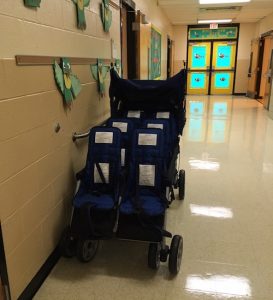
I knew this school was something special after spying this multiple child carrier in the preschool hallway.

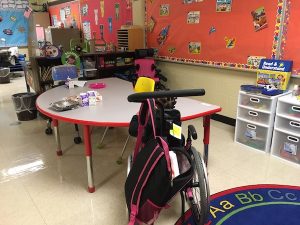
The school, part of Shelby County Schools, has a unique history and collaboration with the Shriner Organization. The Shrine Board of Control provides funding for special services that benefit the students who attend the school. To be eligible to attend, students (who range from age 3 to 21) must have an IEP, and the need for nursing services must be written into their IEPs. The services offered are amazing. Here are pictures of a few.

Breakfast and lunch for all students. The little girl in the chair is eating breakfast. The cafeteria provides special meals for students who require pureed food, thickened liquids, gluten-free and the like.

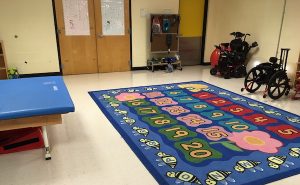
Full time, on site physical, occupational, and speech therapists who do some work in the therapy room above or in the classroom.

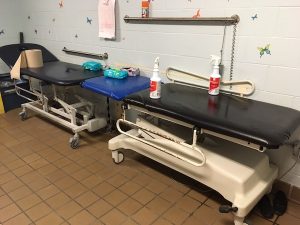
Special changing tables in the locker rooms for students whose IEPs include water therapy in the pool shown at the top of the page.

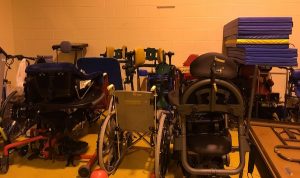
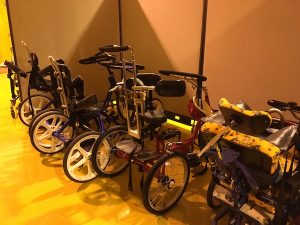
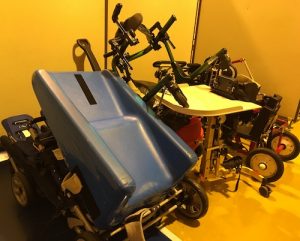
Adaptive PE equipment for tots,

tweens,

teens, and young adults.

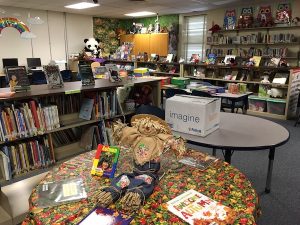
A fully stocked library run by Ms. Posey, which I think is the best possible name for a children’s librarian.

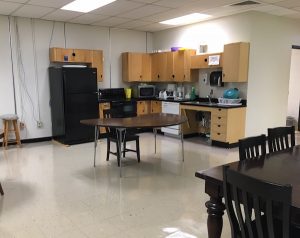
A life skills area where students learn cooking and housekeeping skills.

The Shrine School also has a full time RN who works with students and oversees numerous LPNs that serve each wing of the school (preschool, elementary, middle school, and high school). Class sizes range from 8–13 students. Each classroom has a full time teacher and at least 2 teaching assistants. The principal has been there 18 years and is passionate about the students. The full time guidance counselor, who first contacted me about speaking at their fall parent resource fair, knows every student by name and is constantly searching for resources for children and families.

Here are a few of the Shelby County resources at  the Resource Fair.

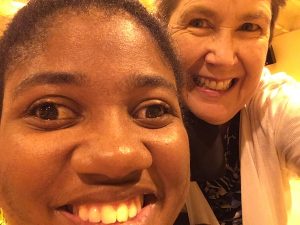
Meet Brittany, a Shrine School Alum, who now works for The Arc in the Memphis area and represented the organization at their booth.

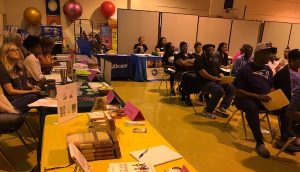
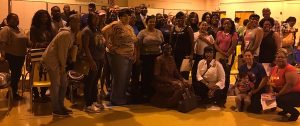
Speaking of families, the Shrine School parents are dedicated and involved. Here are a few of the over 100 who attended the Fall Resource Fair.

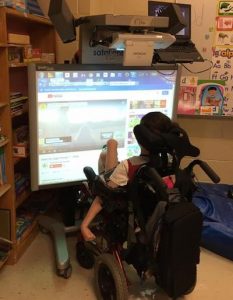
The work being done by and with the students dropped my jaw more than once. In 1 classroom, a little boy operated the smart screen with his foot.

He knew exactly how to get to the channel he wanted.

At the end of the day, I visited a middle school classroom. The speech therapist wheeled one of the students into the room and announced that the young girl had “found her voice” that day. “Say hello to everyone,” she instructed a girl with dancing eyes and a radiant smile who was unable to use her limbs or speak because of cerebral palsy.

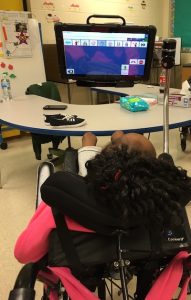
Then, for the first time in her life, the young girl used her gaze-activated communication board to say, “Hi, how are you?”

Gaze-activated communication board in use!

I watched the teachers and associates lovingly gather around her chair to chat with the student and listen to what she had to say. They kept their cool, but I was in tears.

“This school is amazing,” I told the guidance counselor later as I recounted the story.

“Miracles like that happen here all the time,” she said. “Children take their first steps, start talking, and learn to use the bathroom.”

At the end of the day, I went back to my hotel room grateful to the Shriners for their commitment to children with special needs. But my gratitude pales in comparison to that of the parents.

One after another said, “My child loves it here, and so do we. This is the best school ever.”

And do you know what I think?

They’re right.

Do you like what you see at DifferentDream.com? You can receive more great content by subscribing to the quarterly Different Dream newsletter and signing up for the daily RSS feed delivered to your email inbox. You can sign up for the first in the pop up box and the second at the bottom of this page.

By

Jolene Philo is a published author, speaker, wife, and mother of a son with special needs.

Author Jolene Philo

To get posts delivered to your inbox, enter your email address:

Delivered by FeedBurner

Archives

Categories

Related Posts

A Grandmother’s Prayers for a Grandchild with Special Needs

A Grandmother’s Prayers for a Grandchild with Special Needs

A Grandmother’s Prayers for a Grandchild with Special Needs

Different Dream welcomes new guest blogger, Liz Schultz, today. She’s here with the story of the power of a grandmother’s relationship with and her prayers for a grandchild with special needs. What an example for all of us!

A Grandmother’s Prayers for a Grandchild with Special Needs

“Wait, Grandma! Stop the movie! Stop it right there!”

Helen fumbled for the remote and punched the pause button. “What is it, Austin?”

“I want Jesus in my heart,” Austin answered, responding to the gospel message in the Veggie Tales movie now frozen on the screen. Helen prayed with him, “Jesus, come into my heart. I want you to live in me.”

“I don’t know if it sunk into his mind,” Helen explains when she remembers that day and considers the effects of prayer on her grandson’s growing faith, “but I know that seed of faith got into his heart, and my greatest prayer is that what is sown in Austin’s heart will manifest in his life.”

Helen prays that what she teaches about God will grow in Austin’s understanding and be displayed in his behavior. She knows the summer vacations and Christmas breaks that Austin spends with her are times to share her faith and cover him with prayers for his protection and future.

“When Austin is here, it’s seed time,” Helen says. “The greatest thing I can do for him is to sow that seed in his heart and pray for the fruition.”

One effect of Austin’s pervasive development disorder is that he struggles to understand and control his emotions. Helen is teaching Austin to pray to God for his assistance.

“When he becomes angry or aggressive, I say, ‘Let’s ask Jesus to help you,’” Helen says. “’ Let’s ask Jesus to help you when you’re mad. Let’s ask him to help your heart be happy,’ and Austin will reply, ‘Okay, Grandma, I’ll ask Jesus to help.’ When he shares or is polite, I tell him that makes Jesus happy, and Austin understands.”

They often pray together asking Jesus to help Austin make good choices.

“I pray that Austin will make a difference,” Helen explains, describing her hopes for her grandson to live a fruitful and productive future. “I pray that he lives to the full potential God created in him.”

“He is so full of love,” Helen continues. “He’s very aware of and sensitive to other people’s feelings. I pray that he always cares about others, and gives to others. I want him to seek to meet the needs of others, and know that he makes a difference in their lives.”

While Helen prays for Austin’s growing faith, she encourages parents who are struggling with a child’s disability to pray to God and trust in him.

“God knows and loves every child conceived on this earth. Jeremiah 29:11 says that God has a purpose and a plan. Those plans are for good and not evil, for a future and a hope. Never, never give up hope. When I feel weighed down by worries and what-if’s, I remember that God is bigger than my fear.”

“Hey, Grandma, what’s up?” Austin beams as he climbs the front steps, arriving for another visit at Helen’s house.

“There’s my Austin!” Helen greets him, welcoming another opportunity to pray with him and share her faith.

Your Prayers for a Grandchild with Special Needs?

Are you a praying grandparent? Feel free to share about your prayers for a grandchild with special needs in the comment box.


Do you like what you see at DifferentDream.com? You can receive more great content by subscribing to the quarterly Different Dream newsletter and signing up for the daily RSS feed delivered to your email inbox. You can sign up for the first in the pop up box and the second at the bottom of this page.

By

Liz Schultz draws on her experience as a single mother to write encouragement to other single parents. She contributes guest posts at desmoines.citymomsblog.com. Liz also volunteers with a ministry serving teen parents in the Des Moines area, and is completing a book about how her single mom experience led her to faith in God. In her spare time, Liz deconstructs pajama pants to create warm and comforting quilts. Her daughter married last year, so Liz and her husband are now eagerly awaiting the arrival of grandchildren.

Author Jolene Philo

To get posts delivered to your inbox, enter your email address:

Delivered by FeedBurner

Archives

Categories

Related Posts

4 Tricks to Make Halloween a Treat for Your Child with Special Needs

4 Tricks to Make Halloween a Treat for Your Child with Special Needs

4 Tricks to Make Halloween a Treat for Your Child with Special Needs

Are you looking for tricks to make Halloween a treat for your kids with special needs? Guest blogger Trish Shaeffer offers these 4 tips to make costumes, the atmosphere, treats, and words fun for your child this Halloween.

4 Tricks to Make Halloween a Treat for Your Child with Special Needs

Most kids can’t wait to try on Halloween costumes and make their way through the neighborhood trick-or-treating. But for children with special needs, Halloween can bring new challenges. Their choices of costume or candy may be restricted so that Halloween is not always such a treat.

Though children may have limited mobility, a sensory processing disorder, a cognitive problem or a food allergy, they still can enjoy Halloween. Try these tricks to make the haunted holiday the right kind of scary.

  1. Make costumes work for your child. The traditional boo won’t do if your child’s costume includes a wheelchair, or your kids hate the feel of scratchy material, makeup, and masks. But never fear, you can make it work! Many online stores have costumes for kids with special needs or can even give you ideas on how to make your own. If your child uses crutches, a walker or a wheelchair, get creative! Even crutches can complement a costume. Just be sure the costume doesn’t  interfere with your child’s mobility.
  2. Prepare the senses. For kids with sensory processing disorder, candy, nippy fall air, running around after dark, costumes, or even the noises in the dark can be a challenge. To make sure your child can handle the night, try one of these tricks: Let your child stay at home and hand out treats. Or create a comfortable costume and practice wearing it beforehand. You should even practice the steps of what to say during trick-or-treating to prepare them for the night.
  3. Take the scare out of treats. If you’re terrified of trusting others to understand your child’s food restrictions, add a warning sticker, a shirt, or a print out to your child’s costume. You can find many ideas online at sites like Star Allergy Alerts. If you child has food sensitivities or allergies, you can also plan ahead to suggest alternatives like toys or all-natural candy. When in doubt, look for the teal pumpkins when going door to door. These pumpkins signify safe treats for children with food allergies. Look for local events that also offer trick-or-treating opportunities for kids with allergies.
    4. Provide wise words. For children with developmental or speech delays, you can make cards to hand out when they go door-to-door. These cards explain the issue to others so they can understand your child’s needs and offer a friendly hello even without a word from your child. There are many great ideas online for these cards.

I hope these tricks make Halloween a treat for your child. Have a Boo-tiful day and a happy Halloween. And feel free to leave your Halloween tips in the comment box, too.


Do you like what you see at DifferentDream.com? You can receive more great content by subscribing to the quarterly Different Dream newsletter and signing up for the daily RSS feed delivered to your email inbox. You can sign up for the first in the pop up box and the second at the bottom of this page.

By

Trish Shaeffer mom of 3 active boys, a 9-year-old and 5-year-old twins who were born 2 months early and have special needs. She’s a peer supporter for Parent to Parent and volunteers with the United Cerebral Palsy Network, Special Olympics, and the United Way. She’s also an equine volunteer at Leg Up Farm. She’s married to her best friend and biggest supporter, Chris Shaeffer.

Author Jolene Philo

To get posts delivered to your inbox, enter your email address:

Delivered by FeedBurner

Archives

Categories

Related Posts

Why I Wrote Loving Lindsey: An Interview with Linda Atwell

Why I Wrote Loving Lindsey: An Interview with Linda Atwell

Why I Wrote Loving Lindsey: An Interview with Linda Atwell

Different Dream is pleased to welcome Linda Atwell as today’s guest blogger. Linda is here to talk about and answer our questions about her new book, Loving Lindsey: Raising a Daughter with Special Needs. We hope you enjoy getting to know Linda as much as we did and that, perhaps, you’ll purchase her new book.

Why Linda Atwell Wrote Loving Lindsey: An Interview with the Author


Question 1: Did you know immediately after birth that your daughter would have special needs?

When I was pregnant, the only baby my mind ever visualized was a healthy one, and when my daughter was born, I thought my dearest dream had been granted. Lindsey had impressive Apgar scores—the evaluations taken right after a baby is born that tells doctors and nurses how well your infant did coming into the world, then five minutes later to find out how she was adjusting to her new environment. Lindsey scored eight and nine—out of ten. Then she excelled in her early development. Based upon the developmental milestones, she rolled over, crawled, talked, and even walked on time.

Question 2: So, when did things change?

At 16 months, my inquisitive, beautiful toddler suffered a grand mal seizure and developed essential tremors. Although she’d had no visible problems with gross motor skills, fine motor skills confounded her. She could not coordinate the small muscle movements in her fingers, hands, or eyes. She wasn’t making friends or keeping up with her peers in school. In the 1980s, when Lindsey was 6, doctors at Oregon Health Science University diagnosed her as “mildly mentally retarded” (a term I despise and rarely use)—from an unidentified syndrome, but most likely from an undiagnosed birth defect. They told me that when she became an adult, she would likely live in a group home.

Question 3: What lifestyle did you hope for your daughter’s future?

After coming to terms with my daughter’s diagnosis, I learned that what I wanted more than anything (just like the mother of a typical kid), was for my girl—despite her intellectual disabilities—to live an independent life, to have purpose, and to find love. Fortunately, Lindsey wanted those things for herself. In fact, she demanded them. But with such goals, there are also challenges.

Question 4: How did Lindsey handle independence?

Lindsey plunged into adulthood and experimented with sex, decided to have a tubal ligation, then ran away with a man more than twice her age to live in a house with tinfoil taped over the windows. As she grew closer to Emmett, she withdrew from us. But because she was twenty, and it was not illegal in Oregon to pick a bad partner, law enforcement could not help us. It took 4 1/2 years to bring our daughter home.

Question 5: Why did you write Loving Lindsey?

Initially, I felt the need to get our story down on paper. But as I wrote, I wondered if our story might have turned out differently if I’d been aware of Lindsey’s rights as an adult, or the traits of people who prey on our most vulnerable young adults—whether or not they have a mental disability. So by sharing, I hoped it would help others.

Question 6: What do you hope the reader learns from your book?

Our story includes moments of love and pride, as well as the times our family struggled. It shares the successes people with special needs can achieve when offered parental, educational, and community support. Although the challenges for independent living will vary from child to child, and family to family, kids with special needs often have more abilities than we might initially think. Our daughter continues to surprise us all the time. And, truth be told, that is the story I really wanted to tell.


Do you have questions for Linda or about her book, Loving Lindsey? Leave them in the comment box if you like!


Do you like what you see at DifferentDream.com? You can receive more great content by subscribing to the quarterly Different Dream newsletter and signing up for the daily RSS feed delivered to your email inbox. You can sign up for the first in the pop up box and the second at the bottom of this page.


Linda Atwell earned her BA from George Fox College. She owned a successful home décor business for ten years before switching to adjusting catastrophe insurance claims and climbing roofs for a living. Now she writes award-winning work that has appeared in print and online magazines. Her first book, Loving Lindsey: Raising a Daughter with Special Needs was recently released by She Writes Press. Linda irregularly writes a blog about her daughter with special needs. She hopes to get 50 stamps in her passport before it expires. Linda and her husband John live in Silverton, Oregon. They have 2 incredible adult children.
 

By

Jolene Philo is the author of the Different Dream series for parents of kids with special needs. She speaks at parenting and special needs conferences around the country. She’s also the creator and host of the Different Dream website. Sharing Love Abundantly With Special Needs Families: The 5 Love Languages® for Parents Raising Children with Disabilities, which she co-authored with Dr. Gary Chapman, was released in August of 2019 and is available at local bookstores, their bookstore website, and at Amazon.

Author Jolene Philo

To get posts delivered to your inbox, enter your email address:

Delivered by FeedBurner

Archives

Categories

Related Posts