Coronavirus and Kids with Special Needs

Coronavirus and Kids with Special Needs

Coronavirus and Kids with Special Needs

Coronavirus and kids with special needs sounds like a combination worthy of panic. With all the information and misinformation swirling about, it’s easy for caregiving parents to be confused and stressed about how to best protect their kids. Where’s a parent to go to find accurate, truthful information? And what should they do to keep their kids safe and healthy, both physically and mentally, as the situation unfolds? Here are five sources that provide information in a thoughtful, careful manner.

  1. The Center for Disease Control and Prevention (CDC). This site is updated daily as new cases of the coronavirus are identified and scientific advancements are made. You’ll find a state-by-state breakdown of cases and map, a page about the coronavirus in kids that should ease your mind, and a list of measures to slow the spread of the virus and avoid contracting it.
  2. The World Health Organization (WHO). This website is similar to the CDC’s but with a global, rather than national, focus. Their prevention page has much of the same information as the CDC. I especially like their graphic about how help kids cope with stress during the outbreak. What’s the big message for parents worried about the coronavirus and kids with special needs? Stay calm and manage your own stress so your kids don’t get stressed!
  3. AARP. It sounds weird, I know. But the AARP’s article about what senior citizens should know about the coronavirus can be generalized to the coronavirus and kids with special needs. Also, the article answers some questions the CDC and WHO don’t mention.
  4. My husband. He’s a nurse at a regional hospital, and they receive updates and preparedness information. He and the three sources listed above say the same things. Hand washing is the single most effective measure to slow the transmission of the coronavirus.

Based on everything I’ve read and the advice of my husband who’s been a hospital nurse for more than 30 years, the best way to keep the coronavirus and kids with special needs away from one another is to wash your hands. With soap. Several times a day. For at least 20 seconds. You would be wise to institute the other measures recommended by the CDC and WHO. They may seem simplistic and low tech, but research proves they work. Now if you will excuse me, I’m off to wash my hands. Again. 

Do you like what you see at DifferentDream.com? You can receive more great content by subscribing to the monthly Different Dream newsletter and signing up for the daily RSS feed delivered to your email inbox. You can sign up for both at the bottom of this page.

By

Jolene Philo is a published author, speaker, wife, and mother of a son with special needs.

Author Jolene Philo

To get posts delivered to your inbox, enter your email address:

Delivered by FeedBurner

Archives

Categories

Related Posts

Medically-Fragile Kids with the Flu: 3 Tips to Keep Them Out of the Hospital

Medically-Fragile Kids with the Flu: 3 Tips to Keep Them Out of the Hospital

Medically-Fragile Kids with the Flu: 3 Tips to Keep Them Out of the Hospital

Medically-fragile kids with the flu is a scary combination as guest blogger Kimberly Drew knows. Today she shares 3 tips that kept her children with compromised immune systems home after they contracted influenza. If the flu hits at your house, they might do the same for you.

Despite our efforts to avoid it, our house was hit with the flu this winter. It caught us unprepared and we scrambled to get by while doing our best to care for one another. With two children with significant special needs and another child with asthma, it was a difficult time. Here are some things that helped us stay out of the hospital with our vulnerable few.

Tip #1 for Medically-Fragile Kids with the Flu

Hydration. Both our daughters with cerebral palsy (CP) find it difficult to eat and drink on regular days. If you add in illness of any kind, hydration can become a monumental challenge. Pedialyte has what’s needed but tastes terrible. I have found that alternating juice and water does the job just as well. The trick is consistency because dehydration can lead to vomiting, and you have to stay ahead of it. If the girls are refusing to eat or drink, I simply give them fluids from a 10 ML syringe every twenty minutes and increase the amount as they tolerate it. I place the syringe back by the molars and somewhat in the cheek and push in a little at a time like when giving liquid meds. The trick is to keep at it every 15 to 20 minutes until they will use a cup or straw. I set an alarm on my phone to remind me and keep the liquids in a cup nearby.

Tip #2 for Medically-Fragile Kids with the Flu

Help. As soon as I go into constant care mode, I call someone to bring a meal or order us a pizza. Our church has a great network for this. If you don’t have that kind of support system, I strongly encourage you to set one up for yourself. Find five family members or friends ready be on “meal duty” when you need it. This simple act takes a big chunk of time and energy off you so that you can care for your children. There are a thousand ways an extra set of hands can come in handy: someone to sit with your other children so you can get your medically-fragile kids with the flu into a steamy bathroom, or to pick up a prescription to name a few. So don’t be too shy to ask for help.

Tip #3 for Medically-Fragile Kids with the Flu

Honesty. We can all agree that having your children hospitalized is rarely good, so call the after-hours line for your pediatrician or specialist if you’re not sure what to do. Our kids’ physicians are more than happy to offer extra tips to keep them home. Our son with asthma had some very difficult nights these last few weeks, but the on-call pulmonologist helped keep me calm and on top of what he needed. While we can’t control everything, the second set of eyes on situation can really make a difference, especially when we parents are tired and worried!

I hope you don’t find yourself in need of these tips this winter. But if you do, I want to tell you that you can do this! Before you know it, spring will be here and these flu germs will be a bad memory! Stay strong and keep pushing forward.

Do you like what you see at DifferentDream.com? You can receive more great content by subscribing to the monthly Different Dream newsletter and signing up for the daily RSS feed delivered to your email inbox. You can sign up for both at the bottom of this page

By

Kimberly grew up and went to college in the small town of Upland, IN. She graduated from Taylor University with a degree in Elementary Education in 2002. While at TU, she married her college sweetheart and so began their adventure! Ryan and Kimberly have three amazing kids on earth (Abigail, Jayden, and Cooper), and a baby boy waiting for them in heaven. Their daughter Abigail (Abbey) has multiple disabilities including cerebral palsy, a seizure disorder, hearing loss, microcephaly, and oral dysphagia. She is the inspiration behind Kimberly’s  desire to write. In addition to being a stay at home mom, Kimberly has been serving alongside her husband in full time youth ministry for almost fourteen years. She enjoys working with the senior high girls, scrapbooking, reading, and music. You can visit Kimberly at her website, Promises and Perspective.

Author Jolene Philo

To get posts delivered to your inbox, enter your email address:

Delivered by FeedBurner

Archives

Categories

Related Posts

Christy’s Courage: An EA/TEF Success Story

Christy’s Courage: An EA/TEF Success Story

Christy’s Courage: An EA/TEF Success Story

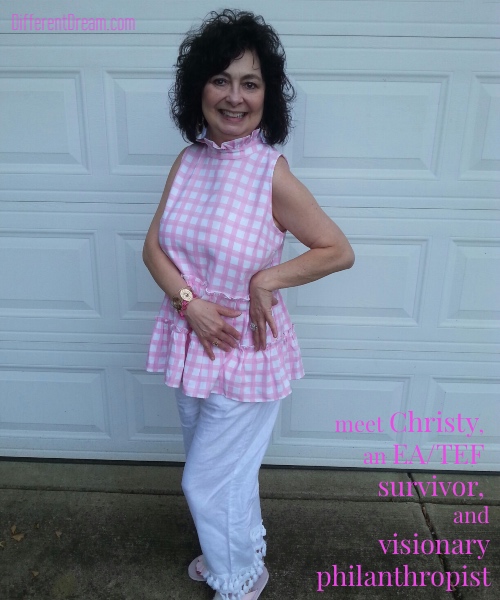
Christy’s Courage is a the brainchild of Christy Cook, an EA/TEF survivor. As part of EA/TEF Awareness Month, 2020 she is sharing her fascinating story and her vision for supporting EA/TEF kids and their families.

My name is Christy Cook. I was born an EA/TEF baby in Baltimore, Maryland in 1963 and my “long gap type C” journey began. The first surgery at attempting to correct my unusual birth defect was performed on the very first day of my life at Sinai Hospital by Dr. Jack Handlesman and his team of doctors. Since the gap at the esophagus was too long, the connection was not successful. Therefore, a gastrostomy tube (g-tube) was very carefully inserted into my small stomach. This g-tube became my life line the next 4 years. The doctor’s goal was to attempt another corrective surgery when I weighed 25 pounds.

When I reached this goal weight sometime during the year of my second birthday, the doctors began contemplating another method for corrective surgery. During this time, I was in and out of Sinai Hospital numerous times for various medical issues relating to EA/TEF. At one time, all my available veins for injecting fluids were depleted. The doctor told my parents that only a miracle could save my life.

A miracle did happen!

The doctor performed an extraordinary surgery to find a deep vein in my groin through which I could receive lifesaving fluids. Also, there were times when fluids were simply injected under the skin to help sustain my life. When I was around 2 years of age, Dr. Handelsman performed a colonic interposition in my chest cavity to try to make a connection to my stomach. Unfortunately the transplant did not succeed because it scarred and died in my chest.

For the next few years, my life consisted of gastrostomy feedings and hospital visits. When I was around 3, my family decided to move back to North Carolina, their home state. After having my medical records sent to the Chapel Hill Hospital at the University of North Carolina, we made contact with a renowned surgeon Dr. Colin Thomas. Dr. Thomas decided to transplant a second colon section outside the chest cavity just under the skin or subcutaneously. His thinking was that this colon transplant could be surgically put into the chest cavity at a later date.

Eureka, a successful connection was made!

This type of corrective surgery has been an unusual restorative procedure that serves me well. Therefore I chose not to risk having the transplant placed into my chest since everything its working If I get a “sticky,” I help the peristalsis motion by massaging my esophagus.

Voilà, no more “sticky!”

This triumphant procedure has served me well for more than 50 years. I have been able to enjoy eating by mouth since I was 4, and I have no other serious birth abnormalities. My corrective surgeries have been written up in medical journals and medical students have studied and learned from my medical history. Thankfully, there are medical professionals who continue to do research and are finding better ways to treat, repair, and surgically help these precious babies who are born with this rare and unfamiliar birth defect.

My goal is to use my life experience to make a difference for EA/TEF patients by supporting them on their journey to navigate this diagnosis and live a successful life. For that reason, Christy’s Courage was established in 2012 when I started to write a book about my life. The book turned into a non-profit when I, along with Pi Kappa Alphas at Western Carolina University, raised money to gift an adjustable bed to an EA child. Since then have held many different fund raisers to raise awareness for EA and to gift adjustable beds, wedge pillows, monetary gifts, Farrell bag covers, airfare to hospitals, and anything else we can handle. We have a scholarship fund for EA young adults to help with their college needs.

Because EA is so rare, it is a challenge to get people engaged to attend our events and make monetary donations. So, if you are reading this educate someone about EA, please refer them to Christy’s Courage so we can make an impact for the EA community!

Do you like what you see at DifferentDream.com? You can receive more great content by subscribing to the monthly Different Dream newsletter and signing up for the daily RSS feed delivered to your email inbox. You can sign up at the bottom of this page.

By

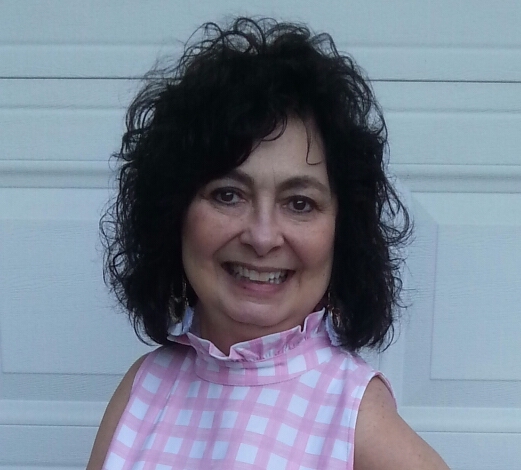
My name is Christy Cook and I am a survivor. Living with Esophageal Atresia (EA) has been a courageous, but difficult journey. Through all the twist and turns of EA, I graduated high school, was a debutante, attended college for 3 years, became a member of Delta Zeta sorority, and after college I work full time as a food broker. (Ironic, don’t you think?) I have been married for 32 years to a wonderful man. Our fur babies are 2 Shih Tzu’s (Bunni Rose and Moonpie) and 6 cats (Amelia, Caramia, Kitta, Panther, Rusty & Zeek). In my spare time I enjoy concerts, hanging with friends and trips to the ocean.

Author Jolene Philo

To get posts delivered to your inbox, enter your email address:

Delivered by FeedBurner

Archives

Categories

Related Posts

EA/TEF Awareness Month, 2020

EA/TEF Awareness Month, 2020

EA/TEF Awareness Month, 2020

EA/TEF Awareness Month has been my favorite way to usher in January for a decade, and 2020 is no exception. As in past years, Different Dream will feature posts from parents raising children born with some variation of the condition. This year, for the first time, at least one post will be partially written by an adult born with EA/TEF.

If you’re wondering why Different Dream devotes an entire month to raising awareness, 2 reasons come to mind right off the bat. First, our first child was born in 1982 with Type C, the most common kind of EA/TEF. So I have a vested interest in making the general public more aware of this birth anomaly. Second, the condition is quite rare, occurring once in every 3,000-5,000 newborns. 60% of babies born with EA/TEF have at least one other birth anomaly, though our son did not. That means there’s a lot of awareness raising to be done, and since January is cold and snowy where I live, it’s the perfect time to talk about EA/TEF on social media. Indoors. Where it’s warm and cozy.

To whet your appetite for what’s to come, check out this 2019 post, which is a compilation of favorite EA/TEF Awareness Month posts over the years. You’ll be blown away by the cuteness of these EA/TEF kids and by the wisdom their parents share. EA/TEF Awareness Month for 2020 will feature 2 posts every week, so stop by often for more cuteness and wisdom.

If you’re an EA/TEF survivor or are raising one, you’re also invited to share your story in the comment section below. I would love to hear your story and so would Different Dream readers around the globe!

Do you like what you see at DifferentDream.com? You can receive more great content by subscribing to the monthly Different Dream newsletter and signing up for the daily RSS feed delivered to your email inbox. You can sign up at the bottom of this page.

By

Jolene Philo is a published author, speaker, wife, and mother of a son with special needs.

Author Jolene Philo

To get posts delivered to your inbox, enter your email address:

Delivered by FeedBurner

Archives

Categories

Related Posts

When a Teen Is in Crisis: 4 Godly Ways to Respond, Part 1

When a Teen Is in Crisis: 4 Godly Ways to Respond, Part 1

When a Teen Is in Crisis: 4 Godly Ways to Respond, Part 1

When a teen is in crisis, parents want to be prepared to respond in wise and godly ways. In this two part series, guest blogger Catherine Boyle offers four strategies she learned the hard way. Because of the rapid changes experienced through the teen years, what she has to say is of value to parents raising children with special needs, disabilities, mental health issues, and their typical siblings. In today’s post Catherine shares the first two tips. In Part 2, she’ll share two more.

The phone rang late at night. That’s never a good thing, especially when one of your teens is away from home.

The words from that night are seared in my memory.

marijuana
alcohol
police
arrested 

So are some of the words from the following week.

expelled
school board
conduct officer
suspension

That phone call came a week before an event organized and hosted by the ministry I had launched a year earlier, the first time I met Key Ministry’s Dr. Grcevich in person. Let’s just say there was some significant spiritual warfare around that particular mental health ministry conference.

For me, the rest of that year and most of the next were spent in the most important ministry of all–family ministry. After all, man plans his steps, but God directs our path. I promise you there were things that I did not do right during that time. But there definitely were some things that my husband and I did well, principles that may help you and help your child when––not if––you find yourself in a crisis.

#1: Respond to your child with more grace than truth.

When you’re in a situation where you know you’ve made a bad mistake, the last thing you want is someone rubbing your face in it. Your kids are no different.

Romans 2:4 says ‘the kindness of God leads to repentance.” Therefore, the day after the late night phone call was actually pretty quiet. We did a lot of hugging without speaking. When we did have to talk about something difficult, we kept it to the point, speaking gently but firmly, conveying love above all else. Like it or not, parents represent God to their children, even teens, and a thoughtful response to teenaged mistakes is important for ongoing openness to matters of faith.

#2: Think about the possibilities, and let your teen make as many decisions as possible.

Kids have limited life experience, so a decision that upends a teen’s world can feel like the end to them. As a parent, especially in a culture where suicide is widely viewed as a way out of pain, you must do what you can in a time of crisis to show your child love and a direction beyond the pain of the moment. Beyond the immediate crisis, as a parent you must anticipate depression, isolation, and possibly anger at God as a result of unwanted changes. If adults experience these things when we face broken relationships, job losses, unexpected deaths, or even long seasons of seemingly unanswered prayer, then teens are going to respond in the same way. The only difference is that due to limited life experience, teens will feel the pain more intensely.

I’m good at research, so I began exploring all options with school, but also with counselors and other mental health professionals. There were some decisions my husband and I made that were non-negotiable––counseling and certain boundaries at home––but others were too personal and important to my teen for my husband and I to decide on our own. Adults routinely have to make difficult decisions, and part of growing up is learning how to sort through imperfect options. Encouraging a teen to make difficult decisions, even during a crisis, prepares them for a future and gives them a sense of agency.

Part 2

Do you like what you see at DifferentDream.com? You can receive more great content by subscribing to the monthly Different Dream newsletter and signing up for the daily RSS feed delivered to your email inbox. You can sign up at the bottom of this page.

By

Catherine Boyle is Mental Health Ministry Director, Blog Editor and Social Media Manager for Key Ministry. Catherine has been impacted by mental health issues her entire life, including her own struggles with anorexia, bulimia, anxiety and depression. Prior to joining Key Ministry in 2018, Catherine authored Hungry Souls: What the Bible Says About Eating Disorder, and helped launch a ministry home for women with eating disorders. In 2015, Catherine founded Outside In Ministries, focusing on how the church can minister to and with people with mental health issues. Follow Catherine’s work here and at www.catherineboyle.com, Facebook, Twitter, Instagram, Pinterest and Patreon.

Author Jolene Philo

To get posts delivered to your inbox, enter your email address:

Delivered by FeedBurner

Archives

Categories

Related Posts

For Better, For Worse in Special Needs Parenting

For Better, For Worse in Special Needs Parenting

For Better, For Worse in Special Needs Parenting

For better, for worse. Today’s guest bloggers, Joe and Cindi Ferrini, have been learning what those words mean for their family for more than 4 decades. In their new book, Love All-Ways: Embracing Marriage Together on the Special Needs Journey, they share what they’ve learned. Today’s guest post us an excerpt from their new book. 

For Better, for Worse

Within a ten year period we lost 5 close family members (one to suicide), was in the process of helping one daughter plan a wedding, getting our other daughter ready for high school graduation, all while I was losing clumps of hair leaving me with huge bald spots, and us trying to continue to meet the needs of our son with multiple special needs. Some of you are saying, “Wow, that’s nothing, here’s my story!” Others are saying, “I sure hope that doesn’t happen to me!” Either way, we all will have hard times amongst the good and there will be challenges. Times got better and life got a little easier, but we aren’t going to lie: it was tough.

Things we learned and hope to help you in your challenges:

  • Don’t be afraid of bad news. Psalm 112:7-8, “They will have no fear of bad news; their hearts are steadfast, trusting in the Lord. Their hearts are secure, they will have no fear; in the end they will look in triumph on their foes.”
  • Trust in God no matter what the news. Genesis 22:1, “They will have no fear of bad news; their hearts are steadfast, trusting in the Lord. Their hearts are secure, they will have no fear; in the end they will look in triumph on their foes.”
  • Trust Him to provide: Philippians 4:19, “And my God will meet all your needs according to the riches of his glory in Christ Jesus.” Matthew 6:33, “But seek first his kingdom and his righteousness, and all these things will be given to you as well.”
  • The root of many problems and challenges is that they are unexpected and if not managed and dealt with will mature into bitterness and often anger.
  • Unrealistic expectations and inevitable difficulties are normal. It’s what we do with them that will make the difference in our marriage.

It’s amazing to see that what we were given in life is the very template of who we will become. Caring for Joey has helped our whole family realize different things in life but as a couple it showed we’d be there for each other “for better, for worse” when that time comes. It was also good that it came early in our marriage giving us the opportunity to recognize selfishness in ourselves giving us the ability to ask God for help to see the bigger picture beyond just “me or us” and to share and serve. Good that comes from right choices was such a great story line in the movie Wonder (2017). It’s a lifetime of right choices, timing, and responding that finally tells the story of life and gives us the ending. In some ways we think we get to write, in part, how that ending turns out. What we find is that positive character traits will get us farther than negative ones and negative emotions. Don’t be entitled; be grateful. Recognize that both valleys and vistas have their own beauty. Life is not social media. Social media isn’t all that real in many ways; but fun, yes.

  • Embrace joy. Give life gusto. Keep trying, doing, enjoying different adventurous things. (Try new hobbies even if you’re lousy at them. We took dance lessons and had fun. We took golf lessons and are still lousy, but we had fun!)
  • Practice God’s presence and ask for the Holy Spirit to fill you.
  • Make friends.
  • Ask for help when you needed and before you need it!
  • Financial planning for you and your child will help eliminate some stress.

Be:

  • Winsome (fun)
  • Wise (Not a windbag!)
  • Wide awake (pay attention to each other)
  • Wishful (hopeful for the future)
  • Stop moving the bar you set for yourself and for your spouse. Are you moving it so neither of you will ever attain it? Stop expecting too much. But expect what is right.
  • Get counseling if you need to work through some things and need the help. Make sure they’ll keep it confidential and private.
  • Find a mentor couple that’s made it through the present stage you’re at.
  • The hardest challenges have changed us the most for the better.
  • Accept, affirm, and appreciate each other “as is” and always act with good intentions and affection.

When worse overshadows better, there is no shame in finding a mentor couple or seeking counseling. Let us help you work through your needs and give you some direction in Love All-Ways: Embracing Marriage Together on the Special Needs Journey. There is no harm in getting help. We all need it from time to time!

Do you like what you see at DifferentDream.com? You can receive more great content by subscribing to the monthly Different Dream newsletter and signing up for the daily RSS feed delivered to your email inbox. You can sign up for the first in the pop up box and the second at the bottom of this page.

By

Dr. Joe and Cindi Ferrini share their newest book, Love All-Ways: Embracing Marriage Together on the Special Needs Journey. They are authors, speakers, and bloggers on marriage, family and special needs. They speak nationally for FamilyLife Weekend To Remember Marriage Get-a-Ways, authored Unexpected Journey – When Special Needs Change our Course, and have been interviewed on Focus on the Family, FamilyLife, and various other radio and television venues. Connect with them at their website and on Facebook at Cindi Ferrini, My Marriage Matters, and Unexpected Journey.

Author Jolene Philo

To get posts delivered to your inbox, enter your email address:

Delivered by FeedBurner

Archives

Categories

Related Posts