Middle-Grade Fiction about Kids with Special Needs

Middle-Grade Fiction about Kids with Special Needs

Middle-Grade Fiction about Kids with Special Needs

Middle-grade fiction about kids with special needs is gaining traction in the writing world, though the stories tend to focus on conditions that can be seen and easily identified. In this post, guest blogger and book writer Lisa Pelissier introduces readers to characters in her middle-grade fiction who have invisible special needs. Be prepared to fall in love with Millie and Stasia and Andie like I did!

I never thought I would find myself occupying the niche of writing middle-grade fiction about kids with special needs. But then, I never thought I’d be parenting kids with special needs. But here I am. They say you write what you know, and I certainly know the struggles and triumphs my kids have had.

All my books feature characters with (mostly) invisible special needs. In some books, it’s more prominent than in other books. There’s always a hint of neurodivergence, anxiety, or mental illness. And sometimes, there’s more than a hint.

One of the things I want to come across to those who read my middle-grade fiction about kids with special needs, is that no one has to be perfect before they can do good, before they can become a hero, before they can be the main character in the narrative. And when the “good guys” win in the end, the disabilities don’t go away. That’s not the battle they’re fighting.

My first book to prominently feature a main character with a disability was MilliM, a wacky dystopian middle-grade novel published in 2020. The main character, Millie, has extreme OCD and has to have everything in her world be symmetrical. When Millie and her best friend Silas (who is autistic, though I never say so in the book) find a baby on her front porch—a baby with a very asymmetrical face—Millie loses it. She knows her mom will want to keep the infant, but she also knows if she has to look at that distorted baby face every day, she’s going to lose her mind. She and Silas get on their bikes and ride to the city center, to the Council of Benevolence (remember—this is a dystopian book), to see if they can trade the baby in on another grandmother. It goes on from there. But one of my favorite things about MilliM is that Millie doesn’t overcome her disability. She is who she is. Sometimes her OCD drives her to do the wrong thing—and sometimes it’s the reason things turn out okay. But it doesn’t go away. And she’s still a hero—albeit a broken one. Like any of us—with or without a disability—would be.

A huge chunk of the goal of not making the disability the central focus and issue to be solved is smashed to smithereens in my upcoming book, Speechless. The main character, Stasia, has been diagnosed with selective mutism, a disability preventing her from speaking aloud with anyone but her best friend, Andie, who has non-verbal autism and a bunch of other diagnoses. Stasia finds out that the reason she can’t speak isn’t actually her neurology, but a fairy curse, laid on her when she was only three years old. Together, she and Andie puzzle out the riddles the fairy gives her in order to break the curse and free her voice. In the process, both she and Andie learn some valuable lessons about what it means to be a friend.

This book was my daughter’s idea—the one with selective mutism. I’ve been working on the book for four years now, and in that time, my daughter has made big strides. She’s never told me why she dreamed up the backstory behind this novel. Sometimes I wonder if pretending her disability was the result of something outside of herself could be helping her cope with it. I mean, believing you’re inherently broken is devastating. But if it’s just a fairy curse, then what? It’s not your fault. It takes the burden away. Not that any of my kids’ disabilities are their fault, but I know from my own life that it’s easy to absorb responsibility—and blame—for things that are not yours to bear. But other times, I just think she has a really good imagination.

Having Stasia’s disability be a curse was uncomfortable for me. I didn’t want to send the message that disabilities are something that will magically go away. I fought with myself about whether to write this novel. I pressed on because I love my daughter and wanted to follow through with her idea. And I think, in the end, I’ve succeeded in what I wanted the book to say. The presence of non-verbal, autistic, really messy Andie redeems the story. She’s broken in ways that won’t be fixed. But she is who she is. She’s valuable. She’s one of the heroines of the story. She’s real. I hope the sweet friendship between these two girls who were born inside my mind and eventually became middle-grade fiction about kids with special needs will inspire children to look for friendship in places they would never have expected to find it.

Do you like what you see at DifferentDream.com? You can receive more great content by subscribing to the monthly Different Dream newsletter and signing up for the daily RSS feed delivered to your email.
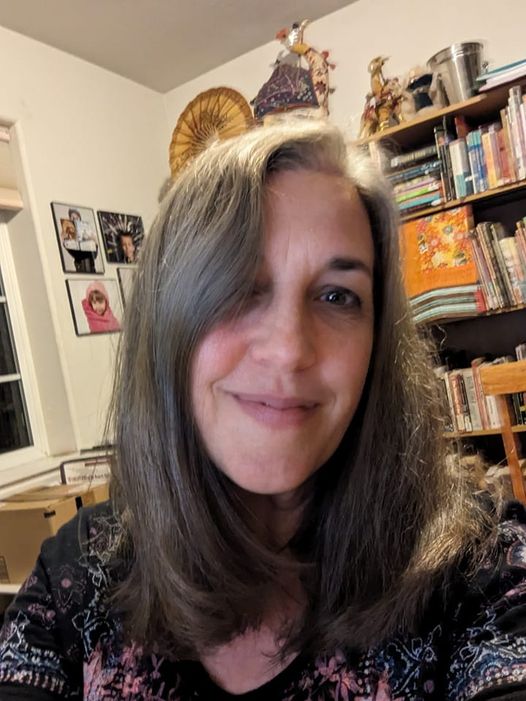
Lisa Pelissier

By

Lisa Pelissier lives in Oregon where she is a homeschool mom and author of five middle-grade fiction novels, the second-grade Monsters series, and a YA fantasy novel. Lisa owns SneakerBlossom Books, offering Christian, classical homeschool Study Guides and curriculum. She blogs at Eleventh Willow, offering encouragement for Christians parenting the mentally ill. She also works as a freelance copy editor, copy writer, and a marketing editor. In her spare time Lisa enjoys playing the piano and writing books.

Author Jolene Philo

To get posts delivered to your inbox, enter your email address:

Delivered by FeedBurner

Archives

Categories

Related Posts

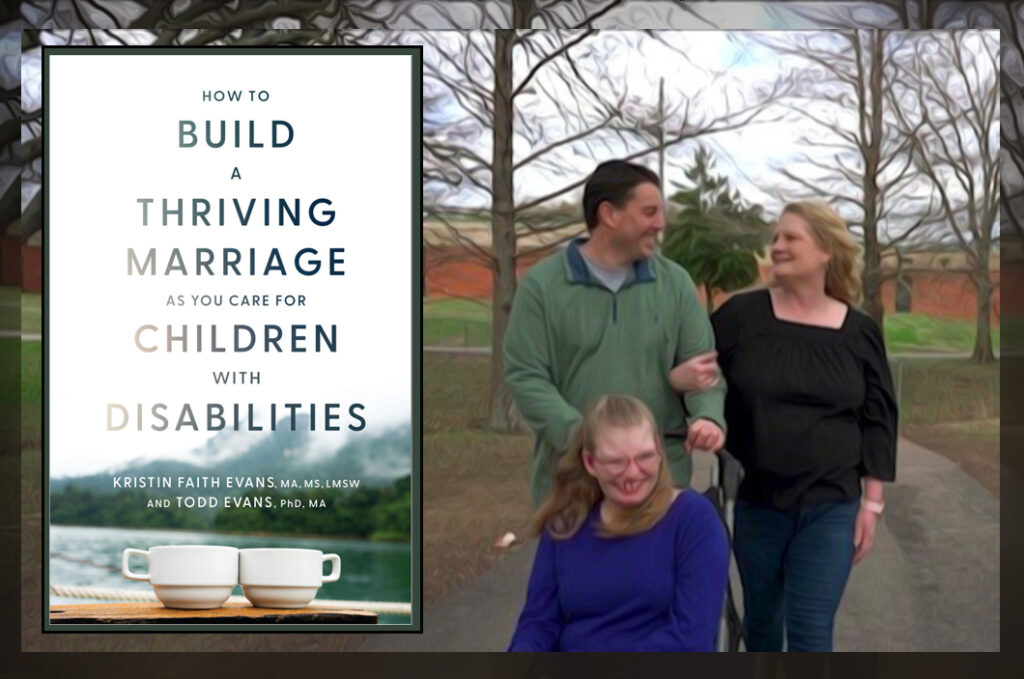
How to Build a Thriving Marriage as You Care for Children with Special Needs

How to Build a Thriving Marriage as You Care for Children with Special Needs

How to Build a Thriving Marriage as You Care for Children with Special Needs

Todd and Kristin Evans know that tending to marriage while raising a child with disabilities can be challenging. About 12 years ago after their medically fragile daughter arrived, they decided to give their marriage one more shot before admitting defeat. In their new book How to Build a Thriving Marriage as You Care for Children with Disabilities, they invite parents to join them on a journey toward wholeness in marriage, parenting, and faith.

Early in our marriage, we discovered building a strong marriage can be difficult. But when our medically complex daughter was born, we began to face even more obstacles to staying connected. We learned the hard way that when special needs parents are not intentional, their marriage may be headed toward disaster. We’re sharing three challenges you may also be experiencing and simple ways you can grow a thriving marriage while parenting your child with special needs.

  1. Commit to a check-in time every day.

As special needs parents, you likely have more to discuss and more serious decisions to make than the average couple. Intense conversations about your child’s needs can easily push out time to engage in more intimate conversations.

Research shows when special needs parents set a consistent ten-minute check-in time every day, their marriages grow stronger. To ensure you have time to connect on a deeper level, agree on a specific time each day that you can set aside all distractions to focus one another. This might be talking on the phone or video chatting over lunch or after the kids are in bed. When you both commit to honoring this time, you will begin to feel more cared for and look forward to those moments. Guard this time and make it a priority.

  1. Regularly manage stress individually and as a couple.

As special needs parents, you likely experience intense daily stress. When your bodies remain in a chronic state of stress, your emotional and mental health can suffer, you can begin to experience physical symptoms, your marriage relationship can become strained, and your physical intimacy may drastically decrease.

In writing our new book, How to Build a Thriving Marriage as You Care for Children with Disabilities (Baker Books), we learned that regularly managing your own stress in healthy ways and supporting your spouse in coping with their stress can greatly improve your marriage. Individually practicing deep breathing, progressive muscle relaxation exercises, and physical activity are very effective ways to reduce your stress levels.

These are some simple ways we destress together that might help you as well:

  • Find a quiet place outdoors to hold hands listening to your surroundings, even if for just five minutes.
  • Go for a walk.
  • Watch a funny show, tickle one another, or swing on a playground.
  • Give your spouse a neck or foot massage.
  • Take a hot, scented bath or shower.
  1. Intentionally build an outside support network.

Caring for your child can easily isolate you and make it difficult to find support and respite. It may feel impossible to find time alone or get out of the house together. Yet, receiving both emotional and practical support can greatly decrease your stress levels and strengthen your marriage. We encourage you to keep searching for different resources. Here are some ideas for finding support:

  • Find local churches with a disability ministry, caregiver support group, or respite program.
  • Contact your state respite coalition
  • Call local college nursing or special education departments for potential caregivers.
  • Talk with other special needs parents about swapping child care

We encourage you to take the first step to strengthening your marriage by choosing one of these ideas and trying it with your spouse today. You’ll find many more ideas in our new book How to Build a Thriving Marriage as You Care for Children with Disabilities, which we hope will help you as well.

Do you like what you see at DifferentDream.com? You can receive more great content by subscribing to the monthly Different Dream newsletter and signing up for the daily RSS feed delivered to your email.

References

Jake Johnson and Fred P. Piercy, “Exploring Partner Intimacy Among Couples Raising Children on the Autism Spectrum: A Grounded Theory Investigation,” Journal of Marital and Family Therapy 43, no. 4 (October 2017): 644-61, https://doi.org/10.1111/jmft.12247.

Linda M. Raffaele Mendez, Karen Berkman, Gary Y. H. Lam, and Charisse Dawkins, “Fostering Resilience Among Couples Coparenting a Young Child with Autism: An Evaluation of Together We are Stronger,” The American Journal of Family Therapy 47, no. 3 (2019): 165-82, doi:https://doi.org/10.1080/01926187.2019.1624225.

By

Kristin Faith Evans, MA, MS, LMSW and Todd Evans, PhD, MA

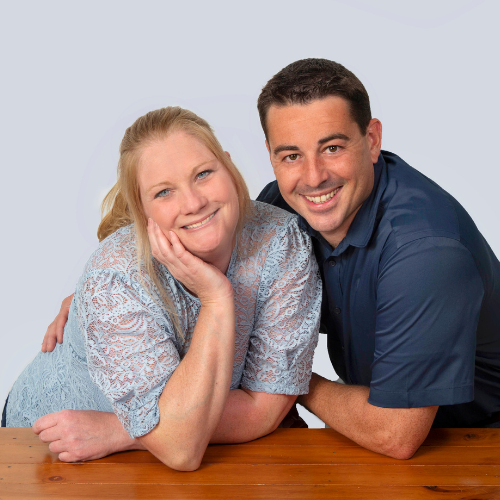
Dr. Todd and Kristin Evans are award-winning authors, speakers, and parents of two children with complex needs. Their new book, How to Build a Thriving Marriage as You Care for Children with Disabilities releases in May 2024 by Baker Books. They both earned their MA in Christian Formation and Ministries at Wheaton College in Illinois and have served together in full-time ministry in church, camping, and retreat settings. Todd received his PhD from Vanderbilt University’s School of Engineering and currently manages his own business, and Kristin earned her MSW from the University of Tennessee and is a Licensed Master Social Worker experienced in couples, child and family, substance abuse, and crisis counseling. Connect with Todd and Kristin and learn more about their ministry and free resources at www.DisabilityParenting.com.

Author Jolene Philo

To get posts delivered to your inbox, enter your email address:

Delivered by FeedBurner

Archives

Categories

Related Posts

The Real Story of Pregnancy and CMV

The Real Story of Pregnancy and CMV

The Real Story of Pregnancy and CMV

The real story of pregnancy and CMV needs to be told often and well. Today guest blogger Amanda Devereaux is here to tell you the story of how Cytomegalovirus (CMV) affects her family and how to avoid passing it on to an unborn child.

One of the strangest things about learning your child will have a disability is how the diagnosis seems to come out of nowhere. In general, women do everything they can to have a healthy pregnancy, and most of them expect to have a healthy baby. Interesting, considering about 1 in 33 babies in the US will be born with a birth defect. Many times we, as a society, avoid the idea of having an atypical child because we don’t want to worry expecting parents. Also, there’s often nothing a parent can do before birth to prevent the health condition in the child.

But what about the times when a condition could be prevented? The real story of pregnancy and CMV in our family illustrates how important prevention is.

Our daughter’s birth defects stemmed from a preventable infectious disease called Cytomegalovirus, or CMV. I, like most people, had little-to-no knowledge about CMV before it caused permanent damage to my daughter’s brain in utero. We found out after our 20 week ultrasound that I had caught CMV early in my second pregnancy and passed it to our unborn child.

A Common Threat

CMV is a common virus, and most people have been infected by the time they are 40. Young children are thought to be hot zones for CMV. They carry it if they catch it outside the womb, and many pregnant women who catch the virus have come into contact with it while caring for children. When the virus crosses the placenta and reaches the unborn child, it can cause permanent damage to their body and brain. Common diagnoses for these children are hearing loss, cerebral palsy, vision loss, epilepsy, and more. One in 1000 children born in the US will have a permanent birth defect or health condition due to CMV. 400 children will die each year.

Preventing CMV

Because CMV is a contagious virus that passes through direct contact with bodily fluids, it can be prevented. Vaccine work has been ongoing for decades with no vaccine yet approved. Until we can prevent CMV with a vaccine, diligent hygiene by pregnant women and women planning a pregnancy should be practiced. This starts with talking about CMV, not keeping it a secret. Prevention steps include:

  • Not sharing a toothbrush
  • Not sharing food, utensils, drinks, or straws
  • Never putting a pacifier in your mouth
  • Avoiding contact with saliva when kissing a child
  • Washing hands, especially after wiping a young child’s nose or drool, changing diapers, feeding a young child, or handling children’s toys

These simple prevention tips are the things I wish I had known while I was pregnant—not because we love Pippa any less, but because birth defects are a risk for any woman having a child. Without an accurate picture of a world with disabilities from pregnancy forward, we aren’t acknowledging the diversity of life or the ways we can care for our children and prevent them from undue challenges.

A Different Dream

Our daughter, Pippa, is almost 5 years old now. CMV caused her irreversible brain damage in utero. She began walking at age 2.5. She does not talk, but certainly lets us know what she is thinking in other ways. She is a happy, wonderful child and she makes us laugh every day. She likes going for walks and bike rides, and loves Daniel Tiger. Our dreams for her are different than they once were, and that is okay. We are learning to embrace this. However, we often think about what her life—and ours—might be like if we had known about CMV during my pregnancy. We have realized part of our dream is to help others avoid the struggles we have to face and to embrace a fuller picture of childbearing. We hope that someday CMV may be prevented, and one day, all pregnant women will know CMV by name. That’s why I’m sharing the real story of pregnancy and CMV in our family.

Do you like what you see at DifferentDream.com? You can receive more great content by subscribing to the monthly Different Dream newsletter and signing up for the daily RSS feed delivered to your email inbox. You can sign up for the first in the pop up box and the second at the bottom of this page.

By

Amanda graduated with her Bachelor’s Degree in Nursing in 2007. She has worked in public health for 11 years, most recently focusing on maternal child health. Currently, she works as the Program Director for the National CMV Foundation. Amanda became passionate about eliminating congenital Cytomegalovirus (CMV) when her daughter was born affected by the virus in 2015. In 2017 Amanda and her family successfully lobbied for CMV awareness and screening legislation in Iowa. Amanda lives in Des Moines, Iowa with her husband, Paul, and 2 children Atticus and Pippa.

Author Jolene Philo

To get posts delivered to your inbox, enter your email address:

Delivered by FeedBurner

Archives

Categories

Related Posts

Coronavirus and Kids with Special Needs

Coronavirus and Kids with Special Needs

Coronavirus and Kids with Special Needs

Coronavirus and kids with special needs sounds like a combination worthy of panic. With all the information and misinformation swirling about, it’s easy for caregiving parents to be confused and stressed about how to best protect their kids. Where’s a parent to go to find accurate, truthful information? And what should they do to keep their kids safe and healthy, both physically and mentally, as the situation unfolds? Here are five sources that provide information in a thoughtful, careful manner.

  1. The Center for Disease Control and Prevention (CDC). This site is updated daily as new cases of the coronavirus are identified and scientific advancements are made. You’ll find a state-by-state breakdown of cases and map, a page about the coronavirus in kids that should ease your mind, and a list of measures to slow the spread of the virus and avoid contracting it.
  2. The World Health Organization (WHO). This website is similar to the CDC’s but with a global, rather than national, focus. Their prevention page has much of the same information as the CDC. I especially like their graphic about how help kids cope with stress during the outbreak. What’s the big message for parents worried about the coronavirus and kids with special needs? Stay calm and manage your own stress so your kids don’t get stressed!
  3. AARP. It sounds weird, I know. But the AARP’s article about what senior citizens should know about the coronavirus can be generalized to the coronavirus and kids with special needs. Also, the article answers some questions the CDC and WHO don’t mention.
  4. My husband. He’s a nurse at a regional hospital, and they receive updates and preparedness information. He and the three sources listed above say the same things. Hand washing is the single most effective measure to slow the transmission of the coronavirus.

Based on everything I’ve read and the advice of my husband who’s been a hospital nurse for more than 30 years, the best way to keep the coronavirus and kids with special needs away from one another is to wash your hands. With soap. Several times a day. For at least 20 seconds. You would be wise to institute the other measures recommended by the CDC and WHO. They may seem simplistic and low tech, but research proves they work. Now if you will excuse me, I’m off to wash my hands. Again. 

Do you like what you see at DifferentDream.com? You can receive more great content by subscribing to the monthly Different Dream newsletter and signing up for the daily RSS feed delivered to your email inbox. You can sign up for both at the bottom of this page.

By

Jolene Philo is a published author, speaker, wife, and mother of a son with special needs.

Author Jolene Philo

To get posts delivered to your inbox, enter your email address:

Delivered by FeedBurner

Archives

Categories

Related Posts

Downloadable Retreats to Strengthen Your Marriage and Special Needs Family

Downloadable Retreats to Strengthen Your Marriage and Special Needs Family

Downloadable Retreats to Strengthen Your Marriage and Special Needs Family

Downloadable retreats to strengthen your marriage and special needs family may sound too good to be true. But Becky Davidson, co-founder of Rising Above Ministries, wants you to know they are real!. In her guest blog she explains how they came about and where to find them. 

On a beautiful spring day in May of 1991, I walked down the aisle to marry my Jeff. We had met one year earlier, shortly after I had graduated from college, and we knew right away that we were each other’s “forever love”.  Within 3 months, we were engaged and a few months later we were getting married.

Standing in front of hundreds of our family members and friends, we promised that from that day forward we would love each other… for better or worse, for richer or poorer, in sickness and in health, and that we would love and cherish each other until we were parted by death.

We were 23 and 24, and we could not begin to comprehend the way those vows would be tested over our 26 years of marriage. From the loss of our first child through a traumatic miscarriage, to raising our son with profound special needs, and later through Jeff’s significant health issues, we faced more trials than we could have then imagined.

Following our son Jon Alex’s birth, we struggled to navigate our new life as special needs parents. I did what many moms do after a diagnosis and threw myself into researching ways to help our son. Jeff, on the other hand, did what many fathers often do. He could not “fix” our son so he threw himself into the arena where he excelled: his job.  We found ourselves at odds over treatment and therapy options for our son. We were exhausted due to our son’s sleep issues and often found ourselves falling into the pit of despair as we tried to our maneuver through our new normal.  

As time went on, we found ways to communicate how we were feeling. We came to a place of acceptance and believed deep in our souls that our son was wonderfully made and created for a plan and purpose. Instead of allowing the hardships and trials we faced to tear us apart, we purposed in our hearts to allow them to draw us closer together. My life with Jeff did not look the way we envisioned it would on that beautiful spring day when we said our vows to one another. But through it all, we remained faithful to the promises we made to each other, and loved each other well until we were parted by death. It was an earth shattering loss when in May of 2017, my sweet Jeff passed away, leaving me a widow and our son without a dad. I have been a solo parent to our son for almost three years now. I never dreamed I would be caring for our son and making decisions regarding his care on my own.  

 Jeff and Becky Davidson doing life together.

When Jeff and I started Rising Above in 2005, we both knew that encouraging married couples raising children with special needs had to be an integral part of our mission. We started the Two-Gether Marriage Conference to address the unique needs of couples raising a child with a disability. We are now able to offer these conferences as downloadable retreats to strengthen your marriage and special needs family. You can do the retreat with your spouse in the comfort of your own home. My hope is that this conference will encourage couples who might be facing overwhelming circumstances to see that it is possible to move toward each other and come together to face whatever life may bring. You can find this conference and other resources at our website, Rising Above Ministries.

Do you like what you see at DifferentDream.com? You can receive more great content by subscribing to the monthly Different Dream newsletter and signing up for the daily RSS feed delivered to your email inbox. You can sign up for both at the bottom of this page.

By

Becky Davidson is the co-founder and president of Rising Above Ministries, a multi-dimensional outreach to families impacted by special needs. She took on her role at Rising Above after the death of her husband, Jeff Davidson. She is passionate about supporting and encouraging special needs families and encouraging women through her platform at Redefine This Life. Becky and Jon Alex, her adult son with special needs, live and thrive in Cookeville, Tennessee. To get to know Jeff through more of his writings, check out the book he wrote with Becky, Ordinary Man, Extraordinary Call.

Author Jolene Philo

To get posts delivered to your inbox, enter your email address:

Delivered by FeedBurner

Archives

Categories

Related Posts

Heartfelt Gratitude for Special Needs Blessings

Heartfelt Gratitude for Special Needs Blessings

Heartfelt Gratitude for Special Needs Blessings

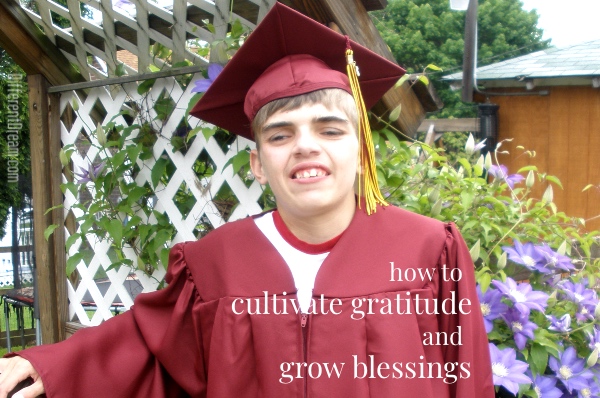
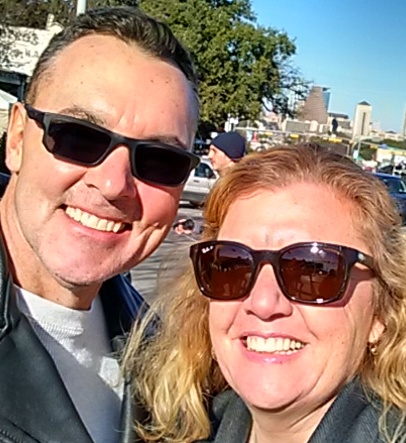
Heartfelt gratitude for special needs blessings may seem like a contradiction of terms for parents grappling with a new diagnosis or the loss of a child. Guest blogger Paul Gallagher describes how he and his wife Valerie cultivated gratitude through the life of their first child, Joshua, and how they use that gratitude to bless others. My wife Valerie and I were expecting our first child in England, her native country, where I was serving in the United States Air Force (USAF). The nursery was ready, the due date was approaching. We were so excited! Two weeks before that date, our USAF doctor noticed something that resulted in us being referred to Guys Hospital in London. After a sonogram, the doctor told us our son had a hypoplastic left heart and would not live more than a few hours after birth. We were devastated. Fortunately, the air force quickly whisked us to the United States where doctors were willing to intervene. We arrived after an 11 hour flight in a military cargo aircraft with Valerie on a stretcher. Josh was born at an army hospital and later transferred to Texas Children’s Hospital to await a heart transplant. At 3 months of age, Josh had the transplant.

Heartfelt gratitude for special needs blessings can take a long time to cultivate. Paul Gallagher describes how he and his wife learned about gratitude and how they want to bless others.

Organ transplantation isn’t a cure. It is trading an unmanageable problem for a manageable one. As a young couple we learned complex immunosuppressive medicine regimes, placed nasal-gastric feeding tubes, and experienced the worries of having a child with a compromised immune system. Later we learned that Joshua was also autistic. We’ve spent countless days living in ICUs and hospital rooms. On numerous occasions we’ve been pulled into a room and told Josh was not going to make it. We watched him endure procedures, ouchies, yucky meds, and pain. We cared for him in our home until he was almost 18. He passed away in January of 2011.

Heartfelt gratitude for special needs blessings can take a long time to cultivate. Paul Gallagher describes how he and his wife learned about gratitude and how they want to bless others. Josh has a younger brother and sister who also walked this path with us. To be sure, Josh’s good days far outnumbered the bad, but life could be unpredictable and very hard. What did we learn through these experiences?
  1. A different understanding of blessings. Blessings are often brought to us through the hardest circumstances. In the hardest times, there is something to be thankful for–if we look for it. We can only experience the blessing of God’s comfort when we are broken-hearted.
  2. We can avoid victimhood and self-pity focusing on what we can do. The quickest way to loose hope is focusing on circumstances we can’t change. But whatever our circumstances, there is always some way to be a blessing to others–if we look for it. Even in impossible situations, we can do something.
  3. We must accept life on its terms and trust the Lord. If we compare, we step away from blessings because comparing my circumstances with others or with the way I think they should be will make it difficult to be thankful. We can’t bless bless others when we aren’t thankful.
We are thankful because we know God loves Josh even more than we do. We are thankful that when Josh entered God’s presence, all the pain he ever felt was not even a memory.  Between now and our joyful reunion, we try to bless others through Josh Tree, a non-profit we recently started. Josh Tree allows us to share our heartfelt gratitude for special needs blessings and keep Josh’s memory alive by helping families with children who have life-changing illness. The long term vision of the organization is to provide those families with resources to stay resilient in the face of incredible challenge as well as helping with their more immediate needs. We invite you to visit the website to learn more about how Joshua taught us to cultivate gratitude for special needs blessings in his life and ours. Do you like what you see at DifferentDream.com? You can receive more great content by subscribing to the monthly Different Dream newsletter and signing up for the daily RSS fee
Heartfelt gratitude for special needs blessings can take a long time to cultivate. Paul Gallagher describes how he and his wife learned about gratitude and how they want to bless others.

By

Paul Gallagher is a retired United States Air Force (USAF) Chief Master Sergeant with 29 years of service. He and his lovely wife Valerie are now empty nesters and living in New Braunfels, Texas where he works as a business consultant. They enjoy friends and family, along with hiking and camping.

Author Jolene Philo

To get posts delivered to your inbox, enter your email address:

Delivered by FeedBurner

Archives

Categories

Related Posts