I Didn’t Want to Learn Hard Caregiving Lessons, but Now I’m Grateful

I Didn’t Want to Learn Hard Caregiving Lessons, but Now I’m Grateful

I Didn’t Want to Learn Hard Caregiving Lessons, but Now I’m Grateful

I didn’t want to learn hard caregiving lessons in 2023. Mainly because I’m a big fan of easy. Hard? Not so much. Yet here I am waiting for 2023 to end—believe me, I’m ready to put it behind me—and at the same time embracing the hard lessons I’m about to share with you as precious gifts.

My entire life, literally since I was two years old, has revolved around caregiving. Therefore I assumed I was prepared for the challenges our family faced after my mother was diagnosed with dementia in 2008. That assumption proved correct until January of 2023 when Mom entered hospice care. Over the six months leading to her departure from this earth, advocating for her was all encompassing. I didn’t want, nor did I have time to learn hard caregiving lessons. With each passing day I became more grateful for how they drew and are still drawing me closer to God. And so, I want to share them with you.

  1. The why of caregiver grief is the same, though the who and what may be different. All grief is a response to loss. Young parents grieve the loss of children gone too soon or the losses related to their child’s disability. Growing children grieve what they don’t experience because their parents live with disabilities or because their parents were lost to disease. Adult children grieve as their elderly parents lose their independence, personality, and function. The universality of loss among caregivers can make us more empathetic toward all caregivers.

To read the rest of I Didn’t Want to Learn Hard Caregiving Lessons, visit the Key Ministry website.

Do you like what you see at DifferentDream.com? You can receive more great content by subscribing to the monthly Different Dream newsletter and signing up for the daily RSS feed delivered to your email.

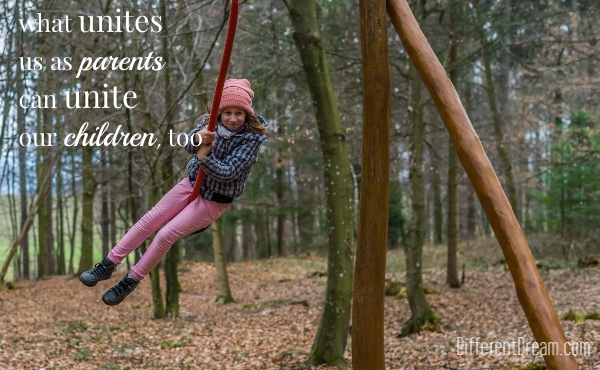
Image by Raven Ryann from Pixabay

By

Jolene Philo is the author of several books for the caregiving community. She speaks at parenting and special needs conferences around the country. Sharing Love Abundantly With Special Needs Families: The 5 Love Languages® for Parents Raising Children with Disabilities, which she co-authored with Dr. Gary Chapman, was released in August of 2019 and is available at local bookstores, their bookstore website, and Amazon. See Jane Dance!, the third book in the West River cozy mystery series, which features characters affected by disability, was released in October of 2023.

Author Jolene Philo

To get posts delivered to your inbox, enter your email address:

Delivered by FeedBurner

Archives

Categories

Related Posts

An Unexpected Christmas Gift

An Unexpected Christmas Gift

An Unexpected Christmas Gift

An unexpected Christmas gift was given to guest blogger Sandy Ramsey-Trayvick and her family more than 2 decades ago. Today she shares her reaction to the gift shortly after it was given and how she views it now.

My son Myles got sick on December 10, 1999. My family had attended a Christmas party four days before. I have memories and pictures from that party of my son giggling with excitement as he raced back and forth across the room, practicing his newly developing walking skills. He was healthy and happy. Our family was excited and looking forward to enjoying the holiday season. But our little boy suddenly became very ill. Instead of planning for Christmas, my husband and I found ourselves in the emergency room receiving the news that our 13-month-old had contracted strep pneumococcal meningitis and was in a coma.

I remember sitting next to his hospital bed in the pediatric intensive care unit signing the photo Christmas cards that featured my three little ones all dressed up in their holiday best. Sending photo cards of my kids to family and friends had become one of my holiday traditions. This particular year, as I signed each card, I prayed for God to awaken my baby boy in time for Christmas. I pleaded with the Lord but His answer was no. The Christmas of 1999 was the saddest I’ve experienced.

I asked the Lord for just one gift and didn’t receive it.

There have been a lot of Christmases since then and, thankfully, my son has been awake and at home for all of them. Through that long illness and the special needs journey that has followed, the Lord has blessed our family with gifts I hadn’t thought to ask for as I sat in that hospital room all those years ago.

God began revealing His first gift to us shortly after Myles was hospitalized.

Prior to that long hospital stay, my husband and I held inaccurate ideas about God and His ways. In the midst of some of our most difficult circumstances with Myles, God gave us the gift of truly getting to know Him. We experienced Him as Teacher, Comforter, Protector, Advocate, and Waymaker. Prior to that hospital experience, we had heard about God and His ways, but He gave us the gift of knowing and seeing Him for ourselves. In the almost 25 years since my son’s initial illness, we’ve continued to know God more intimately as we’ve walked with Him through both joyful and painful experiences.

Through this special needs journey, the Lord has also given me the gift of knowing my true identity.

Becoming a special needs mom challenged all the ways I saw myself. My old chosen identity had been tied primarily to my performance and accomplishments—but it didn’t fit with my new life as a special needs mom. As I struggled for a sense of significance in this role, the Lord walked me through His Word to teach me who He says I am. He taught me that my significance—my worth and value—have always been in Christ. I didn’t need to choose an identity because He had already chosen one for me, one that would remain unchanged by new roles or unforeseen circumstances.

As I reflect back over the past two decades and more, I’m relishing an unexpected Christmas gift of remembrance—the ability to look back and recall all that God has done in and through my family’s special needs life. He has continued to give.

Do you like what you see at DifferentDream.com? You can receive more great content by subscribing to the monthly Different Dream newsletter and signing up for the daily RSS feed delivered to your email.

Photo by Igor Omilaev on Unsplash

By

Sandy and her husband are parents to three young adult children. Their son was diagnosed with multiple disabilities 24 years ago after a devastating illness as a toddler. Following her son’s diagnosis, Sandy quit her job to become his full-time caregiver and advocate.

Sandy is currently a Certified Professional Coach. Her focus is to empower special needs parents who are feeling weary by helping them to renew their hope and strength and reactivate their joy.

You can learn more about Sandy and her work at www.UNDisabledLIVES.org. You can also reach her at Sandy@UNDisabledLIVES.org.

Author Jolene Philo

To get posts delivered to your inbox, enter your email address:

Delivered by FeedBurner

Archives

Categories

Related Posts

Creating Unique, Disability-Friendly Christmas Traditions

Creating Unique, Disability-Friendly Christmas Traditions

Creating Unique, Disability-Friendly Christmas Traditions

Creating unique, disability-friendly traditions may feel like one more task to add to your holiday to do list. These ideas from guest blogger Kristin are anything but one more thing. In fact, her ideas will simplify some of what you’re already doing and give you permission to let other things go.

It can be easy to feel pressure from family, friends, or work to participate in typical holiday activities. But usual Christmas traditions and gatherings can be challenging for families with special needs. Taking a child with medical needs or developmental disabilities to loud, large, or crowded places can be difficult. Just leaving the house can cause more stress than enjoyment. If this sounds like your family, consider modifying usual activities and making new Christmas traditions and memories unique to your family’s needs.

Evaluate Holiday Plans

Start by reflecting on these seven questions as you create your family’s best holiday experience:

    1. What kinds of activities does your family enjoy together?
    2. What kinds of activities does your family not enjoy?
    3. What types of social situations or outings work well for your family?
    4. What types of social situations or outings do not work well for your family?
    5. What expectations or pressures from family and friends might you be trying to fulfill that might not be best for your family?
    6. What could you do differently this year that would decrease stress and create more enjoyment for your family?
    7. What’s one new special tradition you can start that will be unique for your family?

Modify Typical Holiday Activities

Here are some ways for modifying and creating unique, disability-friendly Christmas traditions to fit your family:

    • In place of going to a large family gathering, invite a few family members to your home or schedule a different time to go visit family when only a couple of people will be there.
    • In lieu of going to a Christmas show or large light display at a crowded center, pile into the car, turn on Christmas music, and drive around looking at Christmas lights or go to a drive through light show.
    • Instead of going out to eat, decorate your table and order carry out. Or have a fondue or pancake party.
    • If opening a lot of presents on Christmas morning causes stress for your child, open a few presents at a time throughout the day.
    • If getting pictures made at the mall with Santa scares or upsets your child, take pictures in a private setting in which your child feels more comfortable with a Christmas toy or decoration they like.
    • In place of going to a party, invite one family over for a fun night.
    • If making Christmas cookies or other traditional goodies usually ends in a meltdown, have your child help with only one step of the process.

It might feel like your child or family is missing out. But what you all are likely going to remember most is how the holiday made you feel. Creating unique, disability-friendly Christmas traditions may look different from those of other families, and that’s okay. What’s most important is that you enjoy the holiday together, however that might look for your family.

Do you like what you see at DifferentDream.com? You can receive more great content by subscribing to the monthly Different Dream newsletter and signing up for the daily RSS feed delivered to your email.

Embedded Photos by Richard Stachmann on Unsplash

By

Kristin lives with her husband, Todd, and their two children in the Nashville, TN area. She is an author, speaker, mental health counselor, and a mom of two children with rare genetic disorders and complex needs. Her greatest passion is teaming up with her husband to empower other parents of children with disabilities, mental health disorders, and medical complications. She hopes that you may find encouragement and support on their website www.DisabilityParenting.com

Author Jolene Philo

To get posts delivered to your inbox, enter your email address:

Delivered by FeedBurner

Archives

Categories

Related Posts

Surrendering our Children with Disabilities to God

Surrendering our Children with Disabilities to God

Surrendering our Children with Disabilities to God

Surrendering our children with disabilities to God can be challenging. It’s also crucial to future spiritual development in us and our children. Guest blogger Kelly Simpson explains what’s involved in our surrender and how it can draw us closer to God.

Having a child with special needs or a disability often feels like a heavy load. I’ll be honest—it feels like a burden when I try to make it through on my own energy and my own will. You can try for years and still feel drained or worn out, filled with doubts and questions like these:

    • What is life supposed to look like now?
    • Will this particular opportunity that we have been waiting for even be an option for us now?
    • I have been working so hard for… How will we make it now?
    • Will our dreams be put on hold because of this condition?
    • How does this diagnosis affect the plans I had for my own life?

You may be past the “why me?” or “why us?” phase but still deal with ever-present anxiety. To you I want to kindly ask a question:

If you think you have it all under control, why is anxiety still a huge presence?

The answer could be that we never really have full control and we were never meant to.

Matthew 11:28-29 says, “Come to me, all you who are weary and burdened, and I will give you rest. Take my yoke upon you and learn from me, for I am gentle and humble in heart, and you will find rest for your souls.”

When I surrender to the Maker of the stars, I give Him full control and I receive His true peace.

Matthew 11:29 says that I can also find rest in God. For me, some things have been easy to hand over. I’ve held onto others tightly for years. Once I let go, I wonder why I held on so long. He created the whole world just by speaking and can provide me with peace and rest.

Not surrendering our children with disabilities to God may look like:

    • Replaying thoughts and questions over and over until they become all you can think or talk about
    • Refusing to pray at all or consciously choosing to not pray about certain things

Surrendering our children with disabilities to God may look and feel like:

    • Verbally or mentally handing a situation over to God because you know you have no control of the situation or other people
    • A heavy load lifted off your heart
    • Realizing that God doesn’t promise to make life easier due to surrender, but he does promise to always be at your side
    • A change in outlook even though circumstances don’t change
    • A sense of peace

Recipients of peace:

    • Know they need Jesus during every second of their day
    • Know Jesus will provide for their needs
    • Could feel blessed and know they are along for the ride or journey God has designed for them

Paige Ferrari says this in a devotion she wrote for Grand Canyon University:

Peace is knowing that the Lord of the universe is by your side and resting in that. It’s not just knowing, but it is also living it out. Peace is sitting in comfort and knowing that God is next to your side no matter what. Peace is something that you can’t attain physically because the world is almost always going to be a rocky place.

As Ferrari explains, those who know his peace still live in comfort.

Whatever you’re going through—whether it’s caring for a child with particular needs or wondering if you’ll ever be a parent, I challenge you to surrender every detail and circumstance so that you may live in God’s peace and rest.

Do you like what you see at DifferentDream.com? You can receive more great content by subscribing to the monthly Different Dream newsletter and signing up for the daily RSS feed delivered to your email.

Photo by Cindy Tang on Unsplash

By

Kelly has lived her whole life in Kentucky. She and her husband, Jeremy, have an almost-four-year-old son, who, born during a deployment, was diagnosed with tracheoesophageal fistula (EA/TEF). She has always felt a calling to serve others and is living the dream as an Army wife, middle school teacher, and now, as an encourager to those who are living a dream different than they had planned.

Author Jolene Philo

To get posts delivered to your inbox, enter your email address:

Delivered by FeedBurner

Archives

Categories

Related Posts

Cerebral Palsy Means No Empty Nest

Cerebral Palsy Means No Empty Nest

Cerebral Palsy Means No Empty Nest

Cerebral palsy means no empty nest for parents like Trish Shaeffer, today’s guest blogger. March was Cerebral Palsy Awareness Month, which led to some soul-searching for Trish.

Cerebral Palsy Awareness Month led me to a realization that is in many of our minds as caregivers and parents. Cerebral palsy means no empty nest, a reality that worries and scares us to the core somedays. A reality we sometimes face when we look at our child Alex. I wanted to be honest and and open book and share my thoughts about what I personally deal with.

I see my oldest son being accepted into dental school courses. Alex’s twin became class president and is working on his violin solos. Watching them, I am reminded that cerebral palsy means no empty nest for us.

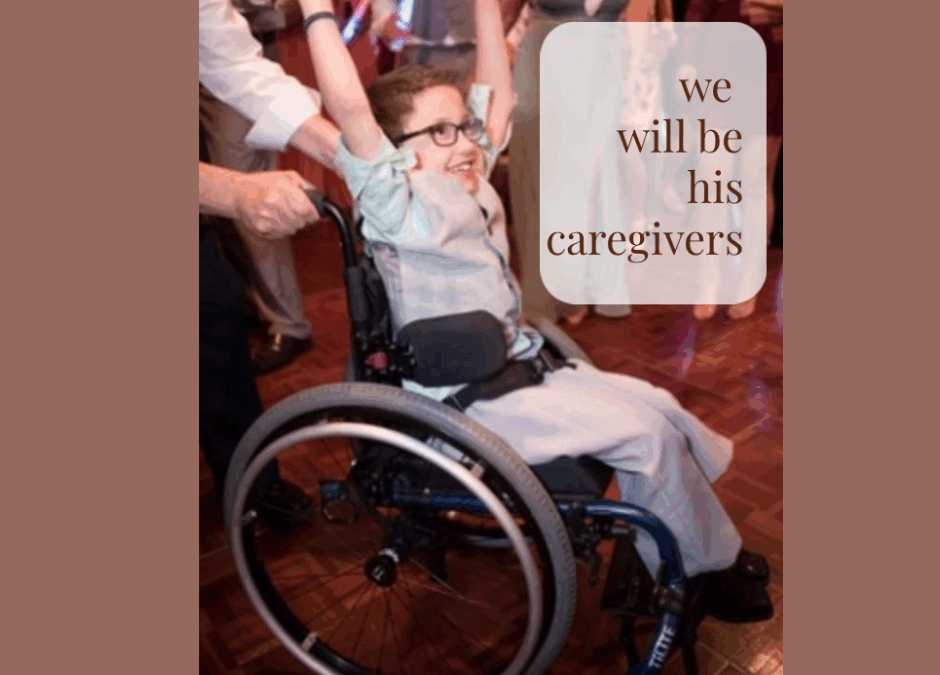
Cerebral palsy comes in many forms. For Alex it’s severe spastic quad cerebral palsy. This means his body is fully affected and he is in a wheelchair. He also has epilepsy and an intellectual disability. Walking and standing are very hard for him and he needs someone to hold on to him when he uses his walker for short transfers. 

He cannot do many simple tasks that we take for granted. Such as taking a bath, or brushing his teeth. Some days he has seizures. And he has a baclofen pump in his body that has to be refiled every few months. He has a lot of medical conditions, such as asthma and heart issues, that need to constantly be monitored.

He also has trouble writing and reading. Even talking sometimes is a challenge. A lot of times, he can not even communicate when he hurts or is ill. Its sometimes a guessing game.

All this comes with the sad reality that Alex may never be fully independent and on his own. We hope that he will be. We want nothing more than him to be out on his own. We want him to be happy.

But a crushing reality stares us down everyday. While our other two children grow older and more independent, we are left with the nagging thought of Alex always needing us. 

He can do some things on his own and in his own way. Like dressing himself and wheeling himself around. But, there are many things Alex may not be able to do. Like balance a checkbook, drive, or cook. Someone has to lift him and help him transfer in and out of things such as a car and his chair. He will probably always need someone there at all times to help him, whether it’s us or a nurse. So we talk often about how we will care for Alex in the future and set him up in life.

Cerebral palsy means no empty nest, but not all is negative.

I’ll always have a buddy and partner in crime. We plan to get an RV and travel with Alex all over the United States once our other two are grown. We are setting up funding so Alex will get the help and care he needs once he is 18.

We also have a tight-knit community, with people just like Alex to guide us into the future. To talk to. To share our stories with.

And we have his two brothers that care for and love Alex. They enjoy helping him with whatever he needs. For ten years Alex has been working on skills in therapy, at school, and at home to become more independent. Such as using an iPad to write, learning to snap and zip his jacket, using adaptive equipment such as an auto access seat to get out of his handicap van and transfer to his wheelchair, using a stair lift to get himself up and down stairs, and so much more.

We choose to focus on our future RV travels when we get sad or defeated when reality comes knocking. We focus on the positive steps Alex is taking to be come more independent.

Because it’s all about perception.

Some days are harder than others. We don’t know what the future holds. But we do know that Alex is a fighter, and he has a fire in his soul.

We will be his caregivers, cheerleaders, and biggest supporters. Despite not being empty nesters. Despite the challenges he faces. ?

Do you like what you see at DifferentDream.com? You can receive more great content by subscribing to the monthly Different Dream newsletter and signing up for the daily RSS feed delivered to your email inbox. You can sign up for the first in the pop up box and the second at the bottom of this page.

By

Trish Shaeffer is the mom of 3 active boys with special needs. She’s a peer supporter for Parent to Parent and volunteers with the United Cerebral Palsy Network, Special Olympics, and the United Way. She’s also an equine volunteer at Leg Up Farm. She’s married to her best friend and biggest supporter, Chris Schaeffer.

Author Jolene Philo

To get posts delivered to your inbox, enter your email address:

Delivered by FeedBurner

Archives

Categories

Related Posts

My Child Is Different, but We Have More in Common Than You Think

My Child Is Different, but We Have More in Common Than You Think

My Child Is Different, but We Have More in Common Than You Think

My child is different, says guest blogger Amy Felix, and yet. And yet, Amy knows that parents of typical kids and parents of kids with special needs have much in common. That commonality, she also believes, is what will help us raise a new generation of compassionate and kind adults.

When she was younger, you thought it was cute. The way she jumped up and down excitedly and repeated everything I said. Her big, green eyes and sweet, round angel face were the first things you’d notice when she entered the room. Her meltdowns were, in your mind, toddler tantrums and you gave me that “I’ve been there, too” smile to relieve the tension you could tell I was feeling. We were the same back then. You and I were just parents, and we understood each other without having to say a word.

Then she got older.

My little girl isn’t so little anymore and, suddenly, there’s a great divide. Now my child is different. You still give me that polite parent-to-parent smile when we enter the room, but when she gets excited or upset–we’re no longer the same, you and me.

Now you’re staring.

As she flaps her hands and talks loudly when she’s feeling joy, or paces back and forth with her hands over her ears when she’s upset. Her differences are becoming more and more obvious to you. You look from her to me, sizing me up. When you realize I’ve noticed it, you look away and avoid me. We no longer have an understanding, and it hurts.

We are strangers to one another.

I know that you have no way of knowing that my child has autism. Not all disabilities are visible. Just as I have no way of knowing anything about your child or your life. So, let’s take a step back for a moment, beyond just us. Beyond this situation we’re finding ourselves in.

Our children are here, at this birthday party or that playground, together.

They are taking it all in and, despite what so many articles may say, bullying is not just something that naturally develops as a part of childhood. Bullying starts with us. You and me. Moms and dads. Staring at one another in the presence of our children who, though they are busy eating cake or playing catch, are also busy watching. Those little sponges are absorbing every moment of uncomfortable silence between us. They haven’t treated each other differently yet. Our children haven’t begun to place each other on a scale of differing values.

But they will because my child is different.

Unless we change this judgmental way of interacting. Unless you look at my situation, unless I look at yours, and try to see the positive; try to embrace the differences as special and not strange. Unless we can be more like our children, our children will all-too-soon be more like us–the us that stands divided. The us that doesn’t take the time to try and understand. The us that we’d rather not acknowledge. The window of time is closing in which we still stand a chance to raise a generation of compassionate, open-minded people. So, from one parent to another, this is my plea.

My child is different. So is yours.

They all are, and that’s what makes them breathtakingly beautiful. Please, let’s not take that truth from them and twist it into the lie that they all need to fit into the same mold. If you see my child doing something that you don’t understand, ask me about it! I’d love to explain what makes her unique and I’d love to hear about what makes your child special, too.

As a parent, I’m different.

I have to be, because my children are not your children. Each of these little people have different personalities and need different things from us as moms and dads. Can we please leave the judgmental stares and awkward silence at the door and just support each other? We may be on very different parenting journeys, but we have one thing in common.

We love our children.

There’s nothing we wouldn’t do for them. When we’re faced with differences that feel too great and we don’t know how to relate to one another, let’s just start there. Chances are, we have more in common than you think.

Do you like what you see at DifferentDream.com? You can receive more great content by subscribing to the monthly Different Dream newsletter and signing up for the daily RSS feed delivered to your email inbox. You can sign up for both at the bottom of this page.

By

My name is Amy Felix. I’ve been married for 10 years to a guy who’s totally out of my league. I’m a homeschooling mom to 4 kids, ranging in age from 9 to 2 years. That’s really enough work on it’s own but, because I love it, I’m a photographer as well. And, in my spare time, I write. My faith is the driving force behind my special needs blog: Appointed To Hope. I’m a firm believer in being real, transparent, and using the gifts of this journey as a way to relate to others in their joy as well as their sorrow. To read more about my adventures in special needs parenting, visit my website at www.appointedtohope.com.

Author Jolene Philo

To get posts delivered to your inbox, enter your email address:

Delivered by FeedBurner

Archives

Categories

Related Posts