
by jphilo | Jan 18, 2010 | Books and Resources, Different Dream, Spiritual Support
The previous post in this series shared five ways to encourage families with special needs kids. The ideas came from Lisa Copen’s book, Beyond Casseroles: 505 Ways to Encourage a Chronically Ill Friend.
Further Beyond Casseroles
Here are five more tips from Lisa’s book, which you can adapt for families with chronically ill children:
- Ask your church youth group to come over and clean up the yard during seasonal changes.
- Don’t ask her, “How are you able to make it financially?” If she wants to share a burden she will.
- Don’t gossip about others. She’ll wonder what you say about her. “Do not let any unwholesome talk come out of your mouths, but only what is helpful for building others up according to their needs, that it may benefit those who listen” (Ephesians 4:29).
- Send tapes of church services your friend misses to her with a copy of the bulletin and a note.
- If your friend misses a special event in your life, call and say, “I wondered if I could bring some photos over and share it with you. You’re very special to me, and you were part of this day whether you were there or not.”
Buy the Book at Rest Ministries
If you want more of Lisa’s ideas, you’ll find them at www.restministries.com. You can receive the first forty pages of the book free, just by signing up for Lisa’s weekly email newsletter. The entire book and several related products are available at the Comfort Zone Online Bookstore.
While you’re at www.restministries.com, browse around a little. Lisa has lots of resources for people with chronic illness and their caregivers. It’s worth your time to take a look.
Do you like what you see at DifferentDream.com? You can receive more great content by subscribing to the quarterly Different Dream newsletter and signing up for the daily RSS feed delivered to your email inbox. You can sign up for the first in the pop up box and the second at the bottom of this page.
Save
by jphilo | Jan 15, 2010 | Books and Resources, Different Dream, Spiritual Support
When I hear about parents of kids diagnosed with a chronic illness or special needs, my thoughts and emotions get tangled up, they tie me in knots.
Sound Familiar?
I want to do something to help – take a casserole or send a card maybe – but invisible, tangled threads hold me back. Doubt sets in, and my good intentions seem feeble or silly. Pretty soon, I talk myself out of doing anything and sit home feeling guilty for not reaching out.
What a shame!
Does my predicament sound familiar to you? If it does, you will appreciate these suggestions from Beyond Casseroles: 505 Ways to Encourage a Chronically Ill Friend by Lisa Copen.
Lisa Copen
Lisa Copen is a young mom with chronic arthritis. Though her book is written for friends of chronically ill adults, if you change the wording just a little, most of the suggestions work for families with special needs kids, too. Here are five of her ideas to get you thinking:
- Just listen . . . until it hurts to not say anything. And then listen some more.
- Ask, “What do you wish people understood about your illness?”
- Instead of saying, “I will pray for you,” say, “I’d like to pray for you right now, if that’s okay.”
- Ask if she would be interested in writing something for the church newsletter, maybe even about the subject of living with chronic illness.
- Ask, “Do you have an errand I can run for you before coming over?”
Beyond Casseroles
In the next blog post, you’ll find five more of Lisa’s ideas and learn how to order the book. Until then, leave a comment about your favorite from the ones listed above.
Do you like what you see at DifferentDream.com? You can receive more great content by subscribing to the quarterly Different Dream newsletter and signing up for the daily RSS feed delivered to your email inbox. You can sign up for the first in the pop up box and the second at the bottom of this page.
by jphilo | Nov 4, 2009 | Books and Resources, Different Dream, Spiritual Support
In Part 1 of this series, you met Julie Papievis, a woman who miraculously survived a near fatal brain stem injury. In that post she shared five positive ways her injury and recovery changed her. In Part 2 of the series, she shared seven valuable tips about how parents can support their brain-injured (or special needs) child.
In Part 3, the final post in the series, Julie provides some facts and treatment information about brain injuries.
Center for Disease Control (CDC) Brain Injury Statistics
- Brain injuries in kids ages 0 – 14 cause 435,00 ER visits a year.
- In the same age group, brain injuries result in 37,000 hospitalizations annually.
- In one year, 2,685 kids between the ages of 0 and 14 died.
When to Seek Treatment for Brain Injuries
Brain injuries eventually manifest themselves in behavior and judgement changes.
Be proactive if your child has a head injury, no matter how mild. Even if your child exhibits no immediate behavior changes after a concussion or head injury, seek treatment.
If your child has a concussion related to a sports injury, pursue medical treatment no matter what the coach or team trainer says.
The Brain Injury Association of America
You can learn More about these nervous system diseases and injuries at the Brain Injury Association of America:
- Spinal cord injuries
- Brain Stem injuries
- Brain Injuries
- Spinal Bifida
- Muscular Dystrophy
Go Back and Be Happy
That wraps up the three part series with Julie Papievis. If you haven’t visited Julie’s website at www.gobackandbehappy.com, I encourage you to do so. And if you want to know more about her amazing story of suffering and surviving a near fatal brain stem injury, check out her book Go Back and Be Happy.
If you have any comments about this series or experiences to share, please add to the discussion below. I look forward to hearing from you.
Do you like what you see at DifferentDream.com? You can receive more great content by subscribing to the quarterly Different Dream newsletter and signing up for the daily RSS feed delivered to your email inbox. You can sign up for the first in the pop up box and the second at the bottom of this page.
by jphilo | Nov 2, 2009 | Books and Resources, Different Dream, Spiritual Support
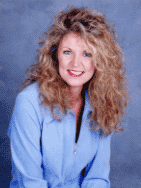
In the first post in this series, you read about Julie Papievis, a woman who survived and recovered from a severe brain stem injury. In that post, Julie shared five positive ways the accident changed her. In this one, she gives advice to parents of children with brain injuries. I think it applies to a broader audience. See what you think.
Education
Educate yourself about what’s happening to your child. Seek professional advice from experts who can address the medical, emotional, and spiritual aspects of the injury. Once that’s done, you can confront the situation and make better decisions.
Acceptance
Let your child be who he is. Don’t make the child’s injury everything. He’s much more than his injury or special need. He’s a person.
Normalcy
Treat your child with normalcy. Let him be a kid because he is a kid.
Focus
Concentrate on what needs to be done instead of on what people think of your child.
Dream
Allow your child to dream. Encourage him to be all he can be. Special needs kids know their limitations. You don’t need to keep reminding them of what they can’t do.
Talk
Let your child talk to you about his feelings. Encourage him to talk to you and to talk to other people, perhaps a counselor or other professional – someone with more expertise than you.
Power
A brain injury or any disability robs a child of his sense of control or power. Give some power back to your child by allowing him to make some choices. Allow him to chose between applesauce and jello for dessert, between watching the DVD of Transformers II or GI Joe.
Go Back and Be Happy
Once again, if you want to read more about Julie before the last post in this series is online, check out Julie’s book Go Back and Be Happy. It tells the story of her accident, her six week coma which included a stop in heaven and a visit with her grandmothers who live there now, and her amazing recovery which confounded and delighted her neurosurgeon. You can also visit her website, www.gobackandbehappy.com.
Do you like what you see at DifferentDream.com? You can receive more great content by subscribing to the quarterly Different Dream newsletter and signing up for the daily RSS feed delivered to your email inbox. You can sign up for the first in the pop up box and the second at the bottom of this page.
by jphilo | Oct 30, 2009 | Books and Resources, Different Dream, Spiritual Support
Julie Papievis was a dynamo before the car accident that changed her life. Now, more than a decade after her brain stem was so badly damaged the EMTs were sure she would die, she’s a dynamo again. In the months and years between her injury and recovery, which was remarkable but not total, she struggled with depression and grief for the woman she used to be.
Recently, I had the opportunity to interview Julie. As she shared her story, it became obvious that what she went through could help parents of special needs kids. In this three part series, you’ll read about her insights. Today’s post will share five positive ways the experience changed her.
Change #1: Funnier
Julie thinks she’s funnier now because she’s fearless. She no longer worries about what people think of her and is willing to be funny or even outlandish.
Change #2: Fearless
Julie went through something grueling and bounced back. What’s left to be afraid of? Not much! So she has no fear.
Change #3: More Emotional
After her accident, Julie cried for weeks. The doctor finally prescribed an anti-depressant so she could stop crying long enough to do physical therapy. Though she no longer cries as easily, she’s still more emotional than before her injury.
Change #4: Grateful
Julie can’t forget and doesn’t want to forget how helpless she was after her accident and how far she’s come. Sometimes, she’s overwhelmed by how far she’s come and gratitude brings her to tears.
Change #5: Deeper Relationships
Julie says she’s closer to her parents than ever before. They encouraged her and stood by her through the entire ordeal. They listened when she talked about her feelings and encouraged her to learn all she could about her condition. She realizes her relationship to them is rare and precious.
Obviously, Julie is not the same woman she was before her accident. And you’re not the same person you were before your special needs child came into your life. But if you allow your experience to make you funnier, fearless, more emotional, and grateful, you might find great good in your different and difficult life. Maybe Julie’s story can help you do that.
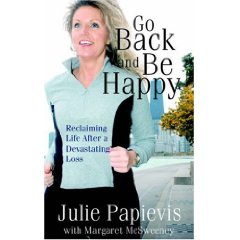
Go Back and Be Happy
If you want to read more about Julie before the next article in this series is posted, check out her book Go Back and Be Happy. It tells the story of her accident, her six week coma which included a stop in heaven and a visit with her grandmothers who live there now, and her amazing recovery which confounded and delighted her neurosurgeon. You can also visit her website, www.gobackandbehappy.com.
Do you like what you see at DifferentDream.com? You can receive more great content by subscribing to the quarterly Different Dream newsletter and signing up for the daily RSS feed delivered to your email inbox. You can sign up for the first in the pop up box and the second at the bottom of this page.

by jphilo | Oct 26, 2009 | Books and Resources, Different Dream, Spiritual Support
Recently, a friend sent me a URL and a very short email. “Check this one out,” it said. “PLEASE WATCH: R. C. Sproul, Chuck Colson, & Joni Eareckson Tada talk about families & disabilities.”
What Could R.C. Sproul, Chuck Colson, & Joni Eareckson Tada Have in Common?
Since I wondered what those three people have in common, I clicked on When Disability Hits Home and began watching a very compelling video. Joni, who’s been in a wheelchair since a diving accident at age eighteen, narrates the episode. It’s part of her Joni & Friends Television Series. In this show, Sproul and Colson share the stories of their special needs grandchildren.
Does God Know What He’s Doing?
But the episode doesn’t stop with their stories. Colson, a well-known Christian writer, talks about how his grandson’s autism changed them and affected his faith. Sproul, a prominent Christian theologian, shares the answers that have provided comfort and hope as his granddaughter wrestles with a brain disorder.
What Do You Think?
Whether or not you agree with Colson or Sproul, this program is thought-provoking. It doesn’t shy away from the hard questions asked by parents of special needs kids. I encourage you to watch it and see what you think. Then come back and leave a comment for all of us. This could be a lively discussion!
Do you like what you see at DifferentDream.com? You can receive more great content by subscribing to the quarterly Different Dream newsletter and signing up for the daily RSS feed delivered to your email inbox. You can sign up for the first in the pop up box and the second at the bottom of this page.
Save