An Update on the Special Needs Love Languages Book

An Update on the Special Needs Love Languages Book

An Update on the Special Needs Love Languages Book

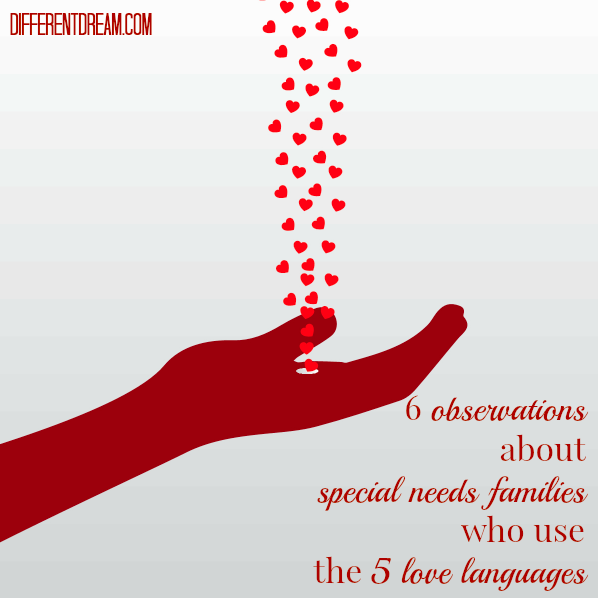
An update on the special needs love languages book is a fitting way to usher in February, the month known for romance and love. I want to share what’s happening during interviews as Ā Dr. Gary Chapman and I collaborate on this specialĀ needs love languages book.Ā Hopefully, these 6 observations about parents raising kids with special needs provide Different Dream readers with a glimpse at what’s going on.

  1. Interviewing families is fascinating. Since the new year, 13 families have graciously shared stories of how they use the 5 love languages with their spouses and with their children, both kids with special needs and those who are typically-developing. The stories they tell about how the 5 love languages help them fill their spouses and children’s love tanks are an encouraging affirmation of the elegant simplicity and power of the love languages. I’m convinced that the 15 scheduled interviews yet to be completed will confirm this observation.
  2. Parents of kids with specialĀ needs are keen observers.Ā They know their children’s love languages, even those of non-verbal kids, because they watch their kids behaviors with systematic intentionality. What these parents have described will help many other families determine their kids’ love languages.
  3. Parents speak the love languages to their kids withĀ special needs in creative ways.Ā Once they know their kids’ languages, they devise innumerable ways to determine their children’s love languages and to speak love to their kids. And they show their children’s doctors, therapists and teachers how to connect with their kids, too.
  4. Parents love their typical kids to the moon and back. They worry that their children without special needs don’t get enough attention, that they become the unintentional sacrifice at the altar of special needs. Many of them feel that using the love languages to fill their typical kids’ love tanks is the best way to remediate this circumstance. Many of them also say that their typical children have no fear of people with disabilities and special needs, but deep compassion for them.
  5. Spouses have ingenious ways to speak love to one another. As a rule, parents of kids with special needs don’t have much money or time. So during each interview, I ask parents to describe inexpensive and easy ways they’ve devised to speak their spouses’ love language. Honestly, this is my favorite part of each interview because the ideas are so wonderful. I can’t wait to share them in the book.
  6. Special needs families are persistent. They don’t give up. They know they may be the primary caregiver for their adults children as long as the parents are alive. So they are constantly looking for ways to better the lives of every member of their family by keeping one another’s love tanks full.

Do you like what you see at DifferentDream.com? You can receive more great content by subscribing to the quarterly Different Dream newsletter and signing up for the daily RSS feed delivered to your email inbox. You can sign up for the first in the pop up box and the second at the bottom of this page.

By

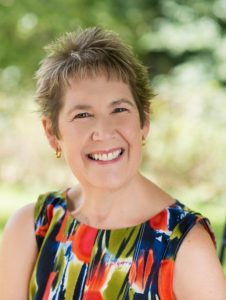
Jolene Philo is a published author, speaker, wife, and mother of a son with special needs.

Author Jolene Philo
Archives

Categories

Subscribe for Updates from Jolene

Related Posts
The Teal Pumpkin Project: Halloween for Kids with Food Allergies

The Teal Pumpkin Project: Halloween for Kids with Food Allergies

The Teal Pumpkin Project: Halloween for Kids with Food Allergies

Guest blogger Jill Seaney wants every child to be able to celebrate Halloween. So her guest post explains what the Teal Pumpkin Project is, who it helps, and where to find resources.

The Teal Pumpkin Project: Halloween for Kids with Food Allergies

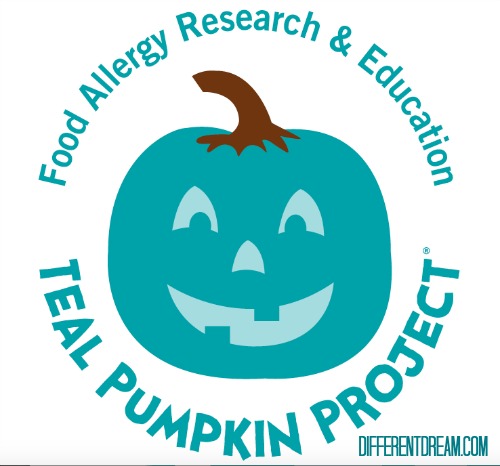
The Teal Pumpkin Project makes Halloween accessible for the one in every thirteen kids with food allergies. In the average classroom, two children have at least one known food allergy. Kids with food allergies are often left out of the fun because so many of the celebrations are centered around food. As a parent of a three-year-old who suffers from food allergies and cannot eat most food that is considered safe for others, I have invested a lot of time researching and coming up with fun food alternative ideas so that my child never has to feel left out. With Halloween approaching, I thought this was a great time to talk to people about the Food Allergy Research & Education (FARE) Teal Pumpkin Project.

The Teal Pumpkin Project helps make sure all children will come home on Halloween night or from Halloween events with something they can enjoy. Kids who have food allergies typically come home with a basket full of candy that they cannot eat. Its definitely hard explaining to a three-year-old that we have to throw all the candy out because it will make him sick. My hope is that through educating more people about the Teal Pumpkin Project, more people will offer non-food items and display a teal pumpkin so that all kids get to enjoy Halloween. Every child should be able to experience the joy and tradition of trick-or-treating!

Fortunately, FARE started the Teal Pumpkin Project to make it simple for everyone to help make Halloween special for kids that have food allergies.. All you need to do is paint one of your pumpkins teal, or buy a teal pumpkin (many craft stores sell plastic or ceramic teal pumpkins, too), and display it with your other pumpkins outside your home and then offer non-food treats. There are also signs that you can download and print from the FARE website that you can hang on your door or outside your home to let trick-or-treaters know that you support the Teal Pumpkin Project and have non-food treats to hand out. The link is included below. But remember, the best way to raise awareness is to have the teal pumpkin outside your home.

Remember to keep non-food treats in a separate bowl from the candy bowl to avoid cross contamination. How will you know which trick-or-treater has a food allergy and which doesn’t?

It’s as simple as asking, ā€œWould you like a piece of candy, or would you like a prize?ā€ Most children know that they have food allergies and will be so excited to go to a house and find something they can enjoy.

There are a lot of alternative treats to candy. Some examples are:

  • Stickers
  • Glow sticks, bracelets, necklaces
  • Bubbles
  • Mini Slinky
  • Bouncy balls
  • Finger puppets
  • Crayons, pencils, pens
  • Coins
  • Mini notepads
  • Mini flashlights
  • Whistles

The goal of the Teal Pumpkin Project is to help children like mine feel included in the fun of Halloween. I hope you will consider joining the movement as well and help all children have a very happy Halloween this year.

For more information on the Teal Pumpkin Project, please visit their website.
The Teal Pumpkin Project home sign can be downloaded here.


Do you like what you see at DifferentDream.com? You can receive more great content by subscribing to the quarterly Different Dream newsletter and signing up for the daily RSS feed delivered to your email inbox. You can sign up for the first in the pop up box and the second at the bottom of this page.

By

Jill lives in Tucson, AZ with her husband Jeff and their son Blake. She worked in Human Resources up until 2014 when her son was born with VACTERL Syndrome which included EA/TEF. Jill resigned to care for her son full time. Later he was also diagnosed with a Congenital Diaphragmatic Hernia and Eosinophilic Esophagitis. Jill’s personal blog (Beloved Blake) documents his surgeries and health challenges, their family struggles, and Blake’s milestones. Jill loves writing and teaching others about what it’s like raising a child with complex medical needs. She wants to be a blessing to other parents just starting on this journey.

Author Jolene Philo

Archives

Categories

Subscribe for Updates from Jolene

Related Posts

The Five Love Languages: 40 Years and Going Strong

The Five Love Languages: 40 Years and Going Strong

The Five Love Languages: 40 Years and Going Strong

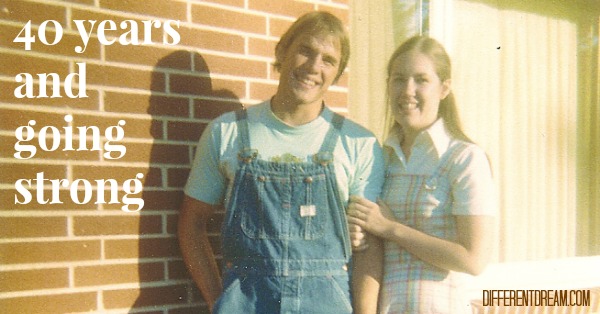
My husband and I were married on a hot and muggy July day in 1977. His tux size remains the same, and I still fit in my wedding dress. We both have all our teeth. So sometimes we look at each other across the supper table, scratch our heads, and ask, “40 years? Have we really been married 40 years?” Then I notice his thinning hair, he notices my collection of wrinkles, and we do the math in our heads.

2017-1977=40.

Yep, we’ve been married for 40 years, not all of them easy. The early years were hard as our diverse family cultures merged, and our different communication methods often clashed.

He was a twin, who talked in a shorthand composed of mostly gestures and expressions.
I loved to talk and play word games with my family and friends.

He wanted constant contact with a constant companion.
I wanted time alone to think and debrief after we were together for a while.

He could play his guitar or listen to music for hours.
I could curl up in a quiet corner and read for hours.

But we both loved Jesus, we loved each other, and we loved children. So when we learned we were expecting, we eagerly embraced the challenges and joys of parenting. We had no idea that the arrival of our baby boy, born with a condition that required immediate life-saving surgery and years of medical intervention and therapy, would usher in the toughest 4 years of our marriage.

For 4 years, our communication styles didn’t matter because we were too busy caring for a sick baby, working, scheduling surgeries, and filing insurance to talk.

For 4 years, my husband’s need for a constant companion and my need for time alone went unmet as I slept with our son in his hospital room following one corrective surgery after another.

For 4 years, he was too tired to play his guitar, and I was too tired to read a book.

During those 4 years, our marriage could have fallen apart. It should have fallen apart.

Because, in 1982, there were no books for parents about how to cling to Christ while caring for children who were fighting for their lives. There were no blogs to encourage families of kids with special needs. There were no Facebook groups where stressed dads and moms could share tips. There were no marriage seminars for parents like us.

By the grace of God, our marriage didn’t fall apart.

Thanks to the intervention of a pastor and his wife who lived in our small town, my husband and I learned to trust God and look for His grace as we parented our child with special needs. The glue of faith strengthened our marriage, but communicating with each other still wasn’t easy, even after our son’s health stabilized.

Years later, when we moved to a bigger town, our new church offered a Sunday school class based on a brand new book, The Five Love Languages: How to Express Heartfelt Commitment to Your Mate by Gary Chapman. We learned that out of the five love languages–gift giving, quality time, words of affirmation, gifts of service, and physical touch–my husband’s primary love languages were physical touch and quality time while mine were gifts of service and words of affirmation.

No wonder communicating was hard for us. We were speaking different languages!

I’ve often reflected on how helpful a five love languages book would have been after our son was born. How using the five love languages could have strengthened our marriage during those hard years. How they could have made our son feel more secure during hospital stays and tests. How sharing them with our son and his younger sister could have improved their relationship. How adapting them for special needs families could provide a resource to foster relationships between parents and with their children.

This year, God has opened doors for Gary Chapman and me to co-author a five love languages book for special needs families. Sharing Love Abundantly in Special Needs Families was released in August, 2019 and can be purchased on Amazon or through your local book store.

Now, if you’ll excuse me, I have to get ready for a dinner date with my husband. We’re celebrating 40 years of marriage, wrinkles and all!

Do you like what you see at DifferentDream.com? You can receive more great content by subscribing to the quarterly Different Dream newsletter and signing up for the daily RSS feed delivered to your email inbox. You can sign up for the first in the pop up box and the second at the bottom of this page.

By

Jolene Philo is a published author, speaker, wife, and mother of a son with special needs.

Author Jolene Philo

Archives

Categories

Subscribe for Updates from Jolene

Related Posts

Every Child Welcome and the Accessibility Summit

Every Child Welcome and the Accessibility Summit

Every Child Welcome and the Accessibility Summit

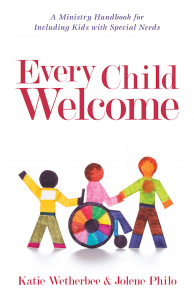
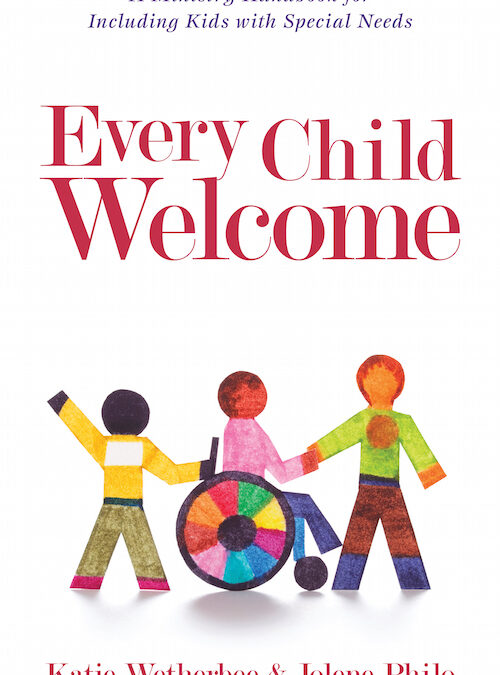
The weekend of April 15-17, Katie Wetherbee and I, co-authors of Every Child Welcome, did something that hardly every happens. We got to see each other at the Accessibility Summit. Not only that, we presented a workshop together. Something that happens only once in a blue moon.

In fact, we only worked in person once during the writing of Every Child Welcome. Most of the our collaboration was done via phone and email. So we had a great time hanging out at our book table after our workshop on Saturday. People who bought the book…

Every Child Welcome

…received copies signed by both of us. They were also advised to hang on to those doubly signed copies because they are quite rare, and someday they will be worth a lot of money on Antiques Roadshow.

But the last thing two former teachers dedicated to inclusion want to do is to make those of you who couldn’t attend the Summit feel like you missed all the fun. So just before the Summit started, we took advantage of the new Facebook Live technology and created a video of the two of us talking about special needs ministry inclusion. The video can be found at the Different Dream Facebook page, but it requires more scrolling every day to find it. So we’ve embedded it here for your convenience.

Please keep in mind that this was the first time we used the technology and that we have lots to learn. But as you watch the video, you’ll also see why I say that being with Katie Wetherbee is like being at a party all day long. Enjoy!

Do you like what you see at DifferentDream.com? You can receive more great content by subscribing to the quarterly Different Dream newsletter and signing up for the daily RSS feed delivered to your email inbox. You can sign up for the first in the pop up box and the second at the bottom of this page.

By

Jolene Philo is the author of theĀ Different DreamĀ series for parents of kids with special needs. She speaks at parenting and special needs conferences around the country. She’s also the creator and host of theĀ Different Dream website.Ā Sharing Love Abundantly With Special Needs Families: The 5 Love LanguagesĀ® for Parents RaisingĀ Children with Disabilities, which she co-authored with Dr. Gary Chapman, was released in August of 2019 and is available at local bookstores, their bookstore website, andĀ at Amazon.Ā 

Author Jolene Philo

Archives

Categories

Subscribe for Updates from Jolene

Related Posts

Does My Child Have PTSD? Has Been Released

Does My Child Have PTSD? Has Been Released

Does My Child Have PTSD? Has Been Released

I am happy to announce the official release of Does My Child Have PTSD? What to Do When Your Child Is Hurting from the Inside Out. Those of you who pre-ordered the book on Amazon should receive copies soon. Those who were waiting to order it after the book release need wait no longer. You can also take a look inside the book at Amazon. It is also available at independent bookstores and at chains like Barnes & Nobles. Or if you’d like a signed copy, please contact me for details and pricing information.

What’s in Does My Child Have PTSD?

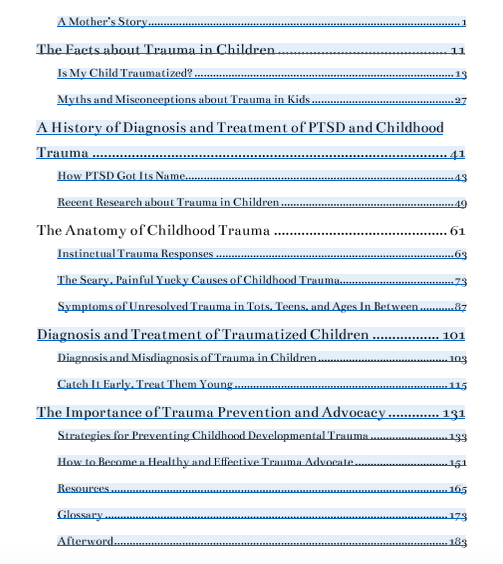
For those of you who prefer to look before you leap, here’s a peek at the table of contents page.

Screen Shot 2015-09-28 at 12.33.58 PM

Lest you feel intimidated by the fancy-schmancy words in the table of contents, rest assured that every one of them is carefully and clearly explained within chapters and then listed in the glossary. And every single chapter begins with a family or teaching story where kids are featured front and center.

My Goal While Writing Does My Child Have PTSD?

My goal in the writing the book was not only to pass along information about PTSD, but also to explain the information in an easy-to-understand way to parents, educators, and others who care about kids but aren’t part of the mental health care community. Therefore I was very pleased when Christopher Robbin of Familius, the house that published the book, emailed to say it received a starred review from Publishers Weekly (PW). That was exciting news because a starred review in PW, the leading book review source in the United States, means it should get more attention and hopefully get into the hands of more families who need the information in it. But I was even more pleased because the review confirmed that the book’s goal was accomplished, as this short quote shows.

In a single sentence, Philo can make a dramatic statement (e.g., trauma “changes the very structure of the brain”) and then evenly explain the physiology behind it. Though occasionally heart-wrenching, the book is organized so simply and logically as to be easy to follow and digest.

Do you like what you see at DifferentDream.com? You can receive more great content by subscribing to the quarterly Different Dream newsletter and signing up for the daily RSS feed delivered to your email inbox. You can sign up for the first in the pop up box and the second at the bottom of this page.

By

Jolene Philo is the author of theĀ Different DreamĀ series for parents of kids with special needs. She speaks at parenting and special needs conferences around the country. She’s also the creator and host of theĀ Different Dream website.Ā Sharing Love Abundantly With Special Needs Families: The 5 Love LanguagesĀ® for Parents RaisingĀ Children with Disabilities, which she co-authored with Dr. Gary Chapman, was released in August of 2019 and is available at local bookstores, their bookstore website, andĀ at Amazon.

Author Jolene Philo

Archives

Categories

Subscribe for Updates from Jolene

Related Posts

How Every Child Welcome Came to Be

How Every Child Welcome Came to Be

How Every Child Welcome Came to Be

Do you remember the Lemony Snicket books that took the children’s literature world by storm in the early 2000s? They were called A Series of Unfortunate Events. My own version of that title comes to mind every time I think of how Katie Wetherbee and I eventually came to write Every Child Welcome. Because the book truly is the result of a series of very fortunate events.

Though I believe they were God-ordained events, not merely fortunate ones.

The series of events began with at a special needs ministry inclusion conference in Des Moines, Iowa. Key Ministry sent a team, which included Katie, to conduct workshops at the conference. My first book had recently been published, and the conference coordinators invited me to host a book table and attend some of the workshops. Can you guess which ones I signed up to attend?

If you guessed the Key Ministry workshops, give yourself a pat on the back!

But before the first workshop started, a petite dark-haired woman with a smile as big as Iowa stopped by to introduce herself. “I’m Katie Wetherbee,” she said. “And I love your book.” We chatted for a few moments and an almost instant friendship formed. We both had kids who had overcome medical special needs. We both were former public school teachers with special education backgrounds. We were both interested in special needs ministry. We both blogged about special needs. And when I attended her workshops, I discovered that our teaching philosophies and styles were much the same.

To read about the rest of the series of events that led to the publication of Every Child Welcome, visit Key Ministry’s blog, Church4EveryChild.

Do you like what you see at DifferentDream.com? You can receive more great content by subscribing to the quarterly Different Dream newsletter and signing up for the daily RSS feed delivered to your email inbox. You can sign up for the first in the pop up box and the second at the bottom of this page.

By

Jolene Philo is the author of theĀ Different DreamĀ series for parents of kids with special needs. She speaks at parenting and special needs conferences around the country. She’s also the creator and host of theĀ Different Dream website.Ā Sharing Love Abundantly With Special Needs Families: The 5 Love LanguagesĀ® for Parents RaisingĀ Children with Disabilities, which she co-authored with Dr. Gary Chapman, was released in August of 2019 and is available at local bookstores, their bookstore website, andĀ at Amazon.

Author Jolene Philo

Archives

Categories

Subscribe for Updates from Jolene

Related Posts