by jphilo | Mar 25, 2011 | Different Dream, Grief, Spiritual Support
For families of kids with special needs, going on vacation can be hard work. In this post, guest blogger Scott Newport tells about a vacation their family took several years ago with their two sons: Noah, a typical second grader at the time, and Evan, who lived with a congenital heart ailment known as Noonan’s Syndrome. In today’s installment, Scott tells about traveling with a medically-fragile kid and about the pesky seagulls that cast a shadow on the trip.
The Shadow Cast, Part 1
This summer, our family traveled to the shores of Lake Michigan for a weekend retreat. Packed into our vehicle along with suitcases, beach toys, and other gear, we looked like your usual weekend adventurers. Penni, my wife, sat slightly cramped in the back seat between our boys, seven-year-old Noah and four-year-old Evan. Riding shotgun with me was Evan’s nurse.
Meet the Family
I guess I should explain that while Noah is an average rising second grader, Evan has defied all odds just by reaching his first birthday. Now, at age four, he lives with a terminal heart disease called hypertrophic cardiomyopathy and a variety of other complications brought about by a genetic condition called Noonan’s Syndrome. Hence, the nurse.
In many ways, Evan doesn’t really fit in with society. He looks a little different. He’s still wearing diapers. He takes many medications. He is fed through a tube in his stomach. He breathes through a tube in his neck and, sometimes, with the help of a ventilator. He’s not your typical kid.
Meet the Family on Vacation
As you can imagine, life with the Newport family is pretty atypical when compared to the rest of society. For instance, half the “gear” packed into our car belonged to Evan—medical equipment, extra supplies, and emergency apparatus. Even taking a family vacation was an extremely rare and very special treat for us. Evan’s fragile condition, combined with our need to stay close to his doctors and the fact that a nurse must come along, usually discourages us from venturing out.
But, despite the odds, there we were, speeding along a busy and well-groomed highway on our way to my parents’ summer cottage. As we drove, I noticed a large hill off in the distance that seemed a little out of place. Noah said, “Hey Dad, what is that gigantic mountain over there? And what is that cool looking cloud over it?”
Meet the Dirty Birds
As we got closer to the sprawling mystery hill, an unpleasant odor filled the car. Everyone, as though on cue, turned their heads toward Evan. Penni quickly checked Evan’s diaper and laughed, “Nope, not him,” and flashed us all the thumbs up sign. Just then, a light switched on in my head and I said to Noah, “That’s the local garbage landfill. And that cloud is actually seagulls.” The swirling mass of determined gulls circled and circled, casting a shadow onto the hill of garbage.
I thought to myself: Seagulls…definitely not one of my favorite birds! Dirty. Loud. Obnoxious.
The landfill notwithstanding, the trip was uneventful. We reached the cottage that evening, unpacked, and Noah and I agreed to go fishing the next morning.
Gone Fishing
The following morning, we drove north to a spot Noah remembered from a previous trip. We meandered along with fishing poles in hand, walking toward a red vintage lighthouse at the end of the breakwater. It was a beautiful morning and, as we walked amongst the towering rocks and broken concrete that protect the harbor, there wasn’t a cloud in the sky to cast a shadow on our father-son outing. Truth be known, I think Noah was more interested in spending a little time with Dad than in fishing. It’s a rare occasion that Noah and I can spend quality time alone together.
It looked like a few other father and son teams had the same idea as us; bobbing fishing boats were headed out of the tiny harbor with men and boys standing on the aft decks, situating their poles and gear for what promised to be a great day of fun. As I watched them leaving the harbor, I hoped that someday I’d be able to afford a fishing trip for Noah and me. But with all of Evan’s medical bills, money is always a little short. I guess that dream will have a shadow over it for awhile, or maybe forever.
Breaking into my thoughts, Noah proclaimed, “Hey Dad, look! There’s an army over there.”
“What do you mean, Son?” I asked.
“Can’t you see all those soldiers on the beach?”
“Ah, okay, I see them now,” I whispered back.
Noah’s army of soldiers standing arm to arm was actually a huge flock of those dang seagulls. I thought: This time, at least, they aren’t eating garbage. But they’re crowding up the whole public beach. What a nuisance.
Come Back Monday for the Rest of the Story
As you can see, Scott isn’t a big fan of sea gulls. Even so, in the second post of this series, he learns something from the very birds he considers a nuisance. You won’t want to miss what he learned in the shadow of a sea gull.
Part Two
Do you like what you see at DifferentDream.com? You can receive more great content by subscribing to the quarterly Different Dream newsletter and signing up for the daily RSS feed delivered to your email inbox. You can sign up for the first in the pop up box and the second at the bottom of this page.
by jphilo | Jan 5, 2011 | Different Dream, Grief, Spiritual Support
The Christmas season may be over, but Scott Newport’s latest guest post will put you in the holiday spirit again. This story about an old school atmosphere at a Home Depot big box store is a winner!
Ol’ School
It’s not too many times you walk to the checkout line in a big box store that a clerk blurts out, “Hey! Wait, I’ll take care of that.” But that’s just what happened to me yesterday. This clerk hurried up to the sliding window of the heated booth in the garden section and waved us on.
Christmas Eve Magic
I know it was Christmas Eve and all but to have the assistant store manager do the same thing as we were about to check out was like a scene out of a well written ol’ school Christmas story. He didn’t say anything; he just lifted his hand and waved for me to put away my wallet. The young cashier winked back.
As my son Noah and I walked out of the store with a small Christmas tree and a stocking big enough to hold a handful of fruit and a couple of toys fit for a child’s pocket, I wondered whether anyone would get in trouble for not charging us.
Pretty Cool
I said. “That was pretty cool, eh Noah?”
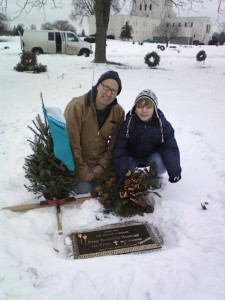
He nodded as we got into my 1995 Ford work van and headed for the cemetery.
“Hey Dad, I know where Evan is buried because of the big tree over there.”
As I looked around I saw a row of towering, leafless maple trees lining the meandering road and wondered why Noah thought one was different than the others. I soon forgot as I spotted my landmark, the faded, orange- painted stake marking a new grave. Even with four inches of snow, it still stood out.
Home Depot Family
You see my other son Evan died just over a year ago, on the day after Thanksgiving. He was seven years old and had struggled with a terminal condition from birth. Over the years the guys and girls at my local Home Depot have followed my family’s story. They have cried with me on many occasions. They celebrated when they heard the University of Michigan named an award after Evan. Many of them came to the funeral and viewing.
I know the corporate part of Home Depot has a tendency to promote lowest prices and specials for the professional guys. But at the Home Depot I go to, it has another part. Remember the old time hardware stores where you and your dad would walk across creaking wood floors. Occasionally you would request an item and the owner would crawl up into an attic to retrieve it. Or at the local coffee shop where price didn’t matter, the laughter was priceless. That is what my store is like.
I just wanted you to know the impact Bill, the assistant manager, and Bonnie, one of the paint ladies, had on my family on Christmas Eve of this year. But I also want to thank all the familiar faces including; Dave, Steve, Curtis, Berry, John, Jay and his wife, Brian, Yang, Kirk, Pat, Mike, Kathy, Cindy, Dave, Kevin, Greg, Rae, John, Jeremy, Ralph, Paul, Bob, Brian, Ben, John Scott Hank, Frank, Bob, Dean, Frazier, Dan, Nick, Ann, Laurie, Scott, Doug, Chris and Terry, Vivian, Deb, Sandy, Bob, and of course the Big Cheese, Marty.
(By the way I saw Marty actually hoisting Christmas trees into peoples’ cars a couple of weeks back in the freezing cold. When I told one lady he was the head honcho she thought I meant head parking lot guy. Just another fun story told while drinking coffee at the Troy Home Depot Pro desk.)
One Step Further
Scott took his story one step further and mailed it to Home Depot’s Customer Care department. They told Scott they’re sending it on to the corporate offices. Amazing how one kind deed leads to another, isn’t it?
If you have a story about unexpected generosity toward your family, would you share it in the comment box? If you can, take it one step further, like Scott did, and pass it on to the powers that be. Maybe it will inspire someone else to further kindness, too.
Do you like what you see at DifferentDream.com? You can receive more great content by subscribing to the quarterly Different Dream newsletter and signing up for the daily RSS feed delivered to your email inbox. You can sign up for the first in the pop up box and the second at the bottom of this page.
by jphilo | Dec 31, 2010 | Different Dream, Grief, Spiritual Support
A new year has arrived, a good time to examine the past, assess the present, and look to the future. In this post, written a few years ago by guest blogger Scott Newport, he looked into the future which has now come to pass. Reading it gave me a new perspective on life and death. Maybe it will for you, too.
The Bridge:
A Life and Death Metaphor
Today, as I was managing life, I stumbled over an unexpected confrontation on my road finding myself on the cold hard ground. My face took most of the impact; the rest of my body seemed unaffected.
The Obstacle
The place I was traveling through was not unfamiliar, it was just I had never seen that obstacle before. I guess I never looked or paid much attention because I usually keep my head up and eyes straight away, kinda on a mission. On this particular day as I traveled I had my head down, not concentrating on my every step, something else was on my mind.
After falling, I wondered if I should call the doctor. I even looked around to see if anybody had seen me falter. There were others around but I don’t think they even noticed. You know, everybody is so busy. Passing by, they probably thought I was bent over to tie my shoe or maybe was just taking a break. All I needed was a hand willing to help me get back up.
Shook up, scared and not wanting for this to happen again I wondered how I fell. I wanted to make sure it wouldn’t happen again especially if I was at the edge of my road where the bottom is a black hole.
The Bridge Between Life and Death
I guess I should back up a bit and explain to you that this story started the day I began my journey across a bridge. I had been on other bridges on my road before and have always been a little afraid to look directly over the rail. My fear is not the height but what may be lurking under the bridge. A place I don’t want to be.
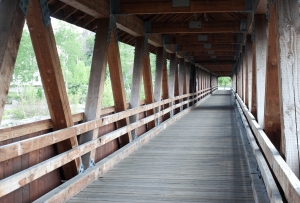
The bridge I am on now is long and you can’t see the other side. I know it’s there, it’s just so far away, I think.
Some days the bridge is a great place to be. On those days the sky is clear, the wind is my friend and the path is dry. Some mornings, as I stroll along the bridge alone, I can see the sun rise on one side, on the other a giant white moon setting into the resting place. On those mornings every moment, every breath seems so clear.
Then there are those days it is dreary on the bridge. The path is usually wet and slippery. On those days your head is down, watching every step. Your mind is so consumed by the path nothing at all seems clear, especially the path itself.
The Journey
The other day when I was walking on the bridge I took a serious notice of the other people on the cement with me. I always figured they were going to the same place as me. We seem to be going in the same direction. But I am not sure. Most people wear shoes but there are very few who wear hats. I wear a hat, but on the day I stumbled it fell off and it didn’t take long to dust it off and put it back on.
Maybe one of these days I will ask them if they are going to same place as me. Actually I did ask once but the person didn’t want to talk about it. I have overheard others talking but their conversation is never about the other side it is only about the weather.
I bet if I could see the other side I could scream to someone on the shore and I could yell, “What it is like over there?” I know it’s not like the place we left……
Something funny just hit me. I have never, never seen anybody going the opposite direction. This definitely must be a one way bridge.
Before I go any further, let me paint you a picture of the bridge. First of all it’s very long and is something you might see between two foreign lands. There is absolutely beautiful blue water below and a great open sky above that looks like it could scoop you up at any time. The aroma in the air is sweet but at times the sweetness turns sorrow. The bridge is like a rainbow as it reaches to the sky and curves back down on the other side. Mind you I am not sure if this is the case because I am still on the upward portion of the bridge, I can only imagine. I can’t see the other side. For now every day is an up hill climb.
The Toll Booth
There are toll booths on the bridge. Each toll booth is unattended and displays a sign that reads, “You may pay now or pay later”. Attached to the side of the booth is a metal box with a slot for change. It is made out of cold stainless steel, the bottom lined with velvet. I guess the velvet is there so when you drop in your coins it softens the noise. I have been paying as I go along; I think it is easier that way. Others seem to be waiting till they get to the other side to pay the toll. There are no set rules on the bridge.
One day on the bridge there was a lot of commotion and talking. I overheard people comment someone had reached the other side. Most of the crowd was crying and just a few had a peace about them. A few hats came off that day. I wish we got together to talk more often but that’s not the way it works on the bridge.
The Dream
One day on the bridge as I was taking a nap I had a dream. The dream put me at the summit of my journey. As I tipped over the top of the bridge I could see a grey haired elderly man in a small shelter just set on the edge of the bridge. “Ahhhhh ,” I whispered, that must surely be the bridge keeper. I now had a sense that I’d finally found someone on the bridge who knew what was going on.
He reminded me of one of those guys who raises and lowers the bridge when needed. He is like the protector of the bridge.
Anyway as the dream continued a group of children and adults came up behind me. They passed me and headed straight for the bridge keeper. The old guy reached out his hairy arm through a small sliding window and waved some to the left and others to the right.
It was a gorgeous sight as the ones on the right mounted up like eagles and flew gracefully to the other side while the ones on the left continued to walk down the path leading to the other side.
After I awoke from my dream I wasn’t sure what that all meant but I did have a sense of peace knowing there just might be someone on the other side who knows what is going on. And maybe when you reach the top there will be an ol’ guy who will guide you.
Oops, I forgot to tell you my favorite part of the dream. In my dream, one of the children who reached the top was guided to the right. He was a little boy and looked really weak and tired. He was the kinda boy any father would be proud of. When his wings picked him up with the blue sky above and the sun in the background, his curly blond hair glowed like a shiny crown. Before he was out of sight and the shadow of his wings left the bridge he turned his head back for just one last look and he smiled and then winked at me.
The Other Side
The dream gave me a feeling of hopefulness. I think if I am to stumble again, and I probably will, next time I will think of what the other side might be like. I will think of the bridge keeper and especially the smile the boy had. He looked so happy.
Do you like what you see at DifferentDream.com? You can receive more great content by subscribing to the quarterly Different Dream newsletter and signing up for the daily RSS feed delivered to your email inbox. You can sign up for the first in the pop up box and the second at the bottom of this page.

by jphilo | Sep 26, 2010 | Different Dream, Grief, Spiritual Support
Searching for Pockets of Joy
This week, guest blogger Scott Newport tells how one member of the team helped Scott and his son Noah find pockets of joy even when Evan’s death was imminent.
Little Moments that Last
A couple of weeks back I found myself sitting alone in my woodshop. Silence was present except for the click-clack of a ticking clock. The sturdy bench I was sitting on was a project I had just completed, constructed out of reclaimed redwood. My Die Hard leather boots were resting comfortably on sawdust and the cobwebs hanging from the corners of the room were doing a slow dance as a summer breeze caressed its way through the open door. My work bench was clear except for my handcrafted mallet. The upright maple handle was glistening from an inquisitive ray of sun sneaking past the cracks of a broken window. A long shadow let me know it was getting late.
“Hey Scott, is it okay to come in?” A woman’s voice spoke from the door behind me.
As I shifted my body around, I saw it was Linda, the social worker from Walk with Me. As she entered through the door I was a bit embarrassed. She had to step over an extension cord and push a piece of scrap wood away with her foot. I am used to maneuvering around my shop but I wasn’t sure if she would be.
“Hey Linda, I almost forgot you were coming over. We can go up to the house to talk. Is it my turn?”
“Yep, it’s your turn, Scott. Remember? Last time I was here I did some art work with Noah.”
“Oh, that’s right,” I recalled. “Noah’s such a great big brother.”
“Why don’t we just sit here and talk,” she gently said.
I unfolded a lawn chair I had garbage-picked, wiped off the dust, and we started to talk. As our conversation went on that day, thoughts that had been hidden away somehow emerged, and Linda just listened. For a moment I couldn’t understand why I was speaking words that I thought shouldn’t be said. Linda reassured me through my tears that it was okay to feel and say what I was experiencing. She explained to me about little moments. She called them “pockets of joy.”
I don’t know how long we sat in my sun-drenched woodshop but as we wrapped up our time together, I thanked Linda. She made her way to the door but I said, “I think I’ll sit here a bit longer. If you want to see Evan, he is up at the house with Nurse Jalinda.”
After she left I realized what an amazing woman she is. Talking in the midst of my environment made the difference. Turns out her dad was a carpenter, too. So I guess she was more familiar than I thought about maneuvering around my place.
After pondering for awhile on that dusty bench, I soon found myself writing this poem for Linda.
A Book about Me
Conversations with you are like learning to read a book about me
Listening reveals father, son, husband, and hurt
Watching you paint with Noah helps words find meaning
Each brush stroke from his heart opens mine to the future
Penni’s hands on the crib ready to touch
Your hand ready to catch each tear that drops
Helping us walk with Evan, circles us all to share
Preparing for his death brings us closer to life
Your presence sweeps the fear away and
Allows us to gather the fleeting pockets of joy
When we get where we’re going, your work will be done
But your memory will be engraved in a book about me
Where Do You Find Pockets of Joy?
How and where do you find pockets of joy while caring for your child with special needs? Please leave a comment in hopes that your strategy will help other parents cope, too.
Do you like what you see at DifferentDream.com? You can receive more great content by subscribing to the quarterly Different Dream newsletter and signing up for the daily RSS feed delivered to your email inbox. You can sign up for the first in the pop up box and the second at the bottom of this page.
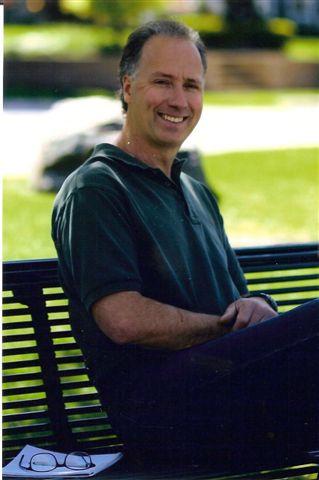
Scott Newport is a carpenter who has a vision for unwanted, damaged wood. His finds are treasures to his soul. Each discovery he makes unfolds into a beautiful piece of furniture for which he finds a home, usually with a child or caregiver of a child with special needs. He writes about the life lessons he learns from his 3 children, especially from Evan who died in November of 2009 after 7 years of joyful life. To access all of Scott’s guest posts, click on the magnifying glass at the top of the page and type “Scott Newport” in the search box.
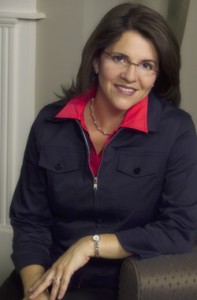
Subscribe for Updates from Jolene
by jphilo | Sep 1, 2010 | Different Dream, Grief, Spiritual Support
About a month ago, I posted an entry about the longevity of grief. The number of readers who responded reinforced the wisdom shared by the grieving parents featured in the post. Grief takes a long time. Parents will be sad for a long time. It’s okay for them to be sad a long time, and it’s important for those surrounding parents to support them throughout the process.
Nancy Guthrie
Nancy Guthrie is an author who understands grieving the loss of a child. She and her husband lost two infants to a rare genetic disorder. She tells her story beautifully in Holding onto Hope: A Pathway through Suffering to the Heart of God. As the title indicates, she also addresses a topic people like to avoid – why God allows suffering.
Is the Church Prepared for Sad People?
Recently, I ran across an interview in which Guthrie talks about what churches can do to walk with sad people while they grieve. Here’s an excerpt:
Grieving people have four primary needs that the church has a key role in addressing:
- They have intense sadness that is lonely and lingering that needs to be respected.
- They have significant questions that need to be addressed in light of Scripture.
- They have broken relationships that need to be healed and normalized.
- They have a deep desire to discover some meaning and purpose in their loss.
While we make room for people to be sad, we want to walk with people in expectation that God will indeed do a work of healing in their lives so that they do not stay stuck in their sadness, but emerge from it strengthened in their confidence in God, deepened in their understanding of the Scriptures, and equipped to serve others.
Read the Entire Interview
The entire interview is available at www.theGospelCoalition.org. Because Guthrie is willing to confront issues many of us want to avoid, some of her thoughts may be difficult to face. But remember, Nancy Guthrie has been where you are. She and her husband lost two children.. They deal with grief daily. Every day, they choose to cling to their faith in God’s goodness despite the circumstances.
Hearing Jesus Speak Into Your Sorrow
I’m stepping out on a limb, recommending Guthrie’s latest book, Hearing Jesus Speak Into Your Sorrow, before reading it. But if it’s anything like her other books, it won’t disappoint. I will be reading it as part of the research for Different Dream Parenting: Raising a Child with Special Needs. And if all goes as planned, I’ll be attending Nancy Guthrie’s workshop at the conference mentioned at the beginning of the Guthrie interview.
If you’re familiar with Nancy Guthrie’s books, leave a comment about how they helped you cope with grief or reconcile your suffering and your faith. Or leave your answer to this question: Is the church prepared for sad people?
Do you like what you see at DifferentDream.com? You can receive more great content by subscribing to the quarterly Different Dream newsletter and signing up for the daily RSS feed delivered to your email inbox. You can sign up for the first in the pop up box and the second at the bottom of this page.

by jphilo | Jul 30, 2010 | Different Dream, Grief, Spiritual Support

Talking to parents who have lost a child isn’t easy. It’s about the hardest thing about working with families of children with special needs. Because many of those children are medically fragile. Many of them will die young, too young.
The Unknowing Friend’s Take
Those of us who have never lost a child share some misconceptions about the longevity of grief:
- We think it’s easier to lose a child living with special needs because parents are prepared for the inevitable.
- We think parents of kids with special needs should get over the loss within a few months and move on.
- We think the other children in a family will fill the empty space left by the child who died.
But parents who have watched a child die say those ideas are wrong.
Joy’s Take
One of those parents is Joy Owens who you may remember from the 4HisHeart-Snuggles from Sam series posted at DifferentDream.com in April. She still struggles with grief and writes about it movingly in a recent post at Sam’s CaringBridge Website.
Scott’s Take
Scott Newport, whose son Evan died in November of 2009 from complications caused by Noonan’s Syndrome, is struggling with the longevity of grief, too. In a recent phone call, he said, “Mother’s Day was brutal. Father’s Day was brutal. This is so hard.” He often writes poetry to process his grief and gave permission to share it here.
Bearing Time
The months creep along like a weightless fog
Treasured memories cling to clay
Numbing days anesthetize want
Fear has no place to hide
Passing clouds no peek of sunshine
Winters ice forgotten thaw
Damp rains dance
Hope has no meaning
Relationships with no language
Words with no interrupter
Blank stares, no title
Vision smeared with black marker
Love stands
Against death
Alone
Wondering
“Will a flashlight help?”
Carolyn’s Take
Carolyn, one of the parents I interviewed for A Different Dream for My Child: Meditations for Parents of Critically or Chronically Ill Children had this to say more than thirty years after her daughter, Beth, died. “People told me to give myself a year to recover. ‘I cam remember getting to the end of one year and saying, ‘What’s this? I don’t feel any different.’ But she says somewhere between two and five years, the physical ache stopped. ‘That’s not really encouraging when you think, “We’ll be doing five years of grieving?” That seems like a really long time.'”
Five Years
Everyone I’ve interviewed about losing a child agrees with Carolyn. It takes five years. Five years.
Can you imagine being a parent and grieving for five years? Can you imagine Joy or Scott’s pain when their best, well-meaning friends advise them to get over it and move on? A few years ago, that’s what I would have said. I had no idea of the longevity of grief.
But now, thanks to people like Joy and Scott and Carolyn, I do know. And I want you to know, too. Because someday, someone you know will lose a child. When that happens, you will already know what the grieving parents won’t comprehend for several years. Their grief will last longer than they expect.
You’ll be there to be their flashlight for however long they need your help.
Five years.
Do you like what you see at DifferentDream.com? You can receive more great content by subscribing to the quarterly Different Dream newsletter and signing up for the daily RSS feed delivered to your email inbox. You can sign up for the first in the pop up box and the second at the bottom of this page.